
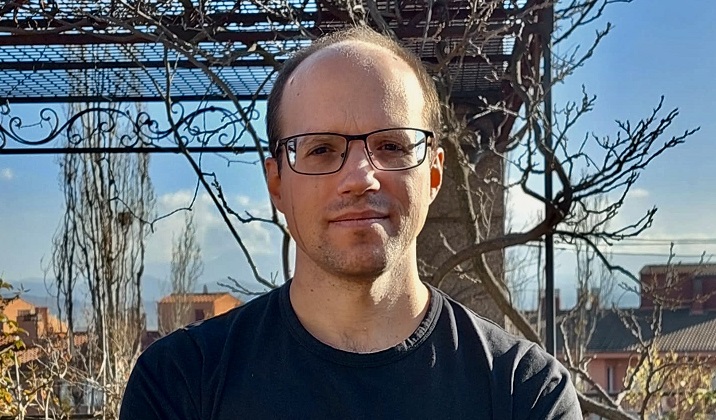
Bernat BardagilView profile
Researcher
- Syntax
- Morphology
- Phonology
- +7 more
Bernat Bardagil is a Catalan linguist and FWO senior postdoctoral researcher at Ghent University's Department of Linguistics. He specializes in Amazonian languages, particularly Panará (Jê family) and Mỹky (isolate), conducting research that combines descriptive and theoretical approaches to syntax, morphology, and phonology. His academic journey includes: PhD from the University of Groningen on case and agreement in Panará NWO Rubicon postdoctoral fellowship at Ghent University Postdoctoral research at UC Berkeley on an ELDP project documenting Manoki MA in linguistics from Paris VII (Université Denis Diderot) Double BA in translation and linguistics from Pompeu Fabra University Bardagil's research focuses on grammatical relations, agreement systems, and case marking in Amazonian languages, with additional interests in language documentation, revitalization, ethnomusicology, and indigenous history. His current FWO project examines argument marking patterns in the linguistically diverse Guaporé-Mamoré region of southern Amazonia to understand both grammatical structures and population history. His recent publications (2024-2025) demonstrate a growing emphasis on interdisciplinary approaches, connecting linguistic analysis with cultural preservation, particularly in the areas of music revitalization and language documentation for endangered communities. Scientific recognition includes: FWO senior postdoctoral fellowship NWO Rubicon postdoctoral award Endangered Languages Documentation Programme (ELDP) grant Bardagil is actively involved in language revitalization efforts, particularly with the Manoki community in Brazil, where he co-founded the Watjuho Ja'a Collective to promote language learning and create educational materials. His teaching at Ghent University includes courses on syntax, case, and contrastive linguistics. As a member of the DiaLing research group and co-founder of G4, FUG, and GILIAB, Bardagil contributes to multiple collaborative research initiatives focused on linguistic diversity and theoretical syntax.