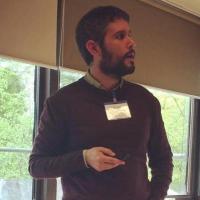
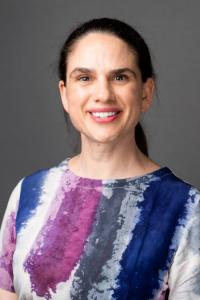
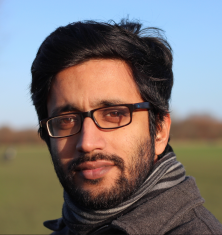
John (Jack) Duff is a postdoctoral researcher at Saarland University’s Department of Language Science and Technology, working with Prof. Vera Demberg’s group on the ERC-funded project Individualized Interaction in Discourse since January 1, 2024. He will join UCLA’s Department of Linguistics as an Assistant Professor in Fall 2025. His research spans psycholinguistics, computational modeling, and cross-linguistic studies, particularly focusing on Santiago Laxopa Zapotec. Research Interests Psycholinguistics Computational Linguistics Discourse Analysis Pragmatics Cognitive Science Language Processing His recent publications highlight work on pragmatic reasoning, computational models of cognition, Zapotec language structures, and experimental analyses of comprehension dynamics. He earned his Ph.D. in Linguistics from UC Santa Cruz in 2023, advised by Pranav Anand and Amanda Rysling.
James Mahshie is a Professor in the Department of Speech, Language and Hearing Science at George Washington University, serving full-time. His roles include leadership in organizations such as the American Association of Phonetic Sciences and the Council of Academic Programs in Communication Sciences and Disorders. He has held key committee positions, including SIG9 coordinator for ASHA and membership in the National Institute on Disability, Independent Living, and Rehabilitation Research (NIDILRR) review panels. His research focuses on speech production/perception in deaf/hard-of-hearing children, particularly with cochlear implants, and addresses healthcare equity issues in newborn hearing screening. Collaborations include cross-cultural studies with Chinese researchers exploring Mandarin-speaking cochlear implant users. He teaches courses in speech science and mentors students in translational research. Dr. Mahshie’s awards include Fulbright Distinguished Scholarships, CAPCSD’s Distinguished Service Award, and ASHA Fellow status. His grants total over $8.6 million in proposals, emphasizing healthcare disparities and international collaborations. He has presented at major global conferences (InterSpeech, ASHA) and given invited lectures at institutions like Nanjing Normal University and Flinders University. Key Research Themes: Prosody development, bimodal bilingualism, and equity in hearing healthcare Recent Focus: Cross-linguistic comparisons of Mandarin vs. English cochlear implant users Grants Highlight: $4.8M PCORI proposal for newborn hearing equity (2024) His lab work integrates acoustic analysis, perceptual studies, and interdisciplinary approaches to improve communication outcomes for hearing-impaired populations.
Heather Marsden is a Professor in the Department of Language and Linguistic Science at the University of York, where she has been a faculty member since 2007, promoted to Senior Lecturer in 2016 and currently holds the rank of Professor. She is actively involved in research, teaching, and external academic engagement, with a strong focus on second language acquisition from a generative linguistic perspective. Her educational background includes a BA in Japanese Studies from the University of Cambridge, an MA and PhD in Linguistics from the University of Durham, and a Diploma in Translation from the Chartered Institute of Linguists. She also held an ESRC Postdoctoral Research Fellowship at Newcastle University before joining York. Her research centers on the L2 acquisition of linguistic structures at the syntax–semantics and syntax–discourse interfaces, with special emphasis on Japanese and other East Asian languages, as well as Spanish, German, and French taught in UK schools. She uses psycholinguistic methods such as acceptability judgments and sentence processing tasks to explore cross-linguistic influence, the role of input (ambient, instructed, or absent), and the impact of explicit grammar instruction on acquisition. Her work bridges theoretical generative SLA and practical language teaching, advocating for collaborative research and knowledge exchange. Her recent publications show a consistent focus on quantifier scope, definiteness, polarity items, filler-gap dependencies, and prosody in L2 and L3 acquisition, particularly involving Japanese, Korean, and English. She frequently collaborates with international researchers and presents at major conferences such as EuroSLA and LAGB. Ambient input, instructed input, and absent input: A reflection on L2 acquisition in different input conditions (2021, Plenary, Japan Second Language Association) Using Case to predict in the German language classroom: a pilot study (2018, UiT The Arctic University of Norway) Insights for teacher-researcher collaboration from theoretical SLA research (2018, UiT) Searching for a common language: where do GenSLA research and the language classroom meet? (2017, GASLA 14) She is an active supervisor of PhD students, welcoming projects grounded in linguistic theory that investigate non-native language acquisition, especially involving Japanese or East Asian languages, or the application of generative SLA findings to pedagogy. She leads and participates in externally funded research projects, including those funded by the British Academy and ESRC, such as Interpreting prosody in a second language and Psycholinguistic methods in the language classroom . She is also a co-investigator in the OASIS project focused on open-access research summaries in language studies. She is involved in lab-based psycholinguistic research and collaborates with teams across Europe and Asia, contributing to a vibrant research network in generative SLA and classroom applications.
Prof. Dr. Heike Behrens is a Professor of Cognitive Linguistics and Language Acquisition Research at the University of Basel, Switzerland, with joint affiliations in the German and English departments. Her research focuses on first language acquisition from a constructivist perspective, emphasizing corpus-based analysis of syntactic and morphological category development. She has held positions at institutions including the University of Groningen, the Max-Planck-Institutes in Nijmegen and Leipzig, and a visiting scholar appointment at UC Berkeley. Behrens' work bridges empirical linguistics and cognitive science, investigating developmental processes in child language production. Education: She completed her Staatsexamen and MA in English and German at the University of Kiel, followed by a PhD at the University of Amsterdam. Her career includes research roles at the University of Braunschweig and extended stays at leading linguistics institutes. Research Interests: Behrens specializes in corpus-driven studies of language acquisition, with particular attention to the interplay between input frequency, perceptual salience, and developmental trajectories. Her FRIAS research project examines re-representation processes in German inflectional systems, analyzing how children reconstruct linguistic structures through usage-based learning. Her publications span theoretical frameworks in language acquisition, methodological advancements in corpus analysis, and cross-linguistic comparisons of morphosyntactic development. She has contributed to foundational texts like Corpora in Language Acquisition Research and pioneered studies on German passive constructions and plural overgeneralization errors.
Jennifer Cabrelli is an Associate Professor in the Department of Hispanic and Italian Studies at the University of Illinois at Chicago (UIC), where she also serves as Director of the Multilingual Phonology Lab and Director of Undergraduate Studies for Spanish. Her research focuses on phonological and morphosyntactic acquisition in multilingual speakers, particularly in second, third, and heritage language contexts. Her research interests lie at the intersection of phonology, bilingualism, and language acquisition. Using experimental methods such as speech production and perception tasks, she investigates how linguistic knowledge is organized in the multilingual mind. Her work emphasizes quantitative analysis and cross-linguistic influence, especially in Spanish and Portuguese contexts. The recent publications reflect a strong focus on transfer phenomena in multilingual acquisition, particularly how L1, L2, and L3 systems interact phonologically and morphosyntactically. Key themes include clitic placement, stop lenition, code-switching, and phonotactic restructuring, with methodologies rooted in psycholinguistics and experimental phonetics. Scientific Awards: Graduate Mentoring Award, UIC Graduate College (2018-2019) Teaching Recognition Program Award, UIC Office of the Provost (2018-2019) Grant Support Program, UIC Office of Social Science Research Education (2017-2018) Advising and Grants: Dr. Cabrelli has served as PI and co-PI on multiple NSF-funded doctoral research improvement grants, supporting graduate research in bilingual phonology. She is actively involved in mentoring students and shaping the next generation of scholars in applied linguistics. Her editorial roles in journals such as Linguistic Approaches to Bilingualism and Hispania reflect her leadership in the field. Labs and Teams: She directs the Multilingual Phonology Laboratory at UIC, a research space dedicated to experimental studies on phonological acquisition and bilingualism. She collaborates with researchers across institutions on projects involving heritage speakers, L3 acquisition, and cross-linguistic influence.
Erin O’Rourke is an Associate Professor of Spanish Linguistics at the Department of Modern Languages & Classics, University of Alabama. She specializes in intonation, sociolinguistics, and language contact phenomena, particularly focusing on Spanish dialects in the Andean and Amazonian regions. PhD in Spanish from University of Illinois at Urbana-Champaign MA in Spanish Linguistics from Pennsylvania State University BA in Spanish and BS in Chemistry from University of Illinois at Urbana-Champaign Her research explores: Intonation and prosodic variation in Spanish and Quechua Acoustic and articulatory phonetics in bilingual contexts Sociophonetic patterns and statistical methods in linguistics Language contact in the Amazon and Andean regions Recent publications analyze phonetic shifts in Amazonian Spanish-Quichua interaction and socioprosodic frameworks. She is affiliated with the PRESEEA project (Quito) and leads the LengUA Lab at the University of Alabama.
Mark Steedman is a Professor of Cognitive Science at the School of Informatics , University of Edinburgh, and an Adjunct Professor in the Department of Computer and Information Science at the University of Pennsylvania. His research bridges Artificial Intelligence , Cognitive Science , and Computational Linguistics , with a focus on Combinatory Categorial Grammar (CCG) , Prosody and Intonation , and Temporal Semantics . He has led the Institute for Language, Cognition, and Computation and contributed to interdisciplinary research at the Human Communications Research Center and Centre for Speech Technology Research . Research Interests : Steedman's work explores the intersection of formal grammar, computational models, and cognitive processes. He investigates how CCG parsing can enhance semantic inference, how prosodic features improve speech processing, and the role of temporal semantics in language understanding. His projects often integrate language models with entailment graphs for question answering and dialogue systems. Scientific Awards : Fellow of the American Association of Artificial Intelligence (1993) Fellow of the Royal Society of Edinburgh (2002) Fellow of the British Academy (2002) Member of Academia Europaea (2006) Best Paper Awards at ACL 2023 and AACL/IJCNLP 2023 Influential Paper Award (IFAAMAS 2017) Recent Trends in Publications : His recent work emphasizes language models for semantic inference , entailment graphs in multilingual settings, and incremental parsing for brain-language interfaces. Papers address challenges in hallucination , cross-lingual transfer , and prosody-text alignment .
Dr. Luisa Meroni is an Assistant Professor in the Department of Languages, Literature and Communication within the Faculty of Humanities at Utrecht University. Her research focuses on language acquisition, processing and disorders, with specialization in Italian language studies. Her areas of expertise include Bilingualism , Psycholinguistics , First Language Acquisition , Sentence Processing , and Second Language Acquisition . Dr. Meroni's work primarily investigates how children and adults process linguistic information, with particular attention to semantic constraints, logical expressions, and ambiguities in language. Her research employs experimental methodologies including eye-tracking to examine real-time language processing. Recent work has expanded to include cross-linguistic studies, particularly examining Mandarin Chinese collectives and Dutch language structures. Her publications reveal a consistent focus on the interface between linguistic theory and experimental evidence in language acquisition. Among her notable scientific contributions are studies on scalar implicatures, epistemic modals, and the acquisition of modality in Dutch. She has received research funding including a European Science Foundation grant and a Marie Curie grant. Dr. Meroni is actively involved in the academic community through conference organization (including Going Romance 2018), editorial work, and numerous invited presentations at international conferences. She has supervised research projects and collaborated with scholars internationally, particularly in studies involving Mandarin Chinese and Dutch language structures.
Lara Reglero is an Associate Professor in the Department of Modern Languages and Linguistics at Florida State University (FSU). She holds a Ph.D. in Linguistics from the University of Connecticut. Her research focuses on syntax, particularly interrogative clauses and their interaction with discourse elements like focus and topic, with a specialization in Spanish and Basque linguistics. She also investigates language acquisition and the syntax-phonology interface, employing cross-linguistic comparisons involving English, French, and Slavic languages. Professor Reglero teaches courses such as Introduction to Linguistics , Spanish Morphosyntax , and Minimalist Syntax . Her work spans theoretical linguistics and experimental phonetics, with recent publications addressing intonation patterns in questions, bilingualism in the Hispanic world, and L2 acquisition challenges. She has contributed to edited volumes like Hispanic Linguistics at the Crossroads and Romance Languages and Linguistic Theory . Her research trends emphasize prosodic correlates of syntactic structures, mirativity in questions, and the interplay between formal syntax and phonological realization. Notable collaborations include studies on L2 Spanish/English processing and bilingual language contact phenomena in Basque-Spanish contexts. She actively participates in the Linguistic Symposium on Romance Languages (LSRL) and publishes in journals such as The Linguistic Review and Probus . Her advising and grants focus on heritage language learners and syntactic theory development. She maintains strong ties with the FSU Department of Modern Languages and Linguistics, contributing to both undergraduate and graduate programs in Hispanic Linguistics.
Dr Víctor Acedo-Matellán is an Associate Professor of Portuguese and Spanish Linguistics at the University of Oxford, holding dual affiliations with the Faculty of Medieval and Modern Languages and the Faculty of Linguistics, Philology and Phonetics . He is also a Tutorial Fellow in Linguistics and Modern Languages (Spanish) at Oriel College. His research focuses on theoretical syntax from a Chomskyan minimalist perspective, with an emphasis on the architecture of grammar and its interfaces, particularly syntax-morphology, syntax-lexicon, and syntax-prosody interactions. He specializes in argument/event structure, spatial adpositions, and diachronic morphosyntactic change, working across Romance (Catalan, Latin), Germanic, Slavic, and Niger-Congo languages like Wolof. He teaches syntax, morphology, and Ibero-Romance linguistics at both undergraduate and graduate levels. Current research themes include the syntax-prosody interface and the formal semantics of spatial expressions. Supervision is offered for graduate work in syntax, morphology, or their interfaces in any language. He is reachable via victor.acedo-matellan@oriel.ox.ac.uk and maintains an active research profile with frequent invited lectures across Europe and Latin America. His academic roles include post-holder status in two prestigious Oxford faculties, reflecting his dual expertise in Romance languages and theoretical linguistics. No awards are explicitly listed in the provided materials, though his extensive publication record indicates scholarly recognition.
Argyro Katsika is an Associate Professor in the Department of Linguistics at the University of California, Santa Barbara (UCSB). She serves as Director of the UCSB SPArK (Speech Production and Perception Research Lab) and Director of Undergraduate Studies. Her research focuses on the interaction between prosodic structure and articulatory kinematics, exploring topics such as prosodic boundaries, prominence, speech production coordination, and prosodic typology across languages. She holds a Ph.D. from Yale University (2012) and an M.Phil. from the University of Cambridge (2005). Education: 2012: Ph.D., Yale University 2005: M.Phil., University of Cambridge Dr. Katsika investigates how prosodic structure—encompassing syllables, words, and phrases—influences articulatory movements and acoustic outcomes. Her work combines experimental methods to study speech production in diverse languages, including Georgian, Korean, Japanese, and Greek. Current projects address prosodic typology, dynamical models of prosodic structure, and speech errors in planning. She teaches courses such as Phonetics, Speech Prosody, and Phonetic Methodology at both undergraduate and graduate levels. Her recent research highlights include studies on the articulatory manifestation of focus in American English, the typology of prosodic boundaries, and gestural overlap in consonant clusters. She actively collaborates on interdisciplinary projects linking prosody to discourse and social interaction, with a focus on speech disorders related to articulatory coordination challenges.
Bhismadev Chakrabarti is Professor of Neuroscience and Mental Health at the University of Reading's School of Psychology and Clinical Language Sciences. He leads research on human social behavior mechanisms, focusing on neural and gut microbiome influences. His work utilizes eye-tracking, MRI, psychophysics, and psychophysiology methodologies. Research examines: Neurobiological foundations of social cognition Autism spectrum heterogeneity Gut-brain axis interactions Cross-cultural emotion processing Neurodiversity across lifespan Recent publications demonstrate strong focus on autism phenotyping through multimodal approaches including neuroimaging, behavioral tasks, and computational modeling. Predominant themes include sensory integration differences, cross-cultural validation of traits, and transdiagnostic assessment frameworks. Neurodevelopmental trajectories and biomarker discovery are recurrent investigative threads. Laboratory activities coordinate with the Centre for Autism and Centre for Integrative Neuroscience and Neurodynamics (CINN), fostering interdisciplinary collaborations on neurodiversity research.
Dr. Carola de Beer is a Research Associate in Clinical Linguistics at the Faculty of Linguistics and Literary Studies, University of Bielefeld, collaborating with the Medical Faculty OWL. She is also a project leader in the SFB 1646: Linguistic Creativity in Communication, focusing on creativity in verbal and multimodal communication in people with neurogenic disorders. Her academic and research career includes postdoctoral work at the University of Potsdam in the CRC 1287 on language variability and cognitive sciences. PhD in Clinical Linguistics, University of Bielefeld (2017) MSc and BSc in Clinical Linguistics, University of Bielefeld Research Associate, University of Bielefeld (since 2021) PostDoc, University of Potsdam (2017–2021) Dr. de Beer’s research focuses on multimodal communication in individuals with neurogenic language disorders, especially aphasia. Her work investigates how speech and gesture interact, how prosody is processed and produced, and how communicative abilities can be assessed. She also explores self-perception of communication and quality of life in affected individuals. Her research bridges clinical linguistics, cognitive science, and medical applications. Her recent publications reveal a strong trend in understanding prosody, gesture use, and diagnostic tools in aphasia and right-hemisphere brain lesions. The studies employ systematic reviews, experimental designs, and clinical assessments, often in collaboration with interdisciplinary teams. Topics span from theoretical models of gesture-speech integration to practical diagnostic frameworks. Dr. de Beer has not been publicly associated with specific scientific awards, but her sustained publication record in high-impact journals demonstrates significant scholarly contribution. She has supervised academic work and coordinated research training groups, indicating active involvement in mentoring and academic leadership. Her clinical experience as a speech therapist in Berlin and as a supervisor in Bielefeld enriches her applied research perspective. She is actively involved in the SFB 1646 research team, particularly Project C03, which examines linguistic creativity under cognitive constraints. Her work is embedded in interdisciplinary environments that integrate linguistics, neuroscience, and rehabilitation.
Henri LE PRIEULT is a Professor at the University of Toulouse, affiliated with the Center for Anglophone Studies (CAS) and the Department of English-Speaking World Studies. His academic work spans English linguistics, enunciative linguistics, the history of ideas, and the didactics of English. He has held significant editorial and research leadership roles, including serving as the editorial director of the journal Anglophonia and leading interdisciplinary research seminars. Doctorate (1992), University of Toulouse 2-Le Mirail Habilitation to Supervise Research (2006), University of Bordeaux 3 Lecturer (1994), University of Toulouse 2-Le Mirail Professor (2008), University of Toulouse 2-Le Mirail His research interests include enunciative linguistics, the history of English grammar, modalization, discourse strategies, and the sociocultural dimensions of language. He has made significant contributions to the understanding of linguistic accommodation, argumentation, and the digital representation of grammar. His interdisciplinary approach bridges linguistics, history, and pedagogy. The most recent publications reflect a sustained engagement with core themes: the evolution of grammatical thought, pragmatic and discourse-level phenomena, and the social practices of English. His work frequently appears in special issues of Anglophonia , often as editor or co-editor, covering topics such as voice quality, e-grammars, and interdisciplinary argumentation. Editorial director, Anglophonia journal Head of sub-axis (Axis 1), CAS Member of the CAS council Responsible for the “CAS Ling” cross-disciplinary seminar LE PRIEULT has advised and collaborated with numerous scholars and has led multiple collective publications. His work is deeply embedded in the research culture of the Centre for Anglophone Studies, where he continues to shape research agendas and mentor junior researchers through editorial and seminar leadership. He is associated with research groups such as IDEA (Interdisciplinarity in English Studies) and HLLI (Unit for Research on History, Languages, Literatures, and Interculturality), and his publications appear in the Anglophonia and Caliban series, published by Presses Universitaires du Mirail (PUM) and Presses universitaires du Midi.
Kie Ross Zuraw is a Professor and Vice Chair of Undergraduate Studies in the UCLA Department of Linguistics. Her research focuses on computational phonology, probabilistic grammars, and the interplay between phonological grammar and processing. She actively studies code-mixing, loanword adaptation, and linguistic patterns in Austronesian languages like Tagalog, as well as Korean and French. Dr. Zuraw has advised numerous PhD students and contributed to software tools like maxent.ot for phonological analysis. She teaches advanced courses in phonology, sociolinguistics, and pedagogical practices, emphasizing inclusive teaching methods. Her work bridges theoretical linguistics with empirical research, integrating corpus analysis and experimental methodologies.