Patrick Sturt is a Reader in Psychology at the University of Edinburgh's School of Philosophy, Psychology and Language Sciences. His research focuses on syntactic processing in language comprehension, computational models of incremental parsing, anaphor resolution, and eye movements in reading. With over 100 publications and more than 3,300 citations, he is a recognized expert in psycholinguistics and language processing. Dr. Sturt's research interests span multiple areas of language processing. He investigates how humans comprehend sentences in real-time, with particular focus on syntactic structures, agreement phenomena, and anaphoric reference. His work often employs eye-tracking methodologies to examine the moment-by-moment processing of linguistic information. He has made significant contributions to understanding how readers handle syntactic ambiguities, garden-path sentences, and the role of prediction in language comprehension. His recent publications demonstrate a strong focus on cross-linguistic studies, particularly examining language processing in Mandarin Chinese and Korean. Many of his studies investigate how syntactic and semantic information interact during comprehension, and how linguistic structures like honorifics, classifiers, and non-canonical word orders are processed. His work bridges theoretical linguistics with experimental psycholinguistics, providing empirical evidence for models of sentence processing. Dr. Sturt actively supervises PhD students including Carine Abraham, Wenjia Cai, Chiuchou Hao, Ruomeng Zhu, and Christy Gu. He teaches Psychology of Language 1 and 2 at the MSc level, as well as Data Analysis for Psychology in R for first-year undergraduates. His teaching reflects his research expertise, providing students with both theoretical knowledge and practical analytical skills. Based in Room G29 of the Psychology Building at 7 George Square, Edinburgh, Dr. Sturt maintains regular office hours on Tuesdays from 3-4pm, providing accessibility to students and colleagues. His email address is patrick.sturt@ed.ac.uk.
Rita Finkbeiner is a Professor of German Linguistics at Johannes Gutenberg-Universität Mainz, where she has held a W3 professorship since April 2020 and served as managing director of the German Institute from 2022-2023. Previously, she was a W2 Professor at Heinrich-Heine-Universität Düsseldorf (2018-2020) and has been affiliated with Johannes Gutenberg-Universität Mainz since 2010. Her research focuses on the critical interface between grammatical structures and pragmatic functions in language use. Her academic background includes: Magistra Artium in German Linguistics and European Ethnology from Humboldt-Universität zu Berlin (2000) Ph.D. in German Linguistics from Stockholm University (2009) Habilitation at Johannes Gutenberg-Universität Mainz (2016) Professor Finkbeiner's research examines how linguistic constructions operate at the grammar-pragmatics interface, with particular attention to speech acts, implicit meaning, and expressivity in German. She investigates phenomena such as wh-headlines in newspapers, reduplicative constructions, expressive morphology, and the pragmatics of social media commenting. Her work bridges theoretical linguistics with practical applications in language teaching and media discourse, demonstrating how linguistic form and communicative function interact systematically. Analysis of her recent publications reveals a consistent focus on construction grammar and pragmatics, with increasing attention to digital communication patterns while maintaining strong theoretical foundations. Key trends include exploration of wh-headlines across discourse types, expressive morphology in German word formation, and the pragmatics of social media commenting, demonstrating both theoretical depth and practical relevance to contemporary communication contexts. Professor Finkbeiner actively supervises doctoral and master's students, with numerous successful completions including Julian Stawecki (2024) and Robert Külpmann (2019). She has led significant research projects including the DFG-funded "W-Überschriften im Deutschen" (2018-2022) on German wh-headlines, and is coordinating the development of a German linguistics textbook. She collaborates closely with researchers including Dr. Robert Külpmann, Dr. Paul Reszke, and Charlotte Eisenrauch. She leads a research team at Johannes Gutenberg-Universität Mainz that investigates construction grammar and pragmatics across various discourse contexts, with particular attention to digital communication and educational applications. Her work environment provides a strong interdisciplinary context connecting theoretical linguistics with language education and media studies.
John W. Du Bois is a Professor in the Department of Linguistics at the University of California, Santa Barbara (UCSB), within the College of Letters and Science. His work focuses on the interplay between discourse, grammar, and sociocultural contexts. Specializing in dialogic syntax, he explores how linguistic structures emerge from interactional dynamics, particularly in conversational coherence and stance-taking mechanisms. His research integrates corpus linguistics, computational methods, and ethnographic approaches to study languages like Mayan and Kazakh. Key research areas include: Discourse and grammar integration Dialogic resonance and affective alignment Corpus design and analysis Ritual language and cognitive models Mayan linguistic systems Recent studies emphasize computational tools like Rezonator for dialogue coherence visualization and remote corpus development methodologies. His work bridges theoretical linguistics with applied research in language documentation and education. Du Bois has contributed to foundational texts on discourse transcription standards and maintains active involvement in the Santa Barbara Corpus of Spoken American English project. His publications span over four decades, reflecting sustained engagement with linguistic complexity across multiple levels—from micro-level syntactic interactions to macro-level sociocultural frameworks. Current projects investigate dialogic syntax in autism and the evolutionary niche of language within social interaction.
Prof. Dr. Gisela Zifonun is a retired University Professor of German Linguistics at the University of Mannheim and former Head of the Grammar Department at the Institut für Deutsche Sprache (IDS) until July 2011. She holds a doctorate (1971) and habilitation (1994) in German Linguistics. Her career includes roles as a scientific employee at the IDS (1973–1995), Head of the Grammar Department (1986–1995), and professorships at the Free University of Berlin (1995–1998) and the University of Mannheim (1998–2011). Her research focuses on grammar theory, German syntax/semantics/morphology, language typology, and comparative linguistics. Key projects include the Grammar of German in European Comparison (GDE-N) and the EuroGr@mm initiative. She has authored/co-authored over 130 works, including monographs and edited volumes on German linguistics. Notable publications include Das Deutsche als europäische Sprache (2021) and Grammatik des Deutschen im europäischen Vergleich (2017). Her work emphasizes cross-linguistic analysis and corpus-driven research. Research interests span syntax, morphology, and typological comparisons across German, Romance, and Slavic languages. Recent contributions address gender-inclusive language reform and corpus-based studies. She has supervised numerous academic projects and serves as a key figure in German linguistic infrastructure, including IDS initiatives. No explicit awards are listed, but her extensive bibliography reflects significant scholarly impact. Professional roles include managing the IDS’s Grammar Department and coordinating international collaborations. Her work bridges theoretical linguistics with applied research, contributing to both academic discourse and language policy discussions.
Professor El Mustapha Lahlali is a distinguished academic at the School of Languages, Cultures and Societies, University of Leeds, where he holds the position of Professor of Applied Linguistics and Media. His research and teaching focus on Arabic media discourse, critical discourse analysis, translation, ideology, and pedagogy. Education: BA in Applied Linguistics MA in Applied Linguistics PhD in Critical Discourse Analysis and Classroom Discourse His research interests span Arab media and society, discourse analysis in educational and political contexts, appraisal theory, translation and ideology, and teaching Arabic as a foreign language. He has published extensively on media discourse, political rhetoric, and translation practices in Arabic contexts, contributing significantly to the understanding of linguistic strategies in media and political communication. His recent publications reflect a strong focus on discourse in conflict, media framing, translation challenges, and pedagogical development. These works collectively emphasize critical analysis of Arabic media, political transitions, and intercultural communication, revealing trends in ideological representation and linguistic power dynamics. Scientific Awards: No specific awards listed in the text. Professor Lahlali has supervised 27 PhD students to completion and currently mentors several more on topics including media translation, ideology, discourse analysis, and pedagogy. He has served as internal and external examiner for over 100 PhD theses across the UK and internationally. He has secured and contributed to numerous research grants in Arabic, linguistics, and Middle Eastern studies. His leadership extends to organizing over 45 academic events, including conferences and workshops. He is actively involved in research groups and welcomes PhD applicants in areas related to Arabic media, discourse analysis, and translation. He is a key figure in professional associations such as BATA (Founder and President), BRISMES, UCML, and APETAU.
Dr. Tyll Robin Lemke is a researcher at Saarland University in the Department of Modern German Linguistics (Neuere deutsche Sprachwissenschaft). He serves as a scientific staff member in Project B3 of the Collaborative Research Center SFB 1102. His academic focus includes experimental linguistics, syntax, and psycholinguistics, with specialized expertise in ellipsis phenomena and fragment analysis. Lemke's research explores the cognitive underpinnings of language production and comprehension, particularly investigating how predictability, context, and information theory shape linguistic structures. His work employs diverse methodologies including corpus analysis, psycholinguistic experiments, computational modeling, and gamified experimental paradigms to examine ellipsis, fragments, and syntactic phenomena in German. Analysis of Lemke's recent publications reveals consistent themes: the role of predictability in language production, constraints on ellipsis resolution, information-theoretic approaches to language efficiency, and experimental validation of syntactic theories. His research bridges theoretical linguistics with cognitive science through innovative experimental designs. In the upcoming 2025/26 winter semester, Lemke is teaching courses on Experimental Linguistics and Ellipsis in Theory and Experiment. He maintains an active research program within the SFB 1102 collaborative framework and regularly presents at international linguistics conferences.
Yoshiko Matsumoto is the Yamato Ichihashi Professor in Japanese History and Civilization and Professor of East Asian Languages and Cultures at Stanford University, with a courtesy appointment in Linguistics. She has been a faculty member at Stanford since 1992, progressing from Assistant Professor to her current distinguished position. Matsumoto also serves as coordinator of the Japanese Language Program and has held significant administrative roles including Chair of the Department of Asian Languages (2003-2005) and Interim Chair of the Department of East Asian Languages and Cultures (2016). Matsumoto earned her Ph.D. in Linguistics from the University of California, Berkeley (1989), following M.A. degrees in Linguistics from UC Berkeley and General and Applied Linguistics from the University of Tsukuba, an M.I.A. in American Studies from the University of Tsukuba, and a B.A. in English Language & Literature from Japan Women's University. Professor Matsumoto's research focuses on linguistic pragmatics from cross-linguistic perspectives, with particular expertise in Japanese language. Her work spans structural and sociocultural aspects of language in use, including noun-modifying clause constructions, honorifics, discourse markers, and the intersection of language with gender and aging. She has pioneered research on conversational narratives of older adults, examining how ordinary framing strategies help individuals navigate difficult experiences. Her current projects explore intergenerational communication through haiku, communicative abilities of people with dementia, and noun-modifying constructions across Eurasian languages. Matsumoto's scholarship consistently bridges theoretical linguistics with practical applications for understanding human communication in diverse social contexts. Matsumoto's recent publications reveal a growing focus on practical applications of linguistic research for social benefit, particularly in intergenerational communication and dementia care. Her work increasingly integrates arts-based approaches, especially haiku poetry, to bridge generational divides and enhance communication with elderly populations. The research shows a consistent trajectory from theoretical linguistic frameworks toward applied, human-centered language studies that address real-world challenges in aging societies, with particular attention to how ordinary language practices help individuals navigate life transitions and difficult experiences. Dean's Award for Distinguished Teaching, School of Humanities and Sciences, Stanford University (2000) Richard E. Guggenhime Faculty Scholar, Stanford University (2000-2003) Violet Andrews Whittier Fellow, Stanford Humanities Center (2019-2020) Faculty Research Fellow, Michelle R. Clayman Institute for Gender Research (2014-2015) Research Fellow, Japan Foundation (2002) Internal Fellow, Stanford Humanities Center (2005-2006) Presidential Fund for Innovation in the Humanities, Stanford University (2009-2011) Professor Matsumoto has mentored numerous students through her teaching in Japanese language and linguistics courses, including specialized offerings on language and aging, points in Japanese grammar, and haiku-based communication. Her research has been supported by prestigious grants from the National Endowment for the Humanities, the Japan Foundation, and Stanford's Presidential Fund for Innovation in the Humanities. She has served on multiple editorial boards including the Journal of Pragmatics since 1992, demonstrating long-standing leadership in her field. Matsumoto has also advised students through individual studies and thesis projects in East Asian Languages and Cultures. Matsumoto leads several collaborative research initiatives including the 'Sharing Conversations' project which examines intergenerational communication through haiku, and research on communicative abilities of people with dementia. Her work often involves interdisciplinary teams spanning linguistics, gerontology, and creative arts, with fieldwork conducted in both Japan and the United States. The 'Noun-Modifying Constructions in Languages of Eurasia' project represents a major international collaboration examining linguistic structures across cultural boundaries. She also directs the 'Language, Old Age and Gender in Japan' project supported by the Stanford University/Japan Foundation, and the 'Difficult Conversations Continue: Memories of the 3.11 Disaster and Bereavement Narratives' project focused on post-disaster communication.
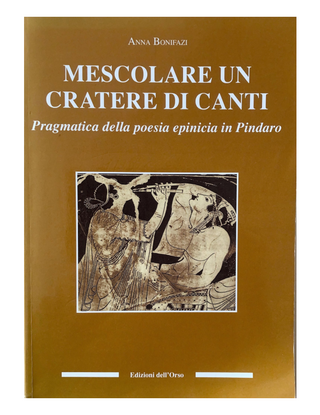
Prof. Anna Bonifazi holds a Professorship in Discourse Studies at the Department of Linguistics, University of Cologne. Her research spans Discourse Analysis, Pragmatics, Cognitive Linguistics, and Multimodal Communication with a focus on Ancient Greek Linguistics and Oral Epic traditions. She investigates phenomena like anaphoric cohesion in long texts, multimodal storytelling in film and oral traditions, and ancient Greek particles' discursive functions. Her work explores how multimodal elements (e.g., visual, musical, gestural) interact in communication, particularly analyzing films (e.g., mystery genres), ancient texts (e.g., Homeric epics), and South Slavic oral narratives. She examines cross-modal iconicity, viewpoint blending, and the cognitive underpinnings of discourse structures. Recent publications address topics like anaphoric strategies in crime stories and syntactic patterns in ancient Greek conversational frameworks. Prof. Bonifazi's research often bridges classical philology and modern cognitive theories, emphasizing embodied cognition and the interplay between language and other semiotic systems. She collaborates internationally on projects involving gesture analysis in storytelling and ancient papyrological studies. Her interdisciplinary work integrates linguistics with musicology, film studies, and cognitive science. Administratively, she oversees the Discourse Studies research group at Cologne and mentors assistants like Dr. Sandra Debreslioska and Madeleine Frings. Her lab focuses on multimodal discourse analysis using experimental and corpus-based methods.
Anna Theakston is a Professor of Developmental Psychology at the University of Manchester where she holds the position of Head of Division for the Division of Psychology Communication and Human Neuroscience. She is also Co-director of the ESRC International Centre for Language and Communicative Development (LuCiD), a major research initiative focused on language development in children. Dr. Theakston completed her undergraduate degree in Psychology at the University of Nottingham and earned her PhD through research at the University of Manchester on early language development in children aged 2-3 years. She subsequently coordinated the Manchester-based Max Planck Child Study Centre before being appointed to her current professorship. Her research focuses on children's early language and communicative development during preschool and early school years, situated within a usage-based framework that emphasizes child-environment interactions and caregiver input. Her work spans multiple areas including early gestural communication, caregiver-child interactions, grammatical construction acquisition, grammatical error origins, inflectional morphology, and syntax-semantics-pragmatics interfaces in complex language development. She frequently conducts crosslinguistic comparisons and employs diverse methodologies from corpus analysis to behavioral experiments, often collaborating with computational modelers. Analysis of her recent publications reveals strong emphasis on children's comprehension and production of complex sentence structures, particularly adverbial and complement clauses, with investigations into how information structure, iconicity, and pragmatic factors influence language development. Her work increasingly examines applications in real-world contexts including schools, nurseries, and cultural institutions, with growing attention to supporting deaf children's communication development and multilingual education. Co-Director, ESRC International Centre for Language and Communicative Development (LuCiD) Active researcher with 111 research outputs including articles, datasets, and book chapters Recipient of research funding from ESRC and Max Planck Institute Professor Theakston supervises numerous PhD students investigating various aspects of language development, with recent projects examining tag questions, cultural institutions' role in language learning for minority populations, science interventions for deaf children, and Modern Foreign Language teaching in multilingual classrooms. Her research has practical impact through tools like the Teacher Toolkit for Teaching Primary MFL in Multilingual Key Stage 2 Classrooms and initiatives supporting deaf children's social communication skills. She maintains active collaborations with researchers across multiple disciplines and institutions, as evidenced by her extensive co-authorship network. Her work contributes to UN Sustainable Development Goals related to quality education and reduced inequalities.
María Sol Sansiñena Pascual serves as Assistant Professor (tenure track) at KU Leuven across Leuven, Kortrijk, and Brussels campuses while also holding a guest professorship at Ghent University. Her primary academic affiliation lies within the Faculty of Arts at KU Leuven where she actively contributes to the Functional and Cognitive Linguistics: Grammar and Typology (FunC) research group. Education PhD in Spanish Linguistics, KU Leuven (2015) Research Focus Her scholarly work centers on semantic-pragmatic interpretation mechanisms, with special emphasis on modality and TAM (Tense, Aspect, Mood) categories, discourse phenomena including insubordination, language variation/change dynamics, and translation pattern analysis. She employs interactional-constructional frameworks to examine Spanish grammatical structures across synchronic and diachronic dimensions, particularly investigating evolutionary pathways from Latin to contemporary Spanish varieties. Publication Trends Analysis of her recent scholarly output reveals concentrated research trajectories in diachronic syntax (especially insubordinate clause evolution), modal-evidential semantics in Spanish conditional/future forms, grammaticalization processes of verbal periphrases, and indexicality mechanisms. Her methodological approach consistently integrates functional, cognitive, and construction grammar perspectives to address complex language change phenomena. Research Leadership Current promotor of "Pathways to insubordination: diachronic evolution of non-subordinate structures" (2025-2026) Principal investigator for "Speech-act orientation and intersubjective alignment" project (2020-2025) Academic Contributions She actively participates in the FunC research collective while teaching specialized courses including Spanish Linguistics I/III, Discourse Analysis, and Master's thesis support seminars. Her scholarly service includes editorial contributions such as co-editing the 2024 volume "Indexicality: The Role of Indexing in Language Structure and Language Change".
Prof. Gerhard Jäger holds the Chair of General Linguistics at the Faculty of Humanities, University of Tübingen . He serves as a Principal Investigator (PI) in the Clusters of Excellence Human Origins and Machine Learning for Science , and leads projects like Phylomilia (funded by Volkswagen Foundation) and CrossLingference (ERC Advanced Grant). His career spans multiple institutions, including Bielefeld University (2004-2009) and Stanford University (visiting scholar, 2004). Habilitation (2002) at Humboldt University Berlin with thesis on Anaphora and Type Logical Grammar PhD (1996) at Humboldt University Berlin on Dynamic Semantics His research bridges computational linguistics , phylogenetic analysis , and game theory , focusing on Bayesian models , language evolution , and cross-linguistic typology . Recent work explores phylogenetic inference from acoustic speech data and geographic influences on language trees . Key contributions include 15+ recent publications on topics spanning phylogenetic typology , cognate detection , and Bayesian language modeling . These works employ machine learning , statistical inference , and evolutionary game theory to analyze language change , typological variation , and linguistic stability . Honors include ERC Advanced Grant , Volkswagen Foundation funding , and DFG-Humanities Centre for Advanced Studies participation. He has taught courses in Computational Historical Linguistics , Phylogenetic Methods , and Bayesian Data Analysis across institutions like Tübingen, Bielefeld, and Stanford. He actively contributes to academic communities through workshop organization (e.g., Quantitative Theoretical Linguistics , Game Theory in Pragmatics ) and serves on the faculty council at Tübingen. His team collaborates with institutions like Max Planck Institute for Evolutionary Anthropology , University of Pennsylvania , and LMU Munich .
Eleanor Dickey is a Professor of Classics at the University of Reading. She has held academic positions at Columbia University, the University of Exeter, and the University of Ottawa. Her research focuses on Greek and Latin linguistics, classical literature, and ancient language use, with a particular emphasis on papyrology and historical pragmatics. She holds a D.Phil. in Literae Humaniores from the University of Oxford and has held fellowships at institutions including the Institute for Advanced Study in Princeton and All Souls College, Oxford. Education: BA (summa cum laude) and MA from Bryn Mawr College; M.Phil. and D.Phil. from Oxford University. Her research interests include the study of ancient language pedagogy, sociolinguistics in antiquity, and the analysis of Greek and Latin texts in papyri. She has authored several influential books, including Ancient Greek Scholarship and Latin Forms of Address . Her work explores the intersection of language, culture, and social dynamics in the ancient world. Key awards include the 2014 Fellowship of the British Academy and the 1996 Hellenic Foundation Prize. Her contributions to classical scholarship have been recognized through teaching accolades and research fellowships worldwide.
Dr. Danfeng Wu is a Research Fellow at Magdalen College, University of Oxford, conducting interdisciplinary research in syntax-semantics and syntax-prosody mappings. Her work focuses on ellipsis, focus in coordination, and the empirical interplay between syntactic structure and prosody, employing experimental phonetic methods. She investigates languages like English and Mandarin Chinese to explore the cognitive and computational aspects of linguistic structure. Her research themes include phonetics, prosody, semantics, and syntax, with a particular emphasis on how syntactic configurations interact with prosodic phrasing and stress patterns. She has contributed to studies on corrective constructions, clitic climbing in Wolof, and vowel lengthening in Zulu, demonstrating a broad methodological approach combining theoretical linguistics with experimental and computational methods. Dr. Wu is affiliated with the Phonetics Lab and Language & Brain Lab within the Faculty of Linguistics, Philology & Phonetics. She has organized interdisciplinary events such as the Oxford workshop on AI language models and developed linguistics courses for computer scientists and cognitive scientists at MIT. Her work bridges formal linguistics with cognitive science and computational linguistics, emphasizing realistic models of language acquisition and evolution.
Arto Anttila is an Associate Professor in the Department of Linguistics at Stanford University and holds an Adjunct Professor (dosentti) position in General Linguistics at the University of Helsinki. His research spans multiple linguistic subfields with particular focus on the interfaces between phonology, syntax, and prosody. Dr. Anttila's research interests include phonology, morphology, syntax, metrics, and language variation. His work often explores how phonological constraints interact with syntactic structures and how variation manifests across different linguistic domains. He has made significant contributions to Optimality Theory, MaxEnt grammar, and probabilistic approaches to phonology. His recent publications demonstrate a strong focus on metrical patterns, stress systems, syllable structure, and the relationship between prosody and syntax. Anttila frequently collaborates with researchers like Giorgio Magri, Adams Bodomo, and Ryan Heuser, examining phenomena across diverse languages including English, Finnish, and Dagaare (an African language). Anttila has developed several computational tools for linguistic research, including CoGeTo (Convex Geometry Tools for constraint-based phonology), MetricalTree (for English phrasal stress prediction), Prosodic (for automatic metrical scansion), T-Order Generator, and OTOrder. These tools reflect his interest in the mathematical and computational aspects of linguistic theory.
Prof. Sabine Schulte im Walde is an Associate Professor at the University of Stuttgart's Institute for Natural Language Processing. She holds affiliations with the International Max Planck Research School for Intelligent Systems (IMPRS-IS), ELLIS Society, and CLARIN-D. Her research focuses on computational modeling of lexical-semantic phenomena, including compositionality of noun compounds and particle verbs, abstract/concrete semantics, and diachronic language change. She has contributed to datasets on association norms for German compounds and led projects on multimodal semantic analysis. Research Interests: Her work bridges computational linguistics and cognitive science, emphasizing data-intensive methods. Key areas include semantic classification of verbs, metaphor detection, and evaluating semantic relations using distributional models. She explores how abstractness influences plausibility judgments and investigates semantic shifts in compounds over time. Awards: Nominated for AcademiaNet by the German Research Foundation (DFG). Active in professional societies including ACL, GSCL, and DGfS. Publications span over 50 peer-reviewed articles in venues like Computational Linguistics and ACL. Labs/Teams: Leads research on computational terminology and semantic change analysis at the Stuttgart Research Focus Language and Cognition (SRF). Collaborates internationally on projects like the DURel annotation tool for diachronic semantics.