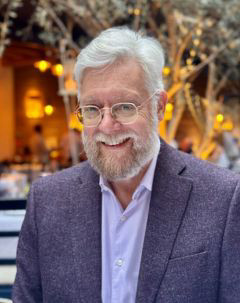
John Archibald is a Professor at the School of Languages, Linguistics and Cultures, University of Victoria, specializing in second and third language phonology. His work bridges phonological theory with empirical studies on multilingual acquisition, focusing on feature mapping, transfer effects, and input processing. PhD, University of Toronto Fellow of the Royal Society of Canada (2020) Research interests include L2/L3 phonology , language learnability , and multilingual mental representation . His theoretical work addresses Plato’s Problem (input poverty), Orwell’s Problem (input resistance), and Escher’s Problem (illusory phonological perception). Recent publications analyze Contrastive Hierarchy applications, pitch accent acquisition , feature dependency , and phonological redeployment . Awards include the Canadian Linguistic Association Lifetime Achievement Award (2021) and SSHRC-funded L3 phonology research . He co-edits Contemporary Linguistic Analysis and teaches courses on linguistics, child language acquisition, and advanced L2/L3 research.
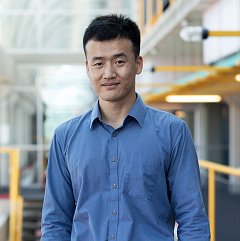
Jing Jiang is a prominent researcher at Singapore Management University, specializing in Natural Language Processing (NLP), Computational Linguistics, and Artificial Intelligence. His work spans diverse areas including Vision-Language Models, Machine Translation, Knowledge Graph Reasoning, Sentiment Analysis, and Social Media Discourse Modeling. Key contributions include frameworks for consistent client simulation in mental health counseling and counterfactual contrastive prefix-tuning for many-class classification. He has pioneered methods in zero-shot VQA with interpretable reasoning graphs , cross-lingual understanding with universal syntax , and modularized zero-shot architectures . His research often combines theoretical insights with practical implementations, as seen in works on stereotypical bias in vision-language models (VLStereoSet), tensorized self-attention for dependency modeling, and collaborative relation-augmented attention for knowledge graph completion. Jing Jiang's collaborations span global experts in NLP and AI, with co-authors from institutions like SMU, Waseda University, and Microsoft Research.
Chengnian Sun is an Associate Professor at the Cheriton School of Computer Science , University of Waterloo, Canada. His research focuses on software engineering and programming languages with an emphasis on software reliability and programming productivity. Education : Ph.D. in Computer Science from National University of Singapore (2013) His work spans compiler testing (EMI, Dfusor, Kitten), program reduction (Perses, Vulcan, PPR), Android testing, and DNN testing. He has received multiple grants including Google Research Scholar Program (2025) and NSERC Discovery Grants (2024-2029). His recent publications focus on LLM-based compiler testing, weighted delta debugging, and ransomware resilience. Scientific Awards : Most Influential Paper Award at SANER (2022) NUS Research Scholarship (2008-2012) ACM SIGSOFT Distinguished Paper Award at ASE (2012) IBM Cup Campus Innovation Contest First Prize (2005) He advises Ph.D. and MMath students in software engineering, compiler testing, and program analysis, including several who have contributed to top-tier conferences like ICSE, ISSTA, and ASPLOS. His service includes program committee roles in ICSE, OOPSLA, and ISSTA.
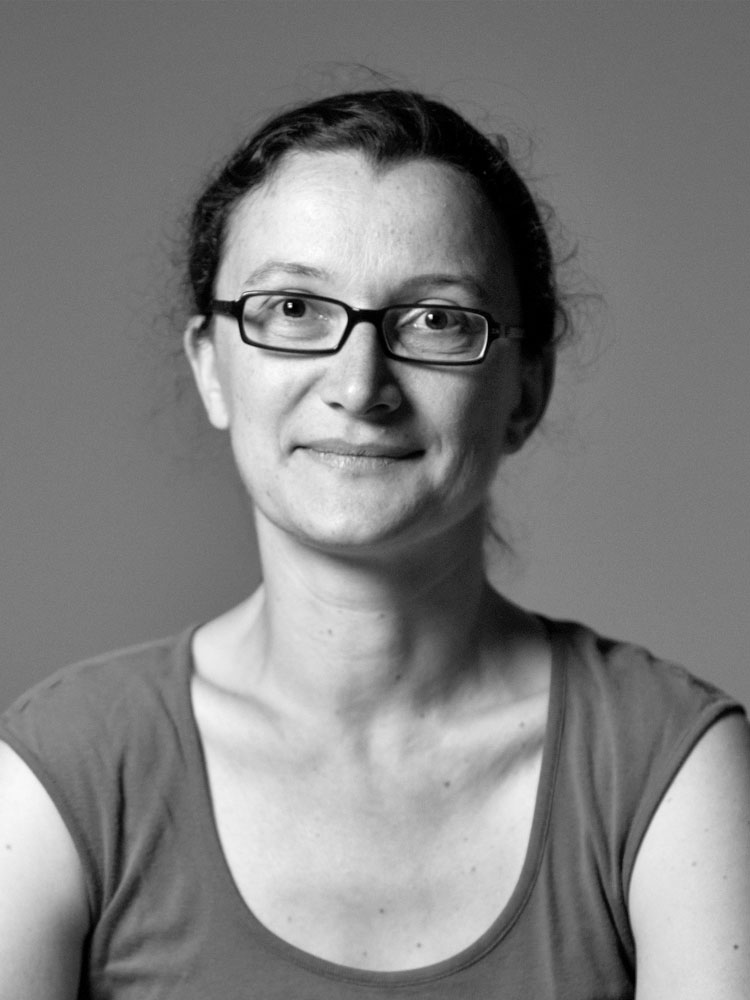
Dr. Yankee Modi is a Research Associate at the University of Sydney , affiliated with the Department of Linguistics and the Sydney Centre for Language Research . She serves as Co-Director of the Centre for Cultural-Linguistic Diversity (Eastern Himalaya) and holds membership in the Vere Gordon Childe Centre . Education: BA (Hons) from Rajiv Gandhi University MA from Jawaharlal Nehru University (JNU) MPhil from JNU PhD from University of Bern Her research focuses on documentation and description of Tibeto-Burman languages in the Eastern Himalayas, particularly those of the Milang tribe in Arunachal Pradesh, India. She specializes in community-led language projects, cultural prehistory reconstruction through proper names, and linguistic responses to geopolitical tensions. Recent projects include a 4-year community-led documentation initiative for 20 Eastern Himalayan languages in partnership with Firebird Foundation and University of North Texas. Publications span topics like applicative morphology, subject autonomy marking, and cultural linguistic diversity. Awards: Shortlisted finalist for 2019 Panini Award (Association for Linguistic Typology) She advocates for indigenous researcher sovereignty and has publicly challenged Chinese geopolitical influence in academic publishing, as seen in her 2023 commentary on retracted Himalayan research.
Ján Strelinger serves as a Senior Lecturer at the Department of English Language, Faculty of Applied Languages, University of Economics in Bratislava, where he has contributed to academic programs since 2008 with expertise spanning language pedagogy and cross-cultural business communication. His educational foundation includes a second degree in Translating and Interpreting (English-Italian) from Comenius University (1991) and a third degree in International Economic Relations from the University of Economics in Bratislava (2016), complemented by professional development through study stays at Universitá di Padova (2003), Universitá per stranieri di Siena (2006), and UC Berkeley (2007). Strelinger's research critically examines Language Teaching methodologies for business contexts, Translation Studies in EU documentation, Consumer Behavior in sustainable food systems, and Cultural Diplomacy in international negotiations. His work bridges linguistic theory with practical applications in economics and management education, emphasizing innovative approaches to multilingual professional communication. Analysis of his publications reveals a consistent focus on adapting language education to global business demands, with significant contributions to understanding Slovak consumer patterns in organic food markets and developing pedagogical frameworks for cross-cultural negotiation competence. No major scientific awards or fellowships were documented in the source material. He has supervised 2 Bachelor's theses and secured research funding through KEGA grants: KEGA Project (2018-2019): 'Ideational idioms in Business English communication' (Co-investigator) KEGA Project (2024): 'Innovative Methods in Teaching Business Negotiations in English' (Co-investigator) His recent Erasmus mobility at Universidad de País Vasco EHU (March 2024) underscores ongoing international collaboration in language education.
Simona ANASTASIO is an Associate Professor in the Department of Language Sciences at the University of Toulouse – Jean Jaurès, where she conducts research at the NeuroPsychoLinguistics Laboratory (LNPL, UR 4156). She is also affiliated with two CNRS research units: UMR 7023 SFL and UMR 8163 STL. Her teaching spans multiple programs, including Units and Diversities of Languages, FLE methodologies, child language development, and second language learning at both undergraduate and graduate levels. University: University of Toulouse – Jean Jaurès Department: Department of Language Sciences Research Lab: NeuroPsychoLinguistics Laboratory (LNPL, UR 4156) Additional Affiliations: UMR 7023 SFL CNRS, UMR 8163 STL CNRS Her research centers on second language acquisition, linguistic typology, and the interface between language and cognition, particularly in the expression of spatial and temporal relations. She employs qualitative and quantitative methods based on oral and written corpus analysis. Her work investigates crosslinguistic influence, inter- and intra-typological variations, and the didactic implications of acquisition research. She has led and participated in several major research projects, including WRIMOTEF, ADMIT, and CAUSEMOTYP, focusing on motion events, migrant integration, and linguistic relativism. The recent publications and conference presentations reflect a strong thematic concentration on motion event construal in L2 French and Italian, with growing attention to pedagogical applications and cognitive underpinnings. Her work frequently compares learners with different L1 backgrounds (e.g., French, English) and analyzes both oral and written productions across proficiency levels. Scientific Affiliations: Member, Second Language Acquisition Network (ReAL2) Member, Romance Linguistics Society (SLR) Member, French Association of Cognitive Linguistics (AFLICO) Member, Italian Association of Applied Linguistics (AItLA) Member, International Society for Applied Psycholinguistics (ISAPL) She actively contributes to the academic community through editorial reviews for journals such as International Review of Applied Linguistics , Discours , and Language and Cognition , and serves on scientific committees for international conferences. She has organized workshops and conferences on linguistic relativism, motion and cognition, and discourse in multilingual contexts. Her current projects involve corpus-based research with practical applications in language teaching and migrant education. Laboratories and Research Teams: NeuroPsychoLinguistics Laboratory (LNPL) UMR 7023 SFL CNRS UMR 8163 STL CNRS Participation in DOC (Didactique, Oral, Corpus) project
Anne Göhring is an Academic Associate at the University of Zurich, working within the Language, Technology and Accessibility research team at the Institute of Computational Linguistics. With over a decade of experience in computational linguistics and natural language processing, she has established herself as a specialist in machine translation, sign language processing, and German language analysis. Her work bridges theoretical linguistics with practical applications, particularly focusing on accessibility technologies and resource-poor languages. Her educational background includes: 2001-2010: Studies in Spanish Linguistics and Literature, Computational Linguistics 2006-2007: Erasmus study year at Universidad Complutense Madrid Dr. Göhring's research spans multiple domains of computational linguistics with a strong emphasis on practical applications. She has made significant contributions to machine translation systems, particularly for hybrid approaches and low-resource languages like Quechua. Her recent work has increasingly focused on sign language processing, developing corpora and translation systems to improve accessibility. She also conducts important research in semantic role labeling, sentiment analysis, and German language processing, with applications ranging from social media analysis to veterinary text mining. Analysis of her recent publications reveals a clear trajectory toward accessibility-focused NLP research, particularly in sign language technologies. While maintaining expertise in German language processing and machine translation, her 2023-2024 work shows a strong emphasis on sign language corpora development (SwissSLi) and pose-based identification systems. Earlier work focused more on semantic analysis, sentiment detection, and cross-lingual processing, demonstrating remarkable versatility across NLP subfields. Dr. Göhring has been actively involved in numerous research projects: 2011-2014: SNSF project SQUOIA on Hybrid Machine Translation 2015: CTI project SentiSpider on expectation-based sentiment analysis 2016-2018: What's up, Switzerland? corpus project 2018-2022: Sentiment inference research 2021-2024: NCCR Evolving Language Project: IMAGINE 2022-2026: Flagship IICT Throughout her career, Dr. Göhring has supervised numerous student projects and taught courses ranging from introductory computational linguistics to specialized seminars on machine translation and NLP for medicine. Her teaching portfolio demonstrates commitment to both foundational knowledge and cutting-edge applications in the field. She is an active member of the Language, Technology and Accessibility research group at the University of Zurich, collaborating extensively with researchers like Manfred Klenner, Sarah Ebling, and Martin Volk on diverse NLP challenges.
Mark Tutton is a Senior Lecturer in French and Francophone Studies at the School of International Studies and Education, University of Technology Sydney. With dual Australian and French citizenship, he coordinates the French language and culture program and has extensive experience in linguistics education across Australia and France since 2004. PhD in Linguistics (University of New South Wales, 2010) Graduate Diploma of Teaching and Learning (University of Southern Queensland, 2018) MA in Linguistics (University of Lille, 2005) MèsL (BA equivalent) in Linguistics (Sorbonne Nouvelle, 2004) BA in Communication and International Studies (UTS, 2001) His research focuses on spatial language and multimodal communication, particularly comparing English and French locative expressions through gestural and cognitive frameworks. Recent work explores foreign language anxiety in online learning environments and the impact of AI on language pedagogy. Articles span topics in spatial semantics, English-French contrastive linguistics, and technology-enhanced language learning. Key themes include metaphorical resource conceptualization, prospective location in motion verbs, and static/motion-framed locative expressions. Mark teaches French language and culture at all levels (A1-C1 ECFR) while advocating for concrete, relatable explanations of abstract linguistic concepts to enhance student learning experiences.
Dr. Kook-Hee Gil is a Reader in Applied Linguistics and Graduate Director of English Language and Linguistics at the School of English , University of Sheffield. She teaches undergraduate courses in Linguistic Theory, Semantics, and Second Language Acquisition, and postgraduate courses including 'Current Issues in Second Language Acquisition' and 'Research Methods' within the MA in Applied Linguistics program. Education: BA in English Literature and Linguistics, Chungnam National University (1993) MSc in Applied Linguistics, University of Edinburgh (1994) MSc in Speech and Language Processing, University of Edinburgh (1995) PhD in Linguistics, University of Edinburgh (2000) with thesis on Korean Long-Distance Anaphora Research Interests: Her work focuses on syntax-semantics interface, second language acquisition of quantifiers, mass/count distinction, and pedagogical applications of generative SLA research. She has led workshops at AAAL (2011), GASLA (2013), and LAGB (2016) on these topics. Publications Trends: Her research spans formal linguistics (e.g., quantification, anaphora) and applied linguistics (e.g., classroom implications, textbook analysis). Key areas include L2 acquisition of English/Korean quantifiers, polarity items, and cross-linguistic semantic variability. Projects: She worked on an AHRC-funded project "Strategies of Quantification" at the University of York (2001-2004) before joining Sheffield.
Philip Miller is a Professor of General and English Linguistics at University of Paris Cité. He specializes in syntax, semantics, and discourse pragmatics, with a focus on verbal complementation, perception verbs, VP ellipsis, pseudogapping, anaphora, and deixis. His work often compares English and French, and he has supervised several PhD students in linguistics. PhD in Linguistics, Utrecht University (1991) His research explores the interface between syntax, semantics, and pragmatics, particularly in areas like auxiliary verbs, ellipsis mechanisms, and discourse constraints. Recent publications analyze VP ellipsis, anaphora, and nominal phrase structures. Professor Miller actively supervises doctoral research in topics such as verbal complementation and discourse pragmatics. He contributes to edited volumes like Sens conventionnel et implicite and Experimental Approaches to Ellipsis .
David Temperley is a Professor of Music Theory at the Eastman School of Music (University of Rochester), where he has been teaching since 2000, progressing from Assistant Professor to Associate Professor and finally to Professor in 2015. His academic career also includes visiting positions at the University of Pennsylvania, Ohio State University, Columbia University, and New York University. He holds a Ph.D. in Music Theory from Columbia University (1996), an M.A. in Composition from Columbia University (1992), and a B.A. in History from Swarthmore College (1985). Dr. Temperley's research spans multiple areas at the intersection of music theory, cognition, and computational modeling. His work focuses on: Music cognition and perception Computational models of musical structure Analysis of popular music, particularly rock Relationships between music and language Rhythm and meter in various musical traditions Corpus-based approaches to music analysis His research demonstrates a consistent interest in applying quantitative and computational methods to understand musical structures and processes. He has pioneered corpus studies in music theory, examining large collections of musical works to identify patterns and principles that might not be evident from individual case studies. His work often bridges theoretical music analysis with empirical cognitive science approaches. Dr. Temperley has received several prestigious awards including the Society for Music Theory Emerging Scholar Award (2003), the University of Rochester Bridging Fellowship (2009), and the University of Rochester Provost's Multidisciplinary Award (2012). These awards recognize his innovative interdisciplinary approach that connects music theory with cognitive science and computational modeling. As an educator, Dr. Temperley has taught a wide range of courses in music theory, analysis, counterpoint, and music cognition at both graduate and undergraduate levels. His teaching reflects his research interests, emphasizing both traditional theoretical approaches and contemporary empirical methods. He has supervised numerous graduate students in their research, particularly in areas combining music theory with cognitive science. Dr. Temperley is also an active composer with numerous performances of his works, including chamber music for various instrument combinations and piano compositions. His compositional work informs his theoretical research and vice versa, creating a productive dialogue between creative practice and scholarly inquiry.
Chiara Piccoli is a Research Fellow and Data Scientist at the University of Amsterdam, holding dual appointments at the Faculty of Humanities' Department of Archaeology and the university's Data Science Centre. She also works at the 4D Research Lab where she applies computational methods to archaeological problems. Her research spans the intersection of archaeology and digital technologies, with particular expertise in 3D modeling, GIS mapping, and data visualization for historical contexts. She specializes in Classical Greek architecture and urban contexts, developing innovative methods for visualizing ancient cityscapes and architectural heritage through procedural generation techniques. Her recent publications demonstrate a strong focus on bridging traditional archaeological methods with advanced computational tools. The 2024 edited volume she contributed to explores space syntax, natural language processing, photogrammetry, and virtual reality applications for architectural heritage, reflecting her commitment to interdisciplinary approaches that transcend traditional disciplinary boundaries in heritage studies. Dr. Piccoli's technical expertise is evident in her development of CityEngine rule sets for GIS-driven symbology of survey finds and Classical Greek architecture, which she has made publicly available through GitHub repositories. Her work enables more intuitive analysis of architectural survey data and facilitates the creation of alternative reconstruction hypotheses for ancient urban environments.
Bryan Koronkiewicz serves as Associate Professor of Spanish Linguistics within the Department of Modern Languages & Classics at the University of Alabama. His academic profile bridges theoretical linguistics and practical language education with specialized expertise in bilingual speech phenomena. His educational trajectory includes: PhD in Hispanic Studies (Linguistics), University of Illinois at Chicago (2014) MA in Hispanic Studies (Linguistics), University of Illinois at Chicago (2010) BA in Spanish / Communication Arts, University of Wisconsin-Madison Dr. Koronkiewicz's research centers on Spanish-English code-switching through experimental and quantitative lenses, examining syntactic constraints in heritage speakers' language production. His work interrogates phenomena like preposition stranding, adverb placement, and inalienable possession while addressing methodological challenges in bilingualism research. This interdisciplinary approach connects theoretical syntax with second language acquisition and heritage language pedagogy, emphasizing empirical validation of linguistic constraints. Analysis of his 13 publications (2013-2023) reveals consistent focus on experimental code-switching research using acceptability judgments and corpus methods. Key trends include systematic investigation of syntactic boundaries in bilingual speech, methodological innovations in data collection, and expansion into language pedagogy through studies of social media integration and writing assessment. His work demonstrates strong alignment with contemporary debates in bilingual syntax while maintaining practical relevance for heritage language education. No scientific awards or fellowships were documented in the source material. Dr. Koronkiewicz teaches across the curriculum from first-year language courses to graduate seminars in bilingualism, syntax, and second language teaching methods. While departmental highlights reference French PhD students (Awodirepo, Lambon, Dafong), no specific advisees in Spanish linguistics are identified. The text contains no mention of grant funding or research team leadership. No dedicated laboratories or research collectives are associated with his profile in the available documentation.
Noboru Matsuda is an Associate Professor in the Department of Computer Science at North Carolina State University, affiliated with the Chancellor’s Faculty Excellence Program cluster in Digital Transformation of Education . He leads the Innovative Educational Computing Laboratory and is an affiliate of the Center for Educational Informatics . His research bridges artificial intelligence , cognitive science , and education to develop adaptive learning technologies. Master of Science in Math Education, Tokyo Gakugei University Ph.D. in Intelligent Systems, University of Pittsburgh Matsuda’s work focuses on intelligent tutoring systems , generative AI for educational content, and adaptive online courses . He has pioneered methods like PASTEL (evidence-based learning engineering) and explored SimStudent , a teachable agent for tutor learning. His studies span question generation , metacognitive scaffolding , and AI-driven skill modeling . Recent publications highlight trends in large language models for education , automated content validation , and student-agent interaction . Though no scientific awards are explicitly listed, his leadership in educational computing and cross-disciplinary research underscores his impact. Matsuda’s lab continues to innovate infrastructure for adaptive learning systems with embedded ITS technologies.
Beatrice Markhoff is a Professor of Computer Science (CNU 27) at the University of Tours , affiliated with the Faculty of Science and Technology (Blois site) and the Computer Science Department . She is a member of the UMR CNRS 7324 - CITERES - Archaeology and Territories Laboratory (CITERES-LAT) and the Maison des Sciences de l'Homme Val de Loire (MSH VdL) . Her research focuses on semantic interoperability , Web of data , knowledge representation , and knowledge extraction , with significant collaborations in cultural heritage disciplines . Doctorate in Computer Science, University of Franche-Comté (1995) HDR (Habilitation to Direct Research), François Rabelais University of Tours (2013) Her research themes include semantic interoperability, knowledge engineering, and data mining, with applications in cultural heritage. She co-created the International Workshop on Semantic Web for Cultural Heritage and co-edited special issues for the Semantic Web Journal and JOCCH . She leads projects like ANR SESAMES (2018-2023), H2020 ARIADNEplus (2019-2022), and H2020 4CH (2021-2023). Her academic contributions span XML data management, semantic web technologies, and functional programming. Key projects include carto4CH for cultural heritage mapping and OpenArchaeo for knowledge graph profiling. She has co-supervised PhD theses on topics like LOD querying and knowledge extraction from Wikidata .