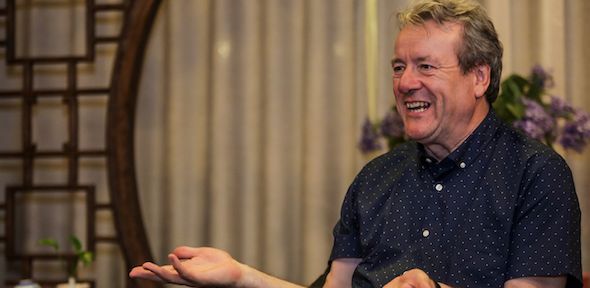
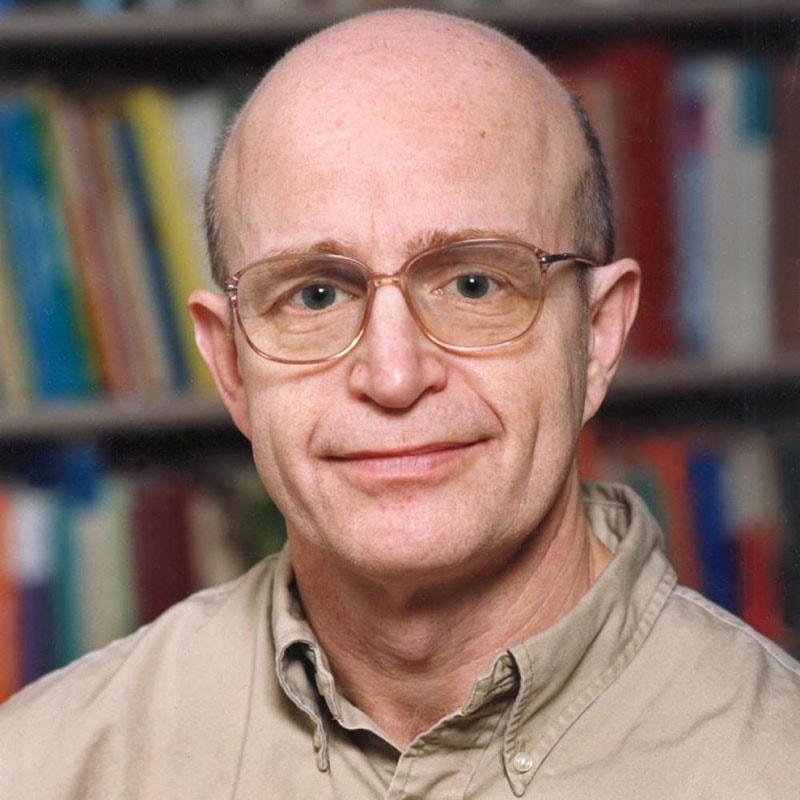
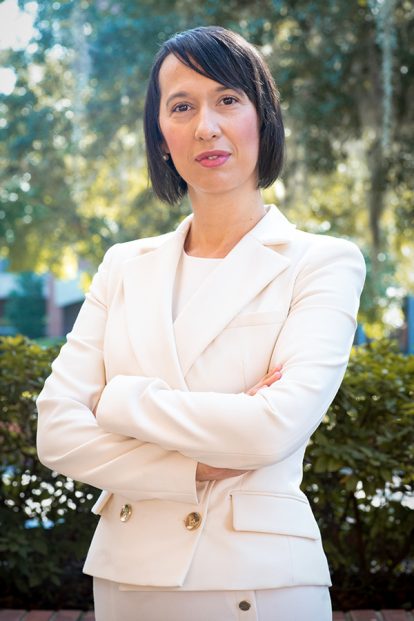
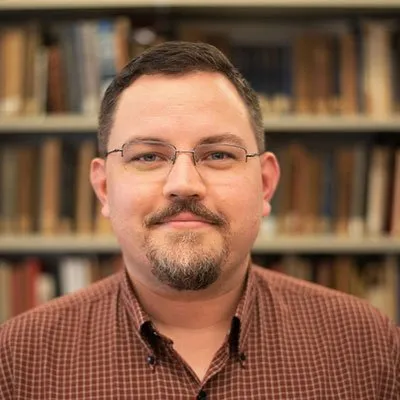
Nicholas Evans is Distinguished Professor of Linguistics and Director of the ARC Centre of Excellence for the Dynamics of Language (CoEDL) at the Australian National University’s School of Culture, History & Language. His work bridges fieldwork-based language documentation with theoretical questions in typology, cultural evolution, and social cognition. Focus on endangered Australian and Papuan languages Director of ARC Laureate Project on 'The Wellsprings of Linguistic Diversity' Co-leader of SCOPIC (Social Cognition Parallax Corpus) study Collaborator in global linguistic diversity initiatives His research explores how micro-level community multilingualism shapes macro-level linguistic diversity, with fieldwork spanning seven years in remote Indigenous communities. Recent projects include PARABANK (paradigm syncretism analysis) and Southern New Guinea language studies, particularly Nen and Yam family languages. Scientific recognition includes the Ken Hale Award (Linguistic Society of America), Anneliese Maier Forschungspreis, and fellowships in the Australian Academy of Humanities, Australian Social Sciences Academy, and the British Academy.
David A. Smith is an Associate Professor at the Khoury College of Computer Sciences, Northeastern University. His research focuses on Natural Language Processing (NLP) and computational linguistics, with applications in machine translation, information retrieval, digital humanities, and social sciences. He is a founding member of the NULab for Texts, Maps, and Networks, a research center focused on digital humanities and computational social sciences. Smith's work has been funded by grants from the Mellon Foundation, NEH, and IMLS, supporting projects such as the Viral Texts initiative analyzing 19th-century newspaper networks and the Oceanic Exchanges project tracking transnational information flows. He has contributed to advancements in OCR for historical texts, text reuse detection, and computational analysis of classical languages. He has advised numerous PhD students, including Shijia Liu, Si Wu, and Ryan Muther, and teaches courses like Natural Language Processing and Information Retrieval. His research has been featured in outlets like Wired and the Economist .
Anna Berge is a Professor of Linguistics at the University of Alaska Fairbanks, directing the Alaska Native Language Archive. She holds a PhD from the University of California, Berkeley (1997), specializing in the documentation, description, and historical analysis of Eskimo-Aleut languages, particularly Unangam Tunuu (Aleut). Her research integrates linguistics with archaeology, genetics, and environmental studies to explore prehistoric language contact and divergence patterns along the North Pacific Coast. Her work focuses on morphosyntax, discourse analysis, and language revitalization for highly endangered languages. She teaches courses in Morphology, Field Methods, Community Language Documentation, and Eskimo-Aleut Linguistics, emphasizing practical skills for language preservation. Berge's multidisciplinary approach addresses Aleut language divergence from Eskimoan branches, leveraging data from multiple disciplines to reconstruct linguistic prehistory. She actively collaborates with Indigenous communities in Russia, Alaska, Canada, and Greenland to archive linguistic materials and support language maintenance initiatives.
Ethan Poole is an Assistant Professor in the Department of Linguistics at the University of California, Los Angeles (UCLA). His research focuses on syntax, the syntax-semantics interface, and morphological case, particularly in Finnish. Key areas include reconstruction effects, quirky subjects, and cross-clausal dependencies, with recent work on the Williams Cycle and Hindi-Urdu binding. His research interests span syntactic movement interpretation, morphological case (especially Finnish), and quirky subjects. He explores topics like embedding, intervention effects in tough-constructions, and NPI grammaticality illusions. Collaborative work includes studies on Hindi-Urdu scrambling and tough-constructions. His articles analyze reconstruction effects, trace semantics, and syntactic phases, reflecting a focus on formal syntax and interface constraints. Notable themes include case assignment mechanisms and the theoretical implications of syntactic movement for semantic interpretation. No specific scientific awards or grants are listed in the provided information. He advises no students in the given data. His work contributes to foundational questions in syntactic theory and cross-linguistic variation.
Professor Ian Roberts is a faculty member at the University of Cambridge, affiliated with the Faculty of Modern and Medieval Languages and Linguistics and the Department of Theoretical and Applied Linguistics. He holds the academic rank of Professor and has been a Fellow in Linguistics at Downing College since his appointment. His research focuses on theoretical linguistics, particularly comparative and historical syntax, grounded in Noam Chomsky's Universal Grammar framework. Education : BA from Bangor University, PhD from University of Southern California (USC), LittD, Fellow of the British Academy (FBA). Roberts' work investigates how grammatical systems across Germanic, Romance, and Celtic languages vary along simple parametric lines while adhering to universal constraints. His recent projects include 'Rethinking Comparative Syntax' (ERC-funded), 'Giving Voice to Digital Democracies', and parametric comparison studies. His publications span monographs and collaborative works, emphasizing syntactic universals, parametric hierarchies, and mechanisms of language change. He has supervised graduate students such as Zepu Zhang, Fanghua Zheng, and Liu Yang. Roberts has received prestigious awards, including the European Research Council Advanced Grant and multiple Cambridge Humanities Research Grants. His academic contributions extend to leadership as Head of the Theoretical and Applied Linguistics Section and involvement in research clusters like CAMPAL (Cambridge Processing and Acquisition of Language lab).
John R Anderson is the Richard King Mellon University Professor of Psychology and Computer Science at Carnegie Mellon University (CMU), affiliated with the Department of Psychology within the Dietrich College of Humanities and Social Sciences. His research focuses on understanding higher-level cognition, particularly mathematical problem-solving, through the development of the ACT-R cognitive architecture—a computational framework simulating human cognitive processes. This architecture integrates behavioral, neural, and educational data to model learning and decision-making. Anderson’s work bridges cognitive science, neuroscience, and educational technology. He investigates how brain imaging (e.g., fMRI, EEG) can reveal the temporal dynamics of cognitive processes and improve instructional methods. His research emphasizes analyzing brain activity time courses to uncover underlying mechanisms of problem-solving and skill acquisition. Key Research Themes: Cognitive architectures, neural correlates of learning, computational models of memory, and intelligent tutoring systems. Notable Contributions: Development of the ACT-R architecture, integration of neuroimaging with cognitive modeling, and studies on skill transfer and learning strategies. Anderson’s publications include seminal books like Cognitive Psychology and Its Implications and How Can the Human Mind Occur in the Physical Universe? His work has advanced understanding of associative memory, strategic decision-making, and the application of cognitive models in educational technology. His lab, the ACT-R Research Group, collaborates across disciplines to model complex cognitive tasks and their neural foundations. Current projects analyze real-time brain activity to refine educational interventions and improve human-machine interaction.
Daniel Klein is a Professor in the Computer Science Division at the University of California at Berkeley , affiliated with the Berkeley Artificial Intelligence Research Lab (BAIR) and the Berkeley Natural Language Processing Group . His research focuses on statistical natural language processing, including unsupervised learning, syntactic parsing, information extraction, and machine translation, with applications in historical linguistics and AI.
Eleni Bozia is an Associate Professor of Classics and Digital Humanities at the University of Florida. She leads the Data-Driven Humanities Research Group and serves as Associate Director of the Digital Epigraphy and Archaeology Project, focusing on 3D digitization of cultural heritage and AI integration in humanities. Her research explores linguistic/cultural diversity in Imperial Greek/Latin literature and its intersections with modern globalism. Bozia holds dual doctorates from the University of Florida (2009) in Classical Studies and Universität Leipzig (2018) in Digital Humanities. Her scholarly work bridges classical studies with digital innovation, including computational analysis of ancient texts, virtual reality for experiential learning, and collaborative global preservation initiatives. Recognized with awards from La Fondation Hardt and the American Academy in Rome, her contributions span peer-reviewed articles, edited volumes, and public engagements like TEDx talks. She actively promotes interdisciplinary collaboration through roles in the Florida Digital Humanities Consortium and the Literary Encyclopedia. Bozia’s research portfolio includes groundbreaking books on Lucian’s works, multilingual practices in antiquity, and digital epigraphy. She advocates for reimagining classical pedagogy through technology, emphasizing accessibility and relevance for younger generations. Her lab’s projects like the Digital Rosetta Stone and 3D artifact preservation redefine how ancient knowledge is studied, shared, and experienced in the digital age.
Susan Irvine is a Professor of English Language & Literature at University College London , where she has held the Quain Professorship since 1992. Educated at the University of Otago and the University of Oxford, she specializes in Old English prose and poetry, teaching across undergraduate and graduate programs including the MA in Medieval and Renaissance Studies. Education: Doctor of Philosophy (University of Oxford, 1987), Bachelor of Arts (Honours, University of Otago, 1981) Her research focuses on Old English literature and language , particularly works associated with King Alfred's court (9th century) and the transitional period between Old and Middle English. She explores manuscript studies, textual reconstruction, and the interplay between linguistic and literary analysis. Recent publications examine topics like Anglo-Saxon micro-texts, the protean form of the Old English Boethius, and prefatory traditions in Old English. These works highlight her expertise in medieval manuscript culture , translation studies , and historical linguistics . Scientific Awards: 2011 Publication Prize (International Society of Anglo-Saxonists) AHRC Research Leave Scheme Award (2007) Irvine also contributes to professional activities as an editor and academic officer, with roles at the Fontes Anglo-Saxonici Project and external examining appointments. Her teaching emphasizes the relevance of Old English to modern literary theory and encourages engagement with UCL's Special Collections.
Prof. Gerhard Jäger holds the Chair of General Linguistics at the Faculty of Humanities, University of Tübingen . He serves as a Principal Investigator (PI) in the Clusters of Excellence Human Origins and Machine Learning for Science , and leads projects like Phylomilia (funded by Volkswagen Foundation) and CrossLingference (ERC Advanced Grant). His career spans multiple institutions, including Bielefeld University (2004-2009) and Stanford University (visiting scholar, 2004). Habilitation (2002) at Humboldt University Berlin with thesis on Anaphora and Type Logical Grammar PhD (1996) at Humboldt University Berlin on Dynamic Semantics His research bridges computational linguistics , phylogenetic analysis , and game theory , focusing on Bayesian models , language evolution , and cross-linguistic typology . Recent work explores phylogenetic inference from acoustic speech data and geographic influences on language trees . Key contributions include 15+ recent publications on topics spanning phylogenetic typology , cognate detection , and Bayesian language modeling . These works employ machine learning , statistical inference , and evolutionary game theory to analyze language change , typological variation , and linguistic stability . Honors include ERC Advanced Grant , Volkswagen Foundation funding , and DFG-Humanities Centre for Advanced Studies participation. He has taught courses in Computational Historical Linguistics , Phylogenetic Methods , and Bayesian Data Analysis across institutions like Tübingen, Bielefeld, and Stanford. He actively contributes to academic communities through workshop organization (e.g., Quantitative Theoretical Linguistics , Game Theory in Pragmatics ) and serves on the faculty council at Tübingen. His team collaborates with institutions like Max Planck Institute for Evolutionary Anthropology , University of Pennsylvania , and LMU Munich .
Na'ama Pat-El is a Professor in the Department of Middle Eastern Studies at the University of Texas at Austin, affiliated with the College of Liberal Arts and the Middle Eastern Languages and Cultures Graduate Studies Committee (MELC GSC). She holds a Ph.D. (2008) in Semitic Philology from Harvard University, preceded by studies at Hebrew University under Gideon Goldenberg and Harvard under John Huehnergard. Education: Ph.D., 2008, Harvard University (Semitic Philology) B.A. and M.A., Hebrew University of Jerusalem Her research focuses on Comparative Semitic Linguistics, Historical Linguistics, Syntax, and Language Contact , with a particular emphasis on syntactic change and morphological evolution. She investigates phenomena such as the development of verbal paradigms, plural morphemes, and copulae across Semitic languages, including Akkadian, Hebrew, and Aramaic. Recent publications address topics like the nondevelopment of third-person nominative pronouns in Semitic perfect/stative paradigms, the diachronic shift of East Semitic subordination markers into West Semitic indicative markers, and the reevaluation of Hebrew 'sign' terminology through epigraphic and comparative evidence. Her work also challenges assumptions about paired body part gender assignment in Semitic languages. Selected Publications (2025–2020) explore: Proto-Semitic verbal morphology Historical syntax in Akkadian and Neo-Assyrian Plural-gender mismatches in Hebrew Substrate influences in Levantine Arabic Biblical text linguistics
Martin Rajman is a Senior Scientist at École Polytechnique Fédérale de Lausanne (EPFL) with multiple affiliations across the institution. He holds positions in the School of Computer and Communication Sciences (SIN - Teaching, SCI IC MR Group, SSC - Teaching) as well as in the Vice Presidency for Strategic Development (VPS Artificial Intelligence) and the Vice Presidency for Academic Affairs (SNAI Administration). He serves as the Executive Director of Nano-tera.ch, a large Swiss Research Program funding collaborative multi-disciplinary projects in Health and the Environment. Rajman's research spans the intersection of artificial intelligence, natural language processing, and information retrieval. His work demonstrates a consistent focus on developing practical applications of computational linguistics and machine learning techniques. Early in his career, he contributed significantly to syntactic parsing, stochastic language models, and vector space representations for text. More recently, his research has expanded into deep learning applications for 3D reconstruction, empathetic conversational agents, and distributed analytics systems. His publications reveal a trajectory from foundational NLP research toward increasingly applied and interdisciplinary work connecting AI with healthcare, environmental monitoring, and human-computer interaction. Analysis of his recent publications (2015-2024) shows a clear evolution toward more applied AI research with strong interdisciplinary connections. While maintaining his core expertise in natural language processing and information retrieval, his work has expanded into computer vision, healthcare applications, and sustainable computing. The publications demonstrate increasing collaboration across disciplines, with applications in medical imaging, mental health support systems, environmental monitoring, and human-centered AI. His leadership role in the Nano-tera.ch program reflects this interdisciplinary approach, connecting computing research with real-world challenges in health and environmental contexts. Rajman has mentored several PhD students including Ailomaa Marita, Eckard Emmanuel, Melichar Miroslav, and Veselý Martin. His research has been supported through the Nano-tera.ch program, which has funded more than 100 research projects with over 95 million CHF in public funding. He has also managed more than 20 European projects during his tenure as Director of the EPFL Global Computing Center. As Executive Director of Nano-tera.ch, Rajman leads a significant research initiative connecting EPFL with national and international partners. His work bridges academic research with industry applications, notably through collaborations with eBay on product ranking technology and with Elsevier on article recommendation systems. His leadership extends to managing large-scale research programs while maintaining an active research agenda and mentoring the next generation of computer scientists.
Dr. Duygu Yavuz is an Assistant Professor at Yeditepe University's Faculty of Arts and Sciences, Department of Turkish Language and Literature. Her academic journey includes a PhD in Turkish Language and Literature from Sakarya University (2011-2017), MA in Old Turkish from Mimar Sinan Fine Arts University (2009-2011), and BA in Turkish Language and Literature from the same institution (2005-2009). Education: PhD: Turkish Language and Literature, Sakarya University (2011-2017) MA: Old Turkish, Mimar Sinan Fine Arts University (2009-2011) BA: Turkish Language and Literature, Mimar Sinan Fine Arts University (2005-2009) Her research focuses on historical linguistics, Turkic dialectology, metaphorical semantics, and loanword adaptation in Old Turkish texts. She has extensively analyzed Turkic conceptual systems through light and fire metaphors, verb morphology, and reduplication patterns in folklore. Recent publications examine Harezm Turkish, Uyghur texts, and compounding mechanisms in Turkic languages. She has presented at international conferences on topics like dialectal variations and cultural symbolism in historical linguistics. Teaching Experience: Turkish Language History (EDTR 121, TLL 113) Old Turkish (EDTR 211-212, TLL 219-220) Contemporary Turkish (EDTR 261-262, TKL 201-202) Teacher Training (PTUR 402-403) Previously worked at the Turkish Ministry of National Education (2014) teaching Turkish Language and Literature. Affiliated with academic societies tracked through memberships in indexing services like TR DİZİN, MLA, and SOBIAD.
Dr Paul Sidwell is an Honorary Associate in the Department of Linguistics at The University of Sydney. His research focuses on Austroasiatic languages, particularly their classification, historical development, and syntactic structures. He has authored and edited numerous works including A Grammar of May: An Austroasiatic Language of Vietnam (2021) and contributed to major volumes like The Languages and Linguistics of Mainland Southeast Asia: A Comprehensive Guide (2021). His work spans comparative linguistics, epigraphy, and the prehistory of Southeast Asian languages. Recent publications include studies on Nicobarese language classification (2022), Austroasiatic syntax (2020), and Tai-Kadai language history (2021). His research integrates phylogenetic analysis, historical reconstruction, and areal linguistics to explore language relationships across Mainland Southeast Asia. Notable contributions include foundational works on Palaungic languages (2015), Old Khmer (2014), and the Munda Maritime Hypothesis (2019). His scholarship combines rigorous linguistic fieldwork with theoretical insights, advancing understanding of Austroasiatic linguistic diversity.
Rikker Dockum (he/him) is a Visiting Assistant Professor in the Linguistics Department at Swarthmore College. His research spans historical linguistics, phonetics, sociolinguistics, computational linguistics, and gender studies, with a focus on Kra-Dai languages, tonal systems, and ethical issues in language technology. Academic Rank: Visiting Assistant Professor University: Swarthmore College Research Focus: Historical linguistics, phonetics, sociolinguistics, computational linguistics, gender studies Contact: rdockum1@swarthmore.edu His recent work explores phonological generalizations from limited data, gender bias in language models and teaching, computational modeling of tone, and decolonizing historical linguistics. Articles highlight functional load dynamics, dialectal variation in Zhongjiang Chinese, and methodological advancements in language documentation. Key trends in his publications include interdisciplinary approaches to phonology, critical examination of sociolinguistic biases, and the application of computational tools to endangered languages. Notable collaborations involve studies of Tai-Khamti sound systems and syntactic borrowing between Khmer and Thai.