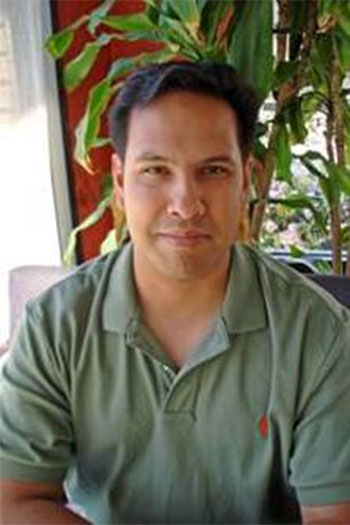
Brian Agbayani is a Professor in the Department of Linguistics at California State University, Fresno. He holds a Ph.D. in Linguistics (1998), an M.A. (1996), and a B.A. (1993) from the University of California, Irvine. His research focuses on comparative syntax , clausal architecture , movement phenomena , ellipsis , and the syntax-phonology interface across languages like Japanese, Latin, Greek, and Indigenous languages of the Americas. He also leads language documentation and revitalization efforts for endangered languages such as Chukchansi Yokuts, Hidatsa, and Wikchamni. His recent 15 most recent articles span topics like multiple scrambling in Japanese, prosodic movement in Indo-European languages, and syntactic structures in Indigenous languages. He collaborates with scholars including Toru Ishii , Masao Ochi , and John Boyle on projects involving experimental linguistics, phonological theory, and language preservation. Agbayani is actively involved in programs such as the Indigenous Languages Group (ILG) at Fresno State, the Chukchansi Language Program (with the Picayune Rancheria), and the Central California Ethnobotany Project . He has secured significant grants, including a $1,000,000 award from the Picayune Rancheria for Chukchansi revitalization.
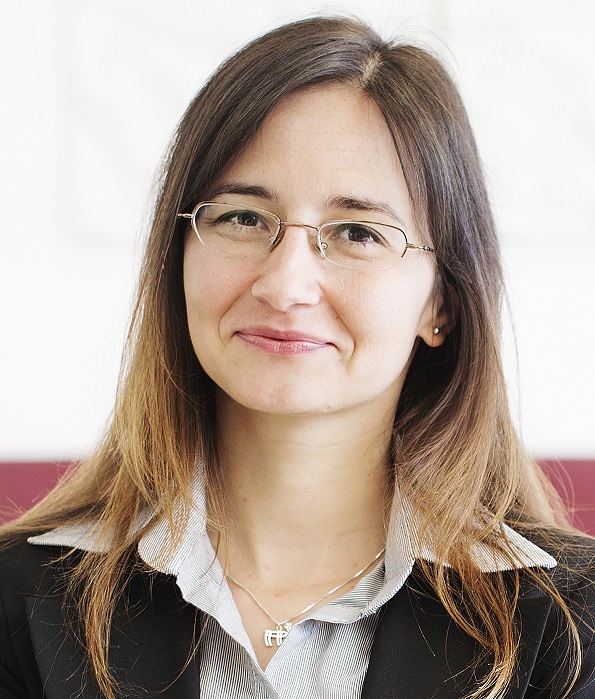
Prof. Dr. Paul Gévaudan is a full professor (W3) of Romance Linguistics with a focus on French and Spanish at Paderborn University's Institute of Romance Studies (Faculty of Cultural Studies). His research spans syntax, semantics, and media linguistics across Romance languages. Contact: Email paul.gevaudan@uni-paderborn.de or paul.gevaudan@upb.de , Phone: +49 5251 60-2384, Office: H2.115 (Warburger Str. 100, 33098 Paderborn). Education : Promotion (2003) with Dissertation: "Manuskript: Klassifikation des lexikalischen Wandels" Habilitation (2014) at University of Tübingen: "Sprachliche Modalität. Eine Untersuchung zum Spanischen und Französischen" Research His work focuses on linguistic modality , polyphony , complement clauses , media linguistics , and lexical change in French and Spanish. He has contributed to theories of discourse markers , textual mediality , and cognitive semantics . His research integrates historical and contemporary approaches, including digital corpora analysis. Publications Trends Recent publications emphasize media and materiality of texts , syntactic typology , and diachronic lexical relations . He frequently explores intersections between cognitive linguistics and discourse analysis in Romance languages, with special attention to grammaticalization processes and textual structures . Labs & Projects He leads research in the Romanische Sprachwissenschaft - Bereich Gévaudan at Paderborn University. Notable projects include DECOLAR (Etymological & Cognitive Dictionary of Romance Languages) and media research networks at University of Zurich, focusing on mediality in medieval French documents.
Professor Jeanette Sakel is a Professor of Language and Linguistics at the University of the West of England (UWE Bristol), where she has been employed since 2007. She currently serves within the Faculty of Arts, Creative Industries, and Education (ACE), bringing extensive expertise in linguistic fieldwork, language contact phenomena, and Amazonian languages. Between 2017-2023, she held the leadership position of Director of Student Experience, overseeing key learning, teaching, and quality processes across the faculty. Her educational background includes a PhD in Linguistics (2003) from the University of Nijmegen & Max Planck Institute for Evolutionary Anthropology, an MA in Linguistics (1999) from Aarhus University, and a BA in Linguistics and Finnish (1998) from the same institution. Professor Sakel's research focuses on the intersection of language contact, typology, and linguistic fieldwork, with particular emphasis on Amazonian languages like Mosetén and Pirahã. She has conducted extensive fieldwork in Bolivia on Mosetén, in Brazil on Pirahã, and in Greenland on Kalaallisut. Her work explores grammatical contact phenomena, syntactic complexity, and the mechanisms of language transfer between bilingual communities. She is particularly interested in how indigenous languages interact with dominant languages like Spanish and Portuguese, documenting structural changes and borrowing patterns. Her publication record demonstrates consistent focus on language contact phenomena across Amazonian languages, with recent work examining historical sources of grammatical borrowing in Mosetén (2024) and comparative studies of Chimane-Mosetén (2023). Earlier works established foundational research on Pirahã-Portuguese contact and Mosetén-Spanish integration. Her publications span descriptive grammar, theoretical linguistics, language acquisition, and practical fieldwork methodologies. Her recognition as a National Teaching Fellow highlights her significant contributions to education. She has authored two influential textbooks: 'Study Skills for Linguistics' (2015) and 'Linguistic Fieldwork' (2012), co-authored with Dan Everett. She also maintains an educational YouTube channel explaining basic grammatical terminology. Professor Sakel has supervised eight PhD students and actively welcomes new doctoral candidates working on minority languages, typology, language contact, second language acquisition, language teaching, Chinese and Sinitic languages, and Amazonian languages. Her leadership experience includes chairing validation panels, developing policies, and establishing academic partnerships. She is an accomplished polyglot who has worked on more than 50 languages worldwide and is currently learning Mandarin Chinese.
Francisco A. Cidrás Escáneo serves as Professor and Director of the Department of Galician Philology at the University of Santiago de Compostela since 2009. Previously, he coordinated USC's doctoral programs in Galician Philology (2002-2009) and the interuniversity Galician Linguistics program (USC, UdC, UVigo), which received a Quality Mention distinction. He earned his Galician-Portuguese Philology degree (1985) and doctorate (1991) from USC with thesis Passive constructions in Galician . His research centers on syntactic theory with sustained focus on passive voice, pronominal constructions, and impersonals. He has pioneered work on functional relations through theoretical frameworks ( On the concept of syntactic function in a functional grammar , FoL 2012) and empirical analysis of marking procedures in Galician including verbal agreement, clitics, and prepositional marking. His scholarship integrates linguistic variation, historical change, and grammatical historiography. Recent publications demonstrate evolving applications of his syntactic expertise, from 2025's comprehensive Manual of Galician Linguistics chapter to 2023's error-based agreement analysis in academic writing, reflecting consistent engagement with both theoretical foundations and practical language usage in Galician. He has advised doctoral students through program coordination and participates in nine active research projects including CORILGA (Computerized Oral Corpus of Galician) and CORTEGAL (student writing corpus), advancing documentation of linguistic change, resource interoperability, and grammatical description across historical and contemporary contexts.
Gözde Mercan is an Assistant Professor in the Department of Near and Middle Eastern Civilizations at the University of Toronto (St. George campus), specializing in Turkish Language and Linguistics. Her research focuses on psycholinguistics, second language acquisition, and Turkish morpho-syntax, particularly examining how learners and heritage speakers process Turkish sentence structures and loanwords. PhD in Cognitive Science (Linguistics major, Psychology minor), Middle East Technical University MPhil in Linguistics, University of Paris III – Sorbonne Nouvelle BA in English Language and Literature, Bilkent University Her work investigates L2 learners' real-time comprehension of ambiguous Turkish sentences, word-order preferences in multilingual speakers, and the interplay between classroom teaching and psycholinguistic research. She organizes international workshops like 'Research-Based Practices in the Teaching of Turkish as L2' and explores Turkish language use in Canadian multilingual contexts. SSHRC Insight Development Grant (2023-2024): L2 ambiguity resolution SSHRC Institutional Grant (2024): Possessive NP corpus analysis Jackman Humanities Institute SiR Program (2023): Loanword mental lexicons Dean’s Merit Award (2021) Mercan contributes to Turkish language pedagogy through courses covering all proficiency levels and cultural aspects like literature, media, and cinema. She actively participates in academic committees including the American Association of Teachers of Turkic Languages and the Canadian Society for Turkish Studies, while collaborating with U of T's Global Languages Initiative and Data Science Institute.
Linnéa Bäckström is a Senior Lecturer at the School of Education, Humanities and Social Sciences, Halmstad University. She holds a PhD in Nordic Languages and specializes in Swedish linguistics, focusing on language change and grammatical evolution. University: Halmstad University School: School of Education, Humanities and Social Sciences Academic Rank: Senior Lecturer Research Interests: Language Change Grammatical Change Swedish Syntax Constructicon Resource Development Cross-Lingual Construction Analysis Publications demonstrate expertise in historical linguistics, computational methods for construction identification, and comparative studies between English, Swedish, and Brazilian Portuguese. Her work on HA-omission in Swedish traces syntactic innovations from contact phenomena to standardized usage.
Henrik Kaatari is a Senior Lecturer in the Department of English at the University of Gävle . His research focuses on corpus linguistics , language learning , and formality in academic writing , with particular interests in grammatical variation , syntactic complexity , and the impact of extramural English (EE) activities on L2 writing development. Current Project : Principal Investigator of the ComplEExity Project (RJ P23-0437), funded by the Bank of Sweden Tercentenary Foundation, investigating EE's impact on Swedish secondary students' L2 writing. Research Areas : Lexical complexity, register variation, phraseology, and self-initiated language learning. His recent publications analyze the relationship between extramural exposure (e.g., gaming, YouTube) and improvements in lexical diversity and grammatical complexity. Using the Swedish Learner English Corpus , Kaatari employs cross-sectional designs and complexity measures to assess writing development across lexis, phraseology, and grammar. His work has practical implications for English pedagogy in Swedish schools.
Dr. Anna Czypionka is a Lecturer and Postdoctoral Researcher in the Department of Linguistics at the University of Konstanz. Her research focuses on language comprehension across multiple levels, from single-word to discourse processing, with particular attention to interfaces between different linguistic components. She is actively involved with several research groups and projects including the Meaningful Silence and Noise (MeaNs) initiative, the German-Greek toolkit for Theory of Mind and Language in Autism (MiLA), the Center for Multilingualism, and the University of Wroclaw Questions at the Interfaces project (DFG Research Unit FOR2111). Dr. Czypionka is an alumna of the Konstanzia Fellowship, which supported her academic development. Her educational background includes extensive training in linguistics with a focus on experimental methodologies. Her primary research interests span language comprehension, sentence processing, multilingualism, language and autism, and interindividual differences in linguistic abilities. She employs diverse methodologies including EEG measurements, eye-tracking, self-paced reading, and various reaction time measurements, combining both lab-based and web-based techniques. Her work frequently explores processing at the syntax-pragmatics interface, examining how speakers navigate complex linguistic phenomena that require integration of multiple information sources. Analysis of Dr. Czypionka's recent publications reveals a consistent focus on experimental approaches to linguistic questions, particularly examining how speakers process complex linguistic phenomena at various interfaces. Her work spans multiple subfields including discourse particles, modal particles, case marking, animacy effects, and aspectual interpretation, primarily using German as the target language but also incorporating cross-linguistic comparisons with languages like Polish and Greek. A notable trend is her increasing focus on individual differences in linguistic processing and connections to autism spectrum disorder. Konstanzia Fellowship Dr. Czypionka collaborates extensively with researchers across institutions, particularly with Stephanie Durrleman and the Autism, Bilingualism, Cognitive and Communicative Development (ABCCD) group at the University of Fribourg. She has been involved in multiple funded research projects including the University of Konstanz Research Initiative project B06 on Interindividual variation at the syntax-pragmatics interface, the YKIDA project involving multiple universities, and the DFG Research Unit FOR2111. Her laboratory work takes place primarily in the Psycholinguistics lab and Neurolinguistics lab at the University of Konstanz, as well as the Center for Experimental Research on Natural Language. These facilities support her experimental research using various methodologies to investigate language processing phenomena.
Dr. Ervin Kovačević is a Professor of Applied Linguistics and Dean of the Faculty of Arts and Social Sciences at the International University of Sarajevo. His research focuses on language learning beliefs, strategies, and linguistic complexity measures, with a particular emphasis on personal foreign language teaching models. Role: Dean of Faculty of Arts and Social Sciences Academic Focus: Applied Linguistics, EFL Pedagogy Key Contributions: Author of Teaching Adult Language Learners: Enhancing Personal Methodologies His recent research explores the interplay between pedagogical frameworks and affective factors in language acquisition. He has published extensively on topics such as lexical and syntactic complexity, learner-centered teaching, and the integration of literature into EFL curricula. His work spans multidisciplinary approaches, including educational theories, cross-cultural studies, and computational linguistics. The 15 most recent publications highlight his focus on EFL methodologies, learner corpus analysis, and reflective practice. These works demonstrate trends in applying linguistic complexity metrics to pedagogical effectiveness, cross-cultural comparisons, and literature-based instruction.
Lucie Broc is a Lecturer in the Department of Psychology at the University of Poitiers, affiliated with CeRCA (Center for Research on Cognition and Learning) and MSHS (Maison des Sciences de l'Homme et de la Société). Her research focuses on the typical and atypical development of oral and written language in children and adolescents, particularly those with Developmental Language Disorder (DLD) and High Functioning Autism (HFA). University of Poitiers CeRCA/MSHS Research Center Her work investigates the impact of transcription modes (typing vs. handwriting) on spelling performance, orthographic error patterns in neurodevelopmental disorders, and the role of narrative writing in mobilizing syntactic knowledge. She collaborates with Prof. Julie Dockrell (UCL), Prof. Marie Anne Schelstraete (UCLouvain), and CNRS Research Director Thierry Olive. Recent publications analyze keyboard typing interventions, working memory assessments, and cross-linguistic spelling differences. Her research employs both experimental studies and meta-analyses across European languages, with a focus on special education applications. Contact: lucie.broc@univ-poitiers.fr
Melissa L.-H. Võ is a Professor at the Faculty of Psychology and Sport Sciences , Goethe University Frankfurt. Her research focuses on scene perception , visual search , and cognitive neuroscience , particularly how scene grammar and spatial priors guide attention and locomotion in naturalistic environments. Her recent work, including the 2021 Psychological Science study on auxiliary anchor-object information, demonstrates the critical role of environmental regularities in behavioral efficiency. She has secured significant funding from the German Research Foundation and the Hessian Ministry of Science and Art , and her 2022 Nature Reviews Psychology paper on remote VR highlights methodological innovations. Key Research Areas: Scene grammar and contextual prediction Attentional guidance in immersive environments Interplay of semantic and syntactic scene processing Major Awards: German Research Foundation (DFG) Grant No. SFB/TRR 135 Hessian Ministry project 'The Adaptive Mind' She supervises researchers like Jason Helbing and Dejan Draschkow , and her work bridges cognitive psychology , neuroscience , and virtual reality applications.
Chiara Branchini is an Associate Professor at the Department of Comparative Linguistic and Cultural Studies at Ca' Foscari University of Venice. She is actively involved in teaching Italian Sign Language (LIS) and its linguistics to undergraduate and graduate students, and serves as coordinator of the 1st level Master's degree and Advanced Training Course in 'Theory and Techniques of Translation and Interpretation Italian-LIS'. Her research focuses on the syntax of Italian Sign Language , including linear order, interrogative and imperative sentences, complex sentences, sociolinguistic analysis, and bimodal bilingual production . Education: PhD in European Intercultural Studies (2007) from the University of Urbino with thesis 'On relativization and clefting in Italian Sign Language (LIS)'; Master's in Foreign Languages and Literatures (2001) from the University of Urbino with thesis 'The Body at the Service of Language. Analysis of Non-Manual Components in American Sign Language (ASL)' Research: Currently collaborating on the drafting of a grammar blueprint for Italian Sign Language within European research project COST ACTION IS 1006; previously participated in national research project PRIN 2007 'Dimensions of variation in Italian Sign Language' by collecting and analyzing the CORPUS LIS Projects: Scientific director of FSE 2012 research grant 'Development of a video-glossary of specialist terms in Italian Sign Language (LIS)'; collaborator on European project 'Spread the sign: dissemination in Europe of vocational sign language' Publications: Authored numerous articles on LIS syntax, grammar, and bilingualism in outlets like Bilingualism , Sign Language & Linguistics , and Glossa , as well as book chapters in A Grammar of Italian Sign Language (LIS) and SignGram Blueprint Editorial Roles: Member of the editorial board for LiLiS (Languages, Language and Deafness) Edizioni Ca' Foscari Reviewing: Regular abstract reviewer for international conferences
Francesca Volpato is an Associate Professor in the Department of Comparative Linguistic and Cultural Studies at Ca' Foscari University of Venice. She specializes in linguistics with a focus on language disorders, particularly in the areas of deafness, language learning disorders, and clinical linguistics. Her work bridges theoretical linguistics with clinical applications, examining how syntactic structures are acquired and processed by various populations. Dr. Volpato's research primarily focuses on the acquisition and processing of complex syntactic structures, particularly relative clauses and clitic pronouns, in both typical and atypical language development. Her work examines these phenomena in diverse populations including children with developmental dyslexia, hearing-impaired individuals with cochlear implants, and bilingual speakers. She employs experimental methodologies such as production tasks, comprehension tests, and sentence repetition to investigate syntactic competence across different language varieties and populations. Her research demonstrates how theoretical linguistic frameworks can inform clinical practice and educational interventions for individuals with language disorders. Dr. Volpato teaches courses on linguistics for deafness, language and learning disorders, and clinical linguistics at both undergraduate and graduate levels across multiple degree programs. Her consistent teaching in these specialized areas reflects her expertise and commitment to training future linguists and speech-language pathologists. As a member of the Joint Teacher-Student Commission for the SLCC Department, she also contributes to academic governance and student affairs within her department.
Zeynep Bilki serves as Associate Professor and Department Head within the Department of Foreign Language Education, Department of English Language Education at TED University in Ankara, Turkey. With uninterrupted teaching engagement documented from 2016 through the 2025 Spring Semester, she instructs core courses in English Language Teaching methodologies, Second Language Acquisition, Technology-Enhanced Language Learning, and teacher practicum experiences across undergraduate and graduate programs. Her research program demonstrates concentrated expertise in virtual exchange implementation for language teacher development, AI applications in L2 writing assessment (including pioneering analysis of ChatGPT-4 capabilities), automated writing evaluation systems, and critical digital literacy frameworks. This scholarly trajectory reveals consistent international collaboration, exemplified by the Turkish-Polish virtual exchange project examining teacher wellbeing, and increasingly sophisticated integration of emerging technologies into language pedagogy. Analysis of her 15 most recent publications (2021-2025) identifies three dominant research thrusts: (1) technology-mediated writing instruction with emphasis on automated feedback mechanisms and AI assessment tools, (2) virtual exchange programs designed to develop pre-service teachers' intercultural and digital competencies, and (3) critical pedagogy applications in language teacher education. Her work consistently bridges theoretical frameworks with practical classroom applications, particularly in teacher training contexts. Through ongoing supervision of Master's and PhD candidates—evidenced by continuous instruction in thesis courses including Master’s Thesis I/II and PhD Qualifying Exam since 2016—Dr. Bilki maintains active mentorship of graduate researchers. Her institutional leadership as Department Head further underscores her significant role in shaping English language education programs at TED University, though specific grant funding details remain unreported in available materials.
Charles Yang is a Professor at the University of Pennsylvania's Department of Linguistics, with joint appointments in Computer and Information Science and Psychology. As Chair of Linguistics and Director of the Program in Cognitive Science since 2011, he co-directs the Integrated Language Science and Technology group with John Trueswell. PhD in Computer Science, MIT AI Lab Faculty at Yale (2000-2008) Current roles: Chair of Linguistics, Director of Cognitive Science Program His research bridges linguistics, cognitive science, and computational modeling, focusing on human and machine language acquisition, phonological and morphological learning, and computational modeling of historical language change. He develops the Tolerance Principle for quantifying language acquisition thresholds and investigates neural language models as cognitive theories. Recent publications analyze language acquisition through computational models (2021-2024), with the 2025 work evaluating LLMs for low-resource languages. His 2016 book The Price of Linguistic Productivity won the Leonard Bloomfield Award and explores productivity in language systems. Guggenheim Fellowship (2018) Bloomfield Book Award (2018) NSF GRFP Fellowship Leonard Bloomfield Book Award (2016) Yang advises students in language acquisition, computational linguistics, and cognitive modeling. His lab collaborates with researchers like Bob Berwick, Johan Bolhuis, and Noam Chomsky on integrated approaches to language science.