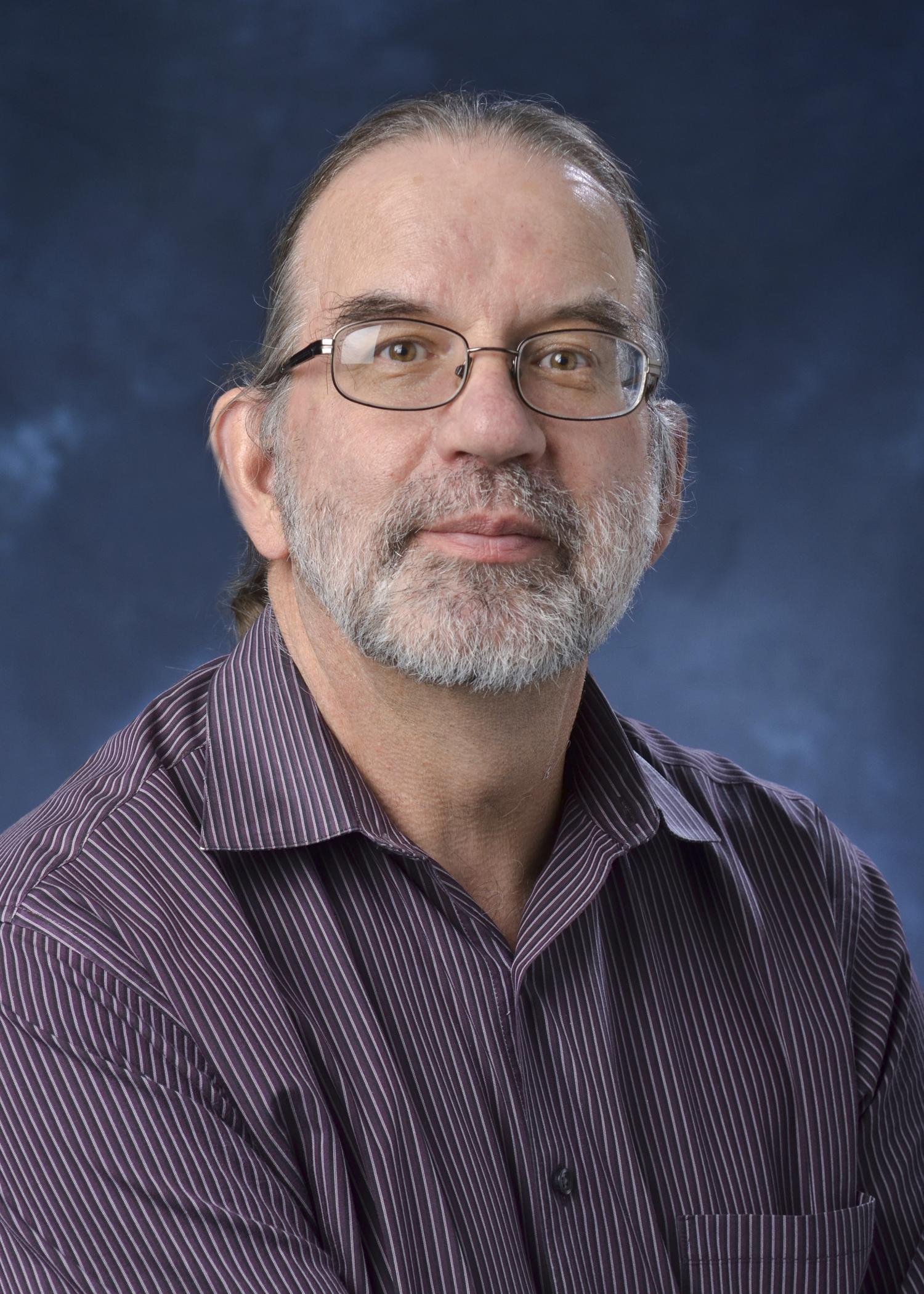
Krzysztof Mielcarek is a Professor at the Institute of Biblical Studies, Faculty of Theology, John Paul II Catholic University of Lublin. He holds the title of Professor of Theological Sciences and serves as Head of the Department of Exegesis of the Gospels and Apostolic Writings. He has held significant academic leadership roles, including Director of the KUL Doctoral School (2021–2023). His research is deeply rooted in biblical scholarship, focusing on Luke-Acts , the Septuagint , Hellenistic Judaism , and early Christian theology . His work explores narrative structures, onomastics, and theological themes in the New Testament, particularly in Lukan writings. The most recent publications reflect a dual focus: detailed exegesis of Lukan and Matthean texts (e.g., Joseph’s characterization, the term 'today') and active engagement in ecumenical theology, especially through contributions to the Faith and Order dialogues on ecclesiology, baptism, and ministry. His scholarship bridges biblical studies with contemporary ecclesial concerns. Scientific Awards: Bronze Cross of Merit (2002) Marshal of the Kuyavian-Pomeranian Voivodeship Medal (2009) Rector of KUL Award for Outstanding Habilitation Work (2008) Silver Cross of Merit (2018) Advising and Grants: While specific students are not listed, he has supervised academic programs and served on doctoral councils. He leads a research project titled "Jerusalem, Hierosolyma. The Significance of the Onomastics of the Holy City in Luke's Work" , funded by the Ministry of Education and Science under the Doskonała nauka program, with a total value of over 49,000 PLN. Labs and Teams: He is actively involved in international scholarly teams, particularly through the Faith and Order Commission of the World Council of Churches and the Catholic-Pentecostal dialogues. He has also coordinated the Theology program for the Erasmus academic exchange since 2003, fostering international academic collaboration.
Leo R. Percer is an Associate Professor of Biblical Studies at Liberty University School of Divinity in Lynchburg, Virginia. He holds a PhD in Religion (with a minor in Philosophy) from Baylor University (1999), an M.A. in Humanities from Western Kentucky University (1989), an M.Div. from Southern Baptist Theological Seminary (1985), and a B.A. in Religion from Union University (1982). His academic career includes adjunct roles at Baylor University and McLennan Community College before joining Liberty University in 2004. His research focuses on Biblical Studies, Theology, and Early Christianity. Education: PhD in Religion (minor in Philosophy), Baylor University (1989–1999) MA in Humanities, Western Kentucky University (1987–1989) M.Div., Southern Baptist Theological Seminary (1982–1985) BA in Religion, Union University (1979–1982) Dr. Percer’s research interests include Pauline theology, early Jewish-Christian relations, and hermeneutical approaches to apocalyptic texts like the Book of Revelation. He has published reviews on critical issues such as the Synoptic Problem and the theological significance of Abraham traditions. His courses at Liberty University include Greek Grammar, Hebrews, Hermeneutics, and Romans. He has received the Daniel R. Mitchell Professor of the Year Award twice (2010 and 2015) and serves on the Board of Directors for Ratio Christi since 2012. His teaching and scholarship emphasize exegetical rigor and practical application of biblical principles.
John S. Kloppenborg is a Professor in the Department for the Study of Religion at the University of Toronto, affiliated with Trinity College. His research focuses on Christian origins, Second Temple Judaism, and the social world of the early Jesus movement in Jewish Palestine and the eastern Graeco-Roman Empire. He is a leading scholar on the Synoptic Sayings Gospel (Q) and the Synoptic Problem, with ongoing projects on the parables of Jesus, the letter of James, and cultic associations in antiquity. Education: PhD and MA from the University of St. Michael's College; BA from the University of Lethbridge. Kloppenborg co-edits the International Q Project and holds a five-year SSHRC Insight Grant for research on associative practices in the Graeco-Roman world. His methodological expertise includes papyrology, epigraphy, and analysis of early Christian texts. He is cross-appointed to the Centre for Jewish Studies and collaborates with interdisciplinary initiatives exploring theopolitical sovereignty and urban ecology through the Entangled Worlds project.
Thomas Martin is a tenured Associate Professor of Religious Studies at Susquehanna University, specializing in biblical scholarship, science-religion dialogue, and environmental ethics. His academic roles include committee chairmanships and community engagement through ethics committees and theological workshops. Education: D.Phil. from Oxford University (1986), MA (1979) and BA (1976, summa cum laude) from Oral Roberts University. Martin’s research intersects New Testament analysis, ecological theology, and interdisciplinary pedagogy. His work on Luke-Acts explores sociological dimensions of early Christian communities, while recent projects analyze apocalyptic texts through environmental ethics and quantum physics. His publications include analyses of Revelation’s heterotopic visions, critiques of science-religion conflicts, and contributions to the Anchor Bible Dictionary . Articles span topics like anti-Judaism in biblical texts, inductive teaching methods, and Lutheran identity in academic contexts. Scientific awards include the John Templeton Foundation Course Development Award (1997) and leadership in the 98/99 National Lecture Series on Science and Religion (Harvard University, 2000-01). Martin’s career spans denominational education, adult ministry, and adjunct roles at institutions such as the University of Nebraska at Omaha and Midland Lutheran College. He founded the Socratic Society student club and contributed to lay worship leader training programs.
Jonathan Martin is a Professor in the Department of Atmospheric and Oceanic Sciences at the University of Wisconsin–Madison, where he has been a faculty member since 1994. His research focuses on synoptic meteorology and large-scale atmospheric dynamics, particularly the structure and evolution of mid-latitude cyclones, jet stream variability, and the interaction between weather systems and climate change. Education: Ph.D. in Atmospheric Sciences (University of Washington, 1992) Research Tools: Fine-scale numerical models, potential vorticity diagnostics, local energetics analysis, statistical compositing techniques Key Collaborations: Research extends to climate model evaluation (CMIP3/CMIP6), extreme weather forecasting, and interdisciplinary climate education initiatives His work on cyclone dynamics explores multi-scale processes from planetary-scale mountain influences to microphysical precipitation mechanisms, with recent emphasis on jet stream waviness trends and their climatological implications. Publications span topics including subtropical cyclone transformation, polar-subtropical jet interactions, and historical weather system analysis through books like Mid-Latitude Atmospheric Dynamics: A First Course and Reginald Sutcliffe and the Invention of Modern Weather Systems Science . Despite claims that "the cyclone problem has been solved", Martin's research demonstrates persistent complexities requiring integrated observational and theoretical approaches across the atmospheric science community.
David O'Neill is a Teaching Professor of Biomedical Engineering and Michael Jaharis Director of Experiential Learning at Northwestern University's McCormick School of Engineering. He holds a DPhil in Engineering Science from the University of Oxford (2012) and an MEng in Engineering Science from the same institution (2008), alongside an LLCM in Conducting from the London College of Music (2018). His research spans medical device development, respiratory physiology modeling, and innovative curriculum design, with a focus on mastery-based grading and vertical curricula. He has extensive teaching experience, including roles as College Lecturer at Oxford's New College and Senior College Lecturer at Keble College. At Northwestern, he teaches courses such as BME 207 (Experimental Design), BME 307 (Quantitative Experimentation), and DSGN 106 (Design Thinking). His work with Prof. Casey Ankeny explores inclusive teaching practices and pedagogical innovations. Research outputs include advancements in gas exchange measurement, CO₂ transport modeling, and adaptive remote learning strategies. He leads curriculum reforms emphasizing synopticism and student-centered learning. Education: DPhil, Engineering Science, University of Oxford, 2012 MEng, Engineering Science, University of Oxford, 2008 LLCM, Conducting, London College of Music, 2018 Key Roles: Michael Jaharis Director of Experiential Learning Teaching Professor of Biomedical Engineering Research Focus: Combines biomedical engineering with educational innovation. Current projects include: Development of standards-based grading systems Vertical curriculum design for biomedical engineering Collaborative pedagogy with Prof. Ankeny Medical device prototyping for respiratory diagnostics Teaching Contributions: Oversees the Biomedical Engineering Design Capstone sequence (BME 390-1/2/3) Redesigned laboratory courses for remote/hybrid learning Advocates for reflective practices in engineering education Curriculum Development: Implements mastery-based grading and synoptic learning pathways to enhance student problem-solving and interdisciplinary understanding.
William Boos is an Associate Professor at the University of California, Berkeley and a Faculty Scientist at the Lawrence Berkeley National Laboratory. He serves as editor for the Journal of the Atmospheric Sciences and teaches courses on atmosphere-ocean dynamics, extreme weather, and career development for students. His research centers on large-scale atmospheric dynamics with emphasis on monsoons, extreme weather phenomena, and Earth's hydrological cycle. He investigates how atmospheric circulations, radiative transfer, ocean interactions, and land surface processes govern global heat and water distribution, with particular focus on phase changes of water in atmospheric systems and their role in planetary-scale flows. Analysis of his recent publications reveals dominant research themes in monsoon low pressure systems, orographic precipitation sensitivity, elevation-dependent warming, and climate change impacts on extreme temperatures. His work consistently integrates theoretical frameworks, observational data, and numerical modeling to address unresolved problems in atmospheric science. Scientific recognition includes: James R. Holton Junior Scientist Award (2010) Boos leads an active research group studying atmospheric dynamics while mentoring students through specialized career development initiatives. His dual affiliation with UC Berkeley and Lawrence Berkeley National Laboratory enables comprehensive climate modeling research with real-world applications.
Casey Davenport is an associate professor in the Department of Earth, Environmental, and Geographical Sciences at the University of North Carolina at Charlotte, affiliated with the College of Humanities & Earth and Social Sciences (CHESS). Their research focuses on severe storm dynamics, mesoscale meteorology, and innovative STEM education techniques, particularly in atmospheric science. University: University of North Carolina at Charlotte College: College of Humanities & Earth and Social Sciences (CHESS) Department: Earth, Environmental and Geographical Sciences Email: Casey.Davenport@charlotte.edu Davenport’s research integrates numerical modeling and observational analysis to study the evolution of supercell thunderstorms and mesoscale convective systems, with a special emphasis on their interactions with complex terrain like the Appalachian Mountains. They have also pioneered pedagogical research in meteorology education, developing tools like the Fundamentals in Meteorology Inventory and implementing active learning and worked examples in teaching. Their recent publications highlight trends in understanding environmental heterogeneity’s impact on storm behavior, improving atmospheric dynamics instruction, and advancing spatial thinking in meteorology students. Collaborative projects span beginner to advanced courses, blending theory with real-world data for enhanced learning. Scientific Awards AMS STAC Mesoscale Processes Awardee Keynote Talk (2023) Davenport advises a mix of current master’s and Ph.D. students, including Eli Blackwelder, Lauren Burns, and Roger Riggin, while mentoring former advisees now in roles at NWS offices and research institutions. They hold a Scholarship of Teaching and Learning (SOTL) grant for spatial thinking research.
Santiago Guijarro Oporto es Catedrático en la Facultad de Teología de la Pontificia Universidad de Salamanca , donde también pertenece al grupo de investigación ICS. Innovación en Ciencias Sociales . Doctorado por su alma mater con la tesis sobre La ruptura con la familia por causa del discipulado y de la misión en la tradición sinóptica , su obra académica se centra en la transmisión oral de la memoria de Jesús , el Documento Q , la formación de los evangelios , y el impacto sociocultural del cristianismo primitivo . Área de investigación: Teología Bíblica, Ciencias Sociales en Exegesis, Cristología del Nuevo Testamento Enfoque metodológico: Análisis contextual, Estudios de memoria social, Investigación interdisciplinar Su bibliografía incluye libros traducidos a múltiples idiomas sobre temáticas como El camino del discípulo , Los cuatro evangelios , y El cristianismo como forma de vida . Ha publicado artículos recientes sobre el amuleto de Frankfurt , género en el Documento Q , y lectura socialmente contextualizada de Marcos .
Dmitri Levitin is a Research Fellow at All Souls College, University of Oxford, specializing in premodern knowledge systems with expertise spanning scholarship, science, medicine, philosophy, and theology from ancient Mesopotamia to 1700. His work critically examines European intellectual encounters with global societies and challenges conventional narratives of knowledge development through institutional frameworks. Levitin's research pioneers interdisciplinary approaches to intellectual history, emphasizing how educational institutions shaped knowledge transmission. His acclaimed publications—including Ancient Wisdom in the Age of the New Science (2015) and The Kingdom of Darkness (2022)—explore Newtonian thought, biblical criticism, and the origins of Eurocentrism, culminating in his 2024 Dacre Lecture on 'The Origins of Modern Eurocentrism.' He argues for models of intellectual change centered on pedagogical structures rather than isolated genius. His recent scholarship reveals consistent engagement with early modern knowledge economies, particularly analyzing Newton's theological manuscripts, the precarity of scholarly 'orthodoxy,' and cross-cultural encounters in textual interpretation. Articles from 2019-2025 demonstrate methodological innovation in tracing how ideas circulated through the Republic of Letters while interrogating power dynamics in knowledge production. Levitin's contributions have been recognized with the 2025 Dan David Prize—the world's largest history prize—awarded $300,000 for transformative work in historical scholarship. This places him among distinguished recipients like Peter Brown, also affiliated with All Souls College.
Dr. Tony Cummins is a Professor of Biblical Studies at Trinity Western University (TWU), affiliated with the School of Graduate Studies and the Faculty of Humanities & Social Sciences. He has served as Director of the MA in Biblical Studies program twice (2006-12; 2015-16) and has held academic roles since 2003. Previously, he taught at Canadian Theological Seminary (1996-2003) and held post-doctoral fellowships at the University of Oxford (1995-96). His research focuses on New Testament studies, particularly Jesus and the Gospels, Pauline theology, and the theological interpretation of Scripture within public life contexts. Education: DPhil (Theology, Oxford), MA (Religious Studies, McGill), MA (English, Ottawa), BA (Honours, Wilfrid Laurier). Awards include SSHRC grants, Lilly Research Grants, and the Hensley Henson Award. His scholarship bridges biblical exegesis, theological reflection, and contemporary cultural engagement. Recent publications include co-editing Acts of Interpretation (Eerdmans, 2018) and contributing to volumes on Romans, Paul, and Markan theology. His work often examines interconnections between biblical narratives and broader societal issues.
Ágnes Zsidai is an External Lecturer at the Department of Developmental and Clinical Child Psychology, with research interests spanning Developmental Psychology , Legal Sociology , and Political Theory . Her work critically examines the intersection of law, ethics, and political systems, particularly in the context of Hungarian intellectual traditions. Her publications focus on the synoptic theory of law , sovereignty , and nonviolent resistance , engaging with the legacies of thinkers like Barna Horváth and István Bibó. Key themes include legal legitimacy , normative tensions , and democratic theory . Ágnes Zsidai's scholarly output reflects a multidisciplinary approach, blending philosophical analysis with historical sociological inquiry . Her work addresses ethical governance , state theory , and the function of law in transitional societies .
Brent Nongbri is a Professor of History of Religions at MF, specializing in early Christianity and ancient manuscripts. He leads the Research Council of Norway-funded EthiCodex project (2021–2026), focusing on codex methodology and ethics. His 2018 book God's Library won major awards. He teaches courses like Theories of Religion (AVH5080) and Religious Heritage for Sale (SAM5010). Education includes a PhD from Yale University (2008), with prior roles as a DECRA Fellow and Macquarie University Research Fellow (2008–2018). His research spans early Christian manuscripts, Dead Sea Scrolls, and papyrology. Collaborative projects include work with MF’s L-MaSDR lab on gospel harmonies. Key achievements: Award-winning publications, radiocarbon analysis studies of Dead Sea Scrolls, and co-authorship of Working with Manuscripts (2025). Awards include the DeLong Book Prize and Biblical Archaeology Society honors. Active in debates over manuscript ethics and palaeographic methods. Recent research highlights: Radiocarbon analysis challenging traditional palaeography, discoveries like the Ostia mikveh , and analysis of ancient writing tools like pumice usage. Engages in public scholarship via his Variant Readings blog and peer-reviewed journals.
Grady Dixon serves as Dean of the Werth College of Science, Technology, and Mathematics and Professor of Geosciences at Fort Hays State University. His academic leadership spans both administrative and teaching roles within the Department of Geosciences. His educational background includes a Ph.D. in Geography from Arizona State University (2005), M.S. in Geography from the University of Georgia (2002), and B.S. in Geosciences (Meteorology) from Mississippi State University (2000). Dixon's research focuses on applying weather data to real-world problems across multiple disciplines, with recent emphasis on improving access, diversity, and inclusion in geosciences and higher education. His field work includes extensive storm chasing activities documented annually from 2007 through 2023 across multiple states including Kansas, Colorado, Texas, and international locations. He teaches core geosciences courses including Elements of Physical Geography, Introduction to World Geography, Climatology, Weather Analysis, Physical Meteorology, Synoptic Meteorology, and Severe Storm Observations. His storm chasing documentation shows active engagement with severe weather phenomena including tornadoes, supercells, and tropical systems, with photographic records spanning more than 15 years of field observations.
Mark Serreze is a Distinguished Professor of Geography at the University of Colorado Boulder, serving as the Director of the National Snow and Ice Data Center (NSIDC) and a Fellow of the Cooperative Institute for Research in Environmental Sciences (CIRES). He has been at the forefront of Arctic climate research for decades, with his work increasingly focused on documenting and understanding the rapid environmental transformations occurring in the polar regions. As Director of NSIDC, he oversees a team of approximately 70 programmers, data specialists, and scientists who provide critical analysis of Arctic sea ice conditions and other cryospheric data. His research and leadership position him as a key figure in translating complex climate science for both scientific and public audiences. Education Ph.D. in Geography, University of Colorado at Boulder (1989) Research Interests Dr. Serreze's research spans multiple aspects of Arctic climate science, with particular expertise in atmosphere-sea ice interactions, synoptic climatology, boundary layer problems, and climate change . His field work has taken him to the Canadian Arctic to study sea ice and icecaps, as well as the Alaskan tundra. Over the past decade, his research has increasingly focused on understanding the rapid environmental changes being observed across the Arctic region. He currently leads the Arctic Rain on Snow Study (AROSS) , a project within the National Science Foundation's Navigating the New Arctic (NNA) initiative, which investigates the distribution, severity, and changing frequency of rain-on-snow and melt-refreeze events in the Arctic and their wide-ranging impacts. His work demonstrates how these rain-on-snow events can have catastrophic consequences for Arctic ecosystems, creating ice layers that prevent caribou and reindeer from accessing food, leading to population crashes that subsequently affect predators and Indigenous communities dependent on these animals. This research exemplifies his approach of connecting fundamental climate processes to their broader environmental and societal implications. Research Trends Analysis of Dr. Serreze's recent publications reveals a clear trajectory from studying fundamental Arctic climate processes to examining the cascading effects of climate change across interconnected systems. His work increasingly integrates observational data with climate modeling to understand and predict Arctic changes. A dominant theme is the accelerating transformation of the Arctic environment , with sea ice extent declining by approximately 50% since the 1980s and precipitation patterns shifting toward more rain and less snow. This research demonstrates how changes once considered theoretical are now being observed in real-time, with profound implications not just for the Arctic but for global climate systems. His publications show particular attention to how these changes affect Indigenous communities and traditional ways of life, reflecting a growing emphasis on the human dimensions of Arctic climate change. Scientific Recognition Dr. Serreze's contributions to climate science have been widely recognized through numerous prestigious awards: 2019: Named a University of Colorado Distinguished Professor by the Board of Regents 2017: Named Professor of Distinction, University of Colorado, Boulder 2014-2017: Thompson Reuters Highly Cited Researcher Award (ranking among top 1% of researchers in his field) 2014: Elected Fellow of the American Meteorological Society 2015: American Meteorological Sigma-XI Distinguished Lecturer 2018: Author of "Brave New Arctic, the Untold Story of the Melting North" Mentorship and Research Leadership Dr. Serreze has advised multiple graduate students including Ethan Carr, Zaria Cast, and Jonathon Cavitt. He has consistently taught courses at CU Boulder such as "Arctic Environment," "Our Changing Planet: Climate and Vegetation," and "The Arctic Climate System." His current research extends beyond traditional academic boundaries, with significant emphasis on science communication and public engagement . As Director of NSIDC, his team provides year-round analysis of Arctic sea ice conditions, with near real-time updates that inform both scientific research and public understanding of climate change. His leadership of the Arctic Rain on Snow Study exemplifies his approach to addressing complex climate challenges through interdisciplinary collaboration, bringing together atmospheric scientists, ecologists, and social scientists to understand the full implications of changing precipitation patterns in the Arctic. Research Infrastructure As Director of the National Snow and Ice Data Center, Dr. Serreze oversees one of the world's premier facilities for cryospheric data. NSIDC processes and analyzes satellite data to provide near real-time monitoring of Arctic sea ice extent, with regular scientific analysis of evolving conditions. The center plays a critical role in maintaining long-term climate records and developing tools for researchers worldwide. Under Serreze's leadership, NSIDC has expanded its focus to include not just data archiving but active interpretation and communication of climate trends, making complex scientific information accessible to policymakers and the public.