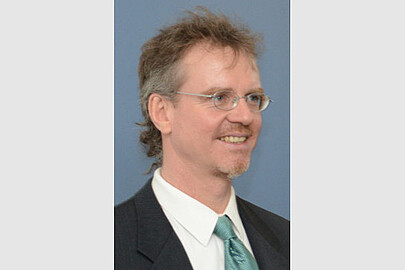
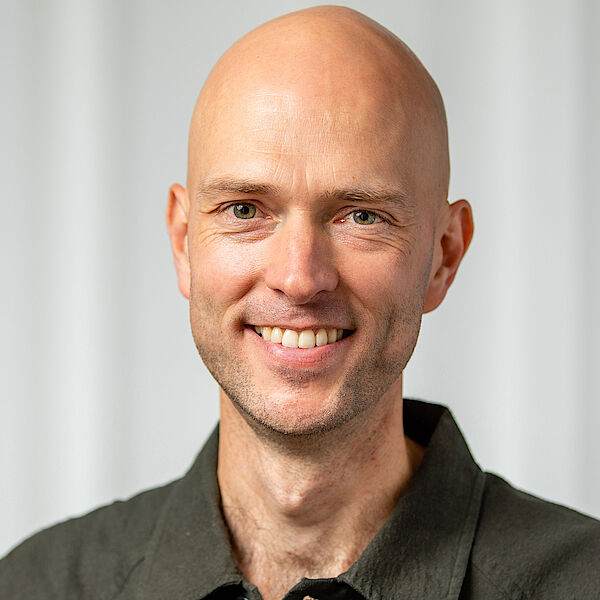
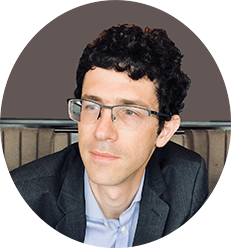
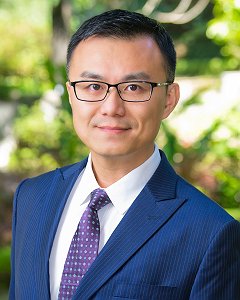
Val Tannen is a Professor at the University of Pennsylvania, specializing in database systems, provenance analysis, and programming languages. His research focuses on data management, query languages, and systems like DBSP and ORCHESTRA. Collaborations include work with co-authors such as Zachary Ives, Susan Davidson, and Todd Green. Key research interests include provenance for databases, incremental view maintenance, and data integration. His work bridges theoretical foundations and practical applications in systems like DBSP for stream processing and ORCHESTRA for collaborative data sharing. Publications span provenance frameworks, query optimization, and distributed systems. While no awards are explicitly listed, his contributions to database theory and systems are widely recognized.
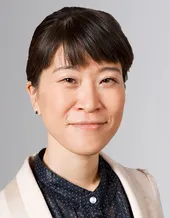
Dongheui Lee is an Assistant Professor at the Institute of Automatic Control Engineering (LSR) within the Faculty of Electrical Engineering and Information Technology at Technische Universität München (TUM). She leads the Dynamic Human Robot Interaction for Automation System Lab. Her research focuses on human motion understanding, physical human-robot interaction, and machine learning in robotics. Education: B.S. and M.S. in Mechanical Engineering from Kyunghee University (2001-2003), PhD in Mechano-Informatics from the University of Tokyo (2007). Prior roles include research scientist at KIST Korea (2001-2004) and project assistant professor at the University of Tokyo (2007-2009). Research Interests: Human-robot collaboration, probabilistic robotics, motion recognition, and incremental lifelong learning mechanisms. She has contributed to advancements in motion primitives, compliant physical interaction, and real-time object tracking. Selected Awards: Finalist for KUKA Service Robotics Best Paper Award (2009), Hirose Scholarship (2006-2007), and multiple grants from KRF, KOSEF, and international robotics competitions. Key Publications: Focus on prioritized inverse kinematics, motion imitation, and adaptive control systems. Her work bridges robotics theory and practical applications in humanoid robots and human-robot interaction.
Ulrich Parlitz is an Adjunct Professor of Physics at Georg-August-University Göttingen and a Scientist leading the Biomedical Physics Group at the Max Planck Institute for Dynamics and Self-Organization. His research focuses on nonlinear dynamics, chaos theory, and biomedical applications, particularly in cardiac dynamics and excitable media. He has held visiting positions at institutions like UC San Diego and the Santa Fe Institute. Education: 1987 PhD in Physics, Georg-August-University Göttingen 1984 Diploma in Physics, Georg-August-University Göttingen Research Interests: Analysis of nonlinear systems (neurons, lasers, oscillators) Bifurcation and chaos phenomena Data-based modeling and synchronization control Wave dynamics in excitable media (e.g., cardiac arrhythmias) Fractal dimension estimation and reservoir computing Labs/Teams: Leads the Biomedical Physics Group at MPI-DS and contributes to the IMPRS Program in Physics of Biological and Complex Systems.
Matthias Becker is a Professor at the Institute for Practical Computer Science within the Faculty of Electrical Engineering and Computer Science at Leibniz University Hannover, where he has been a core member of the Human-Computer Interaction group since 2019. He serves as Internship Coordinator for Computer Science and Computer Engineering and holds key roles in the Computer Science Examination Board and Selection Committee, actively shaping academic governance and student development. His academic journey began with PhD studies at the University of Bremen (1996-2000) supported by a DFG grant, followed by a postdoctoral permanent position at Leibniz University Hannover (2000-2019), an Associated Assistant Professor role at École des Mines de Nantes (2000), and a Habilitation in Computer Science in 2013. This foundation enabled his transition to a full professorship in 2019. Becker's research spans Human-Computer Interaction, Simulation and Modeling, and Bio-inspired Computing, with applications in agriculture, renewable energy, and manufacturing. His work integrates distributed systems, optimization algorithms, and wireless sensor networks to solve complex real-world problems, such as greenhouse monitoring, wind farm logistics, and tire noise reduction. Recent publications reveal a strategic focus on practical validation of simulation models and cross-domain applications of nature-inspired algorithms. His 15 most recent publications (2018-2024) demonstrate consistent innovation in applying simulation techniques to offshore wind farm installation, agricultural pest management, and sports science. These works emphasize real-world validation, collaborative problem-solving, and the development of domain-specific optimization frameworks that bridge theoretical algorithms and industrial implementation. As Internship Coordinator, Becker facilitates critical industry-academia connections for students, while his examination board responsibilities ensure rigorous academic standards. His leadership in the Human-Computer Interaction group drives research on interactive systems for agriculture, energy, and health, with particular emphasis on user-centered design in complex operational environments like wind farm logistics and greenhouse automation.
Prof. Dr.-Ing. Holger Blume serves as Vice President for Research and Transfer at Leibniz University Hannover while maintaining his academic position as Professor in the Architectures and Systems Section within the Faculty of Electrical Engineering and Computer Science. He holds multiple leadership positions including Chairperson of the Research Commission and Central Ethics Committee, Executive Board member of eNIFE (Leibniz Research Initiative for Neurosciences), and membership in both the Laboratory of Nano and Quantum Engineering and L3S Research Centre. His research interests span computer architecture, hardware design, signal processing, AI accelerators, hearing aid technology, and biomedical engineering. His work bridges theoretical computer science with practical applications in automotive systems, medical devices, and quantum engineering. Professor Blume's research demonstrates strong interdisciplinary connections between electrical engineering, computer science, and biomedical applications, with particular emphasis on hardware-oriented solutions for real-world problems. Analysis of his recent publications (2023-2025) reveals a strong focus on hardware acceleration for AI and signal processing applications, particularly in automotive radar/LiDAR systems and hearing aid technology. His work shows consistent innovation in RISC-V processor design, specialized hardware for mathematical functions, and biomedical applications of engineering principles. The research demonstrates a clear trajectory toward energy-efficient, specialized computing architectures for specific application domains. As Vice President for Research and Transfer, Professor Blume oversees significant research initiatives at Leibniz University Hannover, which hosts multiple Clusters of Excellence including PhoenixD (Photonics, Optics, and Engineering), QuantumFrontiers, and Hearing4all. The university participates in numerous collaborative research centers and junior research groups funded by DFG, BMBF, and EU programs. Professor Blume is actively involved in multiple research facilities including the Laboratory of Nano and Quantum Engineering and the L3S Research Centre. His work connects with Leibniz University's research focuses on optical technologies, quantum optics and gravitational physics, and biomedical research and technology. His leadership positions indicate strong involvement in shaping the research strategy and ethical framework of the university's scientific endeavors.
Alan D. Fekete is a Professor at the University of Sydney's Department of Computer Science, specializing in database systems, distributed data management, and consistency models. His work spans transaction processing, cloud computing, and query optimization, with recent focus on enhancing database concurrency and serializable execution. Key Research Areas: Database Concurrency & Transaction Isolation Multicore Scalability & Distributed Systems Cloud Data Consistency & Replication Query Optimization & NoSQL Performance Recent publications (2023-2025) explore transactional frameworks for analytical interfaces, DB-OS co-design for data ingestion, and mixed isolation levels for serializable execution. Earlier works (2018-2014) address scalable lock managers, coordination avoidance in databases, and consistency properties in cloud storage. He has contributed to educational initiatives, including a data-centric computing curriculum (2021) and teaching threading concepts (2008). Collaborations include co-authors like Nancy Lynch, Uwe Röhm, and Joseph Hellerstein.
Emmanuel Baccelli is a Professor for "Open and Secure IoT Ecosystem" at Freie Universität Berlin since September 2019, holding a joint position with Inria and the Einstein Center Digital Future (ECDF). He is also a scientific researcher at Inria since 2007 and co-founder/coordinator of the RIOT open source operating system for IoT devices since 2013. His research focuses on the intersection of low-power protocols, deeply embedded open source software, and security in the Internet of Things (IoT) ecosystem. Baccelli emphasizes the critical trade-off between energy efficiency and security in IoT systems, advocating for privacy-by-design principles and open specifications. His work addresses how users can maintain control over their systems and data in an increasingly connected world. Baccelli's publications demonstrate a clear progression toward secure, efficient IoT systems with recent work focusing on secure firmware updates, TinyML deployment, and privacy-preserving protocols. His research spans from foundational networking protocols to practical implementations for constrained devices, with a consistent emphasis on open source solutions and security-by-design. Baccelli completed his PhD in 2006 at École Polytechnique in Paris on "Routing and Mobility in Large Packet-Based Networks" and received his habilitation from Université Pierre et Marie Curie in 2012. He previously served as a Guest Professor at Freie Universität Berlin in 2013-2014 with a DAAD Grant. His professional activities include significant contributions to IETF standards, particularly RFCs related to routing protocols for low-power networks. Baccelli's research has practical applications across multiple domains including healthcare, smart agriculture, and industrial IoT systems, where security and energy efficiency are paramount concerns.
Davide Di Ruscio is a Full Professor at the Department of Information Engineering Computer Science and Mathematics of the University of L'Aquila (Italy), where he leads research in Model-Driven Engineering and Software Engineering. His work spans domain-specific modeling languages, model transformations, and recommender systems applied to open source software and autonomous systems. His research interests focus on Model Driven Engineering , Model evolution , Open Source Software , and Recommender Systems , with recent work exploring LLM applications in code analysis and fairness engineering. Key application domains include service-based systems, autonomous systems, and hybrid polystore systems. Di Ruscio actively contributes to the software engineering community through leadership roles in major conferences and journals. He serves on the steering committees of ICMT, SLE, SATTOSE, MiSE, and RoSE, and is on the editorial boards of SoSyM, IEEE Software, Journal of Object Technology, and IET Software. His work has been published in over 200 papers across top-tier venues. He has contributed to numerous European and Italian research projects since 2006, applying MDE concepts to real-world systems. Current teaching includes Software Engineering for Autonomous Systems and Software Engineering for the Internet of Things, with office hours on Tuesdays and Wednesdays from 11:30-13:30 at Edificio Alan Turing, Room 208.
Prof. Dr. Martin Hofmann is Chairholder of Photonics and Terahertz Technology at Ruhr University Bochum (RUB), part of the Faculty of Electrical Engineering and Information Technology. He leads research in optical materials, semiconductor lasers, and THz technology. His academic journey includes a doctorate (1994) and habilitation (2000) from Philipps University of Marburg, followed by roles as Scientific Assistant and Head of the Optoelectronic Devices and Materials Group before assuming his current position in 2007. Research Interests: Focuses on THz radiation sources , semiconductor laser characterization , and biomedical optical applications . His work bridges fundamental physics with applied technologies like compact THz systems and photonics for industrial and medical use. Publications: Recent work emphasizes THz generation using VCSELs, mode-locked lasers, and holographic measurement techniques. Key themes include coherent THz systems, dispersive optics, and miniaturized photonic components. Affiliations: Active in RUB’s Photonics and Terahertz Technology department, contributing to projects like TopING doctoral program and Spin-off promotions. Lab activities involve developing compact THz instruments and advanced laser systems.
Prof. Dr. rer. nat. Matthias S. Müller is a Universitätsprofessor and Director of the IT Center at RWTH Aachen University. His research focuses on High-Performance Computing (HPC), parallel programming models, correctness verification, energy-aware computing, and tools for distributed systems. He leads the High-Performance Computing group, contributing to advancements in HPC resource management, runtime systems, and sustainable computing practices. Key areas of expertise include MPI and OpenMP correctness checking, static and dynamic analysis techniques, performance optimization for heterogeneous architectures, and energy footprint modeling. Müller has extensively collaborated on projects like MUST (MPI correctness tool), OMPT tools, and frameworks for analyzing hybrid parallel applications. His work bridges theoretical computer science with practical implementation challenges in large-scale computing environments. Notable contributions include developing methods for data race detection in Remote Memory Access (RMA) programs, latency-aware power management models, and educational frameworks for HPC lab courses. His research often emphasizes tool development, runtime systems, and interdisciplinary applications of HPC across engineering domains. Müller's lab is part of RWTH Aachen's IT Center, which provides infrastructure and expertise for computational research. He actively publishes in top-tier conferences and journals, addressing challenges in parallel programming, energy efficiency, and distributed computing systems.
Prof. Timo Hönig is a Professor leading the Bochum Operating Systems and System Software (BOSS) Research Group at Ruhr-Universität Bochum (RUB). Previously, he served as an Assistant Professor at Friedrich-Alexander-University Erlangen-Nürnberg (FAU), where he was part of Department of Computer Science 4. His research focuses on Energy-Aware Computing Systems, Operating Systems, and System Software design with applications in embedded and real-time systems. Key research projects include the DFG Collaborative Research Center/TR 89 (Invasive Computing) and the DFG SPP 1914 (Latency- and Resilience-Aware Networking). He has received notable awards such as the SOSP SRC Gold Medal (2019) and the ISORC Best Paper Award (2017). He actively contributes to conferences like ACM EuroSys and USENIX ATC, and has led initiatives like the Albatross runtime system for energy-efficient HPC clusters. Teaching includes courses on Energy-Aware Computing and Operating Systems Technology. His work bridges theoretical system software design with practical applications in energy efficiency and heterogeneous architectures. The BOSS group explores future system software challenges for many-core and NVM-based systems.
Prof. Dr. Jürgen Schnack is a theoretical physicist at the Faculty of Physics, Bielefeld University , where he has served since 2007. His academic career includes leadership roles as Vice Dean (2015-2017) and Dean (2017-2019) of the Faculty of Physics. He is a member of the German Physical Society (DPG) , American Physical Society (APS) , and other academic societies. Education: PhD in Physics (1996, Technical University of Darmstadt & GSI), Habilitation (2001, University of Osnabrück) Research: Focus on quantum spin systems, magnetic molecules, frustration effects, and carbon nanomembranes. His work explores decoherence, thermodynamics in non-equilibrium systems, and magnetocaloric effects. Grants: Recipient of projects from the German Research Foundation (FOR 2692, others) and the European Union (e.g., molecule-based magneto/electro/mechano-calorics). Awards: 2002 Hans Mühlenhoff Prize for habilitation; 2006 Fellow of the International Center for Transdisciplinary Sciences, International University Bremen. Advising: Chaired a PhD program with 11 students (2001-2006). Publications: Over 100 peer-reviewed articles in journals like Physical Review Letters , Journal of the American Chemical Society , and Inorganic Chemistry , focusing on frustrated quantum magnets, spin dynamics, and molecular magnetism. Labs/Teams: Leads the Condensed Matter Theory Working Group at Bielefeld University and collaborates with international institutions like Ames Laboratory and INT Seattle.
Nori Jacoby is an Assistant Professor in the Department of Psychology at Cornell University and a Research Group Leader at the Max Planck Institute for Empirical Aesthetics in Frankfurt. Her research bridges cognitive science, neuroscience, and machine learning to explore how internal representations shape sensory and cognitive abilities, with a focus on universality/diversity in perception and collective behavior. Education: PhD from Hebrew University of Jerusalem (ELSC), postdocs at MIT, UC Berkeley, and Columbia University Lab: Directs the CoCoCo Lab (Cornell Computational Cognition Lab) Funding: NSF-funded postdoctoral program collaborating with UC Davis, CUNY, and Princeton Research interests include: High-dimensional perceptual spaces using adaptive sampling (e.g., Gibbs sampling with people) Cross-cultural studies of music and perception via global experiments Human-AI hybrid systems for collective creativity and decision-making Recent work explores mechanisms of cultural diversity in urban populations, neural correlates of rhythm in stroke patients, and LLM alignment with human sensory judgments. Current projects include large-scale music evolution experiments and NSF-funded studies on collective intelligence. Recruitment: Actively hiring postdocs and PhD students for interdisciplinary work.
Jacky Wai Keung is an Associate Professor in the Department of Computer Science at City University of Hong Kong with extensive industry connections across the Asia Pacific region. He leads the Artificial Intelligence and Software Engineering Research Group (AiSE) and serves as Chairman of IEEE Computer Society Hong Kong Chapter and Vice-President of Hong Kong STEM Education Alliance. Prof. Keung received his B.Sc.(Hons) in Computer Science from the University of Sydney and Ph.D. in Software Engineering from the University of New South Wales, Australia, before working as a Research Scientist at NICTA (now DATA61, CSIRO) in Sydney. His research spans software engineering, data science, AI, FinTech, machine learning, blockchain systems, and large language models for code generation and analysis. His recent work focuses on applying large language models to software engineering challenges, with publications examining code translation, anomaly detection, and autonomous driving system testing. The research shows a strong trend toward practical applications of AI in software development processes, particularly in FinTech and autonomous systems domains. Among his numerous accolades, Prof. Keung has been named in Stanford's top 2% most highly cited scientists for both 2022 and 2023, received the President's Teaching Excellence Award in 2020, and earned multiple IEEE best paper awards. His editorial service includes roles as Area Editor for Journal of Systems and Software since 2017 and Associate Editor for Information and Software Technology since 2020. Prof. Keung has successfully secured over HK$20 million in research funding through GRF, ITF, and TDG grants, including major projects like 'Smart Intelligent Process Automation for the Mortgage Lending Industry' (HK$2.62 million) and 'Software Data Analytics and Blockchain Technological Advancements' (HK$6 million). His industry collaborations have significantly enhanced student opportunities, with CS student starting salaries increasing by over 15% year-on-year for the past three years. He currently leads multiple research initiatives including RealisticCodeBench for evaluating LLMs in code generation and FedLAD for federated log anomaly detection, with several active projects focused on AI-enhanced InsurTech systems and deep probabilistic reasoning using deep learning.
Andreea Costea is an Assistant Professor in the Programming Languages Group within the Faculty of Electrical Engineering, Mathematics & Computer Science (EEMCS) at Delft University of Technology. She joined TU Delft in October 2024 after completing her PhD at the School of Computing, National University of Singapore (NUS), where she worked in the Programming Languages and Software Engineering lab collaborating with the Automated Program Repair team, Trustworthy and Secure Software group, and VERSE lab. Her primary research focuses on programming languages design and implementation, with particular emphasis on software verification for critical code, program synthesis, and automated program repair. She maintains strong connections with industry while pursuing formal methods research, especially in the context of Rust programming language safety and interoperability. Dr. Costea's publication record demonstrates consistent contributions to software engineering and programming languages research, with recent work focusing on automated program repair techniques, Rust language safety mechanisms, and communication protocol verification. Her research shows a clear trajectory from theoretical foundations in session types and separation logic toward practical applications in memory safety and program repair. She actively serves the research community as Program Committee member for major conferences including ASE, ICSE, ICFP, and APLAS. Her service includes chairing publicity committees for SPLASH and artifact evaluation for ESOP. Regular Journal Reviewer: CACM, TOSEM, TSE Panel discussions: PLMW @ POPL'22, PLDI'21, PLMW @ PLDI'21, POPL'21 Extensive reviewing for top-tier conferences including POPL, OOPSLA, CAV, VMCAI Dr. Costea supervises multiple Master's students working on Rust-related safety projects and is actively recruiting PhD students to work on software interoperability, particularly focusing on how to restore Rust's safety guarantees when integrating with legacy C code and ensuring correct interaction between components written in different languages.