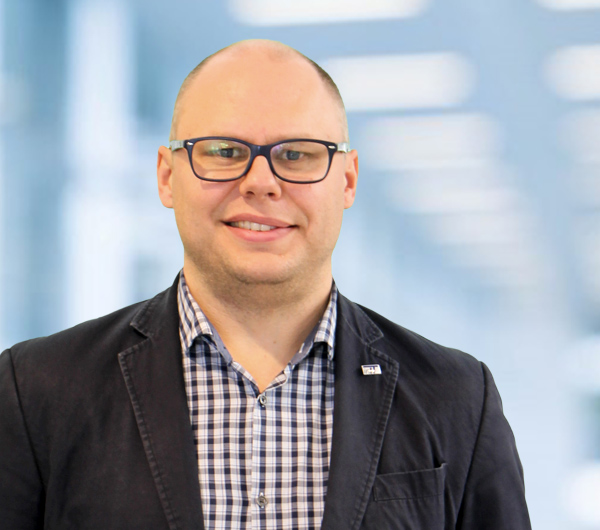
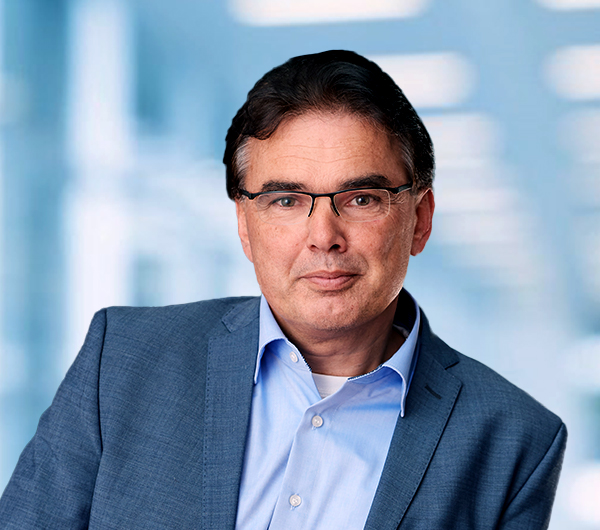
Prof. Dr. Robert Lehmann is a faculty member at the Faculty of Social Sciences of the Nuremberg Institute of Technology , specializing in digital social work and AI applications in counseling. He leads the Institut für e-Beratung and collaborates with the Zentrum für Künstliche Intelligenz (KIZ) . His research spans online consultation , empirical social work science , and blended learning models. Research Themes : Digital transformation in social work, AI ethics, pandemic-era counseling adaptations. Projects : HeLB (funded by BMFSFJ), DIA (Staedtler-Stiftung), Casotex, and VirCo. His recent publications highlight generative AI in counselor training, machine learning for text analysis, and digital service accessibility . He emphasizes data privacy and interdisciplinary collaboration in all projects.
Markus Werkle-Bergner is a Senior Research Scientist at the Max Planck Institute for Human Development's Center for Lifespan Psychology in Berlin. Holding a Habilitation from Ruhr-Universität Bochum (2019) and a PhD in Psychology (Humboldt-Universität zu Berlin, 2009), his work bridges lifespan developmental neuroscience and memory mechanisms . He leads research on age-related changes in neural oscillations , neuromodulatory systems , and memory consolidation , particularly focusing on EEG correlates and multivariate statistical models of cognitive change. His research has been recognized through the Jacobs Foundation Research Fellowship (2017-2019) and extensive publications in top journals like Nature Human Behaviour and Neuron . He supervises students including Eva S. Buchberger (PhD, 2023) and Chikezie M. (Master's, 2024) at Freie Universität Berlin. Current projects like Lifespan Rhythms of Memory and Cognition (RHYME) explore how sleep spindle-oscillation coupling and neuromodulatory integrity affect memory across ages. Key publications reveal that rostral locus coeruleus integrity predicts memory performance in older adults (Nature Human Behaviour, 2019), and that pre-stimulus alpha-lateralization declines in aging (NeuroImage, 2019). His methodological innovations include single-trial neural rhythm characterization and power estimation for developmental SEM models . Awards and editorial roles in Neuroscience & Biobehavioral Reviews emphasize his leadership in cognitive aging and developmental neuroscience .
Dr.-Ing. Jan Kodet is a researcher at the Geodetic Observatory Wettzell, affiliated with the Technical University of Munich (TUM), specifically within the Engineering Institute for Astronomical and Physical Geodesy. His work centers on advanced instrumentation and measurement techniques in space geodesy, including satellite laser ranging, VLBI, and ring laser interferometry for monitoring Earth's rotation. University: Technical University of Munich Research Institute: Engineering Institute for Astronomical and Physical Geodesy Observatory: Geodetic Observatory Wettzell Email: jan.kodet@tum.de His research interests span space geodesy, ring laser interferometry, time and frequency transfer, satellite tracking, and geodetic instrumentation. He develops high-precision systems for optical timing, photon counting, and co-location of geodetic techniques. His work contributes to global geodetic reference systems and fundamental metrology. The recent publications highlight a strong focus on measuring Earth's rotation using large ring lasers (e.g., ROMY), developing optical event timers for satellite ranging, and advancing VLBI techniques for satellite tracking. There is a clear trend toward integrating multiple geodetic techniques and achieving sub-picosecond timing precision for improved geodetic accuracy. Dr. Kodet has supervised master’s students, including Hanna, Maria (2022) on clock comparisons using event timers and Wong, Siow Kay (2018) on atomic clock synchronization via GNSS. His collaborative research involves institutions and projects like ESA, DFG (NEROGRAV, UPLIFT), and international geodetic networks. He is a key contributor to projects involving the Wettzell observatory, such as VGOS and fundamental station development. His work is supported by involvement in major research initiatives including the DFG Research Unit NEROGRAV and the DFG Research Training Group UPLIFT, indicating active grant funding and participation in structured research programs.
Prof. Anton Sirota is a Professor and Research Group Leader at the LMU Division of Neurobiology and a member of the Bernstein Center for Computational Neuroscience (BCCN Munich). He leads the MSc Neuroscience Examination Committee and is a full member of the Graduate School of Neural and Behavioral Sciences (GSN). His research focuses on mechanisms of information representation and propagation in cortical networks, particularly between the neocortex and hippocampus during learning and sleep. He employs advanced techniques including multichannel electrophysiology, optogenetics, and virtual reality to study neural dynamics in behaving rats. His lab uses graphene-based sensors and multiplexed neural probes for high-resolution brain mapping. Research Interests: Neurophysiological mechanisms of learning and memory consolidation Cortico-hippocampal network dynamics Neural oscillations and their role in information transfer Development of neurotechnologies for brain activity recording (e.g., graphene sensors, SiNAPS probes) Role of respiration in coordinating neural networks Advising: Current advisee Arash Shahidi . Graduated students include Dr. Nicholas Del Grosso , Dr. Andrey Sobolev , Dr. Elena Itzcovich , and Fabián Štoček . Labs/Teams: Active in the Cognitive Neurophysiology Lab , leveraging cutting-edge tools like multishank silicon probes and optogenetic modulation. Collaborates on projects involving virtual reality systems for rodent behavior studies and computational modeling of neural networks.
Dr. Alexander Matthias Walter is an Emmy Noether Junior Research Group Leader at the Leibniz Institute for Molecular Pharmacology (FMP) in Berlin, affiliated with Charité - Universitätsmedizin Berlin within the Molecular and Theoretical Neuroscience department. Holding a Dr. rer. nat. from the International Max Planck Research School, Walter specializes in synaptic transmission mechanisms, SNARE protein function, and exocytosis regulation. Education: Master of Science in Neuroscience (Göttingen & Karolinska Institute, 2004-2006), Vordiplom in Chemistry (Göttingen, 2003), B.Sc. in Chemistry (2001-2004) Key Research Areas: Synaptic vesicle fusion, active zone architecture, phosphoinositide signaling, and computational modeling of neurotransmission His research combines molecular biology, imaging, and mathematical modeling to unravel the biophysical basis of synaptic communication. Publications in Nature Communications , Neuron , and eLife highlight his work on presynaptic potentiation, SNARE dynamics, and active zone scaffolding. Scientific Recognition: Japan Neuroscience Society award (2017), EMBO Long-term Fellowship (2010), DAAD Scholarship (2005), and multiple grants including DFG's Emmy Noether program (2015)
Mahsa Shirmohammadi is a CNRS researcher at Institut de Recherche en Informatique Fondamentale (IRIF) , Université de Paris. Her research focuses on verification, probabilistic models, infinite-state systems, automata theory, and numerical computation. Education : PhD from LSV, ENS de Cachan (France) and ULB (Belgium). Previous Affiliation : Postdoctoral researcher at University of Oxford (UK). Her work addresses stochastic games , timed automata , matrix groups , and algebraic computation . Recent publications analyze strategy complexity, synchronization in decision processes, and parametric algebraic problems. Key collaborators include Stefan Kiefer, Richard Mayr, James Worrell, and Patrick Totzke. Her research has been published in venues like ACM SIGLOG News, ICALP, LICS, and ISSAC. Contact: mahsa@irif.fr , +33 (0)1 57 27 92 29, Office 4017 (Sophie Germain building, Paris).
Professor Iftekhar Hasan is a distinguished academic affiliated with Fordham University’s Gabelli School of Business and the Leibniz Institute for Economic Research Halle (IWH). He holds the E. Gerald Corrigan Chair in Finance, directs Fordham’s Ph.D. program, and serves as editor-in-chief of the Journal of Financial Stability . Research Fellow at IWH since 2016 Scientific advisor to the Central Bank of Finland Fractional faculty at the University of Sydney Research fellow at the Wharton Financial Institutions Center His research spans financial institutions , corporate finance , capital markets , and emerging economies , with interdisciplinary policy implications. Recent work explores CEO compensation dynamics, political ties’ impact on financial cycles, and religion’s role in household debt. He has over 475 publications, including books and articles in top-tier journals like Journal of Financial Economics and Strategic Management Journal . Notable awards include Fulbright Scholar, Changjiang Scholar (China), Louis Bachelier Fellow (France), and multiple honorary doctorates . He has advised international organizations such as the World Bank, IMF, and Banque de France. Over 475 publications Editor-in-Chief of Journal of Financial Stability 15+ years of academic leadership Global advisory roles His teaching and research emphasize interdisciplinary finance , with doctoral students and co-authored studies on topics like gender in finance , technological innovation , and banking deregulation . Publications frequently appear in Journal of Financial and Quantitative Analysis , European Economic Review , and Management Science .
Prof. Douglas Biber is a Regents’ Professor in the Applied Linguistics Program (English Department) at Northern Arizona University. He holds a Ph.D. in Linguistics from the University of Southern California (1984) and an Honorary Ph.D. from the University of Uppsala (2000). His research focuses on corpus linguistics, register variation, and discourse analysis. He has held visiting professorships globally, including at the Universities of Copenhagen, Hamburg, Zurich, and Bergen. Key research interests include grammatical complexity across registers, formulaic language patterns, and quantitative corpus methodologies. His work explores how linguistic features vary systematically in different discourse contexts, with applications to language teaching and computational linguistics. Notable contributions include foundational texts like Variation across Speech and Writing (1988) and Dimensions of Register Variation (1995). During his FRIAS fellowship (Nov-Dec 2008), he developed statistical models to analyze linguistic variation, focusing on grammatical complexity and formulaic discourse structures. Awards: Honorary Ph.D. (Uppsala University, 2000) Global Collaboration: Visiting professorships at over 15 institutions worldwide since 1990 Methodological Innovation: Pioneered multi-dimensional analysis of linguistic variation
Olivier Festor is a Researcher at INRIA (French National Institute for Research in Digital Science and Technology), specializing in network security, cloud computing, and IoT. His work focuses on developing scalable solutions for modern network challenges, including in-network computation, cloud service security, and anomaly detection. Research Interests: Dr. Festor investigates vulnerabilities in distributed systems, designs protocols for efficient data processing (e.g., stateful in-network computation), and pioneers frameworks for IoT threat emulation. His recent work emphasizes cloud gaming optimization, automated security for service migrations, and darknet-based threat intelligence. Publication Trends: Over 200 publications (1993–2024) reflect a shift toward cloud/IoT security and programmable networks. Recent articles prioritize machine learning for traffic classification, TOSCA-based cloud orchestration, and P4-enabled data planes, highlighting applied research with industry relevance.
Dr. Katharina Kirsten is a researcher at the Institute for Didactics of Mathematics and Informatik, Department of Mathematics and Computer Science, University of Münster. Her work focuses on empirical studies in undergraduate mathematics education, particularly proof comprehension, instructional videos, and the impact of teaching modes (on-campus vs. distance) on student learning. Her research interests lie at the intersection of mathematics education, cognitive science, and educational technology. She investigates how students engage with mathematical proofs, use instructional videos, and develop cognitive and affective traits during their early university studies. Key areas include proof construction, example usage, validation strategies, and the design of effective digital learning materials. The recent publications highlight a strong focus on comparative studies of learning environments (e.g., flipped classrooms, synchronous distance vs. on-campus), mode effects in assessments, and detailed analyses of student behaviors in proof-related tasks. Her work frequently employs empirical methodologies to assess performance gains, viewing strategies, and affective outcomes such as interest and self-efficacy. Dr. Kirsten has been active in presenting her research at major international conferences including ICME, ERME, and GDM. She is a key contributor to the ProVie project, which explores strategic video use in proof-based instruction. While no formal advising or grant information is listed, her collaborative publications suggest active involvement in research teams and projects.
Dr. Charlotte Debus serves as a junior research group leader at the Scientific Computing Center (SCC) of Karlsruhe Institute of Technology (KIT), directing her independently funded research group since 2022. Her work pioneers sustainable artificial intelligence through robustness optimization, energy efficiency improvements, and carbon footprint reduction in large-scale AI systems. Her academic foundation includes a physics degree and doctoral research focused on AI methods for medical imaging. Prior to leading her KIT group, she contributed to the Helmholtz AI program as an AI consultant, advising researchers across the Helmholtz Association on AI implementation strategies. Dr. Debus's research integrates high-performance computing (HPC) principles into AI training workflows to eliminate computational bottlenecks. She demonstrates how synchronizing data loading, forward/backward computation, and network communication across CPU/GPU architectures minimizes idle time and energy waste. Her meteorology case study proves 2D AI architectures achieve weather forecasting accuracy comparable to 3D models while drastically reducing training time and resource consumption—revealing data processing speed and volume as critical efficiency factors beyond dimensional structure. Funded by the German Federal Ministry of Education and Research, her group develops transparent benchmarking frameworks for AI energy consumption metrics. She actively advocates for industry-wide adoption of these standards to convert computational energy use into tangible CO2 emissions data, driving environmentally responsible AI development practices across research and industry sectors.
Prof. Dr. Matthias Tichy is a Full Professor and head of the Institute of Software Engineering and Programming Languages at Ulm University, Germany, since 2015. His research focuses on domain-specific languages (DSLs), model-driven engineering (MDE), self-adaptive software , and cyber-physical systems , with an emphasis on safety-critical applications and graph transformation formalisms. He employs empirical research methods to evaluate technical contributions and human factors in software engineering. University: Ulm University Role: Professor & Institute Head Research Interests span domain-specific languages for mechatronic systems, collaborative modeling , performance prediction in model transformations, and software evolution in industrial contexts. His work often bridges graph transformations and safety assurance for self-adaptive systems. Recent Publications highlight trends in model versioning (e.g., operation-based caching), DSL design (e.g., flowR for R code analysis), and automotive software testing (e.g., clustering test case specifications). He frequently collaborates with international institutions on topics like cyber-physical systems and IoT resilience . Key Collaborations include projects with Chalmers University, University of Gothenburg, and industrial partners like dSPACE GmbH. His grants and industry partnerships focus on automotive software , robotics , and self-healing systems .
Prof. Dr. rer. pol. habil. Udo Buscher is a full Professor and Chair of Business Administration, especially Industrial Management, at the Department of Economics, Faculty of Business and Economics, TU Dresden, Germany. He has held this active professorial chair since at least 2003 and is recognized for his extensive research in operations research, production management, logistics, and supply chain optimization. His research interests span Business Administration , Industrial Management , Operations Research , and Logistics , with particular emphasis on: Batch-sizing and lot-sizing models in multi-stage production systems Integrated production and reprocessing/remanufacturing processes Supply chain coordination and cost-oriented logistics management Transfer pricing from organizational and agency-theoretic perspectives Optimization under uncertainty using fuzzy set approaches Across more than two decades, Prof. Buscher has published prolifically in leading journals such as Computers & Operations Research , Journal of the Operational Research Society , OMEGA , and Journal of Business Administration . His work consistently addresses practical decision problems in production and logistics, blending rigorous quantitative models with managerial insights. His monographs include the 2003 habilitation thesis Cost-Oriented Logistics Management in Metalogistics Systems and the 1997 dissertation Transfer Pricing from an Organizational and Agency Theory Perspective , both published by leading German academic presses. These works underpin his reputation in cost-oriented production and logistics research. Prof. Buscher is accessible via email at udo.buscher@tu-dresden.de and is located at Münchner Platz 2–3, 01069 Dresden, Germany. No specific student advisees are listed in the provided sources.
Lukasz Wisniewski is a Professor at Ostwestfalen-Lippe University of Applied Sciences (TH OWL), where he serves as Deputy Director of the Institute Industrial IT (inIT) since 2024. He leads the research area 'Technologies of Digital Transformation' and established the bachelor's program 'Digital Management Solutions' (DiMS) in Herford starting 2022. Research Focus: Internet of Things (IoT), industrial communication technologies, digital business models, heterogeneous networks, and AI-driven automation systems. Leadership: Research group manager at inIT (2014–2022), active in IEEE committees, and organizer of major conferences like IEEE ETFA and WFCS. His recent work emphasizes AI integration for wireless network reliability, asset administration shells (AAS), OPC UA PubSub/TSN convergence, and 5G network slicing in industrial contexts. He has published extensively on these topics, with a focus on zero-touch management and cybersecurity. Scientific recognition includes Best Paper Awards at IEEE ETFA 2012 and IEEE WFCS 2017. He contributes as Guest Editor to IEEE Access and Transactions on Industrial Informatics.
Prof. Jürgen Jasperneite is the director of Fraunhofer IOSB-INA in Lemgo and a board member of the Institute for Industrial Information Technology (inIT) at Ostwestfalen-Lippe University of Applied Sciences (TH OWL). He holds the Professorship for Computer Networks and focuses on industrial communication systems for cyber-physical systems and IoT. Current affiliations: Fraunhofer IOSB-INA (Director), inIT (Board Member), TH OWL (Professor) International collaborations: Guest Professor at Midsweden University (2021–present), Research Fellow at Stanford University (2017–present) Research Interests include: Distributed real-time communication and processing 5G/6G integration into industrial networks Time-Sensitive Networking (TSN) and Ethernet migration Semantic interoperability and IT security SmartFactoryOWL and Industry 4.0 testbeds Zero-touch management and network digital twins His work spans manufacturing, process automation, logistics, and urban mobility , with a focus on bridging information technology (IT) and operational technology (OT) through standards like OPC UA and PROFINET. Scientific Recognition : IEEE Senior Member (since 2006) Over 250 publications and conference leadership roles Best Paper Awards at IEEE ISPCS (2007), IEEE ETFA (2012), GI Echtzeit (2014) Founding director of Germany's first Fraunhofer application center for industrial automation Contact: computernetworks@init-owl.de