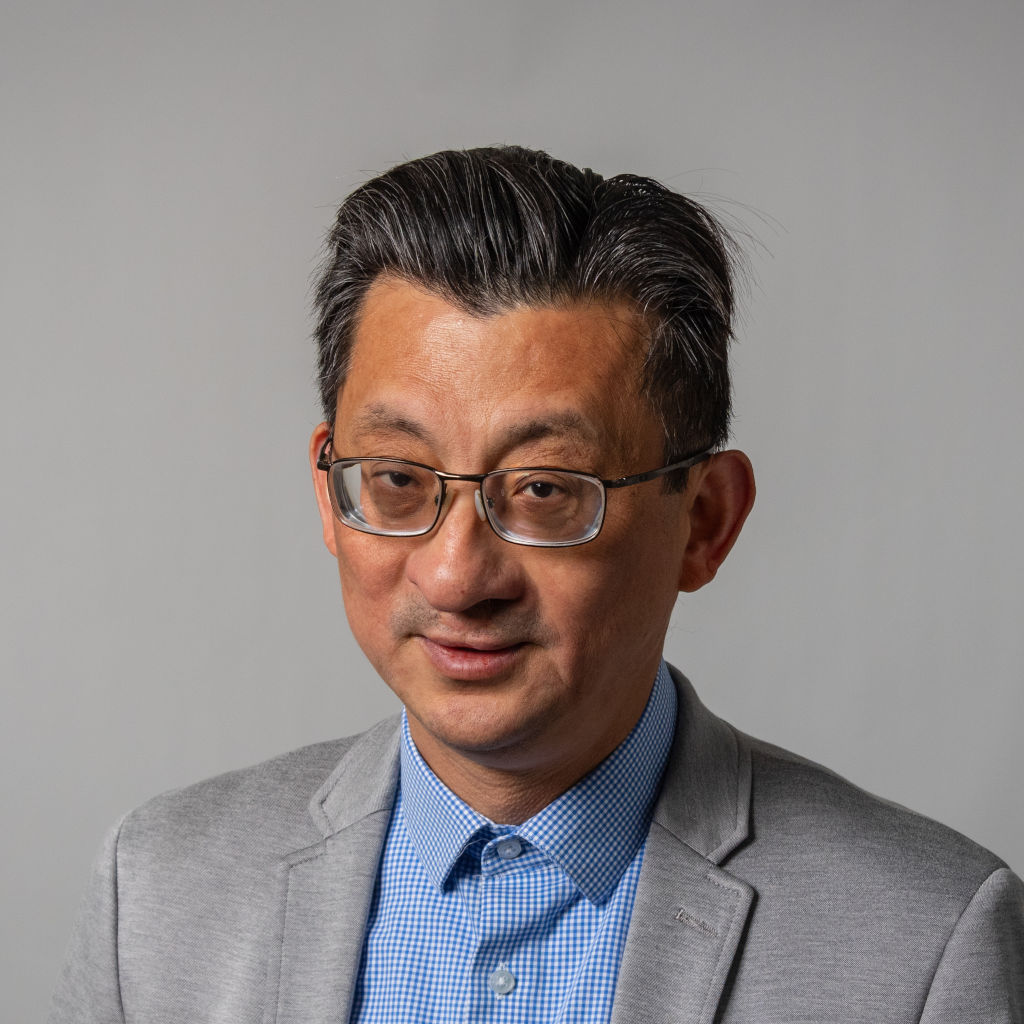
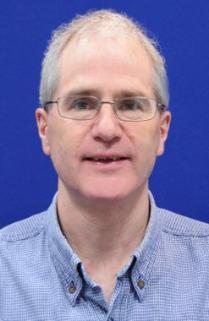
Jiong Tang is a Pratt & Whitney Chair Professor in Design and Manufacturing at the University of Connecticut , where he also serves as Co-Director of the Management and Engineering for Manufacturing Program . He received his B.S. and M.S. in Applied Mechanics from Fudan University, China (1989 and 1992), and his Ph.D. in Mechanical Engineering from Pennsylvania State University (2001). Prior to joining UConn, he worked at the GE Research Center as a research engineer. Research Interests : System dynamics, control theory, smart materials, vibration suppression, uncertainty propagation, computational intelligence, and multi-physics system modeling. Current Projects : Digital twin development for aerospace materials, physics-informed machine learning in manufacturing, adaptive metasurface design, and optimization of cooperative robotics. Methodological Focus : Combines Bayesian deep learning , Gaussian process metamodeling , transformer-based architectures , and multi-fidelity data fusion for industrial applications. His work emphasizes smart sensing , electromechanical integration , and uncertainty-robust inverse analysis . Collaboration : Research funded by federal agencies and industrial partners , with particular emphasis on aerospace and manufacturing technologies. His recent publications highlight generative adversarial networks for defect detection , piezoelectric metamaterials , and physics-guided neural network architectures across mechanical, structural, and composite systems.
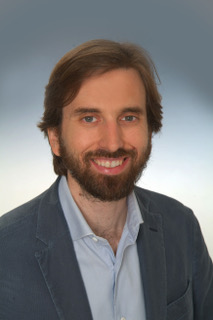
Giacomo Handjaras is an Assistant Professor at the IMT School for Advanced Studies Lucca, affiliated with the MOMILAB research group. His work focuses on neuroimaging, sleep neurophysiology, affective neuroscience, and brain structure-function relationships. He explores topics such as neural correlates of emotions, sleep dynamics, and motor control mechanisms using advanced methodologies like EEG, fMRI, and computational linguistics. Research interests include: (1) Sleep architecture and slow-wave subtypes linked to thalamic activity, (2) Multisensory integration in perception and action, (3) Neuroplasticity in sensory restoration, (4) Computational analysis of dream semantics, and (5) Telemedicine applications in cardiac rehabilitation. His studies often integrate behavioral, neuroimaging, and computational approaches. Recent publications highlight trends in sleep-brain interactions, affective processing across modalities, and neural mechanisms underlying communication deficits. He has contributed to understanding the role of thalamic regulation in sleep stages and the impact of sensory deprivation on brain organization in congenitally blind individuals. His work bridges basic neuroscience with clinical applications in rehabilitation and cardiovascular health.
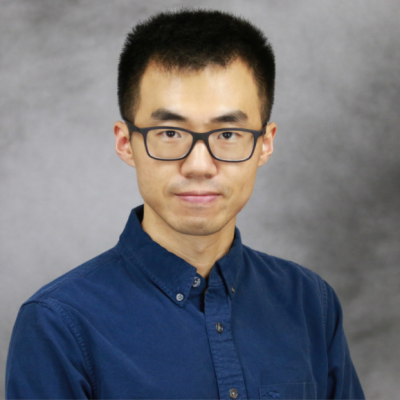
Sheng Li is an Adjunct Assistant Professor in the School of Computing at the University of Georgia (UGA). He holds roles such as Graduate Program Faculty and Courtesy Faculty in the Institute of Bioinformatics. Previously, he served as an Assistant Professor at UGA from August 2018 to July 2022. His research focuses on Machine Learning, Computer Vision, Data Mining, Natural Language Processing, Causal Inference, and User Modeling. Li earned his Ph.D. in Computer Engineering from Northeastern University in 2017, following degrees from Nanjing Institute of Post and Telecommunications in China. His work bridges theoretical advancements and practical applications, including AI solutions for healthcare (e.g., medication adherence monitoring), computer vision for wildlife tracking (fish re-identification), and causal inference methodologies. He has received notable awards like the Fred C. Davison Early Career Scholar Award (2022) and the Aharon Katzir Young Investigator Award (2020). His research is funded by grants from agencies such as the US Department of Defense and NIH, supporting projects like Knowledge-Guided Scene Graph Generation and Reasoning for Visual Understanding. Li’s publications span top venues in AI and computer science, addressing challenges in domain adaptation, trustworthy AI, and multimodal learning. He has collaborated on interdisciplinary projects, including bioinformatics and agricultural NLP. His contributions emphasize both technical innovation and societal impact.
Dr. Antonio Andriella is a Postdoctoral Researcher at the Institut de Robòtica i Informàtica Industrial (IRII), a joint research center of the Spanish National Research Council (CSIC) and Technical University of Catalonia (UPC). He is an incoming Tenured Scientist at IRII expected to start by the beginning of 2026. Previously, he was a Research Scientist at Pal Robotics awarded with a Marie Skłodowska-Curie cofund fellowship in the H2020 project PRO-CARED (no.801342), and a Postdoctoral Researcher at the Artificial Intelligence Research Institute (IIIA) working on the Value-Aware Artificial Intelligence (VALAWAI) project. His educational background includes: PhD in Control, Robotics and Vision (2022) from Institut de Robotica i Informatica Industrial, CSIC-UPC MEng in Artificial Intelligence (2009) from Sapienza, University of Rome BSc in Computer Engineering (2006) from Sapienza, University of Rome Dr. Andriella's research focuses on creating proactive, personalized robots that can tailor their behavior to individual needs and preferences. His work spans Human-Centered Robotics , Socially Assistive Robotics , Robot Personalisation , Proactive Behaviour , and Explainable Robotics . He investigates how robots can explain their decisions to help users build clearer mental models of these systems, ultimately making robots more transparent and understandable. His research has significant applications in healthcare, particularly for elderly care and cognitive training. His recent publications demonstrate a strong focus on applying robotics to healthcare challenges, particularly in cognitive training for elderly patients with cognitive impairments. His work bridges theoretical AI approaches with practical applications in real-world environments, emphasizing user experience, personalization, and explainability across various contexts including frailty assessment, customer service interactions, and therapeutic applications. His scientific achievements have been recognized with prestigious awards: Georges Giralt award for the best European PhD thesis from euRobotics AIHUB.CSIC prize for the best AI PhD Thesis from the AI Hub of the Spanish National Research Council (CSIC) Dr. Andriella has been actively involved in multiple research projects including SWEET (Social aWareness for sErvicE roboTs), ROSPIA, FRAILWATCH, and DEMETER 5.0. He has organized workshops on trust, AI, ethics and personalization at major conferences including HRI, RO-MAN and ICSR, and has served as guest editor for journals such as International Journal of Social Robotics, Frontiers in Robotics and AI, and Paladyn Journal of Behaviour and Interaction Studies. His research group focuses on developing the CARESSER framework (aCtive leARning agEnt aSsiStive bEhaviouR) for in situ learning of robot social assistance, with applications in cognitive training therapy and elderly care. Current projects are exploring robot-assisted frailty assessment systems, dataset reliability for HRI research, and multilingual intent recognition on social robots, demonstrating his commitment to both theoretical advancements and practical implementations in the field.
Junming Zeng is a Researcher at the Department of Electrical and Electronic Engineering, Faculty of Engineering at Imperial College London. His work focuses on advanced CMOS technologies for biomedical applications, including lab-on-chip platforms and ion imaging systems. He holds a PhD from Imperial College London (2022), following a Master's in Analogue and Digital Integrated Circuit Design (2017) and a Bachelor's in Electronic Engineering (2016), both from UK institutions. His research interests span analogue/mixed-signal IC design, FPGA-based digital systems, and ultra-high-speed ion sensing solutions. He has pioneered CMOS lab-on-chip platforms for real-time chemical monitoring and developed compressed sensing techniques for optimizing sensor array performance. His work integrates deep learning for applications like diabetes glucose prediction and drift compensation in ISFET sensors. Zeng has received the Best Student Paper Award (1st Prize) at ISCAS 2018 and Imperial's Department PhD Scholarship. His research bridges electrical engineering and biomedical engineering, with a focus on scalable, energy-efficient systems for healthcare and diagnostics. He leads projects involving edge computing, temporal fusion transformers, and microfluidic integration, demonstrating expertise in both hardware innovation and algorithmic development. His lab develops cutting-edge systems such as 1000fps ISFET SoCs with programmable gain and high-throughput digital readout architectures. Recent work includes live demonstrations of real-time pH monitoring in 3D-printed microfluidic systems and spatio-temporal ion membrane characterization platforms.
Artem Barger is a researcher specializing in blockchain technology, distributed systems, and database optimization. With affiliations primarily in blockchain development and academic research, he has contributed extensively to Hyperledger Fabric enhancements and decentralized information systems. Research Interests Optimizing state databases for blockchain platforms Byzantine Fault Tolerance in distributed networks Permissioned blockchain architectures Tokenization of real-world assets AI applications in soft skills evaluation Recent Publications Barger's work focuses on improving blockchain scalability and security through techniques like certification blocks, Patricia Merkle tries, and verifiable randomness. He has also explored tokenization applications in charity and energy sectors.
Yan Li is a researcher with extensive contributions across interdisciplinary domains including Machine Learning , Signal Processing , and Environmental Science . Affiliated with institutions such as the University of Southern Queensland , Hebei University , and Shandong University , Li's work spans applications in Medical Informatics , Remote Sensing , and Operations Research . Recent publications highlight expertise in Deep Learning (e.g., hyperspectral classification, image fusion), Stochastic Modeling (e.g., chemotaxis models), and Federated Learning (e.g., vertical federated fuzzy clustering). Collaborative projects include 3D Reconstruction , Smart Grid Security , and Landslide Monitoring using satellite data. Li's 2025 work demonstrates a focus on Medical Imaging (segmentation algorithms with dual-frequency decoupling), AI in Education (ChatGPT adoption), and Industrial IoT (GPU-accelerated vessel trajectory visualization). While no explicit academic rank is provided, their prolific publication record suggests a Researcher role.
Nori Jacoby is an Assistant Professor in the Department of Psychology at Cornell University and a Research Group Leader at the Max Planck Institute for Empirical Aesthetics in Frankfurt. Her research bridges cognitive science, neuroscience, and machine learning to explore how internal representations shape sensory and cognitive abilities, with a focus on universality/diversity in perception and collective behavior. Education: PhD from Hebrew University of Jerusalem (ELSC), postdocs at MIT, UC Berkeley, and Columbia University Lab: Directs the CoCoCo Lab (Cornell Computational Cognition Lab) Funding: NSF-funded postdoctoral program collaborating with UC Davis, CUNY, and Princeton Research interests include: High-dimensional perceptual spaces using adaptive sampling (e.g., Gibbs sampling with people) Cross-cultural studies of music and perception via global experiments Human-AI hybrid systems for collective creativity and decision-making Recent work explores mechanisms of cultural diversity in urban populations, neural correlates of rhythm in stroke patients, and LLM alignment with human sensory judgments. Current projects include large-scale music evolution experiments and NSF-funded studies on collective intelligence. Recruitment: Actively hiring postdocs and PhD students for interdisciplinary work.
Mehmet BÜYÜK is an Associate Professor at the Department of Electrical and Electronics Engineering, Faculty of Engineering, Adıyaman University. He serves as Vice Dean of the Faculty since August 2023. He holds a PhD from Çukurova University (2019) and has been an IEEE member since 2015. Education: BSc (2007-2012), MSc (2015), PhD (2019) in Electrical and Electronics Engineering from Çukurova University. Professional roles include Research Assistant (2015-2020), Research Lecturer (2020-2022), Assistant Professor (2022-2023), and current Associate Professor status. Research focuses on renewable energy systems, electric vehicles, power electronics converters, and grid integration challenges. Notable projects include wireless power transfer systems, V2G/V2H interfaces, and smart home energy management. Publications emphasize power quality solutions, inverter topologies, and fuel cell applications. Awards include multiple TÜBİTAK incentives and a Wiley Top Cited Article recognition. Active in reviewing for top journals like Renewable and Sustainable Energy Reviews. Current activities include leading the faculty as Vice Dean, supervising student projects, and collaborating on TÜBİTAK-funded research projects addressing renewable energy challenges and emergency power systems.
Erja Sipilä is a University Lecturer and Vice Dean for Education at the Faculty of Information Technology and Communication Sciences, Tampere University. She specializes in interdisciplinary research at the intersection of e-textiles, educational technology, and sensor systems. Her work includes developing wearable healthcare devices for swallowing movement analysis and advancing flipped learning methodologies in engineering education. She actively contributes to smart clothing innovation and RFID technology research, particularly in additive manufacturing applications. Her research focuses on practical solutions for healthcare monitoring, user-centered textile sensor design, and improving STEM pedagogy through blended learning systems. Key projects include the Smart Campus Innovation Lab and initiatives to transition traditional teaching to online/digital formats. She has led curriculum development efforts in electronics engineering, emphasizing hands-on project work and anonymous feedback systems to enhance student learning experiences. Erja has organized workshops on educational technology and participated in SEFI conferences, highlighting her commitment to academic networking and educational policy. While no specific awards are listed, her contributions to pedagogical innovation and wearable technology development demonstrate impactful academic engagement.
Juho Kanniainen is a Professor of Computing Sciences at Tampere University (Finland), leading the Financial Computing and Data Analytics research group. He has directed large EU projects like HPCFinance and BigDataFinance, securing €7.5M in funding. He heads the international MSc program in Computing Sciences at Tampere University. His research focuses on machine learning, statistical computing, and mathematical modeling applied to time-series analysis, graphs, and financial markets (e.g., limit order books, information cascades). He has published in top journals including IEEE Transactions on Neural Networks and Learning Systems, Pattern Recognition, and the Review of Finance. He has supervised/co-supervised 10 PhD students and organized conferences. His work bridges computational methods with finance, healthcare, and sustainability, exemplified by recent projects in emergency department crowding prediction and circular bioeconomy logistics.
Giovanni Duca is a PhD student at the University of Milan (Italy) and a Visiting Researcher at Northeastern University's College of Social Sciences and Humanities (CSSH). His research focuses on formal epistemology and logic, particularly exploring the interplay between qualitative and quantitative belief representations under learning new information. He investigates normative constraints on doxastic attitudes, bridging synchronic and diachronic rationality principles. Education: PhD Candidate, University of Milan, Italy Research Interests: Giovanni’s work delves into reasoning, belief evaluation, and the stability of belief systems. He examines how odds-threshold orders and hypothesis comparisons under uncertain evidence shape epistemic frameworks. His inquiries address foundational questions in decision theory and the philosophy of science. Grants & Advising: No specific grants or advisees listed in available records. Labs/Teams: Current affiliations not detailed beyond CSSH and University of Milan.
Professor David Halliday holds a position at the University of York as a Professor and Chair of the Research Committee. His research focuses on interdisciplinary fields of Computational Neuroscience and Neural Computing, with a particular emphasis on neural networks and neurophysiological signal analysis. He leads the Intelligent Systems and Nano-science Group and maintains an active research profile with over 100 publications. His work integrates theoretical modeling with experimental techniques to investigate topics such as motor control, neural oscillations, and clinical applications of machine learning. David Halliday's academic training includes a BSc and PhD, though specific institutions are not detailed in the provided text. His research interests span computational modeling of neural circuits, development of neuro-inspired algorithms, and application of signal processing techniques to neurological disorders. His homepage at http://www-users.york.ac.uk/~dh20 provides further details, including access to his ResearcherID profile (RID: A-3848-2009). Key research contributions include studies on cortico-muscular coherence in movement disorders, astrocyte-neuron interactions, and fault-tolerant spiking neural networks. His publications demonstrate interdisciplinary collaboration across computational neuroscience, biomedical engineering, and clinical diagnostics. Notably, his work combines experimental neurophysiology with advanced computational methods, such as non-parametric directionality analysis and wavelet-based coherence estimation. Recent studies have addressed clinically relevant topics like gait disturbance in spinal cord injury and biomarker identification in bladder cancer using machine learning approaches.
Andrea Schiavio is a Senior Lecturer in Music at the University of York, UK, and holds roles including Past President of ESCOM (European Society for the Cognitive Sciences of Music). He earned his PhD in Music from the University of Sheffield (2014) and has held postdoctoral positions at Ohio State University, Bosphorus University, and the University of Music and Performing Arts Graz. His research focuses on embodied cognitive science approaches to music, including creativity, skill acquisition, and the intersection of music with perception, emotion, and culture. Research Interests: Embodied music cognition, musical creativity, music education, cultural and philosophical foundations of music psychology, and interdisciplinary science-humanities collaboration. Current projects include the ERC Synergy Grant-funded REM@KE project reconstructing historic musical instruments through embodied cognition methods. Awards: €8M ERC Synergy Grant (2024), FWF Lise Meitner Fellowship (2017), and a FWF Stand-Alone Grant (2019). Editor of the Oxford University Press book series Music as Art and Science and co-author of Musical Bodies, Musical Minds (MIT Press, 2022). Teaching: Leads courses on music cognition, philosophy of music, and pedagogical practices. Collaborates internationally, including roles in grant-funded research and editorial boards.
Dr. Anthony D. Ross, Sr. is the Leggett & Platt Missouri Distinguished Professor of Supply Chain Management and Professor of Management at the Robert J. Trulaske College of Business, University of Missouri. He serves as President-Elect of the Decision Sciences Institute (2024-2027) and has held leadership roles at institutions like the University of Wisconsin-Milwaukee, where he founded the Supply Chain Management Institute and secured $3M in corporate funding. His expertise bridges academia and industry, focusing on supply chain operations, logistics, and operational efficiency. Research interests include supply chain design, supplier performance evaluation, healthcare operations, staff scheduling, and closed-loop systems. Notable contributions involve integrating technical insights from software engineering into supply chain education and practice. His work emphasizes experiential learning, leading to UWM’s top-tier supply chain program recognition in Gartner rankings. Dr. Ross advises both academic and corporate entities, with consulting experience across 15+ industries. His leadership in industry-academia collaborations and strategic program development underscores his dual focus on theoretical and practical contributions to supply chain management. Past roles include Donald Gordon International Fellow at the University of Cape Town and inaugural holder of Rockwell Automation’s Supply Chain Chair at UWM. His career spans teaching, research, and administrative leadership, reflecting a commitment to advancing supply chain education and innovation.