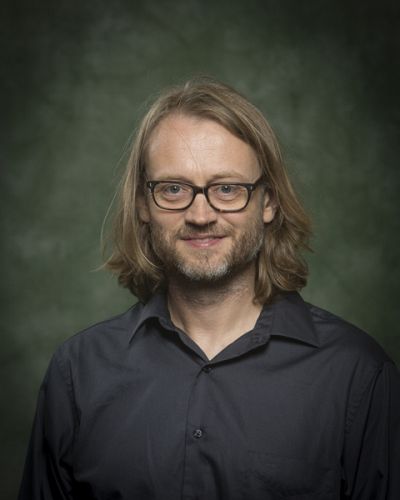
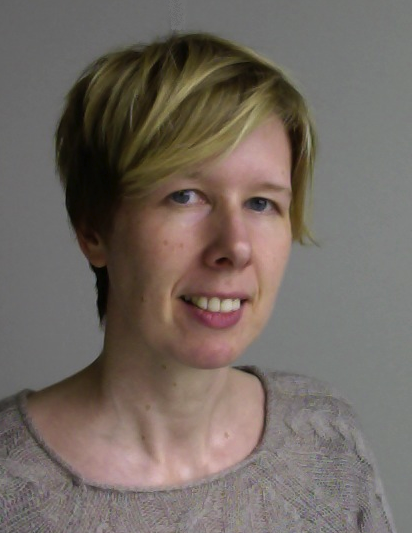
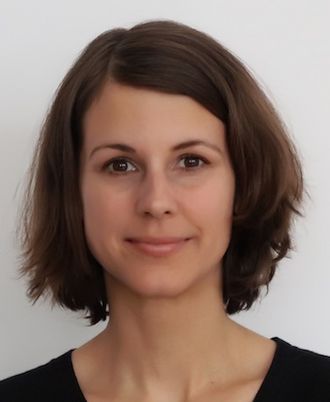
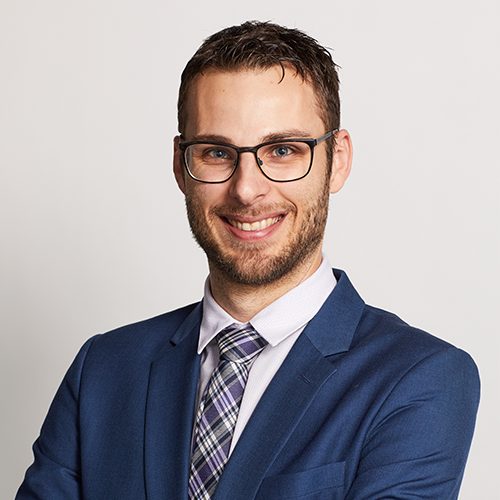
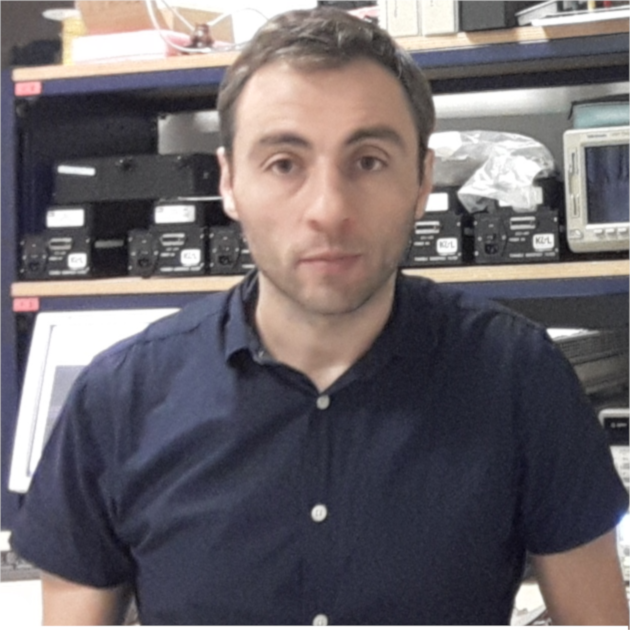
Gregory Key serves as a Turkish Lecturer within the Middle Eastern and Ancient Mediterranean Studies program at Binghamton University. His responsibilities encompass teaching modern Turkish language courses at elementary and intermediate levels, as well as Ottoman Turkish, Turkish literature in translation, and Turkish media and pop culture. Key's research is centered on Turkish linguistics, with a focus on morphosyntax. He investigates the structural properties of Turkish, including causative constructions, unaccusative verbs, and differential object marking. His theoretical work aims to understand Turkish as a coherent synchronic system, and he actively explores the implications of linguistic theory for language pedagogy. His scholarly output demonstrates a consistent emphasis on syntactic and morphological phenomena in Turkish and related languages. Recent publications address complex predicates, language contact between Turkic and Persian, and the decomposition of verbal structures. These contributions highlight his expertise in theoretical linguistics and its application to the Turkish language.
Prosper Dovonon is Full Professor of Economics at Concordia University, Montréal, Canada, where he holds the Tier 1 Concordia University Research Chair in Econometrics of Large Datasets . He is concurrently Adjunct Professor at the University of Adelaide, Australia, and has previously served as Associate and Assistant Professor at Concordia, Visiting Professor at HEC Montréal, and Assistant Vice-President at Barclays Wealth in London. Education Ph.D. in Economics, Université de Montréal (2007) M.Sc. in Statistics and Economics, ENSEA, Abidjan, Côte d’Ivoire (2000) M.Sc. in Mathematics, Université Nationale du Bénin, Abomey-Calavi, Benin (1996) Research Interests Professor Dovonon’s research lies at the intersection of theoretical econometrics and financial data applications . He focuses on developing robust inferential procedures for moment-condition models, bootstrap techniques for high-frequency data, identification issues in GMM, and volatility modeling with factor structures that accommodate skewness and leverage effects. His work on large-dimensional datasets emphasizes scalable methods for estimation and testing in big-data environments. Scientific Awards & Recognition Concordia University Research Chair, Tier 1, in Econometrics of Large Datasets (2022–present) Collaborations & Affiliations Beyond Concordia and the University of Adelaide, he is affiliated with the Centre Interuniversitaire de Recherche en Économie Quantitative (CIREQ) in Montréal and has collaborated with leading scholars across North America, Europe, and Australia. His research is frequently cited in top econometrics and statistics journals, attesting to its broad impact.
Christoph Mulert is a Professor at the Department of Psychiatry and Psychotherapy , Justus-Liebig-Universität Gießen, and serves as the Clinic Director at the University Hospital Giessen. His research focuses on neurophysiological and neurochemical mechanisms underlying visual perception and their alterations in schizotypy. Key research areas include: Gamma oscillations in sensory processing Schizophrenia pathophysiology EEG and fMRI neuroimaging Reward processing networks Dopamine and E/I balance Neural synchronization and hallucinations Recent work explores ketamine models for schizophrenia, tACS applications in psychiatry, and interhemispheric connectivity. Collaborators include G. Leicht, S. Steinmann, and C. Andreou. His team utilizes multimodal neuroimaging to characterize neurophysiological disturbances in psychiatric disorders.
Dr. Silke Hamann is a researcher at the University of Amsterdam, Faculty of Humanities, Department of Linguistics. Her work bridges phonology and phonetics, focusing on the emergence of phonological features, perceptual cues in segmental contrasts, and the interaction of phonology with orthography and language acquisition. Current projects: diachronic loanword adaptation, congenital amusia's impact on speech perception, Bantu languages (with Nancy Kula and Laura Downing), Catalan studies (with Francesc Torres-Tamarit) Research interests span synchronic/diachronic phonology, phonetic perception, computational modeling of phonological acquisition, and cross-linguistic analysis of retroflex consonants. Her publications analyze phenomena in Korean, Japanese, Bantu languages, German, Portuguese, and Slavic languages, with recurring themes of cue weighting, phonological constraints, and orthographic influence. Recent articles highlight her focus on creaky voice diagnostics, loanword phonotactics, congenital amusia, and Bantu intonation systems. Collaborations with Nancy Kula (Bantu) and Francesc Torres-Tamarit (Catalan) underscore her international research network.
Peiyuan Chen is an Associate Professor at the Department of Electric Power Engineering, Chalmers University of Technology. He holds a B.Eng. from Zhejiang University (2004), an M.Sc. from Chalmers (2006), and a Ph.D. from Aalborg University (2010). His research focuses on power system operation and planning with wind power integration, emphasizing time series modeling, statistical analysis, and optimization. He contributes to projects on grid-forming converters, inertia estimation, frequency control, and renewable energy system stability. Research Interests: • Power Systems and Renewable Integration • Grid-Forming Converters and Stability Analysis • Time Series Modeling and Statistical Methods • Machine Learning for Energy Applications • Frequency Control and Synthetic Inertia Recent Publication Trends include studies on deep learning for heating load classification, wind turbine type optimization, fault ride-through capabilities, and inertia estimation in converter-dominated grids. His work bridges theoretical power system analysis with practical implementations in Nordic and European energy networks. Projects (2017-2024) include grants from the Swedish Energy Agency, Swedish Research Council (VR), and collaborations with institutions in Sweden, China, and Italy. Key areas: grid strength metrics, multiport converter applications, and citizen energy communities.
Sophie N. Parragh is Professor and Head of the Institute of Production and Logistics Management at Johannes Kepler University Linz, where she also serves as program director of the master's degree program in Economic and Business Analytics. She received her PhD from the University of Vienna in 2009 and completed her habilitation in 2016, following postdoctoral research at the IBM Center for Advanced Studies in Porto and a visiting professorship at the Vienna University of Economics and Business. Her research focuses on developing exact and heuristic optimization algorithms for complex logistics and transportation problems. Key areas include vehicle routing, green logistics, disaster relief distribution planning, scheduling, and multi-objective optimization. She has particular expertise in branch-and-bound, branch-and-price, column generation, and metaheuristics approaches to solve challenging combinatorial optimization problems. Dr. Parragh's publication record shows a consistent trend toward increasingly complex multi-objective problems, with recent work focusing on electric vehicle routing, multi-echelon production planning under uncertainty, and bi-objective facility location problems with applications in disaster relief. Her research bridges theoretical optimization methods with practical applications in logistics and transportation. Scientific Awards: ÖGOR (Austrian Society for Operations Research) dissertation prize doc.award from the University of Vienna Hertha Firnberg Postdoc fellowship from the Austrian Science Fund (FWF) Dr. Parragh has served as department editor for OR Spectrum and as associate editor for Transportation Science, Transportation Research Part B: Methodological, INFORMS Journal on Computing, and Networks. She has led and participated in numerous third-party funded research projects in operations research, including work in healthcare logistics, field staff routing, production planning, and electric vehicle routing. In 2021-2022, she co-organized the monthly VeRoLog webinar series, demonstrating her active engagement with the international operations research community. She maintains strong research collaborations across Europe, evidenced by her co-authored publications with researchers from institutions in Austria, France, Portugal, Denmark, and beyond. Her work consistently addresses both theoretical challenges in optimization and practical applications in industry and public service contexts.
Dr Matthew Ryan Priestley is a researcher at the School of Electrical Engineering and Telecommunications, University of New South Wales (UNSW). He serves as Lead Technology Translator in the Energy Systems Research Group, focusing on motor drives, power systems, and renewable energy integration. His work spans drone propulsion systems, grid synchronization algorithms, and fault-tolerant motor control. Research Interests: Drone motor drive systems Microgrid and grid-interfacing inverters Fault-tolerant electric machine drives Multi-phase motor control Electric vehicle traction drives Innovative engineering pedagogy Scientific Recognition: Dean’s Award for Outstanding PhD Theses, UNSW, 2019 IEEE IES EMTC paper award, 2018 TALE 2020 outstanding paper award UNSW Founders 10x Accelerator participant Grants & Commercialization: Secured $40k for drone motor drive lab via Digital Grid Infrastructure Scheme, $40k Education Investment Fund grant for capstone teaching methods, and co-founded Motorica – a startup holding patents in specialized motor designs and post-failure control systems. His projects align with UNSW’s Technology for Good initiatives.
Gian Pietro Picco is a Full Professor at the Department of Information Engineering and Computer Science (DISI) at the University of Trento, Italy. His research focuses on wireless networks, particularly ultra-wideband (UWB) technology, wireless sensor networks, and cyber-physical systems. He teaches courses including Distributed Systems, Low-power wireless networking for the Internet of Things, and Programming 2. Professor Picco's research interests span several interconnected domains in pervasive computing and networking: Ultra-wideband (UWB) technology for precise localization and communication Wireless sensor networks and Internet of Things (IoT) systems Cyber-physical systems and networked control Energy-efficient networking protocols Distributed systems and middleware Software engineering approaches for networked embedded systems His recent publications demonstrate a strong focus on ultra-wideband technology applications, particularly in localization, ranging, and concurrent transmissions. His work bridges theoretical foundations with practical implementations, often addressing real-world challenges in human-robot interaction, contact tracing, and infrastructure monitoring. A notable trend is the increasing application of UWB technology for precise positioning in complex environments, with significant contributions to understanding and mitigating human occlusion effects on ranging accuracy. Professor Picco has received numerous prestigious awards for his research contributions: Best Paper Award at IPSN'23 for "Network On or Off? Instant Global Binary Decisions over UWB with Flick" Best Paper Award at IPIN 2019 for "TALLA: Large-scale TDoA Localization with Ultra-wideband Radios" Best Paper Award at EWSN 2018 for "Concurrent Ranging in Ultra-wideband Radios" Best Paper Award at IPSN 2015 for "Geo-referenced Proximity Detection of Wildlife" Best Paper Award at IPSN 2011 for "Wireless Sensor Networks for Adaptive Lighting in Road Tunnels" Best Paper Award at IPSN 2009 for "Monitoring Heritage Buildings with Wireless Sensor Networks" Mark Weiser Best Paper Award at PerCom 2012 Professor Picco actively advises numerous PhD and Master's students, with several of his advisees becoming prominent researchers in wireless networking. His laboratory has secured significant funding for research projects in wireless sensor networks, IoT systems, and cyber-physical systems. His work has practical applications in heritage building monitoring, wildlife tracking, road tunnel lighting systems, and pandemic contact tracing. His research group maintains the Cloves large-scale ultra-wideband testbed and has developed several middleware systems for wireless sensor networks, including Lime and TeenyLIME. The group collaborates extensively with international research institutions and has made significant contributions to standardization efforts in IoT networking protocols.
Chadi Jabbour is a Professor at Institut Polytechnique de Paris , specializing in analog/digital converter design, communication system linearization, and flexible receiver architectures. He leads the Communication Circuits and Systems (C2S) team at the Information Processing and Communication Laboratory (LTCI) in the Communications and Electronics (Comelec) department.
Lale Tükenmez Ergene is a Professor at Istanbul Technical University 's Department of Electrical Engineering, specializing in Electrical Machines and Energy Conversion . Her work bridges theoretical research and practical applications in motor design for electric vehicles and home appliances. Ph.D. in Electrical Engineering from Rensselaer Polytechnic Institute 20+ years of academic and administrative leadership Focus areas: Permanent Magnet Motors, Synchronous Reluctance Motors, and Sensorless Control Systems Her research explores: Optimization of traction motors for electric vehicles Advanced sensorless control algorithms for motor drives Reduction of voltage distortion in high-performance motors Integration of predictive diagnostics in motor systems Applications of neurofuzzy control systems in multicopters Recent publications highlight trends in PMaSynRM parameter estimation , flux weakening capabilities , and real-time motor diagnostics . Her work spans both traditional electrical engineering and cross-disciplinary innovations like VR-based language learning systems for EU workforce mobility. Scientific recognition includes: Best Poster Paper Award (2016) 2nd Prize in Graduation Design Competition (2015) Doctoral Thesis Excellence Award (2015) She leads projects such as: Pmasynrm's Innovative Real-Time Model Diagnostic System (2021-2024) Sensorless Magnet-Supported Motor Drive for Washing Machines (2019-2022) VR-based Business English Training for Engineers (2018-2022)
Jo Herstad is an Associate Professor in the Department of Information Systems Design at the University of Oslo , where she has worked since 2002. With a background in industry at Ericsson (1990-2003), Herstad bridges technical expertise with academic rigor. She teaches courses including: IN1030 - Introduction to Design, Use, Interaction (since 2017) IN2000 - Software Engineering with Project Work IN5480 - Interaction with AI and Autonomous Systems Research Focus: Her work explores Human-Computer Interaction through: Universal Design principles in digital environments Human-Robot Interaction for domestic applications Inclusive Technology across diverse populations Participatory Design methodologies Privacy Dynamics in smart homes Multimodal Systems for elderly care Key Publications (2017-2024) examine motion profiling in robotics, equitable digital feedback, and socio-technical systems. Her supervision includes 15+ master's theses on topics ranging from chatbot ethics to universal design in education. Current projects focus on: Artificial Intelligence and Sensor Technology Multimodal Elderly Care Systems (MECS) Podcast Accessibility (PUD) RHYME: Music Technology for All
Brett Bligh is a Senior Lecturer at Lancaster University's Department of Educational Research and Director of the Doctoral Programme in E-Research and Technology Enhanced Learning. His work focuses on technology-driven institutional change in post-compulsory education through Activity Theory and interventionist methodologies like the Change Laboratory. Current roles: Director of Teaching for Department of Educational Research Leadership in International Society for Cultural-historical Activity Research (ISCAR) Co-editorships: Studies in Technology Enhanced Learning, Bureau de Change Laboratory Research interests center on: Digital transformation in higher education Activity theory applications Change Laboratory interventions Technology-enhanced learning frameworks His recent publications analyze: Open Educational Practices (2025) Virtual sustainability initiatives (2025) Pandemic-era educational pivoting (2022) Networked learning frameworks (2023) He supervises numerous PhD students (20+) working on: AI integration in teaching Blended learning communities Logistics education reform Medical professional identity
Tanja Ackermann is a Professor of German Linguistics with a focus on Variation and Change at Bielefeld University , holding the position since 2023. She serves as project leader in two subprojects of the Collaborative Research Center 1646: Linguistic Creativity in Communication (projects A06 and B03), and as a member of BiSEd (Bielefeld School of Education). Her academic affiliations include the Faculty of Linguistics and Literary Studies and its Habilitation Committee . Doctorate in Linguistics (2017) Habilitation, Venia legendi in German Linguistics (2023) Prior academic roles: Acting Professor at University of Mainz (2020–2022), Research Associate at Freie Universität Berlin (2011–2023), and short-term lectureship at Peking University (2017). Research interests span diachronic and synchronic analysis of language variation (areal/sociolinguistic), language change (functional/contrastive), historical grammar (morphology/morphosyntax), and pragmatics (speech acts, address forms, (im)politeness, expressivity). She specializes in onomastics (name grammar, sociopragmatic aspects, phonology) and interactive linguistic creativity (interrogative forms, indirect meaning). Publications reflect trends in Germanic morphosyntax, historical pragmatics, and onomastic variation. Key themes include inflectional erosion , possessive markers , and gendered phonological patterns in proper names. Scientific Recognition Awarded Wilhelm von Humboldt Prize by the DGfS in 2019 Affiliation Highlights Project leader for SFB 1646 (linguistic creativity in communication) Previous involvement in SRC 980 'Episteme in Motion' (subproject C08, 2016–2020)
Prof. Dr. Haris Gačanin is a faculty member at RWTH Aachen University, affiliated with the Institute for Distributed Signal Processing under the College of Electrical Engineering. His research focuses on integrating machine learning with wireless communication systems, particularly in industrial IoT, edge computing, and network optimization. Current academic rank: Professor Contact: harisg@dsp.rwth-aachen.de Research Interests: Wireless systems, machine learning, signal processing, and network optimization. Key contributions include: Adaptive resource allocation in IIoT and vehicular networks AI-driven channel estimation and feedback mechanisms Security-oriented emitter identification via metric learning Federated/transfer learning for edge environments Hardware-efficient deep learning models for mmWave and THz communications Methodological Focus: Combines reinforcement learning, attention mechanisms, and robust neural architectures with practical implementations on FPGA and vehicular systems.
Georgios Zouraris is a Professor at the University of Crete, where he has maintained an active research profile since earning his Ph.D. from the same institution in 1995. His work is centered in the School of Science and Engineering, focusing on advanced computational mathematics with applications in physics and engineering. Education: Ph.D. in Mathematics, University of Crete, 1995 Professor Zouraris specializes in the development and rigorous analysis of numerical methods for partial differential equations. His research spans finite element and finite difference techniques for nonlinear Schrödinger equations, logarithmic heat equations, and stochastic PDEs with space-time white noise. Key contributions include error estimation frameworks for relaxation schemes, convergence analysis of Crank-Nicolson methods, and efficiency improvements for multilevel Monte Carlo simulations. His theoretical work consistently addresses singular nonlinearities and complex domain geometries, bridging mathematical rigor with computational practicality. Analysis of his 2020-2025 publications reveals a sustained focus on high-accuracy numerical schemes for challenging PDEs, particularly those involving logarithmic singularities and stochastic forcing. Recent work demonstrates increasing sophistication in handling noncylindrical domains and coupling strategies, with applications ranging from quantum systems to material science. The publications show consistent emphasis on provable convergence rates and computational efficiency. Information regarding student advising, research grants, and laboratory facilities is not documented in the available sources. His active publication record through 2025 indicates ongoing research leadership in computational mathematics.