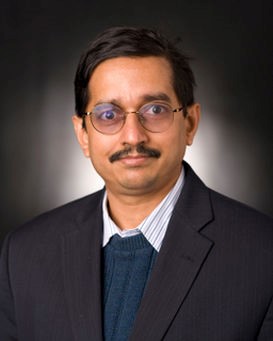
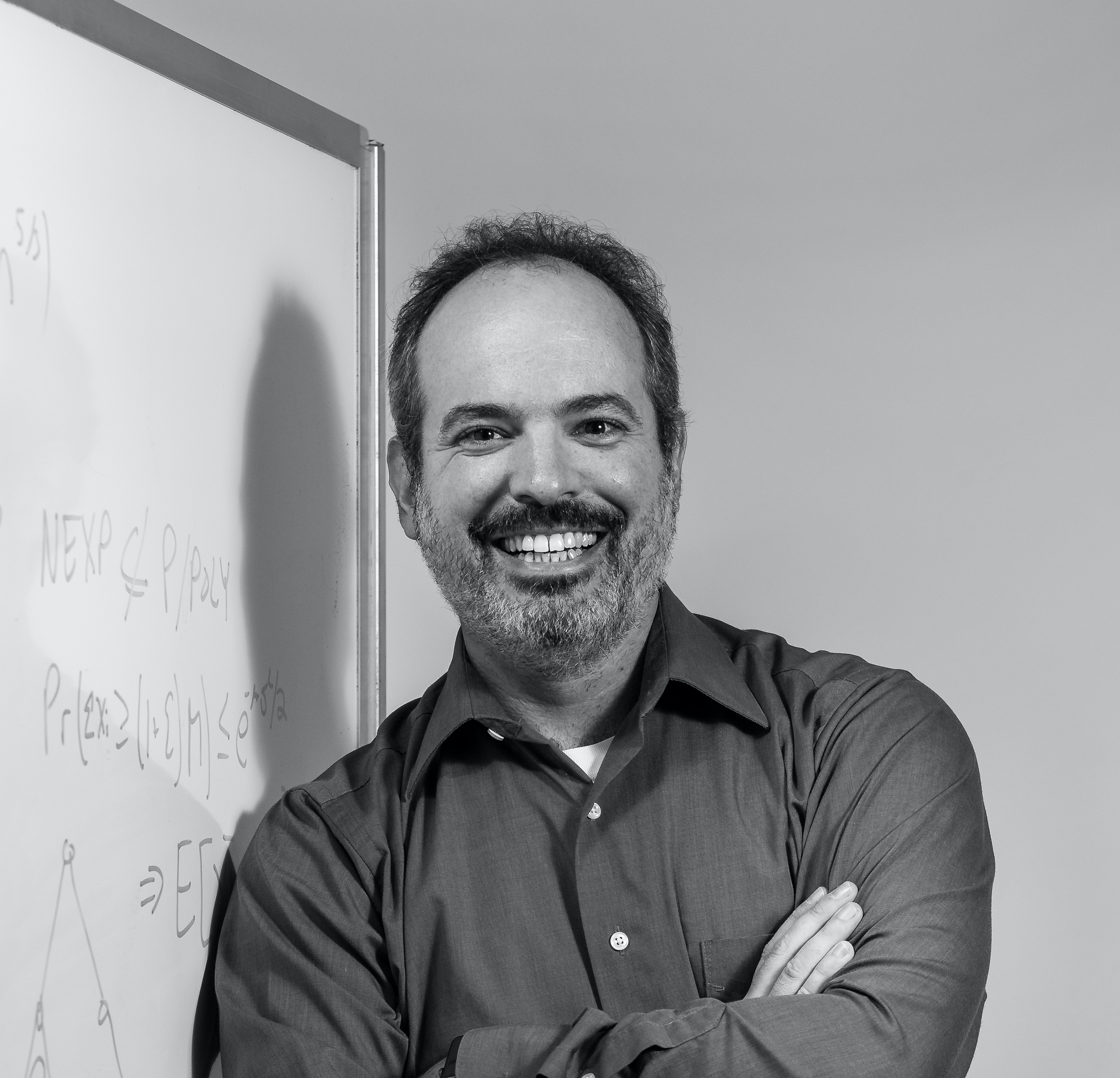
Umut A. Acar is a Professor at the Computer Science Department , Carnegie Mellon University , and an Amazon Scholar. His research focuses on bridging formal methods with systems , algorithms , and AI , aiming to integrate safety and performance in parallel computing. His research spans multiple domains: Quantum Computing : Developing optimization techniques for quantum circuits (e.g., Quartz , Atlas ). Self-Adjusting Computation : Advancing dynamic algorithms and incremental programming frameworks (e.g., Diderot , MPL ). Concurrency & Parallelism : Designing efficient scheduling mechanisms and disentanglement strategies. Recent publications highlight his work on parallel functional programming , quantum simulation , and cache coherence optimization . Notable awards include Best Paper (QCE 2025) , Distinguished Paper (POPL 2024) , and the Intel Award (2022) . He advises PhD students like Pengyu Liu and Mingkuan Xu , and has mentored alumni now at institutions such as NYU , Google , and Inria . His lab collaborates on projects like Diderot (AI/ML) and MPL (parallelism management).
Gunnar Malm is a full-time Professor and Deputy Head of Department at the Royal Institute of Technology (KTH) in the School of Electrical and Computer Engineering. His research focuses on semiconductors and spintronics (nano-electronics), with special emphasis on variability, noise, and fluctuations in electronic components, as well as electronics for extreme environments. He combines experimental work with large-scale computer simulations via KTH's PDC, national SNIC clusters, and Vienna University of Technology's VSC resources. Editor, IEEE Electron Device Letters (2017–present) Technical Program Committee, European Solid-State Device Research Conference (ESSDERC) His pedagogical research (TALE 2022) explores citation practices in thesis writing, and he coordinates multiple semiconductor component courses including Design of Nanosemiconductor Components (IH2657) and Simulation of Semiconductor Components (IH2653) . Malm's Noise and Fluctuations Lab investigates fundamental device physics for sustainable electronics development.
Cem Çakmaklı serves as Associate Professor of Economics at Durham University Business School and Koç University's College of Administrative Sciences and Economics (currently on leave). Previously, he held Assistant Professor positions at Koç University (2015-2023) and the University of Amsterdam (2011-2013), following an AXA Postdoctoral Fellowship at Koç University (2013-2015). His academic credentials include: Ph.D. in Economics/Econometrics, Tinbergen Institute, Erasmus University Rotterdam (2012) M.Phil in Economics (Cum Laude), Tinbergen Institute (2007) MA in Economics (with distinction), Istanbul Technical University (2005) B.Sc. in Management Engineering, Istanbul Technical University (2002) His research integrates advanced econometric methodologies with macroeconomic policy analysis, specializing in time series modeling for economic forecasting, pandemic impact assessment, and financial market dynamics. Recent work demonstrates innovative applications of Bayesian semiparametric techniques to yield curve modeling, GDP nowcasting, and vaccination economics, with particular emphasis on emerging market contexts. His methodological contributions bridge theoretical econometrics with real-world policy challenges. Publication trends reveal a strategic pivot toward pandemic economics since 2020, producing high-impact studies on global vaccination strategies and lockdown effectiveness, while maintaining core expertise in time-varying parameter models and financial econometrics. His work consistently addresses policy-relevant questions through rigorous quantitative frameworks. Scientific recognition includes: AXA Research Fund Post-Doctoral Fellowship (2013-2015) Fellowships at Economic Research Forum (ERF), Centre for Macroeconomic Policy, and Rimini Center for Economic Analysis (RCEA) Research funding comprises multiple TUBITAK grants totaling over 400,000 TL for projects on central bank credibility (2019-2020), large time-varying parameter VARs (2019-2020), and emerging market business cycle indicators (2017-2019). As an educator, he has developed and taught advanced econometrics curricula at PhD and graduate levels across multiple institutions, while his Capital magazine columns translate complex economic concepts for public discourse. His professional ecosystem integrates academic research through Ethos Economics Consulting with policy engagement via media commentary.
Vijaykrishnan Narayanan is a Professor at the College of Engineering , Pennsylvania State University, with affiliations in both Computer Science & Engineering and Electrical Engineering departments. He co-directs the Microsystems Design Lab and leads the Architecture, Benchmarking, and Circuits Thrust at the DARPA/SRC LEAST Center. Education : Bachelors (1993) from University of Madras; Ph.D. (1998) from University of South Florida His research focuses on Power Aware Computing , Computer Architecture , Embedded Systems , and Emerging Device Integration . Recent work explores steep-slope devices for energy efficiency, nonvolatile processors for ambient energy harvesting, and neuromorphic architectures using hybrid VO₂-MOSFET oscillators. Key article trends span post-CMOS technologies (tunnel FETs, VO₂ devices), low-power design , and bio-inspired signal processing . Scientific Awards : IEEE Fellow, ACM Fellow, IEEE Transactions on VLSI Best Paper, IEEE Micro Best Paper Patents : Dynamically-configurable hardware architecture for audience analytics
Julie Haas is a Professor at Lehigh University investigating neural attention mechanisms through electrical synapses in the thalamic reticular nucleus (TRN). Her research integrates electrophysiology, optogenetics, and computational modeling to decode how inhibitory circuits filter sensory information, with implications for attention disorders. Her educational journey includes a B.A. in Music and Mathematics from Indiana University, a Ph.D. in Biomedical Engineering from Boston University, and postdoctoral training at Harvard University and UC San Diego, supplemented by Computational Neuroscience studies at the Marine Biological Laboratory. Research focuses on electrical synapse plasticity as the core mechanism for attentional selection. The Haas lab examines how dopamine, GABA receptors, and amygdala inputs modulate TRN circuitry using in vitro brain slices and optogenetic tools. Key discoveries include activity-dependent long-term potentiation at electrical synapses and their role in sensory gating, bridging molecular dynamics to circuit-level functions through innovative computational models. Publication analysis reveals a decade-long trajectory from foundational electrical synapse characterization (2012-2015) to neuromodulatory mechanisms (2016-2021) and recent dopamine receptor investigations (2022-2024). This evolution demonstrates increasing complexity in understanding how electrical synapses integrate neuromodulatory signals for attentional control. Funding from NIH, NSF, Whitehall Foundation, and Brain and Behavior Foundation supports her lab's work. She teaches advanced courses including Synapses, Plasticity and Learning (Bios 385/415) and Neurophysiology Laboratory (Bios 278), training next-generation neuroscientists in cutting-edge techniques. The Haas lab operates within Lehigh's neuroscience facilities with specialized electrophysiology rigs, optogenetic systems, and computational resources for multi-scale analysis of thalamic circuitry, currently exploring electrical synapse dysfunction in neurodevelopmental disorders.
Dr. Seraina Dual serves as an Assistant Professor (tenure track) in Biomedical Signal Processing at KTH Royal Institute of Technology's Department of Biomedical Engineering and Health Systems within the School of Engineering Sciences in Chemistry, Biotechnology and Health. She leads the Intelligent Heart Technology Lab (I-HeaL), focusing on cardiovascular disease prediction, prevention, and treatment through engineering solutions. Her research spans Biomedical Signal Processing , Implantable Sensor Systems , and Soft Robotics for Cardiac Support , with particular emphasis on MRI-compatible medical devices and hemodynamic monitoring. Current projects include cardiac support technologies, physiologically-guided signal processing, and interactive wearable systems for cardiovascular health assessment. Dr. Dual's recent publications reveal strong trends in cardiovascular device innovation (particularly soft robotics and artificial muscles for circulatory support), advanced hemodynamic modeling of aortic conditions, and physiological signal analysis in daily activities. Her work bridges engineering precision with clinical cardiovascular needs through interdisciplinary collaboration. She actively mentors students across bachelor's, master's, and PhD levels, with current projects including aortic blood pressure analysis and MRI-compatible mock loops. Her research receives funding from VINNOVA, the Swedish Research Council, and Digital Futures initiatives. Dr. Dual teaches core courses including Health and Sports Instrumentation (CM2022), Medical Instrumentation (HL1203), and Medical Measurement and Monitoring (HL1016), serving as course responsible and examiner. Her lab maintains collaborations with Stanford University, ETH Zurich, and clinical institutions including German Heart Center Berlin and St. Vincent's Hospital Sydney.
Martin Hand is a Professor and Department Head of Sociology at Queen's University. He also serves as Acting Undergraduate Chair. He holds a Ph.D. in Sociology from the University of York, U.K. His primary research interests include the sociology of culture, media, technology, digital culture, visual culture, and consumerism. He has authored/co-authored influential books such as Ubiquitous Photography and Making Digital Cultures , and edited volumes on big data and digital research methods. Hand has extensive teaching experience, recently teaching graduate courses in sociological theory and new media cultures, as well as undergraduate courses on visual culture and consumer culture. He has supervised 4 PhDs, 29 MAs, and 37 undergraduate thesis students. His publications span over two decades, focusing on topics like computational seeing, social media visuality, smartphone practices, and digital memory. He actively contributes to academic discourse through journal articles, book chapters, and special issue editorships, such as the 2023 Photographies special issue on machine vision. Hand's work bridges theoretical sociology with empirical research on digital media's societal impacts. His research emphasizes the interplay between technology, everyday practices, and cultural dynamics, with a focus on temporality, visuality, and datafication in contemporary life.
Jimmy Zhou is a Professor at Yale University School of Medicine, with joint appointments in the Departments of Cellular and Molecular Physiology and Neuroscience. His research focuses on retinal neurobiology, investigating synaptic circuits, neurotransmitter systems, and developmental mechanisms in visual processing. PhD, University of Houston (1989) MSc, University of Houston (1984) BS, Fudan University (1982) Dr. Zhou's work spans retinal physiology, direction selectivity in starburst amacrine cells, contrast processing, and the role of vGluT3 amacrine cells in retinal circuits. He explores how spontaneous retinal activity shapes visual map development and contributes to retinal degeneration models. His recent publications (2015-2023) highlight vGluT3 amacrine cell circuits, retinal wave dynamics, optogenetic techniques, and cone-rich retinal organoids. Key themes include neurotransmitter co-release, synaptic integration, and retinal disease modeling. Dr. Zhou leads research supported by NIH grants (e.g., Vision Core Grant renewal in 2022) and mentors through Yale's academic programs. His lab investigates retinal networks at the intersection of neuroscience and biomedical data science.
Theodore Vo is a Lecturer in the School of Mathematics at Monash University. He previously held an Assistant Professor position at Florida State University (2017–2019). His research focuses on geometric singular perturbation theory, canards, and slow-fast analysis applied to excitable cells and bursting oscillations. He earned a PhD in Applied Mathematics from the University of Sydney (2011–2014), specializing in mixed-mode dynamics in pituitary cells. Education: Doctor of Philosophy (Applied Mathematics), University of Sydney, 2014 Research Interests: His work explores canard-mediated phenomena in cardiac cells, bursting dynamics in biological systems, and bifurcation analysis in reaction-diffusion equations. Recent studies include delayed Hopf bifurcations, symmetry-breaking in coupled oscillators, and spatiotemporal canards. Article Trends: Vo’s recent work emphasizes multiscale systems, particularly in cardiac electrophysiology and coupled oscillator networks. Key themes include canard-induced early afterdepolarizations, delayed bifurcation effects, and chimera states in reaction-diffusion systems. Awards: SIAM Outstanding Paper Prize (2017) for collaborative work on bursting oscillations in pituitary cells. Advising/Grants: He accepts PhD students and has contributed to interdisciplinary projects at the interface of mathematics and cellular biology. No grants are explicitly listed, but his research is supported by institutional and collaborative funding.
Athanasios Vourvopoulos is an Assistant Professor at the Department of Bioengineering, Instituto Superior Técnico (University of Lisbon). He leads research in Brain-Computer Interfaces (BCI), Virtual Reality (VR), and neurorehabilitation, focusing on applications for stroke recovery and neurological disorders. His work integrates EEG neurofeedback, neuromodulation, and embodied VR to enhance clinical outcomes. He teaches courses such as Fundamentals of Bioinstrumentation and Introduction to Biomedical Engineering. Research Interests Brain-Computer Interfaces Neurorehabilitation EEG Neurofeedback Neuromodulation techniques Human-Machine Interaction Assistive technologies His research emphasizes translating neurotechnologies into clinical settings, with studies on BCI-VR systems for motor recovery in stroke patients and EEG-based action anticipation in robotics. Recent work includes multimodal neuroimaging (EEG-fMRI) and open-source tools like NeuXus for real-time artifact reduction. Awards Early Career Investigator Award , International Society for Virtual Rehabilitation (ISVR, 2022) Diploma of Excellence in Teaching , Instituto Superior Técnico (IST, 2023) He collaborates with the Institute of Systems and Robotics (ISR-Lisbon) and has published extensively on BCI-VR integration, neuromodulation, and neurorehabilitation outcomes. His labs focus on developing embodied VR systems and BCI-driven therapies for motor impairment recovery.
Shengdun Zhao is an active researcher in the fields of Electrical Engineering, Automotive Engineering, and Machine Learning, contributing extensively to optimization techniques and control systems for electric vehicles and motors. His work spans journals like IEEE Transactions on Vehicular Technology and Journal of Intelligent & Fuzzy Systems , focusing on practical applications of deep reinforcement learning, meta-learning, and multi-objective optimization. Key research areas: Electric motor control, energy management systems, and clustering algorithms. Collaborates with researchers such as Yiming Zhang, Wei Du, Chee-Kong Chui, and Chin-Boon Chng. His publications from 2007–2025 address technical challenges in mechatronics, sustainable transportation, and data-driven engineering solutions. Research Trends Recent articles highlight Zhao's emphasis on deep reinforcement learning for motor control, meta-learning in energy systems, and evolutionary algorithms for multi-objective optimization. He integrates machine learning with automotive engineering to improve electric vehicle efficiency and motor performance.
Seth Gilbert is the Dean's Chair Associate Professor and Head of the Department of Computer Science at the National University of Singapore. His research focuses on designing robust, scalable algorithms for large-scale distributed systems, particularly in the domains of Byzantine agreement, dynamic networks, and contention resolution. He holds a PhD from MIT (advised by Nancy Lynch) and completed a postdoc at EPFL under Rachid Guerraoui. His work emphasizes three core techniques: accountability (identifying network failures), work-sharing (task distribution in asynchronous environments), and contention resolution (efficient resource allocation). Notable contributions include the DConstructor (PODC 2020) and Polygraph (ICDCS 2021) protocols for accountable Byzantine agreement. He has received multiple awards, including the Edsger W. Dijkstra Prize (2021) and Best Paper Awards at DISC, ICDCS, and IPDPS. Prof. Gilbert has served as program chair for DISC 2021, OPODIS 2019, and SPAA 2016, and currently chairs the DISC Steering Committee. His career includes industry experience at Microsoft (Visual Studio team) and early work on solar car engineering at Yale University.
Dr. Gerwin van der Laan is an Assistant Professor at Tilburg University's TiSEM School of Economics and Management, specializing in the Strategy & Entrepreneurship Department. His research focuses on higher education curricula, character development, and corporate governance. He also serves as Academic Director of the BSc International Business Administration program. His interdisciplinary work bridges philosophy (e.g., Montaigne's educational theories) and contemporary educational practice, advocating for student-centered approaches. He has authored/co-authored influential books like Breaking Barriers: Innovation through Collaboration (2023) and edited volumes such as Educational Utopias (2023). He holds adjunct roles including Research Fellow at the Tilburg Center of the Learning Sciences and Senior Policy Advisor at University College Tilburg. His career spans academic leadership, policy development, and teaching across multiple institutions. Key Roles: Assistant Professor (2012–present), Academic Director (Tilburg), Research Fellow (2022–24) Research Themes: Curriculum design, virtue ethics in education, corporate social responsibility Publications: Over 30 peer-reviewed works emphasizing higher education reform, governance, and interdisciplinary collaboration Teaching: Courses on institutional economics, strategy, and organizational theory at undergraduate and graduate levels His recent work explores Montaigne's influence on modern character education, advocating for resilience and well-being in students. Collaborations include projects on academic innovation and policy frameworks for cultural entrepreneurs.
Tim Green is a Professor and Head of the Department of Electrical and Electronic Engineering at Imperial College London, part of the Faculty of Engineering. His research focuses on developing zero-carbon electricity systems dominated by renewable energy and inverter-based resources (IBR). He leads initiatives in grid stability, fault detection, and control innovations to ensure reliable energy systems. His work bridges physics-led and data-led modeling approaches to address challenges in frequency and voltage regulation. Education: PhD from Heriot-Watt University (1990) and BSc from Imperial College London (1986). Affiliations: Energy Futures Lab, Control and Power Research Group. Research interests include renewable power systems, grid resilience, and inverter-driven oscillations. His projects are funded by EPSRC, National Energy System Operator, and Hitachi Energy. He teaches power engineering modules and mentors postdoctoral researchers and PhD students. Awards include Fellowships from the Royal Academy of Engineering, IEEE, IET, and the Chinese Society for Electrical Engineering.
Dr. Liqiang Zhang is a Professor at the Department of Computer and Information Sciences, Indiana University South Bend. He holds a Ph.D. in Computer Science from Wayne State University (2005). His research focuses on wireless networks, mobile computing, resource allocation, IoT, cognitive radio networks, and network security. His work is supported by IU and the National Science Foundation. He has organized multiple conferences including ICCCN 2013 (Track Chair), GLOBECOM 2010 (Publicity Co-Chair), and founded/co-chaired WiMAN workshops. He serves as a Guest Editor for journals like ACM Transactions on Autonomous and Adaptive Systems and Elsevier's Computer Communications. He reviews for top journals including IEEE Transactions on Mobile Computing and IEEE Transactions on Parallel and Distributed Systems. Dr. Zhang teaches courses such as Computer Structures, Mobile App Development, and Network Security. Recent publications (2019-2009) include advancements in network scheduling, cognitive radio protocols, radar positioning, and digital design education. His research spans both theoretical and applied aspects of networking and distributed systems.