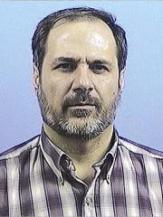
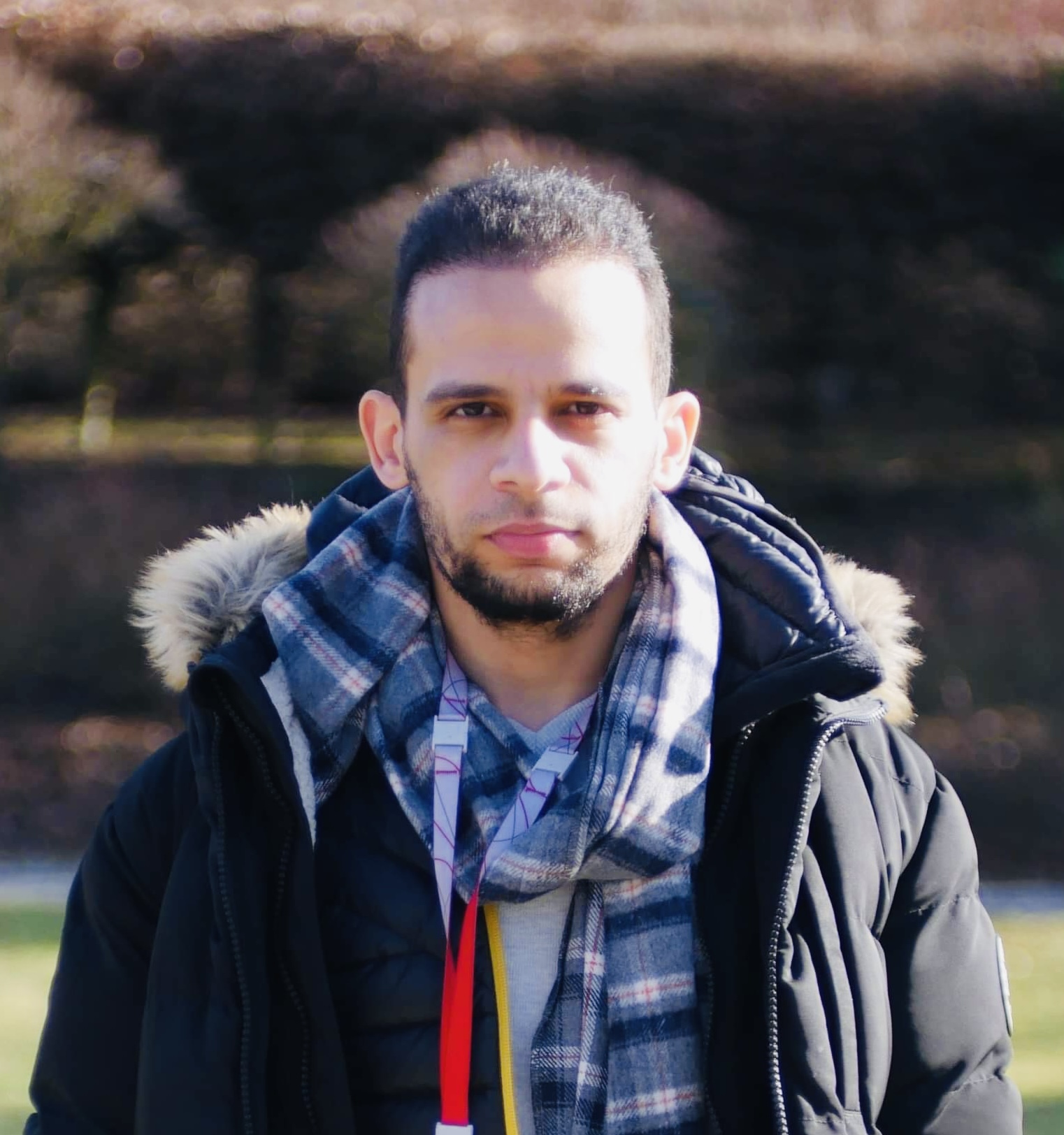
Hossein Saidi is a Professor in the Department of Electrical and Computer Engineering at Isfahan University of Technology, Iran. His research spans High Speed Switching Networks, QoS Algorithms in Broadband Networks, Internet Security, Cryptography, Wireless Networks, Information Theory, and Coding. Research Interests: High Speed Switching Networks, QoS Algorithms, Internet Security, Cryptography, Wireless Networks, Information Theory, Coding Email: hsaidi@iut.ac.ir His recent publications focus on Software-Defined Networking (SDN), Blockchain Consensus, Wireless IoT, and Energy Management Systems. Key themes include network optimization, security protocols, distributed systems, and hardware design.
Irina Shklovski is a Professor in the Department of Computer Science at the University of Copenhagen, specializing in Human-Centred Computing. Her research focuses on ethics in technology, data privacy, and the societal implications of digital systems. She coordinates projects like VIRT-EU, investigating ethical practices in IoT development and promoting responsible technology design. Her work addresses challenges such as data governance, normalization of privacy intrusions, and the moral stress faced by technical professionals. Research interests span ethical AI, algorithmic accountability, and the human impact of emerging technologies. She advocates for educational reforms to instill ethical considerations in tech development. Collaborations include international studies on data ethics and hybrid work dynamics. Notable contributions include critiques of LLM-generated data in social sciences and explorations of artistic methods to envision future work environments.
Matthew Nicol is the John and Rebecca Moores Professor in the Department of Mathematics at the University of Houston. His career includes positions at UMIST, University of Surrey, and visiting appointments at Warwick and New Mexico State. Research specialties encompass ergodic theory, dynamical systems, probability, and extreme value theory. His work applies mathematical frameworks to climate science, medical imaging, and statistical mechanics. Notable publications examine hurricane modeling, nonstationary extremal analysis, and surgical planning algorithms. He received the Leverhulme Trust Research Fellowship (2002-2003). Publication analysis reveals interdisciplinary applications across: Dynamical systems and statistical mechanics Extreme event modeling for climate phenomena Medical applications of mathematical modeling Probability theory in chaotic systems
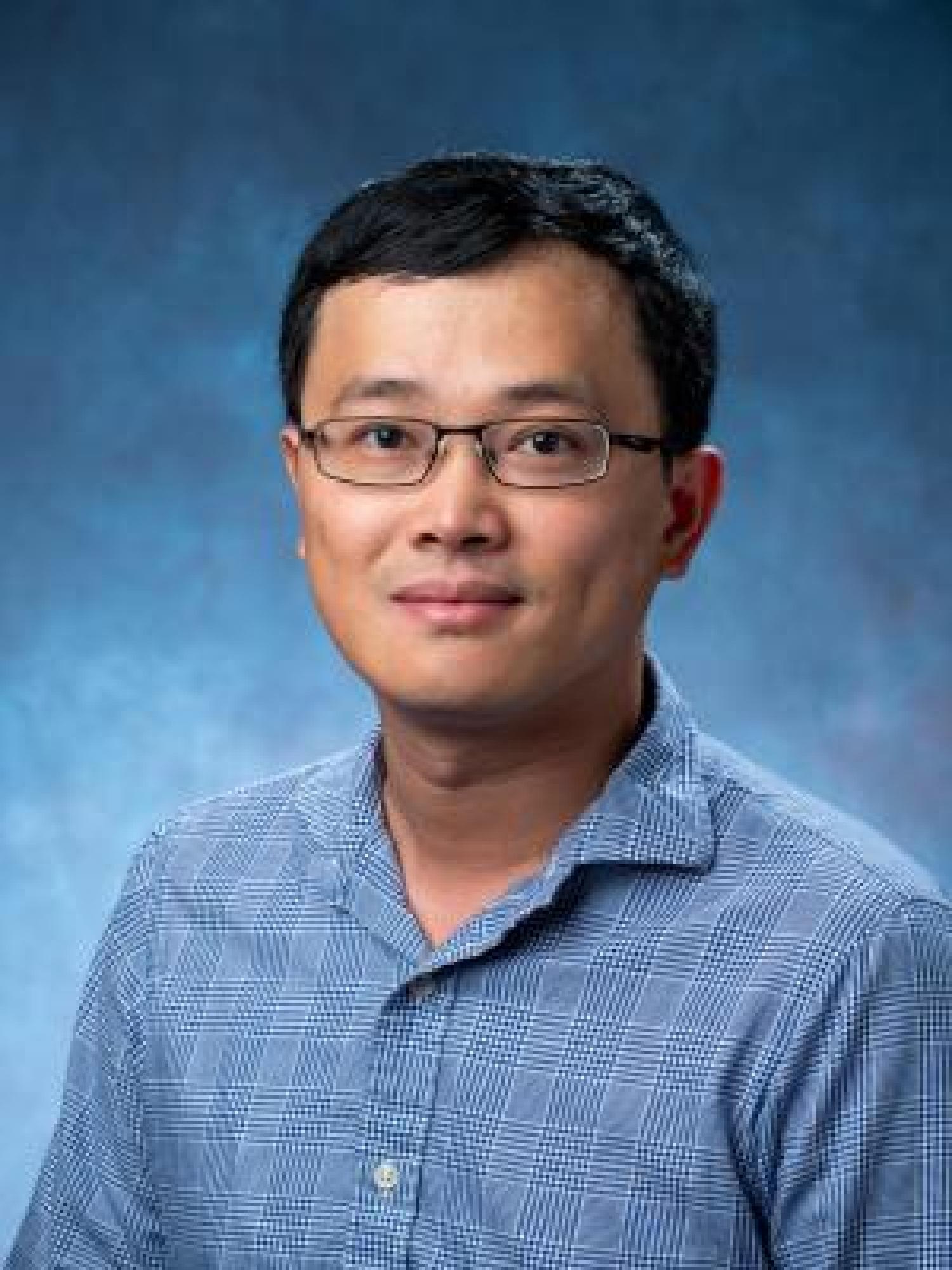
Shu-Wei Huang is an Associate Professor in the Department of Electrical, Computer, and Energy Engineering at the University of Colorado Boulder, affiliated with the College of Engineering and Applied Science. His research focuses on advanced photonics and quantum engineering, with specialties in nonlinear optics, frequency combs, and ultrafast laser systems. He holds affiliations with both the ECEE department and the Photonics and Quantum Engineering group. His work emphasizes novel laser designs, microresonator-based systems, and applications in optical sensing and quantum technologies. Dr. Huang's research interests include the development of high-performance laser systems, such as counterpropagating all-normal dispersion (CANDi) fiber lasers, and the creation of advanced frequency comb technologies. He explores topics like dissipative soliton generation, parametric oscillation, and the integration of machine learning for predictive modeling in nonlinear optics. His experimental work involves cutting-edge platforms such as lithium niobate microresonators and graphene-enhanced devices. His recent contributions span innovations in photonic flywheel systems for stable frequency combs, broadband magnetometry using magnetic nanoparticles, and lidar measurement techniques. He has pioneered methods for deterministic microcomb generation and explored applications in high-resolution imaging and biochemical sensing. His research bridges fundamental physics with engineering applications, addressing challenges in precision metrology and quantum-enabled technologies. Dr. Huang's lab is located in ECEE 1B79, and his work is supported by grants focusing on nonlinear optics, ultrafast lasers, and integrated photonics. His team actively collaborates on projects involving coherent dual-comb spectroscopy, electrically tunable frequency combs, and nanophotonic devices for next-generation optical systems.
Ron Mangun is a Professor of Psychology and Neurology at the University of California, Davis, and co-director of the Center for Mind and Brain . His work bridges cognitive neuroscience, attentional mechanisms, and the interplay between free will and neural processes. Mangun has significantly shaped neuroscience education through his co-authored textbook, Cognitive Neuroscience: The Biology of the Mind , which has sold over 150,000 copies across five editions. 2024 Award for Education in Neuroscience Fulbright US Distinguished Scholar (2024-2025) Mangun's research focuses on visual attention , neural oscillations , and predictive cognitive processes , often integrating EEG-fMRI for high-resolution neural mapping. His recent work explores alpha oscillations, rhythmic environmental sampling, and the ventral attention network's role in reorienting attention. His scientific awards include: 2024 Award for Education in Neuroscience Fulbright US Distinguished Scholar (2024-2025) Mangun has mentored numerous trainees globally through the Summer Institute in Cognitive Neuroscience , a program funded by NIMH, NIDA, and the Kavli Foundation. His research is supported by the National Science Foundation , focusing on attention and free will.
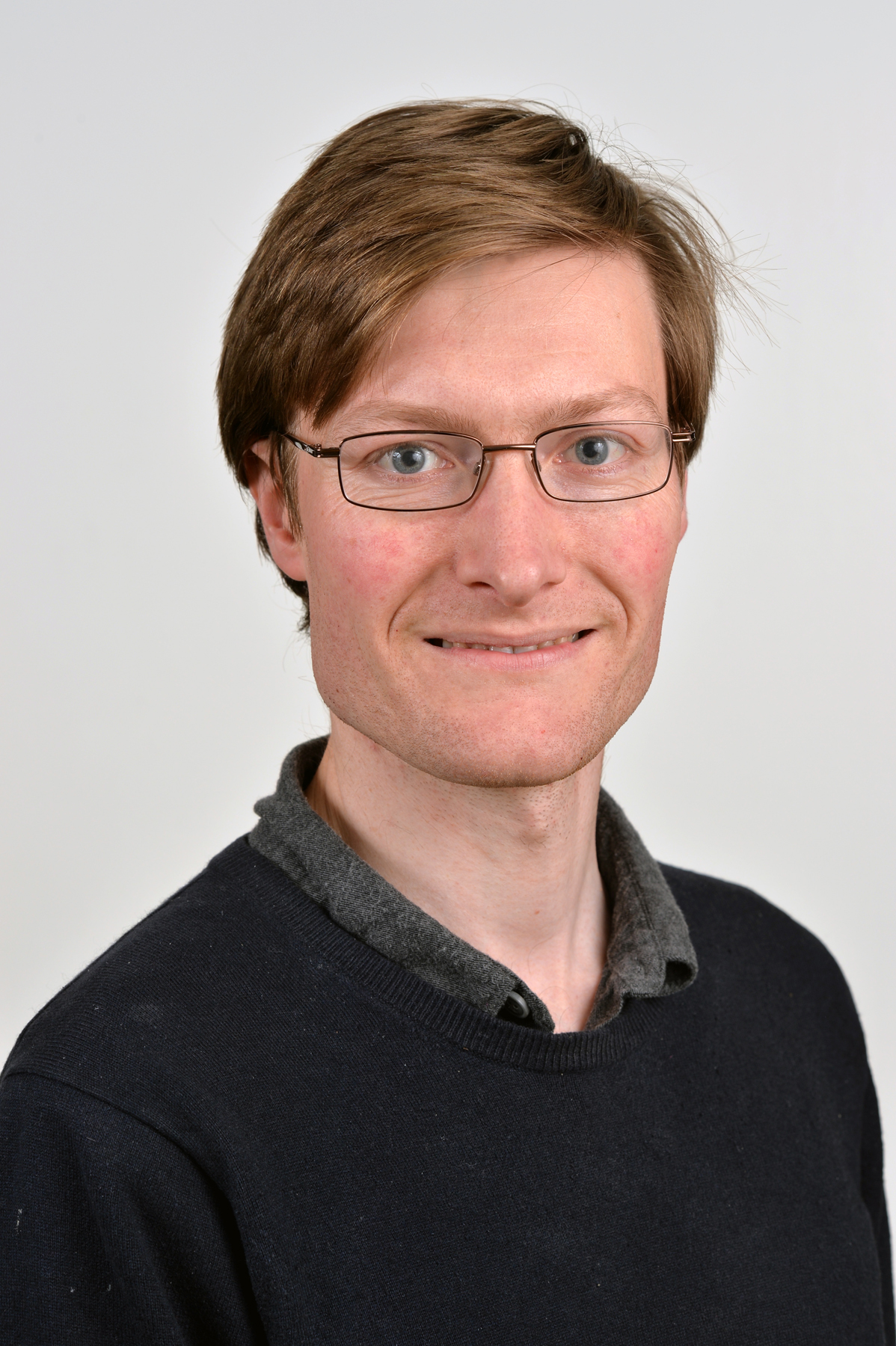
Dr. Robert Johnson is a Senior Lecturer in Pure Mathematics at Queen Mary University of London, affiliated with the School of Mathematical Sciences. He leads the Communication and Public Engagement for the Centre for Combinatorics, Algebra and Number Theory. His research focuses on extremal combinatorics, graph theory, and probabilistic combinatorics, with particular emphasis on extremal problems on graphs, set systems, permutations, and discrete hypercube structures. Robert Johnson earned his PhD from the University of Cambridge in 2003 and joined Queen Mary in 2004 after a postdoctoral position at the London School of Economics. His work has contributed significantly to combinatorial optimization, Ramsey theory, and hypercube graph analysis. He has supervised multiple PhD students, including Trevor Pinto (2016), A Nicholas Day (2017), and Natalie Behague (2020), with current advisees Belinda Wickes and Asier Calbet Ripodas. His research explores topics such as resistor network optimization, synchronizing automata, and extremal set systems, with applications in discrete mathematics and theoretical computer science. Notable contributions include studies on multicolour Ramsey numbers of odd cycles and Turán properties in hypercube intersection graphs. Johnson's publications span over two decades, covering areas like permutation correlation, hypercube saturation, and Kneser graph Hamiltonicity. He is actively involved in mentoring and welcomes inquiries from prospective PhD candidates. His affiliations include the Combinatorics group at Queen Mary’s School of Mathematical Sciences and the Centre for Combinatorics, Algebra and Number Theory, where he drives public engagement initiatives.
Igor Ivkovic was a Professor in the Department of Systems Design Engineering at the University of Waterloo, Canada. His work focused on integrating theory and practice in complex information systems, emphasizing system modeling, process modeling, and data modeling to bridge technical and business stakeholder needs. He taught courses such as Data Structures and Algorithms, Algorithms and Data Structures, and Digital Systems in recent years. Education: Holds a Doctorate in Electrical and Computer Engineering (2011), along with advanced certificates in university teaching (Certificate in University Teaching, 2011) and instructional skills (ISW, 2015). Earlier degrees include a Master of Mathematics in Computer Science (2003) and a Bachelor of Mathematics in Operations Research (2001), both from the University of Waterloo. Research Interests: Specialized in Information Systems, Software Engineering, and Knowledge Engineering. His work addressed challenges in model synchronization, software evolution, and architecture recovery, leveraging formal methods and model-driven approaches to enhance system consistency and interoperability. Notable Contributions: Authored influential papers on model synchronization for software evolution (2011) and improving the Gnutella protocol (2001), the latter earning a prize-winning award. He also pioneered educational innovations like Design Days Boot Camps (2017–2021), integrating remote learning and augmented reality into engineering education. Awards: Recognized for his 2001 research on the Gnutella protocol, which won a prestigious award through the LimeWire contest.
Prof. Sander Koole is a Full Professor at the Faculty of Behavioural and Movement Sciences and APH - Mental Health at Vrije Universiteit Amsterdam. He specializes in Clinical Psychology and serves as Chief Editor at Taylor & Francis since 2018. His research focuses on Emotion Regulation , Interpersonal Synchrony , and Adaptive Behavioral Systems , with over 195 publications and 15 supervised PhD theses. His work bridges clinical practice with computational models, addressing topics like mental health in pandemics and human-robot interaction. Research Interests: Emotion Regulation Dynamics Multimodal Interpersonal Synchrony Computational Models of Coregulation Psychotherapy and Mental Health Cultural and Cognitive Foundations of Behavior Awards & Grants: Best Paper Awards (2015, 2000, 1995) Consolidator Grant (2011) Academic Excellence in Psychology (1991) Advising & Grants: Supervisor of 15 PhD theses. Research funded by grants addressing emotion regulation and mental health. Active in media commentary on topics like stress, self-esteem, and societal well-being. Labs/Teams: Collaborates on projects involving computational neuroscience, clinical psychology, and interdisciplinary teams at VU Amsterdam.
Marc H Gershow is an Associate Professor and Director of Undergraduate Studies for Physics at New York University's College of Arts and Science. His research focuses on understanding sensory processing and decision-making in model organisms like Drosophila larvae and C. elegans. He develops advanced microscopy techniques, including CRASH2p and 3D tracking two-photon imaging, to study neural activity in freely behaving animals. His work bridges neuroscience, physics, and engineering to uncover how organisms integrate sensory information with learned and innate behaviors. Education & Background While specific educational details are not explicitly listed, his research trajectory suggests a strong background in biophysics and neuroscience. His lab homepage indicates ongoing projects in olfactory circuits, sensory integration, and neurophysiological imaging. Research Interests Gershow's lab investigates neural mechanisms underlying navigation, olfactory learning, and decision-making. Key areas include: Olfactory circuits in Drosophila larvae and C. elegans Development of closed-loop imaging systems (e.g., CRASH2p) Multi-neuronal recording in unrestrained animals Integration of learned and innate sensory valences Awards & Recognition NSF CAREER Award (2015) NIH Director's New Innovator Award (2015) Lab & Collaborations His lab integrates engineering and biology, with a focus on creating tools for real-time neural activity analysis. Collaborations likely span physics, neuroscience, and computational biology. The lab homepage provides further details on ongoing projects and publications.
Michael Shah is a Senior Lecturer of Computer Science at Yale University's School of Engineering & Applied Science. His research focuses on software visualization tools, performance analysis frameworks, and innovative computing education methodologies. He has contributed to fields such as parallel computing, GPU execution visualization, and asynchronous programming patterns. Dr. Shah's work bridges technical software development with educational applications, including curriculum design for introductory graphics courses and teaching assistant training programs. His research emphasizes practical tool development for debugging and performance optimization in both academic and industry contexts. Notable projects include the Daisen GPU visualization framework, DrAsync for JavaScript anti-pattern detection, and the Iceberg static analysis tool for Java concurrency issues. His publications span topics from procedural content generation in games to runtime performance bug mitigation strategies.
Dr. Roman Shugayev is an Assistant Professor in the Department of Electrical and Computer Engineering at the University of Nevada, Las Vegas. He holds a Ph.D. in Electrical Engineering from Purdue University and a master's from Boston University. His research focuses on applied electromagnetics and quantum science, with expertise spanning quantum sensing, integrated photonics, plasmonics, and nanophotonics applications. His primary research investigates quantum emitters, photonic modulation, and advanced sensing techniques using nanomaterials. Recent work explores ultraviolet photonics in VLSI architectures, quantum communication networks, and metamaterial-based sensing platforms. Key innovations include strain-engineered photonic devices and metal-organic frameworks for quantum sensing enhancement. Publications demonstrate strong focus on quantum-photonic integration with applications in energy systems and communications. Trend analysis shows consistent development of chip-scale quantum devices, MEMS-based photonics, and novel sensing methodologies using nanomaterials.
Alessandro Gulberti is a Research Fellow in the Department of Neurology at the Universitätsklinikum Eppendorf (UKE) in Hamburg, affiliated with the Faculty of Medicine. His work focuses on the neurophysiological and clinical aspects of Parkinson’s disease, particularly the effects of deep brain stimulation (DBS) on motor and cognitive functions. He investigates neural mechanisms underlying gait disorders, speech impairment, and cognitive deficits in Parkinson’s patients, leveraging advanced techniques like electrophysiology, neuroimaging, and computational modeling. Key research interests include DBS efficacy in modulating cortical and subcortical networks, the role of beta oscillations in Parkinsonian symptoms, and the application of virtual reality for gait rehabilitation. His studies often involve collaborations with neurologists, neurosurgeons, and engineers to optimize DBS protocols and understand disease mechanisms. Gulberti’s work has contributed to understanding the anatomical and functional targets of DBS, such as the subthalamic nucleus and substantia nigra, and their impact on axial symptoms, speech, and cognitive performance. Publications highlight his exploration of DBS-induced changes in neural networks, including studies on gait symmetry, pupil fluctuations in progressive supranuclear palsy, and the use of theta-burst stimulation. He has also evaluated the perioperative effects of safinamide in DBS patients and developed frameworks for improving eye-tracking data quality. His research bridges clinical neurology with translational neuroscience, aiming to enhance therapeutic outcomes through precision stimulation and personalized medicine.
Dr. Yann Quilcaille is a Researcher at ETH Zurich's Department of Environmental Systems Science, affiliated with the Professorship for Land Climate Dynamics. His work focuses on climate extremes, climate emulators, and socio-economic integration of climate models. He holds a PhD from Université Paris-Saclay and previously served as a research scholar at IIASA (Austria), advancing the OSCAR climate model. Key contributions include the MESMER-X emulator for spatially resolved climate extremes and research on fire weather, extreme event attribution, and climate overshoot scenarios. Dr. Quilcaille's research integrates physics-based and statistical approaches to develop low-cost climate emulators, aiming to bridge climate modeling with socio-economic frameworks. His expertise spans heatwaves, droughts, and fires, with a focus on global and regional climate impacts. Notable projects include analyzing fire weather overlaps between continents and quantifying carbon majors' contributions to historical heatwaves. His academic journey includes studies at Ecole Normale Supérieure de Paris-Saclay (Theoretical Physics), AgroParisTech (Economics of Sustainable Development), and Université Pierre & Marie Curie (Ocean, Atmosphere, Climate). He has authored over 50 publications on climate modeling, emulation techniques, and policy-relevant climate science.
Hesham Almatary is a Researcher at the Department of Computer Science and Technology, University of Cambridge. He holds a PhD from the University of Cambridge on CHERI compartmentalisation for embedded systems. His research focuses on computer security, operating systems, systems software, and computer architecture, with contributions to open-source projects including Linux, seL4, RTEMS, and FreeRTOS. Education: PhD in Computer Science, University of Cambridge (CHERI Compartmentalisation for Embedded Systems) Research Interests: Secure embedded systems and operating systems CHERI architecture and compartmentalization techniques RISC-V processors and hardware validation Memory management and capability-based security Publications: Recent work includes studies on CHERI implementation in MMU-less Linux, embedded system security frameworks (CompartOS), and testing RISC-V processors. His contributions span both theoretical advancements in computer architecture and practical implementations in open-source software. Awards: No scientific awards explicitly mentioned. Advising/Grants: No advisees or grants listed in the provided information.
Neave O'Clery is an Associate Professor at the Centre for Advanced Spatial Analysis (CASA) at University College London (UCL), leading a research group focused on data-driven models for economic development and urban systems. She holds additional roles as Visiting Professor, Research Fellow, and Lecturer. Previously, she was a Senior Research Fellow at the University of Oxford’s Mathematical Institute (2016–19) and a Fulbright Scholar/Postdoctoral Fellow at Harvard Kennedy School’s Center for International Development (2013–16). She earned a PhD in mathematics from Imperial College London (2009–13). Education: PhD in Mathematics, Imperial College London (2009–2013) Bachelor’s/Master’s degrees (implied) Research Interests: O'Clery’s work bridges data science, urban systems, and economic development. She explores network dynamics, industrial agglomeration, and policy-relevant applications of complex systems theory. Her methodologies combine mathematical modeling with real-world socioeconomic analysis. Publications: Recent work spans AI’s societal impacts, network prediction models, and industrial development theories, reflecting her interdisciplinary approach. Awards: Fulbright Scholar (2013–2016) Advising & Grants: Founder and Editor-in-Chief of Angle journal (since 2009), focusing on policy-science intersections. Active in grant-funded research at UCL, Oxford, and Harvard. Labs/Teams: Leads the economic development research group at CASA, collaborating with interdisciplinary teams on urban and industrial systems modeling.