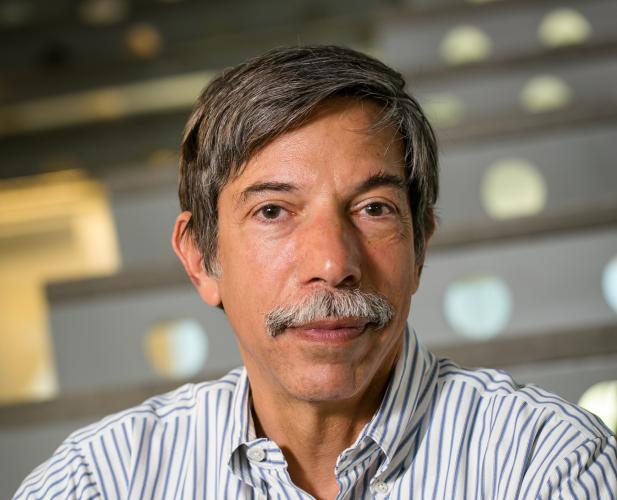
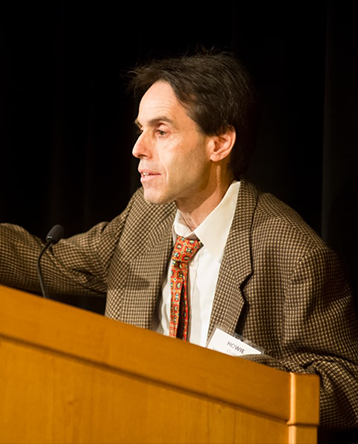
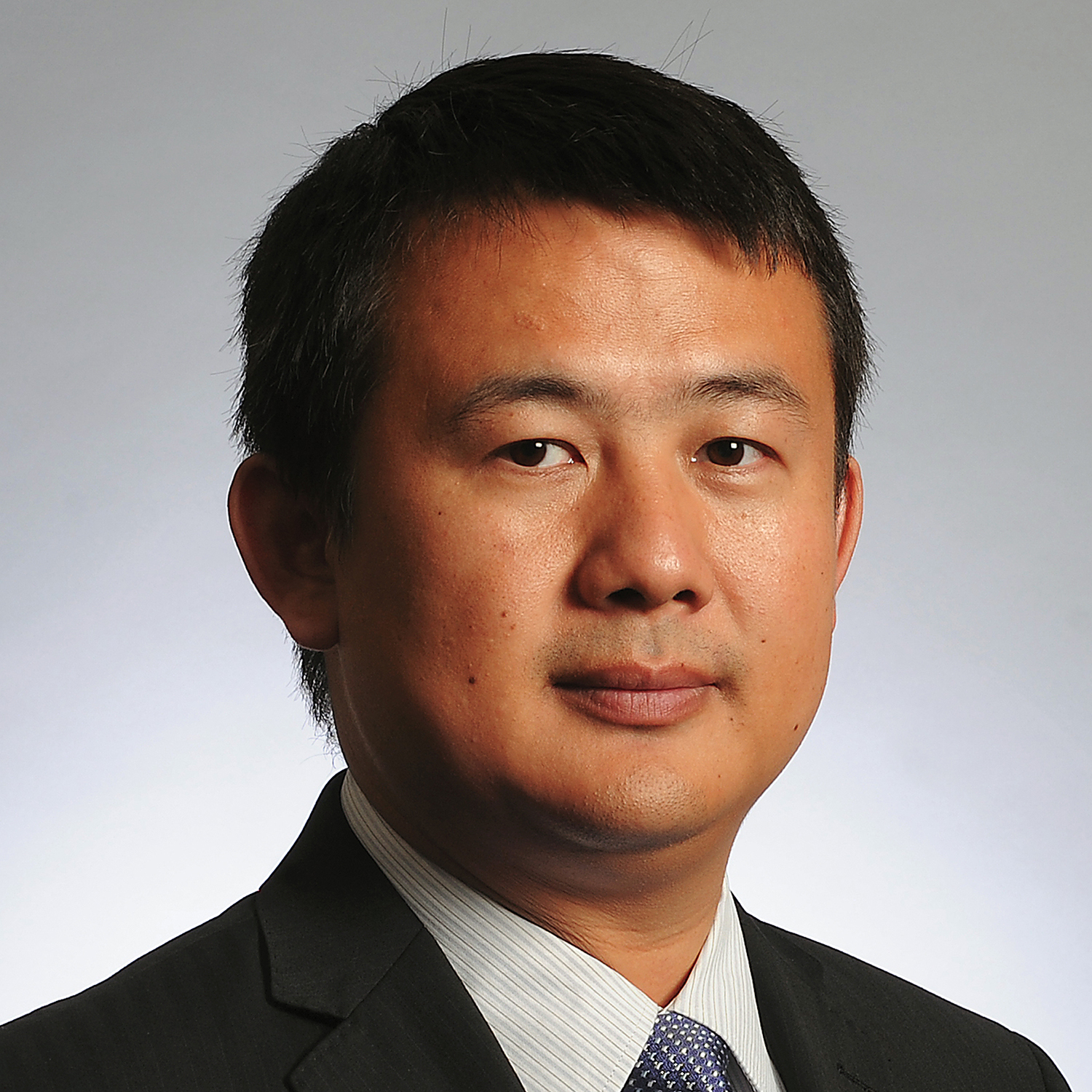
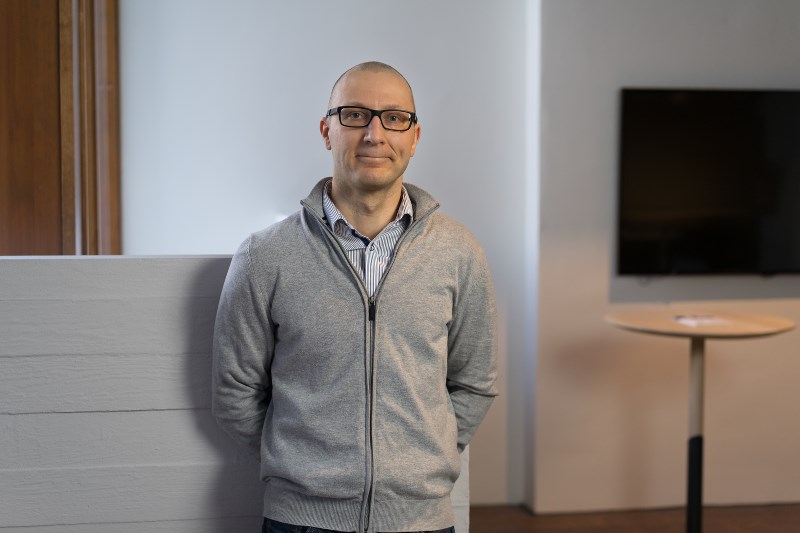
Fred B. Schneider is the Samuel B. Eckert Professor of Computer Science at Cornell University , where he has been a faculty member since 1978. His career spans foundational work in trustworthy systems , fault-tolerant distributed systems , and system security . He served as department chair from 2014–2018 and previously earned a B.S. in Engineering from Cornell (1975) and a Ph.D. in Computer Science from Stony Brook University (1978).
Parastoo Abtahi is an Assistant Professor in the Computer Science Department at Princeton University. She leads the Situated Interactions Lab (Ψ Lab) as part of the Princeton HCI Group, focusing on AR/VR and spatial computing. Prior to Princeton, she worked at Meta Reality Labs Research. PhD in Computer Science from Stanford University BSc in Electrical and Computer Engineering from University of Toronto (Engineering Science program) Her research explores wearable interactive technologies that augment human intelligence in physical contexts through: Input on-the-go: Low-effort, privacy-preserving multimodal interfaces Intelligent output: Timely, minimal multisensory systems Situated AI: Personalizable, predictable, safe physical-digital interaction Recent publications analyze: Drone-based haptic illusions for AR/VR Microgestures for mobile AR input Interactivity in explainable AI systems Temporal dynamics in VR haptics Awards include: 2025 Google Research Scholar Award CHI 2019 & 2018 Honorable Mentions She teaches courses like: COS 436: Human-Computer Interaction COS IW: AR Meets AI
Howie Choset is a Professor of Robotics at the Robotics Institute, Carnegie Mellon University. He directs the Undergraduate Robotics Minor and leads the Biorobotics Laboratory, where his research focuses on snake robots, motion planning, and medical robotics. He is also affiliated with the Manufacturing Futures Institute. Ph.D., Mechanical Engineering, California Institute of Technology (1996) M.S., Mechanical Engineering, California Institute of Technology (1995) B.S.E., Computer Science and Engineering, University of Pennsylvania (1990) B.S., Economics, The Wharton School of Business (1990) Choset's research centers on robotics for confined and complex environments, particularly through the development of snake robots. His work integrates mechanism design, path and motion planning, and estimation to enable applications in surgery, manufacturing, infrastructure inspection, and search and rescue. He is a pioneer in medical robotics and has co-founded Medrobotics to commercialize minimally invasive surgical robots. His recent publications highlight a strong focus on ergodic exploration, multi-agent systems, motion planning under uncertainty, and medical robotics. Themes include optimizing robot trajectories for information gathering, solving complex path planning problems with dynamic obstacles, and advancing autonomous systems for disaster response and space exploration (e.g., the EELS robot for Enceladus). MIT Technology Review Top 100 Innovators under 35 (2002) Best Paper Award, RIA (1999) Best Paper Award, ICRA (2003) Best Paper, IEEE Bio Rob (2006) Best Video, ICRA (2011) Nominations for best papers at ICRA, IROS, and CLAWAR Choset has advised numerous students, many of whom have won top awards. His lab has received significant funding for robotics research, including projects in surgical robotics, additive manufacturing, and autonomous exploration. He is the lead author of the textbook Principles of Robot Motion and is actively involved in educational innovation through custom robotics labs. He leads the Biorobotics Laboratory at CMU, which develops advanced robotic systems like snake robots and the EELS (Exobiology Extant Life Surveyor) robot for NASA missions. The lab collaborates with industry and government agencies on applications ranging from surgery to space exploration.
Wei Sun is an Associate Professor in the Department of Electrical and Computer Engineering at the University of Central Florida, where he also serves as the Director of the Siemens Digital Grid Lab. His research focuses on power system restoration, self-healing smart grids, cyber-physical security, and renewable energy integration. Dr. Sun received his Ph.D. from Iowa State University in 2011, and his M.S. and B.S. from Tianjin University in 2007 and 2004, respectively. Prior to joining UCF, he was an Assistant Professor at South Dakota State University (2013-2015), a power system engineer at Alstom Grid (2011-2012), a visiting scholar at the University of Hong Kong (2011), and an intern at California Independent System Operator (2010). His research interests include: Power System Restoration and Self-healing Smart Grid Resilient and Secure Critical Infrastructure Cyber-Physical Systems Renewable Energy and Microgrid Distributed Energy Resources Integration Dr. Sun's recent publications demonstrate strong focus on cyber-physical security in power systems, distributed energy resource integration, and resilient grid operations. His work shows increasing emphasis on AI and machine learning applications for grid security and resilience, particularly in the context of high renewable penetration. His notable scientific awards include: Microsoft Software Engineering Innovation Foundation Award (2014) Best Paper Award, 2019 IEEE PES ISGT Asia Mentor of the Year, UCF Graduate Student Association (2019) Dr. Sun has successfully secured multiple research grants totaling millions of dollars from agencies including the US Department of Energy, National Science Foundation, Florida Center for Cybersecurity, and Microsoft. He currently serves as PI or Co-PI on several major projects including "Secure and Resilient Operations Using Open-Source Distributed Systems Platform (OpenDSP)" funded by the Department of Energy. He leads the Siemens Digital Grid Laboratory at UCF, which is equipped with utility-grade software and hardware including Spectrum Power Microgrid Management System, Power System Simulator for Engineering, and Siemens Distribution Feeder Automation. The lab provides capabilities for both software modeling and hardware-in-the-loop testing of power systems.
Chita R. Das is a Professor at Pennsylvania State University, known for extensive contributions in computer architecture, machine learning, and high-performance computing. Their research focuses on optimizing hardware-software co-design for edge computing, cloud infrastructure, and energy-efficient systems. Key areas include FPGA acceleration, GPU optimization, and serverless computing frameworks. Das collaborates frequently with institutions like AMD and Intel, addressing challenges in parallel computing and distributed systems. Their work bridges theoretical advancements with practical applications in recommendation systems, bioinformatics, and real-time video processing. Research interests span across hardware acceleration techniques, cloud resource management, and sustainable computing. Notable projects include adaptive training frameworks for intermittent power environments and neural-augmented game streaming for mobile platforms. Das's publications often address performance bottlenecks in modern architectures and propose novel solutions for latency and energy efficiency. Recent articles highlight innovations in serverless computing cost optimization, low-bandwidth VR streaming, and FPGA-based bioinformatics tools. Their contributions are characterized by interdisciplinary approaches combining computer architecture with machine learning and embedded systems.
Frede Blaabjerg is a Professor at Aalborg University (AAU Energy) , affiliated with the Faculty of Engineering and Science . Since 1998, he has pioneered power electronics research in applications such as wind turbines , photovoltaic (PV) systems , reliability engineering , and Power-2-X technologies. Education : PhD in Electrical Engineering (1995, Aalborg University) Honorary Degrees : Honoris Causa at University Politehnica Timisoara (2017) and Tallinn Technical University (2018) His research focuses on power electronics control , system optimization , and reliability for renewable energy and electric mobility . Recent work includes grid-forming converters , virtual synchronous generators , and smart EV charging systems. Key publication trends span 15+ years , with over 3,733 peer-reviewed articles and 900+ journal papers in power electronics , renewables , and energy storage . Notable book series: Control of Power Electronic Converters and Systems (4 volumes, Elsevier). Scientific Awards : 46 IEEE Prize Paper Awards 2020 IEEE Edison Medal 2019 Global Energy Prize 2014 IEEE William E. Newell Power Electronics Award Leadership Roles : Editor-in-Chief, IEEE Transactions on Power Electronics (2006–2012) Chairman, Danish Council for Research and Innovation Policy (2020–) President, IEEE Power Electronics Society (2019–2020)
Jason Ritt is an Associate Professor of Brain Science (Research) and Scientific Director of Quantitative Neuroscience at the Robert J. and Nancy D. Carney Institute for Brain Science, Brown University. He holds affiliations with the Data Science Institute and collaborates across disciplines on quantitative research methods. Education : B.S., M.A., and Ph.D. in Neuroscience from Boston University (1997–2003). Research : Focuses on neural processing during active sensing and neuroengineering for neurostimulation. Combines electrophysiology, optogenetics, and theoretical approaches in rodent models. Develops closed-loop systems for studying sensory neural prosthetics and brain-machine interfaces. Key areas include synaptic diversity, neurocontrol algorithms, and sensory restoration. Teaching : Instructs NEUR 2100 NeuroPracticum, integrating hands-on neuroscience research training.
Marko Hinkkanen is a Professor at Aalto University's Department of Electrical Engineering and Automation, affiliated with the School of Electrical Engineering. His research focuses on electric drives, power electronics, and control systems, with a strong emphasis on sensorless control, grid converters, and motor drives. He has received numerous awards, including the IEEE Fellow distinction and multiple best paper awards for contributions to sensorless control and grid integration. Research interests span advanced control algorithms, power converter design, and renewable energy systems. His work addresses challenges in grid stability, motor drives under weak grid conditions, and energy-efficient control strategies. Notable achievements include innovations in bearingless motor systems and grid-forming converter control frameworks. His awards reflect impactful contributions: the Aalto ELEC Supervisor Award (2023) highlights exceptional mentorship, while the IEEE Fellow (2023) and numerous paper awards underscore technical excellence. Key publications include advancements in grid-forming control, sensorless techniques, and electromagnetic damping for aircraft systems. He has advised doctoral students such as F. M. Mahafugur Rahman and Hafiz Asad Ali Awan, whose theses won top awards. His labs and collaborations focus on cutting-edge topics like virtual air gap reactors and six-phase machine dynamics.
Heather Knight is an Assistant Professor in the Department of Electrical Engineering and Computer Science at Oregon State University, part of the College of Engineering. Her research focuses on social robotics and human-robot interaction, emphasizing non-verbal communication and the design of non-anthropomorphic robots. She directs the CHARISMA Research Lab, which applies principles from performing arts to enhance robot charisma through expressive motion and interaction design. Dr. Knight holds a Ph.D. in Robotics from Carnegie Mellon University (2016), and dual M.S. degrees in Robotics (Carnegie Mellon) and Electrical Engineering & Computer Science (MIT, 2008), alongside a B.S. in Electrical Engineering from MIT (2006). She also leads Marilyn Monrobot, a robot theater company producing comedic performances and an annual Robot Film Festival. Her work bridges technical innovation with societal impact, exploring how robots can better communicate intent through motion and interaction. Notable contributions include the 'Sanitizerbot' project for playful public health support and the development of Laban-based motion frameworks for expressive robotics. Awards include being named to Forbes' 30 Under 30 in Science (2011) and her TED talk on robot comedy. Key Research Themes: Multi-robot formations, expressive motion design, human-robot social dynamics, and ethical integration of AI in robotics. Recent Projects: VR storytelling with social robots, service robots in workplace environments, and motion-based affective communication. Her articles span topics from robot humor generation to industrial light communication systems, reflecting a commitment to both foundational research and applied solutions for human-robot coexistence.
Prof. Bryan Ford leads the Decentralized/Distributed Systems (DEDIS) lab at EPFL. He focuses on secure decentralized systems, including blockchain technology, privacy, and systems security. He earned his Ph.D. from MIT and held faculty positions at Yale University and EPFL. His work spans distributed consensus protocols, peer-to-peer networking, and privacy-preserving systems. Key projects include QuePaxa (timeout-free consensus), UIA (global connectivity for mobile devices), and MedCo (secure healthcare data sharing). He advises numerous PhD students and contributes to open-source projects like Bitcoin collective signing and privacy networks like Riffle. Education: Ph.D., MIT; Postdoctoral work at Yale Research interests include blockchain scalability, consensus algorithms, and cryptographic privacy. His lab develops systems like TRIP for coercion-resistant voting and F3B to mitigate blockchain front-running. His work on NAT traversal and peer-to-peer protocols (e.g., STUN/ICE) remains foundational in network architecture. He emphasizes practical, auditable security solutions such as CertiKOS and atomic cross-chain transactions (Atom). Notable contributions: CoSi (collective signing), OmniLedger (sharded blockchain), and privacy-preserving protocols like PURBs (Protected Unsealable Recursive Boxes). His lab collaborates with Swiss Post to audit e-voting systems and designs democratic cryptocurrencies like PoPCoin.
Massimo Mischi is a Full Professor at the Faculty of Electrical Engineering of the Eindhoven University of Technology (TU/e) and chairs the Signal Processing Systems (SPS) Division , the largest division at TU/e with over 250 researchers. He founded the Biomedical Diagnostics (BM/d) Lab in 2012, which now includes 180 researchers and clinical/industrial advisors, focusing on biomedical signal processing for diagnostics and monitoring.
Qingguo Li is a Professor and Associate Head at the Department of Mechanical and Materials Engineering , Queen's University , and a member of the Ingenuity Labs Research Institute . He specializes in biomechanical system design, energy harvesting, wearable sensors, gait analysis, and load carriage systems. His research integrates robotics, biomedical engineering, and sensor technology to develop human-centric devices and mobility aids. Current Roles : Professor, Associate Head, Queen's University Research Institute : Ingenuity Labs Research Institute Lab : Bio-Mechatronics and Robotics Laboratory His work focuses on biomechanical energy harvesting , IMU-based motion analysis , and assistive device development . Key applications include stroke rehabilitation, gait monitoring, and wearable power generation systems. Articles span cable-driven robots , smart walkers , and 3D printing mechanisms , emphasizing human-robot interaction and dynamic modeling . The lab explores sensor calibration , adaptive control algorithms , and human movement optimization . Areas of impact include rehabilitation engineering , load carriage stability , wearable sensor accuracy , and assistive robotics . His team develops solutions for gait asymmetry detection , post-stroke mobility , and low-cost energy systems , leveraging machine learning and kinetic modeling .
Prof. Liam Murphy is a Full Professor of Computer Science & Informatics at University College Dublin (UCD) and Director of the Performance Engineering Laboratory. He holds a B.E. from UCD, M.Sc. and Ph.D. from UC Berkeley. His research focuses on performance engineering of networks, software systems, and multimedia transmissions. He has published over 150 peer-reviewed papers and is an IEEE member and Fellow of the Irish Computer Society. Education: B.E. in Electrical Engineering, UCD (1985) M.Sc. & Ph.D. in Electrical Engineering & Computer Sciences, UC Berkeley (1988, 1992) Research Interests: Dynamic resource allocation in networks Cloud computing efficiency Software performance engineering Wireless multimedia systems Quality of Service (QoS) optimization Recent work emphasizes energy-efficient cloud workflows, multi-objective data center optimization, and decentralized traffic simulation. Grants & Awards: Fellow of the Irish Computer Society (2007) Conference Paper Awards (2004, 2002, 2001) Principal Investigator in multiple funded projects (e.g., EU-funded traffic simulation, cloud resource allocation) Advising & Labs: Directed 24 Ph.D. and 8 M.Sc. students. Leads the Performance Engineering Laboratory (PEL), focusing on distributed systems, cloud efficiency, and network performance. Collaborates on industry-relevant projects like crovan (UCD/DCU campus company). Teaching: Coordinates courses on computer science fundamentals, distributed systems performance, and software engineering at UCD.
T. S. Eugene Ng is a Professor of Computer Science and Electrical & Computer Engineering at Rice University. He holds appointments in both departments and chairs the CS Grad Committee. His research focuses on network architectures, optical networking, and machine learning applications in distributed systems. Education: B.S. in Computer Engineering (with distinction and magna cum laude), University of Washington M.S. and Ph.D. in Computer Science, Carnegie Mellon University Research Interests: Developing robust network infrastructure, optical circuit-switched systems, congestion control, and efficient machine learning frameworks. Current projects include BOLD (Big data and Optical Lightpaths Driven) networking, telemetry systems like Söze, and gradient compression techniques for distributed training. Awards: IEEE Fellow (2023) Alfred P. Sloan Research Fellow (2009) National Science Foundation CAREER Award (2005) IBM Faculty Award (2009) Kavli Fellow Professional Activities: Chair of the 2018 ACM SIGCOMM Distinguished Dissertation Award Committee, Associate Editor for IEEE Transactions on Big Data, and organizer of multiple networking conferences/workshops. Active in program committees for SIGCOMM, NSDI, and CoNEXT. Teaching: Courses include Introduction to Computer Networks, Advanced Computer Networks, and seminars in distributed computing and network systems.
Gordon Plotkin is a Professor at the School of Informatics, University of Edinburgh, where he is affiliated with the Laboratory for Foundations of Computer Science (LFCS). His research lies at the intersection of theoretical computer science and programming language semantics, with a profound influence on the formal understanding of computation. His research interests include Programming Language Theory, Semantics of Programming Languages, Domain Theory, Operational Semantics, Lambda Calculus, Type Theory, Concurrency Theory, and Algebraic Effects. His seminal work on structural operational semantics and domain theory has laid the foundation for modern semantics of programming languages. His publications span over five decades, showing a sustained and evolving research trajectory from foundational work in lambda calculus and domain theory to recent contributions in algebraic effects, probabilistic computation, and biochemical systems modeling. The articles demonstrate a consistent focus on formal methods, mathematical rigor, and the algebraic structure of computational effects. He has collaborated with leading researchers including Martín Abadi, John Power, Glynn Winskel, and John Reynolds. His work continues to influence both theoretical and practical developments in programming languages and systems. Gordon Plotkin has made foundational contributions to computer science, particularly through his development of structural operational semantics and domain-theoretic models of computation. He has advised numerous researchers and supervised many influential PhD theses, though specific student names are not listed in the provided text. His work has been supported by long-standing affiliations with the Laboratory for Foundations of Computer Science and the University of Edinburgh, and he has contributed to major collaborative projects in programming language design and verification. He is associated with several research groups and labs, most notably the Laboratory for Foundations of Computer Science (LFCS), which serves as a hub for theoretical research in programming languages, semantics, and logic at the University of Edinburgh.