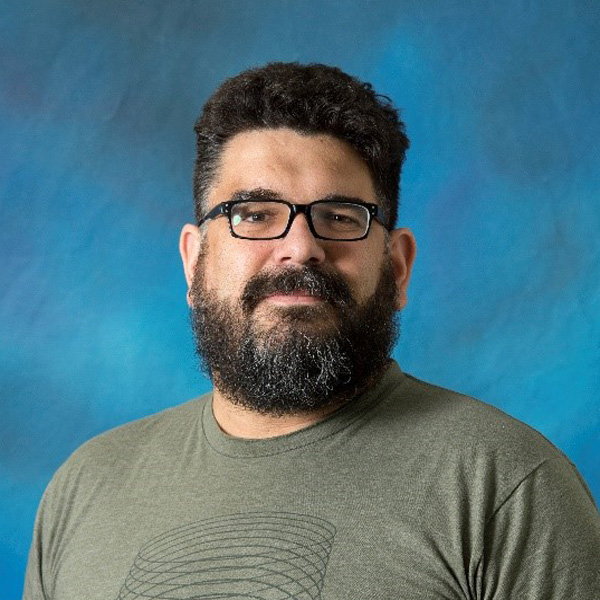
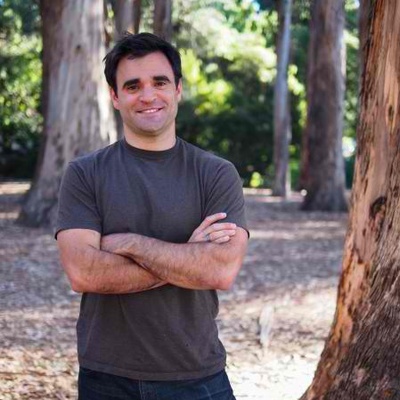
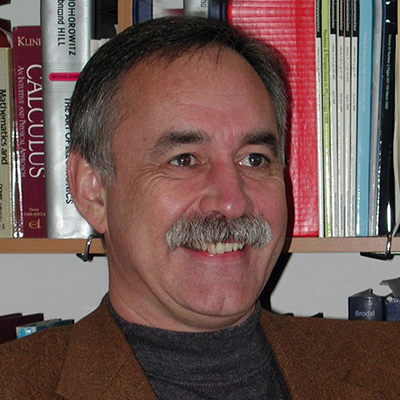
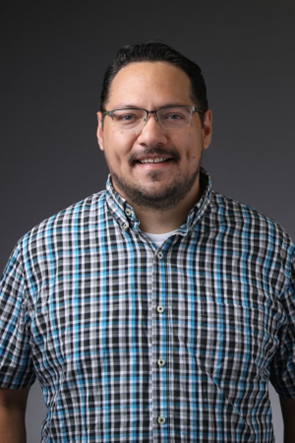
Brent Doiron is a Professor at the University of Chicago, holding appointments in the Departments of Neurobiology and Statistics, and serving on the Committee on Computational and Applied Mathematics (CCAM). His research integrates nonlinear dynamics and statistical mechanics to study neural circuit variability, focusing on mechanisms underlying neural coding and network learning through collaborations with experimentalists in sensory systems. Education: PhD in Physics (University of Ottawa, 2004) Postdoc: Center for Neural Science at New York University (2017) Previous Roles: Mathematics Professor at University of Pittsburgh (2007-2020), Co-Director of Neural Computation Program at Carnegie Mellon Neuroscience Institute Research interests center on neuronal population dynamics, recurrent circuit mechanisms, and computational neuroscience. Current work investigates correlated variability in cortical networks, inter-areal communication, and stochastic spiking models. Recent publications emphasize cortical stability/gain modulation, asynchronous/synchronous activity balance, and Bayesian inference frameworks. Key themes include sensory processing, network plasticity, and dimensionality reduction in neural coding. Scientific Awards Alfred P. Sloan Research Fellowship in Neuroscience Vannevar Bush Faculty Fellowship Chancellor’s Distinguished Research Award (University of Pittsburgh) Active grants include NIH R01 and R90/T90 awards for neuronal dynamics research and computational neuroscience training programs.
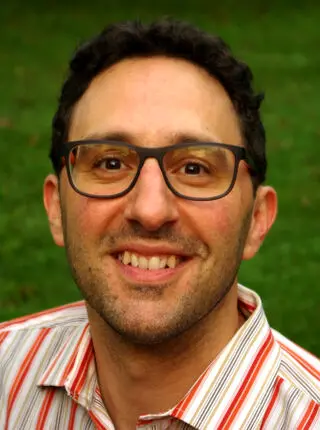
Dr. Juan Alvaro Gallego is a Senior Lecturer (equivalent to Associate Professor) in the Department of Bioengineering at Imperial College London's Faculty of Engineering. He leads the Behaviour and Neural Dynamics Lab (Be.Neural), a multidisciplinary team focused on understanding neural mechanisms underlying motor control and spinal cord learning, with applications in developing neural interfaces to restore movement in conditions like Parkinson’s disease and paralysis. His research integrates behavioral experiments, neural recordings, data analysis, and computational models, funded by the ERC, EPSRC, ARIA, and industry partners like InBrain Neuroelectronics and Meta Reality Labs. Research interests include motor control, neural dynamics, and clinical applications of neural engineering. The lab collaborates across systems neuroscience and biomedical engineering, aiming to translate fundamental discoveries into therapeutic technologies. Key areas of focus include neural manifolds, synaptic plasticity in motor learning, and closed-loop neuroprosthetics for tremor management. Funding sources include the European Research Council, Engineering and Physical Sciences Research Council, and industry collaborations. The Be.Neural Lab’s work is showcased on their dedicated website (https://beneural.ic.ac.uk).
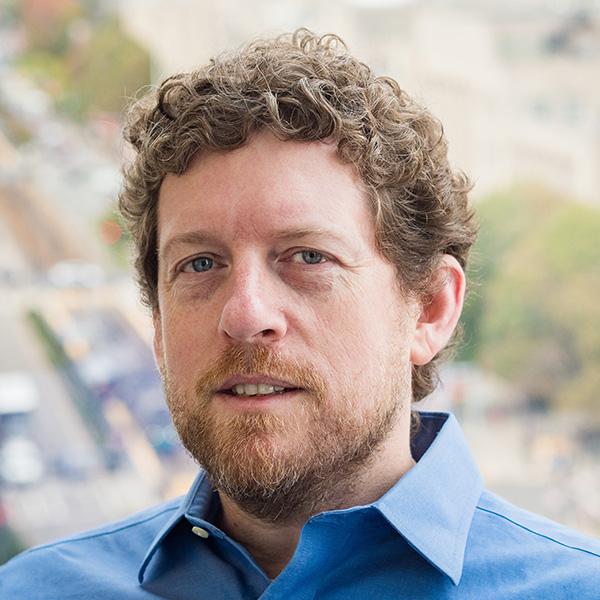
Anirban Paul is an Associate Professor in the Department of Neuroscience and Experimental Therapeutics at Pennsylvania State University, affiliated with the Penn State Neuroscience Institute. His research focuses on cellular and molecular mechanisms of GABAergic inhibitory circuits, with particular emphasis on interneuron biology and its implications in neurological disorders. Dr. Paul's research spans multiple neuroscience domains, with primary focus on GABAergic inhibitory circuits and interneuron biology. His work investigates how specific neuron subtypes, particularly Chandelier cells and cortical interneurons, contribute to brain function and dysfunction. He has made significant contributions to understanding the role of these cells in schizophrenia, Alzheimer's disease, and other neurological conditions. His research integrates molecular, cellular, and systems-level approaches to uncover fundamental mechanisms of neural circuit assembly, plasticity, and function. Key areas include RNA regulation in neuronal development, transcriptomic subtypes of inhibitory neurons, and cell-type specific vulnerabilities in neurodegenerative diseases. His research portfolio demonstrates consistent productivity with publications spanning from 2003 to 2025, showing an evolving focus from basic molecular neuroscience to translational research in neurological disorders. Recent work emphasizes single-cell analysis techniques and the role of specific interneuron populations in disease mechanisms, particularly in schizophrenia and Alzheimer's disease. His publications appear in high-impact neuroscience journals including Neuron, BMC Biology, and Frontiers in Cellular Neuroscience. Dr. Paul has received the NARSAD Young Investigator Award (2018), recognizing his promising research in neuroscience. His scientific contributions have been supported by multiple competitive grants from prestigious organizations including the National Institute on Aging (NIA) and the Brain and Behavior Research Foundation. He serves as Principal Investigator on multiple active research projects, including two major grants from the National Institute on Aging focused on cell-type specific risk and resilience in Alzheimer's disease and aging (2021-2024 and 2024-2026), as well as previous projects from the Brain and Behavior Research Foundation investigating Chandelier cells in schizophrenia. His research program demonstrates sustained funding and scientific leadership in the field of interneuron biology and its clinical implications.
Marc V Fuccillo is an Associate Professor of Neuroscience at the Perelman School of Medicine, University of Pennsylvania, where he leads a research laboratory focused on understanding the neural circuit mechanisms underlying behavioral control. His work bridges molecular, synaptic, and behavioral approaches to investigate how striatal circuits regulate mouse behavior from simple motor patterns to complex goal-directed actions. Fuccillo holds dual appointments in the Neuroscience and Cell and Molecular Biology Graduate Groups at Penn and maintains an active laboratory investigating the synaptic and circuit basis of neuropsychiatric disorders. Education: B.A. in Molecular and Cellular Biology and Music Performance (Violin) from Brown University (1998) Ph.D. in Developmental Genetics from New York University School of Medicine (2007) M.D. from New York University School of Medicine (2008) Fuccillo's research centers on the synaptic and circuit mechanisms of behavioral control, with particular emphasis on striatal circuits. His laboratory employs a range of technologies including mouse genetics, in vitro electrophysiology, in vivo imaging, and quantitative behavioral analysis to explore how neural circuits of the striatum regulate behavior and how disruptions in these circuits contribute to neuropsychiatric disorders. His work has particularly focused on autism-associated abnormalities in behavioral control, examining how synaptic adhesion molecules like neuroligins and neurexins shape circuit function and behavior, with significant findings regarding D1 dopamine receptor positive medium spiny neurons in the nucleus accumbens. Analysis of Fuccillo's recent publications reveals a strong focus on striatal circuit function across multiple dimensions. His work spans molecular neuroscience (examining synaptic adhesion molecules), cellular physiology (studying specific neuron types in striatal circuits), systems neuroscience (mapping circuit connectivity), and behavioral neuroscience (quantifying motor learning and decision-making). A unifying theme is how disruptions in specific molecular pathways lead to circuit-level abnormalities that manifest as behavioral phenotypes relevant to neuropsychiatric disorders, with particular attention to autism, OCD, and schizophrenia models. Scientific Recognition: Publications in high-impact journals including Nature Neuroscience, Current Biology, Cell Reports, and Neuron Research supported by multiple NIH grants including NIMH F32, NIMH K01, and HHMI Gilliam Fellowship awards for lab members Fuccillo actively mentors a diverse group of trainees including postdoctoral fellows, graduate students, and undergraduates. His laboratory has produced numerous successful alumni who have gone on to faculty positions, medical residencies, and graduate programs at prestigious institutions. His mentoring approach emphasizes technical skill development across multiple neuroscience disciplines while fostering independent scientific thinking. Current research in his lab is supported by NIH funding focused on understanding the molecular architecture of striatal circuits and their role in behavioral control, with three major research directions exploring molecular logic of striatal circuits, circuit mechanisms of behavioral control, and striatal dysfunction in neuropsychiatric disease models. The Fuccillo Laboratory operates within the Department of Neuroscience at the University of Pennsylvania, with access to state-of-the-art facilities for molecular, electrophysiological, imaging, and behavioral neuroscience research. The lab maintains active collaborations with other neuroscience research groups at Penn and beyond, creating a rich intellectual environment for studying the neural basis of behavior. Current research directions include investigating whether there is a molecular logic to striatal circuit composition, how striatal circuits shape behavioral control, and what mouse models of autism, schizophrenia, and OCD can reveal about striatal circuit dysfunction in disease pathophysiology.
Jason Ritt is an Associate Professor of Brain Science (Research) and Scientific Director of Quantitative Neuroscience at the Robert J. and Nancy D. Carney Institute for Brain Science, Brown University. He holds affiliations with the Data Science Institute and collaborates across disciplines on quantitative research methods. Education : B.S., M.A., and Ph.D. in Neuroscience from Boston University (1997–2003). Research : Focuses on neural processing during active sensing and neuroengineering for neurostimulation. Combines electrophysiology, optogenetics, and theoretical approaches in rodent models. Develops closed-loop systems for studying sensory neural prosthetics and brain-machine interfaces. Key areas include synaptic diversity, neurocontrol algorithms, and sensory restoration. Teaching : Instructs NEUR 2100 NeuroPracticum, integrating hands-on neuroscience research training.
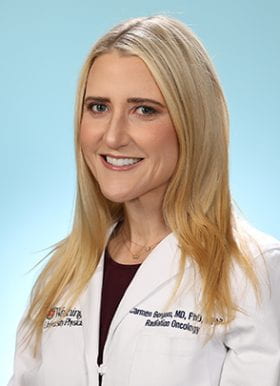
Carmen Bergom, MD, PhD, is an Associate Professor of Radiation Oncology at Washington University School of Medicine (WashU Medicine), where she joined the faculty in 2020. She holds secondary appointments in the Division of Cancer Biology and the Siteman Cancer Center. Her research focuses on leveraging genetic models to improve radiation therapy efficacy while mitigating radiation-induced cardiotoxicity , particularly in breast cancer patients. Key areas include radiation biology , tumor microenvironment , and cardio-oncology . Recent publications highlight her work in genetic mapping of radiation sensitivity (e.g., rat chromosome 3 variants), innovative imaging techniques (e.g., integrin-targeted PET), and clinical trial design for cardiovascular risk stratification. Her laboratory has pioneered the first genetic studies of radiation-induced cardiac dysfunction. Scientific awards include the Michael Fry Research Award (2021) and recognition as a Top Doctor in America (2018, 2019). She serves as Chair of the ASTRO Science Council Scientific Review Panel and co-chair of the Clinical and Experimental Research in Radiation Oncology meeting at ESTRO. Dr. Bergom treats breast cancer patients clinically and mentors students across all levels (undergraduate to postdoctoral). Her work bridges basic research with clinical applications , aiming to develop biomarkers and therapeutic targets for radiation oncology.
Colin J Akerman is Professor of Neuroscience and Group Leader in the Department of Pharmacology at the University of Oxford, concurrently serving as Corange Fellow and Medical Tutor at Corpus Christi College. His research investigates fundamental mechanisms of synaptic circuit formation and plasticity, with direct implications for epilepsy, dementia, and schizophrenia through multidisciplinary approaches integrating electrophysiology, optical imaging, and computational modeling. His primary research interests encompass Synaptic Plasticity, Neural Circuit Formation, and Excitatory-Inhibitory Balance, with specific focus on neuronal progenitor influences on connectivity, chloride dynamics in inhibitory transmission, and learning mechanisms in disease contexts. The lab employs custom-built equipment and molecular tools to probe synaptic function across in vivo , in vitro , and in silico platforms, emphasizing how activity-dependent processes shape neural networks during development and disease. Recent publications (2023-2025) reveal strong thematic convergence on intracellular chloride regulation in sleep-wake cycles, cortical circuit assembly from embryonic progenitors, and innovative optical tools for neural monitoring. This work bridges molecular neuroscience with systems-level understanding of synaptic plasticity, particularly regarding ionic mechanisms in epilepsy and sleep homeostasis. No scientific awards or fellowships are explicitly documented in the source materials. Professor Akerman currently mentors four PhD students (Vourvoukelis, Selfe, Wang, Gemayel) and multiple postdoctoral researchers, having previously trained scientists now leading independent groups in Toronto, Edinburgh, Cape Town, Oxford, and London. His research is funded by the European Research Council, Innovative Medicines Initiative, and Wellcome Trust, supporting investigations into synaptic mechanisms underlying neurological disorders. The Akerman Group, established in 2008, operates as an integrative neuroscience hub within Oxford's Pharmacology Department. The 10-member team combines expertise in patch-clamp electrophysiology, optogenetics, multiphoton imaging, and computational modeling, with current projects spanning neuronal progenitor biology, inhibitory synaptic plasticity, and learning rule implementation in neural networks. The lab emphasizes technical innovation, regularly developing custom instrumentation and molecular tools for neural observation and manipulation.
Qing Cao is an Associate Professor of Materials Science and Engineering at the University of Illinois at Urbana-Champaign, with courtesy appointments in Chemistry and Electrical Engineering. He leads the Cao Research Group within the Grainger College of Engineering and serves as Deputy Editor of Science Advances. Dr. Cao received his B.S. in Chemistry from Nanjing University in 2004 and his Ph.D. in Materials Chemistry from the University of Illinois at Urbana-Champaign in 2009. After working for 9 years as a research scientist at IBM Thomas J. Watson Research Center, he returned to UIUC in 2018 as a faculty member. His research focuses on developing functional nanomaterials for unconventional electronic systems, high-performance logic devices, and low-cost energy harvesting. The Cao Research Group specifically works on: nanoelectronic devices based on novel nanomaterials; next-generation memory devices for neuromorphic and in-memory computing; monolithic 3D integration for high performance electronics; high-performance printable electronic materials; and bioelectronics for healthcare applications. His work bridges materials science, chemistry, electrical engineering, and device physics. Analysis of Dr. Cao's recent publications reveals a strong focus on electrochemical memory devices for neuromorphic computing, with significant work on carbon nanotube-based electronics and novel nanomaterials. His 2023 Nature Electronics paper on CMOS-compatible electrochemical synaptic transistors demonstrates his leadership in developing hardware solutions for deep learning acceleration. His research trajectory shows a progression from fundamental carbon nanotube device physics to more applied systems for computing and sensing applications. IBM Pat Goldberg Memorial Best Paper Award (2017) IBM Master Inventor Award (2016) MIT Technology Review TR35 (2016) Forbes '30 Under 30' (2012) and 'Most Influential All-Star Alumni' (2016) Atlantic Council Millennium Fellow (2017) US Frontiers of Engineering by National Academy of Engineering (2016, 2019) 17 IBM Invention Achievement Awards (2011-2018) Dr. Cao has secured significant research funding including NSF grants 1950182 and 2139185. His research group actively recruits graduate students and postdoctoral researchers to work on cutting-edge materials and device projects. His work has resulted in over thirty research papers and fifty patents and patent applications. He teaches graduate courses including MSE 403 (Synthesis of Materials), MSE 460 (Electronic Materials I), and MSE 488 (Optical Materials). The Cao Research Group operates within the University of Illinois' world-class facilities including the Frederick Seitz Materials Research Laboratory and Holonyak Micro and Nanotechnology Laboratory. His research has received support from NSF, DoD, DOE, and industry partners including TSMC. The group's recent $2 million project focuses on developing technology to help mobile devices learn and adapt to their surroundings.
Jonny Kohl is a Group Leader at the Francis Crick Institute , where he established the State-dependent Neural Processing Laboratory in 2019. His work bridges neural circuits and internal physiological states (e.g., hunger, pregnancy) to decode instinctive behaviors like parenting and aggression in mice. PhD: MRC Laboratory of Molecular Biology, Cambridge (2013) Postdoc: Harvard University (2014–2019) with support from EMBO, HFSP, and Wellcome Trust fellowships Research Interests : Kohl investigates how hormonal and metabolic states dynamically rewire neural circuits to drive adaptive behaviors. His lab combines circuit neuroscience , molecular biology , and behavioral profiling to study: State-dependent neural processing in parental behavior Chemosensory dominance hierarchies in mice Plasticity mechanisms in aggression circuits Development of ultrafast tissue labeling and cryoanesthesia tools Scientific Trends : His recent publications highlight hormone-mediated synaptic remodeling (2023), cost-effective lab tools (2023), and brain-wide activity mapping (2016). Collaborative work spans computational biology , metabolism , and imaging disciplines. Honors: NARSAD Young Investigator Award (2019), ERC Starting Grant (2019), Wellcome Trust Discovery Award (2025) Grants: BBSRC Research Grant (2025), BBSRC Pioneer Grant (2023) His lab mentors PhD and MSc students and has developed open-source neuroscience tools (e.g., cryoanesthesia device, 2023). Kohl's research has been featured in Nature , Science , and Cell .
Chi Liu is a Professor of Radiology & Biomedical Imaging at Yale School of Medicine . He serves as Associate Director of Biomedical Imaging Technology at the Yale Biomedical Imaging Institute and Director for Research Faculty Affairs in the Radiology & Biomedical Imaging department. Education : PhD from Johns Hopkins University (2008) Postdoctoral Training : University of Washington (2010) Certification : American Board of Science in Nuclear Medicine (Nuclear Medicine Physics and Instrumentation) His research focuses on quantitative cardiac and oncological PET/CT and SPECT/CT imaging , emphasizing deep learning algorithms , reconstruction algorithms , data correction , and dynamic imaging . Key clinical applications include early detection of chemotherapy-induced cardiotoxicity , multimodality imaging of heart failure , and motion variability elimination in therapy response assessment . The 15 most recent publications reveal a strong emphasis on deep learning techniques for low-dose imaging , motion correction , and cross-tracer generalizability in PET/SPECT systems. These works span applications in cardiac imaging , neuroscience , oncology , and theranostics . Scientific Award : Bruce Hasegawa Young Investigator Medical Imaging Science Award (2012) Contact: chi.liu@yale.edu | ORCID 0000-0002-7007-1037
Evelyn Lake is an Associate Professor in the Department of Radiology and Biomedical Imaging at Yale University, with affiliations to the Wu Tsai Institute and Yale Biomedical Imaging Institute. Her research focuses on functional neuroimaging, particularly using rodent models to study brain connectivity, neurovascular coupling, and disorders like Alzheimer’s disease and autism spectrum disorder. PhD in Medical Biophysics, University of Toronto (2016) Postdoctoral Associate, Yale University (2019) BSc (Honors) in Biophysics, University of Guelph (2010) Her work spans multimodal imaging techniques (e.g., simultaneous Ca2+ and fMRI), examining how genetic mutations (e.g., PTEN, KATNAL2) affect cerebrospinal fluid dynamics and neuronal connectivity. She investigates longitudinal changes in Alzheimer’s models and methodological aspects of animal neuroimaging, such as sample size optimization and awake imaging protocols. Recent publications highlight her contributions to understanding autism-related white matter abnormalities, transdiagnostic connectome predictive modeling, and the impact of neurovascular uncoupling in awake mice. Collaborations include Todd Constable, Francesca Mandino, Xilin Shen, and Xenophon Papademetris.
Dr. Hillel Adesnik is a Professor in the Department of Neuroscience at the University of California, Berkeley, and a leading researcher in the neural basis of sensory perception. His lab focuses on cortical microcircuits, optogenetics, and neural coding, with emphasis on visual processing and memory formation. Key Research Areas: Cortical Microcircuits Optogenetic Tools Gamma Band Rhythms Neural Coding Mechanisms Dr. Adesnik has pioneered high-speed optical methods like 3D-MAP and 3D-SHOT to manipulate neural activity. His work spans cortical dynamics, synaptic plasticity, and cortical layer interactions, with applications in understanding learning algorithms and sensory inference. Selected Trends from Publications: Recent preprints and papers highlight advancements in cortical VIP neuron function, channelrhodopsin structures, and inter-areal computations. His team utilizes two-photon holography, cryo-EM, and computational modeling to decode perception-related neural codes. Scientific Awards: NIH Director's New Innovator Award (2013) Dr. Adesnik's lab collaborates with institutions like NIH and develops tools for awake animal studies. Funding includes grants from the Beckman Young Investigator Program and NIH.
Istvan Mody is a Professor at the University of California, Los Angeles (UCLA) with appointments in the Department of Neurology and Department of Physiology . His research focuses on synaptic signaling in health and disease, including mechanisms of GABAergic transmission, calcium homeostasis, and their roles in neurological disorders such as epilepsy, Alzheimer's disease, Huntington's disease, stress, alcoholism, and postpartum depression. He utilizes advanced techniques like patch-clamp electrophysiology, neuroanatomical and immunohistochemical methods, and molecular biology in animal models and human brain tissue . Research Interests: Dr. Mody investigates the physiology, pharmacology, and pathology of synaptic transmission and extrasynaptic receptor activation , with a particular emphasis on GABA(A) receptors and their subunit-specific modulation. His work explores how disruptions in excitation-inhibition balance contribute to neurological diseases, including mechanisms of tonic inhibition , calcium signaling , and neurosteroid interactions . He also studies the effects of chronic stress and hormonal fluctuations on neural excitability and behavior. Publications Trends: Recent studies highlight his work on gamma oscillations in Alzheimer's models, microglial dynamics , and rehabilitation strategies for stroke. His lab develops optical tools like dqGEVI for neuronal activity monitoring and investigates human brain organoids to model network dysfunction in epilepsy and intellectual disability. Laboratory Location: 635 Charles Young Dr S, Los Angeles, CA 90095, United States.
Sylvia Richardson is an MRC Investigator at the MRC Biostatistics Unit and holds a Research Professorship at the University of Cambridge, where she served as Director of the Biostatistics Unit from 2012 to 2021. She is affiliated with the Cambridge Mathematics of Information in Healthcare Hub (CMIH) at the Centre for Mathematical Sciences. Her work bridges advanced statistical methodology with critical healthcare applications, particularly in the analysis of complex biomedical data. Richardson's research spans multiple domains of biostatistics with a strong emphasis on Bayesian approaches. Her work has significantly advanced spatial modeling and disease mapping techniques, developed sophisticated methods for handling measurement error in epidemiological studies, and pioneered mixture and clustering models for integrative analysis of heterogeneous data sources. Her research addresses fundamental challenges in analyzing longitudinal health data, multimorbidity patterns, and complex disease trajectories. Her publication record demonstrates consistent methodological innovation applied to pressing healthcare challenges. Recent work focuses on traumatic brain injury outcomes, multimorbidity progression, genomic analysis, and statistical approaches to pandemic data. The articles reveal a strong pattern of methodological development driven by real-world healthcare challenges, with particular attention to longitudinal analysis, Bayesian computation, and integrative modeling approaches that can handle diverse and complex data structures. While specific awards are not detailed in the available information, Richardson's leadership as Director of the MRC Biostatistics Unit for nearly a decade and her continued Research Professorship reflect significant recognition of her contributions to the field. Her work with major international consortia like CENTER-TBI demonstrates her role in large-scale collaborative research efforts addressing critical health challenges. Richardson's research has substantial implications for healthcare policy and practice, particularly in understanding disease progression, developing predictive models for patient outcomes, and creating methodological frameworks that can integrate diverse data sources to generate meaningful clinical insights. Her work continues to influence both statistical methodology and healthcare applications through ongoing research and leadership in the field.
Dr. Rodolfo J. Flores serves as an Assistant Professor in the Department of Psychology within the College of Liberal Arts at the University of Texas at El Paso (UTEP). His primary research investigates neuromodulator function in the prefrontal cortex, with emphasis on acetylcholine and dynorphin systems during motivational conflict, stress responses, and addiction pathways. He employs advanced optogenetic and biosensor technologies to dissect neural circuitry underlying psychiatric conditions. Dr. Flores earned his Ph.D. in Social Cognitive and Neuroscience from UTEP in 2019, followed by postdoctoral training at the National Institute of Mental Health (NIMH). His work bridges molecular neuroscience with behavioral outcomes, focusing on how stress and substance exposure alter prefrontal cortical function. His research portfolio demonstrates consistent high-impact publication in top neuroscience journals including Nature Neuroscience , Neuron , and Psychoneuroendocrinology . Current work examines opioid neuropeptide dynamics, nicotine-alcohol interactions, and sex-specific hormonal influences on addiction behaviors. Methodologically, he specializes in genetically encoded biosensors and circuit-level manipulations to study threat processing and reward pathways. Dr. Flores teaches graduate and undergraduate courses including PSYC 4341 (Motivation & Emotion), thesis/dissertation supervision (PSYC 5395/6395), and research applications courses. His lab actively trains students through undergraduate research (RSRC 4033) and independent study opportunities (PSYC 4352).