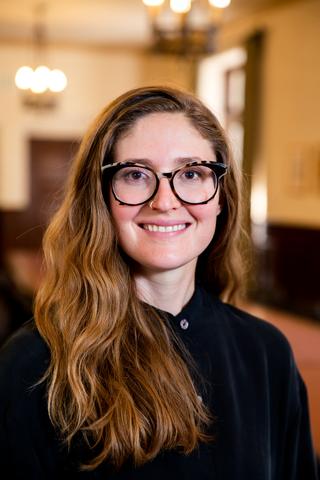
Laura Tamberg is a Research Fellow at Tallinn University of Technology’s School of Science, Department of Chemistry and Biotechnology. She holds a Doctoral Degree (2023) and Master’s Degree (2014) in Genetics and Molecular Biology from the same institution. Her research focuses on genetic regulation in neurological contexts, particularly studying the Drosophila Basic Helix-loop-helix Transcription Factor Daughterless and its mammalian homologue TCF4. Her work integrates developmental biology, molecular genetics, and neurobiology to understand gene expression in nervous system disorders. Notable contributions include modeling Pitt-Hopkins syndrome in Drosophila and analyzing BDNF receptor expression in mammals. She has received awards for her poster presentations and student research in genetics. Current projects involve gene regulation in intellectual disability and autism spectrum disorders, emphasizing transcription factors and neurotrophic pathways. Tamberg collaborates on initiatives like the Centre of Excellence for Genomics and Translational Medicine, focusing on clinical and molecular diagnostics in neurology. Her academic advising includes mentoring students in genetic and molecular research projects, though no specific advisees are listed in the provided texts. She is actively involved in grant-funded research, including studies on neuron-glia interactions and activity-dependent gene expression.
Bassel Sawaya, PhD, MS is a Professor at the Lewis Katz School of Medicine , Temple University , with affiliations to the Fels Cancer Institute for Personalized Medicine , Center for Substance Abuse Research , and Neural Sciences department. His research focuses on understanding the molecular mechanisms of HIV-1 associated neurocognitive disorders (HAND) in the HAART era. Research interests include: Neurotoxic effects of HIV-1 proteins (Tat, Vpr, gp120) MicroRNA regulation in neurodegeneration Metabolic reprogramming in viral pathogenesis Blood-brain barrier dysfunction Neuronal injury mechanisms Recent publications highlight: 2025 study on CK1δ-SNAPIN-lysosomal dysfunction in HAND 2023 discoveries on gp120-calcineurin pathway interactions 2022 work on metabolic shifts in neuroAIDS and SARS-CoV-2 2019-2013 investigations into Tat/Vpr neurotoxicity His lab employs molecular, virological, and cellular approaches to dissect HIV-1 pathogenesis. Current work explores therapeutic targets for HAND through microRNA and metabolic pathway modulation.
Botond Roska is a Professor at the Faculty of Science, University of Basel, Switzerland, and previously served as Professor at the Faculty of Medicine, University of Basel since 2014. He is the Founding Director of the Institute of Molecular and Clinical Ophthalmology Basel (IOB), established in 2018. His academic career includes serving as Senior Group Leader (2010-2019) and Junior Group Leader (2005-2010) at the Friedrich Miescher Institute in Basel. Born in 1969 in Hungary, Roska obtained his M.D. at the Semmelweis Medical School, a Ph.D. in neurobiology from the University of California, Berkeley, and studied genetics and virology as a Harvard Society Fellow at Harvard University and Harvard Medical School. Dr. Roska's research focuses on understanding the visual system at the level of cell types and circuits, with particular emphasis on the retina, thalamus, and cortex. His work aims to find ways to repair visual dysfunction and restore vision in blind individuals. He investigates how the organization of cell types and circuits in the nervous system, when combined with cellular engineering, can be used to design new therapies to fight blindness. Analysis of Roska's recent publications reveals a strong focus on single-cell resolution studies of the retina, development of gene therapy approaches for vision restoration, and detailed mapping of visual neural circuits. His work spans multiple disciplines including neuroscience, ophthalmology, genetics, and molecular biology, with a clear translational focus toward developing treatments for visual impairments. Dr. Roska has received numerous prestigious awards throughout his career: 1997: Fulbright Fellow 2001: Bearden Memorial Award for Biophysics 2002: Harvard Junior Fellow 2006: Marie Curie Excellence Grant 2009: EMBO Young Investigator 2010: ERC Starting Grant and VIVA Award 2011: Alcon Award and EMBO membership 2013: Alfred Vogt Award 2015: ERC Advanced Grant 2016: Cogan Award 2018: Bressler Prize and Alden W. Spencer Award 2019: Louis-Jeantet Prize, Order of Saint Stephen of Hungary, Cloëtta Prize, and Semmelweis Budapest Award 2020: ERC Advanced Grant and Körber European Science Prize 2024: Wolf Prize in Medicine (for sight-saving and vision restoration to blind people using optogenetics) As a principal investigator, Roska has secured significant research funding including multiple ERC grants (Starting Grant in 2010, Advanced Grants in 2015 and 2020), a Marie Curie Excellence Grant, and the VIVA Award. His laboratory has mentored numerous researchers who have gone on to publish impactful work in top-tier journals. The collaborative nature of his research is evident from the multi-institutional authorship of his publications. Dr. Roska founded and directs the Institute of Molecular and Clinical Ophthalmology Basel (IOB), which brings together basic scientists and clinicians to develop treatments for eye diseases. His laboratory employs advanced techniques including single-cell analysis, viral vector engineering, optogenetics, and neural circuit mapping to advance our understanding of the visual system and develop novel therapeutic approaches.
Valentina Emiliani is Director of the Photonics Department at the Vision Institute in Paris, France, where she leads the Wave front engineering microscopy group. Previously, she served as Director of the Neurophotonics Department at University Paris Descartes and held research positions at CNRS. With over 70 publications and 80+ invited seminars, Dr. Emiliani has established herself as a leader in neurophotonics. Her work bridges physics, engineering, and neuroscience to develop advanced optical techniques for brain circuit investigation. Dr. Emiliani's educational background includes: PhD in Physics from University 'La Sapienza' (Rome, Italy) in 1997, focusing on tunneling effect in quantum wells Postdoctoral research at Max Born Institute, Berlin, working on carrier transport in quantum wires Postdoctoral work at European Laboratory for Nonlinear Spectroscopy in Florence, Italy Her research spans optical wave front shaping, optogenetics, and two-photon imaging, with particular focus on creating tools for 'all-optical' investigation of brain circuits. She has pioneered methods for three-dimensional spatiotemporal focusing of light, enabling precise neural stimulation even in scattering brain tissue. Her laboratory develops holographic light patterning techniques that provide unprecedented spatial and temporal control for both imaging and stimulating neural activity. Dr. Emiliani's publication record demonstrates a clear progression from fundamental optical physics to sophisticated neuroscience applications. Her research consistently focuses on developing holographic methods that enable precise spatial and temporal light control, with recent work emphasizing optogenetics applications. This work represents a major advance toward all-optical electrophysiology, where both neural activity recording and stimulation can be achieved with light alone, eliminating the need for electrical electrodes. Her scientific achievements have been recognized with several prestigious awards: 2019: Invited Presidential Speaker at the SfN annual meeting 2018: Axa-Chair award for 'Investigation of visual circuits by optical wave front shaping' 2015: Prix 'Coups d'élan pour la recherche française' from Bettencourt-Shueller foundation 2009: Human Frontier Research Program – Coordinator Research Grant 2005: European Young Investigator Award (EURYI) Dr. Emiliani has successfully secured significant research funding, including the European Young Investigator grant that enabled her to establish her research group. Her leadership of research teams since 2005 demonstrates extensive mentoring experience. Her laboratory has produced numerous high-impact publications in top journals including Nature Neuroscience and Nature Methods, indicating a productive research environment that trains students in cutting-edge neurophotonics techniques. Dr. Emiliani leads the Wave front engineering microscopy group at the Vision Institute, specializing in developing optical techniques for neuroscience research. Her laboratory bridges physics, engineering, and neuroscience to create tools that enable researchers to observe and manipulate neural activity with unprecedented precision. This work has significant implications for understanding brain function and developing new approaches to treat neurological disorders.
Claudia Bagni is a Full Professor at the University of Lausanne (Switzerland) in the Department of Fundamental Neurosciences within the Faculty of Biology and Medicine, and maintains a dual appointment at the University of Rome Tor Vergata (Italy). She previously served as Director of the Department of Fundamental Neurosciences (2016-2021) and as Vice-Dean for Research and Innovation at the Faculty of Biology and Medicine, University of Lausanne (2021-2024). Her academic journey began with work in renowned laboratories including Fotis C Kafatos at Harvard, and subsequently at the EMBL with Carlos Dotti. She was Group leader at VIB (Flemish Institute for Biotechnology) and Full Professor at the Faculty of Medicine of KU Leuven (2008-2016) before joining the University of Lausanne. Professor Bagni is an EMBO member and was elected to the Academy of Europe in 2024. Professor Bagni's research focuses on molecular mechanisms of synaptic plasticity, neuronal development, mRNA metabolism, and the molecular basis of intellectual disabilities, particularly Fragile X Syndrome. Her work bridges biochemistry and neuroscience, investigating brain wiring, ASD and SCZ-like behaviors, and cancer mechanisms in intellectual disability contexts. She has published over 130 papers in high-impact journals and holds three patents. Her scientific contributions have been recognized with numerous prestigious awards including the Knight of the Order of Merit of the Italian Republic (2023), Nestle Research & Development Women in Science Award (2018), Pavoncella Prize (2017), and Solvay Prize (2016). She serves on multiple scientific advisory boards including the Fragile X International Association. As an active contributor to the scientific community, Professor Bagni mentors junior scientists, reviews for leading journals, and organizes high-profile conferences including EMBO and Gordon Research Conferences. Her recent publications (2024-2025) in journals like Nature Neuroscience, Science, and Neuron demonstrate her ongoing research productivity and leadership in the field.
Anthony Holtmaat is a Full Professor in Neuroscience at the Department of Basic Neurosciences, Faculty of Medicine, University of Geneva, Switzerland. He has held this position since 2016 and was an Associate Professor from 2007–2015. His research focuses on synaptic and structural plasticity in cortical circuits. Full Professor (2016–present) Associate Professor (2007–2015) Chair Alan Rossier (2007–2015) His work spans molecular neuroscience , optical imaging of brain structure , and cortical-thalamic circuits . Key contributions include studies on dendritic spine dynamics and activity-dependent plasticity using in vivo imaging techniques. Recent publications highlight his expertise in synaptic potentiation mechanisms , interneuron development , and computational neuroimaging . He has received major awards including the Swiss Brain League Research Prize and funding exceeding 1.5M CHF for his Chair. Swiss Brain League Prize (2016) 1.5M CHF Chair Funding (2007) 30+ PhD Students Examined 12 Postdocs Advised
James J. Cheetham is an Associate Professor in the Department of Biology at Carleton University within the Faculty of Science. He holds a B.Sc. and Ph.D. from McMaster University and serves as an Undergraduate Co-op Advisor. His research bridges membrane biochemistry, computational biology, and biophysics. Education: B.Sc. (McMaster University) Ph.D. (McMaster University) Research Interests: Protein-lipid interactions in synaptic vesicle regulation Computational modeling of presynaptic nerve terminals Biophysical techniques for membrane analysis Application of machine learning to protein interaction prediction Research Trends: His publications span molecular neuroscience, computational modeling, and bioinformatics. Recent work focuses on antimicrobial mechanisms and fungal membrane disruption, while earlier studies emphasize synaptic protein dynamics and algorithm design for biological simulations. Advising & Techniques: He employs liposomes, atomic force microscopy, and fluorescence spectroscopy alongside bioinformatics tools like PIPE. Collaborations include neuroscience (e.g., synapsin studies) and computational science (e.g., DEVS models).
Prof. Dr. Jürgen Franke is a renowned academic in statistics and applied mathematics. He held the position of Professor C4 (Chair) for Applied Mathematical Statistics at Technische Universität Kaiserslautern from 1988 to 2017. Since 2017, he has been a Consultant Researcher at the Fraunhofer Institute for Industrial Mathematics (ITWM) in Kaiserslautern. His research focuses on nonlinear time series analysis, stochastic processes, and their applications in finance, risk management, and biomedical data analysis. Education: - Diplom in Mathematics, Goethe-Universität Frankfurt a.M., 1974. - PhD (Dr. phil.nat.) in Mathematics, Goethe-Universität Frankfurt a.M., 1980. - Habilitation in Mathematics, Goethe-Universität Frankfurt a.M., 1985. Research Interests: Franke's research emphasizes the development of statistical methodologies for nonlinear time series, spatial data, and stochastic processes. Key areas include local smoothing techniques (kernel and wavelet-based estimates), functional data analysis, resampling methods (bootstrap), and nonparametric approaches in machine learning. His applied work addresses challenges in finance, risk management, and biomedical data analysis where traditional methods may be insufficient. Advising and Grants: While specific grants are not detailed, Franke has collaborated extensively with researchers in applied mathematics and statistics, contributing to numerous projects. His work often intersects with interdisciplinary applications, reflecting a commitment to bridging theoretical and practical domains. Labs/Teams: Affiliated with the Department of Mathematics at TU Kaiserslautern and the Fraunhofer Institute for Industrial Mathematics (ITWM), where he focuses on applied statistical research and collaboration with industry.
Rüdiger Klein is a Director and Scientific Member at the Max Planck Institute for Biological Intelligence , leading the Molecules - Signaling - Development department. His research spans neurodevelopment , neurodegeneration , and neural circuit dynamics , blending molecular biology, genetics, and advanced imaging. Research Focus: Cell-Cell Communication: Investigates FLRT proteins and Ephrin-Eph signaling in cortical folding and axon guidance. Neurodegeneration: Studies protein aggregates in Huntington’s disease via collaborations with proteomics experts. Circuit Dynamics: Explores amygdala and spinal cord microcircuits in feeding behavior and motor control. Scientific Contributions: Identified FLRTs as dual adhesion/repulsion molecules, elucidated Ephrin-Eph trans-endocytosis mechanisms, and characterized amygdala neurons regulating food consumption. His work combines mouse genetics, optogenetics, and X-ray crystallography.
Michael Hildebrand is a Professor in the Department of Neuroscience at Carleton University and an Affiliate Investigator at The Ottawa Hospital. He serves as Associate Vice-Provost (Graduate Student Affairs), overseeing graduate policies, student crisis mediation, and thesis defense processes across the university. His educational background includes a PhD in neurophysiology from the University of British Columbia (UBC), followed by an industrial R&D fellowship at NeuroMed Pharmaceuticals and an academic postdoctoral fellowship at Sick Kids Hospital. Hildebrand's research focuses on spinal mechanisms of pain processing using molecular, pharmacological, electrophysiological, and behavioral approaches. His lab bridges translational gaps between basic science and clinical needs by studying acute/chronic pain states in both rodent and human spinal cord models. Key interests include sexual dimorphism in pain pathways , T-type calcium channel functions , and NMDA receptor subunit contributions to identify novel pain treatment targets. Analysis of his 15 most recent publications reveals dominant trends in sex-specific pain mechanisms, human spinal cord translational models, and molecular targets like calcium channels and NMDA receptors. His work consistently integrates rodent and human tissue studies to address chronic pain's clinical challenges. Scientific recognition includes: Ronald Melzack, Canadian Journal of Pain Paper of the Year Award (2023) Hildebrand mentors undergraduate, graduate, and postdoctoral researchers while securing major funding from NSERC, CIHR, MITACS, and industry partners. His leadership extends to national roles including Chair of the Canadian Pain Society's Scientific Program Committee. The Hildebrand Lab operates within Carleton's Health Sciences Building, utilizing pioneering human spinal cord preclinical assays alongside animal models to investigate pain mechanisms and therapeutic interventions.
Jennifer Evans is an Associate Professor in the Department of Biomedical Sciences at Marquette University . She holds a Ph.D. in Psychology from the University of California, San Diego, and completed postdoctoral research at the Morehouse School of Medicine. Her lab investigates neural circuits driving circadian rhythms using molecular, cellular, and behavioral approaches, with a focus on sex differences and light-induced plasticity. Research Interests include: Neural circuit organization in the suprachiasmatic nucleus Biological sex influences on circadian systems Light exposure effects on clock function Molecular signaling in clock synchronization Pathological consequences of circadian disruption Recent Publications reveal trends in: SCN circuit mapping , sex-based clock variability , neuropeptide signaling , and environmental entrainment . Her work has uncovered sex-specific responses to light and roles of somatostatin/VIP in clock regulation. Scientific Contributions include Faculty Fellowship from University of California Key discoveries about SCN intercellular coupling Establishing sex differences in circadian plasticity Defining non-photic entrainment mechanisms Elucidating seasonal GABA signaling Advising : Graduate student Sydney McGraw works in her lab. The Evans Laboratory explores circadian network dynamics and their health impacts, with ongoing projects on clock neuron specialization and downstream tissue regulation.
Gabriella R. Sterne, Ph.D., is an Assistant Professor in the Department of Biomedical Genetics and the Department of Neuroscience at the University of Rochester School of Medicine and Dentistry (SMD). She holds joint appointments in both departments and leads the Sterne Lab, focused on understanding neural circuit mechanisms underlying feeding behaviors. Dr. Sterne earned her Ph.D. in Neuroscience from the University of Michigan (2016) and a B.A. in Biology from Whitman College (2010). Her research integrates experimental and computational approaches to study how neural circuits coordinate feeding motor programs, time feeding intervals, and store feeding-related memories using Drosophila as a model system. Key research themes include: Feeding Motor Sequences : How circuits orchestrate rhythmic motor actions like proboscis extension. Feeding Microstructure : Neural coding strategies for timing feeding rhythms across timescales. Feeding Memories : Circuit mechanisms linking taste experiences to long-term behavioral adaptations. Her lab collaborates extensively with neuroimaging and computational teams, contributing to projects like the Drosophila connectome mapping. Recent work includes computational brain models and neuroendocrine pathway discoveries influencing feeding behavior. Lab Members include postdoctoral scholars, graduate students (e.g., Gladys Leitch studying hunger modulation), and undergraduates involved in neuroanatomy visualization and synaptic quantification projects. The lab is affiliated with the Biomedical Genetics and Genomics, Neurobiology & Anatomy, and Neuroscience Ph.D. programs. Lab location: KMRB 2-9639, 601 Elmwood Ave, Rochester, NY 14642.
Athanasios Metaxas is an Assistant Professor in the Department of Life Sciences at the School of Sciences, European University Cyprus. He holds a Ph.D. in Biosciences and Medicine (University of Surrey, U.K.), an M.Sc. in Biosciences and Medicine (University of Surrey, U.K.), and a B.Sc. in Pharmacy (Aristotle University of Thessaloniki, Greece). His research focuses on neuroinflammation, synaptic pathology, and molecular mechanisms underlying Alzheimer’s disease, particularly using transgenic mouse models and advanced imaging techniques like PET. Metaxas has received travel awards from the Lundbeck Foundation and the University of Southern Denmark, and his work emphasizes serotonin signaling, tau protein alterations, and the development of diagnostic tools for neurodegenerative conditions. Educations: Ph.D., Biosciences and Medicine, University of Surrey, U.K. (2010) M.Sc., Biosciences and Medicine, University of Surrey, U.K. (2005) B.Sc., Pharmacy, Aristotle University of Thessaloniki, Greece (2004) Research Interests: His studies investigate the interplay between neuroinflammation and synaptic dysfunction in Alzheimer’s disease. Metaxas employs transgenic mouse models to study amyloidosis, tau pathologies, and the role of serotonin transporters (SERT) in disease progression. He is also dedicated to developing PET imaging ligands targeting NMDA receptors and exploring antioxidant therapies that modulate the NRF2 pathway. Recent work highlights the protective roles of cytokines like TNF in cognitive processes under physiological conditions, while his studies on 5-HT2B receptors in microglia cells reveal behavioral impacts of conditional receptor inactivation. Metaxas’ research bridges molecular proteomics with translational neuroscience, aiming to identify novel therapeutic targets and biomarkers. Publications Trends: His articles emphasize Alzheimer’s disease pathogenesis, focusing on synaptic plasticity, neuroinflammation, and age-related biomarkers. He frequently publishes in journals like Cells , Scientific Reports , and Alzheimer’s Research & Therapy , with contributions to both basic science and clinical neuroimaging. Recent work extends to canine models of early Alzheimer’s, suggesting cross-species relevance of microglial activation patterns and perivascular macrophage infiltration. Awards & Recognition: 2018: IMM Travel Award (University of Southern Denmark) 2017: Lundbeckfonden Travel Award (Lundbeck Foundation) 2016: IMM Travel Award (University of Southern Denmark) 2006-2010: Ph.D. Studentship (European Commission) Advising & Grants: Metaxas has served as Principal Investigator for projects on neurofibrillary tangles (2016), SSRIs and amyloid pathology (2015), and Co-Investigator in studies on serotonergic signaling in microglia (2018-2020). He collaborated on LeARN (2010-2014) for Alzheimer’s diagnosis tools and CoPING AD (2015-2018) exploring neuron-glia interactions. As a supervisor, he guided undergraduate and postgraduate theses in multiple institutions (SDU, VUmc, University of Surrey). His leadership roles include Erasmus+ Coordinator at SDU (2016-2017) and Professional Training Year Coordinator at VUmc (2012-2013), emphasizing international collaboration and training program development. Labs & Teams: While specific lab names are not provided, his research is embedded within collaborative projects such as LeARN (Center for Translational Molecular Medicine) and CoPING AD (University of Southern Denmark). These projects involve multidisciplinary teams focusing on neuropharmacology, imaging, and molecular biology, with contributions to preclinical drug evaluation and diagnostic tool development.
Dr. Tina Kroll is a researcher at the Institute of Neuroscience and Medicine (INM-2) at the Research Center Jülich GmbH. Her work focuses on neuroimaging, particularly positron emission tomography (PET), to study neurodegenerative diseases like Alzheimer’s, adenosine receptor dynamics, and the effects of sleep deprivation on brain function. She investigates synaptic density, molecular pathology quantification, and the interplay between sleep architecture and neurodegenerative processes. Key projects include developing novel PET-derived biomarkers for Alzheimer’s (e.g., spatial extent analysis of pathology), optimizing awake PET methodologies in rodents, and exploring sex differences in synaptic density measurement. Her research integrates genetics, neurophysiology, and advanced imaging techniques to understand brain mechanisms in health and disease. Collaborations span neurology, psychiatry, and computational biology, with a focus on translating findings into clinical staging models (e.g., T-POT cohort for tau propagation). Technical contributions include enhancing PET/MRI image quality with deep learning, improving motion correction in animal PET studies, and validating radiotracer applications for adenosine receptors. Her work bridges preclinical models and clinical applications, addressing challenges in neuroimaging accuracy and translational research.
Andrea Gomez is an Assistant Professor of Cell Biology, leading the Gomez Lab focused on understanding molecular mechanisms shaping neural circuits. Her research integrates electrophysiology, imaging, and molecular biology to study synaptic properties and their roles in psychiatric disorders such as autism and neurodegeneration. Current projects include investigating alternative RNA splicing's role in neural complexity, synaptic organization in hippocampal neurons, and the RNA biology of psychedelics. The lab explores how transsynaptic signaling and splicing regulators influence cell-type specific dynamics in neural networks. Notable contributions include discoveries on neurexin molecular codes, Lrp4's role in synapse formation, and the impact of psychedelic compounds on transcriptomic plasticity. Her work bridges fundamental neuroscience with translational insights into cognitive flexibility and neural repair.