Tom Van Imschoot is a Lecturer and Coordinator of the Imagination & Language unit at KU Leuven's Faculty of Arts in Ghent. His research focuses on intersections between visual art, political theory, and digital media. He actively promotes interdisciplinary projects such as Dissensus and Connection as Artistic Tactics (2019-2025) exploring art's role in political subject formation and Dear Reader (2015-2024) investigating graphic design authorship. His recent publications analyze topics ranging from Raoul De Keyser's art criticism to AI collaboration in creative processes. Research interests span art criticism, graphic design theory, and AI's impact on artistic practices. He coordinates the Imagination & Language team, fostering cross-disciplinary projects between art, language, and cultural studies. Supervised PhD projects include studies on trompe l'oeil techniques and authorship in design. Key contributions include co-organizing the Data Imagination seminar (2023) and publishing in venues like Cultuur+Educatie . Current projects emphasize art's role in societal discourse and digital innovation in creative education.
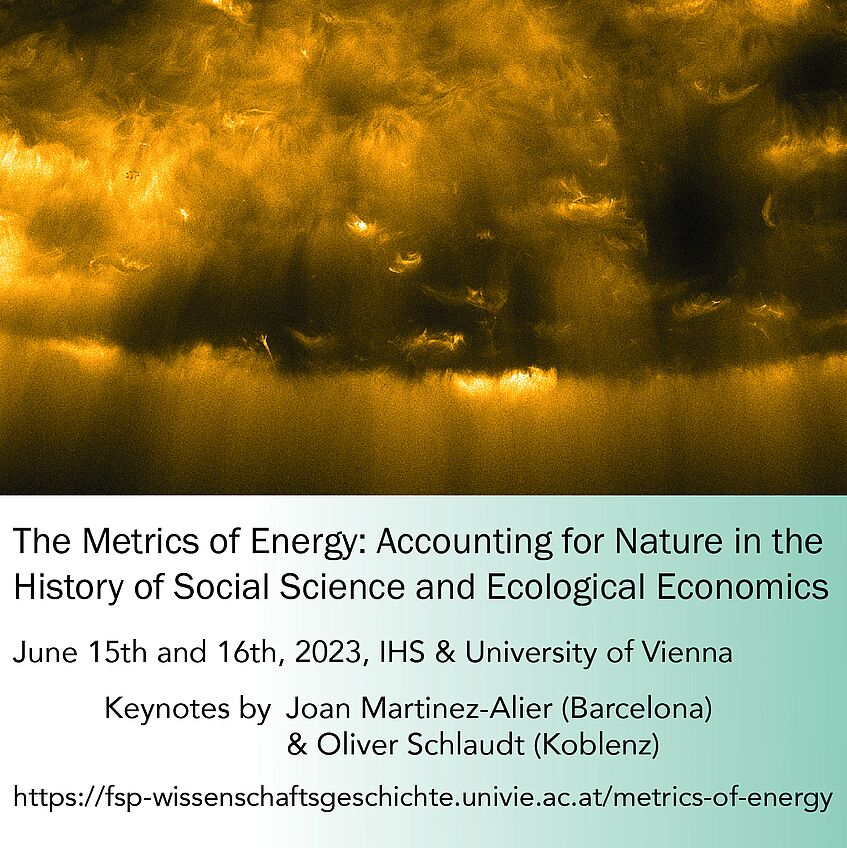
Anna Maria Echterhölter is Professor of Modern History: History of Science at the Department of History, University of Vienna, a position she has held since March 2018. She also serves as spokesperson of the key research area History of Science at the Faculty of Historical and Cultural Studies since March 2019. Previously, she was Visiting Professor of History of Technology at Technische Universität Berlin (2018) and Visiting Professor of Cultural History at Humboldt Universität zu Berlin (2017). Her academic journey includes fellowships at the Max Planck Institute for the History of Science and the German Historical Institute Washington DC. Echterhölter's educational background includes a Magister programme in literature and cultural studies from Freie Universität Berlin (1994-2001), with additional studies in physics. Her academic credentials were solidified with her dissertation on "Epistemic values in obituaries on scientists 1711–1860" (2009) and her habilitation thesis defended in February 2017. Her international academic experience includes semesters at Goldsmiths College London (1998), summer school at the University of Silesia in Katowice (1999), and the Goethe-Institute in Manila (1996). As a historian of science, Echterhölter specializes in social histories of quantification, particularly focusing on the measurement of resources and how units of measurement interact with patterns of justification in allocation schemes. Her research spans history of science (18th and 19th century) , historical-political epistemology , epistemic decolonisation , and the history of quantification and modern data technologies . She has made significant contributions to understanding colonialism, measurement and quantification in Oceania , technologies of money , and the history of auxiliary sciences and historical methods including metrology and chronology. Her work on Pacific perspectives through the lens of epistemic decolonization has been particularly influential in challenging colonial narratives. Echterhölter's recent publications reveal a clear trajectory toward examining the intersections of historical quantification practices with contemporary AI and data technologies. Her work increasingly focuses on how historical measurement systems inform current data practices, particularly in colonial contexts. A notable trend is her exploration of "enquétes" (colonial surveys) as serialized forms of knowledge production that shaped scientific fields and colonial administration. Her scholarship bridges historical analysis with critical examinations of modern computational methods, demonstrating how historical patterns of quantification continue to influence contemporary data practices and epistemological frameworks. Editor of Science in Context (since 2022) Editor of Historische Wissensforschung book series Founding member of ilinx magazine Reviews for ISIS, N.T.M., Centaurus, and other prestigious journals Supervisor in two sections of the Vienna Doctoral School of Historical and Cultural Studies Professor Echterhölter leads the key research area History of Science at the University of Vienna, which includes the MA History program and the joint MA programme "Epistemologies of Science and Technology." She has organized numerous significant conferences and workshops, including "Beyond Quantity: Research with Subsymbolic AI" (2022), "The Metrics of Energy: Accounting for Nature in the History of Social Sciences and Ecological Economics" (2023), and "Scales, Norms, Limit Values in Times of (Digital) Change" (2021). Her collaborative work with institutions like the Institute for Historical Research London on "Anthropocene Histories" demonstrates her commitment to international scholarly exchange and interdisciplinary approaches to the history of science.
Michelle Williams Gamaker is a Professor in Fine Art at Goldsmiths, University of London, where she teaches in the Department of Art. Based in London, she is a moving image and performance artist whose work explores the fiction-making machine of 20th Century British and Hollywood studio films through restaging sequences to reveal cinematic construction and recasting characters to propose alternative endings. She is also Chair of Trustees at Pavilion in Leeds and co-founder of the Women of Colour Index (WOCI) Reading Group with Samia Malik and Rehana Zaman. 2016: Postgraduate Certificate in the Management of Teaching and Learning (HEA) 2012: PhD in Fine Art, Goldsmiths College, University of London 2005-06: MA Visual Anthropology, Goldsmiths College, University of London 1998-01: BA Fine Art (First Class Hons), Middlesex University 1997-98: BTEC Diploma in Art & Design, Middlesex University 2003-05: de Ateliers, Amsterdam, The Netherlands Williams Gamaker's key focus is the development of 'fictional activism': the restoration of marginalised brown characters as central figures who return in her works as vocal brown protagonists challenging historical cinematic injustices. Her practice involves scriptwriting, workshopping with actors, acquiring film paraphernalia, and producing props for intricate restagings of film sets. She explores migratory aesthetics, mental health, and the emotional complexities of capitalism and gender ideology through collaboration, particularly with artists Julia Kouneski and Mieke Bal. Her work with the WOCI Reading Group focuses on improving the visibility of women of colour artists while using archival material to generate discussion around current social and political concerns. Her recent works demonstrate a consistent exploration of postcolonial narratives, feminist film theory, and decolonial aesthetics. The Dissolution Trilogy represents a significant body of work that deconstructs Powell and Pressburger's 1947 Black Narcissus, revealing how cinematic construction shapes representation. Her filmic approach combines historical critique with contemporary theoretical frameworks, particularly around race, gender, and representation in cinema. Williams Gamaker is represented by Tintype Gallery, London, and her work has been exhibited internationally at venues including the BFI London Film Festival, Internationale Kurzfilmtage Winterthur, and various galleries across Europe. She has also presented at academic conferences such as Spectacular Evidence: Theatres of the Observed Mind, where she discussed Lygia Clark's work on 'biological architecture'. She has collaborated extensively with artist and cultural theorist Mieke Bal on projects including 'Madame B: Explorations in Emotional Capitalism' and 'Precarity,' which have been shown internationally at venues including Stedelijk Museum in Amsterdam, Gallery of Sydney College of the Arts, and Museum Bärengasse in Zürich. Her collaborative practice extends to her work with Julia Kouneski, revisiting Brazilian artist Lygia Clark's psychotherapeutic work as inspiration for interventions with the body, architecture and landscape.
Dr. Sotirios Batsakis is a Senior Research Fellow at the University of Huddersfield, School of Computing and Engineering. He holds a diploma in Computer Engineering and Informatics from the University of Patras (Greece) with highest distinction, and a Master’s/Ph.D. in Electronic & Computer Engineering from the Technical University of Crete. His work contributes to UN Sustainable Development Goals through research in knowledge representation, semantic web, and spatio-temporal reasoning. Centre for Planning, Autonomy and Representation of Knowledge Centre of Artificial Intelligence for Mental Health Centre for Autonomous and Intelligent Systems His research spans knowledge representation, semantic technologies, spatio-temporal reasoning, and AI applications in mental health. Recent work focuses on large language models for formal verification, defeasible reasoning, and compliance checking in legal contexts. He has contributed to qualitative spatial reasoning frameworks, temporal representation in OWL, and semantic IoT systems. Active in academic service as a programme committee member for IEEE conferences, he has published extensively on semantic web technologies, ontologies, and AI applications. His research fingerprint includes ontology engineering (100%), semantic web (66%), and temporal reasoning (15%) across 63 publications since 2009.
Alex Schoeman is an Associate Professor in the School of Geography, Archaeology and Environmental Studies at the University of the Witwatersrand. She leads the NRF-funded South African Farmscapes & Food team, focusing on pre-colonial African farming systems in northeastern South Africa. Her work integrates environmental, economic, and social dimensions of farming, with a strong emphasis on Indigenous Knowledge and sustainability. BAHons, University of the Witwatersrand MA, University of the Witwatersrand PhD, University of the Witwatersrand Her research interests span the archaeology of farming and food, gender and feminism, interactions between farmers and hunter-gatherers, and the history of archaeology. She explores how farming communities transformed their environments and how ritual, labor, and social structures shaped pre-colonial landscapes. Her teaching includes courses on the archaeology of the last 2000 years in southern Africa, the history of archaeological thought, and the archaeology of food production. Her recent publications reflect a strong trend in landscape archaeology, phytolith and organic residue analysis, ritual sites, and the reinterpretation of stone-walled settlements like Bokoni. The articles span environmental reconstruction, gendered labor, technological practices, and decolonial approaches to archaeological interpretation, demonstrating a multidisciplinary and socially engaged methodology. She has not been explicitly awarded any scientific prizes in the provided text, but her leadership of an NRF-funded project indicates significant recognition and competitive grant acquisition. Alex Schoeman actively supervises students and leads field projects such as the Bokoni Farmscapes and AGRI-DRY initiatives. Her work involves collaboration across institutions and disciplines, particularly in geochemical, botanical, and remote sensing analyses. She is deeply involved in community-engaged archaeology and the curation of Indigenous Knowledge systems. She is affiliated with key research platforms including the Bokoni Farmscapes Project and the AGRI-DRY research network, which support her fieldwork and interdisciplinary investigations into southern African farming pasts.
Anne Buckley is Associate Professor in German and Translation Studies at the School of Languages, Cultures and Societies, University of Leeds, Faculty of Arts, Humanities and Cultures. Her work spans translation pedagogy, corpus linguistics, and the history of German prisoners of war during the First World War. She leads translation modules at undergraduate and postgraduate levels and supervises final year projects. Education: BSc in Pure Mathematics and German, UMIST PGCE in German and Mathematics, University of Strathclyde MA in Applied Translation Studies, University of Leeds Anne's research centers on the experiences of German POWs in the UK during WWI, particularly at the Raikeswood Camp in Skipton. She explores coping strategies, cultural activities, delayed repatriation, and mental health impacts. Her interdisciplinary approach combines historical analysis with translation and corpus linguistics. She has led public engagement initiatives with Craven Museum and Skipton Library, and translated key historical texts. Her publications and conference presentations reveal a strong focus on military captivity, cultural resilience, and translation as a historical tool. Themes include transnational prisoner movement, legacy of war, and the use of translation in preserving historical memory. Anne Buckley is a Fellow of the UK Higher Education Academy and a member of the German History Society and the International Society for First World War Studies. She has no listed scientific awards. She supervises final year translation projects and serves as the Residence Abroad Tutor for German students. She has led a team of translators on major historical translation projects but no formal PhD students are listed. Her work integrates teaching, research, and public history, particularly through the Kriegsgefangen in Skipton project. Anne is involved in research groups including the Translation German group, Centre for Translation Studies, and Language at Leeds, and contributes to the War Studies research community at Leeds.
Dr. Jelle Zuidema is Associate Professor in Natural Language Processing, Explainable AI and Cognitive Modelling at the Institute for Logic, Language and Computation (ILLC) of the University of Amsterdam, with primary affiliation in the Natural Language Processing research group and secondary affiliation in Language & Music Cognition. He directs the Cognition, Language and Computation lab (CLC-lab) within the Faculty of Science. His research bridges artificial intelligence, cognitive science and linguistics with focus on interpretable deep learning models for text and sound. He pioneered techniques including diagnostic classification (probing), attention rollout, TreeLSTM, and masked language modeling. His work addresses fundamental questions about hierarchical compositionality in language and how neural networks can represent linguistic structure. Analysis of his publication record reveals consistent innovation in neural network interpretability methods, with recent work focusing on bias detection in language models and attention flow quantification. His research trajectory shows evolution from foundational neural parsing work to current emphasis on explainable AI and cognitive plausibility of deep learning models. Dr. Zuidema actively supervises PhD and MSc students while teaching courses including Evolution of Language and Music, Foundations of Neural and Cognitive Modelling, and Interpretability & Explainability in AI. He coordinates the Cognitive Science track in the Brain & Cognitive Sciences master's program. He directs the CLC-lab which pursues both hypothesis-driven methods (diagnostic classifiers, representational similarity analysis) and data-driven methods (layer-wise relevance propagation, contextual decomposition) for neural network interpretation. The lab's InDeep project focuses on interpreting deep learning models for text and sound processing.
Kaliakatsos Papakostas Maximos is an Associate Professor in AI in Music at the Department of Music Technology and Acoustics, Hellenic Mediterranean University, where he also directs the MSc program in Sound and Music Technologies. He collaborates with the Athena Research and Innovation Centre and the Cognitive and Computational Musicology Group at Aristotle University of Thessaloniki. His research focuses on computational creativity, neural networks in music understanding, evolutionary algorithms for harmony and rhythm generation, and interactive music systems. He develops applications like Genius Jam Tracks and contributes to open-source projects such as the CHAMELEON harmonisation system. His work bridges music theory, AI, and technology, with applications in mobile music tools and cognitive modeling. Research Interests : Computational Creativity through Machine Learning and Conceptual Blending Neural Networks in Music Generation and Analysis Evolutionary Computation for Musical Structures Human-Computer Interactive Systems for Improvisation Cognitive Models of Musical Perception Labs & Collaborations : Collaborating Researcher at Athena Research Centre Partnership with the Cognitive and Computational Musicology Group (Aristotle University) Development of open-source tools like CHAMELEON and GCT_py Grants & Projects : Not explicitly listed in provided texts, but his GitHub activity suggests ongoing research in AI music technologies.
Marco Braga is a researcher focused on information retrieval, large language models, and parameter-efficient fine-tuning techniques. His work spans personalized community question answering systems, synthetic data generation, and adapter-based model optimization. Recent research interests include: Zero-shot learning and task arithmetic for LLMs Context-aware personalization in retrieval systems Hybrid neural-symbolic approaches for structured reasoning Telecommunications domain modeling Key article trends show expertise in: Adapter modules and low-rank parameter optimization Community question answering personalization Synthetic dataset creation for training LLMs Model efficiency in resource-constrained settings Collaborations include Gabriella Pasi, Pranav Kasela, and Alessandro Raganato. His work appears in SIGIR, COLING, WI-IAT, and IIR conferences, with notable Zenodo dataset contributions.
Graziano Blasilli is an Assistant Professor at Sapienza University of Rome's Department of Computer, Control and Management Engineering within the School of Engineering. With a prolific publication record spanning from 2018 to 2025, he has established himself as a significant contributor to the fields of visual analytics, information visualization, and cybersecurity. His research primarily focuses on applying visualization techniques to complex domains including cybersecurity, healthcare, and business process management. Blasilli's research interests center around visual analytics for cybersecurity, with numerous publications on network security visualization, vulnerability analysis, and cyber situational awareness. He has also made significant contributions to healthcare informatics through visual analytics for network medicine and digital twins. His technical expertise extends to developing visualization frameworks for machine learning interpretability, clustering quality assessment, and process mining. His work consistently bridges theoretical visualization concepts with practical applications in critical domains. His recent publications demonstrate an expanding research trajectory into healthcare digital twins, explainable AI for deep learning, and visual perception-based analysis of clustering algorithms. Blasilli frequently collaborates with researchers including Marco Angelini, Simone Lenti, and Giuseppe Santucci, forming a productive research group at Sapienza University of Rome. His work appears in top-tier visualization venues including IEEE Transactions on Visualization and Computer Graphics, VizSec, EuroVis, and AVI. Blasilli's research has practical implications across multiple sectors, particularly in cybersecurity operations where his visualization techniques help security analysts detect threats and understand complex network behaviors. His work on healthcare applications shows promise for improving clinical decision support systems through better data visualization.
Professor Jarosław Arabas is a distinguished academic at Warsaw University of Technology's Faculty of Electronics and Information Technology, currently serving as Head of the Division of Artificial Intelligence (since 2024) and previously as Director of the Institute of Computer Science (2016-2024). His institutional leadership includes roles as Head of the Scientific Council for Information and Communications Technology and Head of the Faculty Council Committee on Research since 2009. His educational background includes M.Sc. (1993), PhD (1996), and D.Sc. (2006) degrees. Key research areas span Evolutionary Computation, Global Optimization, Artificial Intelligence, Neural Networks, Decision Making Under Uncertainty, Smart Grids, and Energy Markets. His work demonstrates strong interdisciplinary connections between computational methods and energy systems applications. Analysis of his 15 most recent publications reveals dominant trends in surrogate-assisted optimization, particularly for JADE and CMA-ES algorithms, with significant focus on step-size adaptation, matrix-free implementations, and performance benchmarking. His research consistently bridges theoretical algorithm development with practical applications in energy markets and smart grid systems, while maintaining strong contributions to evolutionary computation theory. Rector's Award in Science (2020) Rector's Award in Education (2021) Professor Arabas has supervised 50 promoted theses and led 15 research projects, demonstrating exceptional mentorship capacity. His leadership extends to directing the Institute of Computer Science and heading the Artificial Intelligence Division. Current research activities involve the Zespół Metaheurystycznych Metod Optymalizacji i Ich Zastosowań (Metaheuristic Optimization Methods and Their Applications Team), which he leads, alongside membership in the Koło Naukowe Sztucznej Inteligencji 'GOLEM' (Scientific Circle of Artificial Intelligence).
Jacob Sparks is an active Assistant Professor in the Department of Philosophy at California Polytechnic State University, San Luis Obispo. Holding a PhD from Bowling Green State University (2018), he maintains a robust research program at the intersection of traditional philosophical inquiry and contemporary technological challenges. His research spans Moral Epistemology , Meta-Ethics , and Applied Ethics , with particular focus on the Ethics of Artificial Intelligence and Technology Ethics . Key interests include moral justification frameworks, human agency models in AI systems, and business ethics with emphasis on market semiotics and commodification critiques. His work consistently bridges theoretical philosophy with practical applications in emerging technologies. Analysis of his publication record (2017-2025) reveals three dominant research trajectories: (1) foundational work in moral epistemology examining how moral beliefs are justified, (2) critical engagement with AI ethics focusing on human-centered approaches and moral agency models, and (3) applied ethics investigations into business practices, medical ethics, and pandemic response protocols. His most cited works demonstrate increasing engagement with AI ethics since 2020. His professional activities include collaborations with researchers like Athmeya Jayaram and Ava Wright across multiple publications. While no formal advising relationships are documented in the provided materials, his scholarly output demonstrates significant engagement with both theoretical and applied ethical dilemmas.
Viktoria Dorfer is a Professor at the University of Applied Sciences Hagenberg, affiliated with the Bioinformatics Center of Excellence and Medical Engineering/TIMed Center HEAL. She holds an ORCID iD (0000-0002-5332-5701) and has published 66 research outputs with an h-index of 9 and 676 citations. 2007–2012: Doctoral research on algorithmic approaches 2013–2016: FWF Translational Research on MS Amanda 2020–2022: PI for b-tastic project Research Interests: Spanning bioinformatics, mass spectrometry, and medical engineering, her work focuses on: Algorithm development for peptide identification Evolutionary algorithms in data analysis Mass spectrometry software platforms (AMANDA, Annika) Cross-linked peptide analysis Precision agriculture applications Medical device optimization 2024 Trends: Recent contributions include symbolic regression in livestock farming, enhanced rescoring platforms, and structural analysis of the C. elegans Box C/D complex. Awards: EuPA Bioinformatics Mass Spectrometry Award (2020) Leadership: Organized Austrian Proteomic Research Symposia (2017), served as reviewer/peer-reviewer for journals, and led interdisciplinary collaborations.
Fernando Suárez Carballo is a Professor of Art Direction at the Faculty of Communication (Pontifical University of Salamanca) since 2000. His work focuses on graphic design, visual communication, and their intersection with technology. Degree in Journalism (2000) PhD in Audiovisual Communication (2005, thesis on Cognitive Repercussions of Printed Journalistic Design ) His research explores: Semiotics and aesthetics in design Effectiveness of visual communication Visual identity and adaptive branding Education in graphic design Digital design trends (New Ugly, minimalism) Recent work analyzes: Adaptive graphic brands in digital identity Simplicity vs complexity in logo design Typography in journalism education Visual strategies in sports branding User experience in digital publications Scientific recognition: Accreditation as Full Professor by ANECA CNEAI-recognized research section 22 academic interests including visual rhetoric and design education Administrative roles: Coordinator of Advertising and Public Relations Vice-Dean of Students (2 terms) Director of Research Transfer Office President of Doctoral Committee Contact: fernando.suarez@usal.es
Meltem Yıldirım İmamoğlu is an Assistant Professor in the Department of Software Engineering at International Cyprus University. Her research focuses on adaptive neural networks, evolutionary algorithms, and data mining techniques for multi-dimensional and multi-view datasets. Research Interests: Evolutionary parameter optimization for unsupervised learning models Multi-view association rule mining using neural clustering Rule-based decision systems for software engineering applications Publication Trends: Recent work includes (1) PTGNG for parameter tuning in the Growing Neural Gas algorithm (2023), (2) MARCMV for multi-view rule extraction (2023), and (3) a decision support system for programming language selection (2017). These studies highlight expertise in neural networks, data mining, and evolutionary computing.