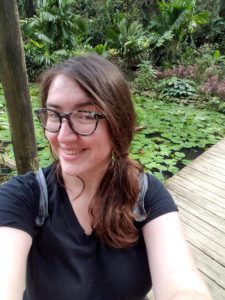
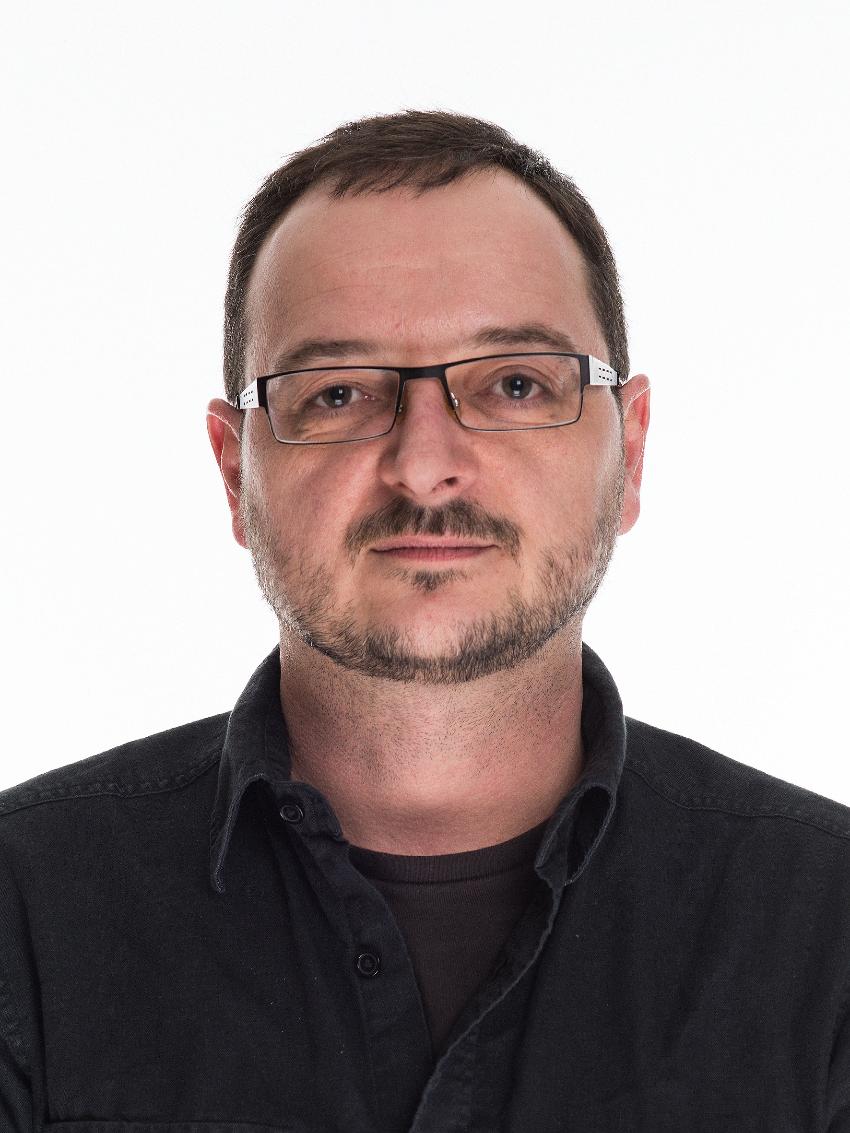
Caroline Crouch is a Lecturer in the Department of Linguistics at Rice University. She earned her PhD in 2022 from the University of California, Santa Barbara. Her research focuses on phonetics and phonology, integrating both fieldwork and laboratory methodologies. Her work includes field studies in Vanuatu and laboratory research on syllable coordination. Her doctoral dissertation utilized Electromagnetic Articulography to examine the relationship between sonority and timing in syllable onsets in Georgian. She explores how speech sounds are produced and perceived, combining theoretical and empirical approaches. Crouch’s research interests span phonetics, phonology, and language documentation. She employs both experimental and field-based methods to understand linguistic phenomena, contributing to the broader understanding of speech structures and their temporal organization. While no specific grants or advising roles are detailed, Crouch’s academic contributions are centered on her research activities. She has not listed any current or past grants or students in the provided information.
Ellen Broselow is the Toll Professor in the Department of Linguistics at Stony Brook University. She holds a Ph.D. in Linguistics from the University of Massachusetts Amherst (1976). Her research focuses on phonology, second language acquisition, and the interfaces of phonology with phonetics, morphology, and syntax, with special attention to Arabic, Salish, Bantu, and Indonesian languages of Sulawesi. Her work examines second language phonology, including loanword adaptation and learner errors, as well as the phonetics-phonology interface. Broselow has served as editor for journals like Natural Language and Linguistic Theory and is currently on editorial boards of Bilingualism: Language and Cognition , Linguistic Inquiry , and others. She has received prestigious awards, including the Godfrey Excellence in Teaching Award and Fellowship in the Linguistic Society of America. Recent research explores factors influencing second language production errors, vowel insertion in foreign languages, and prosodic processing. Her studies highlight the role of perceptual biases in second language acquisition and the impact of vocal fry in intonation patterns among native and non-native speakers.
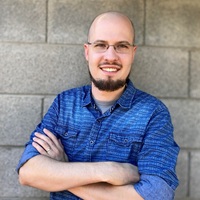
William Kruger is an Assistant Teaching Professor in the Department of English at Arizona State University (ASU). He holds a PhD in Linguistics & Applied Linguistics and specializes in historical linguistics, phonology, syntax, and morphology with a focus on Germanic languages. His research explores topics such as prosodic influences on syntactic structures, diachronic phonological processes in Old and Early Middle English, and morphological ambiguity in Old English dialects. Key contributions include studies on null complementizer distribution, verbal prefixation in Old Northumbrian, and the role of type frequency in phonological generalizations. Kruger’s work appears in journals like Glossa , Canadian Journal of Linguistics , and Journal of Historical Linguistics . He maintains an active academic profile with 73 followers and collaborations with scholars such as Robert Mailhammer and Alexander K Makiyama. His research integrates theoretical linguistics with empirical analysis of historical language data. No specific grants or awards are listed, though his extensive publication record reflects sustained academic engagement.
Jeffrey Steele is a Professor in French Studies at the University of Toronto. His research focuses on second language acquisition, laboratory phonology, and bilingual literacy. He explores how phonological and phonetic factors influence language learning, particularly the acquisition of French and Spanish segmental and prosodic features by Mandarin, Japanese, and English speakers. Steele also investigates the role of phonological awareness in bilingual children's literacy development. PhD in Linguistics, McGill University MA in French Linguistics, Queen’s University BA Hons in French, University of Manitoba Steele’s work employs electropalatography (EPG) to analyze articulatory timing, assimilation, and cluster simplification in native and non-native speech. His publications address topics like cross-linguistic influence on coda voicing, syllable position effects, and the impact of phonetic input variability on L2 learning. Recent studies highlight gradient and categorical effects in bilingual phonology, phonological licensing asymmetries, and prosodic prominence acquisition. He co-developed the University of Toronto Test of French and maintains the Romance Phonetics Database (2004–Present). SSHRC Insight Development Grant (2022–2027) on Reading Comprehension in French Immersion Learners Steele teaches courses in French language skills, linguistic analysis, and individual differences in language acquisition. His collaborations with researchers like Colantoni and Kochetov bridge theoretical linguistics and applied pedagogy.
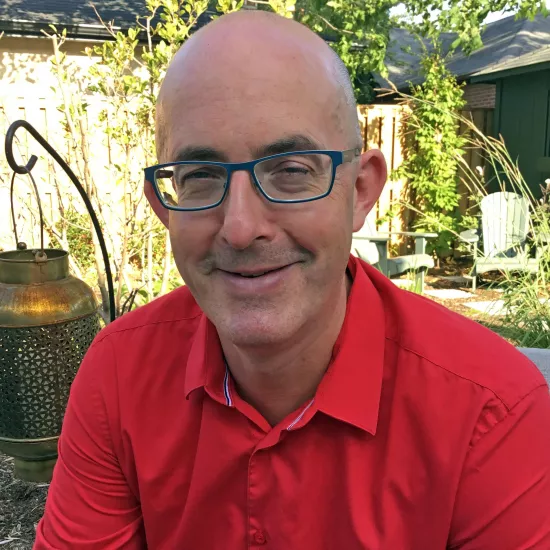
Benjamin Macaulay is a Senior Lecturer in Phonetics within the English Studies section of the Centre for Languages and Literature at Lund University's Faculty of Humanities. He also holds a position as Visiting Research Fellow in the Division of Linguistics and Cognitive Semiotics, General Linguistics, at the same Centre. His contact information includes the email benjamin.macaulay@ling.lu.se and office SOL:H425 at Helgonabacken 12, Lund. Macaulay's research interests span Linguistics and Phonetics, with a focus on syllable structure, elicitation methods, metalinguistic knowledge, and argumentation in linguistic analysis. His work often involves case studies and experimental approaches to understanding phonological phenomena, particularly in the context of speaker judgments and cognitive aspects of language. His recent publications in 2024 address critical issues in the elicitation and analysis of syllable structure, emphasizing that speaker judgments alone are insufficient for diagnosing syllable structure. These works contribute to the fields of experimental linguistics and phonological theory, highlighting the need for systematic methodologies in linguistic research. Macaulay is actively involved in the academic community, participating in events such as the Lund Language Diversity Forum and the AFLAXXX conference. He teaches a variety of courses including English Phonetics and Pronunciation, and introductory linguistics courses at Lund University.
Sašo Živanović is an Assistant Professor at the Department of Comparative and General Linguistics, Faculty of Arts, University of Ljubljana. He holds a PhD in General Linguistics (2007) and a Diploma in Theoretical Mathematics (2002), and has been continuously employed at the university since 2007. His educational background reflects an interdisciplinary approach, combining mathematical rigor with linguistic theory. This foundation supports his research at the intersection of formal linguistics and computational methods. Živanović's research spans theoretical linguistics with particular emphasis on semantics (especially quantification), phonology, and syntax. His work demonstrates a consistent focus on the formal properties of language structure, with publications ranging from theoretical explorations of logical form to practical applications in linguistic documentation. His recent work shows increasing integration of computational approaches, particularly through his development of specialized LaTeX packages for linguistic research. Analysis of his publication record reveals a dual trajectory: theoretical contributions to linguistic theory (particularly in Slavic languages) and practical tools for linguistic documentation and analysis. His most recent publications demonstrate growing interest in computational linguistics and the development of specialized software tools for linguistic research. Živanović maintains an active presence in both academic and open-source communities, with significant contributions to the LaTeX ecosystem through packages like Memoize, Forest, and SignDraw that address specific needs in linguistic research and publication. As an educator, he teaches courses including Phonetics and Phonology, Linguistic Typology, Modern Linguistic Theories, and LaTeX for Linguists, demonstrating his commitment to equipping students with both theoretical knowledge and practical technical skills essential for contemporary linguistic research.
Scott W Linderman is an Assistant Professor of Statistics at Stanford University with courtesy appointments in Electrical Engineering and Computer Science. He serves as an Institute Scholar in the Wu Tsai Neurosciences Institute and is affiliated with Stanford Bio-X and the Stanford AI Lab. Education: PhD in Computer Science (2016) - Harvard University SM in Computer Science (2013) - Harvard University BS in Electrical and Computer Engineering (2008) - Cornell University 3 years as Microsoft software engineer before graduate school His research focuses on machine learning and computational neuroscience , developing: Advanced state space models (rSLDS, GP-SLDS) behavioral time series methods (GIMBAL, Keypoint MoSeq) deep state space architectures (S5, ELK) point process models (PP-Seq) scalable inference algorithms (SIXO, Structure-exploiting VI) Key collaborations include: Prof. David Anderson (Caltech) - hypothalamic dynamics Prof. Bob Datta (Harvard Medical School) - behavioral sequencing Prof. Chris Ré (Stanford) - biomedical ML Prof. David Sussillo (Stanford) - neural network theory Scientific contributions: Developed SSM and Dynamax software packages Leonard J. Savage Award recipient (2016) Bridging reinforcement learning and neural dynamics Advancing 3D keypoint tracking and behavioral syllable analysis Labs & teams: Linderman Lab - computational neuroscience Stanford AI Lab - machine learning Wu Tsai Neurosciences Institute - interdisciplinary research Stanford Bio-X - cross-departmental collaboration
Dr. Adrienn Gulyás is an Associate Professor in the Department of Arts Studies and Art Pedagogy at the Faculty of Humanities and Social Sciences, Károli Gáspár University of the Reformed Church in Hungary. She specializes in historical linguistics, sociolinguistics, dialectology, French creoles, and translation studies, with particular focus on Martinique Creole language and literary translation between French and Hungarian. Her educational background includes a PhD in Linguistics (Romance Studies) from Université René Descartes (Paris) and Eötvös Loránd University (Budapest) in 2008, with a dissertation on syllabic structure changes from Latin through Middle French to Martinique Creole. She earned her MA degrees in French Language and Literature and English Language and Literature from Eötvös Loránd University (Budapest) in 2000 and 2002, along with a Diplôme d'études approfondies from Université René Descartes (Paris) in 2001. Dr. Gulyás's research focuses on the historical development of creole languages, particularly Martinique Creole, examining phonological changes from Latin through Middle French. Her translation scholarship centers on French literary works into Hungarian, with special attention to Rabelais, Modiano, and contemporary French authors. She has conducted extensive research on translation challenges, particularly concerning colloquial language and cultural adaptation. Her scholarly output demonstrates consistent engagement with creole linguistics, historical language change, and literary translation theory. Recent publications show increasing focus on retranslation of classics and the philosophical dimensions of translation, while maintaining her foundational work on Martinique Creole language structure. Szekeres György Literary Translation Award (2018) Dr. Gulyás has served as an opponent in doctoral defenses, including for Kovalik-Deák Szilvia's dissertation on translator students' associative connections in C language vocabulary. She has received multiple translation grants, including awards from the Centre national du livre (France) in 2009 and 2012, and Babits Mihály Literary Translation Scholarships in 2009, 2010, 2012, and 2014. She has been active in the Hungarian Translators' Association (2010-2020) and served on the board of the Hungarian Association of Literary Translators (2017-2020). She coordinates the professional translation training program at her university and has organized literary translation events, including the Literary Translation Day with Dean Enikő Sepsi and Institute Head Géza Horváth. Her international academic engagement includes guest lectures and research stays at institutions such as Université François Rabelais (Tours), Jagiellonian University (Krakow), and Université Toulouse-Jean Jaures.
Kevin Ryan is a Professor and Department Chair of Linguistics at Harvard University, located at 307 Boylston Hall. His research focuses on phonology, prosody, metrics, and quantitative methods, with particular attention to stress systems, metrical structure, and the analysis of Indic and Dravidian languages. He holds a B.A. from UC Berkeley and a Ph.D. from UCLA (2011). Dr. Ryan's work integrates statistical corpus analysis, experimental methods, and comparative studies of specific languages to explore topics such as prosodic end-weight, stress-weight interfaces, and phonological processes in Sanskrit. He has published in top journals like Natural Language and Linguistic Theory , Phonology , and Linguistic Inquiry . His advising and grants include contributions to computational linguistics and phonological theory, though specific grants or lab affiliations are not detailed in the provided texts. His research emphasizes interdisciplinary approaches, blending experimental and theoretical frameworks.
Steven McCartney is a Senior Lecturer in the Department of English at Coastal Carolina University, focusing on teaching composition, business communication, technical writing, and linguistics. His research interests include prosody and phonology, with a particular emphasis on stress patterns in language. Education: Ph.D., University of Texas at Austin McCartney’s publications explore the interplay of binary and ternary structures in prosody, notably in the context of Estonian stress systems. His work bridges linguistic theory with practical applications in language structure analysis. He maintains active office hours during the Spring 2025 term, available by appointment, and resides in the southern United States, enjoying time with his three cats in his personal life.
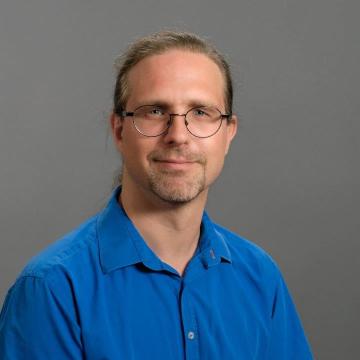
Jonathan North Washington is an Associate Professor in the Linguistics Department at Swarthmore College. His research focuses on Turkic languages, particularly Kazakh and Kyrgyz, examining articulatory and acoustic properties of vowel systems, sonority theory, syllable margin phonology, and language technology for under-resourced languages. He also specializes in computational descriptions of grammatical patterns, including finite-state morphology and dependency syntax, with a secondary interest in the historical development of Turkic languages. Ph.D., Linguistics, Central Eurasian Studies, Indiana University (2016) M.A., Central Eurasian Studies, Indiana University (2012) M.A., Linguistics, University of Washington (2010) B.A., Linguistics and Anthropology, Brandeis University (2005) His work bridges traditional phonological analysis with advanced computational methods, aiming to preserve and analyze Turkic linguistic structures while developing tools for under-resourced languages. Office hours: Wednesdays 1:30-3:00, Fridays 10:30-11:30 (fall 2024), Pearson 105.
Alexander Hartelt is a researcher at the Institute of Computer Science, Faculty of Mathematics and Computer Science, University of Würzburg. He works at the Chair of Artificial Intelligence and Knowledge Systems (Computer Science VI) focusing on computer vision applications for historical document digitization. His research interests include: Computer Vision for historical document analysis Layout recognition and segmentation algorithms Optical character recognition (specializing in handwritten documents) Deep learning-based information extraction Digital preservation of cultural heritage materials Hartelt's recent publications demonstrate strong focus on medieval music manuscripts and historical print digitization. His work combines contour-based segmentation, deep learning networks, and open-source tool development to address challenges in historical document processing. Key application areas include music notation transcription and OCR for aged printed materials. Hartelt has been actively teaching since Winter Semester 2020/21, supervising: Artificial Intelligence I exercises Current Trends in Artificial Intelligence seminars Software internship topics His primary research projects include: Corpus Monodicum : Researching, transcribing and editing historically significant monodic music collections using the Ommr4all transcription tool Segmentation of Old Prints : Developing algorithms for segmentation and transcription of historical printed materials using pixel classifiers, contour-based approaches, and baseline detection methods
Tanja Kupisch is a Professor of Romance Linguistics at UiT The Arctic University of Norway . Her research spans bilingualism, minority languages, and bilectalism, with a focus on phonological and syntactic variation. Education : Not explicitly mentioned in the text Research Interests : Phonological differences between European and Brazilian Portuguese Crosslinguistic influence in bidialectal speakers Age of onset effects in dialect acquisition Heritage language phonology and sociolinguistic attitudes Publication Trends : 15 most recent articles focus on bilingual phonology, dialect acquisition, and heritage language maintenance Keywords: Bilingualism, Dialectology, Phonetics, L2 Acquisition, Language Contact, Sociolinguistics Scientific Awards : No specific awards mentioned in the provided text
Aveen Mohammed Hasan is an Assistant Professor at the Department of English Language, University of Zakho, Iraq. She holds a PhD (2012) and MA (2005) in Linguistics from Ulster and Mosul Universities, respectively. Her primary research focuses on Kurdish linguistics, with specializations in phonetics, phonology, and sociolinguistics. She has served as Head of Department and contributed to editorial roles at journals like the Humanities Journal of University of Zakho and the Journal of Comparative Studies (Daugavpils University). Her academic career includes teaching roles since 2005 (Assistant Lecturer) and promotions to Lecturer (2013), Assistant Professor (2018). Key professional development includes TESOL Methodology (2019) and leadership training programs. She has conducted extensive research on Kurdish intonation, stress patterns, articulation tests for children, and the role of literature in language education. Notable contributions include analyzing loanword usage across Kurdish dialects and investigating the phonetic features of the glottal stop in Bahdini Kurdish. Her work bridges theoretical linguistics and applied research, with publications in journals like Journal of Experimental Phonetics and European Scientific Journal . She actively participates in international conferences, including the International Conference on Kurdish Linguistics and the Workshop on Low-Resource Languages. Her research emphasizes understudied aspects of Kurdish language structure, contributing to both Kurdish-specific scholarship and broader linguistic typology.
Martin Krämer is a Professor of General Linguistics at the Department of Language and Culture, UiT The Arctic University of Norway in Tromsø. His research focuses on phonology , optimality theory , and microvariation , with a particular emphasis on syllable structure, vowel harmony, and language typology. He leads and contributes to projects like Syllable structure: Acquisition, Loss and Typology (SALT) and SIGMA , exploring topics such as Latvian stress patterns and cross-linguistic phonotactics. Key areas of investigation include the interaction of tone, weight, and stress in Latvian; the phonological status of diphthongs and nasal consonants; and the role of sonority hierarchies in syllable formation. Krämer collaborates extensively with institutions in Latvia, Brazil, and other countries, as evidenced by his co-authored works on bilingual Portuguese speakers and Yuman languages. He is affiliated with research groups like AcqVA: Acquisition, Variation & Attrition and has published widely in journals such as Linguistica Lettica , Glossa , and Nordlyd . His work bridges formal phonological theory with empirical analysis, addressing both synchronic and diachronic processes in languages ranging from Italian to Kinande (Bantu).