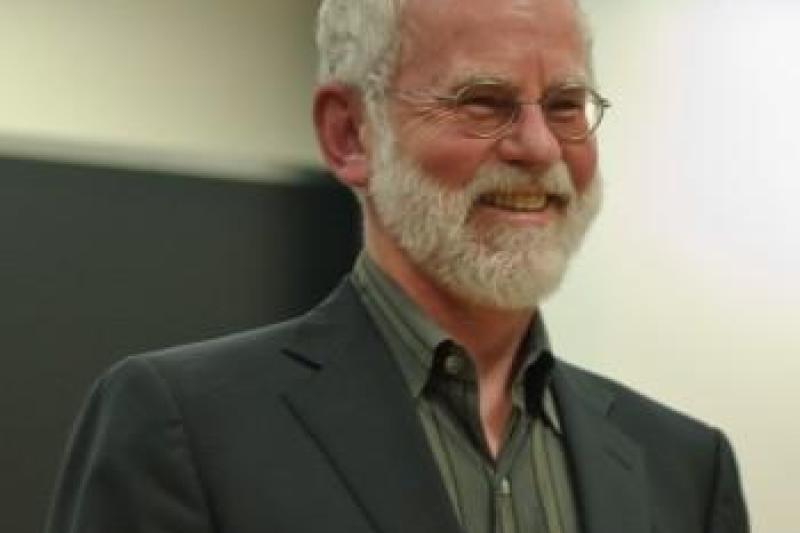
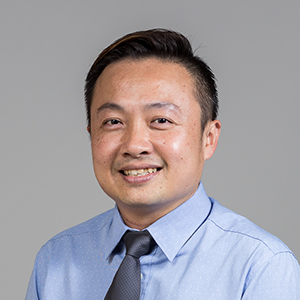
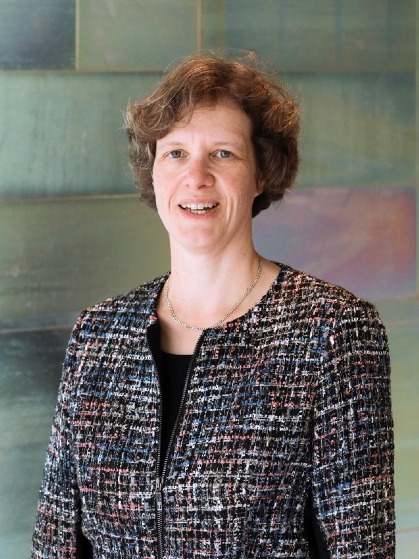
Professor Roy Pea is the David Jacks Professor of Education & Learning Sciences at Stanford University, with a courtesy appointment in Computer Science. He served as Director of the H-STAR Institute (2007-2021) and founded Stanford’s PhD program in Learning Sciences and Technology Design. His research focuses on technology-enhanced learning, social foundations of human learning, and interdisciplinary applications of digital tools. Stanford University, School of Education Graduate School of Education Department Courtesy appointment in Computer Science His work spans complex domains like concussion education, climate change learning, and AI-driven mental health interventions. He co-authored the 2010 National Education Technology Plan and co-edited key texts including Video Research in the Learning Sciences and AI in Education . His NSF-funded LIFE Center (2004-2014) advanced learning science theories. Recent publications address: (1) linguistic framing of concussions and reporting behavior, (2) AI chatbots for mental health, (3) "engineering fiction" to reduce climate change abstractness, and (4) immersive AR/LLM learning experiences. His research integrates data science, psychology, and educational technology. Fellow, American Academy of Arts and Sciences (2019) Inaugural Fellow, International Society of the Learning Sciences (2018) Honorary Doctorate, The Open University (2018) Best Bridging Paper, EDM 2014 LAK13 Best Paper Award (2013) Roy mentors doctoral and master’s students in learning sciences, advising on topics related to technology, cognition, and equity. He contributes to digital education policy through roles on advisory boards for organizations like NSF, NIH, and the Joan Ganz Cooney Center. His patents include methods for digital video analysis and collaborative learning systems.
Véronique Michaud is an Associate Professor at the École Polytechnique Fédérale de Lausanne (EPFL), affiliated with the Laboratory for Processing of Advanced Composites (LPAC) within the School of Engineering (STI). Her research focuses on polymer composite processing, adaptive composites (e.g., shape memory alloys, self-healing mechanisms), and material science. She also contributes to teaching in Materials Science and Engineering, including courses like 'Materials: From Chemistry to Properties' and 'Composite Materials Processing.' Her academic roles include Associate Professorships in SMX, EDMX, and EDAM teaching units, and she serves as a PhD program committee member for the Doctoral Program in Advanced Manufacturing. She has advised numerous PhD students, including Michele Bonacina, Pierre-Alexandre Boschert, and Jean-Baptiste Desbrest, among others. Research highlights include sustainable composite material development, defect mitigation in composites, and advanced manufacturing techniques. Her work often addresses challenges in aerospace and renewable energy applications, emphasizing sustainability and material innovation.
Bryan Kian Hsiang Low serves as Associate Professor in the Department of Computer Science at the National University of Singapore's School of Computing, while simultaneously holding leadership positions as Director of AI Research at AI Singapore and Deputy Director of the NUS AI Institute. His academic journey includes a B.Sc. (2001) and M.Sc. (2002) in Computer Science from NUS, followed by a Ph.D. in Electrical & Computer Engineering from Carnegie Mellon University (2009). His research spans probabilistic machine learning, multi-agent systems, and trustworthy AI, with particular focus on Bayesian optimization , federated learning , and data-efficient methodologies . The Low Lab develops frameworks for collaborative AI, automated machine learning, and AI applications in scientific domains through the Group of Learning and Optimization Working in AI (GLOW.AI), which maintains a multi-disciplinary approach bridging computer science, mathematics, and engineering disciplines. Analysis of his recent publications reveals a consistent emphasis on data valuation , privacy-preserving collaborative learning , and robust optimization techniques , with increasing integration of large language models into his research framework. His work demonstrates strong theoretical foundations coupled with practical applications in computational sustainability and robotics. Andrew P. Sage Best Transactions Paper Award (2006) NUS Overseas Graduate Scholarship (2004-2009) Faculty Teaching Excellence Award (2017-2018) IEEE RAS Distinguished Lecturer (2019) World Economic Forum Global Future Councils Fellow (2016-2018) Dr. Low actively mentors PhD students including Rachael Sim, Quoc Phong Nguyen, and Zhongxiang Dai, while leading major initiatives like the AI Phenome Platform for plant breeding optimization. His research group GLOW.AI operates at the intersection of theory and practice, with strong industry engagement through AI Singapore. Current projects focus on scalable AI systems for scientific discovery and developing frameworks for equitable collaborative machine learning with robust privacy guarantees.
Christoph Müller is a Full Professor of Energy Science and Engineering at ETH Zürich's Department of Mechanical and Process Engineering. He leads the Laboratory of Energy Science and Engineering, focusing on sustainable energy generation, heterogeneous catalysis, and granular systems. His research integrates experimental methods like Magnetic Resonance Imaging (MRI) and Discrete Element Modelling (DEM) with mathematical modeling to address industrial energy challenges. Education: Dipl.-Ing. from Technical University of Munich (2004), PhD in Chemical Engineering from the University of Cambridge (2008). Notable awards include the Danckwerts-Pergamon Prize (2009) and DAAD Scholarship (2005). He teaches courses such as Thermodynamics I and Thermo- and Fluid Dynamics. Research interests span CO₂ capture via chemical looping, catalytic hydrogenation, and granular flow dynamics. Recent work explores catalyst design for propane dehydrogenation, MXene-based ammonia synthesis, and MgO-based CO₂ sorbents. His lab employs advanced techniques like operando X-ray absorption spectroscopy to study catalyst behavior under reaction conditions. Key achievements include developing stable PtGa propane dehydrogenation catalysts and advancing understanding of Na₂CO₃-promoted CO₂ sorbents. His work on fluidized bed hydrodynamics via MRI contributes to reactor design optimization. Müller's interdisciplinary approach bridges fundamental science and industrial application, addressing global energy sustainability challenges.
R. Michael Alvarez , Flintridge Foundation Professor of Political and Computational Social Science at Caltech, is a leading scholar in election technology, political methodology, and machine learning applications in social science. Affiliated with the Caltech/MIT Voting Technology Project , the Social and Decision Neuroscience Program , and the Resnick Sustainability Institute , his work bridges technology and democracy. Education: B.A. from Carleton College, Ph.D. from Duke University Academic Career: Caltech faculty since 1992 His research spans: Election Integrity : Monitoring election security, fraud detection, and ballot systems Computational Social Science : Applying machine learning to voter behavior and policy analysis Climate Policy : Examining public attitudes and behavioral interventions for sustainability Online Behavior : Analyzing toxicity in gaming and social media dynamics Key article trends show focus on election forensics (2025 Nature Climate Change study), game toxicity analysis (2025 CHI Play paper), and LLM applications in social science. His students include Jacob Morrier, Mitchell Linegar, and teams of postdocs and undergraduates in Caltech's SURF program. Scientific recognition includes: Google Cloud Research Innovators Class of 2022 Co-editor of multiple academic series including Cambridge Elements in Quantitative Methods
Pardis Pishdad is an Associate Professor and Graduate Program Director in the School of Building Construction at Georgia Institute of Technology’s College of Design. She directs the Smart Built Environment Eco-System (Smart Bees) Laboratory, focusing on integrating cyber-physical systems, digital twins, and innovative project delivery methods (e.g., IPD, Flash Tracking) for sustainable built environments. Her research bridges technology adoption, trust-building in construction contracts, and supply chain optimization. Education: PhD, Environmental Design and Planning (Virginia Tech) Master’s Degrees: Civil Engineering (Virginia Tech), Design Studies in Project Management (Harvard), Architecture (University of Tehran) Bachelor’s in Architectural Engineering (Azad University of Shiraz) Research Interests: Her work emphasizes sustainable construction practices using IoT, BIM, and blockchain. Key areas include lifecycle cost analysis, lean construction, and smart building technologies. She explores trust dynamics and collaboration in construction projects through game theory and process optimization. Recognition: 2018 ENR Top 20 Under 40 Professionals 2016 CII National Outstanding Researcher Award 2020-2022 Georgia Tech Provost Teaching Learning Fellow Advisory Roles: Academic Advisor for CII’s Supply Chain Management Community, Vice Chair of BuildingSMART’s BIM Forum 5D Taskforce. Formerly advised the Construction Management Association of America’s Board (2016–2018). Industry Collaboration: Partnerships with Turner Construction, GDOT, and VDOT. Research on Flash Tracking and blockchain has been integrated into industry practices. Labs & Teams: The Smart Bees Lab pioneers cyber-physical systems for smart buildings, exploring AI-driven solutions and sustainable construction frameworks.
Prof. Iris F.A. Vis is a Professor of Industrial Engineering at the University of Groningen's Faculty of Economics and Business. She specializes in logistics and operations management, focusing on optimizing processes through quantitative and qualitative methods. Her work intersects logistics with sectors like healthcare, education, and energy. She leads major projects such as SMiLES (sustainable mobility-logistics integration) and designs logistics solutions for personalized learning systems in schools. She has advised over a dozen PhD students and collaborates with industry partners globally. Awards include Fellowship in the Netherlands Academy of Engineering. Education: M.Sc. Mathematics (Leiden University), PhD in Operations Management (Erasmus University Rotterdam) Roles: Captain of Science for Topsector Logistics, Member of multiple national advisory boards Research interests span sustainable transportation networks, port optimization, healthcare logistics, and educational logistics. Key projects include LNG supply chain design, offshore wind farm maintenance planning, and synchromodal transport networks. Over 45 peer-reviewed publications and 18 media engagements highlight her impactful contributions. Teaching includes courses on supply chain network design, technology-enabled innovation, and operations management at all academic levels. She advises on industrial partnerships and digital transformation initiatives in the Northern Netherlands region.
Mario Romero is an Associate Professor in Visualization at the Department of Computational Science and Technology (CST), KTH Royal Institute of Technology. He leads the InfraVis national research infrastructure for data visualization and is a Digital Futures Faculty member. His roles include national technical manager of InfraVis, member of the Executive Committee of Digital Futures, and Associate Director for Seminars & Workshops. Education: PhD in Computer Science (Georgia Tech, 2009), MSc in Computer Science (UIUC, 2001), and dual BSc degrees in Industrial Engineering and Construction Engineering (Universidad San Francisco de Quito, 1996). He is a Fulbright Scholar from Ecuador and holds postdoctoral experience at Uppsala University. Research focuses on Human-Computer Interaction, Visualization, and Ubiquitous Computing. Key projects include: TENT: Technology-Enhanced Neurosurgical Training VisBac: Visualizing airborne bacteria in ORs PSP: Platform for Smart People (autism support) SMART: Predictive maintenance in pharmaceuticals Homo Colossus: Energy footprint visualization Awards: Selected for IVA's 100 research2business projects (2021). Co-founded BrailleTouch (blind-friendly keyboard) and Anymaker (3D sketching app). Supervised students in C-Awards-winning projects (e.g., Yue Liu's thesis defense in 2024). Teaching: Responsible for courses like Information Visualization (DH2321) and Advanced Graphics & Interaction (DH2413). Active in organizing conferences (e.g., Eurographics 2020 Education Track Chair).
Eric Masanet is a Professor and Mellichamp Chair in Sustainability Science for Emerging Technologies at the University of California, Santa Barbara (UCSB), holding a courtesy appointment in the Department of Mechanical Engineering. He leads the Bren School's Industrial Sustainability Analysis Laboratory, focusing on decarbonizing industrial and IT sectors while advancing equity and sustainability. His research spans energy system analysis, climate mitigation, and sustainable manufacturing. Education: Ph.D. in Mechanical Engineering from UC Berkeley, with M.S. and B.S. degrees from Northwestern University and the University of Wisconsin-Madison, respectively. Research interests include data center sustainability, industrial decarbonization, and the intersection of technology and climate policy. He has contributed to the IPCC's Sixth Assessment Report, advised the U.S. White House, and serves on the DOE's Industrial Technology Innovation Advisory Committee. Notable achievements include authoring the U.S. Data Center Energy Usage Report and leading the Resources, Conservation, and Recycling journal as former Editor-in-Chief. His work bridges academia with policy, influencing international energy and climate strategies. Advising and grants: Supervises PhD students (e.g., Jaxon Stuhr) and postdocs (Antoine Merlo, Jason Ye) in decarbonization research. Collaborates with Lawrence Berkeley National Laboratory and international organizations like the IEA. Labs/Teams: Directs the Industrial Sustainability Analysis Laboratory, advancing models for low-carbon industrial and IT systems.
Nicola Paltrinieri is a Professor of Risk Assessment at the Department of Mechanical and Industrial Engineering, NTNU (Norway), and an Adjunct Professor at the University of Bologna (Italy). His expertise spans risk assessment, hydrogen technologies, process safety, and data-driven safety management. He holds Chartered Engineer and Chartered Scientist certifications and has served on editorial boards for journals like Safety Science and Journal of Risk Research . Education: PhD in Environmental, Safety and Chemical Engineering (University of Bologna, 2012) Master’s in Chemical and Process Engineering (University of Bologna, 2008) Research Interests: Focuses on hydrogen infrastructure safety, Natech accident analysis, risk-based inspection strategies, and AI integration in safety systems. His work emphasizes sustainable energy transitions and mitigating risks in emerging technologies like hydrogen. Key Projects (2022-2026): H2Glass : Decarbonizing glass and aluminum sectors via hydrogen HyInHeat : Hydrogen technologies for industrial heating HYDROGENi : Norwegian research center for hydrogen/ammonia Awards: Onsager Fellowship (2016–2021) Frank Lees Medal (2012) for safety-related publications Grants & Leadership: Head of NTNU Energy Team Hydrogen, coordinator for EU-funded projects like SUSHy , and active in international risk committees (e.g., EFCE, ESRA). His work bridges academia and industry, with over 8 PhD examinations supervised. Labs/Teams: Leads the NTNU Energy Team Hydrogen and collaborates on initiatives like SH2IFT-2 for safe hydrogen fuel handling. His research group focuses on AI-driven risk analysis and hydrogen infrastructure resilience.
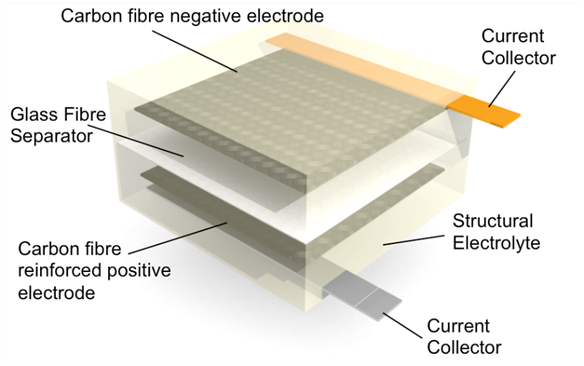
Professor Dan Zenkert is a faculty member at Kungliga Tekniska Högskolan (KTH) in the Department of MATERIAL AND STRUCTURAL MECHANICS. He earned his M.Sc. (Aeronautics) and Ph.D. (Lightweight Structures) from KTH, becoming a docent (D.Sc.) in 1996, associate professor in 1998, and full professor in 2001. His research focuses on multifunctional composite materials, particularly carbon fiber-based systems for energy storage (structural batteries), shape-morphing composites, integrated sensing, and energy harvesting. Collaborations with Electrochemistry and Polymer Chemistry groups drive innovations in structural batteries, where materials simultaneously bear mechanical loads and store energy. He teaches courses on lightweight structures and composite mechanics. Research highlights include structural battery design using laminated carbon fiber electrodes, piezo-electrochemical sensing via Li-ion intercalation, and shape-morphing composites through electrochemical actuation. Recent work explores electrolyte optimization, LiFePO₄-coated electrodes, and long-term performance of multifunctional systems. Publications span over 30 years, with contributions to journals like Composites Science and Technology and Advanced Energy & Sustainability Research . His teaching includes roles as examiner and course responsible for programs like Fibre Composites and Future Sustainable Aviation. Personal interests include fly-fishing, motorcycle riding, and basketball coaching. Scholarly contributions include over 130 peer-reviewed articles and book chapters, with active involvement in conferences like ICCM and ECCM.
Dr. John Shepherd is an Associate Professor in the School of Science at RMIT University, specializing in applied mathematics, numerical and computational mathematics, and their applications in engineering and environmental systems. His research focuses on analyzing nonlinear problems, particularly in bioreactor dynamics, fluid mechanics, and nuclear energy policy. He has contributed to studies on anaerobic digestion models, reactor stability, and the role of nuclear energy in climate change mitigation. Education: Doctorate in Applied Mathematics (not explicitly stated in text, inferred from title). His work bridges theoretical analysis and real-world applications, such as optimizing methane production in waste digesters and evaluating environmental policies for nuclear energy. He actively supervises research projects, including the analysis of anaerobic digester dynamics. Dr. Shepherd’s publications span interdisciplinary topics, emphasizing the intersection of mathematics, engineering, and environmental science. He engages with policy discussions on nuclear energy’s role in decarbonization, advocating for its integration into clean energy strategies. His research highlights the importance of multiscale analysis in understanding complex systems like bioreactors and fluid flows. Collaborations involve industry and international institutions, reflecting his commitment to practical solutions for sustainability challenges.
Prof. Dr. Katja Thoring is a Full Professor of Integrated Product Design at the Technical University of Munich (TUM School of Engineering and Design). She holds a doctorate in Design Research from Delft University of Technology and has previously served as Professor of Integrated Design at Anhalt University of Applied Sciences in Dessau from 2009–2022. Her research bridges product design, architectural space, and technology, focusing on how physical environments stimulate creativity and design processes across functional, emotional, and cognitive dimensions. Key areas include generative AI applications in design, innovative research methodologies, and creative workspace design. She developed methods like the 'Delphi Design Sprint' and contributed to frameworks such as the FOD (Future-Oriented Design) model. Thoring is a member of prominent design societies (DGTF, Design Society, DRS) and a founding member of the Academy of Design Innovation Management (ADIM). Notable awards include the 'Best Paper Award' at ADIM Conference (2017) and recognition as a top early-career researcher (2019). Her work integrates design education innovation, with studies on pedagogical spaces and cross-cultural design thinking. She has published extensively on design knowledge models, creative environments, and future-oriented design strategies.
Luís B. Elvas is an Assistant Professor at ISCTE-University Institute of Lisbon's Department of Social and Business Sciences (SINTRA) and a Research Assistant at ISTAR-Iscte Research Center. He holds qualifications including a Technical Specialization in TensorFlow for AI (Coursera, 2021) and certifications in IoT/Blockchain from ISCTE and cybersecurity from Palo Alto Networks. His research spans artificial intelligence, healthcare informatics, smart cities, and blockchain, with applied work in medical imaging, data sharing, and urban analytics. Research interests include: Healthcare AI : Developing deep learning models for cardiac diagnostics, medical imaging analysis, and blockchain-based health data systems Smart Cities : Implementing IoT solutions for urban mobility optimization, disaster management, and sustainable transportation Data Science : Creating predictive analytics frameworks for clinical decision support and urban planning His publications demonstrate a strong focus on AI-driven healthcare solutions (67% of recent works) and smart city technologies (33%), with emerging interests in blockchain and NLP. Research consistently targets real-world applications in clinical settings and urban environments. Awards: Award for best internship, Order of Engineers (2022) Distinction for best internship, Order of Engineers (2021) He leads/contributes to multiple EU research consortia including AMR-EDUCare (antimicrobial resistance education), NEEM (e-health in Nepal), and Blockchain.PT. Coordinates the IEEE Computational Intelligence Society Student Branch Chapter at ISCTE and developed the ManagiDiTH master's program in digital health transformation.
Dr. Yu Zhong is an Assistant Professor in the Department of Materials Science and Engineering at Cornell University's College of Engineering, where he leads the Yu Zhong Group. His research laboratory focuses on the design and synthesis of novel soft materials and nanomaterials for applications in electronics, energy, healthcare, and sustainability. As a principal investigator, he oversees a dynamic research team comprising postdoctoral associates, graduate students, and undergraduate researchers working on cutting-edge materials science projects. Dr. Zhong received his educational training at prestigious institutions, earning his B.S. in Chemistry from the University of Science and Technology of China (USTC) in 2011, followed by a Ph.D. in Chemistry from Columbia University in 2017 under the supervision of Prof. Colin Nuckolls. His doctoral research centered on designing contorted molecules for electronic and energy applications including organic solar cells, photodetectors, and gas sensors. He then conducted postdoctoral research at the University of Chicago in Prof. Jiwoong Park's group, where he worked on the design and synthesis of 2D polymers for ultrathin electronic circuits and energy conversion. Dr. Zhong's research program spans three primary directions: (1) the bottom-up synthesis of ultrathin nanoporous membranes using techniques like laminar assembly polymerization (LAP) for applications in water desalination, nanofiltration, and gas separation; (2) the study of transport behaviors in hybrid organic-inorganic 2D heterostructures created through layer-by-layer assembly for use in optical, electronic, and thermal management devices; and (3) the development of mixed ionic-electronic materials for bio-inspired and bioelectronic devices. His group employs advanced synthesis methods including organic/polymer synthesis, supramolecular and reticular chemistry, and 2D materials characterization to explore novel scientific phenomena and technological applications. An analysis of Dr. Zhong's recent publications reveals a strong focus on the synthesis and characterization of 2D polymers and organic-inorganic hybrid materials. His work bridges fundamental materials science with practical applications in energy conversion, electronics, and separation technologies. A notable trend is his development of innovative synthesis techniques like laminar assembly polymerization that enable precise control over material structure at the molecular level, leading to breakthroughs in areas such as lithium-ion transport, osmotic power generation, and ultra-narrowband photodetection. Dr. Zhong's scientific achievements have been recognized with several prestigious awards: Pegram Award for Meritorious Graduate Research, Columbia University (2016) Camille and Henry Dreyfus Postdoctoral Fellowship, Dreyfus Foundation (2016) Arun Guthikonda Memorial Fellowship, Columbia University (2015) Jack Miller Award for Excellence in Teaching, Columbia University (2014) As an advisor, Dr. Zhong mentors a diverse group of researchers including postdoctoral associate Qiyi Fang, multiple Ph.D. students (Yuhe Zhang, Kaushik Chivukula, William Xie), M.S. students, and undergraduate researchers. His group has secured funding for research on soft and nanomaterials, with projects spanning organic electronics, 2D materials synthesis, and biomimetic membranes. Dr. Zhong actively seeks motivated graduate students and postdoctoral fellows to join his research team, emphasizing the importance of interdisciplinary collaboration in advancing materials science. The Yu Zhong Group operates state-of-the-art laboratories in Bard Hall at Cornell University, equipped for organic synthesis, materials characterization, and device fabrication. The research team works collaboratively across disciplines, partnering with experts in physics, chemistry, and engineering to tackle complex challenges in materials science. Current projects focus on developing novel synthesis methodologies and exploring structure-property relationships in soft materials to enable next-generation electronic, energy, and healthcare technologies.