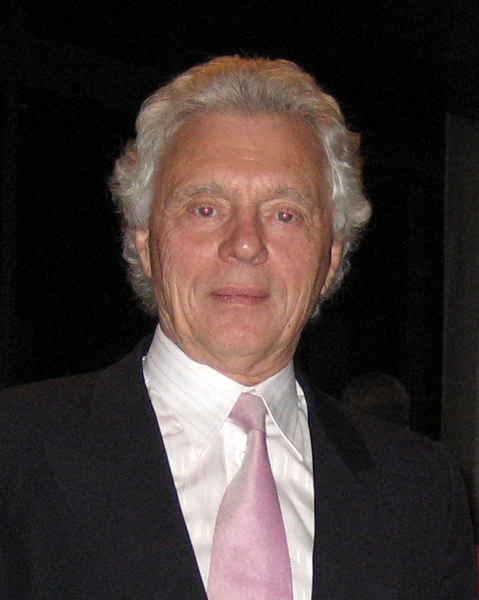
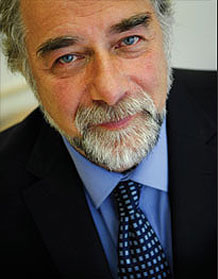
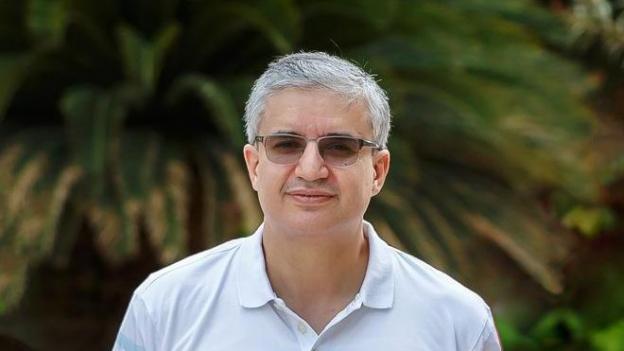
Allen J. Scott is a Distinguished Research Professor at the University of California, Los Angeles, with a joint appointment in the Department of Public Policy (School of Public Affairs) and Department of Geography. He has held prestigious positions at UCLA since 1994 and previously at the University of Toronto (1969–1994). His career spans over five decades, focusing on urban geography, regional development, and cultural economy. Education : BA (1961) from Oxford University; MA and PhD (1962, 1965) from Northwestern University. Research Interests include: Creative cities and cognitive-cultural capitalism Political economy of urbanization and globalization Industrial clusters and labor-intensive economies Human capital distribution in metropolitan areas Cultural landscapes and peripheral development Publication Trends (2005–2014) emphasize: Globalization's impact on low-technology industries Cognitive-cultural capitalism in urban contexts Human capital dynamics in metropolitan hierarchies Celebrity culture and urban glamour Creative field theories and urban policy implications Scientific Awards : 1986 Guggenheim Fellow 2003 Vautrin Lud Prize 2005 Meridian Book Prize 1999–2013: Chaires d’Excellence, Fellowships, and Doctor Honoris Causa 2008 Carol and Bruce Mallen Lifetime Achievement Award 2003 ISI Highly Cited Author
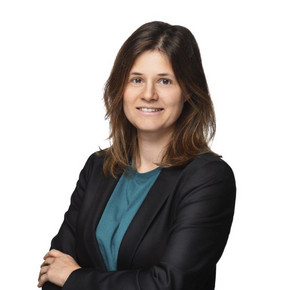
Atakan Aral serves as an Associate Professor at the Faculty of Computer Science, University of Vienna, where he leads research in edge computing, distributed systems, and environmental monitoring applications. His work focuses on developing efficient and resilient computing systems for environmental applications, with particular emphasis on neuromorphic edge AI and the cloud-edge continuum. He maintains an active teaching schedule offering courses in Distributed Systems Engineering, Cloud Computing, and Practical Software Courses with Bachelor's Thesis work across multiple semesters through 2025. Dr. Aral's research interests span several critical areas in modern computing including edge computing architectures, federated learning approaches, neuromorphic computing for environmental monitoring, and resilient systems design. His work addresses fundamental challenges in resource-constrained environments, particularly focusing on latency-sensitive applications and energy-efficient computation. The interdisciplinary nature of his research bridges theoretical computer science with practical environmental applications, developing systems that can operate effectively in remote or resource-limited settings. Analysis of his recent publication trajectory reveals a clear evolution from foundational cloud computing research toward increasingly specialized edge intelligence systems. Early work focused on resource allocation and scheduling in cloud environments, while his current research emphasizes neuromorphic approaches for sustainable environmental monitoring. His publications demonstrate growing interdisciplinary collaboration, particularly with environmental scientists, and increasing focus on practical implementations of theoretical concepts in real-world monitoring systems. Dr. Aral leads significant research projects including TROCI (Towards Resilient Operation of Critical Infrastructure), an ongoing initiative, and SWAIN (Sustainable Watershed Management Through IoT-Driven AI), which ran from February 2021 to February 2024. His work spans multiple dimensions of computing systems, from hardware-aware algorithms to application-level implementations, with consistent contributions to major conferences and journals in distributed systems and edge computing. He is an active member of the Scientific Computing research group at the University of Vienna, working from Room 6.49 at Währinger Straße 29. His research environment includes collaboration with the Environment and Climate Research Hub, reflecting the interdisciplinary nature of his work that bridges computer science with environmental applications. His publications indicate strong international collaboration across European institutions and research groups.
Hilda Tellioglu is an Associate Professor and Dean of Academic Affairs for Informatics at TU Wien, leading the Artifact-based Computing and User Research department. She holds a dual role as Head of Research Unit and oversees the Office of the Dean. Her work focuses on Human-Computer Interaction (HCI), Design Thinking, and Digital Transformation, with a strong emphasis on socio-technical systems and participatory design methodologies. Research interests span software engineering, CSCW, ambient assisted living (AAL), and digital co-creation practices in urban planning. She has spearheaded projects like aspern.mobil LAB, EnviSense, and StreetForum, exploring smart mobility, environmental sensing, and citizen participation in urban development. Her work frequently integrates tangible interfaces and model-based design approaches. Key contributions include frameworks for digital transformation evaluation (EEFCET 2020), user-centered design for informal caregivers (TOPIC platform), and crisis management systems using crowdsourcing (RE-ACTA). She has led over 20+ research projects funded by FFG, EU, and national agencies, focusing on mobility innovation, healthcare technology, and sustainable urban systems. Teaching responsibilities include courses on Design Thinking, Digital Transformation, and Research Methods across bachelor's, master's, and PhD programs. She actively promotes interdisciplinary collaboration through initiatives like the Center for Technology & Society (CTS) and Living Lab methodologies.
Gabriella Giannachi is Professor of Performance and New Media and Director of the Centre for Intermedia at the University of Exeter's Faculty of Humanities, Department of English. She leads interdisciplinary collaborations between artists, academics, and scientists to advance research in performance and digital arts. Her educational background includes: BA in Modern Languages and Literatures from Turin University's Faculty of Letters and Philosophy PhD in English from Cambridge University, researching silence in modern European Drama with Trinity Hall scholarship Giannachi's research pioneers performance documentation in mixed reality environments, examining how digital archives function as mobile interpretation hubs for cultural engagement. She investigates mobile user-generated documentation's role in knowledge production, museum visitor dynamics, memory formation, and identity construction within ecological and heritage contexts, with significant focus on copyright and accessibility implications. Her publication trends reveal consistent exploration of presence theory across physical-digital boundaries, with award-winning CHI conference papers (2009-2013) and books like 'Performing Mixed Reality' (2011) establishing frameworks for understanding mixed reality performance, environmental art, and digital heritage preservation. Her scientific recognition includes: Three consecutive CHI Best Paper Awards (2009, 2012, 2013) Theatre Library Association Book Award nomination for 'Performing Presence' (2012) Royal Society of Arts Fellowship nomination (2012) While specific advisees aren't documented, her research partnerships demonstrate extensive collaborative supervision across institutions including Tate, Imperial War Museum, British Library, and Stanford Libraries, securing projects that integrate artistic practice with scientific research. As Centre for Intermedia Director, she cultivates experimental teams investigating how digital archives transform cultural engagement through mobile platforms, particularly in environmental contexts via partnerships with Met Office Hadley Centre and Ludwig Boltzman Institute.
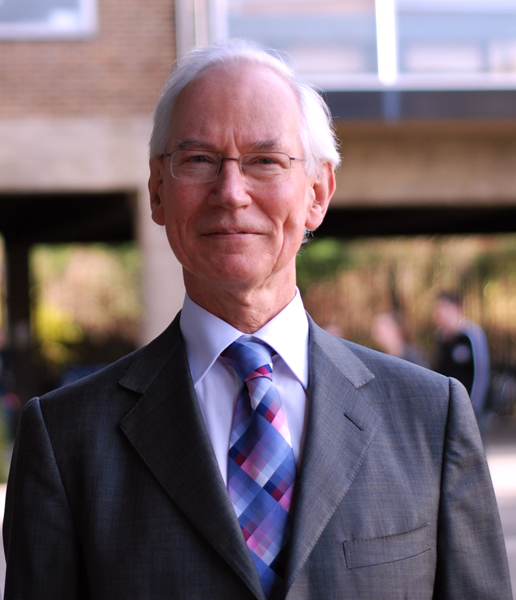
David Newbery serves as Professor of Applied Economics at the University of Cambridge's Faculty of Economics since 1988 and Research Director of the Electricity Policy Research Group (EPRG). His career spans prestigious appointments including Visiting Professorships at Stanford, Princeton, UC Berkeley, and Imperial College London, alongside significant policy roles at the World Bank and IMF. His research focuses on electricity market design , climate policy economics , and transport pricing , addressing critical challenges in energy transition and regulatory frameworks. Key contributions include foundational work on supply function equilibria, market power assessment in liberalized utilities, and optimal climate policy instruments. Analysis of his publications reveals consistent leadership in energy market restructuring (1990s-2000s) renewables integration economics (2000s-2010s) climate policy-market power interactions (2000s-present) with methodological strengths in game theory and empirical industrial organization. Major recognitions include: CBE (2012 Birthday Honours) Frisch Medal (1990) Fellowships of Econometric Society and British Academy IAEE Outstanding Contributions Award (2003) Honorary Degree from University of Antwerp (2004) Newbery's policy impact extends through World Bank advisory roles (1981-83 as Division Chief of Public Economics), IMF consultations (1987), and sustained engagement with European energy regulators via EPRG. His work informs critical infrastructure pricing frameworks globally, particularly in electricity and transport sectors. He leads the Electricity Policy Research Group at Cambridge, fostering interdisciplinary collaboration between economists, engineers, and policy experts to address energy transition challenges through rigorous market design analysis.
Elena Bacchin is a Professor of Modern History at the University of Vienna’s Faculty of Historical and Cultural Studies, Department of History. She previously held academic positions as Associate Professor (2023-2024) and Assistant Professor (2021-2023) at Ca’ Foscari University of Venice, a Marie Sklodowska-Curie Global Fellow (2019-2022) at Columbia University and Ca’ Foscari, and a Lecturer at Queen Mary University of London (2017-2018). PhD in History, University of Padua (2007-2010) Doctoral Student, Scuola Normale Superiore, Pisa (2011-2015) Her research focuses on the transnational history of the 19th and 20th centuries, particularly political actors such as exiles, foreign fighters, and deportees. She examines the circulation of people, ideas, and practices across borders and their influence on political mobilization, repression, and the development of international solidarity networks. Her work also explores the history of nationalism, cultural history, and the relationship between political and religious identities. She contributes to UN Sustainable Development Goals 10 (Reduced Inequalities) and 16 (Peace, Justice, and Strong Institutions). Recent publications analyze political deportation during the Risorgimento, memory of exiles in Fascist Italy, and transnational humanitarian movements. These studies emphasize forced migration, penal colonies, narrative construction, and the intersection of international law with state security. Marie Sklodowska-Curie Fellowship Fellow at Remarque Institute, New York University Fellow at University of St Andrews Principal Investigator of the PRISON project (Italian Ministry of Research) As Principal Investigator of the PRISON project, she investigates political repression and international solidarity networks. Her academic collaborations include visiting scholar appointments at the University of California San Diego, University of Oxford, and New York University.
Vienna University of Economics and BusinessAustria
Prof. Tina Wakolbinger is a Professor at Vienna University of Economics and Business (WU) , where she serves as Deputy Head of the Institute for Transport Economics and Logistics and Head of the Supply Chain Management Research Institute. She also chairs the Senate and has led numerous research projects in supply chain management, humanitarian logistics, and the circular economy. PhD in Business Administration, Isenberg School of Management, UMASS Amherst (2007) Mag. in International Economics, University of Innsbruck (2002) Her research focuses on Supply Chain Management , with an emphasis on Humanitarian Logistics and the Circular Economy . She investigates how operational settings and disaster characteristics affect supply chain resilience, explores sustainable urban mobility solutions like electric scooters, and develops frameworks for resource allocation in disaster relief. She has published extensively on topics including disaster preparedness, outsourcing in humanitarian logistics, and the impact of digitalization on sustainable supply chains. Recent publications highlight trends in 2025 with strategic dependencies in supply chains, 2023 contributions to circular economy models and humanitarian logistics assessments, and 2022 analyses of pandemic-era supply chain disruptions. Earlier work includes studies on sustainable freight transport, e-waste management, and risk-sharing contracts. Scientific Awards Literati Award 2020 (Journal of Humanitarian Logistics) WU Cooperation Officer of the Year 2018 Talent promotion bonus of Upper Austria 2011 Best Paper Award 2008 (Fogelman College of Business) Graduate School Fellowship 2006 (UMASS Amherst) She has been involved in external positions such as Member of the Post Control Commission (2022–2027) and advisory roles for Caritas Österreich and Finland’s Strategic Research Council. Current projects include developing circular business models for timber supply chains and optimizing e-scooter fleet management in Vienna.
Alexandra Brausmann is an Associate Professor in Environmental and Resource Economics at the Department of Economics, University of Vienna, and a member of the Environment and Climate Research Hub. She holds a Master's in International Economics (MIS) from The Graduate Institute (Geneva) and a PhD in Economics/Resource Economics from ETH Zürich. Research Focus: Climate change impacts (macro/micro), environmental migration, resource management, climate policy, agricultural economics, growth and sustainability. Recent Publications: Co-authored works on endogenous climate shocks, undocumented migration economics, and climate policy effectiveness, published in journals like Journal of Environmental Economics and Management and Environmental and Resource Economics . Teaching: Offers courses in Environmental Economics (MA) and Resource and Environmental Economics (BA) at the University of Vienna. News: Co-organizing a workshop on the Political Economy of the Environment in February 2025 at the University of Vienna.
University of Natural Resources and Life Sciences ViennaAustria
Tamara Artacker is a Researcher at the Institute of Social Ecology within the Department of Economics and Social Sciences at the University of Natural Resources and Life Sciences, Vienna (BOKU). Based in Vienna at Schottenfeldgasse 29, she has been actively contributing to the field since 2019, following the completion of her MA in International Development Studies from the University of Vienna in 2017. Her work bridges academic research with practical policy implications, particularly focused on Latin America and global environmental challenges. Artacker's educational background in International Development Studies has shaped her interdisciplinary approach to examining the complex relationships between society, environment, and economic systems. Her research spans multiple interconnected domains that address critical contemporary challenges facing communities worldwide. Her research interests center on political ecology, food sovereignty, ecofeminism, and sustainable agricultural systems. Artacker critically examines the structural inequalities embedded in global food systems, the impacts of climate change on agricultural communities, and the tensions between economic development models and ecological sustainability. Her work consistently highlights how extractive agricultural practices intersect with social injustices, particularly affecting vulnerable populations. She explores alternative models that prioritize community resilience, ecological balance, and social equity, with particular attention to the Global South and Latin American contexts. Artacker's extensive publication record reveals a strong focus on the intersections between environmental policy, agricultural practices, and social justice. Her research demonstrates consistent engagement with contemporary crises including the pandemic's impact on food systems, geopolitical conflicts affecting global food security, and the complex challenges of transitioning toward sustainable agricultural models. She has developed particular expertise in analyzing Ecuadorian agricultural policies and their implications for food sovereignty, while also examining broader regional and global patterns. As an active academic, Artacker regularly presents her research at international conferences and engages with diverse audiences through invited keynote speeches. Her work demonstrates a commitment to knowledge transfer beyond academic circles, with presentations addressing policymakers, practitioners, and community organizations working on food sovereignty and environmental justice issues.
Hannes Hick is a Professor at Graz University of Technology , affiliated with the Institute of Machine Elements and Development Methodology . His research focuses on mechanical development, tribology, and systems engineering for automotive and industrial applications. He actively contributes to engineering education and methodology standardization. Research Interests Hydrogen internal combustion engines System modeling and digital twins Tribology in electric drivetrains Sustainable engineering practices MBSE (Model-Based Systems Engineering) Friction and wear analysis Article Trends His recent work emphasizes hydrogen propulsion systems, model-based approaches for interdisciplinary engineering challenges, tribological optimization for sustainable mobility, and integrating AI with mechanical design workflows. Labs and Teams He leads research at the Institute of Machine Elements, focusing on mechanical validation and development methodologies for advanced powertrain systems.
Vienna University of Economics and BusinessAustria
Associate Professor Vera Hemmelmayr is affiliated with the Institute of Transport Economics and Logistics at the Vienna University of Economics and Business . Her research spans Operations Research , Logistics , Supply Chain Management , and Circular Economy , with a focus on vehicle routing , city logistics , and metaheuristics . She has led major projects like CREATE_AT (circular timber supply chains) and Sustainable Urban Deliveries . Research trends in her recent work include real-time optimization algorithms for railway disruptions, sustainable urban freight solutions , and integrated railcar fleet management . Her publications often bridge transport policy with computational methods , emphasizing green supply chains and smart city logistics . 2025: Preis für innovative Lehre 2017: Best Application Paper Honorable Mentions (IIE Transactions) 2012: Dr.-Maria-Schaumayer-Habilitationsstipendium 2012: WU Visiting Fellow 2005: Prämierung ausgezeichneter Diplomarbeiten She has supervised research projects on topics including two-echelon delivery systems , railway disruption management , and digital transformation in logistics, while contributing to policy frameworks for circular economy in transportation.
Bruce Brown is Pro-Vice-Chancellor for Research at the University of Brighton , overseeing research across life, physical, social sciences, and arts and humanities. He previously served as Dean of the Faculty of Arts and Architecture (1989–2006) and Head of the Department of Design (1984–1989). Administrative Leadership : REF2014/RAE2008 Chair, International Governor at Shenkar College, and advisor to academic bodies in Hong Kong, Portugal, and Italy. Research Interests : Visual memory, arts education, and research leadership, with publications spanning design history, spatial design, and cultural policy. Scientific Awards : 2007 WHO’s WHO (A&C Black) 2005 Honorary Fellow (University for the Creative Arts) 2004 Honorary Fellow (Royal College of Art) 1985 Elected Member (Designers and Art Directors Association) 1978 Sanderson and Herbert Read Awards (Royal College of Art) 1970 Elected Fellow (Royal Society of Arts) Articles focus on visual communication, design policy, and cultural memory, reflecting his expertise in design research and higher education leadership . He is currently an Editor of Design Issues: Research Journal (MIT Press).
Mohamed-Slim Alouini is a Professor of Electrical Engineering and Associate Dean of the Computer, Electrical and Mathematical Science and Engineering (CEMSE) Division at King Abdullah University of Science and Technology (KAUST) in Saudi Arabia. He also serves as the Associate Vice President for Research and holds the UNESCO Chair in Education to Connect the Unconnected. With over 500 journal publications and more than 46,000 citations, he is a world-renowned expert in wireless communications who was elected IEEE Fellow in 2009 at the age of 39. Education: PhD in Electrical Engineering, California Institute of Technology (Caltech), 1998 MS in Electrical Engineering, Georgia Institute of Technology (Georgia Tech), 1995 Diplôme d'Etudes Approfondies (DEA) in Electronics, Université Pierre & Marie Curie (Sorbonne University), 1993 Diplôme d'Ingénieur, École Nationale Supérieure des Télécommunications (Télécom Paris Tech), 1993 Habilitation, Université Pierre & Marie Curie (Sorbonne University), 2003 Dr. Alouini is a world-renowned expert in wireless communication and networking with research interests spanning diversity combining techniques, MIMO systems, multi-hop/cooperative communications, optical wireless systems, cognitive radio, UAV communications, and advanced modulation schemes. His current focus addresses the technical challenges of uneven information and communication technology distribution, particularly targeting rural, low-income, disaster-prone, and hard-to-reach areas through integrated ground-airborne-space networks. His work bridges theoretical foundations with practical implementations to solve real-world connectivity problems. His recent publications (2020-2024) demonstrate a clear research trajectory toward integrated communication networks combining terrestrial, aerial, and space components. There's growing emphasis on UAV communications, satellite systems, optical wireless technologies, and rural connectivity solutions, with increasing integration of machine learning techniques for network optimization. His work shows consistent focus on addressing the digital divide, with several publications specifically targeting 6G challenges for connecting underserved populations and recycling existing infrastructure for enhanced rural connectivity. Scientific Awards: Member of the European Academy of Sciences and Arts (2019) Fellow of the African Academy of Sciences (2018) IEEE Fellow (2009) Abdul Hameed Shoman Award for Arab Researchers (2016) OIC Science & Technology Achievement Award (2017) Multiple recognitions as Highly Cited Researcher NSF CAREER Award (1999) Dr. Alouini has mentored numerous successful students and post-doctoral fellows who have secured positions at top institutions worldwide including Harvard, Caltech, Imperial College, and faculty positions at Korea University, Hanyang University, and universities across the Middle East. His December 2018 PhD graduate Qurrat-Ul-Ain Nadeem received the prestigious Marconi Society Paul Baran Young Scholars award, while post-doctoral fellows have won IEEE ComSoc Young Professionals Best Innovation Award and attended the Lindau Nobel Meeting. His Communication Theory Lab at KAUST drives significant research in wireless communications with funding supporting extensive publication output and innovative projects. Dr. Alouini leads the Communication Theory Lab at KAUST and holds the UNESCO Chair in Education to Connect the Unconnected, focusing specifically on technical solutions for connecting underserved communities. His lab works on integrated ground-airborne-space networks to bridge the digital divide, with particular emphasis on rural, low-income, and hard-to-reach areas. The team develops practical solutions using UAVs, satellite communications, and recycled infrastructure to provide cost-effective connectivity where traditional approaches fail.
Christina Sagioglou serves as Assistant Professor in the Department of Social Psychology at the Institute of Psychology, University of Innsbruck. Her research bridges social psychology, environmental science, and substance use studies with particular emphasis on psychedelic experiences and their psychological consequences. Her core research domains include: Social Dynamics : Examining social exclusion, relative deprivation, and aggression across cultural contexts (Japan, Germany, USA) Psychedelics & Ecology : Investigating how psychedelic use fosters nature relatedness and pro-environmental behavior Personality Mechanisms : Exploring links between psychopathy, masochism, and substance use patterns Organizational Behavior : Analyzing workplace mobility effects on employee attitudes Recent publications (2023-2025) reveal a distinct interdisciplinary trajectory where psychological phenomena intersect with environmental consciousness. Her work increasingly employs cross-cultural methodologies while maintaining focus on substance use mechanisms and social cognition. Scientific Awards: No awards documented in source materials. Advising and Grants: Source text contains no information regarding student supervision or research funding. Labs and Teams: No laboratory affiliations or research team structures were specified in the provided documentation.
Associate Professor Dr. Alina Lengauer, LL.M. , Jean Monnet Professor of European Law ad personam , is affiliated with the University of Vienna at the Institute for European, International and Comparative Law under the Faculty of Law . Her research focuses on European constitutional law , EU internal market law , and international energy law , with a particular emphasis on principles of European law and climate change implications . Languages: German, French, English, Romanian, Italian, Hungarian LL.M. from the College of Europe, Bruges Doctor of Law from the University of Vienna (1998) Habilitation in European Law (2009) Her supervision criteria for dissertations and master's theses require German, English, and French language proficiency , with optional knowledge of other EU languages. She has co-edited the Journal of European Law, Private International Law and Comparative Law since 2008 and served on the Board of the Institute for the Danube Region and Central Europe (2013–2018). She conducted research at the Max Planck Institute and Humboldt University. Academic awards include the DOC Award, Maria Schaumayer Prize, and Figdor Prize from the Austrian Academy of Sciences. She coordinates the "European Law in Depth" Specialization Area (since 2025) and teaches courses in EU Energy Law , EU Constitutional Law , and European Law Case-Solving in English and German.