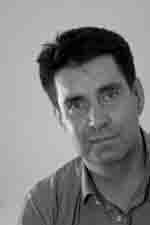
Prof. Hens Runhaar is a Full Professor of Sustainable Food System Governance at Utrecht University's Copernicus Institute of Sustainable Development. His research focuses on reconciling food production with biodiversity recovery, environmental sustainability, and health through innovative governance frameworks. He emphasizes connectivity issues in food systems, such as disconnects between production and environmental conditions, and advocates for transformative practices like agroecology and nature-inclusive agriculture. Key roles include chairing the Board of Examiners for Sustainable Development and membership in Future Food Utrecht. His projects include NWO-funded initiatives like COMBINED (grassland biodiversity) and REWIRE (circular agricultural missions). He actively engages in policy dialogues, such as advising BirdLife Netherlands and contributing to the Dutch Biodiversity Council. Research highlights systemic barriers to sustainability transitions in agriculture, with recent work analyzing dairy farming and farmer collectives. His outreach includes media appearances on nitrogen policy, nature restoration, and sustainable food systems. Professional memberships span international networks like Earth System Governance and the Wageningen School of Social Sciences.
Jampel Dell'Angelo is an Associate Professor with ius promovendi in Water Governance and Politics at the Department of Environmental Policy Analysis, Institute for Environmental Studies (IVM), Vrije Universiteit Amsterdam. He holds concurrent roles as a Visiting Scholar at the University of California, Berkeley's Ecohydrology Lab, and an Environmental Governance Affiliate Scholar at SESYNC, Maryland. His research focuses on multilevel dimensions of water governance, climate adaptation in African irrigation systems, and transnational land investments' impacts. He leads the EU-funded NEWAVE project, coordinating 15 Early Stage Researchers across 10 institutions. Educated with a dual PhD in Environmental Science (Autonomous University of Barcelona) and International Cooperation (Sapienza University), he also holds advanced degrees from the LSE, Sapienza, Curtin, and the University of Siena. As Editor-in-Chief of World Development , he promotes interdisciplinary research on socio-environmental systems. His work contributes to UN SDGs related to clean water, sustainable cities, and responsible production. Research interests span water grabbing dynamics, socio-ecological resilience, and policy frameworks for equitable resource management. Recent projects address Mediterranean water scarcity solutions and the socio-political implications of global land rushes. He supervises PhD candidates exploring themes like water democracy, agrifood transitions, and environmental justice. Key contributions include pioneering analysis of 'water commons grabbing' and documenting the Global Water Grab Syndrome. His documentary work complements field research, such as Working Together: Research and Water Governance on Mount Kenya . Current projects emphasize innovative governance models and climate-resilient water management in transboundary contexts.
Alessandra Arcuri is Full Professor of International Economic Law at the Department of Law and Markets, Erasmus School of Law, Erasmus University Rotterdam, and a member of the Erasmus Initiative on Inclusive Prosperity. Her academic leadership spans critical intersections of law, sustainability, and democratic governance within global economic frameworks. Her research interrogates the tensions between international economic law and planetary boundaries, focusing on how investment treaties constrain climate action through cases like Rockhopper v. Italy . She exposes how fossil fuel interests exploit legal mechanisms like the Energy Charter Treaty while analyzing glyphosate regulation failures and corporate influence on EU Green Deal implementation. Her work consistently challenges technocratic governance models that marginalize democratic participation in environmental decision-making. Recent scholarship reveals an intensified focus on supply-side climate policies, where investment law clashes with state efforts to phase out fossil fuels. She documents how tribunals prioritize investor protections over ecological imperatives, using Dutch river pollution cases to demonstrate states' international obligations to prevent toxic emissions. Her analysis of boundary-work in investment law reveals systemic exclusions of public interest perspectives. Scientific Awards: Jean Monnet Fellow (2011-12) Fernand Braudel Fellow (2021-22) Hauser Global Research Fellow (2003-04) Marie Curie Fellow (2001) Professor Arcuri supervises PhD candidates including Abdurrahman Erol, with whom she co-authored pivotal research on Dutch river degassing that directly influenced national policy banning toxic emissions from inland vessels. Her policy impact extends through commissioned reports for the Dutch Parliament, Ministry of Foreign Affairs, European Commission, and NGOs, translating academic rigor into tangible regulatory change. She actively bridges scholarly critique with public advocacy, as seen in open letters correcting ministerial misinterpretations of environmental law. As a core contributor to the Erasmus Initiative on Inclusive Prosperity, she collaborates across disciplines to reconfigure economic governance toward ecological sustainability and democratic accountability, challenging the fossil fuel economy through legal innovation and grassroots empowerment.
Professor Ruerd Ruben is an external academic expert in Development Economics with over 300 research outputs spanning food systems, smallholder livelihoods, and rural poverty alleviation. His work focuses on value chain transformation, nutrition, and sustainable agricultural practices in Africa, Latin America, and Asia. Research Pillars: Food systems optimization Smallholder economic empowerment Value chain governance Sustainable diets and nutrition Rural development strategies Ruben's recent publications examine midstream actors in informal economies (2025), market-based poverty reduction (2024), and fair trade limitations (2023). His editorial work includes contributions to Food Security journal, and he has supervised 19 PhD projects on topics ranging from Ethiopian potato chains to climate-resilient East African agribusinesses. Scientific Leadership: Contributed to 300+ academic works Received 7 Scopus citations for key publications Active in global food systems discourse
Alfons Oude Lansink is a Professor and Chairholder in Business Economics at Wageningen University, Netherlands. He holds adjunct professorships at Universitas Padjadjaran (Indonesia) and the University of Florida (USA), and serves on the Dutch Ministry of Agriculture's CDM committee and Rabobank's scientific advisory board. His academic career spans roles as director of Wageningen School of Social Sciences (WASS) and Secretary-General of the European Association of Agricultural Economists. Education: MSc and PhD in Agricultural Economics from Wageningen University Leadership: Head of Business Economics group since 2003 His research focuses on dynamic technical and economic efficiency , sustainable performance of food supply chains , and economics of plant health . Recent work examines climate adaptation strategies, circular economy applications, and cross-border agri-food innovation dynamics using advanced econometric models. Key projects include MINDSTEP (modeling farm decisions), Closing the Loop (insect-based agriculture), and Food Pro-tec-ts (transboundary food technologies). Publications address topics like: Technical efficiency in dairy and arable farming Economic impacts of climate change on agriculture Corporate social responsibility in food manufacturing Policy evaluation for biogas and organic farming He serves as: Secretary/Treasurer of agricultural economics journal foundation Advisor to Universitas Padjadjaran (Indonesia) on policy and PhD supervision Editorial board member of Agronomy Journal and European Review of Agricultural Economics
Hens Runhaar is Professor of Policy and Governance for Sustainable Food Systems at Utrecht University's Copernicus Institute of Sustainable Development. He holds positions as Chair of the Examination Committee for Sustainable Development and is a member of the Core Team of Future Food Utrecht. Additionally, he serves on the Editorial Board of Earth System Governance Journal and as Associate Editor of Frontiers in Sustainable Food Systems journal. His research focuses on sustainable food systems, policy and governance for biodiversity conservation, and nature-inclusive agriculture. Runhaar's research interests center on understanding the connectivity issues in Western food systems that lead to sustainability challenges including biodiversity loss, climate change, and food-related diseases. He investigates the decoupling of food production from environmental conditions, disconnects between feed production and livestock farming, and the separation between food production and consumption areas. His work emphasizes biodiversity as a key indicator of sustainable food systems, with special interest in scaling up agroecology, regenerative agriculture, and nature-inclusive agriculture. He delivered his inaugural lecture on January 17, 2025, titled 'Governing towards sustainable food systems: new connections for more diversity'. His recent publications demonstrate a strong focus on biodiversity policy integration, nature-based solutions, and transformative food system changes. Runhaar has been instrumental in special issues on biodiversity governance and environmental policy integration. His research projects include COMBINED (2025-2031), REWIRE, DivGrass, and work on the Water Framework Directive after 2027. Editorial Board Member of Earth System Governance Journal Associate editor of Frontiers in Sustainable Food Systems journal Member of the Scientific Advisory Committee of Dutch Bird Protection Association Senior Research Fellow of Earth System Governance research network Fellow of Wageningen School of Social Sciences Runhaar actively supervises numerous PhD students and postdoctoral researchers, with a focus on sustainable food systems, biodiversity conservation, and nature-inclusive agriculture. He has contributed significantly to societal debates through media appearances in NRC, De Volkskrant, and EenVandaag, addressing topics like nitrogen policy, nature restoration, and the role of farmers in sustainability transitions. Beyond academia, he volunteers with the Badger Working Group Utrecht and 't Gooi Foundation, monitoring badgers since 2012 and contributing to nature conservation efforts.
Professor Peter Verhoef is a renowned academic at the University of Groningen, serving as a Professor of Marketing and Director of the University of Groningen Business School. He earned his PhD from the Erasmus School of Economics. His research focuses on customer management, loyalty, and consumer behavior in contexts such as organic product purchasing and digital transformation. Notably, Verhoef received the 2013 Sheth Foundation/Journal of Marketing Award and the 2009 Harold M. Maynard Award, marking him as a leading figure in marketing research. He also chairs the Advisory Council for the Customer Centre of the Dutch Banking Association (NVB). Education: PhD from Erasmus School of Economics Affiliations: Director of University of Groningen Business School, Chair at NVB Research Interests: Verhoef’s work bridges academic rigor and practical applications. He investigates how digital transformation impacts businesses, explores consumer responses to privacy practices, and analyzes the effects of marketing strategies on customer retention. His findings often challenge conventional wisdom, such as demonstrating that 'light' products do not aid weight loss. Recent studies emphasize omnichannel retailing, privacy calculus, and the business value of SME digitalization. Awards: His accolades include the Sheth Foundation/Journal of Marketing Award for groundbreaking work on CRM efforts and the Harold M. Maynard Award for best paper in the Journal of Marketing. These prizes underscore his global influence in marketing academia. Grants & Teams: While specific grants are not detailed, his leadership roles suggest involvement in large-scale research projects. Collaborative work with institutions like the SOM Research School and contributions to interdisciplinary initiatives (e.g., digital transformation frameworks) highlight his team-oriented approach. Labs/Teams: Active in the University of Groningen Business School’s marketing department, he collaborates with researchers like Dong J.Q., Nguyen D.K., and Eggers F., focusing on data analytics, customer experience, and privacy-related challenges.
Hannah van Zanten is a Full Professor in Earth Systems and Global Change at Wageningen University & Research, specializing in sustainable food systems, regenerative agriculture, and biodiversity conservation. Her work emphasizes circular food systems, livestock production optimization, and environmental impact mitigation. She has received multiple awards, including the Storm-van der Chijs award (2015) and several Best Oral Presentation accolades at academic conferences. Her research spans topics like protein upcycling, soil biodiversity, and the environmental implications of livestock feed. She supervises PhD projects on regenerative agriculture, circular food transitions, and ecosystem services in South American grasslands. Recent projects include redesigning European food systems to enhance food security under climate change and modeling circularity impacts. Key research interests include: sustainable diets, land-use efficiency, and the integration of biodiversity conservation with agricultural practices. She has published extensively on topics like earthworm farming, circular protein systems, and the compatibility of animal-sourced foods with circular principles. Awards: 5 major prizes for academic contributions, including innovation in animal sciences and sustainability. Grants/Projects: Leading 19 active projects, including EU-funded initiatives on sustainable livestock and circular food system modeling. Labs/Teams: Collaborates with interdisciplinary teams on projects like SUSFANS (Sustainable Food Systems) and Re-Livestock (resilient livestock systems).
Jonathan Verschuuren is a Full Professor of International and European Environmental Law at Tilburg Law School, specializing in climate change law, environmental governance, and sustainable development. He holds positions as an Extraordinary Professor at the University of the Western Cape and North West University (South Africa). His research focuses on climate adaptation, legal frameworks for climate-smart agriculture, and the intersection of environmental law with global governance. Education: PhD (cum laude, 1993) from Tilburg University. He has conducted research at institutions like the University of Sydney’s Australian Centre for Climate and Environmental Law (2016) and has advised governments and international bodies on environmental policy. Research interests include climate change mitigation/adaptation, carbon farming, environmental justice, and EU environmental directives. Key publications explore legal aspects of climate adaptation, Ramsar Convention implementation, and EU emissions trading systems for agriculture. Awards: IUCN Academy of Environmental Law Senior Scholarship (2017), Marie Sklodowska Curie Fellowship (2015), and grants from the Netherlands Research Council (NWO) for projects like 'Reducing greenhouse gas emissions from agriculture' (2020-2023). Teaching: Courses on climate change law, international environmental law, and research methodology. Supervised 26 PhD students, many now in senior academic roles globally. Collaborations: Led projects like 'Constitutionalizing the Anthropocene' (2019-2026) and 'KARBONMAT' (designing carbon sequestration models in Norway). Active in networks like the IUCN World Commission on Environmental Law.
Kees van Veen is an Associate Professor at the University of Groningen, affiliated with the Faculty of Behavioural and Social Sciences and the Department of Sociology. His expertise spans Corporate Governance , Policy Evaluation , and Sustainable Food Systems , with significant contributions to International Business & Management and Social Psychology during the pandemic. Education : MSc in Sociology (cum laude) from the University of Groningen. Research Focus : Interdisciplinary work bridging organizational behavior, prosociality, and global health behaviors, leveraging machine learning for cross-national pandemic analysis. His recent publications analyze prosocial behavior , conspiracy beliefs , and lockdown psychology through multi-country longitudinal data, emphasizing UN Sustainable Development Goals . He supervises MSc theses in Business Administration and Sociology and collaborates on open datasets like PsyCorona .
Prof. LFM (Leo) Marcelis is a Professor and Chairholder at the Department of Horticulture and Product Physiology, Wageningen University & Research. His research focuses on plant physiology in controlled environments, energy-efficient horticultural systems, and vertical farming technologies. He leads major projects such as SKY HIGH and 'LED it be 50%', aiming to revolutionize plant production through smart lighting and sustainable practices. Key research interests include optimizing crop growth under LED lighting, closed-system agriculture, and enhancing resource use efficiency. Marcelis coordinates courses on plant physiology, greenhouse horticulture, and vertical farming. He actively collaborates with industry partners, governments, and international institutions to bridge academic research with practical applications in global horticulture. He serves as Vice Chair of the Leibniz Institute’s Science Advisory Board and as Chief Editor of the Crop and Product Physiology section in Frontiers in Plant Science . His work emphasizes interdisciplinary approaches, integrating physiology, engineering, and data science to address food security and sustainable agriculture challenges. Marcelis advises numerous PhD students on projects related to plant-light interactions, crop modeling, and vertical farming scalability. His research has contributed to advancing energy-saving technologies and improving crop quality in both greenhouse and urban agricultural settings.
Dr. Leonie Guerrero Lara is a researcher at the Copernicus Institute of Sustainable Development , Utrecht University, focusing on the intersection of community-supported agriculture (CSA) , degrowth , and post-capitalism . Her work applies social movement theory to analyze how CSA networks drive ecological and social justice in agri-food systems. She contributes to academic discourse through publications in journals like Agriculture and Human Values and Sustainability Science , while volunteering with Germany’s Netzwerk Solidarische Landwirtschaft . PhD research: Political agency of CSA networks Key themes: Degrowth, Post-Capitalism, Social Justice Her studies explore coalition-building between CSA and degrowth movements, emphasizing transformative strategies for sustainable food systems. Recent articles highlight systemic transitions and policy engagement in agri-food governance. She also participated in international conferences such as the International Degrowth Conference and POLLEN .
Annelies Zoomers is a Professor of International Development Studies at Utrecht University's Faculty of Geosciences. Her research focuses on climate change, land governance, migration, and sustainable livelihoods. She co-founded the Netherlands Land Academy (LANDac) and the Shared Value Foundation, and served as Chair of WOTRO Science for Global Development (2019–2022). Her current projects include the EU-funded 'Welcoming Spaces' initiative, which explores integrating migrants into shrinking European regions, and 'Diamonds in the Delta,' addressing climate resilience in delta cities. Zoomers has extensive experience in policy咨询 for global organizations like the World Bank and ILO, and has authored over 200 publications. She is a member of the Dutch Advisory Council on International Affairs (AIV). Her work bridges academic research with practical solutions for inclusive development, emphasizing participatory approaches to land governance and migration policy.
Peter Driessen is a full Professor of Environmental Governance at the Copernicus Institute of Sustainable Development (Utrecht University) since 2004. His research focuses on governance strategies for sustainability transitions , particularly in climate adaptation , water management , and science-policy interfaces . He leads the Environmental Governance research group and contributes to global debates on resilient governance and institutional reform . Key research themes include: Sustainable Urban Development : Analyzing institutional frameworks for climate-resilient cities Water Governance : Exploring legal and social conditions for effective water policy Science-Policy Interfaces : Enhancing decision-making through interdisciplinary collaboration His recent publications emphasize anticipatory governance in the Global South, city-to-city learning for water management, and institutional shifts in flood risk governance. Driessen’s work bridges theoretical analysis with practical policy recommendations, focusing on legitimacy , efficiency , and effectiveness of sustainability governance models. Contact: p.driessen@uu.nl
Zoë Robaey is an Assistant Professor in Ethics of Technology at Wageningen University’s Philosophy Group. Her work focuses on moral responsibility in uncertain technological contexts, particularly in biotechnology and agriculture. She holds a PhD from Delft University of Technology (2017) and prior roles include postdoctoral research at Delft and work at the Rathenau Institute. She currently serves on the Management Team of the 4TU Centre for Ethics and Technology, is an Associate Editor at Science and Engineering Ethics , and actively advises on synthetic biology competitions like iGEM. Her research integrates conceptual ethics with empirical studies, addressing challenges like GMO ownership, inclusive biobased innovations, and biomimetic design. Awards include a VENI Grant (2019) and recognition in the 'Young Philosophers' program (2017). She engages widely in public debates on agriculture and technology through platforms like Pakhuis de Zwijger. Education: BA Biology (University of Ottawa, 2007), MA Science and Technology Studies (Maastricht University, 2008), MA Public Policy (Hertie School of Governance, 2011). Research interests span ethical governance of emerging technologies, responsible innovation frameworks, and the intersection of biotechnology with societal values. Recent work explores biomimetic ethics, climate change education, and safe-by-design approaches in synthetic biology. Grants include the VENI Grant (2019) supporting her work on virtues in innovation. She has advised the Dutch Ministry of Infrastructure and Water Management and collaborates internationally on projects like the Inclusive Biobased Innovations initiative (2017–2019). Labs/Teams: Active in the 4TU Centre for Ethics and Technology, contributing to interdisciplinary ethics research networks. Teaches courses on ethics of food systems, synthetic biology, and molecular life sciences.