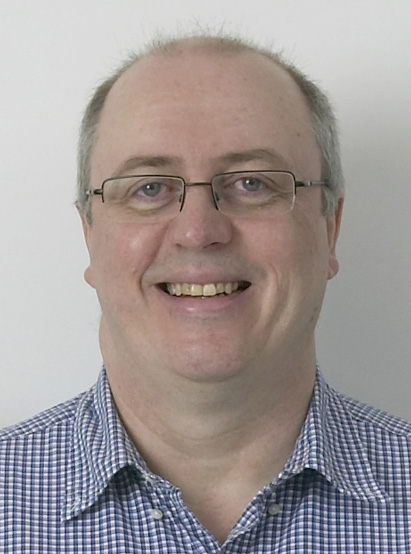
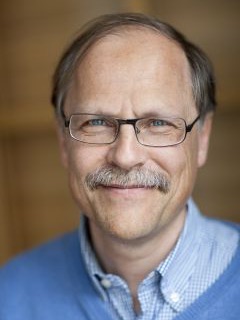
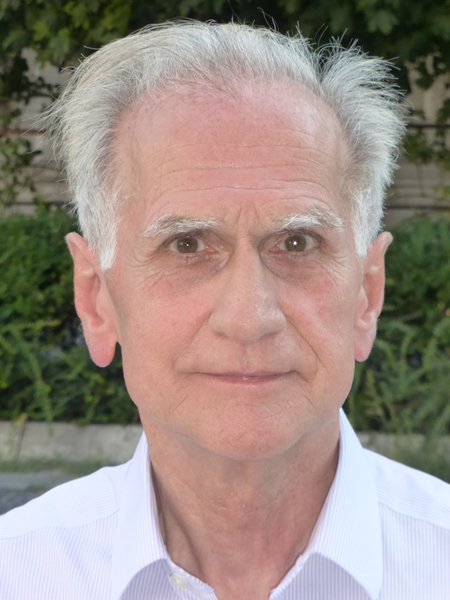
Gerhard Huisken is a Professor at the University of Tübingen and Director of the Mathematisches Forschungsinstitut Oberwolfach . His work spans Differential Geometry , Geometric Flows , and Mathematical Relativity . Education : Diploma (1982), PhD (1983), and Habilitation (1986) in Mathematics from Heidelberg University. His research focuses on geometric evolution equations, particularly mean curvature flow and inverse mean curvature flow , with applications to mathematical relativity and geometric inequalities . He has contributed to the understanding of singularities in curvature flows and developed surgical techniques for their analysis. His work on the Riemannian Penrose inequality and center of mass in isolated systems bridges geometry and physics. Selected publications highlight trends in geometric flows (mean curvature flow, Ricci flow), mathematical relativity (Penrose inequality, center of mass), and singularities in geometric PDEs. His collaborations with leading mathematicians like Simon Brendle and Tom Ilmanen reflect interdisciplinary impact. Scientific Awards and Honors : Fellow of the American Mathematical Society (2013) Clay Foundation Senior Fellowship (2013, 2007) Leibniz Preis from German Research Foundation (2003) Medal of the Australian Mathematical Society (1991) Member of the German Academy of Sciences Leopoldina (2004) He has held leadership roles including Dean of the Faculty of Mathematics at Tübingen University and directed major institutes like the Max Planck Institute for Gravitational Physics (2002-2013).
Tobias Bolch is a full Professor at the Institute of Geodesy, Graz University of Technology (TU Graz), Austria, specializing in cryospheric research with a focus on High Mountain Asia and the Tibetan Plateau. His work integrates advanced geodetic and remote sensing methodologies to address critical climate change impacts on glaciers and related systems. His research spans: Glacier dynamics and mass balance monitoring using InSAR and optical satellite data Rock glacier kinematics and permafrost interactions Glacial lake evolution and outburst flood hazards Climate-glacier-hydrology linkages in Central Asian river basins Long-term cryosphere reconstruction using historical satellite archives Analysis of his 2023-2025 publications reveals dominant trends in quantifying ice loss acceleration, particularly from lake-terminating glaciers, and the application of multi-sensor approaches (Sentinel, ASTER, UAV) for decadal-scale change detection. His work consistently emphasizes the hydrological consequences of glacier retreat for downstream water security across High Mountain Asia. No scientific awards or specific grant programs were documented in the provided materials. While student supervision details are absent, his position at TU Graz's Institute of Geodesy indicates active mentorship within geospatial and cryospheric research programs. His homepage (https://ifg.tugraz.at) serves as the primary hub for research dissemination through the university's PURE portal.
David Leigh is a Professor in Organic Chemistry at the University of Manchester , UK. He has held prestigious positions including the Sir Samuel Hall Chair (2014–present), Forbes Chair at the University of Edinburgh (2001–2012), and Chair of Synthetic Chemistry at the University of Warwick (1998–2001). His research focuses on synthetic molecular machines, supramolecular chemistry, and molecular knots. Fields of Scholarship : Synthetic molecular machines, Synthetic molecular knots and links, Supramolecular chemistry His work includes creating hydrogen-bonded molecular rotors , reversible rotary molecular motors , and artificial ribosome mimics . Article trends highlight nanotechnology , molecular engineering , and self-assembly advancements. Scientific Awards : Royal Society of Chemistry Pedler Award (2014), ERC Advanced Grant (2014), Bakerian Prize (2013), Tilden Prize (2010), Fellow of the Royal Society (2009), etc. Leigh has led groundbreaking projects funded by the European Research Council (2008, 2014) and held an EPSRC Senior Research Fellowship (2005–2010). His lab at the University of Manchester explores bottom-up molecular design and stimuli-responsive systems.
Kurt Johansson is a Full Professor of Mathematics at KTH Royal Institute of Technology, Sweden. His academic journey includes roles as Associate Professor at KTH (1993-2001) and Uppsala University (1988-1993), alongside research funded by the Swedish Natural Science Research Council (1998-2003). His primary affiliations are within the Department of Probability, Mathematical Physics & Statistics at KTH, where he also coordinates courses on Differential Equations and Fourier Analysis. Education: BSc in Physics (1982) and PhD in Mathematics (1988), both from Uppsala University. Research interests focus on Probability Theory , Mathematical Physics , and Random Matrix Theory , with contributions to stochastic models, determinantal processes, and universality in statistical mechanics. Key Awards: Wallenberg Prize (1995), Rollo Davidson Prize (2000), Göran Gustafsson Prize (2002), Fellow of the American Mathematical Society (2012), and multiple Wallenberg Scholar grants (2011-2023). Grants: Major funding from the Swedish Research Council (VR), K&A Wallenberg Foundation, and others. His research group explores Random Matrices, Stochastic Models, and Analysis , with notable work on the Arctic Circle Theorem and KPZ universality class. Recent publications analyze Brownian directed percolation and domino tilings of the Aztec diamond, reflecting his focus on interdisciplinary applications of probability and mathematical physics.
Christian Friedrich Wilhelm Becker is a full Professor at the University of Vienna, holding a position within the Faculty of Chemistry and the Department of Biological Chemistry. His research profile shows extensive activity in protein chemistry and biochemistry, with particular focus on post-translational modifications and their implications in disease mechanisms. His work bridges chemical biology, biochemistry, and biomedical applications, contributing significantly to the academic and research landscape at one of Europe's oldest and most prestigious universities. Faculty of Chemistry, University of Vienna Department of Biological Chemistry Active research leader with numerous ongoing projects Significant publication record spanning multiple disciplines Professor Becker's research primarily focuses on protein chemistry, particularly post-translational modifications and their role in protein function and dysfunction. His work spans multiple interconnected areas including ubiquitination, protein aggregation, prion protein behavior, and biomimetic approaches to protein analysis. His research has significant implications for understanding neurodegenerative diseases and developing novel therapeutic approaches. The fingerprint analysis of his work shows strong connections to biochemistry, molecular biology, and chemistry, with particular emphasis on cysteine chemistry, glycosylation, and amino acid modifications. Analysis of Professor Becker's recent publications (2021-2025) reveals a consistent research trajectory focused on protein modification techniques and their biological implications. His work shows increasing sophistication in chemical biology approaches to study protein function, with particular emphasis on ubiquitination pathways and protein aggregation mechanisms. The integration of chemical synthesis methods with biological analysis represents a hallmark of his research approach. His publications span high-impact journals in biochemistry, chemical biology, and peptide science, demonstrating the interdisciplinary nature of his contributions. Professor Becker has received notable recognition for his research contributions, most prominently the Cathay Award in 2020. This award acknowledges his significant contributions to the field of protein chemistry and chemical biology. His work appears to have practical applications in therapeutic development, particularly in the areas of targeted protein degradation and immunotherapy, which likely contributed to this recognition. Cathay Award (2020) Professor Becker leads multiple significant research projects, including 'Targeted protein degradation - from small molecules to complex organelles' (2020-2024), 'Taktira: Development of an improved, low-side-effect and sustainable immunotherapy' (2019-2023), and 'Structure Zoom: Zooming in on protein functional sites with atomic resolution' (2018-2021). These projects demonstrate substantial grant funding and collaborative research efforts across multiple institutions. His active participation in 290 recorded activities through 2025 indicates a highly engaged research program with numerous collaborators and trainees. Targeted protein degradation project (2020-2024) Taktira immunotherapy project (2019-2023) Structure Zoom project (2018-2021) Professor Becker's research environment includes a robust team of collaborators and junior researchers, as evidenced by the numerous co-authored publications and activities. His work intersects with multiple research groups studying protein function, modification, and therapeutic applications. The international collaboration network shown in his profile indicates significant engagement with researchers across multiple countries, creating a dynamic research ecosystem focused on advancing protein science and its biomedical applications.
Béla Bollobás is a renowned mathematician affiliated with the University of Memphis as the Jabie Hardin Chair of Excellence in Combinatorics and the University of Cambridge as a Fellow of Trinity College and Honorary Professor at the Centre for Mathematical Sciences. His work spans combinatorics, probability theory, and graph theory, with significant contributions to percolation and random graphs. Dr. Rer. Nat. (Budapest, 1967) Ph.D. (Cambridge, 1972) Sc.D. (Cambridge, 1984) Bollobás pioneered extremal graph theory, random graphs, and probabilistic combinatorics. He introduced novel graph polynomials and advanced bootstrap percolation models, impacting both theoretical mathematics and statistical physics. His research includes inhomogeneous random graphs and cellular automata in random environments. His selected publications reveal a focus on percolation thresholds, graph invariants, and stochastic processes. Notably, he derived sharp thresholds for bootstrap percolation and defined critical probabilities for Voronoi percolation. Senior Whitehead Prize (2007) Fellow of the Royal Society (2011) Foreign Member, Hungarian Academy of Sciences (1990) Foreign Member, Polish Academy of Sciences (2013) Honorary Doctorate, Adam Mickiewicz University (2013) Szechenyi Prize (2017) Bollobás has supervised over 50 Ph.D. students and authored over 450 publications, including 10 books. He co-founded the journal Combinatorics, Probability and Computing and served on eight editorial boards. He organized numerous conferences, including Bill Tutte and Paul Erdős events.
Farooq Azam is a Distinguished Professor of Microbial Oceanography at the Scripps Institution of Oceanography, University of California San Diego. He has held this position since 1996, following roles as Professor-in-Residence and Research Biologist at the same institution. His research focuses on marine microbial ecology, coral reef microbiology, microbial biogeochemistry, and the ocean carbon cycle. Azam earned his Ph.D. in microbiology from the Czechoslovak Academy of Science, Prague, and completed a postdoctoral fellowship at Stony Brook University. Affiliations: Scripps Institution of Oceanography, UCSD Key Roles: Long-term leadership in microbial oceanography research Research Interests: His work explores how marine microbes influence biogeochemical cycles, coral health, and organic matter dynamics. He has pioneered studies on microbial regulation of the ocean carbon cycle and the ecological roles of marine phages. Awards: Includes election to the American Academy of Arts and Sciences (2015), Tiedje Award (2004), and recognition as an ISI Highly Cited Researcher (2002). He holds an honorary doctorate from Linnaeus University (2004).
Martin Kaltenbrunner is a Professor in the Department of Soft Matter Physics at the Faculty of Engineering & Natural Sciences, Johannes Kepler University Linz (JKU). He leads the LIT Soft Materials Lab and is affiliated with the Linz Institute of Technology (LIT), focusing on sustainable material innovations for next-generation electronics. His research spans biodegradable flexible electronics, energy-autonomous systems, and eco-friendly substrates. Key interests include perovskite solar cells for healthcare robotics, mycelium-based electronic skins, and algal polysaccharide conductive nanocomposites. He pioneers sustainable alternatives using organic materials to replace conventional electronics in soft robotics and wearable devices. Recent publications (2024-2025) emphasize circular economy principles, featuring mycelium substrates for PCBs, algae-derived transistors, and passivation techniques for high-efficiency solar cells. The work integrates materials science with environmental sustainability, targeting applications in medical sensors and autonomous robotics. Professor Kaltenbrunner has supervised 18 research works and leads multiple major grants: Personalized Sustainable Smart Patch Omnificence (Persimmon) - EU project (2024-2028) Mycelium-based substrate for sustainable flexible PCBs (MycoSub) - EU project (2024-2025) Intelligent cellulose-based sensors - FFG project (2022-2025) Metasurface Fabrication (META-FAB) - FFG project (2024-2027) Nadelholzreststoffe for mycelium packaging (MycoSoft) - FFG project (2023-2026) He directs the LIT Soft Materials Lab, which develops biodegradable gels, fungal biomaterials, and sawmill byproduct-based insulation. The lab collaborates across JKU's engineering and natural sciences divisions to advance sustainable electronics through interdisciplinary projects like Persimmon and MycoSub, emphasizing real-world deployment of eco-friendly technologies.
Professor Paul Midgley is a leading academic in Materials Science at the University of Cambridge's Department of Materials Science and Metallurgy, serving as Professor since 2007 and Head of Department from 2018–2020. He is a Fellow of Peterhouse College and holds multiple prestigious awards, including the Royal Society Fellowship and the Ernst Ruska Prize. Education: PhD in Physics (University of Bristol, 1991), MSc (Distinction) in Semiconductor Materials (1988), BSc (Hons) Physics (1987). Administration: Director of the Wolfson Electron Microscopy Suite, and active on various University committees including Research, Teaching, and REF. His research focuses on advanced electron microscopy techniques such as convergent beam diffraction, electron tomography, and nanostructure analysis, with applications in nanoscale materials science and 3D reconstruction using compressed sensing. He has pioneered methods like precession electron diffraction and multi-dimensional electron microscopy, contributing to fields like plasmonic nanoparticles and catalytic materials. Key Research Themes: Electron crystallography, nanomaterial characterization, energy materials, and defect analysis in perovskites. Midgley has delivered over 20 invited/plenary lectures globally, including at EUROMAT, the Welch Symposium, and the John Cowley Memorial Lecture. His grant income exceeds £16M as Principal Investigator. Labs/Teams: Leads the Wolfson Electron Microscopy Suite and collaborates internationally on microscopy advancements and materials innovation.
Yuri Tschinkel is a Professor of Mathematics at the Courant Institute of Mathematical Sciences, New York University, and Director of the Mathematics and Physical Sciences Division at the Simons Foundation since 2012. He previously held positions at the University of Goettingen, Princeton University, and the University of Illinois at Chicago. His research spans algebraic geometry, analytic number theory, and arithmetic geometry, focusing on rational points, birational geometry, and algebraic structures. Ph.D. in Mathematics, MIT (1992) His work addresses stable rationality of algebraic varieties, weak approximation over function fields, and distribution of rational points. Key contributions include studies on Mori cones, log Fano varieties, and quadric surface bundles. Recent publications reflect collaborations with leading mathematicians like Kontsevich and Hassett. Scientific accolades include 2018 Member of Leopoldina, German National Academy of Sciences 2014 Fellow of the American Association for the Advancement of Science 2012 Fellow of the American Mathematical Society As Director of the Simons Foundation division, he oversees grants and research initiatives in mathematics and physical sciences. He has authored 135 papers, edited 19 books, and serves on 8 editorial boards and advisory panels.
Paolo Samorì is a full-time Professor at the Université de Strasbourg , where he serves as Director of the Nanochemistry Laboratory and Emeritus Director of the Institut de Science et d'Ingénierie Supramoléculaires (ISIS) . He is affiliated with multiple prestigious academies, including the German National Academy of Science and Engineering (ACATECH) , Royal Society of Chemistry (FRSC) , and European Academy of Sciences (EURASC) . Education: Laurea (MSc) in Industrial Chemistry (University of Bologna, 1995), PhD in Chemistry (Humboldt University Berlin, 2000, summa cum laude). His research focuses on Nanochemistry , 2D materials , and supramolecular systems at interfaces , with applications in organic electronics , optoelectronics , and sensing . He pioneered methods for scanning probe microscopies and photoresponsive nanodevices , including graphene-based systems and diarylethene molecular switches. His scientific awards include the ERC Advanced Grant (2019) , Blaise Pascal Medal (2018) , and Catalán-Sabatier Prize (2017) , among 20+ honors. He has trained over 130 students and researchers , including 34 professors now active globally.
University of Natural Resources and Life Sciences ViennaAustria
Henry Jäger is a Professor in Food Technology at the University of Natural Resources and Life Sciences, Vienna (BOKU) since 2014. Previously, he worked as a Project Manager at Nestlé (2012-2014) and Lecturer at TU Berlin (2012-2017), following his PhD/Postdoc at TU Berlin (2006-2012) and Diploma in Food Technology (2000-2006). His research focuses on electrotechnologies in food processing , particularly pulsed electric fields (PEF) and ohmic heating , for microbial inactivation, food preservation, and quality optimization. He explores applications in plant material processing , gluten-free baking , and novel food preservation methods . His work also addresses edible insect processing for allergenicity reduction and protein recovery. Recent publications (2025-2024) analyze synergies between PEF and ohmic heating, biofilm imitation systems for hygiene validation, and computational models for sterilization processes. These studies span food safety , sustainable processing , and functional food design . Henry Jäger actively contributes to scientific communities, serving on the EFFoST managing board , as scientific advisor for food conferences, and as reviewer for journals like Food Chemistry and Trends in Food Science & Technology . He has organized workshops on PEF applications and contributed to EU food technology initiatives.
University of Natural Resources and Life Sciences ViennaAustria
Fabian Pfrengle is a full Professor of Organic Chemistry at the Institute of Organic Chemistry , Department of Natural Sciences and Sustainable Resources , University of Natural Resources and Life Sciences Vienna (BOKU). He previously led research groups at the Max Planck Institute of Colloids and Interfaces (2013-2020) and worked at The Scripps Research Institute (2010-2013). Research Focus: His work bridges carbohydrate chemistry and plant biology , specializing in plant cell wall glycans and glycosyltransferases . He develops synthetic glycan arrays for enzyme characterization and investigates immune response triggering mechanisms in plants through oligosaccharide fragments . His projects include automated polysaccharide synthesis and liposome-based immune tolerance applications. Publication Trends: His 15 most recent articles emphasize chemical synthesis of sugar nucleotides , plant glycan arrays , and enzyme specificity analysis , reflecting his focus on carbohydrate engineering and plant immunity . Key subfields include UDP-sugar derivatization , Xylan structure-function relationships , and Glycosyltransferase profiling . Grants & Projects: Currently leads 5 major projects including Automated Algal Polysaccharide Synthesis (EU-funded, 2023-2028) and Synthetic Glycan Ligands for Plant Immune Receptors (FWF-funded, 2022-2026). His research also explores thrombocyte biology and Rhamnogalacturonan-II fragments with support from FWF and City of Vienna . Community Service: Serves on editorial boards ( Monatshefte für Chemie , 2021-present) and as reviewer for 12 journals including JACS Au , Nature Communications , and Angewandte Chemie . Member of professional societies: Gesellschaft Österreichischer Chemiker (2020), Deutscher Hochschulverband (2019), and Gesellschaft Deutscher Chemiker (2008).
Cesare Franchini is a full Professor at the University of Vienna's Faculty of Physics, leading the Computational Materials Physics research group. His work focuses on theoretical understanding and computational modeling of quantum materials using first principles methods, particularly VASP. He maintains an active research program with numerous postdocs, PhD students, and collaborations across multiple institutions including the University of Bologna. Professor Franchini's research centers on quantum materials with many interacting degrees of freedom (lattice, spin, and electron orbital) that enable novel electronic and magnetic phases. His specific interests include metal-insulator transitions, polaron physics (electron-phonon interactions), non-collinear spin orderings, topological Dirac/Weyl phases, multiferroism, and superconductivity. He has increasingly incorporated machine learning data-driven tools and diagrammatic Monte Carlo techniques into his computational approaches. Analysis of his recent publications (2024-2025) reveals a strong focus on polaron physics across multiple material systems, with significant work on hematite, titanium dioxide, and quantum paraelectrics like KTaO3. His research increasingly integrates machine learning with traditional first-principles methods, particularly for studying hydrogen diffusion, surface science phenomena, and electronic structure calculations. There's also substantial work on single-atom catalysis and the application of advanced computational techniques to understand fundamental charge transport mechanisms in energy materials. Professor Franchini actively supervises numerous PhD students and postdocs, including Andrea Angeletti, Viktor Birschitzky, Lorenzo Celiberti, and several others working on diverse aspects of computational materials physics. He leads or participates in major research projects including TACO (Taming Complexity in Materials Modeling), DCAFM (Doctoral College Advanced Functional Materials), and the recently launched Spin-orbit entangled anharmonic polarons project. His group maintains strong collaborations with experimentalists at Charles University, Technical University of Vienna, and other international institutions.
Jussi Parikka is a Professor in Technological Culture and Aesthetics at the Winchester School of Art, University of Southampton (UK), and a Visiting Professor at FAMU, Academy of Performing Arts in Prague. He holds an adjunct professorship at the University of Turku, Finland. His research spans media archaeology, environmental humanities, and new materialism, focusing on intersections of technology, ecology, and culture. Education: PhD in Cultural History, University of Turku, 2007 Licentiate of Philosophy in Cultural History, University of Turku, 2004 Master of Arts in Cultural History, University of Turku, 2002 Research Interests: Parikka investigates media archaeology, environmental media studies, and digital culture. Key themes include the geology of media, operational images, and the ecological implications of technological systems. His work bridges art, science, and philosophy, addressing urgent issues like climate change and data infrastructures. Awards & Honors: 2021: Elected Member of Academia Europaea 2012: Anne Friedberg Award (SCMS) for Insect Media 2016: Choice Magazine Outstanding Academic Title ( A Geology of Media ) 2017: Moebius Fellowship (Kone Foundation) Grants & Projects: Parikka leads the Digital Aesthetics Research Centre (DARC) and collaborates on initiatives like the Critical Environmental Data project with the Helsinki Biennial. His work integrates art, science, and activism, addressing topics such as environmental sensing and climate justice. Labs/Teams: Director of the Digital Aesthetics Research Centre (DARC), Aarhus University, and co-curator of exhibitions like Weather Engines (Onassis Stegi, Athens).