Andreas BrandhuberView profile
Professor
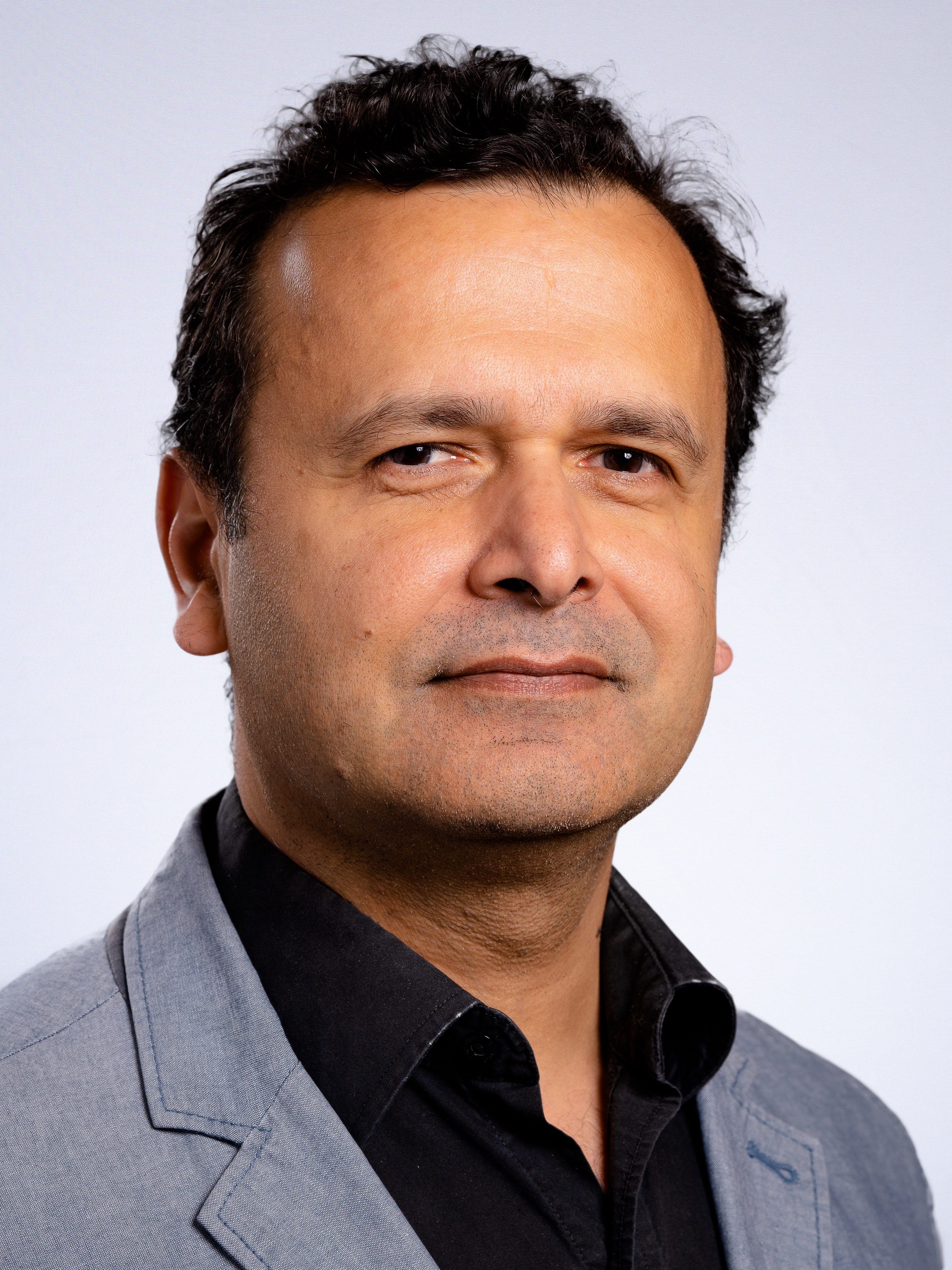
Professor Andreas Brandhuber is a Professor of Theoretical Physics and Head of the Centre for Theoretical Physics at Queen Mary University of London's School of Physical and Chemical Sciences. He has held postdoctoral fellowships at Tel Aviv University, CERN, and Caltech before joining Queen Mary in 2003. He received his PhD jointly from CERN and Technical University Vienna. His research focuses on modern methods for computing scattering amplitudes with the goal of revealing novel symmetries and mathematical structures while developing efficient computational tools. His work bridges theoretical physics, particle physics, and gravitational physics, with particular emphasis on applications to gravitational wave physics and particle collisions. Professor Brandhuber's recent publications demonstrate a clear trend toward applying scattering amplitude techniques to gravitational physics, particularly in the context of binary black hole systems and gravitational wave radiation. His work increasingly connects quantum field theory methods with general relativity through approaches like the double copy formalism and effective field theories of gravity, showing how insights from particle physics can solve problems in gravitational physics. His scientific achievements have been recognized through several prestigious awards: Ludwig Boltzmann Prize of the Austrian Physical Society (2005) Nuclear Physics B Most Cited Article 2006-2010 Award for the paper 'MHV Amplitudes in N=4 super Yang-Mills and Wilson Loops' Feinberg Foundation Visiting Faculty Program Fellowship at the Weizmann Institute, Israel (2011-2012) Professor Brandhuber actively supervises PhD students, with current research focusing on scattering amplitudes and their applications to gravitational physics. He leads the Centre for Theoretical Physics research group, which includes several postdoctoral researchers and PhD students working on related topics. His grant portfolio includes significant funding from the Science & Technology Facilities Council (STFC) and the European Commission, including a £1.47 million STFC grant for 'Amplitudes, Strings and Duality' running from 2023-2026. He has organized numerous international conferences and workshops on scattering amplitudes, including the SAGEX Closing Meeting at QMUL in 2022 and the Amplitudes 2010 workshop. His research group is actively engaged in the SAGEX (Scattering Amplitudes: from Gauge theory EXperiments) network, which connects theoretical physics with experimental gravitational wave observations.