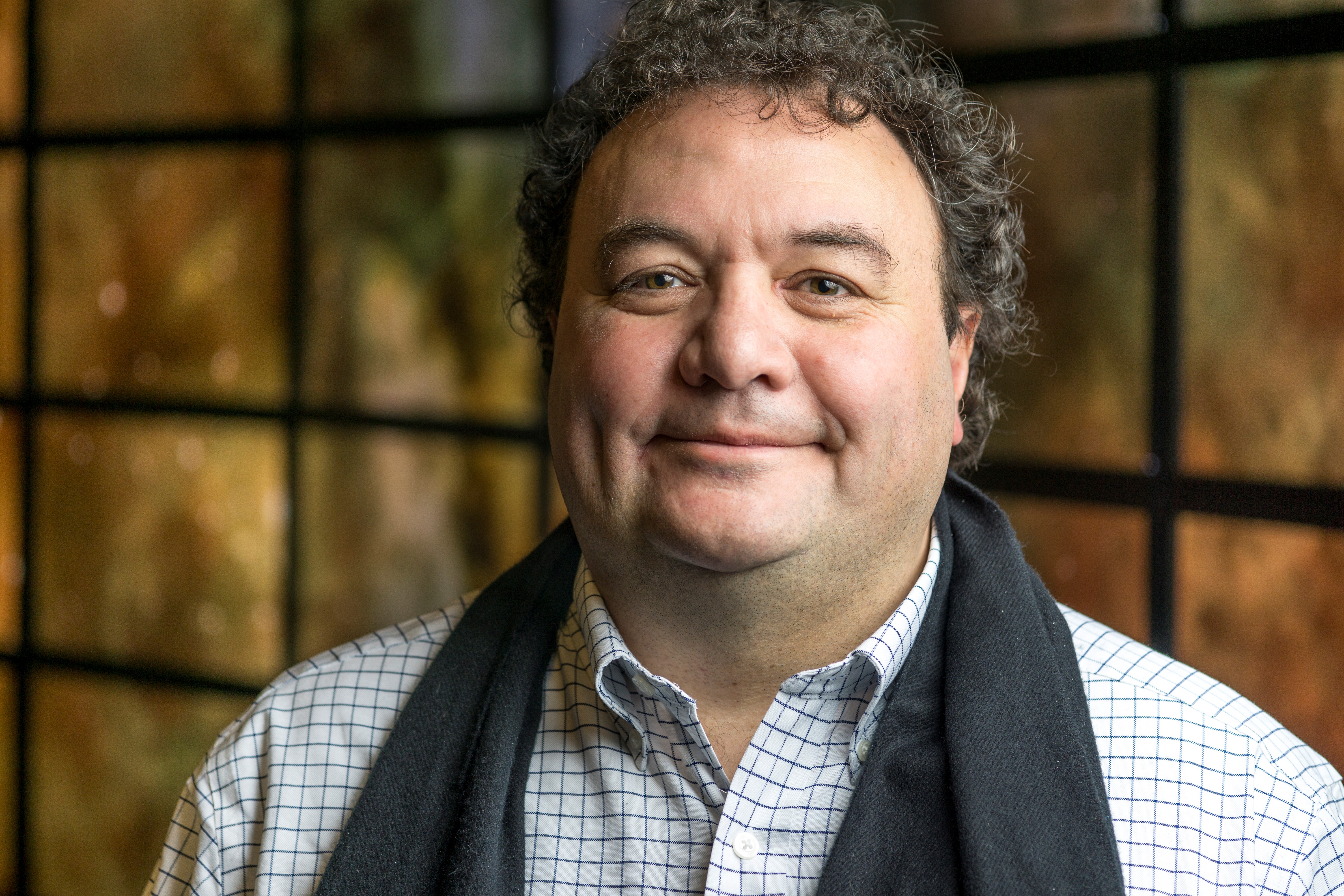
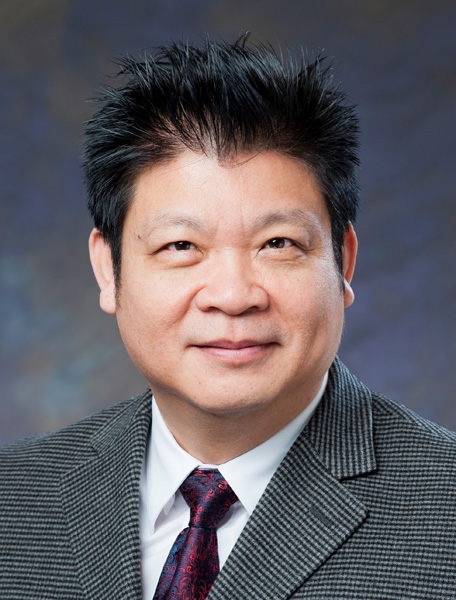
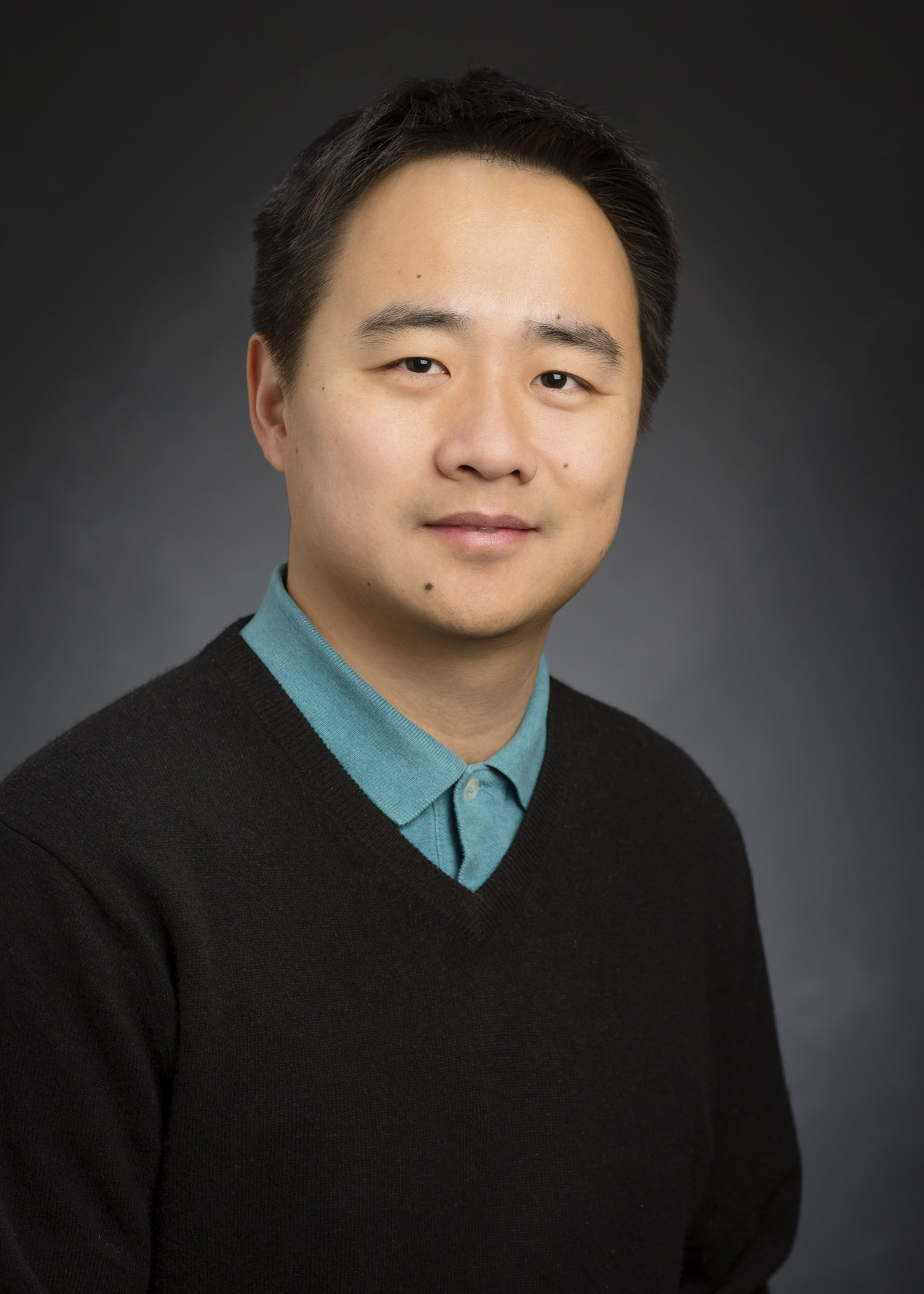
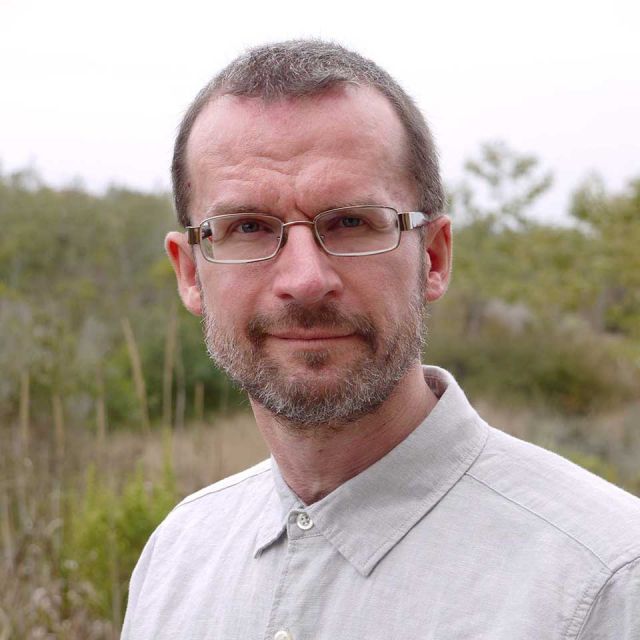
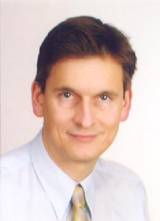
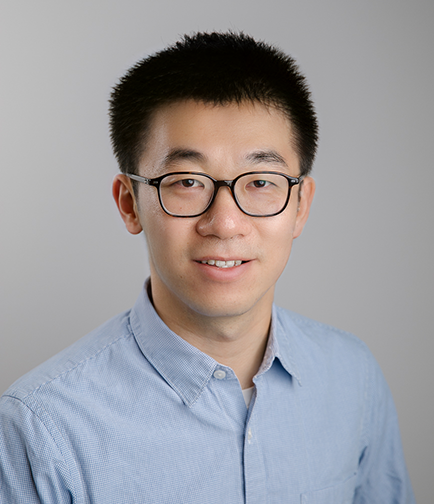
Valerio Pascucci is a Professor at the University of Utah's School of Computing and a DOE Laboratory Fellow at Pacific Northwest National Laboratory. He directs the Center for Extreme Data Management Analysis and Visualization (CEDMAV) and previously led projects at Lawrence Livermore National Laboratory and University of Texas at Austin. PhD in Computer Science (Purdue University, 2000) MSc in Electrical Engineering (University 'La Sapienza', Rome, 1993) As a pioneer in Big Data Management , Scientific Visualization , and Computational Topology , his work connects topological methods with progressive algorithms to enable interactive exploration of petascale datasets. His research spans climate modeling , neuroscience , materials science , and precision agriculture , focusing on multi-resolution techniques and geometric compression . Recent publications show specialization in web-based visualization and AI-driven analytics for climate data, with emphasis on equity in data access and FAIR data principles . His ViSUS project enables real-time data streaming from supercomputers to desktops, while NAPA explores GPU-based architectures for streaming algorithms. Scientific Awards : Best Paper Award, IEEE Pacific Visualization 2011 Best Application Paper Award, IEEE VIS 2006 DOE Laboratory Fellow He advises numerous graduate students and leads collaborations across national laboratories , universities , and industry . Funded by NSF Grant #2127548 , he develops technologies for exascale computing and geospatial intelligence .
Prof. Liew Kim Meow is a Chair Professor of Civil Engineering at City University of Hong Kong (CityU) since 2005. He previously served as Head of the Department of Architecture and Civil Engineering (2011–2017) and held tenured professorial positions at Nanyang Technological University (NTU), Singapore. He earned BS from Michigan Tech (1985), MEng (1988), and PhD (1991) from the National University of Singapore. His research focuses on composite materials, multiscale modeling, structural optimization, and computational mechanics. Notable contributions include pioneering work on carbon nanotube-reinforced composites and advanced numerical methods. He has published over 800 papers with 38,000+ citations (H-index 97). Education: BS, Michigan Technological University (1985) MEng, National University of Singapore (1988) PhD, National University of Singapore (1991) His awards include Clarivate Analytics' Highly Cited Researcher (2018–2019), Xiangjiang Scholar (2017), and multiple fellowships from professional institutions. He serves as Editor-in-Chief of International Review of Civil Engineering and holds editorial roles in over a dozen journals. He founded key research centers like the Nanyang Center for Supercomputing and Visualization (NTU) and led initiatives in computational mechanics. His work influences global research in composite materials and structural analysis.
Paul Fischer is a Professor at the University of Illinois, holding dual appointments in the Siebel School of Computing and Data Science and the Mechanical Science and Engineering department. His research focuses on advanced numerical methods for fluid dynamics, particularly leveraging spectral element techniques and high-performance computing. He is a core contributor to the Nek5000/NekRS computational frameworks. Recent work emphasizes turbulence modeling, exascale CFD simulations, and multiphase flow dynamics in complex systems like pebble bed reactors. His research interests span spectral methods, large eddy simulation (LES), direct numerical simulation (DNS), and parallel computing architectures. Key projects include developing scalable algorithms for Reynolds-averaged Navier-Stokes (RANS) models and exploring non-conforming domain decomposition approaches for reacting flows. His contributions bridge computational methodology and engineering applications, with a focus on exascale-ready solutions. Publications from 2024-2025 highlight advancements in energy-efficient CFD simulations, turbulence transition mechanisms in granular media, and reduced order modeling for turbulent flows. Collaborations involve cross-disciplinary teams focusing on combustion, fluid-structure interaction, and high-fidelity flow analysis. He maintains active involvement in computational fluid dynamics communities and contributes to open-source software tools critical for industrial and academic research. Current efforts prioritize scalability, accuracy, and adaptability in numerical methods for next-generation supercomputing platforms.
Mateo Valero Cortés is a renowned Professor of Computer Architecture at the Polytechnic University of Catalonia and Director of the Barcelona Supercomputing Center (BSC). He has held academic and leadership roles since 1974, advancing high-performance computing (HPC) and computer architecture research. His work includes pioneering contributions to vector architectures, multithreading, and instruction-level parallelism. Education includes a Telecommunications Engineering degree from the Polytechnic University of Madrid (1974) and a PhD in Telecommunications Engineering from the Polytechnic University of Catalonia (1980). His research spans over 700 publications, focusing on HPC systems, parallel computing, and supercomputing infrastructure. Key research interests include vector processing, super-scalar processors, and task-based programming models. Recent work emphasizes scalable architectures for exascale computing and energy-efficient hardware-software co-design. Notable achievements include the Eckert-Mauchly Prize (highest in computer architecture), Seymour Cray Award, and Charles Babbage Prize. He has led initiatives like the Spanish Supercomputing Network (RES) and PRACE (European HPC partnership). Academic affiliations include the Royal Academy of Engineering of Spain, ACM Fellow, and IEEE Fellow. He has received 13 honorary doctorates and awards such as Mexico’s Order of the Aztec Eagle. Current projects include the Mont-Blanc HPC prototype and ERC-funded research on multi-core chip design. His BSC oversees over 300 researchers and manages MareNostrum supercomputers.
Jian Peng is an Associate Professor and Willett Faculty Fellow at the University of Illinois at Urbana-Champaign with primary appointment in the Department of Computer Science and courtesy appointments in the College of Medicine. He holds affiliate positions at the Institute of Genomic Biology, Cancer Center at Illinois, and National Center for Supercomputing Applications. His research integrates computational biology and machine learning, focusing on functional genomics, cancer genomics, neurodegenerative diseases, deep learning architectures, and reinforcement learning applications in biological domains. His work bridges algorithmic development with real-world biomedical challenges. Analysis of recent publications (2020-2021) reveals strong emphasis on machine learning applications in drug design, protein engineering, and computational biology. Key technical themes include generative modeling for molecular structures, reinforcement learning advancements, causal inference frameworks, and novel computer vision approaches. The work demonstrates consistent interdisciplinary innovation across computational and biological domains. Major Scientific Awards: Donald Biggar Willett Faculty Fellow (2020) Overton Prize - ISCB (2020) Dean's Award for Excellence in Research (2020) C.W. Gear Junior Faculty Award (2019) NSF CAREER Award (2017-2022) Sloan Research Fellowship (2016) He leads significant research initiatives including co-directing the NSF AI Institute's Molecular Maker Lab and an ASAP collaborative grant for Parkinson's disease research. His students have secured faculty positions at leading institutions including Georgia Tech and University of Washington.
Skirmantas Janusonis is an Associate Professor in the Department of Psychological and Brain Sciences at the University of California, Santa Barbara (UCSB). He is a core faculty member of the UCSB Neuroscience Research Institute and the Interdepartmental Graduate Program in Dynamical Neuroscience, and a member of the California NanoSystems Institute. His research program lies at the intersection of neuroscience, complex systems, and computational modeling. Education: Ph.D. in Neuroscience and Behavior, University of Massachusetts Amherst Postdoctoral Research, Department of Neuroscience, Yale University School of Medicine B.S./M.S. in Biology, Vilnius University, Lithuania Dr. Janusonis's research focuses on the stochastic (random walk-like) behavior of serotonergic axons in the brain, particularly within the ascending reticular activating system and the broader serotonergic matrix. His work integrates molecular neurobiology, comparative neuroanatomy (from sharks to rodents to humans), advanced microscopy, and supercomputing simulations. He investigates how these complex systems self-organize and their relevance to mental disorders, especially autism and the enigma of platelet hyperserotonemia. His lab collaborates with physicists, mathematicians, and engineers to model anomalous diffusion and fractional Brownian motion in 3D brain spaces. His recent publications reveal a strong trend toward computational and theoretical neuroscience, using high-resolution data and mathematical generalizations to model axonal distributions. Key themes include reflected fractional Brownian motion, self-organization of serotonergic densities, and the interface between central and peripheral serotonin systems. His work challenges traditional views of the blood-brain barrier and proposes interdisciplinary solutions involving immunology, physiology, and computer science. Scientific Awards and Recognition: Elected to the Board of Directors of the Organization for Computational Neurosciences (2024) NSF, NIMH, and California NanoSystems Institute grant funding Multiple student awards under his mentorship, including the Harry J. Carlisle Award and NIH IRTA NSF CRCNS and Frontera supercomputing grants UCSB Art of Science People's Choice Award (awarded to lab member) Dr. Janusonis actively mentors PhD students such as Justin Haiman and Dahyana Arroyo, and has advised alumni including Dr. Angela Chen, Dr. Kasie Mays, and Dr. Melissa Hingorani. His lab has received numerous grants from the NSF and NIH, supporting research on stochastic axon systems and super-resolution imaging. He teaches graduate and undergraduate courses including Neuroanatomy (Psy 269), Neurobiology of Brain States (Psy 136), and Complex Systems (Psy 113L). Research Team and Collaborations: The Janusonis Lab is an interdisciplinary group combining neuroscience, mathematics, and engineering. It collaborates with institutions such as UC San Diego, the University of Pisa, and MIT. The lab is equipped with advanced imaging tools and has access to Frontera, a leading NSF supercomputer. Outreach includes science nights at local schools and public lectures at the Santa Barbara Museum of Natural History.
Dr. Tim Lynar serves as a Senior Lecturer at the University of New South Wales Canberra within the School of Systems & Computing. With a strong background in both academic research and industry practice, he has established himself as a leading figure in cyber security and computer science. His work bridges theoretical research with practical applications, focusing on innovative solutions for complex computing challenges across multiple domains including IoT security, machine learning applications in cyber defense, and high-performance distributed systems. Dr. Lynar's research interests span a wide spectrum of cyber security applications, with particular emphasis on the application of machine learning techniques to security challenges and the innovative use of epidemiological approaches to understand and combat cyber threats. His work in modeling & simulation, statistical & data analysis, network & systems administration, and high-performance distributed computing demonstrates his commitment to developing comprehensive security frameworks that address evolving threats in digital environments. The interdisciplinary nature of his research connects computer science with biological modeling approaches, creating novel methodologies for understanding security vulnerabilities. Analysis of Dr. Lynar's recent publications reveals a strong trend toward applying advanced machine learning techniques to cyber security challenges, particularly in IoT environments. His work increasingly integrates epidemiological models with security frameworks, creating a unique approach to threat detection and mitigation. The research spans practical applications in network security, drone systems, and AI security, demonstrating both theoretical depth and real-world applicability. A notable pattern is the consistent application of cutting-edge deep learning architectures like Vision Transformers and Variational Autoencoders to solve specific security problems across diverse domains. IBM Master Inventor (2016) Multiple IBM Innovation Awards (2011-2018) Client Value Outstanding Technical Achievement Awards (2015-2016) High Value Patent Awards (2014-2016) Best Article Award – International Journal of Information Systems & Social Change (2010) Multiple research scholarships from 2007-2010 Dr. Lynar's extensive patent portfolio demonstrates significant industry impact, with numerous issued US patents spanning diverse applications from energy efficient supercomputing to vehicle collision avoidance and drone-based microbial analysis. His research has attracted substantial industry collaboration, particularly with IBM, where he received multiple prestigious awards including the IBM Master Inventor designation. The practical applications of his work are evident in the wide range of patented technologies addressing real-world security and optimization challenges across multiple industries. Dr. Lynar's work spans multiple research domains simultaneously, with active projects in cyber security, drone systems, AI safety, and maritime traffic analysis. His research methodology consistently combines theoretical modeling with practical implementation, often leveraging simulation environments to test and validate approaches before real-world deployment. The interdisciplinary nature of his work creates connections between traditionally separate fields, enabling innovative solutions to complex problems.
Prof. Dr. Thomas Ludwig is the Director of the German Climate Computing Center (DKRZ) and a Professor at the Universität Hamburg. He holds a doctoral degree and habilitation from the Technische Universität München, with expertise in High-Performance Computing (HPC), energy efficiency, and data storage systems. His research focuses on optimizing parallel systems, storage technologies, and computational efficiency for climate science applications. He leads projects like AIMES and PeCoH, advancing HPC storage and energy-aware computing. Education: Doctoral degree and habilitation from TU München (1988–2001). Chair in Parallel Computing at Universität Heidelberg (2001–2009). Research Interests: HPC, data reduction techniques, energy-efficient systems, parallel I/O optimization, and climate modeling infrastructure. Recent Research Trends: His work emphasizes storage system efficiency, machine learning in HPC, and convergence between HPC and Big Data. Key contributions include frameworks for portability (Vecpar), automated performance tools, and energy-aware storage solutions. Awards: Some publications received recognition, e.g., a Best Paper award in 2014 for work on energy efficiency. However, no personal awards are explicitly listed. Advising & Grants: Supervised numerous theses in HPC, I/O optimization, and energy efficiency. Leads major projects funded by national and international initiatives. Labs/Teams: Heads the DKRZ team providing supercomputing and data management for climate research, collaborating with global institutions like the University of Hamburg and European research networks.
Hari Sundar is an Associate Professor in the Department of Computer Science at Tufts University, holding the Ada Lovelace Associate Professorship. Previously, he served as an Associate Professor at the Kahlert School of Computing, University of Utah. His research focuses on developing parallel algorithms for computational sciences and high-performance computing, addressing challenges in biosciences, geophysics, computational fluid dynamics, and computational relativity. He leads efforts in adaptive mesh refinement, geometric multigrid methods, and scalable scientific computing frameworks like Dendro-GR for numerical relativity. Education: Ph.D. in Computer Science from the University of Pennsylvania (2009), and a Bachelor of Engineering from the University of Delhi (2000). Postdoctoral work at the Oden Institute, University of Texas at Austin. Research Interests: Parallel algorithms, high-performance computing architectures, computational relativity (binary black hole simulations), multiphase flow modeling, and domain-specific languages for scientific computing. His work emphasizes scalability and efficiency on modern supercomputers. Key Contributions: Development of the Dendro-GR platform for gravitational wave simulations, scalable PDE solvers, and GPU-optimized algorithms for phonon transport and genomic sequence alignment. His recent work includes advancements in gravitational waveform modeling for LISA space missions and thermodynamically consistent two-phase flow simulations. Grants & Collaborations: Active in NSF-funded projects on computational relativity, multiphase flow algorithms, and scalable PDE solvers. Collaborates across disciplines in astrophysics, materials science, and bioinformatics.
Dr. Md Arifuzzaman is an Assistant Professor in the Department of Computer Science at Missouri University of Science and Technology (Missouri S&T). He specializes in High-Performance Systems, Quantum Networking, and Distributed Systems, focusing on optimizing large-scale system performance and scalability. His work addresses challenges in next-generation networks and storage systems, with publications in top venues like IEEE TPDS and ACM Supercomputing. Education: Ph.D. in Computer Science and Engineering, University of Nevada, Reno (2023) B.S. in Computer Science and Engineering, Bangladesh University of Engineering and Technology (2016) Research Interests: Dr. Arifuzzaman's work spans cutting-edge topics including quantum entanglement routing, reinforcement learning for network optimization, and high-speed file transfer protocols. His research emphasizes practical solutions for emerging technologies like terabit networks and quantum communication systems. Publications: Recent work focuses on quantum network protocols, machine learning-driven network probing, and storage reliability. His articles highlight advancements in both theoretical frameworks and real-world system implementations. Awards: No specific awards mentioned in the provided information. Advising/Grants: Details regarding student advising and grant activities are not explicitly stated in the text.
Professor Wes Armour is a Professor of Scientific Computing at the University of Oxford and serves as the Associate Head of Department for Research in the Department of Engineering Science. He previously directed the Oxford e-Research Centre, an interdisciplinary research center within the Engineering Science Department. With over £31 million secured as PI or Co-I, his work spans supercomputing, signal processing, machine learning, computational fluid dynamics, and protein crystallography. Professor Armour's research focuses on extracting science from data through fundamental challenges in modeling, simulation, and data processing. His work draws from numerical analysis, signal processing, and machine learning to develop technologies enabling future scientific discoveries, particularly for the Square Kilometre Array (SKA) telescope. Key interests include GPU computing, high performance computing, and machine learning applications across diverse domains from radio astronomy to finance. As Director and Principal Investigator of JADE and JADE2, a 700-GPU machine, he established the UK's first national High Performance Computer facility dedicated to advancing Artificial Intelligence and Machine Learning. His research group has pioneered GPU applications across multiple fields, including Square Kilometre Array data processing, protein crystallography, and graphene simulations. Current projects span energy-efficient machine learning, stock price prediction in finance, prime number prediction in cryptography, and multi-modal CCTV data analysis. Professor Armour has been instrumental in developing real-time signal processing techniques for astronomical observations, including the ARTEMIS system for millisecond radio transient detection. His publications demonstrate consistent innovation in GPU-accelerated computing dating back to early work in 2008 on accelerating conjugate gradient routines for electron transport in graphene.
Brian M Deal serves as a Professor of Landscape Architecture within the School of Architecture at the University of Illinois at Urbana-Champaign, holding additional appointments in Urban and Regional Planning, the European Union Center, the Center for Latin American and Caribbean Studies, and the National Center for Supercomputing Applications (NCSA). His expertise bridges sustainable planning theory, energy systems, and spatial modeling to develop practical decision-support tools for community development and climate resilience. His educational foundation includes a PhD in Regional Planning (2002), Master of Architecture (1997), and BS in Architectural Studies (1983), all earned at the University of Illinois at Urbana-Champaign. Prior academic experience encompasses a decade of professional architecture practice and senior research at the Army Construction Engineering Research Laboratory (CERL), where he specialized in sustainable military facility design using spatial simulation. Deal's research centers on sustainable planning systems and climate adaptation, with current projects examining urbanization impacts on Korean rural amenities, advancing the University of Illinois' climate action plan (iCAP), and developing next-generation 'sentient' planning support systems. His work integrates land-use modeling, energy systems analysis, and decision-support technologies to address complex urban environmental challenges through interdisciplinary collaboration. Recent publications reveal a pronounced shift toward data-driven sustainability solutions, featuring AI applications for carbon-neutral planning, multi-scaled green infrastructure optimization, and socio-ecological modeling. Key themes include urban carbon sequestration, post-pandemic park dynamics, and climate-resilient coastal design, demonstrating consistent innovation in translating theoretical frameworks into actionable planning tools for real-world implementation. Professor Deal's scientific awards and honors were not detailed in the provided text. As faculty mentor to the Student Sustainability Committee and chair of campus sustainability planning efforts, Deal actively guides student development and institutional policy. His leadership of the LEAM Laboratory and SEDAC involves managing research grants focused on urban resilience, energy systems, and climate adaptation, fostering partnerships with government agencies and community organizations to deploy planning tools that directly impact community decision-making processes. Deal directs the Land Use Evolution and Impact Assessment Modeling (LEAM) Laboratory and Smart Energy Design Assistance Center (SEDAC), leading interdisciplinary teams in developing spatial simulation models and decision-support systems. His operational leadership extends to authoring the university's climate action plan and chairing campus sustainability committees, positioning him at the nexus of academic research, institutional policy, and community engagement for sustainable urban futures.
Brian Towles is an Adjunct Assistant Professor in the Department of Electrical and Computer Engineering at Duke University. He earned his D.Phil. from Stanford University in 2005 and has contributed extensively to computer architecture and machine learning systems through research and publications. His work focuses on specialized hardware for molecular dynamics simulations and network-on-chip design. Research Interests: Dr. Towles specializes in computer architecture, particularly in network-on-chip design, event-driven computation, and low-latency interconnects for scientific computing. His research enables high-performance simulations in molecular dynamics and machine learning, with notable collaborations on Anton/TPU series supercomputers. Publication Trends: His publications span from 2001 to 2024, emphasizing Custom ASICs for scientific computing (Anton 2/3, TPUv4) Optimized interconnects and routing algorithms Event-driven and cycle-accurate simulation frameworks Resilient systems for large-scale machine learning
Dr. Dong Gong is a Senior Lecturer and ARC DECRA Fellow (2023-2026) at the School of Computer Science and Engineering (CSE), UNSW. He holds an adjunct position at the Australian Institute for Machine Learning (AIML), University of Adelaide. His research focuses on machine learning challenges in dynamic environments, including continual learning, foundation models, generative models, and applications in interdisciplinary areas like mining and agriculture. Research interests include learning with non-ideal supervision, foundation model adaptation, generative models, and interdisciplinary problems combining CV/ML with domain-specific applications. His work often addresses real-world scenarios such as mineral exploration and soil trait analysis using CV/ML technologies. Outstanding Reviewer: NeurIPS 2018 Outstanding Area Chair: ACM MM 2024 ARC DECRA Fellowship (2023-2026) Advising and grants: Actively supervises PhD/MPhil students in computer vision and ML. Collaborates with industry and government on research projects. Utilizes advanced infrastructure like UNSW's Katana supercomputing cluster and Gadi (NCI). Labs/Teams: Involved in interdisciplinary research groups at UNSW CSE and AIML, focusing on dynamic learning paradigms and real-world applications of AI.
Charles E. Leiserson is a Professor of Computer Science and Engineering at MIT, holding the Edwin Sibley Webster Professorship in Electrical Engineering and Computer Science. He leads the Supertech Research Group and is Faculty Director of the MIT-Air Force AI Accelerator. His work focuses on parallel computing, performance engineering, and algorithms. Leiserson is renowned for co-authoring the foundational textbook Introduction to Algorithms , widely used in computer science education globally. He has pioneered technologies like the Cilk multithreaded programming language and contributed to supercomputing architectures such as the Connection Machine CM-5. His research bridges theoretical computer science with practical applications, emphasizing cache-oblivious algorithms and compiler optimizations. Leiserson has received multiple awards for his academic contributions and educational impact, including the ACM-IEEE Ken Kennedy Award and Margaret MacVicar Fellow distinction at MIT. Education: B.S., Yale University, 1975 Ph.D., Carnegie Mellon University, 1981 Research Interests: Leiserson’s work addresses performance engineering challenges in post-Moore’s Law computing. His group develops algorithms, software systems, and hardware strategies for scalable parallelism. Key areas include parallel programming frameworks (e.g., OpenCilk), cache-aware algorithms, and compiler optimizations. He emphasizes making parallel computing accessible to mainstream programmers through tools like Cilk and educational initiatives such as MIT’s Software Performance Engineering course. Projects & Leadership: Leiserson leads the Supertech Research Group and contributed to the Cilk Arts Inc. venture, acquired by Intel. He chairs the MIT Undergraduate Practice Opportunities Program (UPOP) and teaches courses on algorithms and discrete mathematics. His leadership workshops for faculty have educated hundreds worldwide on team management in academia. Awards & Recognition: 2014 ACM-IEEE Ken Kennedy Award IEEE Taylor L. Booth Education Award ACM Paris Kanellakis Theory and Practice Award Member of the National Academy of Engineering Labs & Teams: Active in MIT’s CSAIL, Leiserson collaborates through the Supertech Group and Theory of Computation communities. His current projects include Tapir compiler infrastructure, graph neural network applications for anti-money laundering, and deterministic parallel scheduling algorithms.