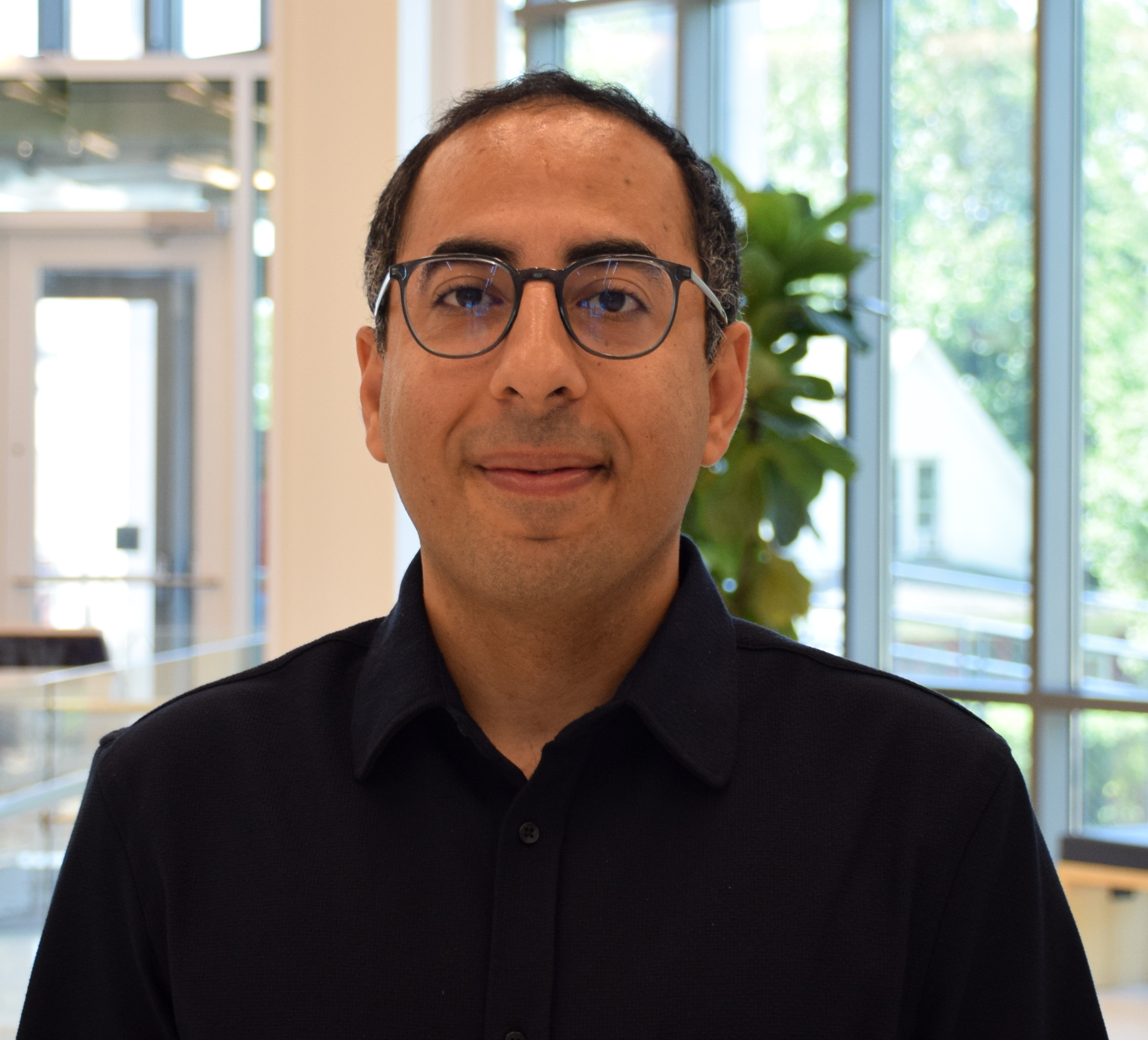
Selma Yildirim is an Associate Instructional Professor at the University of Chicago's Department of Mathematics. Her research primarily focuses on mathematical analysis, partial differential equations, spectral theory, and mathematical physics, with an emphasis on eigenvalue problems. She has taught a wide range of courses including Calculus, Mathematical Methods in Physical Sciences, Linear Algebra, and Numerical Analysis. Her pedagogical approach incorporates blended synchronous teaching formats and educational technology like GeoGebra and Python. Her publications consistently explore eigenvalue estimation techniques for operators such as the fractional Laplacian and Klein-Gordon operators, with applications to quantum mechanics and fluid dynamics. She has also developed educational resources on metacognition and data science.
Lillian Beatrix Pierce is a Professor of Mathematics at Duke University, affiliated with the Trinity College of Arts & Sciences. She holds a B.A. from Princeton University (2002), an M.Sc. from the University of Oxford (2004), and a Ph.D. from Princeton University (2009). Her research focuses on analytic number theory and harmonic analysis, exploring intersections between oscillating functions, Diophantine equations, and arithmetic structures. Pierce has been recognized with prestigious awards, including the 2023 Guggenheim Fellowship, the 2018 Sloan Research Fellowship, and the 2019 PECASE award. She leads research grants from the NSF and Simons Foundation, investigating topics like class groups, character sums, and oscillatory integrals. Her work bridges number theory and harmonic analysis, with contributions to sieve methods, maximal operators, and decoupling techniques. She serves on editorial boards for journals like the Journal of the AMS and Duke Mathematical Journal. Pierce also advocates for accessibility in mathematics, co-founding the journal Essential Number Theory to disseminate foundational research. Her academic journey includes roles as a von Neumann Fellow at the Institute for Advanced Study and a Rhodes Scholar. Notable publications include breakthroughs on the Vinogradov mean value theorem, ℓ-torsion in class groups, and polynomial Carleson operators. She actively mentors and collaborates in global research networks, fostering interdisciplinary approaches to mathematical challenges.
Nils Wilde is an Assistant Professor in the Faculty of Computer Science at Dalhousie University, Halifax, Canada. He specializes in robotics, AI, and human-computer interaction, with a focus on cognitive robotics, multi-robot systems, and human-robot interaction. His research integrates planning, optimization, control, and machine learning to develop interactive and adaptive robotic systems. His educational background includes: BSc and MSc in Computer Science or related field from Technical University Berlin (2012, 2016) PhD in Electrical and Computer Engineering from the University of Waterloo (2016–2020), co-supervised by Dana Kulić and Stephen L. Smith Postdoctoral Fellow at TU Delft (2021–2024) in the Autonomous Multi-Robots Lab with Javier Alonso-Mora Postdoctoral Fellow at the University of Waterloo’s Autonomous Systems Lab (until August 2021) Nils Wilde's research centers on enabling robots to learn from human feedback and adapt to user preferences in dynamic environments. His work spans preference learning , multi-objective planning , motion planning , task assignment in multi-robot systems , and human-robot interaction . He develops algorithms that allow robotic systems to balance competing objectives such as efficiency, safety, and user comfort, particularly in service robotics applications like hospitals and industrial facilities. His recent publications (2020–2024) demonstrate a strong trajectory in top robotics venues (T-RO, RA-L, ICRA, IROS, CoRL, CDC, WAFR), with a focus on multi-objective optimization, dynamic vehicle routing, sensor scheduling, and learning user preferences. A key theme is improving the quality of service in robotic systems by optimizing metrics like waiting times, statistical distinctness of plans, and user satisfaction, often through novel cost functions and learning frameworks. Nils is actively building a new robotics lab at Dalhousie University, with funded PhD positions and an interdisciplinary research environment. He is involved in organizing academic workshops, such as the upcoming 2025 RSS workshop on Multi-Objective Optimization and Planning in Robotics. He mentors prospective students and encourages applications from diverse backgrounds.
Ying Wu is a Professor of Physics at Duke University within the Trinity College of Arts & Sciences . His research focuses on the nonlinear dynamics of charged particle beams , coherent radiation sources , and the development of novel accelerators and light sources using advanced mathematical frameworks like Lie Algebra, Differential Algebra, and Frequency Analysis. His work has significantly enhanced understanding of nonlinear phenomena in light source storage rings and collider rings, with applications in Gamma-ray source development Free-electron laser (FEL) technology Beam stability and diagnostics VUV mirror protection systems Polarization-controlled radiation sources High-reflectivity cavity design Recent publications highlight experimental and theoretical advances in Orbital angular momentum beam generation Photonuclear cross-section measurements Storage ring lattice optimization Multi-color FEL operation Longitudinal beam instability control Differential algebra for particle dynamics Current research programs include collaborations with the High Intensity Gamma-ray Source (HIγS) facility and the Triangle Universities Nuclear Laboratory , with active grants from the Department of Energy (1997–2027), National Institutes of Health (2024–2026), and Ian's Friends Foundation (2024–2025). Ying Wu's laboratory specializes in Free-electron laser cavity design Gamma-ray beam characterization Storage ring diagnostics systems High-current electron beam control Polarization-sensitive detection Next-generation light source development
Sebastian Goette is a Professor at the Mathematical Institute of the University of Freiburg, where he serves in the Department of Pure Mathematics. His office is located in Room 339 at Ernst-Zermelo-Straße 1, D-79104 Freiburg, Germany. He teaches courses including Differential Geometry, Algebraic Topology, and Mathematics, with office hours held on Wednesdays from 13:00 to 14:00. Professor Goette's research interests center on differential geometry, with particular focus on special holonomy, G2-manifolds, scalar curvature, and topological invariants. His work bridges pure mathematics with applications in mathematical physics, particularly in areas related to string theory and gauge theory. He employs advanced techniques from algebraic topology, spectral geometry, and Riemannian geometry to investigate the structure of manifolds and their classification. Analysis of his recent publications reveals a strong emphasis on the geometry and topology of 7-manifolds with special holonomy, particularly G2-structures. His research spans both theoretical developments in invariant theory and concrete classification results for specific manifolds. The work often involves sophisticated interactions between analysis, topology, and geometry, with applications to mathematical physics. Professor Goette is actively involved in multiple research collaborations, including the Simons Collaboration on Special Holonomy in Geometry, Analysis and Physics, the Research Training Group Cohomological Methods in Geometry, and the DFG Priority Programme Geometry at infinity, where he leads project 04 on Secondary invariants of foliations. He is scheduled to take a sabbatical in summer 2025.
Asu Ozdaglar is the EECS Department Head and MathWorks Professor at MIT, serving as Deputy Dean of Academics in the MIT Schwarzman College of Computing. Her research bridges optimization theory, machine learning, and network science with societal implications, focusing on AI ethics, data-driven decision systems, and strategic interactions in networked environments. Her technical contributions include foundational work on large-scale optimization algorithms (e.g., distributed methods, first-order methods), game-theoretic models for network systems, and federated learning frameworks. Recent work addresses critical societal challenges like misinformation dynamics, data market inefficiencies, and algorithmic fairness in AI systems. Publications from 2023-2025 highlight advancements in graphon-based network game analysis, privacy-preserving data mechanisms, and multi-agent learning dynamics. She co-leads initiatives in MIT's AI+D program, emphasizing interdisciplinary education and ethical AI development. Notable institutional roles include oversight of MIT's computing education strategy and contributions to pandemic-related research on infection control through testing optimization. Her work integrates technical rigor with policy-relevant insights, influencing both academic and real-world systems.
Professor Martin Peifer is a computational cancer genomics researcher at the University of Cologne, where he leads the Department of Translational Genomics. He serves as Principal Investigator of the Peifer Lab, which focuses on developing computational methods to analyze cancer genome sequencing data. His work is deeply integrated with the Center for Data and Simulation Science and he is an active member of the International Cancer Genome Consortium and the Pan-Cancer Analysis of Whole Genomes project. Peifer's research interests center on computational approaches to understanding cancer biology, with particular emphasis on tumor evolution and genome instability mechanisms. His lab develops methods to analyze somatic genome alterations including point mutations, copy number changes, and rearrangements. They also create computational tools for integrative genome analyses, tumor evolution reconstruction, and single-cell sequencing data analysis (both RNA and DNA). His interdisciplinary team applies high-performance computing and machine learning to interpret complex cancer sequencing data, aiming to better understand tumorigenesis, clonal evolution, and therapy resistance. Analysis of Peifer's extensive publication record reveals a strong focus on neuroblastoma and lung cancer genomics, with particular attention to tumor evolution patterns and genomic instability mechanisms. His work spans multiple cancer types but maintains consistent themes of computational methodology development and application to understand cancer progression and treatment resistance. The publications demonstrate increasing sophistication in analyzing intra-tumor heterogeneity and clonal dynamics over time. Peifer leads an active research group including postdoctoral fellows (Joel Kaufmann, Dr. Stephanie Pabel, Agnieszka Rumińska) and PhD students (Magdalena Seiffert, Justinas Valiulis). His lab is involved in the Collaborative Research Center 1399 focused on Mechanisms of Drug Sensitivity and Resistance in Small Cell Lung Cancer, indicating significant grant funding and collaborative research efforts. The Peifer Lab operates at the intersection of computational biology and cancer research, maintaining an interdisciplinary approach that combines bioinformatics, machine learning, and high-performance computing to address complex questions in cancer genomics. Their work has significant implications for understanding cancer evolution and developing more effective treatment strategies.
Giorgio Ferrari is a Full Professor for Mathematical Finance at the Institute for Mathematical Economics (IMW), Faculty of Economics, Bielefeld University. His research bridges stochastic control theory with applications in economics, finance, actuarial science, and epidemiology. Education: B.Sc. and M.Sc. in Physics and Mathematical Physics from the University of Rome La Sapienza, Ph.D. in Mathematics for Economic-Financial Applications (2012). Academic Appointments: Post-Doctoral Researcher (2012–2015), Substitute Full Professor (2015), Junior Professor (W1) (2016–2017), Associate Professor (2017–2023), and Full Professor (2023–present) at Bielefeld University. Research Interests focus on Singular Stochastic Control , Optimal Stopping , and Stochastic Games , with applications to economic policy, financial markets, and epidemic modeling. His work extends to Mean-Field Games for large-scale strategic interactions and Free-Boundary Problems for investment decision-making under uncertainty. Scientific Contributions include groundbreaking publications in Stochastic Processes and their Applications , Mathematical Finance , and SIAM Journal on Control and Optimization . His research projects, such as the DFG SFB 1283 subproject C4 and the Research Training Group 2865 , address uncertainty in dynamic economies through game-theoretic and stochastic frameworks. Notable Awards: AMASES Best Young Researcher Paper (2014), YITP Research Prize (2017), and multiple research fellowships from the University of Padova. Leadership: Director of the Bielefeld Graduate School in Theoretical Sciences (2023–present) and Principal Investigator in major DFG-funded initiatives.
James R. Lee is a Professor in the Department of Computer Science at the University of Washington. His research spans theoretical computer science, probability, and geometry. He has held visiting scientist roles at Microsoft Research (2023, 2018, 2017) and participated in programs at the Simons Institute (2023, 2020, 2018, 2017, 2014). Research Interests: Algorithms, complexity theory, convex optimization, metric embeddings, spectral graph theory, probability, stochastic processes, and the interplay between discrete and continuous analysis. Teaching: Courses on modern algorithms, quantum computing, optimization theory, and spectral methods in theoretical computer science. Scientific Contributions: Developed sparsification algorithms for generalized linear models and norms with near-linear size guarantees (STOC'24, FOCS'23). Extended Cheeger-type inequalities to higher eigenvalues (STOC'12, STOC'18). Proved super-polynomial lower bounds for LP/SDP relaxations in constraint satisfaction (STOC'15, FOCS'13). Disproved Benjamini-Papasoglou conjectures on annular separators (Discrete Comp. Geom. 2024). Advanced understanding of random walks in geometric and unimodular graphs (Israel J. Math. 2023, GAFA 2023). Scientific Awards: Best Paper Award, STOC 2015
Zeev Rudnick is a Professor of Mathematics at Tel Aviv University, holding the Cissie and Aaron Beare Chair in Number Theory since 2012. He is affiliated with the School of Mathematical Sciences and the Department of Theoretical Mathematics. Education: Ph.D., Yale University, 1990 M.Sc. summa cum laude, The Hebrew University, 1985 B.Sc. summa cum laude, Bar-Ilan University, 1984 Research Interests: Professor Rudnick's work focuses on the interface of Number Theory and Mathematical Physics, particularly Quantum Chaos. His research includes eigenvalue distribution, zeros of L-functions, quantum unique ergodicity, arithmetic problems in function fields, lattice point counting, and spectral statistics. Recent publications explore zeros of modular forms, quantum models, sparse exponential sums, and spectral properties of geometric domains. Awards and Honors: Heilbronn Distinguished Visiting Professor (2019) David Rees Distinguished Visiting Fellowship (2017) Aisenstadt Chair (2014) Invited Speaker at ICM 2014 ERC Advanced Grants (2013–2024) Fellow of the AMS (2012–) AHP Distinguished Paper Award (2011) Erdős Prize (2001) Alon Fellowship (1995) Sloan Dissertation Fellowship (1989/90) Advising and Grants: He has supervised 28 Ph.D. and M.Sc. students in number theory and mathematical physics. His research is supported by an ERC Advanced Grant (RMAST, 2019–2024), following a previous ERC grant (2013–2018). He currently teaches graduate/undergraduate seminars and analytic number theory.
Matthew K. Tam is an Associate Professor at the School of Mathematics and Statistics, The University of Melbourne, specializing in Operations Research. He is also an investigator at the Melbourne Centre for Data Science and an associate investigator in the ARC Training Centre OPTIMA. PhD in Mathematics (2016) from University of Newcastle under Jonathan Borwein Postdoctoral research at University of Göttingen with RTG-2088 and Alexander von Humboldt Foundation Junior Professor at University of Göttingen (2017-2020) His research focuses on continuous optimization, monotone operator theory, and variational analysis, with applications in wavelet construction and inverse problems. Key trends include distributed algorithms, resolvent splitting, and convergence analysis for feasibility problems. Discovery Early Career Researcher Award (DECRA) Alexander von Humboldt Fellowship He collaborates with institutions like ANZIAM, Springer, and IEEE, with publications spanning mathematical optimization, harmonic analysis, and computational mathematics. His work emphasizes algorithmic design for complex data systems and real-world applications in imaging and industrial modeling.
Prof. Dr. Andreas S. Schulz is a faculty member at Technische Universität München (TUM), holding a chair in the Department of Mathematics and the Department of Business and Economics. He previously served as the Patrick J. McGovern Chair of Management and Professor of Mathematics at MIT. His research focuses on mathematical optimization, algorithm design, and their applications in logistics, production, healthcare systems, and online advertising. He has held visiting professorships at institutions such as the Sauder School of Business (UBC) and ETH Zurich. Prof. Schulz’s research bridges operations research, theoretical computer science, and economics. He develops analytical methods to solve complex decision-making problems in business, including scheduling, resource allocation, and network optimization. A key interest is applying mathematical approaches to enhance healthcare delivery and system efficiency. Education: PhD in Operations Research (MIT), prior academic roles at MIT and visiting institutions. Key Achievements: Alexander von Humboldt Professorship (2014), Humboldt Research Award (2010), Glover-Klingman Prize (2006). Research Themes: Robust optimization, approximation algorithms, scheduling theory, and algorithmic game theory. His publications span topics like integer programming, optimal transport, and congestion games. He collaborates across disciplines, emphasizing practical applications of theoretical insights.
Professor Guoyin Li is a faculty member at the School of Mathematics & Statistics , University of New South Wales (UNSW Sydney). He holds a Ph.D. from The Chinese University of Hong Kong (2007) and has been at UNSW since 2011, currently serving as Professor and Research Director. Research Interests His work spans optimization , variational analysis , and multilinear algebra , with applications in robust optimization , structural engineering , and machine learning . He specializes in nonconvex nonsmooth optimization , tensor eigenvalue problems , and exact semi-definite programming relaxations . Recent Publications His articles focus on robust optimization for structural design, nonlinear approximation techniques, and conic programming for uncertain data. Key journals include Foundations of Computational Mathematics , Mathematical Programming , and Computer Methods in Applied Mechanics and Engineering . Awards and Grants Fellow of the Australian Mathematical Society (2023) 2022 AustMS Medal 2024 Marguerite Frank Award ARC Discovery Grants (2021-2023, 2025-2027) ARC Research Hub Project (2017-2021) Professional Roles He serves on editorial boards of SIAM Journal on Optimization , Optimization Letters , and Journal of Optimization Theory and Applications , and has delivered plenary lectures at international conferences in Austria, Spain, and Canada.
Mohsen Heidari is an Assistant Professor in the Department of Computer Science at Indiana University, Bloomington. He is affiliated with the IU Quantum Science and Engineering Center (QSEc) and the NSF Center for Science of Information (CSoI). He previously held positions as a Visiting Assistant Professor at Purdue University and as a Postdoctoral Research Associate at CSoI. Ph.D. in Electrical Engineering (2019) and M.Sc. in Applied Mathematics (2017) from the University of Michigan His research focuses span quantum computing, theoretical machine learning, and information theory. Key themes include: Quantum algorithm design and sample complexity Fourier-based learning frameworks Quantum-classical duality in learning problems Information-theoretic approaches to biological systems Article trends show a strong emphasis on quantum-classical learning intersections (6/15 papers), Fourier analysis applications (5/15), and information-theoretic foundations (12/15). Notable venues include NeurIPS, IEEE Transactions, and ISIT. He directs research involving: Quantum Neural Network development Quantum measurement simulation Quantum data compression techniques Quantum algorithm implementation constraints
Fabio Furini is an Associate Professor at the Department of Computer Science, Automatics, and Management (DIAG) at Sapienza University of Rome since September 2021. Prior to this position, he served as a CNR researcher at IASI-CNR in Rome (2020-2021), Maître de Conférences at Université Paris-Dauphine, France (2013-2019), postdoctoral researcher at Université Paris-13, France (2012-2013), and research fellow at the University of Bologna (2011-2012). His educational background includes a Ph.D. in Control Engineering and Operations Research from the University of Bologna in 2011. He further obtained the Habilitation à Diriger des Recherches (HDR) in France in 2017 and the National Scientific Qualification for Full Professor in Operations Research in Italy in 2019. Fabio Furini conducts theoretical and methodological research on Combinatorial Optimization and Operations Research. His primary focus is on developing exact algorithms based on decomposition and reformulation techniques for integer linear programming problems. His research spans various applications including network optimization, graph theory, and combinatorial problems such as the maximum clique problem, bin packing problem, and vertex separator problem. His work often bridges theoretical developments with practical applications in transportation, logistics, and network security. His recent publications demonstrate a strong focus on exact algorithms for combinatorial optimization problems, particularly in network interdiction, bin packing with temporal constraints, and graph-based problems. His work consistently combines integer programming techniques with combinatorial search methods to develop novel formulations and efficient solution approaches that advance the state-of-the-art in these domains. Among his notable scientific awards are the Prime d'encadrement doctoral et de recherche (PEDR), which he received annually from 2014 to 2020, recognizing him among the top 15% of researchers in the French university system. He also holds the prestigious Habilitation à Diriger des Recherches from France (2017) and the National Scientific Qualification for Full Professor in Operations Research from Italy (2019). Fabio Furini has been actively involved in supervising PhD students and has served as principal investigator for numerous national and international research projects. His extensive network includes over 60 co-authors across European and American universities. He is also a member of the editorial boards for three prestigious international journals: Omega, Annals of Operations Research, and Discrete Applied Mathematics. His research activities include collaborations with various institutions across Europe and the United States, including Imperial College London and the University of Colorado. These collaborations have resulted in a robust research program focused on advancing the theoretical foundations and practical applications of combinatorial optimization.