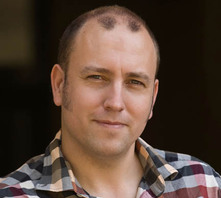
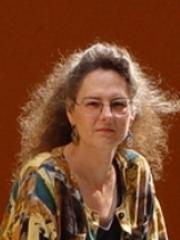
Aydogan Kars is a Senior Lecturer in the Department of History at Monash University, affiliated with the Centre for Consciousness and Contemplative Studies. His research focuses on medieval and modern Islamic mysticism, Sufi theology, and interreligious dialogue. Kars has led or co-led seven major research projects, including studies on Sufi genealogies, religious literacy, and the intersection of AI with human selfhood. He holds prestigious awards such as the Monash Faculty of Arts Dean’s Research Award (2021) and a Doctoral Fellowship from the Orient-Institut (2015). Kars actively contributes to academic governance as an editorial board member for the Journal for the Academic Study of Religion and peer reviews for journals like Religions and Journal of Islamic Ethics . His research interests span Islamic philosophy, mystical texts, and comparative theology, with notable work on apophatic theology in medieval Islam. Kars supervises PhD students and collaborates internationally on projects exploring Sufi traditions across Iran, the Ottoman Empire, and modern contexts.
Julian Millie is a Professor in Indonesian Studies at Monash University, Faculty of Arts, where he coordinates and teaches in the Indonesian Studies program. His academic work bridges anthropology, religious studies, and Southeast Asian studies, with a focus on the social and political dimensions of Islamic practice in Indonesia. His research centers on embodied Islamic routines, including preaching, ritual, and commemoration of regional Islamic figures. He has led major ARC-funded projects such as Preaching Islam: politics, performers and publics and Glocalisation and sub-national Islams , and currently leads the international project Islamic Bureaucracies and Pious Publics in Turkey and Indonesia . Anthropology of Indonesia Islamic Culture and Society Ritual and Religion Public Islam and Preaching Social Change in Muslim Societies Political Anthropology His recent publications (2023–2024) reveal a continued focus on Islamic consumerism, reformist critiques of consumption, ritual embodiment, and the politics of Islamic education. These works span journals like Asian Studies Review and edited volumes on preaching and Malay-Indonesian Islamic studies, showing strong interdisciplinary reach into sociology, cultural studies, and education policy. Julian Millie has contributed to scholarly discourse through editorial roles, including guest editorships for Asian Studies Review (2023) and International Journal of Cultural Studies (2013). His media engagements highlight his commitment to public anthropology, commenting on the state of Indonesian studies in Australia and Islamic education policy. He is actively involved in research grants, including current funding from 2020 to 2025, and has collaborated with scholars across Australia, Indonesia, and Turkey. While no formal advisees are listed, his leadership in research projects suggests mentorship and team coordination. He is a central figure in the study of contemporary Indonesian Islam, contributing to both academic and public understanding.
Peyvand Firouzeh is a Senior Lecturer in Islamic Art History at the University of Sydney, specializing in medieval and early modern Islamic art and architecture. She holds a BA and MA from the University of Art in Tehran and a MPhil/PhD from the University of Cambridge (Camb.). Her research focuses on Sufi material cultures, Indian Ocean artistic exchanges, and the intersection of art with politics and religion in the Islamic world. She is a member of the Vere Gordon Childe Centre and affiliated with the Art Gallery of New South Wales and the Sydney Asian Art Series. Dr. Firouzeh’s current projects include a monograph on Ne’matullahi shrines (Indiana UP, 2025) and a DECRA-funded study on fifteenth-century Deccan art networks. Her teaching emphasizes object-based learning, addressing contemporary issues like cultural heritage restitution and Islamophobia. She has received major grants from the Australian Research Council, Getty Foundation, and British Museum. Key Awards: DECRA (2023–2026), Getty Scholar Grant (2022–2023), Sydney Teaching Excellence Award (2022) Research Groups: Association for the Study of Persianate Societies, Power Institute’s Sydney Asian Art Series
Professor Samer Akkach is a prominent academic at the University of Adelaide's School of Architecture and Civil Engineering within the Faculty of Sciences, Engineering and Technology. He joined the university in 1993 after completing his Master of Architectural Design at UNSW (1985) and PhD at the University of Sydney (1992). As a leading scholar in architectural history, Islamic studies, and Middle Eastern urban history, he founded the Centre for Asian and Middle Eastern Architecture (CAMEA) in 1997 to address Eurocentric biases in architectural discourse. His research focuses on early modern Islamic intellectual history, urban secularism in Damascus, and pre- and post-Copernican Islamic cosmology. Key contributions include editing seminal works like Self, Place, and Imagination (1999) and De-Placing Difference (2002). CAMEA conferences such as the 2016 Ilm: Science, Religion, and Art in Islam reflect his commitment to cross-cultural architectural thinking. Akkach’s publications bridge architecture, philosophy, and cultural studies, emphasizing interdisciplinary approaches to urban form and sacred space. His work critiques conventional architectural education and advocates for inclusive, culturally sensitive design frameworks.
Associate Professor Adam Bowles is based at the School of Historical and Philosophical Inquiry, The University of Queensland. He serves as Deputy Head of School and Director of Research, with expertise in Sanskrit literature, South Asian history, religious traditions, and Mahābhārata studies. His work spans Hinduism, Buddhism, Jainism, Sikhism, and religious diversity in Queensland. Bachelor (Honours) of Arts, La Trobe University Doctor of Philosophy, La Trobe University His research focuses on Sanskrit epics, particularly the Mahābhārata, examining dharma, political discourse, and historical traditions in Hindu texts. He also investigates religious diversity in Queensland, contributing to the Queensland Atlas of Religion as General Editor. His publications include analyses of apotropaic rituals, Bhisma's royal instructions, and the Gṛhastha householder in Hindu culture. 2019–2025: Queensland Atlas of Religion (ARC Linkage Project) 2013: Society, Ideology and Nation in the Mahabharata (UQ Early Career Researcher Grant) 2010–2011: The Mahabharata: Charter Myth for Empire and Nation? (UQ New Staff Research Start-Up Fund) Adam Bowles is available for supervision, with current PhD students exploring topics like South Asian immigration, Sufism in Indonesia, and Bhutanese cultural studies. He has served as Principal or Associate Advisor to numerous completed theses on Buddhism, Hinduism, and historical narratives.
Dr. Milad Milani is a Senior Lecturer in Religious Studies at Western Sydney University and a School-based Member of the Institute for Culture and Society. He leads the Humanities Religious Studies Research Collective and co-leads the Sufi Studies Network (Monash University). He serves on the editorial boards of Sophia and the Journal for the Academic Study of Religion . From 2023–2025, he was President of the Australian Association for the Study of Religion. His expertise focuses on Islam and Sufism, contributing to UN Sustainable Development Goals related to peace and understanding. Education: PhD and BA in Religious Studies from the University of Sydney. Research Interests : Sufism and its philosophical dimensions (e.g., Heideggerian ontology) Islamic mysticism and its global manifestations Gender dynamics in Sufi traditions Sufi political thought and modernity Interfaith dialogue and civic roles of Sufi orders Publications Trends : Recent works critically examine Sufism through existential philosophy, Islamic identity in modern contexts, and gendered holiness. His analysis bridges historical narratives with contemporary challenges, emphasizing ontology, political culture, and cross-cultural influences. Awards : Includes the Australian Postgraduate Award, Early Career Research Fellowship, and recognition for contributions to religious education and community projects. Advising & Grants : Supervised 2 HDR completions. Secured grants such as the Community Grant Blacktown Arts ($29,000) and Early Career Research Fellowship ($20,000). Active in editorial roles and academic leadership. Labs/Teams : Leads the Humanities Religious Studies Research Collective and co-leads the Sufi Studies Network, fostering interdisciplinary collaborations in Sufi studies and global religious dynamics.
Dr. Roxanne Marcotte is a Full Professor in the Department of Religious Studies at the University of Quebec at Montreal and an Honorary Research Senior Fellow in Religious Studies at the University of Queensland. With over 150 publications spanning books, journal articles, and book chapters, she is a leading international scholar whose work bridges classical Islamic philosophy with contemporary Muslim communities in Western contexts. Professor Marcotte's research focuses on Islamic philosophical traditions (particularly Suhrawardi and post-Avicennan thought), gender and Islam (examining women's roles, sexuality, and feminist perspectives), and contemporary Muslim communities in Canada and Australia. Her work increasingly explores the intersection of religion and digital media, notably through her SSHRC-funded project 'Canadian Muslims Online.' She teaches courses including Introduction to Islam, Women in Islam, Sufism, Religion and Sexuality, and Arabic Philosophical Ethics. Analysis of her 15 most recent scholarly articles reveals a clear trajectory toward examining how traditional Islamic thought adapts to modern contexts. Her work demonstrates particular expertise in Persian and Arabic philosophical psychology, while her contemporary research investigates online religious discourse, Muslim identity formation in diaspora communities, and evolving interpretations of Islamic texts. The thematic consistency across decades of scholarship shows her sustained engagement with questions of religious authority, interpretation, and adaptation. Professor Marcotte has secured significant research funding, most notably a Canadian Social Sciences and Humanities Research Council (SSHRC) Insight Grant (2013-2018) for 'Canadian Muslims Online' valued at $482,194. She currently serves as editor of Religiologiques (2014-2017, 2019—) and has held previous editorial roles with Studies in Religion/Sciences Religieuses . Her academic leadership includes service as Former Vice President of the Australian Association for the Study of Religions. Through her extensive publication record and editorial work, Professor Marcotte has significantly contributed to shaping contemporary understanding of Islamic thought both in its classical manifestations and modern adaptations. Her research supervision has developed numerous scholars working at the intersection of Islamic studies, gender studies, and contemporary religious practice in Western contexts.
Dr Dzavid Haveric is a Research Fellow at the Centre for Islamic Studies and Civilisation , Charles Sturt University . He holds a PhD in Humanities (Victoria University, 2009) and MA in Cultural History (Deakin University, 2004), with additional qualifications in management and journalism. Key affiliations: Institute for Community, Ethnicity and Policy Alternatives (Victoria University) Victoria Museum (Research Associate) Public and Contextual Theology Research Centre (CSU) His research spans Islamic history , Australian Muslim identities , interfaith dialogue , and multiculturalism . Recent work includes military history ( 2024 book ) and socio-historical analyses of human rights in Islamic contexts. Selected recent publication trends: 2024 : Military service and national loyalty narratives 2023 : Islamic jurisprudence in Australian diaspora 2020 : Human rights frameworks in Islamic thought 2019 : Three major books on community building, ANZAC history, and Islamic Australia 2017 : Interfaith community development in Victoria Scientific honors include: 2023 Australian Muslim Professional of the Year (AMAA) Australian Postgraduate Award (2006) Multiple Certificates of Appreciation (2001-2011) He has contributed extensively as a journalist for SBS Radio and Bosnian community newspapers, and held roles at the Parliament of the World's Religions and Victoria Museum .
Cheryl Taylor is a literary scholar affiliated with James Cook University, specializing in Australian literature, medieval studies, and regional cultural analysis. Her work focuses on Queensland writers like Thea Astley, feminist literary criticism, and contemplative texts such as The Cloud of Unknowing. PhD thesis: Rolle, Hilton, and The Cloud of Unknowing (1998) Research spans Australian modernism, tropical cultural studies, and postcolonial themes Her publications include critical analyses of literary transitions, gender politics in Australian fiction, and interdisciplinary studies of historical and mystical texts. She has contributed book reviews to journals like Parergon and Australian Historical Studies, covering diverse topics from Renaissance poetry to Sufism. Though no formal awards or teaching roles are explicitly documented, her scholarship highlights regional identity in literature and the interplay between poetry and fiction in Queensland contexts.
Dr David Brophy is a Senior Lecturer in Modern Chinese History at the University of Sydney, affiliated with the China Studies Centre. He holds an ARC Discovery Early Career Research Fellowship for his project on 'Empire and Religion in Early Modern Inner Asia.' His research focuses on the social and political history of China’s northwest, particularly Xinjiang Uyghur Autonomous Region, and its connections with the Islamic and Russian/Soviet worlds. Brophy completed his MA and PhD at Harvard University before joining the University of Sydney in 2013. Research Interests: History of Qing and Republican China Early Modern Eurasia Colonialism and National Movements Islamic Studies (Sufism) Teaching: Courses include 'China in the Nineteenth-Century World,' 'Modern Chinese History,' and 'Beyond the Great Wall: China’s Frontiers.' He supervises research on modern Chinese history, Xinjiang politics, and Eurasian empires. Awards: ARC Discovery Early Career Research Fellowship (2017–present) Labs/Teams: Active member of the China Studies Centre. His work bridges historical analysis with contemporary geopolitical discourse, evidenced by his media engagement on Sino-Australian relations.
Dr. Zahra Taheri is a Lecturer and Program Convenor of Persian Studies at the Australian National University (ANU), within the Centre for Arab & Islamic Studies. She has held academic roles at institutions including UC Berkeley (USA) and Tokyo University of Foreign Studies (Japan). Her expertise spans Persian language, literature, and culture, with a focus on Sufism, women's studies, and modern Persian literature. Dr. Taheri holds a PhD in Near Eastern Studies from UC Berkeley and is a Senior Fellow of the Higher Education Academy (UK). Her research has been supported by the Bodleian Library Fellowship (2016–2017). Notable publications include Hozur-e Peyda va Penhan-e Zan dar Mutun-e Sufiyyeh (2007) and Sokut-e Kohan-e 'Ayene-haa (2016), examining women's roles in Sufi texts and Iranian literary history. She is currently researching women in Persian ethical texts. Her contributions extend to poetry, with collections such as Milad and Pegaah-e Nokhostin , and her work on online Persian language pedagogy at ANU.
Professor Carole M. Cusack is a distinguished scholar in Religious Studies at the University of Sydney's Faculty of Arts and Social Sciences. She has been teaching in the Studies in Religion department since 1989, becoming a full-time staff member in 1996, and currently holds the position of Professor of Religious Studies. Her extensive academic career includes significant administrative roles such as Pro-Dean (Teaching and Learning) for 2013-2014, Director of Academic Support and Development, Associate Dean (Undergraduate), and Degree Director of the Bachelor of Arts. Professor Cusack's educational background includes a Bachelor of Arts (Honours) in Religious Studies and English Literature from the University of Sydney (1986), a PhD in Studies in Religion (1996), and a Master of Education (Educational Psychology) (2001). Her academic journey reflects a deep commitment to both religious scholarship and educational theory. Her research spans a remarkably diverse range of religious phenomena, with particular expertise in medieval European religion, religious conversion, medieval and modern Paganism, contemporary religious trends, alternative spiritualities, and new religious movements. Professor Cusack has made significant contributions to the study of Western esotericism, European mythology, religion and new media, pilgrimage and tourism, witchcraft and magic, and contemporary Christianity. Her interdisciplinary approach bridges historical, sociological, and anthropological perspectives on religion. Professor Cusack's extensive publication record reveals consistent engagement with both historical religious traditions and emerging spiritual movements. Her work demonstrates a particular interest in the intersection of religion with literature, media, and popular culture. She has published extensively on invented religions, religious conversion, and the adaptation of religious traditions in modern contexts. Her research shows a consistent pattern of exploring the boundaries between established religious traditions and alternative spiritualities, often with attention to how these phenomena are represented in media and popular culture. Vice-Chancellor's Award for Excellence in Higher Degree Research Supervision (2010) CHASS Excellence in Research Higher Degree Supervision Award (2006) Faculty of Arts Excellence in Teaching Award (2004) Professor Cusack has supervised numerous research postgraduates and Honours students across diverse topics including medieval religion, New Age studies, European mythology, religious conversion, religion and new media, Pagan Studies, pilgrimage and tourism, witchcraft and magic, new religious movements, contemporary Christianity, and civil religion. She has served on eleven journal editorial boards as of 2018, demonstrating her significant standing in the academic community. Her leadership extends to various university initiatives and professional associations, including the Australia and New Zealand Association for Medieval and Early Modern Studies, the Sydney Society for Scottish History, and the British Association for the Study of Religion. Professor Cusack maintains active engagement with international scholarly networks, particularly with the University of Edinburgh where she has taken Special Studies Program Leave and taught on exchange. Her work with the Religious Studies Project as a Trustee and her regional directorship of the 'Australian Religions and Spiritual Traditions' Special Project for the World Religions and Spirituality Project demonstrate her commitment to collaborative, international scholarship in religious studies.