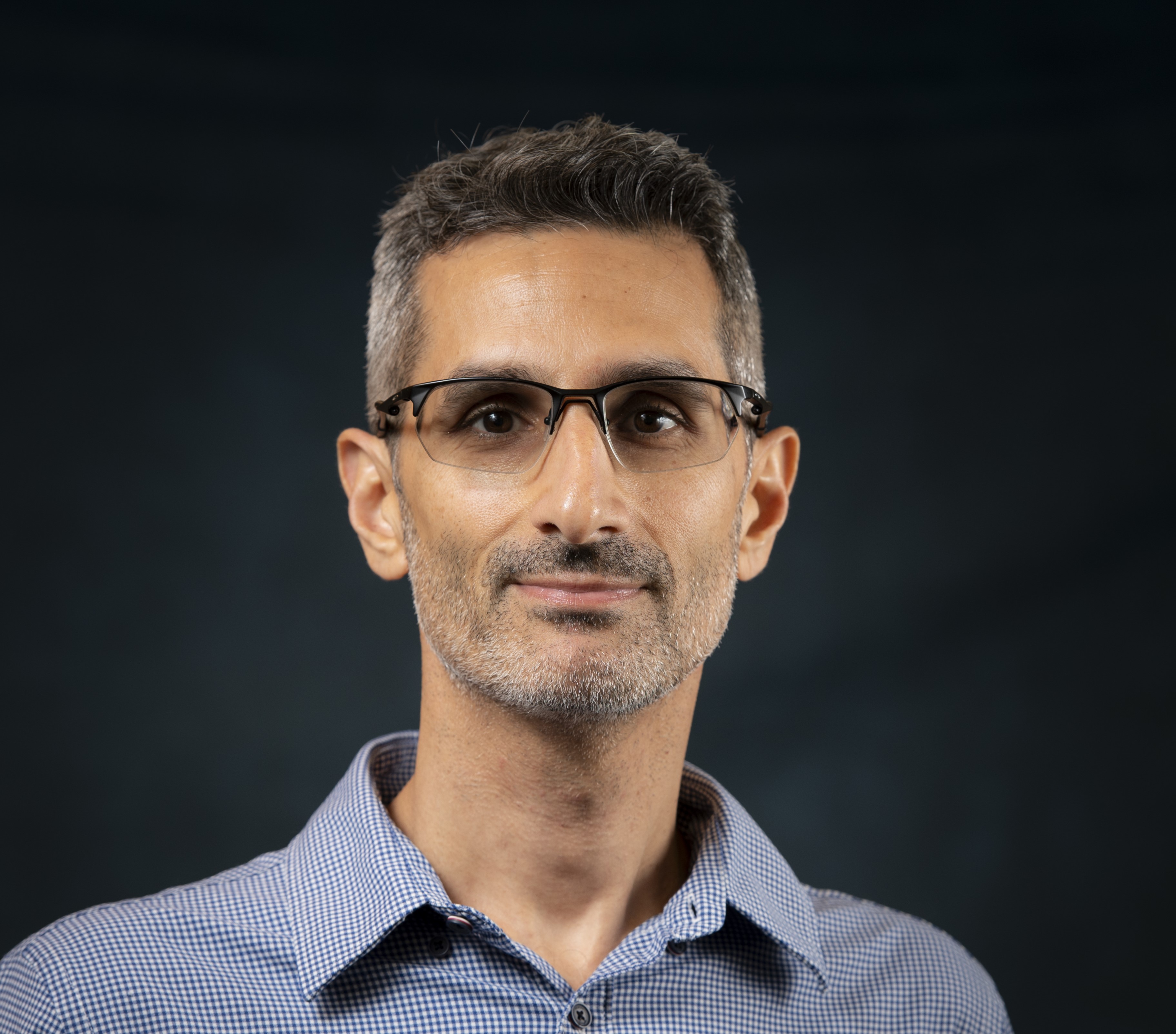
Pietro Rosatti is a Research Fellow at the Department of Industrial Engineering, University of Trento, specializing in electromagnetic systems and artificial intelligence applications. His research focuses on: Antenna Design for automotive radar and communication systems Microwave Engineering and mm-wave technologies Artificial Intelligence integration in electromagnetic problem-solving Inverse Problems and electromagnetic imaging System-by-Design optimization frameworks Real-world applications in medical imaging and radar systems Analysis of his 17 publications (2018-2025) reveals a dominant trend toward AI-driven solutions for electromagnetic challenges, particularly in automotive radar antenna design (77 GHz systems), microwave medical imaging, and ground-penetrating radar. His work consistently employs multi-objective evolutionary optimization and system-by-design methodologies to overcome the curse of dimensionality in inverse scattering problems, with increasing emphasis on real-time deep learning frameworks since 2021.
Kevin Rosso is a Laboratory Fellow and the associate director of the Physical Sciences Division for Geochemistry at Pacific Northwest National Laboratory (PNNL). He received his BS degree in geological sciences from Cal Poly at Pomona, California, in 1992, and his MS and PhD degrees in geochemistry from Virginia Tech in 1994 and 1998. With over 340 publications and an H-index of 63, Dr. Rosso is a leading figure in molecular geochemistry and surface science. Dr. Rosso's educational background includes: Ph.D., Geochemistry, Virginia Polytechnic Institute and State University M.S., Geochemistry, Virginia Polytechnic Institute and State University B.S. Geological Sciences, California State Polytechnic University, Pomona Dr. Rosso is best known for his pioneering research on electron transfer reactions between aqueous ions, mineral surfaces, and bacterial enzymes. His research spans from fundamental topics such as metal sulfide oxidation, bacterial reduction of metal oxides, contaminant interactions with clay minerals, and mechanisms of crystal growth and dissolution, to applied areas including geologic carbon sequestration, stress corrosion cracking in alloys, performance optimization of lithium battery materials, and the design of semiconductor materials for solar photocatalysis. His work has been instrumental in establishing the field of molecular geochemistry through the application of advanced tools like scanning probe microscopy, quantum mechanical molecular simulations, and massively parallel supercomputers. Analysis of Dr. Rosso's recent publications (2022-2023) reveals a continued focus on mineral-water interfaces, electron transfer processes, and materials for energy applications. His research spans multiple disciplines including geochemistry, materials science, surface chemistry, and computational chemistry. Key themes include aluminum speciation in alkaline solutions, mineral dissolution and precipitation mechanisms, electron transport in metal oxides, and the development of advanced characterization methods for understanding complex geochemical systems. Dr. Rosso has received numerous prestigious awards recognizing his contributions to geochemistry: Science Innovation Award (Stumm Medal), European Association of Geochemistry, 2020 Geochemistry Fellow, 2020 Member, Washington State Academy of Sciences, 2019 Visiting Distinguished Scholar, Durham University, 2019-2020 Life Fellow of the Mineralogical Society of America Life Fellow of The Geochemical Society Life Fellow of The European Association of Geochemistry Mineralogical Society's Hallimond Lectureship, 2016 Mineralogical Society of America Award, 2004 Dr. Rosso leads the U.S. Department of Energy's major fundamental geochemistry program at PNNL and is the founding director of the Center for Understanding Subsurface Signals and Permeability (CUSSP), a multi-institutional DOE Energy Earthshot Research Center launched in 2023. He has mentored a research group of approximately 35 PhD students, postdoctoral fellows, and staff scientists. His laboratory work is supported by significant DOE funding for research on geochemical processes relevant to energy production, environmental remediation, and nuclear waste management. Dr. Rosso directs the Center for Understanding Subsurface Signals and Permeability (CUSSP), which focuses on understanding subsurface processes critical for carbon sequestration, nuclear waste disposal, and geothermal energy. His team combines experimental and computational approaches to study mineral-fluid interactions at multiple scales, from molecular to field levels. The laboratory maintains state-of-the-art facilities for surface characterization, spectroscopy, and high-performance computing simulations.
Grant Ferguson is a Professor at the University of Saskatchewan with a joint appointment in the School of Environment and Sustainability, and holds adjunct professor positions at the University of Arizona and the University of Waterloo. He earned his B.Sc. from the University of Waterloo and Ph.D. from the University of Manitoba, establishing a foundation in hydrogeological sciences. His research centers on deep groundwater systems, regional hydrogeology, and sustainable groundwater resource development. These investigations address critical water security challenges through advanced modeling of subsurface flow dynamics and resource management frameworks under climate change pressures, contributing significantly to global water policy discussions. Dr. Ferguson's scholarly impact is recognized through prestigious honors including: IAH CNC’s Long-Term Service Award AGU Editors’ Citation for Excellence in Refereeing Hydrogeology Journal Editor’s Choice designation AGU Research Highlights recognition Groundwater Highly Cited Paper status 2025 National Ground Water Association Darcy Lecturer appointment As an active mentor, he guides graduate students in hydrogeological research while serving the international community through leadership roles. Currently Vice President for North America at the International Association of Hydrogeologists (IAH), he spearheads initiatives connecting Canadian, US, and Mexican groundwater chapters while expanding the Early Career Hydrogeologists Network across the continent.
Prof. Sorin Pop is a Professor in the Department of Mathematics and Computer Science at Eindhoven University of Technology (TU/e). His research focuses on numerical analysis and computational methods for multiphase flow in porous media, with emphasis on two-phase flow dynamics, dynamic capillarity, and hysteresis effects. He has published extensively in journals like Computer Methods in Applied Mechanics and Engineering and Studies in Applied Mathematics . His work involves developing and analyzing numerical schemes for complex flow models, including domain decomposition methods and iterative solvers for nonlinear systems. Pop collaborates internationally on projects involving porous media applications in environmental and industrial contexts. He has supervised 21 academic works and contributed to over 117 research outputs since 2000.
Dr. Victor Bense is an Associate Professor in Hydrology and Environmental Hydraulics at Wageningen University & Research. His expertise spans groundwater flow dynamics, permafrost hydrogeology, and numerical modeling of subsurface systems. He leads interdisciplinary projects addressing climate change impacts, groundwater management, and coral reef health in the Caribbean. Research interests include groundwater extraction effects, thermal regimes, and sustainable resource management. He has supervised multiple PhD candidates, including studies on managed aquifer recharge in Bangladesh, hydrogeological characterization of Gorongosa National Park, and permafrost dynamics in Arctic regions. His work integrates field data, numerical modeling, and environmental tracers to address complex hydrogeological challenges. Key contributions include modeling groundwater systems in Iran's mining regions, analyzing Caribbean coral reef water composition, and developing tools for basin-scale groundwater availability projections. Bense actively engages in knowledge exchange, contributing to media discussions on water scarcity and sustainable policy development.
Ran Drori is an Associate Professor and Department Chair in the Chemistry and Biochemistry Department at Yeshiva University . He holds a B.Sc. in Biotechnology from Tel-Hai College (2007), an M.Sc. in Plant Pathology from The Hebrew University of Jerusalem (2009), and a Ph.D. in Biochemistry from The Hebrew University of Jerusalem (2015). His postdoctoral research at NYU’s Chemistry Department focused on synthetic ice growth inhibitors and ice growth dynamics under H 2 O/D 2 O exchange. Dr. Drori’s research interests center on ice-binding proteins , clathrate hydrates , and microfluidic technologies . He investigates how these proteins inhibit ice growth in biological and non-biological systems, with applications in cryopreservation, food science, and energy storage. His lab employs microfluidics and advanced imaging techniques like micro-thermography to study ice crystal dynamics. Key recent publications highlight his work on antifreeze protein mechanisms, methane clathrate inhibition, and ice growth modulation. His research bridges biochemistry, physics, and engineering, aiming to uncover fundamental principles of ice-protein interactions and develop novel materials for real-world applications. Dr. Drori teaches undergraduate courses in biochemistry and organic chemistry at Yeshiva University. His lab, the Drori Lab, is located at Stanton Hall on the Beren campus.
Dr. Hugo Putuhena is a Research Fellow in Offshore Renewable Energy (ORE) specializing in spatial mapping at the University of Southampton. He is affiliated with the Royal Academy of Engineering (RAEng) Chair Centre of Excellence for Intelligent & Resilient Ocean Engineering (IROE). His work focuses on identifying suitable spaces for offshore renewable energy by integrating anthropogenic, ecological, geoscience, and met-ocean factors. He holds a PhD in Marine Geoscience from the University of Manchester (2020) and has contributed to projects like EcoWind, BOWIE, DASA cables, and Geospatial HEIF. Education: BSc in Physical Oceanography (Bandung Institute of Technology, 2013), MSc in Marine Geophysics (University of Southampton, 2015), PhD in Marine Geoscience (University of Manchester, 2020). Research Interests: Geospatial assessment, seabed/ocean digitalisation, and offshore renewable energy. He has published extensively on spatial constraints for offshore wind, geospatial tools, and net-zero strategies. Projects: Active in multidisciplinary initiatives such as NERC-Crown Estate EcoWind and Benthic-Offshore Wind Interactions (BOWIE). Collaborates with the ORE Supergen Hub and IROE to address challenges in floating offshore wind and seabed characterization. Labs/Teams: Member of Southampton Marine and Maritime Institute and Southampton Geospatial groups.
Andres Goza is an Assistant Professor in the Department of Aerospace Engineering at the University of Illinois at Urbana-Champaign. He holds affiliate appointments in Computational Science and Engineering and Mechanical Science and Engineering. His research focuses on unsteady aerodynamics, fluid-structure interaction, and bio-inspired flow control. Goza's work combines computational methods and experimental insights to design passive and adaptive flow control strategies for aerodynamic systems, with applications in micro aerial vehicles and energy harvesting. Education: PhD (Mechanical Engineering, Caltech, 2018), MS (Mechanical Engineering, Caltech, 2013), BS (Mechanical Engineering, Rice University, 2011). Key areas of research include covert feather-inspired flaps, phononic materials for flow control, and vortex dynamics. Recent work explores reinforcement learning for hybrid flow control and surface morphing techniques at stalled angles of attack.
Rebecca Allen is an Associate Professor at the Department of Built Environment, Faculty of Technology, Art and Design at OsloMet – Oslo Metropolitan University. Her work focuses on sustainable built environments and CO2 storage solutions, emphasizing computational modeling for geoscientific challenges. She is affiliated with the Sustainable Built Environment (SustainaBuilt) research group. Her research integrates advanced simulation tools like MATLAB and Python to address critical issues in porous media analysis, heat pump thermodynamics, and CO2 storage optimization. Notable contributions include developing algorithms for quantifying effective void space in porous pavements and modeling vapor compression cycles for residential heating systems. Allen’s publications span topics such as parameter uncertainty in CO2 storage capacity estimates, formation categorization for carbon sequestration, and innovative stormwater management strategies using porous asphalt. She actively participates in international conferences like the International Conference on Net-Zero Built Environment and Scandinavian Simulation Society events. Her interdisciplinary approach bridges environmental engineering, geology, and computational methods to advance climate resilience and sustainable infrastructure. Collaborations include projects on the Norwegian Continental Shelf and public education initiatives about carbon storage technologies.
Dr. Asheesh Kumar is a Researcher at the CSIR-Indian Institute of Petroleum. Previously, he held positions as a Post-Doctoral Research Fellow at the National University of Singapore (2016–2018) and a Research Associate at the University of Western Australia (2018–present). He specializes in gas hydrate technology, CO₂ capture/sequestration, and flow assurance. His work focuses on energy storage solutions, including solidified natural gas (SNG) and hydrate-based carbon capture. Education: M.Tech., Indian Institute of Technology Roorkee (2010) Ph.D., CSIR-National Chemical Laboratory, Pune (2016) Research Interests: His research spans gas hydrate formation kinetics, CO₂ sequestration in marine sediments, and sustainable energy storage. He has pioneered studies on additives to enhance hydrate stability and reduce environmental impact. Notable contributions include the use of biopolymers and recycled materials in energy systems. Key Achievements: Two of his publications are listed as highly cited by Essential Science Indicators. He received the NCL RF-Keerti Sangoram Memorial Endowment Award (2016) for excellence in research. Labs & Teams: Associated with the Fluid Science and Resources group, focusing on advanced hydrate-based technologies and sustainable resource management.
Dr. Vanille Ritz is a postdoctoral researcher at the Swiss Seismological Service (SED), ETH Zurich, with a split position between the Modelling Group and the GeoBest team. Her expertise lies in developing hydro-geomechanical and statistical models to understand and forecast induced seismicity in geothermal systems. She focuses on projects like GeoBest, which provides seismological support for Swiss geothermal energy initiatives, and has been a key contact for cantons Vaud, Jura, and Geneva. She holds a Ph.D. from ETH Zurich (2023) and a M.Sc. in Seismology from Université de Strasbourg (2017). Research interests include induced seismicity mitigation, geothermal reservoir engineering, and real-time seismic monitoring. Her work integrates data-driven approaches with physics-based models to optimize energy production while minimizing seismic risks. Notable contributions include the 'Transient Evolution of Earthquake Size Distributions' study (2022), recognized with the SSA Student Award. Education: Ph.D., ETH Zurich (2018–2023): Modelling Induced Seismicity in Deep Geothermal Systems M.Sc., Université de Strasbourg (2015–2017): Seismology Geophysical Engineering, Ecole et Observatoire des Sciences de la Terre (2014–2017) Professional activities include leadership in projects like DEEP (2021–2024), COSEISMIQ (2018–2021), and DESTRESS (2017–2018), advancing de-risking strategies for geothermal energy. Awards include the 2023 SSA Student Presentation Award for seismic risk indicator research. Her work bridges geoscience and engineering, emphasizing collaboration with cantonal governments and energy stakeholders to ensure sustainable geothermal development. Current efforts focus on synthetic benchmark datasets and real-time forecasting tools for induced seismicity management.
Dr. Neil Burnside serves as a Senior Lecturer and Chancellor's Fellow in the Department of Civil and Environmental Engineering, Faculty of Engineering, University of Strathclyde. His academic role integrates teaching with leadership in subsurface energy research, focusing on sustainable decarbonization through geothermal systems and carbon management. He actively contributes to institutional strategic themes in energy transition and environmental sustainability. Burnside's research spans geothermal energy systems, carbon capture and storage, and legacy mine infrastructure repurposing. He investigates climate resilience of minewater resources, thermal energy storage in flooded shafts, and GIS-based site optimization for geothermal applications. His work bridges earth sciences, engineering, and environmental policy to address technical and systemic barriers in renewable energy deployment, with strong alignment to UN Sustainable Development Goals 7 (Affordable and Clean Energy) and 13 (Climate Action). Recent publications (2023-2026) reveal concentrated expertise in mine water geothermal systems, evidenced by projects like the International Hot Sedimentary Aquifer Database and Scottish coalfield shaft assessments. Key trends include de-risking geothermal development through success/failure analysis, modeling thermal storage for grid balancing, and evaluating climate change impacts on resource viability. This body of work demonstrates consistent interdisciplinary methodology integrating field data, computational modeling, and policy frameworks. Awards and Honors: GeoNetZero PhD Studentship Recipient (2021) Burnside mentors PhD students including Clodagh Gillen and leads significant research initiatives: Principal Investigator for STORMIN (2025 Knowledge Exchange project on mine shaft thermal storage) Principal Investigator for climate change impact study on minewater geothermal (2022-2026) Co-investigator on GigaWattHour STEaM project (2022-2026) and EPSRC thermal characterization equipment grant He collaborates extensively through Strathclyde's Institute for Energy and Environment, participating in EPSRC Critical Mass workshops (2025) and international consortia. His work drives practical engineering solutions for decarbonizing heating/cooling systems while addressing geological and climate uncertainties in subsurface energy applications.
Prof. Dr. Wolfgang Bach serves as a Professor of Petrology at the MARUM Center for Marine Environmental Sciences (University of Bremen), leading the Petrology of the Ocean Crust research group since 2005. His work bridges magmatic petrology and inorganic geochemistry with a focus on global hydrothermal systems. PhD (1996) & Diplom (1991) from Justus Liebig University Giessen Woods Hole Oceanographic Institution (1996-2005) as Postdoc/Research Associate IODP leadership roles (2003-2005) and ECORD Science Operator collaboration His research examines ocean crust formation/destruction cycles , including seafloor spreading, hydrothermal alteration, mantle recycling, and chemosynthesis-driven ecosystems. Key methods involve: Micromineralogy of altered basalts and serpentinites Geochemical analysis (ICP-MS, laser ablation, fluid inclusion studies) Thermodynamic modeling of fluid-rock-microbe interactions Recent publications (2024-2025) highlight advances in CO2 sequestration in marine basalts , hydrothermal sulfur cycling , and mantle-derived hydrogen production across diverse settings from Arctic ridges to subduction zones. Collaborative work spans 30+ international institutions and integrates data from IODP expeditions and ECORD programs . He contributes to ocean drilling infrastructure at the University of Bremen, maintains the MARUM Research Academy training initiatives, and advises on subseafloor biosphere exploration through projects like IODP Expedition 336 and Surtsey volcano monitoring.
Ian Clark is an Adjunct Associate Professor at UniSA STEM (University of South Australia). His work focuses on groundwater resource management, sustainability, and geospatial analysis in arid and semi-arid regions. He employs GIS, remote sensing, and isotopic methods to address data-scarce hydrological challenges. Current research includes groundwater potential mapping in fractured rock using ensemble machine learning and geospatial techniques. Prior studies examined groundwater-dependent ecosystems and subsurface heterogeneity in the Flinders Ranges and Great Artesian Basin. His pedagogical work explores systems thinking in sustainability education, aiming to balance environmental, economic, and social perspectives. Collaborations span institutions like Flinders University and CSIRO. Recent publications highlight applications of GIS, quantitative morphometric analysis, and remote sensing for water resource protection.
Emily Graham is a quantitative ecosystem ecologist at Pacific Northwest National Laboratory (PNNL) and an Adjunct Professor at the School of Biological Sciences , Washington State University. Her work integrates molecular biology with ecosystem ecology to study responses to disturbances like drought, wildfire, and urbanization. PhD in Biogeoscience, University of Colorado at Boulder (2015) MS in Biogeoscience, University of Colorado at Boulder (2012) BS in Biology, University of North Carolina at Chapel Hill (2009) Graham’s research explores microbial and biogeochemical mechanisms driving ecosystem resilience. Key projects include the Molecular Observation Network (MONet) at EMSL and global crowdsourced disturbance ecology frameworks. Her recent publications focus on soil viromes, microbial assembly processes, and hydrological-biogeochemical linkages. Her work spans interdisciplinary domains, including soil microbiomes , hyporheic zone biogeochemistry , and climate change impacts . She collaborates on the WHONDRS project and contributes to biogeochemical modeling and metabolomics integration.