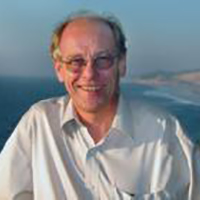
Maura Puerto is a Research Scientist at Rice University's Department of Chemical and Biomolecular Engineering, affiliated with the George R. Brown School of Engineering. Previously, she spent 25 years at Exxon Mobil before transitioning to academia. Her expertise focuses on surfactant applications in porous media processes, particularly in enhanced oil recovery and environmental remediation. She contributes to projects in the Hirasaki and Miller labs. Dr. Puerto holds a chemical engineering degree from Oriente University in Cuba. Her accolades include the SPE Cedric K. Ferguson Award and an Exxon Chemicals Quality Award, recognizing her technical contributions. Her work bridges industrial experience with academic research, addressing challenges in energy and environmental engineering. Though not explicitly listed, her research interests likely involve interdisciplinary approaches to sustainable resource management and subsurface engineering. She collaborates actively within Rice's engineering ecosystem but no formal advisees or grants are detailed in the provided text.
Alan Hunter is a Professor in Autonomous Systems at the University of Bath's Department of Mechanical Engineering. He serves as Deputy Head of Department for Workload and Wellbeing and is affiliated with the Water Innovation & Research Centre (WIRC) and the UKRI CDT in Accountable, Responsible and Transparent AI. His research focuses on underwater acoustics, signal processing, imaging, and machine intelligence, with applications in sonar-based remote sensing and marine robotics. Education: B.E. (Hons I) in Electrical and Electronic Engineering from the University of Canterbury (2001), PhD in Synthetic Aperture Sonar (SAS) from the same institution (2006). Career highlights include roles at the University of Bristol (2007-2010), TNO Netherlands (2010-2014), and NATO CMRE (2014). He has led projects on sub-sediment imaging, autonomous mine-hunting systems, and precision navigation algorithms. Research Interests: • Underwater Acoustics & Sonar Imaging • Autonomous Underwater Vehicles • Machine Learning for Acoustic Data Analysis • Non-Destructive Inspection via Ultrasound • Sustainable Coastal Protection (via UN SDG contributions) Active Projects (2023-2025+): - Noise Network Plus : Engineering a Quieter Future (EPSRC) - TESSMEX SR 4 : Naval Mine-Hunting Technology (Defence Lab) - Decision-Making with Ambiguities : Legal AI for Robotics (EPSRC) Professional Affiliations: • Senior Member, IEEE • Associate Editor, IEEE Journal of Oceanic Engineering • Collaborations with NATO, TNO, and UK Defence Orgs. Labs & Teams: • Robotics and Autonomous Systems Lab • Centre for Space, Atmospheric and Oceanic Science • WIRC @ Bath (Water Innovation Hub)
Kathy Fontaine serves as Senior Lecturer in Information Technology and Web Science at Rensselaer Polytechnic Institute and Program Manager for the RPI-IBM AI Research Collaboration. She joined RPI in 2014 after 25 years at NASA Goddard Space Flight Center where she developed international data access policies through CEOS WGISS, GEO, and USGEO. Her educational background includes: B.S. in Physics with Astrophysics Option from New Mexico Institute of Mining and Technology (1984) M.A. in Science, Technology and Public Policy from The George Washington University (2002) Ph.D. in Public Policy and Public Administration from Walden University (2013) Dr. Fontaine's research integrates data science policy with ethical frameworks, focusing on international data sharing cultures and volunteer organization dynamics. She develops courses like Big Data Policy and Ethical Informatics that address data scientists' societal responsibilities. Her work examines how policy implementations affect global earth observation systems and research data ecosystems, with particular attention to cross-cultural collaboration challenges in scientific consortia. Analysis of her publications reveals strong interdisciplinary connections between earth sciences and computer science, with emerging trends in data dexterity training, knowledge graph applications for social equity, and mineral inventory data legacies. Her research increasingly bridges technical data infrastructure with ethical considerations in data sharing. Dr. Fontaine actively contributes to scientific communities through the Earth Science Information Partners (ESIP), where she serves on GEO's Programme Board, and maintains affiliations with AGU, ACM Web Science, IEEE GRSS, and IEEE SSIT. Her current leadership in the RPI-IBM AI Research Collaboration extends her mission to develop responsible AI frameworks.
Abdulkadir C. Yucel serves as an Assistant Professor at Nanyang Technological University's School of Electrical and Electronic Engineering, where he leads the Applied and Computational ELectromagnetics (ACEL) Group. His research spans applied electromagnetics, radar imaging, and AI-driven electromagnetic analysis with applications in smart cities, neurotechnology, and quantum systems. Education: Ph.D. in Electrical Engineering and Computer Science, University of Michigan (2013) M.S. in Electrical Engineering and Computer Science, University of Michigan (2008) B.S. in Electronics Engineering, Gebze Institute of Technology (2005, Summa Cum Laude) Yucel's research focuses on developing advanced computational techniques for electromagnetic analysis, particularly through machine learning applications in radar detection, uncertainty quantification, and integral equation solvers. His team pioneers innovations in tree radar systems for root imaging, through-wall sensing, and bio-electromagnetic analysis for MRI/TMS applications. Recent work integrates deep learning with tensor decomposition to accelerate EM simulations. Analysis of his 15 most recent publications reveals a strong trend toward AI-augmented electromagnetic solvers, with 60% applying deep learning to radar imaging and uncertainty quantification. Key domains include tree defect detection (24%), bio-electromagnetic dosimetry (16%), and accelerated computational methods (28%), demonstrating cross-cutting applications from forest health monitoring to medical safety. Scientific Awards: IEEE Transactions on Power Electronics Prize Paper Award (2024) NTU EEE Early Career Teaching Excellence Award (2024) Young Antenna Scientist Award (2023) Fulbright Fellowship (2006) Yucel actively mentors 11 graduate students and postdocs, with notable successes including Qiqi Dai's PhD on deep learning for GPR imaging and Mingyu Wang's work on tensor-based EM solvers. His research is supported by Singapore's National Research Foundation and industry partnerships, with recent grants focusing on standoff tree radar systems and neural network-accelerated EM analysis. The ACEL Group maintains collaborations with MIT, KAUST, and National Supercomputing Center Singapore. The ACEL Group operates advanced radar testbeds including custom tree radar systems and MRI safety validation platforms, with recent deployments highlighted in NTU's social media and National Supercomputing Center newsletters. Current projects focus on real-time tree health monitoring and AI-driven electromagnetic compatibility analysis for next-generation wireless systems.
Keith D. Koper is a Professor in the Department of Geology & Geophysics at the University of Utah and serves as Director of the University of Utah Seismograph Stations (UUSS). He is also the editor-in-chief of The Seismic Record . His work integrates academic research with operational seismic monitoring and public safety initiatives across Utah and the Intermountain West. Education: PhD in Geophysics, Washington University, 1998 BA in Math, Geology, and ISP, Northwestern University, 1993 Dr. Koper's research focuses on array seismology, forensic seismology, deep Earth structure (especially the inner core), earthquake rupture imaging, ambient seismic noise, and seismic hazards in the Intermountain West, including mining-induced and urban earthquakes. His work combines observational seismology with advanced signal processing and machine learning techniques to improve detection, discrimination, and imaging capabilities. He has led or contributed to major projects involving the Wasatch Front, Yellowstone, and regional seismic networks. His recent research emphasizes machine learning for earthquake detection, high-resolution relocation of aftershock sequences (e.g., Magna 2020, Bluffdale 2019), microseism generation in lakes, and fine-scale imaging of the Earth's inner core using seismic reflections. His studies often involve interdisciplinary collaboration, particularly with mining engineering and geodesy. Dr. Koper's research has been consistently funded by federal and state agencies, including the National Science Foundation (NSF), U.S. Geological Survey (USGS), Department of Energy (DOE), Air Force Research Laboratory (AFRL), and the Utah Department of Public Safety. His publications reflect a strong trend toward integrating computational methods with traditional seismological analysis to tackle complex problems in both natural and induced seismicity. Scientific Service and Leadership: Editor-in-Chief, The Seismic Record Director, University of Utah Seismograph Stations Secretary, U.S. Air Force Seismic Review Panel Former Chair and Vice-Chair, Utah Seismic Safety Commission Dr. Koper mentors graduate students in seismology and geophysics, including recent advisees Sean Hutchings and Alysha Armstrong. His research group actively engages in both fundamental and applied seismological research, with strong ties to national labs such as Sandia. The group is involved in deploying portable seismic arrays, analyzing large datasets, and developing new algorithms for event detection and classification. The University of Utah Seismograph Stations, under his leadership, plays a critical role in monitoring seismicity in Utah and Yellowstone, producing real-time earthquake information, ShakeMaps, and public outreach materials. The station also contributes to national and international efforts in nuclear test monitoring and volcanic hazard assessment.
Dr. J. David Frost is the Elizabeth and Bill Higginbotham Professor of Civil Engineering at Georgia Institute of Technology and a Regents' Entrepreneur. He has held academic positions at Purdue University and Georgia Tech, with a focus on geotechnical engineering and disaster response. As founding director of Georgia Tech's Savannah campus and head of the Geosystems Engineering Group, Frost has shaped academic programs and research initiatives. Education: B.A.I and B.A. in Civil Engineering and Mathematics, Trinity College, Dublin (1980) M.S. and Ph.D. in Civil Engineering, Purdue University (1986, 1989) Research Interests span geotechnical engineering, bio-inspired design, and disaster resilience. His work emphasizes digital data collection systems for subsurface hazard assessment, soil-polymeric material interactions, and geotechnical responses to earthquakes, hurricanes, and anthropogenic disasters. Recent projects integrate ant nest geometry, plant root mechanics, and geosynthetic innovations into infrastructure solutions. Scientific Contributions include two U.S. patents for subsurface data systems, leadership in NSF-funded post-disaster reconnaissance missions (e.g., 9/11, Türkiye earthquakes), and co-founding the Geotechnical Extreme Events Reconnaissance (GEER) Association. His articles reflect expertise in bio-inspired geotechnics, machine learning for disaster modeling, and advanced computational simulations. Awards & Recognition: ASCE Huber Civil Engineering Research Prize NSF National Young Investigator Award Georgia Society of Professional Engineers Engineer of the Year in Education Coastal Business & Education Technology Alliance Leadership Innovation Award Professional Engagement includes chairing the Savannah Area GIS board, advising on ASCE Geo-Legislative Committees, and founding a software company serving 350+ global clients. His work bridges academia, policy, and industry innovation.
Andrew Wells is an Associate Professor of Physical Climate Science at the University of Oxford's Department of Atmospheric, Oceanic and Planetary Physics. His research focuses on fluid mechanics, thermodynamics, and geophysical processes, with a particular emphasis on sea ice dynamics, ice-ocean interactions, and turbulent convection. He is affiliated with the Ice and Fluid Dynamics research group and conducts studies using mathematical modeling, numerical simulations, and laboratory experiments. His work explores phenomena such as mushy layer growth in sea ice, buoyant plumes under ice shelves, and the impact of salinity on melt pond evolution. Key contributions include studies on Enceladus' geysers, frazil ice crystal interactions, and thermal convection in porous media. His research has implications for climate modeling, astrobiology, and geophysical fluid dynamics. Wells has published extensively in journals like *Journal of Fluid Mechanics*, *Geophysical Research Letters*, and *Proceedings of the Royal Society A*. His recent work emphasizes the interplay between phase changes, convection patterns, and environmental processes in polar and planetary systems.
Professor Anne Verhoef is a leading academic at the University of Reading, specializing in environmental and hydrological sciences. Her research focuses on soil-plant systems, climate change impacts, groundwater dynamics, and remote sensing applications in ecological modeling. She collaborates internationally on projects like GEWEX and AMMA, advancing understanding of global hydrological cycles and land-atmosphere interactions. Key Research Areas: Hydrological modeling and prediction Climate change adaptation in semi-arid regions Soil health and pedotransfer functions Evapotranspiration dynamics in tropical ecosystems Remote sensing for biodiversity and water resource assessments Her work integrates field observations, satellite data, and numerical models to address challenges in water resource management, flood mitigation, and sustainable agriculture. She has published widely in top journals such as Reviews of Geophysics , Water Resources Research , and Nature Reviews Earth & Environment . Professor Verhoef contributes to interdisciplinary initiatives, including climate adaptation strategies in transboundary regions and improving land surface models for global Earth system simulations. Her research emphasizes bridging gaps between observational data and predictive frameworks to inform policy and environmental decision-making.
Richard Pawlowicz is a Professor in the Department of Earth, Ocean & Atmospheric Sciences at the University of British Columbia (UBC), within the Faculty of Science. His research focuses on ocean physics, seawater properties, geophysical fluid dynamics, and coastal processes. He holds a PhD from the MIT/WHOI Joint Program and has been a faculty member at UBC since 1996. His work integrates field observations, numerical modeling, and novel instrumentation, such as neutrally buoyant floats (Swish floats) and satellite-tracked drifters, to study coastal circulation, estuarine dynamics, and double diffusion processes. He leads research in the Salish Sea, Strait of Georgia, and Gulf of St. Lawrence, emphasizing subsurface mixing, dispersion, and the impacts of climate change on marine ecosystems. Education & Background: B.Sc. (Hons) from Queen's University (1987), PhD from MIT/WHOI (1994), Postdoctoral research at Institute of Ocean Sciences (1994–1996). Research Interests: Ocean circulation, nonlinear waves, estuarine mixing, double diffusion in stratified basins, and the application of TEOS-10 seawater standards. He collaborates on projects like the MEOPAR Observation Core and has developed influential software tools for oceanographic analysis. Students & Supervision: Active supervisor of graduate students and postdocs in physical oceanography. Notable supervisees include Mark Halverson, Caixia Wang, Sam Stevens, and Grace Watts. He emphasizes mathematical rigor and writing skills, requiring strong backgrounds in PDEs and fluid dynamics. Labs & Teams: Member of the MEOPAR Research Management Committee, co-chair of SCOR/IAPWS/IAPSO seawater committees, and collaborator with the Pacific Salmon Foundation's citizen science programs. His work contributes to coastal resource management and climate resilience initiatives.
David F. Boutt is a Professor in the Department of Earth, Geographic, and Climate Sciences at the University of Massachusetts Amherst. He leads the Boutt Hydrology Group and holds several leadership roles, including Program Head of the 1-year Hydrogeology (MS) Program, Co-Director of the Environmental Science Program, and Major Coordinator for the Department of Geosciences. His research focuses on the subsurface component of the hydrologic cycle, with an emphasis on groundwater recharge, discharge, and its contribution to streamflow and springs. He investigates regional water availability across geologic time and employs isotopic and geochemical tracers to understand hydrological processes. Lithium & Arid Hydrology: Studies hydrogeology of salar and brine systems in Chile, Argentina, and the U.S. Great Basin, focusing on lithium enrichment processes. North-East Hydrology & Climate Change: Assesses climate change impacts on New England’s hydrological cycle, including precipitation, evaporation, and subsurface storage. Isotopic & Geochemical Tracers: Uses environmental tracers to constrain residence times and isotopic composition of waters, supported by funding from the Massachusetts Environmental Trust. Advanced Groundwater Modeling: Applies quantitative models to test hydrological hypotheses and predict impacts such as saltwater intrusion and groundwater flooding. His work has been featured in the Washington Post and Environmental Monitor, and he collaborates on international projects in Japan, Tobago, Chile, and Argentina. Research is funded by programs such as the Massachusetts Municipal Vulnerability Project. Dr. Boutt advises graduate students and leads a dynamic research group integrating fieldwork, modeling, and remote sensing. He is actively involved in academic leadership and research innovation.
Dr. Mohammed Z E B Elshafie serves as a University Lecturer in Construction Engineering at the University of Cambridge's Department of Engineering and holds the position of Director of Studies in Engineering at Hughes Hall College. His academic career bridges theoretical research and practical construction applications, with emphasis on innovation in construction methodologies and geotechnical analysis. His educational background includes: BSc in Civil Engineering from the University of Khartoum, Sudan MPhil in Engineering from the University of Cambridge PhD in Engineering from the University of Cambridge Dr. Elshafie's research focuses on three interconnected domains: Construction Engineering (advancing construction methods for complex projects), Geotechnical Engineering (modeling soil-structure interactions and subsurface processes), and Instrumentation and Monitoring (developing real-time sensing systems for infrastructure safety). His work integrates computational modeling with field instrumentation to address challenges in sustainable infrastructure development. His distinguished awards portfolio features: Philip Turner Prize for Geotechnical Centrifuge Modelling (2007) Academy of Achievement recognition as a top global scholar (2005) Gates Cambridge Scholarship (2004) UK Government Overseas Research Studentship Award (2004) Hughes Hall College Major Scholarship (2004) University of Khartoum Academic Excellence Award (2002) As an educator, Dr. Elshafie supervises all undergraduate years in Structural Mechanics while mentoring students through his Director of Studies role at Hughes Hall. His teaching integrates practical construction challenges with theoretical principles. He maintains active affiliation with the Laing O’Rourke Centre for Construction Engineering and Technology, which drives innovation in construction processes and digital engineering solutions through industry-academia collaboration.
Professor Ali Yapar is a faculty member at Istanbul Technical University in the Electronics and Communication Engineering department. His research focuses on Electromagnetics , Microwave Engineering , and Antenna Technologies , with a particular emphasis on inverse scattering problems and microwave imaging for biomedical applications. He has supervised numerous graduate students and led projects related to breast cancer treatment and rough surface imaging. PhD in Electronics and Communication Engineering from Istanbul Technical University (1997) MSc in Electronics and Communication Engineering (1995) His recent publications analyze advanced techniques for microwave hyperthermia systems, reverse time migration methods, and Newton-based solutions for electromagnetic inverse scattering. Key projects include TUBITAK-funded initiatives on microwave tomography and brain stroke imaging. He serves as a project investigator and executive for electromagnetic research programs. Research areas span Electromagnetic Wave Propagation , Green's Function Applications , and Dielectric Material Analysis . Collaborations include IEEE members and international researchers in computational electromagnetics.
Prof. Flavio Anselmetti is a Full Professor of Quaternary Geology and Paleoclimatology at the University of Bern , where he has been employed since 2012. He also serves as the Managing Director of the Institute of Geological Sciences . Prior to this, he held significant roles at ETH Zurich, including SNSF Assistant Professor, and at EAWAG Dübendorf as Head of the Sedimentology Group, while remaining a Titular Professor at ETH Zurich until 2012. His academic training includes a Diploma in Geology (1990) from the University of Basel , followed by a PhD (1994) from ETH Zurich and University of Miami (USA) . He spent three years as a Postdoctoral Fellow and Research Associate at the University of Miami between 1994 and 1997. Paleoseismology : Using lacustrine and marine sediments to reconstruct earthquake and tsunami records Climate Change Studies : Investigating Holocene and Pleistocene climate shifts through sediment cores Sediment Dynamics : Analyzing source-to-sink systems and glacial sediment properties His recent publications focus on sedimentary archives in Science Advances , Quaternary Research , and Environmental Modelling and Software , with an emphasis on deep learning applications in sediment analysis , multi-proxy paleoenvironmental reconstructions , and human impact assessments over millennia. He has contributed to major projects in the Alpine foreland and Caribbean regions . Prof. Anselmetti leads the Quaternary Geology and Paleoclimatology Research Group and collaborates with international teams on ICDP-DOVE drilling campaigns and multibeam bathymetry mapping in Swiss lakes. His work extends to geohazard assessment , carbonate-siliciclastic shelf dynamics , and subaqueous fault analysis in active tectonic zones.
Steven Constable is a Professor of Geophysics at the Institute of Geophysics and Planetary Physics (IGPP) within the Scripps Institution of Oceanography at UC San Diego. He specializes in electrical conductivity studies of Earth’s crust and mantle, seafloor instrumentation development, and geophysical data analysis. His research focuses on understanding tectonic processes, subduction zone dynamics, and marine geohazards through electromagnetic methods. Education: B.S., University of Western Australia Ph.D., Australian National University Research Interests: Electrical conductivity of crust and mantle Seafloor instrumentation development Magnetotelluric and controlled-source electromagnetic (CSEM) methods Subduction zone fluid dynamics CO 2 sequestration monitoring Mid-ocean ridge magmatism Grants & Collaborations: NSF-NERC Collaborative Research: Magnetotelluric imaging of plume-ridge interactions (Galapagos) Magnetotelluric Investigation of the Salton Trough (MIST) Experiment PI-LAB Experiment at the Equatorial Mid-Atlantic Ridge Labs & Teams: He leads the Marine Electromagnetics Lab , developing cutting-edge instrumentation for marine geophysical surveys. His team collaborates globally on projects ranging from Arctic permafrost assessment to subduction zone imaging.
Behzad Alaei serves as an Associate Professor in the Section for Study of Sedimentary Basins within the Department of Geosciences at the University of Oslo's Faculty of Mathematics and Natural Sciences. His office is located in room K38 of the Geology Building at Sem Sælands vei 1, 0371 Oslo, with a professional email contact at behzad.alaei@geo.uio.no. Dr. Alaei maintains an active research profile with publications spanning from 2005 to the present, demonstrating his ongoing contributions to geological sciences. Dr. Alaei's research spans multiple critical areas within structural geology and sedimentary basin analysis, with particular expertise in fault zone architecture, seismic interpretation techniques, and CO2 storage site assessment. His work bridges theoretical geological concepts with practical applications in petroleum geology and carbon sequestration. A significant portion of his research focuses on the Norwegian Barents Sea region, where he has conducted extensive studies on normal fault systems and their geometric characteristics. His recent work increasingly integrates machine learning and deep learning approaches with traditional geological analysis, reflecting the evolving nature of geoscience research methodology. The analysis of Dr. Alaei's publication record from 2018-2024 reveals a strong thematic continuity in fault characterization research, with progressive incorporation of advanced computational methods. Early publications focused primarily on traditional structural analysis of fault systems in sedimentary basins, while more recent work demonstrates increasing integration of machine learning techniques for fault detection and characterization. A notable trend is the application of these geological insights to practical challenges in carbon capture and storage, particularly regarding fault risk assessment for CO2 storage sites in the North Sea region. His collaborative work with Anita Torabi appears consistently throughout this period, suggesting a strong research partnership. Dr. Alaei maintains an active research program with multiple ongoing projects related to sedimentary basin analysis and fault characterization. His work appears to involve significant collaboration with both academic and industry partners, particularly in the context of CO2 storage research. While specific grant details aren't provided in the available information, his consistent publication record across multiple high-impact journals suggests successful funding of his research activities over the past two decades.