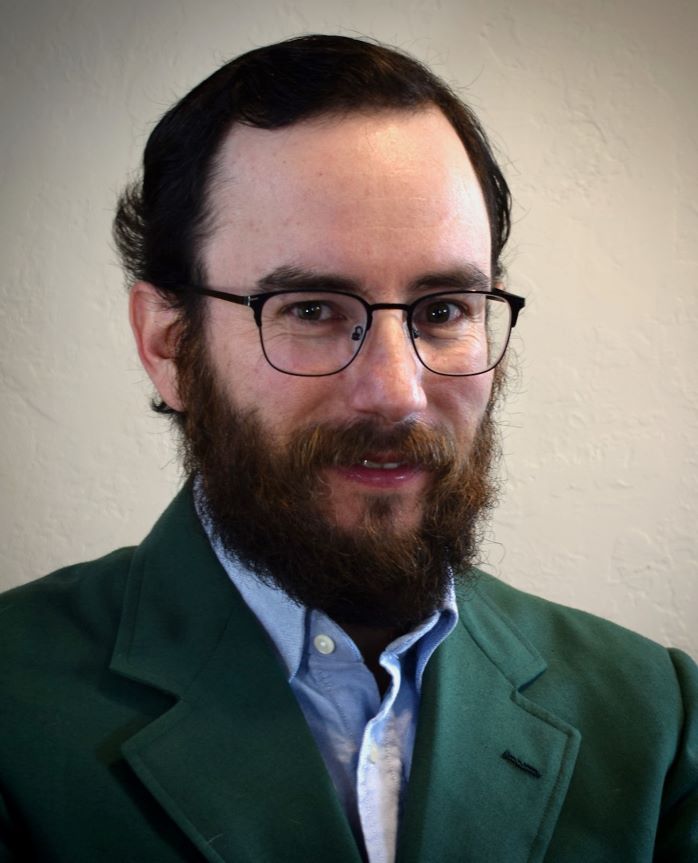
Dr Alireza Salmachi is a Senior Lecturer in the School of Chemical Engineering at The University of Adelaide. He specializes in subsurface energy systems, with a focus on hydrogen storage, CO2 sequestration, and reservoir engineering. His research integrates geomechanical modeling, wellbore integrity, and innovative 3D printing techniques for porous media. Current projects include underground hydrogen storage in depleted reservoirs, repurposing decommissioned wellbores for energy storage, and CO2 sequestration in coal seams using micro-CT imaging. Research interests span: Hydrogen energy storage mechanisms and infrastructure Wellbore integrity and decommissioning strategies CO2 sequestration efficiency in coal seams Unconventional reservoir production analysis 3D-printed porous media design for energy applications His recent publications emphasize techno-economic assessments of hydrogen storage, geomechanical impacts of CO2 injection, and fractal-based porous media modeling. He actively supervises postgraduate research in these areas through collaborative industry partnerships.
Arthur Pétusseau is an Assistant Professor of Engineering at Dartmouth College's Thayer School of Engineering. He earned dual master's degrees in Engineering Sciences from the University of Strasbourg (2018) and a PhD in Engineering Sciences from Dartmouth (2023). His research focuses on developing innovative optical imaging technologies for cancer diagnostics and treatment, emphasizing real-time surgical guidance and novel methodologies over commercial solutions. He specializes in image-guided surgery, fluorescence imaging, and radiotherapy applications. Key research interests include oximetry, ultra-high dose rate radiotherapy (FLASH therapy), and molecular imaging. His work bridges lab-born technologies with clinical applications, leveraging expertise in hardware development and animal surgery. Pétusseau has pioneered the PRESTO (Pressure-Enhanced Sensing of Tissue Oxygenation) imaging technology to distinguish cancerous from healthy tissue during surgery. Awards: John W. Strohbehn Memorial Prize, Stu Trembly Award, 2nd place in Collegiate Inventors Competition. Startup: Co-founder of Hypoxia Surgical LLC, advancing surgical imaging tools. Research Projects: Investigating oxygen dynamics in ultra-high dose rate radiotherapy and Cherenkov photon imaging for radiotherapy guidance. His publications span high-impact journals like Proceedings of the National Academy of Sciences and International Journal of Radiation Oncology , reflecting contributions to biomedical optics and medical imaging systems.
Mong-Han Huang is an Associate Professor in the Department of Geology at the University of Maryland, College Park. He leads the Active Tectonics Laboratory, focusing on geodesy and seismology to study crustal deformation, earthquakes, and volcanic activities. His research integrates advanced techniques like InSAR and GPS to monitor Earth's surface dynamics, with applications to natural hazards and landscape evolution. Education: Ph.D. in Geology from the University of California, Berkeley (2014). Research Interests: Earthquake cycle mechanics and modeling Volcanic deformation and magma dynamics Landslide hazards and geomorphic processes Ice shelf seismology and tidal effects Near-surface geophysics and critical zone science Key Scientific Contributions: Developed methods to monitor ice shelf rifts in Antarctica using GPS and seismic data Pioneered landslide detection via satellite SAR and Google Earth Engine Investigated volcano-tectonic interactions in the East African Rift Explored bedrock weathering controls on landscape evolution Scientific Awards: NSF Graduate Research Fellowship Program (Recipient: Kathrine Udell Lopez) Dr. Richard Payne Graduate Fellowship Award Marc Lipella Memorial Scholarship Advising & Fieldwork: Supervised students including Kathrine Udell Lopez (NSF GRFP awardee) and Zoe Schlossnagle. Conducted fieldwork in Antarctica (Ross Ice Shelf) and California (Eel River landslides). Collaborates on projects blending field observations with numerical modeling. Labs/Teams: Active Tectonics Laboratory focuses on interdisciplinary approaches combining geodetic, seismic, and geophysical methods to address Earth system processes. Hosts international collaborations and student training programs.
Roman Isaenkov serves as a Research Fellow at Curtin University's School of Earth and Planetary Sciences within the Faculty of Science and Engineering. His work focuses on advanced geophysical monitoring techniques for carbon capture and storage projects. His research interests center on seismic monitoring , distributed acoustic sensing (DAS) , and CO2 geosequestration verification . Key areas include fiber-optic sensing applications, 4D seismic imaging for reservoir characterization, and multiwell monitoring systems for carbon storage projects. His technical expertise spans data processing workflows for DAS VSP (Vertical Seismic Profiling), source positioning accuracy, and time-lapse monitoring of CO2 plumes. Isaenkov's publication record demonstrates consistent contributions to carbon storage monitoring through the CO2CRC Otway Project. His work shows a clear progression from methodological development (source positioning effects, wavefield decomposition) to field implementation (Gorgon CCS case study, Pilbara mineral exploration). Key collaborations include researchers from CO2CRC, with frequent co-authorship with R. Pevzner, K. Tertyshnikov, and A. Yurikov. His technical focus includes: Permanent reservoir monitoring systems using fiber-optic technology Automated processing of continuous DAS data streams CO2 plume evolution tracking through multiwell seismic arrays Repurposing abandoned wells for geophysical surveillance Isaenkov has contributed significantly to the Stage 3 Otway Project, developing monitoring systems for small-scale CO2 injections and investigating nonlinear seismic effects in subsurface environments. His work bridges theoretical geophysics with practical field applications in carbon management.
Vladimir Puzyrev is an Adjunct Research Fellow at Curtin University’s School of Earth and Planetary Sciences (EPS) and a Senior Research Scientist at Schlumberger-Doll Research. His work bridges geophysics, numerical modeling, and machine learning. He specializes in deep learning applications for geophysical inversion, electromagnetic exploration, and seismic facies classification. Research interests include: deep learning for geophysical data analysis, 3D modeling and inversion, isogeometric and finite element methods, and sparse linear solvers. His interdisciplinary approach integrates computational geosciences with advanced numerical techniques. Publications focus on applying neural networks to mineralization prediction, seismic facies classification, and electromagnetic inverse problems. Key contributions include frameworks for generative adversarial networks in geophysical modeling and Monte Carlo dropout for uncertainty quantification in geochemical data. Affiliations: Curtin University (Adjunct Research Fellow), Schlumberger Limited (Senior Research Scientist). Active in professional societies like SEG and EAGE. His work spans academic and industrial sectors, emphasizing real-world applications of computational geoscience.
Johnathon Osmond is a Doctoral Research Fellow at the University of Oslo's Department of Geosciences, affiliated with the Norwegian CCS Research Centre (NCCS). His research focuses on subsurface and outcrop characterization of faults, CO₂ storage site evaluation, and structural influences on hydrocarbon/CO₂ migration. He holds an M.S. in Geological Sciences (University of Texas at Austin, 2016) and a B.S. in Geology (University of Houston, 2013). Key research areas include 3D structural modeling, seismic stratigraphy, and carbonate diagenesis. His work integrates geophysics with field observations to address challenges in CO₂ storage and petroleum reservoir integrity. Notable projects include structural analysis of the Aurora and Smeaheia CO₂ storage sites in the North Sea. Awards: Norwegian CCS Mobility Grant (2019), Jackson School Field Scholarship (2015) Publications: 10+ peer-reviewed articles in journals like Petroleum Geoscience and Marine and Petroleum Geology Affiliations: Bureau of Economic Geology (2016-2017), Gulf Coast Carbon Center (2013-2015) His current research emphasizes structural de-risking of CO₂ storage sites and understanding tectonic controls on sedimentary basins. He contributes to interdisciplinary teams at the University of Oslo and NCCS.
Alessandra Insana is a Fixed-term Assistant Professor at the Department of Structural, Geotechnical and Building Engineering (DISEG) at Politecnico di Torino, where she conducts research and teaches in the fields of geotechnical engineering, energy geostructures, and climate change adaptation. She holds an academic appointment under Law 240/10 art.24-A and is actively involved in multiple national and EU-funded research projects. Her affiliations include participation in the ERC sectors PE8 and PE10, and she contributes to academic governance as an invited member of the College of Civil and Building Engineering and the Planning and Design College. Her research focuses on sustainable geotechnical solutions, particularly energy geostructures, shallow geothermal energy, tunneling, and fiber optics monitoring. She investigates the thermal performance of energy tunnels and walls, time-dependent behavior of geomaterials, and climate change impacts on geohazards. Her work aligns with SDG Goals 7 (Affordable and Clean Energy), 9 (Industry, Innovation, and Infrastructure), 11 (Sustainable Cities), and 13 (Climate Action). Her recent publications highlight advancements in energy tunnel applications, thermal retrofitting of infrastructure, real-time geohazard monitoring using fiber optics, and numerical modeling of tunnel behavior. These works span journals and conferences in geotechnics, tunneling, and sustainable energy, demonstrating a strong trend toward integrating renewable energy with civil infrastructure and enhancing resilience through advanced monitoring and simulation. She has received the Open badge Learning to Teach (L2T) from Politecnico di Torino, recognizing her teaching contributions. Alessandra Insana supervises several PhD students, including Juliana Lopez Ochoa, Francesco Campana, Maria Romana Alvi, Amirreza Pourfatollah, Simone De Feudis, and Chongyang Wang, on topics related to energy tunnels, time-dependent behavior of geomaterials, and geohazard monitoring. She is the scientific responsible for key research projects such as REGENERATE and ARCITunLin, demonstrating leadership in both academic and applied research. She has also contributed to commercial and consulting research projects related to tunnel safety and geotechnical analysis. She is a key contributor to the development of patented technologies, including the TUNREFIT system for thermal activation of existing tunnels and the OPTIALP system for real-time debris flow and avalanche detection using optical fiber sensing, developed in collaboration with colleagues at Politecnico di Torino.
Tristram Irvine-Fynn is a Reader in the Department of Geography and Earth Sciences at Aberystwyth University , where he conducts research in process glaciology and hydrology, particularly in the High-Arctic. He is affiliated with the Centre for Glaciology (CfG) , Interdisciplinary Centre for Environmental Microbiology (iCEM) , and the Climate Change Consortium of Wales (C3W) . His research focuses on: Glacier thermal regime and hydrology Supraglacial processes and ecology Development of methods in glaciology Paraglacial dynamics in Arctic catchments His recent publications (2022–2024) explore microbial habitats in weathering crusts, albedo dynamics on the Greenland Ice Sheet, englacial conduit evolution, cryoconite microbiomes, and photogrammetric analysis of ice surface roughness. These works reflect a strong interdisciplinary approach combining glaciology, microbiology, remote sensing, and hydrology. He has led multiple externally funded research projects from NERC, Leverhulme Trust, and Royal Society, focusing on glacier surface processes, microbial transport, and climate feedbacks. While no formal scientific awards are listed, his research has received significant media attention, particularly on the release of ancient microbes from melting glaciers. He contributes to teaching in physical geography and has supervised postgraduate researchers. He is also active in academic service, serving on editorial boards and peer-review panels, including for Progress in Physical Geography and UKRI-NERC . He maintains an active research presence with collaborations across the UK, Norway, Canada, and Japan, and has upcoming invited talks at Chiba University in 2025.
Associate Professor Florea Adrian is affiliated with the Faculty of Mining at the University of Petroșani, specifically within the Department of Environmental Engineering and Geology, where he serves as Deputy Department Manager. His research focuses on environmental and geotechnical challenges in mining regions, including air quality management, subsidence phenomena, and tailings/waste dump stability. He has contributed to interdisciplinary projects addressing pollution control, geomechanical modeling, and sustainable post-mining land use. His work integrates advanced methods such as computer-aided design for mine planning and geospatial data analysis. Key research interests include decarbonization strategies for traditional coal mining areas and the environmental impact of industrial activities like waste burning. Publications highlight innovative solutions for mine closure management and legal frameworks for energy resource quality. Notable projects include studies on CO2 storage risks, ophiolitic rock utilization in construction, and phytoremediation of contaminated sites. Florea Adrian’s research addresses both technical challenges and policy implications, emphasizing practical applications for ecological reconstruction and community resilience in mining-dependent regions.
Andrew D. Parsekian is an Associate Professor in the Department of Geology & Geophysics at the University of Wyoming, part of the College of Engineering and Physical Sciences. He serves as Director of the Hydrologic Science Program and is actively engaged in research and graduate education in environmental geophysics. Ph.D., Rutgers-Newark, 2011 B.S., Dickinson College, 2005 His research focuses on environmental geophysics, particularly the application of non-invasive geophysical methods to study groundwater and cryospheric systems. His group specializes in ground-penetrating radar, electrical resistivity tomography, seismic refraction, and nuclear magnetic resonance. These tools are used to investigate permafrost dynamics, active layer processes, snow distribution, and hydrogeophysical inversion in complex terrains. His recent publications (2024–2025) span high-impact journals such as Geophysics , Journal of Geophysical Research , and The Cryosphere . The work demonstrates a strong trend toward integrating geophysical data with hydrological models, incorporating uncertainty quantification, and applying machine learning to hydrofacies classification. Many of his papers feature student lead-authors, highlighting his active mentorship in graduate research. Scientific contributions include leadership in the ABoVE airborne radar surveys and the Permafrost Dynamics Observatory. His work bridges geophysics, hydrology, and climate science, with growing emphasis on remote sensing and big data analytics. Machine learning-based hydrofacies classification Uncertainty quantification in geophysical inversion Permafrost and active layer monitoring Snow distribution and non-Gaussian statistics Hydrogeophysical data fusion Remote sensing of boreal and Arctic systems Dr. Parsekian teaches Fundamentals of Research for incoming graduate students and Engineering and Environmental Geophysics every odd-year spring. He advises several graduate students, many of whom have led recent publications. His research is supported by active collaborations and data-sharing initiatives, though specific grants are not listed in the text. He leads a dynamic research group focused on advancing near-surface geophysical techniques for environmental applications. He is affiliated with the Hydrologic Science Program and conducts fieldwork in diverse environments, from Arctic permafrost regions to tropical peatlands. His team combines field data collection with advanced data processing and modeling, contributing to both theoretical and applied geophysics.
Sabatino Ciarcia is an Associate Professor in the Department of Science and Technology (DST) at the University of Sannio, Italy. His research focuses on stratigraphic geology, sedimentology, structural geology, and geological surveys, particularly in the Southern Apennines and Campania regions. He teaches courses such as Multidisciplinary Geological Field on Environmental Projects and Regional Geology and Advanced Geological Survey for advanced degree programs in geosciences.
Raffaella De Matteis is an Associate Professor in the Department of Science and Technology at the University of Sannio, Italy, specializing in Solid Earth Geophysics (GEO/10). Her research focuses on seismic tomography, crustal structure analysis, and earthquake source characterization, with particular emphasis on volcanic and geothermal regions in Italy. Her research interests span seismicity analysis, stress field determination, crustal structure using tomographic techniques, seismic wave propagation in heterogeneous media, seismic source parameters analysis, and ground motion predictive equations for early-warning applications. Dr. De Matteis has extensively studied Italian volcanic systems including Mt. Vesuvius, Ischia island, and Campi Flegrei caldera, as well as geothermal fields like Larderello in Tuscany and Nesjavellir in Iceland. Her publication record reveals strong expertise in 3D seismic tomography, with methodological contributions to velocity model development, earthquake relocation techniques, and ground-shaking mapping. Her work often addresses the practical applications of seismic research for hazard assessment and early warning systems, with a particular focus on how advanced tomographic methods improve our understanding of seismic hazards in complex geological settings. Dr. De Matteis has collaborated extensively with researchers across Italy and internationally, particularly on projects involving seismic monitoring of volcanic and geothermal areas. Her recent work has increasingly focused on the relationship between pore fluid pressure and earthquake triggering mechanisms, reflecting a growing interest in the connections between geothermal systems and seismic activity.
Ondrej Kitzler is a Dr MQ Co-funded Fellow at Macquarie University's School of Mathematical and Physical Sciences. His research focuses on advanced laser systems, particularly in nonlinear optics and the generation of new wavelengths of light. He is actively involved in projects related to tunable terahertz radiation and high-power diamond Raman lasers. PhD in Physics, Macquarie University (2014) M.Sc. in Lasers and Optical Engineering, Czech Technical University in Prague (2010) Dr. Kitzler's research interests lie at the intersection of laser physics and applied optics. He specializes in nonlinear optical processes , including stimulated polariton scattering in crystals for tunable terahertz radiation , and power scaling and frequency control of diamond Raman lasers . His recent work extends into marine LiDAR systems for ocean temperature mapping using blue and gallium nitride laser diodes, demonstrating applications in environmental monitoring and remote sensing. The analysis of his recent publications (2020–2025) reveals a strong trend toward practical and environmental applications of advanced laser systems. His work spans terahertz generation , LIDAR-based oceanography , and high-power solid-state lasers . The keywords across these works include optics, remote sensing, photonics, and nonlinear frequency conversion, with subfields such as marine LiDAR, THz polariton lasers, and diamond-based laser systems. This indicates a shift from fundamental laser development to real-world sensing and measurement technologies. Scientific Awards and Recognition: h-index of 21 Over 1300 citations in Scopus Dr. Kitzler has advised or collaborated on multiple research projects funded by competitive grants. Notable projects include: Precision frequency spectrum diagnostic for pulsed lasers (2017–ongoing) Blue Ocean LiDAR for remote ocean temperature mapping (2024–2025) Kilowatt-class laser for physics, earth sciences and engineering research (2018) These projects highlight his role in interdisciplinary research with applications in earth sciences, engineering, and environmental monitoring. He collaborates with prominent researchers such as Richard Mildren, Helen Pask, and David Spence. Dr. Kitzler is part of a dynamic research network at Macquarie University focused on advanced laser technologies. His work is integrated within the broader context of the Laser Physics and Photonics Group , contributing to both fundamental and applied research in optical engineering and quantum technologies.
Ivy Frenger is a Research Group Leader in the Research Unit Biogeochemical Modelling at GEOMAR Helmholtz Centre for Ocean Research Kiel. She leads the ERC Starting Grant (ERCStG) OSTIA project, focusing on the ocean's role in mitigating climate change and understanding the legacy of anthropogenic heat and carbon under net-negative emissions. Her research integrates ocean dynamics, biogeochemistry, and climate modelling, with a particular emphasis on mesoscale eddies, carbon cycling, and upwelling systems. Ph.D., ETH Zurich, 2013 M.Sc., University of Hamburg & Max Planck Institute for Meteorology, 2009 B.Sc., University of Hamburg, 2005 Her research interests span ocean biogeochemistry, marine carbon cycling, mesoscale ocean eddies, climate system dynamics, Earth system modelling, and ocean-atmosphere interactions. She investigates how ocean processes such as eddies and upwelling influence carbon sequestration, ecosystem functioning, and climate feedbacks, particularly in eastern boundary upwelling systems like the Humboldt and Canary Currents. The 15 most recent publications reflect a strong focus on biogeochemical modelling, climate change impacts, and ocean dynamics. Key themes include the marine biological carbon pump, ocean deoxygenation, eddy-driven ecosystems, mixed layer processes, and Earth system model development. Her work frequently appears in high-impact journals such as Nature Geoscience , Global Change Biology , and Geophysical Research Letters . ERC Starting Grant (OSTIA, 2024–2029) DFG Project CHOICE (2024–2027) BMBF Project Humboldt-Tipping II (2023–2025) Dr. Frenger has contributed to teaching as a co-lecturer and teaching assistant in courses on marine biogeochemical modelling and climate systems. She has developed and shared open-source software for tracking ocean mesoscale eddies. Her collaborative research involves extensive work with Earth system models and observational data synthesis. She has not received individual scientific awards listed in the text but leads competitively funded projects, indicating strong recognition in her field. She leads a research group and collaborates widely within GEOMAR and internationally, contributing to large model intercomparison projects and interdisciplinary ocean research initiatives.
Markus Heinze is a researcher at the Chair of Astronomical & Physical Geodesy, Technical University of Munich, actively contributing to satellite geodesy, gravimetry, and GNSS data processing. He is involved in major ESA and DFG-funded projects including GOCE, GETRIS, NEROGRAV, and UPLIFT, focusing on precise orbit determination, geodetic monitoring, and Earth observation. His research interests span Satellite Geodesy , Precise Orbit Determination , Gravimetry , GNSS Data Processing , Remote Sensing , and Geophysical Monitoring . His work integrates advanced geodetic techniques for monitoring alpine environments, permafrost dynamics, hydrological changes, and urban subsurface structures using relative gravimetry, SAR imaging, and electronic corner reflectors. The 15 most recent publications highlight a strong trend towards geodetic monitoring of environmental changes, particularly in high-alpine and permafrost-affected regions, leveraging satellite and ground-based sensors. There is a clear evolution from early work on GOCE orbit determination and GNSS clock modeling to current applications in climate impact assessment and infrastructure monitoring. Scientific contributions include: Development of methods for precise intersatellite ranging Improvements in GNSS data processing with Galileo integration Validation of GOCE gravity field models and orbits Innovative use of SAR and electronic corner reflectors for long-term deformation monitoring Application of relative gravimetry to detect hydrostatic pressure changes in alpine tunnels and rock slopes Markus Heinze advises bachelor's students in geodetic and environmental research topics. His supervised theses cover cavity detection in urban areas, meteorological correlations with gravimetric signals, and instrument tilt effects on gravimeter accuracy. He is part of collaborative research teams in DFG Research Units NEROGRAV and UPLIFT, and participates in ESA projects MAGIC, QSG4EMT, and Baltic+, contributing to satellite applications and geodetic infrastructure development. He is associated with the Engineering Institute for Astronomical and Physical Geodesy and works under the supervision of Prof. Dr. Roland Pail and Prof. Dr. Urs Hugentobler. The research environment emphasizes interdisciplinary collaboration, innovation in geodetic instrumentation, and application-driven science for Earth system monitoring.