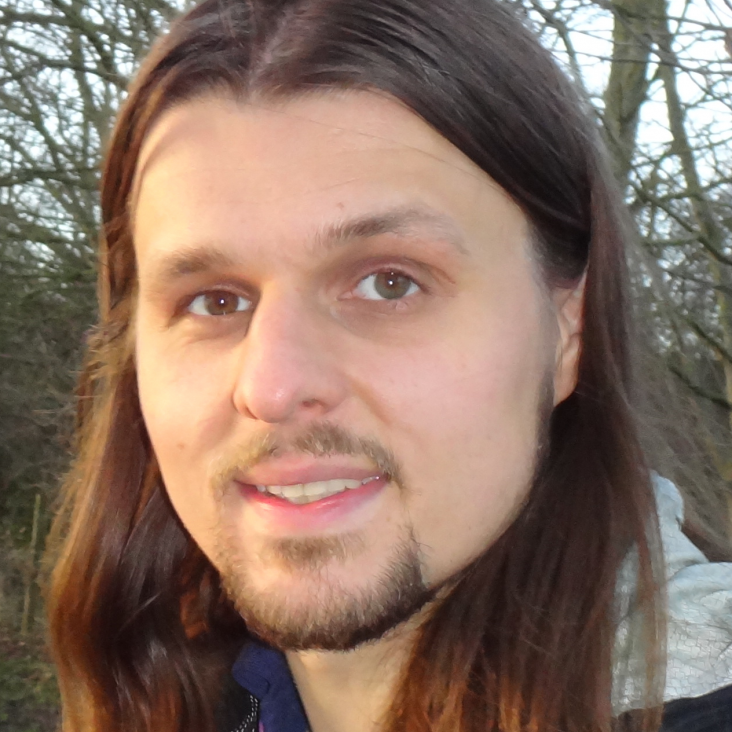
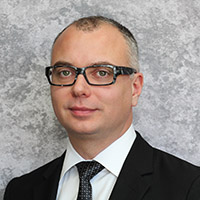
Andrew Wells is an Associate Professor of Physical Climate Science at the University of Oxford's Department of Atmospheric, Oceanic and Planetary Physics. His research focuses on fluid mechanics, thermodynamics, and geophysical processes, with a particular emphasis on sea ice dynamics, ice-ocean interactions, and turbulent convection. He is affiliated with the Ice and Fluid Dynamics research group and conducts studies using mathematical modeling, numerical simulations, and laboratory experiments. His work explores phenomena such as mushy layer growth in sea ice, buoyant plumes under ice shelves, and the impact of salinity on melt pond evolution. Key contributions include studies on Enceladus' geysers, frazil ice crystal interactions, and thermal convection in porous media. His research has implications for climate modeling, astrobiology, and geophysical fluid dynamics. Wells has published extensively in journals like *Journal of Fluid Mechanics*, *Geophysical Research Letters*, and *Proceedings of the Royal Society A*. His recent work emphasizes the interplay between phase changes, convection patterns, and environmental processes in polar and planetary systems.
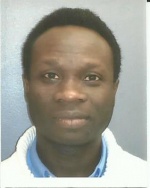
Dr. Lateef Akanji is a Senior Lecturer in the Department of Petroleum Engineering at the School of Engineering, University of Aberdeen, where he has been contributing since 2014. He previously served as Lecturer and Head of the Petroleum Technology Research Group at the University of Salford, Assistant Professor at King Saud University, and Visiting Lecturer at the University of Leoben. His academic journey includes a PhD from Imperial College London and degrees from the University of Ibadan. University: University of Aberdeen School: School of Engineering Position: Senior Lecturer, Petroleum Engineering Email: l.akanji@abdn.ac.uk Education: PhD, Petroleum Engineering, Imperial College London M.Sc., Petroleum Engineering, University of Ibadan B.Sc. (Honours), Petroleum Engineering, University of Ibadan DIC (Diploma of Imperial College) Research Interests: Dr. Akanji's research centers on multiphase flow in porous and permeable media, with applications in enhanced oil recovery (EOR) in clastic, carbonate, and unconventional shale reservoirs. His work integrates theoretical, experimental, and computational fluid dynamics, utilizing platforms like Python, C++, and Fortran. He is pioneering the application of artificial intelligence in petroleum engineering, particularly in EOR screening and production optimization. His research includes pore-scale modeling, gas-lift systems, and nuclear reactor flow dynamics. Publication Trends: His recent publications (2025–2021) reflect a strong focus on fluid displacement in porous media, shale reservoir characterization, AI applications in energy, and nuclear safety. Notable themes include computational modeling of multiphase flow, biosurfactant EOR, and advanced numerical methods for reservoir simulation. Scientific Awards and Honors: Fellow of the Higher Education Academy (FHEA) Chartered Engineer (CEng) Chartered Petroleum Engineer European Engineer (Eur Ing) Member of the Energy Institute (MEI) Advising and Grants: Dr. Akanji supervises numerous PhD students in areas such as AI-based production optimization, permeability upscaling, and biosurfactant EOR. He leads research funded by PTDF, TETFUND, Sonangol, and Elphinstone, focusing on high-pressure high-temperature flow loops, gas-lift pilot rigs, and neuro-fuzzy screening systems. His collaborative projects involve institutions in the UK, Austria, and Australia. Laboratories and Research Platforms: He contributes to the development of the Complex System Modelling Platform (CSMP++), a C++-based API for simulating multi-physics flow in porous systems, co-developed with ETH Zurich and Montanuniversität Leoben. He also leads a technology innovation platform for EOR, including experimental rigs for biosurfactant screening and gas-lift stability testing.
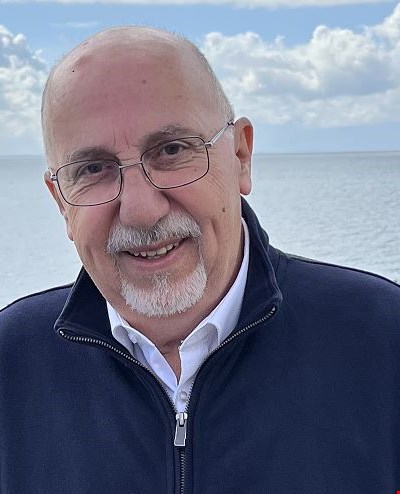
Professor Ronny Pini is a Professor of Multiphase Systems at Imperial College London's Department of Chemical Engineering within the Faculty of Engineering. His research focuses on sustainable industrial processes, particularly carbon capture and storage (CCS), porous media dynamics, and imaging-based process design. He holds a PhD in Mechanical and Process Engineering from ETH Zurich and has held academic positions including Senior Lecturer and Reader at Imperial College since 2015. His educational background includes a Postdoctoral fellowship at Stanford University (2010-2013) and prior roles at the Colorado School of Mines. Research interests span multiphase flow mechanics, adsorption science, and environmental engineering applications. Key projects include the InFUSE Prosperity Partnership and Digital Rocks Lab, leveraging X-ray tomography, positron emission tomography, and computational models to study subsurface CO2 storage and sustainable materials. Professor Pini's work integrates chemical engineering with material science and earth sciences, addressing global challenges like industrial decarbonisation. He collaborates on developing advanced imaging techniques to characterise porous media behavior and optimise processes for energy transition. Current focus areas include direct air capture technologies and enhancing oil recovery via CO2 utilisation. His research outputs include over 150 peer-reviewed articles, with recent emphasis on adsorption-based CO2 capture systems, pore-scale transport phenomena, and sustainable process design frameworks. He is actively involved in training early-career researchers through Imperial College's Chemical Engineering programs and international collaborations.
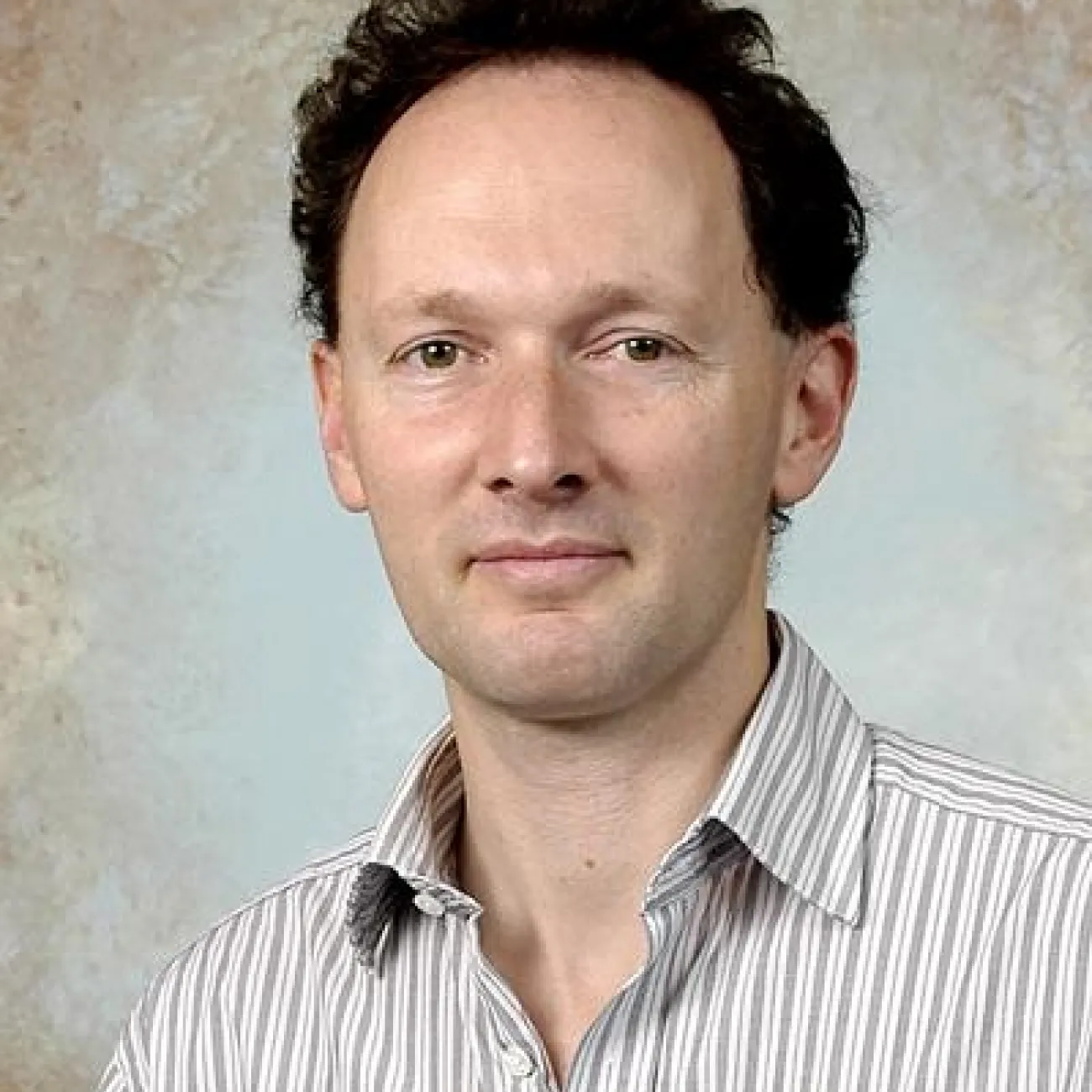
Professor Sergei Fedotov is a Professor of Applied Mathematics in the Department of Mathematics at the University of Manchester. He holds a PhD from Ural Federal University (1986) and has held academic positions in London, Aachen, Wuppertal, and Berlin before joining Manchester in 1998. His research focuses on random walk theory, reaction-transport systems, and anomalous transport phenomena with applications to biophysics, nanotechnology, and cancer biology. His expertise includes non-Markovian models, fractional calculus, and interdisciplinary collaborations in areas such as intracellular transport, nanoparticle dynamics, and DNA repair. Fedotov has led major grants, including EPSRC-funded projects on nanoparticle transport in radiotherapy and FAPESP-UoM collaborations on correlated memory in biological systems. He has supervised PhD students including Anna Gavrilova, Daniel Han, and Helena Stage, and collaborates with institutions globally, such as Universitat Autònoma de Barcelona and The Christie Hospital. Key research themes include stochastic models of subdiffusion/superdiffusion, fractional partial differential equations, and the application of statistical mechanics to biological systems. His work contributes to sustainable development goals through advancements in medical physics and environmental modeling. Recent publications explore heterogeneous transport in C. elegans, stochastic water flow dynamics, and the modeling of radiation-induced DNA damage. Fedotov’s team develops novel frameworks to bridge theoretical mathematics with experimental biology, emphasizing the role of memory effects and non-equilibrium processes. Grants managed include the EPSRC £702k project on improving radiotherapy via nanoparticle transport modeling (2021–2025) and the FAPESP-UoM study on correlated memory in biological systems (2018–2022). His work integrates mathematical rigor with experimental validation, addressing challenges in cellular logistics and disease mechanisms.
Sabrina Speich serves as Full Professor of Oceanography and Climate Sciences at École Normale Supérieure (ENS), a constituent institution of Paris Sciences and Letters University (PSL). She conducts research within the Laboratoire de Météorologie Dynamique (LMD) at the Institut Pierre Simon Laplace (IPSL), France's premier climate research consortium. Her work bridges observational oceanography with climate modeling to address fundamental questions in earth system dynamics. Her research program investigates scale-interaction phenomena in ocean-atmosphere systems, with specialized focus on mesoscale eddy dynamics, tropical Atlantic circulation patterns, and remote sensing applications. Key interests include the three-dimensional structure of anticyclonic eddies, material coherence in oceanic features, and the interplay between river plumes (notably the Amazon) and ocean currents. She employs integrated methodologies combining in-situ measurements, satellite remote sensing, and theoretical frameworks to unravel complex fluid dynamics processes. Analysis of her 2023-2024 publications reveals consistent emphasis on eddy boundary detection techniques, vertical eddy structure characterization, and air-sea interaction mechanisms in tropical regions. Her work demonstrates methodological innovation in applying theoretical frameworks to observational data, particularly regarding North Brazil Current ring dynamics and latent heat flux variations. Collaborative international research features prominently across these studies. Professor Speich actively contributes to the Laboratoire de Météorologie Dynamique's research ecosystem at IPSL, participating in France's national climate science infrastructure. Her editorial role as Associate Editor for Ocean Observation at Frontiers in Marine Science further demonstrates engagement with the broader oceanographic community, alongside 35 documented editorial contributions including edited research topics and publications.
Professor Vahid Joekar-Niasar is a faculty member in the Department of Subsurface Engineering and Porous Media Physics at the University of Manchester. He holds academic affiliations with Energy Manchester, Sustainable Futures, Dalton Nuclear Institute, and Manchester Environmental Research Institute. His research focuses on subsurface energy systems, multiphase flow in porous media, and electrochemical energy devices. Key areas include carbon capture and storage (CCS), hydrogen storage, geothermal energy, and PEM fuel cells. Education: PhD in Engineering (details not explicitly stated) Research interests integrate computational modeling at pore-scale and multiscale levels, with applications to CO2 sequestration, geothermal systems, and electrochemical devices. His work addresses UN Sustainable Development Goals related to clean energy and climate action. Recent studies explore hydrogen injection dynamics, calcite-brine interactions in enhanced oil recovery, and non-Newtonian fluid transport in porous media. Notable awards include the Young Researcher InterPore-Fraunhofer Award (2011) and FSE Best Supervisor Award (2024). He leads projects on subsurface energy storage and has supervised 11 research projects. Collaborations span global institutions with focuses on two-phase flow, wettability, and pore-scale physics. Labs/Teams: Direct characterization of transport in unsaturated porous media, interdisciplinary porous media research at Stuttgart University.
Professor Jonathan Bull is a faculty member in Ocean and Earth Science at the National Oceanography Centre Southampton, University of Southampton. His research focuses on fluid flow dynamics, carbon capture and storage (CCS), marine geophysics, and tectonics. He leads projects such as STEMM-CCS and QICS, addressing challenges in CCS monitoring and seabed methane venting. Bull teaches exploration geophysics and remote sensing at undergraduate and graduate levels. He currently supervises eight PhD students and serves on NERC panels. Research interests: Fluid flow quantification, passive acoustics, marine geophysics, and northern Indian Ocean tectonics. Key projects: Greensand Project, STEMM-CCS, and CHIMNEY (NERC-funded). Teaching: Coordinates the second-year module 'Exploration Geophysics and Remote Sensing.' External roles: NERC Core Panel Member and NERC Main Panel Chair since 2020. His work integrates geophysical methods with environmental monitoring, emphasizing long-term CCS safety and seabed fluid dynamics. Collaborations include institutions like the National Oceanography Centre and European Union-funded initiatives.
Professor Tassos Karayiannis serves in the Mechanical and Aerospace Engineering Department within Brunel University London's College of Engineering, Design and Physical Sciences. Holding the position of Professor, he currently directs the Centre for Energy Efficient and Sustainable Technologies (2020-present) and leads the Two-Phase Flow and Heat Transfer Research Group (2018-present). His academic journey includes significant leadership roles including Vice Dean for Education (2014-2017) and Deputy Head of School (2005-2014). His educational background includes a PhD in Engineering Science with focus on Convective Heat Transfer from The University of Western Ontario and a BSc (Hons) in Mechanical Engineering from City University, London. His professional development includes extensive training in leadership, management, and academic administration through programs at Brunel University and Cranfield School of Management. Professor Karayiannis' research centers on thermal science and engineering with particular expertise in heat transfer phenomena. His primary research areas include single-phase heat transfer, boiling and condensation mechanisms, heat transfer enhancement techniques, microchannel thermal systems, and geothermal energy applications. His work bridges fundamental thermal science with practical engineering solutions for energy efficiency and sustainability challenges. Current research focuses on advanced thermal management systems for high heat flux applications and geothermal energy technologies. His publication record demonstrates consistent contribution to thermal science, with recent work emphasizing microscale heat transfer phenomena, geothermal systems, and advanced heat exchanger technologies. Key publication trends show increasing focus on sustainable thermal systems, with significant contributions to understanding two-phase flow in microchannels and vacuum-insulated geothermal technologies. Fellow of Institution of Mechanical Engineers (1990) Fellow of Institute of Energy (2002) UK National Heat Transfer Committee Member and Chairman (2013) UK Heat Transfer Society President (2022-2023) Geothermal Energy Advancement Association Vice-President (2023) Professor Karayiannis actively supervises PhD students including Joseph Widgington (Flow boiling in microchannels), Mina Kerolos (Pool boiling on plain and enhanced surfaces), Paige Draper (Lifetime optimisation of multiple deep closed-loop geothermal wells), and Buse Bekir (Pool boiling of refrigerants). His research is supported by substantial grants from EPSRC, Innovate UK, and industry partners including TMD Technologies Ltd and Oxford nanoSystems. Current projects include BOiliNg flows in SmAll and microchannels (BONSAI), Enhanced Multiscale Boiling Surfaces (EMBOSS), and geothermal feasibility studies for district heating. He maintains active collaborations with researchers across the UK and internationally, particularly in microscale thermal systems and sustainable energy technologies. He leads the Two-Phase Flow and Heat Transfer Research Group at Brunel, which maintains specialized facilities for microchannel thermal testing, boiling and condensation experiments, and geothermal system analysis. The group collaborates with the Centre for Energy Efficient and Sustainable Technologies and participates in multi-institutional projects including Spray cooling high power dissipation applications (SANGRIA) with Edinburgh and Imperial colleges.
Florian Doster is a Professor at Heriot-Watt University, affiliated with the School of Energy, Geoscience, Infrastructure and Society and the Institute for GeoEnergy Engineering. He leads the MuPhi Research Group, focusing on multi-scale modeling of subsurface flow phenomena, particularly in porous media and fractured reservoirs. His work addresses challenges in CO2 storage, hydrocarbon production, and groundwater management. He actively supervises PhD students, including Amanzhol Kubeyev, and collaborates with industry and research councils. Research interests include multi-scale simulation, reactive transport, and AI-driven uncertainty quantification, with applications to geological carbon sequestration and reservoir engineering. His group develops open-source tools, such as the Carbonate Reservoir Group HWU code. Notable projects include regional screening of saline aquifers in Malaysia and fracture mechanics studies. Publications highlight advancements in AI for subsurface modeling, CO2 leakage risk assessment, and pore-scale interactions. Funding sources include industry partnerships and research councils. The MuPhi Group’s activities span geomechanics, fracture network analysis, and environmental sustainability.
Sajjad Foroughi is a Senior Postdoctoral Researcher at the Department of Earth Science & Engineering , Faculty of Engineering , Imperial College London. He is affiliated with the Imperial-Shell Digital Rocks Program , where he focuses on pore-scale and continuum-scale modeling of multiphase flow in porous media. His research addresses critical challenges in energy transition technologies, including geological CO2 storage , hydrogen storage , electrochemical devices , and subsurface energy systems . Research Focus Dr. Foroughi's work bridges fundamental physics of porous media with applied energy systems. Key research areas include: Optimization of electrochemical devices (batteries, fuel cells) Hysteresis and trapping mechanisms in hydrogen storage Ostwald ripening effects on displacement processes Multiscale modeling of capillary pressure and relative permeability Applications in carbon capture and storage (CCS) and geothermal energy Technical Expertise His methodologies combine: Micro-CT imaging for pore-scale characterization Lattice Boltzmann simulations Network modeling of heterogeneous carbonates Deep learning for uncertainty quantification Image segmentation and contact angle measurement
Rumbidzai Nhunduru is a Research Associate at the Institute of Mechanical, Process & Energy Engineering within Heriot-Watt University's School of Engineering & Physical Sciences, United Kingdom. Her research focuses on experimental and computational analysis of fluid flow in porous media with direct applications to carbon sequestration and enhanced oil recovery operations. Her core expertise spans pore-scale modeling of multiphase flow systems, specializing in fluid displacement mechanisms, wettability effects, and residual trapping phenomena. She employs advanced micromodel experiments and direct numerical simulations to investigate ganglion dynamics, surface roughness impacts, and transport kinetics in geological formations relevant to subsurface energy storage. Analysis of her publications reveals a cohesive research trajectory bridging microscopic flow observations with macroscopic reservoir behavior. Key contributions include quantifying wettability's role in dynamic fluid connectivity and elucidating surface roughness effects on residual trapping—critical insights for optimizing CO2 storage in saline aquifers and improving reservoir simulation accuracy. Dr. Nhunduru collaborates extensively with an international team led by Professor Mercedes Maroto-Valer, contributing to laser-manufactured microfluidic device development and pore-scale visualization techniques. Her work supports next-generation modeling for subsurface energy applications, with recent datasets on wettability impacts and fluid displacement kinetics publicly archived through Heriot-Watt University.
Saeed Ghanbari serves as a Research Fellow at Heriot-Watt University's School of Energy, Geoscience, Infrastructure and Society, affiliated with the Institute for GeoEnergy Engineering in Edinburgh, United Kingdom. His work focuses on advanced subsurface energy storage systems within geological formations. His research expertise spans Carbon Capture and Storage (CCS), Underground Hydrogen Storage, and Reservoir Engineering, with specialized investigations into CO2 plume migration dynamics, legacy well integrity assessment, and numerical simulation of geochemical/microbial processes in storage reservoirs. Recent work emphasizes risk-based modeling frameworks for CO2 storage applications and the development of novel simulation techniques for hydrogen storage systems. Analysis of his 2024-2025 publications reveals a strong trend toward computational modeling of subsurface flow phenomena, particularly examining how geological heterogeneities and background flow conditions impact long-term storage security. His work consistently addresses critical challenges in geological storage safety and efficiency, contributing directly to clean energy transition technologies. No scientific awards were documented in the provided source material. No information regarding student supervision or research grant funding was available in the scraped content.
Philip Ball is an Honorary Senior Research Fellow in the Department of Geography, Geology and the Environment at Keele University's School of Life Sciences, with dual expertise in academia and industry as a Senior New Ventures Geologist at TOTAL E&P Americas. He holds a PhD in Earth Sciences from Royal Holloway University, an MSc in Basin Evolution, and a BSc in Geology and History from Keele. His research bridges plate tectonics, rifted margins, petroleum systems, and sustainable energy transitions, with focus areas including: Geodynamics of continental rifting Hydrothermal systems and fluid-rock interactions Geothermal resource assessment Low-carbon energy innovation Dr. Ball has contributed to numerous pioneering studies on geothermal potential, natural hydrogen systems, and Red Sea basin evolution. His industry collaborations enhance applied geological solutions for energy transition challenges.
Dr Lee Hosking is a Senior Lecturer in Energy Geomechanics at Brunel University's Department of Civil and Environmental Engineering within the College of Engineering, Design and Physical Sciences. He holds a PhD and MEng in Civil Engineering from Cardiff University and has been recognized with a Fellowship of the Higher Education Academy (FHEA) in 2022. Senior Tutor (Civil and Environmental Engineering) Chair of Student Experience Committee NSS Champion Digital Education Champion Lee's research focuses on numerical modelling of deep subsurface environments, particularly coupled thermal-hydraulic-mechanical (THM) phenomena, fracture network representation, and damage evolution. His work has been applied to geological CO₂ storage, unconventional geothermal energy systems, and radioactive waste disposal. Current projects funded by The Royal Society and EPSRC explore CO₂ storage injection well integrity and fluid injection-induced seismicity prediction. He teaches modules such as Energy Infrastructure Engineering, Climate Change and the Environment, and supervises PhD students in areas like coupled THM behavior of unconventional geothermal reservoirs and CO₂ injection well integrity. Lee collaborates nationally and internationally with academic and industry partners and is affiliated with the Centre for Energy Efficient and Sustainable Technologies, Two-Phase Flow and Heat Transfer, and Geotechnical and Environmental Engineering groups at Brunel. Fellowship of the Higher Education Academy (FHEA), 2022 Editorial Board Member - Deep Underground Science and Engineering Member - UK Carbon Capture and Storage Research Centre Member - British Geotechnical Association Member - International Society for Rock Mechanics and Rock Engineering
Gina Javanbakht is a Research Fellow in Clean Energy Technologies within the Department of Engineering at the School of Computing and Engineering, University of Huddersfield, United Kingdom. Her research focuses on interfacial phenomena in energy and environmental systems, particularly in enhanced oil recovery and subsurface contaminant remediation. She actively contributes to scientific discourse through peer-reviewed publications and editorial work. Research Interests: Her work centers on surfactant and microemulsion applications in porous media, with emphasis on asphaltene behavior, NAPL mobilization, and nanoscale interfacial interactions. These areas align with sustainable energy development and environmental protection goals. The published articles reflect a consistent focus on molecular and micro-scale mechanisms in energy and environmental fluid dynamics, particularly in complex geological media. Her research integrates experimental and computational approaches to understand phase behavior and displacement efficiency. Scientific Contributions: Active editorial role in the journal Energies (2024–present) Research contributing to UN Sustainable Development Goals in clean energy and environmental sustainability Work referenced in patents and widely read on platforms like Mendeley Advising and Grants: While no formal students or grant funding are mentioned in the provided text, her collaborative research with institutions in North America suggests active scientific networking. Her publications involve multi-institutional teams, indicating potential involvement in funded research projects. Labs and Research Teams: Though not explicitly named, her research on micro-scale displacement and interfacial phenomena likely involves advanced laboratory facilities for porous media experiments, microfluidics, and interfacial characterization at the University of Huddersfield.