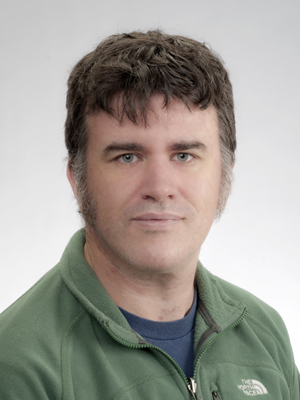
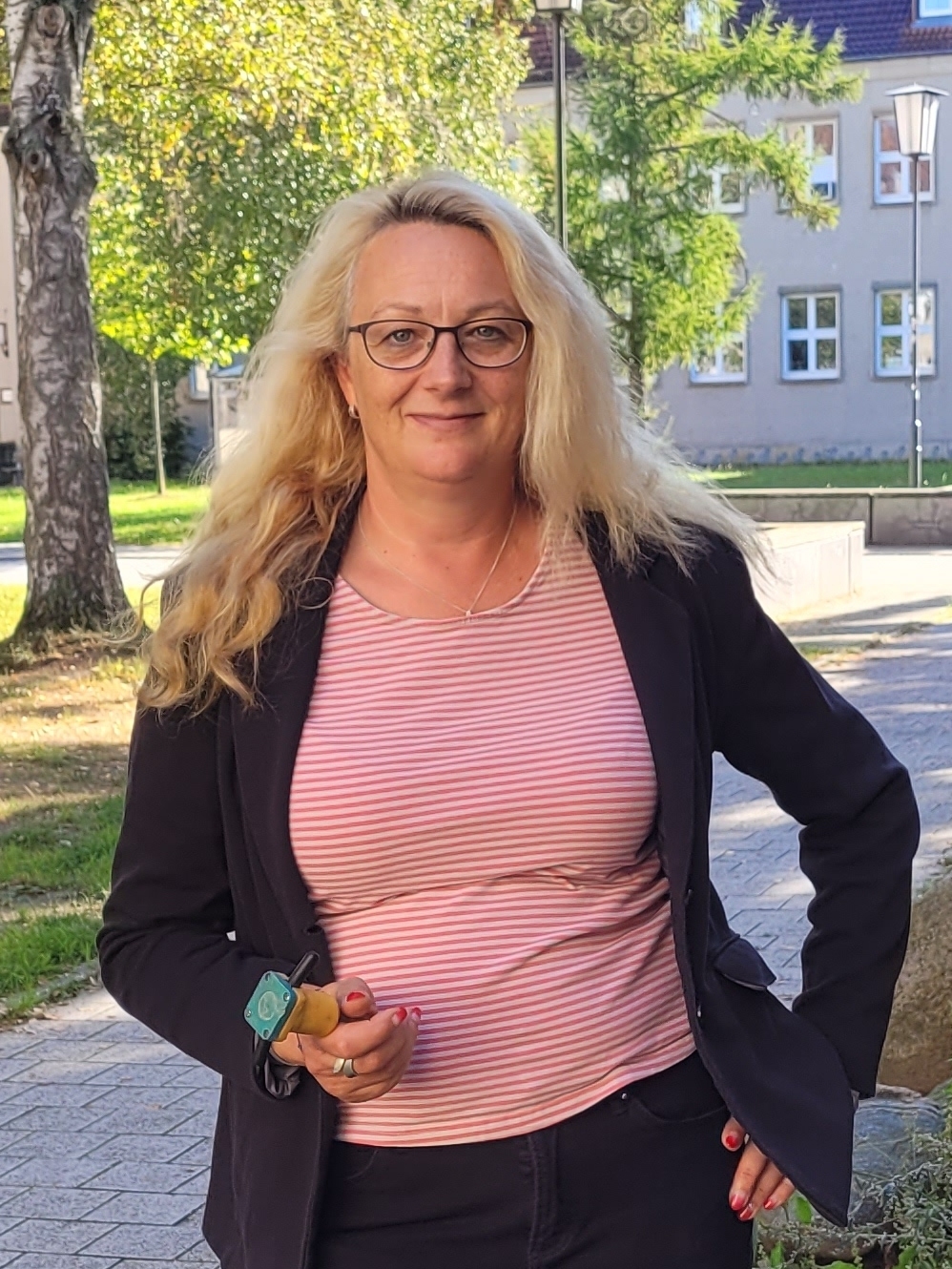
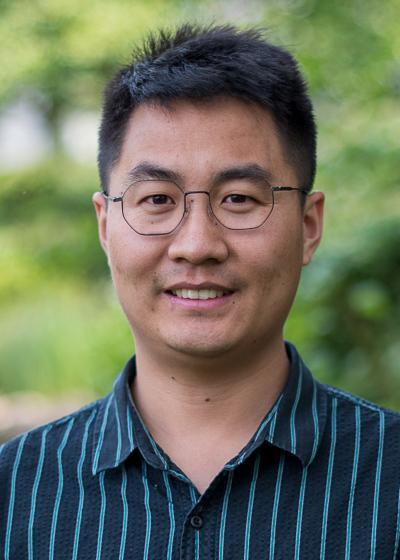
Michael Welch is a Senior Researcher at the Danish Offshore Technology Centre (Technical University of Denmark) specializing in Geology and Geophysics. His research focuses on fracture mechanics, fluid flow dynamics, and geomechanical modeling in subsurface environments. Research Interests: Welch investigates fracture propagation across material interfaces, subcritical crack growth, and fluid flow variations in fractured reservoirs. His work integrates seismic data analysis, discrete fracture networks (DFN), and phase-field modeling techniques. Key areas: Fracture network validation, geomechanical controls on chalk/marl reservoirs, mechanical failure risk assessment for CCS operations Methodologies: Linear Elastic Fracture Mechanics (LEFM), poroelastic modeling, photogrammetry hardware development Collaborations: Active in international projects related to North Sea geology, Netherlands diapir structures, and Danish Central Graben analysis.
Behzad Hosseinzadeh is a postdoctoral researcher at the Danish Offshore Technology Centre, GeoEnergy Engineering , Technical University of Denmark. His research focuses on coupled thermo-hydro-mechanical-chemical (THMC) processes in subsurface reservoirs for carbon capture and storage (CCS) and enhanced oil recovery (EOR). Research Themes : CO2 Storage, Gas Reservoir Engineering, Geomechanics, Process Chemical Modeling Technical Expertise : Simulators, CO2 Injection Dynamics, Chalk Reservoirs Collaborations : Active in international CCS research networks His work contributes to UN Sustainable Development Goals (SDGs), particularly Climate Action . Recent publications analyze mechanical risks in CO2 storage, develop deep learning models for reservoir characterization, and assess caprock integrity using THMC frameworks. He has presented 10 conference papers on these topics since 2019. Contact: behzadh@dtu.dk | ORCID
Hannah F. Mark is a Lamont Assistant Research Professor at the Lamont-Doherty Earth Observatory (LDEO), part of the Columbia Climate School at Columbia University. Her research focuses on understanding Earth's dynamic processes, particularly mantle dynamics, tectonics, and lithosphere structure through seismic imaging and geodynamic modeling. Education: Specific degrees are not detailed in the provided text, but her extensive research background in geophysics and seismology is evident from her publications and roles. Research Interests: Mantle Dynamics: Investigating how mantle processes shape Earth's surface and lithosphere. Tectonics and Surface Processes: Exploring interactions between tectonic activity and surface phenomena. Seismic Imaging: Utilizing active and passive seismic data to image subsurface structures. Oceanic Lithosphere: Studying the formation and evolution of oceanic plates, including the lithosphere-asthenosphere boundary (LAB). Subduction Zones: Analyzing processes like mantle hydration and faulting near subduction zones. Publication Trends: Her recent publications span cutting-edge topics in geophysics, including seismic anisotropy in the Pacific Plate, constraints on subduction zone processes, and the development of open-source tools for marine gravimetry. A significant portion of her work involves collaborative field campaigns and data-driven modeling, with a focus on understanding the mechanical and thermal structure of the lithosphere. Scientific Awards: No specific awards are mentioned in the provided text. Advising and Grants: While specific grants or students are not listed, her leadership roles (e.g., co-chairing standards for Seismica ) and extensive fieldwork imply active mentorship and funding. Labs and Teams: She is affiliated with the Lamont-Doherty Earth Observatory, a leading research institution in Earth sciences. Her work involves the GUANACO team for Patagonian slab window studies and collaborations with institutions like WHOI (Woods Hole Oceanographic Institution).
Dr. Saeed Mahmoodpour is a researcher at the Technical University of Munich's Department of Geothermal Technologies within the School of Engineering and Design. He works under the Assistant Professorship of Geothermal Technologies led by Prof. Dr. Michael Drews, focusing on subsurface energy systems and contributing to projects like the Geothermal Alliance Bavaria (GAB) and GoEffective. His educational background includes: Bachelor of Science in Petroleum Engineering from Sharif University of Technology (2008-2012) Master of Science in Reservoir Engineering from Sharif University of Technology (2012-2014) Professional experience at University of Tehran and Technical University of Darmstadt prior to his current position Dr. Mahmoodpour's research centers on subsurface energy systems , with particular expertise in fracture network modeling , THMC simulations , carbon capture and storage , and underground hydrogen storage . His work integrates computational approaches with geological analysis to address challenges in sustainable energy development. He has developed sophisticated models for predicting behavior of geological formations under various energy storage and extraction scenarios. Analysis of his recent publications (2022-2025) reveals a strong focus on hydrogen storage in geological formations and enhanced geothermal systems . His research demonstrates increasing sophistication in modeling coupled physical processes, with recent work incorporating molecular dynamics simulations alongside traditional reservoir modeling approaches. A notable trend is his expanding investigation of CO2-hydrogen mixtures and their behavior in subsurface environments. Dr. Mahmoodpour actively collaborates with researchers across multiple institutions, contributing to the Geothermal Congress and EGU General Assembly presentations. His work supports the Bavarian Pressure Map initiative and other regional geothermal development efforts in the North Alpine Foreland Basin.
Anneli Aitta is a Researcher at the Department of Applied Mathematics and Theoretical Physics (DAMTP) at the University of Cambridge. Her work bridges theoretical physics, geophysics, and planetary science through mathematical modeling of planetary interiors and fluid dynamics. Her research focuses on Planetary interior structure (e.g., Mars, Venus, Pluto) Earth's core composition and dynamics Tricritical phenomena in fluid flow and phase transitions Solidification processes in ternary alloys and planetary cores Analysis of her 15 most recent publications reveals a trajectory spanning planetary geophysics, fluid dynamics, and high-pressure thermodynamics, with recurring themes of symmetry breaking, core-mantle interactions, and computational modeling of phase transitions.
Dany Lauzon is an Assistant Professor at the Department of Civil, Geological and Mining Engineering at Polytechnique Montréal . He is affiliated with the Institute for Research in Mining and the Environment (IRME) and the Geothermal and Hydrogeology Research Group . His research focuses on stochastic subsurface modeling using geostatistical and machine learning methods, inverse problems in hydrogeology, and uncertainty quantification in geological models. Education: B.Eng. (Polytechnique Montréal), Ph.D. (Polytechnique Montréal) Postdoctoral training: Karst Systems Modeling (University of Neuchâtel), Mineral Prospectivity (INRS) His work develops geostatistical algorithms and deep learning surrogates for groundwater flow and subsurface risk mitigation. Publications highlight spectral methods, graph neural networks, and hybrid modeling approaches for environmental and geological applications. Current supervision: Ph.D. student Innocent Boris Tagne Nkounga Master's student Olivier Brisebois
Lingzhong Guo is a Lecturer in the Department of Automatic Control and Systems Engineering at the University of Sheffield , affiliated with the Insigneo Institute for in silico Medicine and Neuroscience Institute . His research bridges signal processing, nonlinear systems identification, and biomedical applications. PhD from Bristol Robotics Laboratory (UWE Bristol) Specializes in spatio-temporal system identification, PDE control, and machine learning for medical imaging Recent work focuses on deep learning applications for muscle segmentation in MR images and EIS analysis for oral disorder detection. Collaborations with Zilico Ltd. and participation in Horizon2020 projects highlight his translational research. Scientific Recognition SANO Centre grant (H2020, £2.5M) for computational diagnostics SPINe: Numerical and Experimental Repair strategies (H2020 European program, €1.58M) Innovate UK KTP for EIS-based medical diagnosis (£190K) His publications span nonlinear dynamics , multiscale modeling , and biomedical signal processing , with methodological contributions to Volterra series and coupled PDE-ODE systems.
Dr. Takeshi Kurotori is a Research Associate in the Department of Chemical Engineering within the Faculty of Engineering at Imperial College London. Based at the South Kensington Campus, his research utilizes advanced imaging techniques to study subsurface processes critical for energy sustainability and carbon management. Research Focus: Dr. Kurotori specializes in experimental and computational methods for analyzing fluid transport in complex geological systems. His research integrates: Multiphase flow dynamics in fractured porous media Geological carbon sequestration mechanisms Reactive transport modeling in shale formations Advanced tomography (X-ray CT/PET) for subsurface characterization Machine learning applications for reservoir property inversion Publication Trends: His recent work (2020-2025) demonstrates consistent focus on pore-scale to field-scale modeling of subsurface processes. Dominant themes include fracture-matrix interactions in shale caprocks, imbibition dynamics, permeability heterogeneity quantification, and chemo-mechanical coupling in geological formations. Over 75% of publications leverage tomographic imaging for experimental validation. Affiliations: As part of Imperial College's Chemical Engineering department, Dr. Kurotori collaborates extensively with subsurface engineering researchers. His work contributes to Imperial's initiatives in sustainable energy solutions and subsurface resource management.
Duncan A. Young serves as a Research Associate Professor at the University of Texas Institute for Geophysics (UTIG), part of the University of Texas at Austin's Department of Earth and Planetary Sciences. His expertise spans Antarctic ice sheet dynamics and planetary exploration of Jupiter's moon Europa, conducting field research on ice-penetrating radar applications for both terrestrial and extraterrestrial environments. His academic credentials include: Ph.D. in Geology from Southern Methodist University B.S. in Geological Sciences from University of Canterbury, New Zealand Young's research centers on radioglaciology and planetary geophysics , employing airborne geophysical surveys to investigate Antarctic subglacial hydrology, ice sheet evolution, and ancient ice preservation. He actively applies terrestrial analogs from Antarctica to interpret Europa's ice shell structure through NASA's Europa Clipper mission. His work integrates radar sounding, gravity, and magnetic data to map subglacial geology and ice-ocean interactions, with significant contributions to the NSF-funded Center for Oldest Ice Exploration (COLDEX). Analysis of his 2025 publications reveals concentrated expertise in Antarctic ice sheet dynamics and Europa exploration. Key methodologies include advanced radar reflectometry for subsurface characterization, multi-sensor geophysical integration, and development of the Open Polar Radar framework. His research addresses critical questions in sea level rise projections, ice sheet stability mechanisms, and extraterrestrial habitability through projects like COLDEX and REASON. Young leads major collaborative initiatives: Instrument science team member for REASON radar on NASA's Europa Clipper mission Principal investigator for NSF COLDEX aerogeophysical surveys in East Antarctica Lead scientist for UT-led aerial surveys revealing ancient subglacial landscapes His laboratory operates the Open Polar Radar system at UTIG's J.J. Pickle Research Campus, conducting field campaigns across Antarctica while developing radar technologies for planetary exploration missions. Current efforts focus on optimizing ice core site selection and advancing radar techniques for Europa's ice shell characterization.
Dr. Grit Büttner serves as a Researcher in the Department of Applied Geophysics within the Faculty of Geography and Geology at the University of Greifswald, where she has held academic and research responsibilities since August 2002. Her work integrates teaching in general and applied geophysics—including specialized borehole geophysics courses—with active research in subsurface fluid dynamics and thermal processes. Her academic foundation includes a Diploma in Geophysics from the Technical University of Berlin (1998), with thesis work on hydrologically relevant rock characteristics using combined radar and geoelectrical methods, followed by a doctoral degree (2002) from TU Berlin/GFZ Potsdam. Her dissertation investigated thermo-hydraulic fields and heat flux density near Hawaii's active mantle plume through borehole temperature analysis—a continuation of her DFG-funded project at the GeoForschungsZentrum Potsdam (1999-2002). Research interests center on Geophysics and Hydrogeology, with specialized focus on Heat Flow quantification, Fluid Transport mechanisms in geological formations, Mantle Plume dynamics, and Borehole Geophysics applications. Her methodology emphasizes field-based temperature measurements to model subsurface thermal regimes and fluid migration, particularly in volcanic settings. As an academic advisor, Dr. Büttner supervises student research while managing departmental system administration. She actively contributes to the Applied Geology | Hydrogeology Working Group and maintains professional affiliations with the German Geophysical Society (DGG) and the European Association of Geoscientists and Engineers (EAGE), reflecting her engagement with both national and international geoscience communities.
Ang Liu serves as a Lecturer at the John and Willie Leone Family Department of Energy and Mineral Engineering within the College of Earth and Mineral Sciences at Penn State University. Their research focuses on critical geomechanical and energy storage challenges. Rock mechanics and poromechanics Multiphase flow and transport in porous media Mathematical modeling of coupled processes Carbon dioxide sequestration and hydrogen storage Unconventional gas exploitation and mine control Ang Liu actively contributes to research on sustainable energy solutions, particularly through computational modeling of geological systems and subsurface energy storage. Their work addresses technical challenges in carbon capture, hydrogen energy infrastructure, and unconventional resource recovery, with applications to climate mitigation and mining safety.
Gael Pallares is a Teacher-researcher at CESI based at the Montpellier Med Airport Zone campus, specializing in urban mobility, building energy performance, and physics of complex systems through the Engineering and Digital Tools research team. His interdisciplinary work bridges transportation engineering and materials science with practical applications in smart city infrastructure. Education: Doctorate in Physics, CEA Saclay and University of Montpellier (2010). Thesis: 'Multi-scale analysis of crack propagation mechanisms in oxide glasses'. Master's Degree (M2R) in Materials Science, University of Montpellier (2007). Research Focus: Dr. Pallares investigates multimodal transport system optimization (e.g., TIGA project for Rouen's smart mobility) and energy-efficient student mobility (MobE project), while advancing fundamental understanding of fracture mechanics in oxide glasses, elastomer contact physics, and thermodynamic anomalies in supercooled water. His methodology integrates experimental, numerical, and theoretical approaches across multiple scales. Publication Trends: Recent publications (2023-2024) emphasize urban mobility solutions using agent-based transport simulations and mathematical optimization, reflecting a strategic pivot toward applied transportation engineering while maintaining foundational contributions in material physics. His work consistently addresses sustainability challenges in urban infrastructure and complex material behaviors. Academic Supervision: Currently guiding two doctoral candidates (B. Sahbani on multimodal transport supervision and J. Burgalat on smart city transport optimization), with defenses scheduled for 2024-2025. Previously supervised R. Sahli's thesis on elastomeric contact mechanics (2017) and multiple internships (2008-2016). Research programs include TIGA and MobE, focusing on real-world mobility challenges. Scientific Engagement: Active member of the Neocampus Scientific Interest Group (University of Toulouse) and Midoc key challenge on smart/sustainable mobility in Occitanie, contributing to regional research networks for sustainable urban development.
Prof. Dr. Fadi Nader is a Professor of Tectonics at the Faculty of Geosciences , Department of Earth Sciences, Utrecht University . He also holds a significant professional background at IFP Energies Nouvelles (Institut Français du Pétrole) where he has served as Research Engineer, Project Leader, and Manager of Business Development for Geosciences since 2007. Education: 2015 : HDR (Université Pierre et Marie Curie) - Multi-scale diagenesis and reservoir rock heterogeneity 2003 : PhD in Geology (KU Leuven) - Kesrouane Formation study 2000 : MSc in Geology (American University of Beirut) - Carbonate sequence analysis 1994 : BSc in Geology (American University of Beirut) Research Interests focus on sedimentology , diagenesis , reservoir characterization , and tectonic evolution with particular emphasis on fluid-rock interactions across multiple scales. His work integrates seismic interpretation, numerical modeling of thermal evolution, and petroleum systems analysis. Research Trends over recent publications (2019-2025) show a consistent focus on: Multi-scale diagenesis and its impact on reservoir properties Tectonic controls on sedimentary basin evolution Fluid-rock interactions in collisional orogens and carbonate systems Geothermal energy and subsurface resource assessment Carbonate reservoir characterization in Middle East and Mediterranean regions 3D forward stratigraphic modeling for petroleum exploration Key Collaborations include work with institutions in the United Arab Emirates , Cyprus , Lebanon , and across Europe, with significant publications in journals such as Basin Research , Marine and Petroleum Geology , and Global and Planetary Change .
Professor Simon Tait, affiliated with the School of Mechanical, Aerospace and Civil Engineering at the University of Sheffield, is a leading expert in water engineering with a focus on urban drainage systems and sediment dynamics. His research integrates experimental and numerical modeling approaches to address challenges posed by climate change, infrastructure deterioration, and pollutant transport. Key Contributions : Development of novel sewer inspection techniques, spin-out instrumentation company with Professor Kirill Horoshenkov, Grand Challenge for Water collaborative initiatives Research Themes : Sediment erosion/transport, near-bed turbulence, climate-resilient infrastructure, heat recovery from buried systems Recent publications analyze free surface turbulence , sewer overflow management , and acoustic pipe defect detection , reflecting his interdisciplinary approach combining environmental fluid mechanics and sustainable urban development . Collaborations span hydraulic engineering , thermal energy storage , and hydrodynamic modeling applications.
Kisa Edson Mwakanyamale-Gilkie is an Associate Research Scientist at the Illinois State Geological Survey , focusing on geophysics and environmental science. Key research areas include groundwater-surface water interactions, sediment mapping, and coastal dynamics. Research Interests His work spans geophysical methods (electrical resistivity, distributed temperature sensing) to study: Lake Michigan shoreline sediment thickness Volcanic layering and porosity Glacial sediment distribution Methane dynamics in peatlands Non-invasive agricultural monitoring Recent Publications Recent studies highlight applications of TEM/ERT for coastal sediment analysis (2020), fiber-optic sensors for groundwater mapping (2013), and interdisciplinary collaborations across 17 outputs. Geographical Collaborations Active in Illinois and Hanford (Washington) with international partnerships in environmental geophysics.