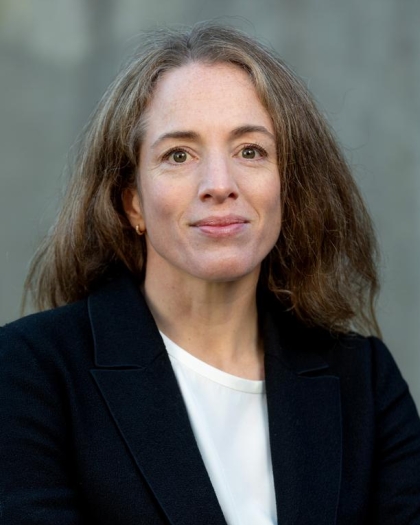
Inga Berre is a Professor at the Department of Mathematics, University of Bergen, and serves as Director of the Center for Modeling of Coupled Subsurface Dynamics (CSD). She leads the Porous Media Research Group and was appointed Argyris Visiting Professor at the University of Stuttgart's SimTech Cluster of Excellence in 2023. Research Interests: Mathematical modeling, partial differential equations, numerical methods for coupled thermo-hydro-mechanical-chemical processes in subsurface systems, and fault reactivation induced by injection/production. Scientific Leadership: Member of SIAM Council (2022-2027), Chair of SIAM GS activity group (2021-2022), Co-Chair of SET-Plan Deep Geothermal Implementation Working Group (2019-2021), and Chair of the Joint Program Geothermal, European Energy Research Alliance (2018-2021). Awards: 2011 Meltzer Award for Young Researchers. Advisory Roles: Member of Scientific Advisory Boards for GFZ (2024-2027) and SFB1313 (2018-), among others. Teaching: Developed courses on calculus, functional analysis, mathematical modeling, and numerical methods at the Bergen Summer Research School.
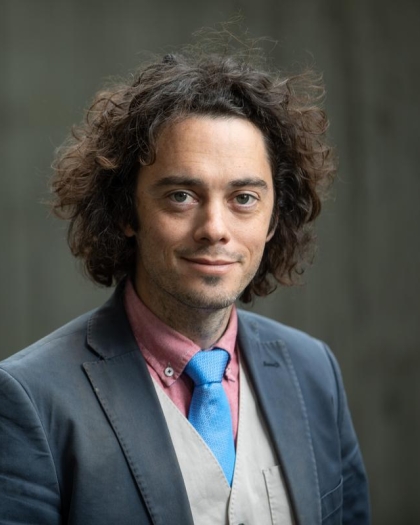
Jan Martin Nordbotten is a full-time Professor at the Department of Mathematics, University of Bergen (UiB), with adjunct positions at Princeton University and NORCE. His research focuses on applied mathematics, particularly in porous media, CO2 storage, fluid dynamics, and interdisciplinary applications in hydrology, biomedicine, and ecology. He completed his PhD at UiB in 2004 and became Norway's third youngest professor in 2007. His work emphasizes numerical methods, multiscale modeling, and experimental validation. Affiliations: UiB (full-time), Princeton (adjunct), NORCE (adjunct) Research Group: Center for Sustainable Subsurface Resources Research interests span mathematical modeling of subsurface processes, including flow in fractured media, geomechanics, and phase-field fracture. Notable contributions include analytical and numerical solutions for CO2 leakage, multiphase flow, and development of tools like DarSIA for image processing in porous media. Publications highlight advancements in mixed-dimensional models, finite element methods, and experimental validation of CO2 storage forecasts. His work bridges theoretical mathematics with practical applications in energy and environmental systems.
Norwegian University of Science And TechnologyNorway
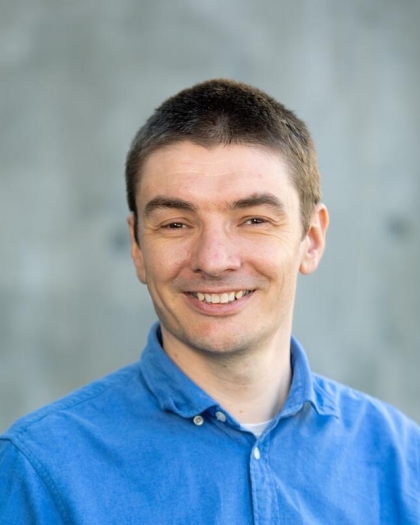
Morten Hovd is a Professor in the Department of Engineering Cybernetics at the Norwegian University of Science and Technology (NTNU). His research focuses on advanced control systems, model predictive control (MPC), power electronics, and optimization algorithms. He has contributed significantly to the development of robust control strategies for uncertain systems and has published extensively in leading journals and conferences in the field of control engineering. His research interests span several key areas in control systems engineering, including model predictive control, nonlinear control systems, optimization under uncertainty, and applications in power systems and energy efficiency. He is particularly known for his work on discrete-time bilinear systems, modular multilevel converters (MMCs), and the integration of machine learning techniques with control theory. His contributions address both theoretical advancements and practical implementations in industries such as energy and petroleum engineering. Hovd's recent publications highlight advancements in energy-efficient control systems, stochastic surrogate modeling for subsurface flows, and optimization algorithms tailored for complex engineering problems. His work often combines rigorous mathematical frameworks with real-world applications, such as improving the reliability of power systems and enhancing reservoir management through data-driven methods. He is actively involved in teaching courses such as TTK4210 (Advanced Control of Industrial Processes) and TK8118 (Mini-seminar in Cybernetics). His research has led to innovations in fault detection for power systems, energy-efficient building climate control, and robust MPC strategies for uncertain systems.
Norwegian University of Science and TechnologyNorway
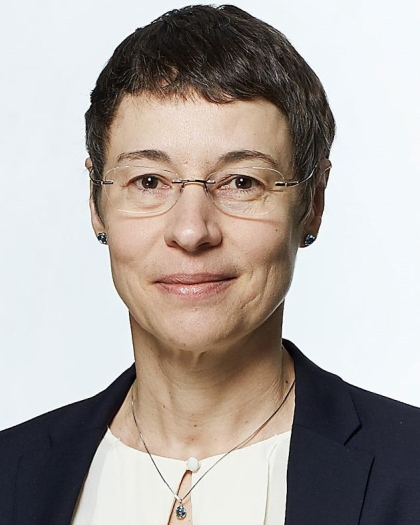
Ashkan Jahanbani Ghahfarokhi is an Associate Professor in Reservoir Engineering at NTNU’s Department of Geosciences since 2019. He leads the CEORS Gemini Centre (CO2 Enhanced Oil Recovery & Storage) and is a core member of the BRU21 Reservoir Management group. His research focuses on data-driven subsurface modeling, CO2 storage, and optimization of oil recovery processes. Education: PhD, NTNU (2015); MEng, University of Calgary (2009); MSc/BSc, Petroleum University of Technology, Iran (2006–2009). Roles: Head of Reservoir Engineering Group (2021–2022), Project Manager for NORHED II (2022), and NTNU’s Outstanding Academic Fellow (2022–2026). Research interests include CO2-EOR/Storage, machine learning applications, proxy modeling, and reservoir simulation. He has supervised 20+ students and published over 40 journal/conference papers. Awards include DNVA postdoc scholarship (2015–2017) and PoreLab postdoc (wettability studies). Teaching: Masters/PhD courses in reservoir fluids, simulation, and geomechanics. Guest editor for Energies (AI in Oil & Gas).
Eirik Keilegavlen is a Researcher at the Department of Mathematics, University of Bergen. His primary research focuses on developing mathematical models, numerical methods, and simulation tools for multiphysics processes in porous media, particularly in geothermal energy, CO 2 storage, and subsurface energy systems. He leads the development of the open-source software PorePy, designed for simulating processes in fractured porous media. His work emphasizes coupled problems involving fluid flow, heat transfer, and mechanical deformation. Key research interests include: Mathematical modeling of coupled thermal-hydro-mechanical processes Numerical discretization methods for fractured media Development of open-source simulation tools Applications in geothermal energy extraction and carbon sequestration Recent publications highlight advancements in: Uncertainty quantification for CO 2 leakage Viscous fingering in fractured reservoirs Automated solver selection for multiphysics systems Collaborations involve interdisciplinary teams addressing challenges in geothermal reservoir stimulation, fault mechanics, and high-performance computing. His work bridges theoretical developments with practical applications in energy and environmental systems.
Isabelle Lecomte is a Professor in Reservoir and Near-Surface Geophysics at the University of Bergen's Department of Earth Science. Her research focuses on seismic modeling, reservoir characterization, and near-surface geophysics, with applications to paleokarst reservoirs, fault zone analysis, and archaeological geophysics. She has supervised numerous master's theses and contributed to projects funded by the Research Council of Norway. Her work integrates field observations, numerical modeling, and geophysical data interpretation to advance understanding of subsurface structures and processes. Affiliations: Department of Earth Science, University of Bergen Research Groups: Geodynamics and Basin Studies Research Interests: Development of seismic modeling techniques for reservoir characterization and near-surface imaging Application of ground-penetrating radar (GPR) in archaeology and environmental studies Seismic expression of faults, sand injectites, and carbonate systems Paleokarst reservoir dynamics and flow simulation Publications: Over 30 peer-reviewed articles focus on seismic modeling, subsurface imaging, and geohazard assessment. Recent work emphasizes 3D/4D seismic interpretation, fault zone analysis, and outcrop-subsurface analogues. Grants & Awards: Involved in projects funded by the Research Council of Norway, including studies on paleokarst reservoirs and CO2 storage feasibility. Advising: Supervised 14 master's students, with thesis topics ranging from seismic attribute analysis in archaeology to reservoir characterization of paleokarst systems.
Robert Leslie Gawthorpe is a Professor in the Department of Earth Science at the University of Bergen (UiB). He joined UiB in July 2010 after serving as Professor of Sedimentology and Tectonics at the University of Manchester, where he led the Basin Studies and Petroleum Geoscience Group. His research focuses on integrating geomorphology, sedimentology, stratigraphy, and tectonics to study tectonic landscapes and sedimentary basins, with particular emphasis on rift basins, salt tectonics, and seismic interpretation. He established a 3D seismic and digital outcrop laboratory at UiB, equipped with advanced workstations for interpreting large seismic datasets. Current projects include the Research Council of Norway-funded SynRift Systems project and studies on rift margin dynamics. In 2018, he was appointed VISTA Professor, a prestigious industry-academic collaboration position. Key research themes include syn-rift stratigraphy, fault growth mechanics, carbonate reservoir characterization, and the interplay between tectonics and sedimentation in rifted margins. His work bridges field observations, subsurface data, and numerical modeling to address challenges in petroleum geoscience and basin analysis. Awards: VISTA Professor (2018) Projects: SynRift Systems, DeepRift, ZechTec, and studies on Brazilian and Norwegian margins. Labs: 3D seismic and digital outcrop laboratory at Realfagbygget, UiB.
Raoof Gholami is a Professor of Energy Resources at the University of Stavanger's Faculty of Science and Technology, Department of Energy Resources. His research focuses on subsurface energy storage, particularly hydrogen and CO₂ sequestration in geological formations. He has contributed extensively to understanding mechanisms like hydrogen leakage in salt caverns, CO₂-mineral interactions in chalk reservoirs, and bio-reactive transport modeling in storage sites. Key research interests include: (1) Hydrogen storage in porous media, (2) CO₂ sequestration risks and geomechanical stability, (3) Reactive transport modeling, and (4) Machine learning applications in reservoir characterization. His work bridges experimental studies (e.g., salt precipitation dynamics) with numerical modeling (e.g., caprock integrity analysis). Recent publications emphasize hydrogen storage challenges (2025), CO₂ storage in chalk (2023), and leakage risk assessment frameworks (2021). His research also explores novel materials like biodegradable surfactants for drilling fluids (2023) and advanced well path design techniques (2022). Collaborations span institutions globally, addressing topics like shale reservoirs, geothermal energy, and subsurface imaging.
David Landa Marban is a Researcher at NORCE Research AS, affiliated with the Energy and Technology division. His primary focus is on mathematical modeling and simulation of subsurface processes, including applications in CO2 storage (CCS), microbial enhanced oil recovery (MEOR), and microbially induced calcite precipitation (MICP). He has expertise in scientific computing, software development for multi-phase flow and reactive transport, and numerical simulations at pore, core, and field scales. Education: PhD in Applied Mathematics from the University of Bergen (2019), followed by a postdoctoral position at NORCE (2019-2021). Current role as a Research Scientist since 2022. Research interests emphasize computational geosciences, with projects such as MuPSI (multiscale pressure-stress impacts on CO2 storage) and CSSR (sustainable subsurface resources). He develops open-source tools like pyopmspe11 and contributes to frameworks like OPM Flow for reservoir simulation and history matching. Key contributions include modeling pressure interference in CO2 storage, machine-learned near-well models, and data-driven predictions for CO2 EOR. His work bridges lab-scale experiments with field-scale applications, addressing challenges in subsurface energy systems and leakage remediation.
Ivar Midtkandal is a Professor at the University of Oslo's Department of Geosciences, specializing in the Section for Study of Sedimentary Basins. His work focuses on sedimentology, tectonostratigraphy, and planetary geology with a particular emphasis on CO2 storage and basin evolution. He is affiliated with research groups such as Basin Studies and CO2 Storage. Research interests include rift basin dynamics, fault seal analysis, and sedimentary architecture. His projects involve Arctic petroleum exploration (ARCEx), CO2 containment (COTEC), and Triassic reservoir prediction (FORCE Triassic). Recent studies explore topics like fault complexities in CO2 storage sites and seismic geomorphology of submarine canyons. Midtkandal's work integrates field data, seismic interpretation, and experimental methods. He leads initiatives like the VISTA Centre for CO2 Storage in Volcanic-Sedimentary Systems (VICCO) and collaborates internationally on projects such as NOR-R-AM2 (volcanism and tectonics). Publications span 20+ years, addressing topics like Paleogene basin development, sedimentation records of glacial cycles, and volcanic influences on basin evolution. His research bridges geology, geophysics, and environmental science, with applications to energy and climate challenges.
Norwegian University of Science and TechnologyNorway
Carl Fredrik Berg is a Professor in the Department of Geosciences at the Norwegian University of Science and Technology (NTNU). His research focuses on porous media flow, subsurface reservoir modeling, and energy-efficient production strategies in petroleum engineering. Key areas include multiphase flow dynamics, CO₂ sequestration, phase-field modeling, and digital rock physics. Recent work emphasizes the interplay between material microstructure and macroscopic properties, particularly in porous media. Collaborations involve developing advanced computational methods for reservoir simulation, optimization algorithms for well placement, and energy policy analysis under CO₂ taxation frameworks. Publications highlight contributions to phase-field equations, permeability estimation from CT scans, and stochastic modeling for subsurface flows. His work bridges theoretical physics, applied mathematics, and engineering applications in oil recovery and environmental geoscience.
Clara Sena is a Researcher in Hydrogeology at the University of Oslo (UiO) since 2019, affiliated with the Section for Environmental Geosciences. Previously, she held post-doctoral positions at UiO (2016-2019) and the University of Aveiro (2013-2016). Her work spans hydrogeology, environmental geology, and numerical modelling of contaminant transport, with a focus on groundwater-surface water interactions and geochemical redox processes. Sena has participated in major initiatives like IODP Expedition 351 (2014) and coordinated the Norway-Brazil GeoSource network addressing geological resource sustainability. Education : PhD in Geosciences (2009) from University of Aveiro & AMPHOS 21, MSc in Geochemistry (2007), and degrees in Applied Geology and Hydrology. Key Projects : COLOSSAL (Flow across Scales), GeoSource (Norway-Brazil collaboration), and the LOT A2 experiment on radioactive waste repository modelling. Her research integrates numerical tools to study water-rock interactions, contaminant fate, and landslide dynamics. She actively engages in science outreach and policy support, including roles in the EUROFLEETS infrastructure project (2012-2013) and the UNOC-III conference (2025).
Dr. Zachary Paul Alcorn is an interdisciplinary reservoir engineer and geoscientist at the Department of Physics and Technology at the University of Bergen, where he serves as Research Director for the Norwegian Petroleum Research Center, NCS2030 (National Center for Sustainable Subsurface Utilization of the Norwegian Continental Shelf). His research bridges laboratory observations with field performance, focusing on multiphase fluid flow during CO2 injection processes in subsurface reservoirs. He teaches courses PTEK 211 and ENERGI 365 while leading multiple research projects including 'Optimizing CO2 Foam Mobility Control for Field Pilots' and 'In-situ Quantification of CO2 Flow and Mobility Control for Improved Carbon Utilization and Storage'. Dr. Alcorn's research interests center on CO2 foam applications for enhanced oil recovery (EOR) and carbon storage. He has developed expertise in special core analysis, reservoir characterization, geologic and reservoir modeling, numerical simulation, and field pilot design. His work specifically focuses on CO2 foam mobility control, investigating how foam can reduce gas mobility, improve CO2 utilization, and decrease gas-oil ratios in heterogeneous reservoirs. His research spans from pore-scale phenomena to field-scale implementation, with particular attention to how geological heterogeneity affects fluid flow behavior. His publication record shows a strong focus on CO2 foam technology, with research progressing from fundamental pore-scale investigations to field-scale implementation. The articles demonstrate an evolving research trajectory from basic foam characterization to practical field applications, with increasing attention to monitoring techniques and integration with carbon capture, utilization, and storage (CCUS) frameworks. Recent work emphasizes the relationship between rock properties and foam performance, surfactant formulations for challenging reservoir conditions, and methods for monitoring and interpreting field pilot results. Dr. Alcorn leads the NCS2030 research center and has been involved in multiple significant projects related to CO2 utilization and storage. His work has resulted in numerous field pilot implementations, particularly in heterogeneous carbonate reservoirs, with a focus on integrating laboratory findings with practical field applications. He actively collaborates with researchers across institutions and regularly presents findings at major industry conferences including SPE events and specialized CCUS conferences. His laboratory work focuses on pore-scale and core-scale investigations of CO2 foam behavior under reservoir conditions. He has developed methodologies for monitoring foam performance through pressure measurements and other techniques. His team works extensively with various rock types, particularly heterogeneous carbonates, to understand how geological properties affect foam generation, stability, and mobility control. Current research directions include nanoparticle-stabilized foams, surfactant formulations for high-salinity environments, and methods to quantify foam effects on CO2 storage capacity.
Norwegian University of Science And TechnologyNorway
Anne C. Elster is a Professor in the Department of Computer Science at the Norwegian University of Science and Technology (NTNU), within the Faculty of Information Technology and Electrical Engineering. She is the founder and director of the HPC-Lab, a leading research group in heterogeneous and parallel computing. She also maintains a long-standing affiliation with the Oden Institute at the University of Texas at Austin as a Senior Visiting Scientist until Summer 2025. Research Interests: Her work spans high-performance computing (HPC), GPU computing, parallel algorithms, auto-tuning, performance optimization, and machine learning applications in scientific computing. She leads research in heterogeneous architectures and has contributed significantly to compiler and runtime systems for GPUs and accelerators. Publications Trends: Her recent publications (2021–2024) focus on GPU acceleration, auto-tuning frameworks (e.g., BAT, LS-CAT), performance modeling (Roofline), machine learning integration in HPC, and applications in geophysical and scientific computing. There is a strong emphasis on empirical evaluation, benchmarking, and practical optimization techniques. Scientific Awards and Recognition: IEEE Senior Member (2000) IEEE Computer Society Distinguished Contributor Charter member, NTNU's Board (2021) Distinguished Speaker, IEEE Computer Society (2019–2022) Advising and Grants: She has advised over 100 master’s students and several PhD students. She has led major funded projects including the RCN SFI Centre for Geophysical Forecasting, EU H2020 CloudLightning and TICOH, and NFR FRINATEK on Computational Microscopy. She has served on numerous international program committees and evaluation boards. Labs and Teams: She leads the HPC-Lab at NTNU, which includes postdocs, PhDs, and master’s students, and collaborates with international researchers. The lab is a hub for innovation in GPU computing, auto-tuning, and HPC applications.
Trine Mykkeltvedt is a Researcher II at NORCE (formerly IRIS) specializing in numerical simulation and modeling of flow and transport in porous media. She earned her master's and doctorate in applied mathematics from the University of Bergen (2014) and joined NORCE in 2015. Affiliated with the "Computational Geosciences and Modelling" group Department of Energy and Technology Her research focuses on CO2 storage, hydrogen storage, and enhanced oil recovery (EOR) through reservoir modeling. Applications include carbon capture and storage (CCS), subsurface energy systems, and environmental flow dynamics. Recent publications highlight her work on convective mixing in CO2 storage (2025), pressure interference effects (2024), and hydrogen leakage quantification (2024). Her methodological expertise includes WENO schemes, unstructured grids, and multiphase flow modeling. She contributes to projects like HyPE (Hydrogen Storage) and CSSR (Sustainable Subsurface Resources) while applying computational methods to address climate challenges through subsurface energy solutions.