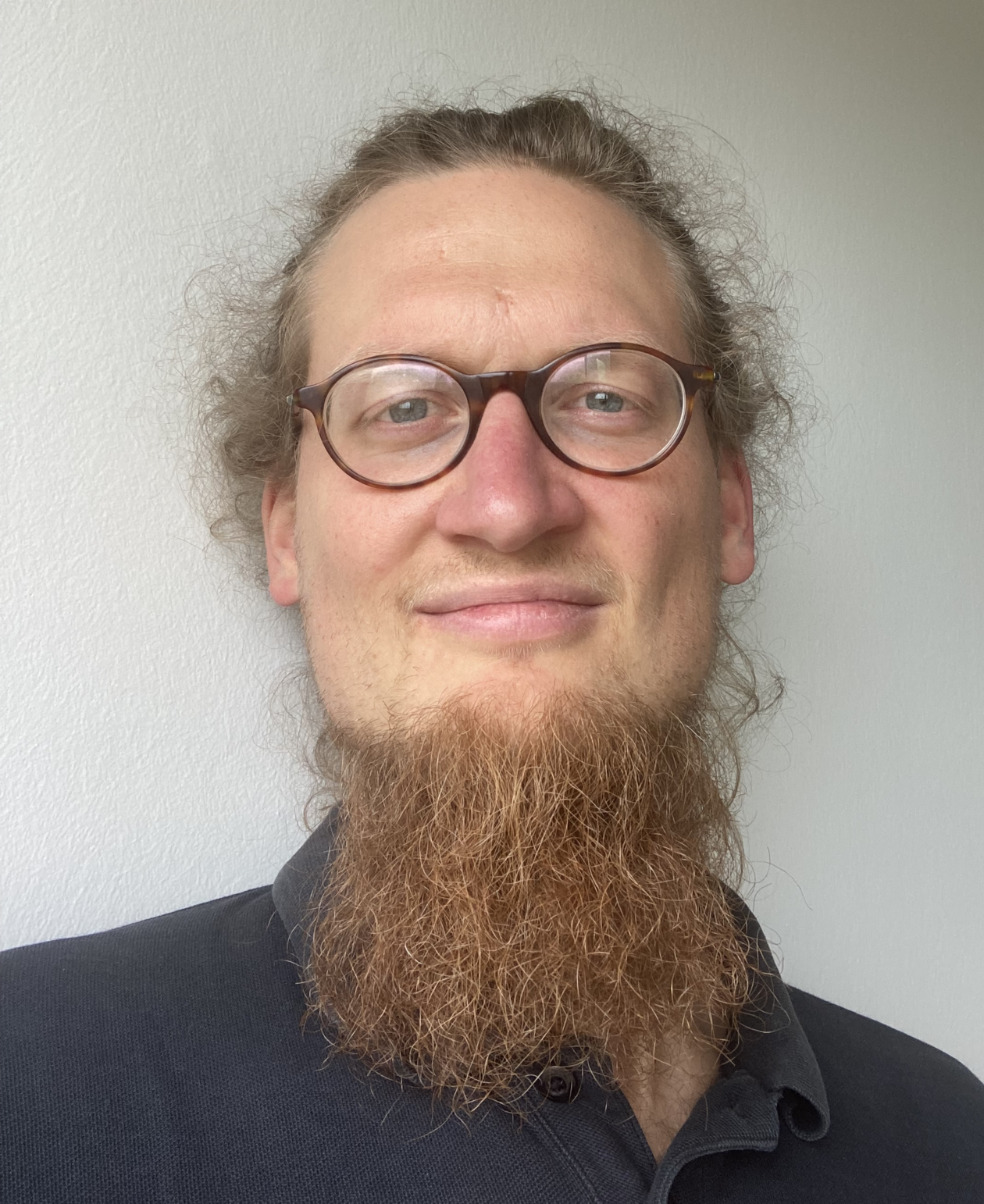
Prof. Paul Yecko is a faculty member at the Albert Nerken School of Engineering, part of The Cooper Union for the Advancement of Science and Art. His research focuses on fluid dynamics, particularly in geophysical flows, magnetic fluids, and computational modeling. He co-authored the Vofi library for fluid interface volume fraction calculations and has published extensively on topics like ferrofluid behavior, machine learning in ocean circulation, and passive ventilation systems. Research Trends: Recent publications emphasize Multiscale modeling of magnetic fluids Machine learning integration in geophysical flow prediction Volume fraction analysis in multiphase systems Nonlinear dynamics in shear and pulsatile flows Bio-inspired fluid transport mechanisms Optimal disturbance tracking in rotating boundary layers
Sreeni Chadalavada is a Senior Lecturer in Water Engineering at the University of Southern Queensland, where he focuses on teaching and research in hydrology, water resources, and environmental engineering. Previously, he served as Principal Hydrogeologist and Research Manager at CRC CARE (University of Newcastle) and Senior Scientist at the University of South Australia. His expertise spans hydrology, environmental risk assessment, contaminated land management, and optimization techniques. Education: BTech (Pondicherry University, 2003), MTech (Indian Institute of Technology, 2005), PhD (University of South Australia, 2009). Research interests include water resources engineering, waste management, environmental monitoring, and the application of AI in environmental systems. He has supervised numerous doctoral and master’s students on topics like groundwater remediation, climate change impacts on hydrology, and machine learning in water quality management. Key affiliations include the Centre for Applied Climate Sciences and the Institute for Life Sciences and the Environment. His recent work emphasizes AI-driven solutions for air and water quality, climate change adaptation, and sustainable remediation strategies.
Daniel B. Abrams is a Principal Research Scientist at the Illinois State Water Survey , affiliated with the Grainger College of Engineering at the University of Illinois at Urbana-Champaign . His work focuses on Groundwater Flow Modeling , Aquifer Systems , and Water Supply Planning , with extensive use of MODFLOW and hydrological simulation techniques. Research interests include: Groundwater Depletion Dynamics in urban and regional contexts Hydrogeological Risk Assessment for sandstone and dolomite aquifers Participatory Modeling for community water management Structural Error Evaluation in groundwater models Isotope Fractionation in heterogeneous aquifers Key contributions involve: Developing Groundwater Flow Models of Illinois (2018, 2023) Calibrating Chloride Accumulation Models (2023) to assess deicer impacts Leading Water Supply Planning Studies for multiple Illinois regions (2010-2060) Analyzing Transit Time Distributions in aquifer systems (2011-2018) Collaborations include: Long-term partnership with Daniel R. Hadley and Charles Cullen Joint work with Tom Birkenholtz on participatory modeling Contributions to Cambrian-Ordovician Aquifer sustainability studies
Karl Dunbar Stephen is an Associate Professor at the School of Energy, Geoscience, Infrastructure and Society at Heriot-Watt University, holding a joint affiliation with the Institute for GeoEnergy Engineering. His research focuses on reservoir engineering, enhanced oil recovery, and geomechanical modeling, with significant contributions to fractured reservoir simulation, CO₂ sequestration, and production optimization techniques. He has authored over 215 research outputs, including peer-reviewed articles, conference papers, and technical reports. His expertise aligns with UN Sustainable Development Goals, particularly in affordable and clean energy (SDG 7) and climate action (SDG 13). Key research areas include reservoir simulation methodologies, data integration through machine learning, and innovative approaches to history-matching and uncertainty quantification. Dr. Stephen has received the Award for Outstanding Service (2012) and actively participates in international conferences such as EAGE and SEG/SPE workshops. He has served as a peer reviewer for journals like Tectonophysics and organized specialized training programs like the Strategic Reservoir Simulation course. His collaborative projects involve institutions worldwide, focusing on heterogeneous reservoirs, tight gas systems, and carbon capture technologies. Recent research trends emphasize AI-driven reservoir optimization, CO₂-enhanced oil recovery, and fracture stimulation techniques. He has contributed to field studies in Iraq's Sadi Formation and offshore reservoirs, demonstrating practical applications of advanced simulation tools and data mining techniques.
Glyn Williams-Jones is a Professor and Co-Director of the Centre for Natural Hazards Research at Simon Fraser University's Department of Earth Sciences. His work bridges physical volcanology, glaciovolcanism, and geothermal systems with Indigenous knowledge integration. Current research explores magma dynamics in the Cascade Volcanic Arc Develops machine learning tools for volcano monitoring Integrates Indigenous oral histories with geological analyses Notable projects include studying Canada's deadliest volcanic eruption (Tseax, ~1700 CE) and developing hazard assessments for glacier-capped volcanoes. His lab employs advanced geophysical techniques like gravity modeling and seismic signal analysis. Students under his supervision work on topics spanning structural geology, glaciovolcanic cave systems, and volcanic risk communication. Recent publications highlight applications of machine learning in volcano-seismic data analysis (2025), Indigenous-Western science co-creation (2024), and glaciovolcanic void dynamics (2024). He actively collaborates with institutions like the Instituto Geofísico de la Escuela Politécnica Nacional in Ecuador.
Damiano Pasetto is Associate Professor in Numerical Analysis at Ca' Foscari University of Venice, affiliated with the Department of Environmental Sciences, Informatics and Statistics. His office is located in the Alfa building of the Via Torino scientific campus. Pasetto's research develops computational methods for environmental and epidemiological systems. Core focuses include reduced-order modeling techniques applied to groundwater flow simulations and physics-informed neural networks for epidemiological forecasting. Recent publications demonstrate strong emphasis on epidemic modeling (40%), hydrological systems (33%), and computational method development (27%). COVID-19 spatial dynamics and cholera transmission mechanisms represent significant thematic clusters. He leads EPIDOC project (2021-2025) on data assimilation and optimal control for COVID-19 forecasting in Italy. Additional research includes Bayesian parameter estimation for hydrological transport models. Office hours: Tuesdays 14:00-15:00 in Alfa 314 or by appointment.
Sophia Tsang is a Lecturer in the School of Earth, Atmosphere, and Environment at Monash University, focusing on education and transdisciplinary research in Earth Systems Science. She previously held roles at Te Pū Ao | GNS Science and the University of Auckland, where she contributed to volcanic hazards research and geoscience education. Her work emphasizes community engagement, combining qualitative social science with geological methodologies. Education : Ph.D. in Geology from the University of Auckland (2020), Graduate Diploma in Secondary Teaching (2022), ScB in Geology from Brown University (2015). Roles : Transitioning to First Year Coordinator, coordinating courses like EAE1011 and EAE1022. Honorary Academic at the University of Auckland (2023–2025). Research interests span effusive volcanic hazards, geoscience education, and applied community-centered projects. She advocates for ethical integration of research with education and community involvement. Her recent work includes the Soilsafe Kids program and TiDeTEW tsunami warning systems in Aotearoa New Zealand. Publications highlight outreach strategies, lava flow modeling, and the impact of science education on career trajectories. She actively supervises students interested in geoscience education and hazards research.
Susan Allen is a Professor in the Department of Earth, Ocean & Atmospheric Sciences at the University of British Columbia (UBC), part of the Faculty of Science. Her research focuses on physical oceanography, coastal dynamics, and biogeochemical-physical interactions, with a specialization in submarine canyon flows and numerical modeling. She holds affiliations with the Institute of Applied Mathematics and collaborates on interdisciplinary projects. Education: B.Sc. (Physics, Queen's University, 1984); Ph.D. (Cambridge University, 1989). Postdoctoral work at Seakem Oceanography (1989–1990) before joining UBC in 1990. Served sabbaticals at institutions like the Institute of Ocean Sciences (2000), IFREMER (2006), and Berkeley (2013–2014). Research Interests: Submarine canyon hydrodynamics, climate-driven ocean processes, trace element distribution (e.g., Mn, Pb), and model development for coastal systems like the Salish Sea. She investigates impacts of anthropogenic carbon on ocean chemistry, upwelling/downwelling dynamics, and ecosystem responses to climate change. Key Contributions: Developed models for carbonate chemistry in the Salish Sea, Arctic trace metal distributions, and canyon-induced cross-shelf exchanges. Her work bridges numerical modeling with field observations, addressing topics like phytoplankton bloom timing and larval dispersal in coastal ecosystems. Advising & Grants: Supervised numerous graduate students (e.g., Becca Beutel) in oceanography and atmospheric science. Active in securing grants for projects such as the Salish Sea forecast model under MEOPAR. Collaborates on initiatives like the Canadian Arctic GEOTRACES program. Labs/Teams: Involved with UBC's Bamfield Marine Sciences Centre and the Pacific Museum of Earth. Contributes to climate crisis research through EOAS committees and interdisciplinary projects addressing ocean acidification and hypoxia.
Dr. Phanikumar Mantha is a Professor in the Department of Civil and Environmental Engineering at Michigan State University’s College of Engineering. His research focuses on water quality and environmental flow/transport processes in the Great Lakes and large river basins, combining field data with computational models. He leads the Computational Hydrology & Reactive Transport Modeling lab, emphasizing interdisciplinary approaches to address societal challenges like nutrient cycling, groundwater-surface water interactions, and climate impacts. Education: Ph.D., Computational Fluid Dynamics and Thermal Sciences, Indian Institute of Science, India (1990) B.S., Mechanical Engineering, Andhra University, India (1984) Research Interests: Coastal processes and water quality in the Great Lakes Integrated hydrologic modeling in large river basins Fate and transport of contaminants (nutrients, pathogens) Groundwater-surface water interactions Awards: 2013 Fellow, Geological Society of America 2012 Member, CILER Council of Fellows 2004 Lilly Teaching Fellow 1996 C.V. Raman Young Scientist Award Advising & Grants: Advised doctoral student Chelsea Weiskerger (2021) Recipient of multiple grants for Great Lakes and Amazon Basin studies Labs/Teams: Computational Hydrology Lab at Michigan State University, collaborating on projects funded by NSF, NOAA, and international agencies.
Peter H. Hennings serves as a Research Professor at the Bureau of Economic Geology (BEG), which is part of the Jackson School of Geosciences at the University of Texas at Austin. His work focuses on geophysical research with particular emphasis on seismology and energy-related geological studies. Dr. Hennings' research interests span multiple critical areas of geoscience including Geophysics , Seismology , Structural Geology , Energy Resources , Carbon Sequestration , and Induced Seismicity . His work addresses fundamental questions about earthquake mechanisms, particularly those related to energy production activities, and contributes to our understanding of subsurface processes critical for resource development and environmental protection. Analysis of his publication record reveals a strong focus on seismotectonic characteristics of the Midland Basin, wastewater injection-induced seismicity, and 3-D lithospheric structure mapping. His research demonstrates an interdisciplinary approach combining field observations, modeling techniques, and statistical analysis to address complex geological problems with practical implications for energy development and seismic hazard assessment. Dr. Hennings has contributed to significant research initiatives including the Center for Injection and Seismicity Research (CISR) and the Gulf Coast Carbon Center (GCCC), focusing on the intersection of energy production, geological storage, and seismic risk. His work supports critical energy and environmental decision-making through advanced geophysical analysis and contributes to the Bureau's mission of providing science-based solutions to geological challenges facing Texas and the nation.
Valeria Todaro is a Researcher at the Department of Engineering and Architecture, University of Parma, where she conducts interdisciplinary research in hydrology, environmental engineering, and climate resilience. Her work integrates numerical modeling, geophysical data assimilation, and field-based assessments to address challenges in water resource sustainability and urban flood risk. Research Interests: Her expertise spans hydrological modeling under climate change , urban flood simulation using porous media approaches , subsurface characterization via Electrical Resistivity Tomography , and pollution assessment in aquifers . She applies advanced computational methods to real-world problems such as drought impacts on transboundary water systems and integrated soil and water conservation. The analysis of her recent publications reveals a strong trend toward data-driven subsurface modeling , inverse hydrological methods , and sustainable management of water and land resources . Her research bridges civil engineering, environmental science, and climate adaptation, with a focus on practical applications in Mediterranean and arid regions. Scientific Awards: No awards listed in the provided text. Advising and Grants: There is no information available about students advised or research grants obtained. However, her collaborative publication record suggests active involvement in research projects involving multidisciplinary teams and international cooperation. Labs and Teams: While specific lab affiliations are not mentioned, her use of laboratory-scale experiments and advanced modeling techniques indicates participation in experimental hydrology and computational geoscience research groups within her department.
Matthias Karlbauer is a Postdoctoral Researcher in the Cognitive Modeling group at the Wilhelm Schickard Institute for Computer Science, University of Tübingen. He is currently working in the Land-Atmosphere Feedback Initiative (LAFI), focusing on physics-aware machine learning for climate and environmental modeling. His work bridges cognitive science, artificial intelligence, and geophysical systems. PhD in Cognitive Modeling, University of Tübingen (2019–2024) Master of Cognitive Science, University of Tübingen (2015–2018) Bachelor of Cognitive Science, University of Tübingen (2012–2015) Scholar, International Max Planck Research School for Intelligent Systems (IMPRS-IS) His research centers on physics-aware neural networks , spatiotemporal data prediction , and deep learning for environmental systems . He develops models like DISTANA and finite volume neural networks to integrate physical laws into neural architectures, enabling robust forecasting of temperature, geopotential, and fluid dynamics. His interests also extend to generative models, recurrent networks, and graph neural networks applied to climate and sustainability challenges. The recent publications show a strong trend toward integrating partial differential equations with neural networks, denoising spatiotemporal signals , and modeling physical processes using hybrid AI. His work emphasizes interpretability, physical consistency, and real-world applicability in climate science and cognitive modeling. Matthias has actively supervised multiple Bachelor’s and Master’s students on projects related to neural network applications in physics and climate data. He has contributed to teaching as a tutor and lecturer in courses such as Generative and Recurrent Neural Networks , Advanced Artificial Neural Networks , and Graph Neural Networks . While no formal grants are mentioned, his IMPRS-IS affiliation suggests institutional funding support. He is part of the Cognitive Modeling research group at the University of Tübingen, collaborating on projects involving neural modeling of cognitive and physical processes, with a focus on sustainability and climate protection.
Mohsen Assadi is a Professor at the Department of Energy and Petroleum Engineering, Faculty of Science and Technology, University of Stavanger (UiS), Norway. His work focuses on sustainable energy technologies, particularly micro gas turbines, hydrogen energy systems, geothermal applications, and AI-driven energy modeling. He actively collaborates with researchers across Europe and contributes to the clean energy transition through techno-economic and performance analyses. Research Interests: His research spans key areas in modern energy systems, including micro gas turbines , hydrogen and fuel-flexible combustion , geothermal energy , thermal energy storage , smart grids , and artificial intelligence applications in energy . He emphasizes techno-economic feasibility, decarbonization strategies, and system integration for residential, industrial, and urban environments. The recent publications highlight a strong trend toward AI-enhanced modeling for heating and cooling prediction, optimization of microgrids with hydrogen and renewables, and innovative energy storage solutions such as subsea pumped hydro and wastewater thermal reservoirs. His work bridges engineering fundamentals with real-world sustainability challenges. Scientific Awards: No scientific awards mentioned in the provided text. Advising and Grants: While specific students or grants are not listed, Dr. Assadi frequently co-authors with early-career researchers and engineers, suggesting an active mentoring and advisory role in research projects. His publications appear in high-impact journals and conferences in energy and engineering, indicating sustained research funding and collaborative project involvement. Labs and Teams: Though not explicitly named, his research output suggests involvement in energy systems labs focused on microturbines, geothermal applications, and AI-based energy modeling at the University of Stavanger. He collaborates with interdisciplinary teams across thermodynamics, fluid mechanics, and sustainable urban infrastructure.
Michael Martin is a nationally recognized expert in National Renewable Energy Laboratory (NREL) , specializing in Computational Fluid Dynamics , Heat Transfer , and Advanced Manufacturing . His work addresses sustainability challenges in areas like green steelmaking and quantum computing energy efficiency. He joined NREL in 2017 and serves as practicum coordinator for the DOE Computational Science Graduate Fellowship and representative in the HPC4EI program . Research interests include: Computational Fluid Dynamics Heat Transfer Optimization Sustainable Computing Advanced Manufacturing Recent publications analyze: Climate change impacts on renewable energy resources Supercritical CO2 flow dynamics Quantum data center thermal parameters Geothermal reservoir machine learning models Scientific awards include: ASME Fellow (2023) Milton Van Dyke Award (2022) New Voices Cohort (2021) Active in professional networks like: American Physical Society AIAA DOE HPC4EI
Jerry P. Fairley serves as a Full Professor in the Department of Earth and Spatial Sciences within the College of Science at the University of Idaho. His academic career spans three decades with continuous research contributions in hydrogeological systems and geothermal energy applications. Education: B.S. in Geology (1984) from State University of New York College at Cortland M.S. in Geosciences (1991) from University of Nevada, Las Vegas Ph.D. in Earth Resources Engineering (2000) from University of California, Berkeley Professor Fairley's research centers on fluid dynamics in complex geological media , with emphasis on heterogeneous porous systems, geothermal reservoir characterization, and environmental applications including carbon sequestration and nuclear waste disposal. His work integrates field measurements, geospatial analysis, and numerical modeling to address challenges in hydrothermal systems and arid-region groundwater management. Recent projects demonstrate particular expertise in Yellowstone hydrothermal dynamics and Chilean mining district hydrology. Analysis of his 15 most recent publications (2017-2024) reveals consistent focus on hydrothermal system behavior (particularly Yellowstone), groundwater recharge in arid environments (notably Chilean Andes), and geothermal resource assessment using geostatistical methods. His work bridges fundamental fluid mechanics with practical energy and water resource applications, often employing innovative field measurement techniques like ice box calorimetry and thermal anomaly mapping. Professor Fairley has led significant collaborative research initiatives including the NSF-funded project Constraining Heat Flux from the Shallow Geothermal System, Yellowstone Caldera (2013), demonstrating sustained external funding for his geothermal investigations. His fieldwork spans diverse geological settings from Idaho's Snake River Plain to active volcanic zones in Japan and Chile.