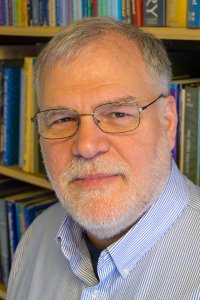
Brian J. McPherson is a Professor in the Department of Civil & Environmental Engineering at the University of Utah. He specializes in geologic carbon storage, geomechanics, and subsurface fluid dynamics, with extensive research on CO₂ sequestration, enhanced oil recovery (EOR), and reservoir characterization. His work integrates experimental, numerical, and field studies to assess risks and optimize subsurface storage. McPherson's research focuses on: Geomechanical risk assessment for CO₂ storage Multiphase flow dynamics in porous media Machine learning applications in reservoir forecasting Impacts of CO₂ leakage on groundwater systems His publications emphasize carbon capture and storage (CCS) technologies, hydraulic fracturing, and subsurface monitoring methods. Recent articles frequently address uncertainty quantification and predictive modeling using Bayesian frameworks and AI. He leads major DOE-funded initiatives, including the San Juan Basin CarbonSAFE project and the Uinta Basin CarbonSAFE II feasibility study. These projects focus on ensuring safe long-term CO₂ storage in saline reservoirs. McPherson advises graduate students through thesis research courses and directs the SMART Machine Learning Initiative as an External Advisory Board member.
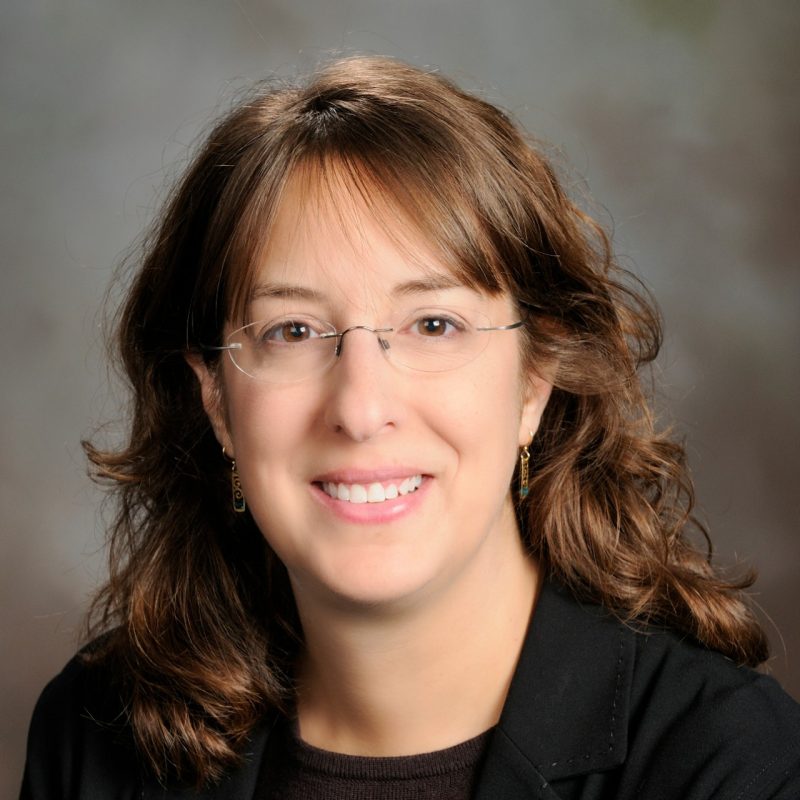
Soutir Bandyopadhyay is a Professor in the Department of Applied Mathematics and Statistics at Colorado School of Mines. He holds a PhD in Statistics from Texas A&M University, an M.Stat from the Indian Statistical Institute, and a B.Sc in Statistics from St. Xavier’s College. His research focuses on spatial and environmental statistics, time series analysis, bootstrap methods, and large sample theory, with applications in energy systems, climate science, and machine learning. Recent work includes advancements in spatial extremes modeling using neural networks, risk analysis in oil and gas flowlines, and statistical frameworks for energy load forecasting. He has organized major conferences including the 2023 IISA Annual Conference and the 2024 workshop on uncertainty in civil/environmental systems. As Director of the Data Science Program at Mines since 2025, he leads interdisciplinary initiatives. Key contributions include development of the National Climate Database (NCDB), bias-correction methods for solar radiation data, and R packages like glmfitmiss for handling missing data in GLMs. His students have achieved notable recognitions, including Fulbright awards and ASA competition honors.
Femke Vossepoel is a Professor of Earth System Simulation at the Delft University of Technology 's Faculty of Civil Engineering & Geosciences. She leads a research group focused on data assimilation in geosciences, integrating observations with dynamic Earth-system models to address challenges in urban heat islands, subsidence, and seismic hazard forecasting. Her interdisciplinary background spans oceanography, petroleum engineering, and climate resilience. Research Focus Earthquake occurrence estimation using advanced filtering algorithms Subsidence due to subsurface fluid extraction Climate resilience applications in urban environments AI-enhanced data assimilation for CO2 storage optimization Her work bridges geoscience and computational methods, with key roles in EU's Destination Earth initiative and the UrbanAIR consortium. She received funding from the Dutch Research Council (NWO), Delphi Consortium, and Petrobras for her innovative projects.
Randal Barnes serves as an Associate Professor and Director of Undergraduate Studies for Civil Engineering and Geoengineering at the University of Minnesota's Department of Civil, Environmental, and Geo-Engineering. He holds the distinguished title of Distinguished University Teaching Professor, recognizing his exceptional contributions to education. His research traverses mathematical modeling in geological and civil engineering with three primary foci: geostatistical site characterization (optimal sample design and engineering decision-making under spatial variability and parameter uncertainty), incorporation of uncertainty into quantitative modeling for geoengineering, and computational aspects of the Analytic Element Method. His work spans civil infrastructure, geotechnical applications, and environmental engineering, with particular emphasis on uncertainty quantification in engineering systems. Barnes' recent publications demonstrate a strong trend toward integrating machine learning techniques with traditional engineering modeling, particularly in uncertainty quantification for both civil infrastructure and environmental applications. His work bridges civil engineering with data science approaches, showing increasing focus on neural network applications for engineering problems. Distinguished University Teaching Professor Barnes has served as Principal Investigator and Co-Investigator on significant transportation research projects funded by the Minnesota Department of Transportation, including the MnROAD Data Mining project and PCC Pavement Thickness Variation study. His research has garnered substantial academic attention with multiple publications receiving double-digit Scopus citations. His work contributes to UN Sustainable Development Goals related to sustainable infrastructure development and environmental protection through improved engineering modeling and decision-making under uncertainty.
Madeline E. Schreiber serves as Professor of Hydrogeosciences in the Department of Geosciences within Virginia Tech's College of Science. Her research program develops quantitative predictions of solute behavior in natural waters to address critical questions about release mechanisms, transport processes, and fate of contaminants, with a practical focus on protecting water quality through integrated field, laboratory, and modeling approaches. Her work is published in leading hydrogeology and environmental science journals and supported by diverse funding sources including NSF, federal agencies, industry, and non-profits. Dr. Schreiber's educational foundation includes: Ph.D. in Geology from University of Wisconsin-Madison (1999) M.S. in Geology from University of Wisconsin-Madison (1995) B.S. in Geology from Yale University (1991) Her research spans chemical hydrogeology with emphasis on solute transport dynamics, groundwater chemistry, and environmental contamination. Key investigations address metal cycling in reservoirs, arsenic mobilization in aquifers, and biogeochemical processes controlling contaminant fate. She employs advanced methodologies including high-frequency sensor networks, laboratory experiments on mineral-water interactions, and numerical modeling to resolve complex hydrogeochemical systems across temporal and spatial scales. Recent publications (2023-2025) demonstrate concentrated expertise in reservoir management, particularly examining hypolimnetic oxygenation effects on iron/manganese removal, drawdown impacts on reservoir ecosystems, and arsenic contamination mechanisms. Her work increasingly integrates real-time forecasting systems for water quality management under climate change, leveraging extensive time-series data from Virginia reservoirs. This research bridges fundamental hydrogeochemistry with practical water resource protection needs. Dr. Schreiber actively mentors graduate students in hydrogeology and related disciplines while securing competitive funding from multiple sectors. Her research group maintains strong industry and agency partnerships focused on solving pressing water quality challenges. The VT Hydrogeosciences lab conducts field studies across southwestern Virginia reservoirs (Falling Creek, Beaverdam, Carvins Cove), utilizing cutting-edge instrumentation for high-frequency water quality monitoring. Current projects examine metal cycling dynamics, sediment-water interactions, and biogeochemical responses to oxygenation management, directly informing drinking water protection strategies.
Federico Ciardo is an Assistant Professor of Civil and Environmental Engineering at Northwestern University, specializing in geomechanics and subsurface engineering. His research focuses on understanding deformation mechanisms in brittle rocks and fault zones under fluid injection, aiming to improve predictive models for geo-engineering applications like geothermal energy and CO2 sequestration. He leads the GEOFORCE Group, which develops advanced computational and theoretical approaches to study subsurface processes across multiple scales. Education: Ph.D. in Mechanics from École Polytechnique Fédérale de Lausanne (EPFL, Switzerland), M.Sc. and B.Sc. in Civil/Structural Engineering from the University of Bologna, Italy. Research Interests: Investigating fluid-driven deformation instabilities in fractured rocks, seismic hazard mitigation, and the interplay between in-situ stresses and external forces. Key topics include aseismic/a-seismic slip dynamics, hydraulic stimulation effects, and fault zone heterogeneity. His work integrates fracture mechanics, numerical modeling (e.g., boundary element methods), and scaling arguments to achieve mechanistic insights. Scientific Contributions: Published extensively on induced seismicity forecasting, fault slip nucleation, and hybrid hydromechanical models. Notable recognition includes the EPFL Doctoral Program Thesis distinction award (2020). Labs/Teams: Principal investigator of the GEOFORCE Group, affiliated with the Paula M. Trienens Institute for Sustainability and Energy. Collaborates on projects involving underground laboratories (e.g., Bedretto Lab) and geothermal energy systems.
Mateo Acosta is an Assistant Professor of Geomechanics at Virginia Tech, specializing in earthquake mechanics, crustal deformation, and geomorphic processes. He serves as Center Director of the Center for Geomechanics and Mitigation of Geohazards (GMG) and Associate Director of the Center for Autonomous Systems and Technologies, bridging geoscience with engineering applications. His research integrates field observations, seismological and geodetic measurements, remote sensing, and laboratory experiments to develop kinematic and dynamic models. Key projects include seismicity forecasting in subsurface engineering operations, hydrology-crustal deformation interactions, Martian dune dynamics, Himalayan and Tibetan tectonic studies, and postseismic deformation analysis. Recent publications focus on induced seismicity mitigation, geothermal reservoir optimization, fault hydraulic properties, and earthquake nucleation mechanisms. These works span 2017-2025 with recurring themes in geothermal energy applications, CO2 storage safety, and computational geomechanical modeling. Scientific awards : Resnick Graduate Scholar Acosta contributes to earthquake physics outreach through media appearances, including a PBS Interview on geothermal systems. His work connects geological processes with practical engineering solutions for geohazard mitigation.
PD Dr. Daniel Werner Meyer-Massetti is a Privatdozent (Part-Time Lecturer) at the Department of Mechanical and Process Engineering , ETH Zürich. His research focuses on stochastic methods for fluid dynamics and multiphase transport problems in complex systems. Primary Affiliation: ETH Zürich, Department of Mechanical and Process Engineering Email: meyerda@ethz.ch His work bridges theoretical and applied research in turbulence, porous media, and combustion. Key contributions include: Stochastic particle-based frameworks for fractured subsurface flows Turbulence modulation in droplet-laden flows Uncertainty quantification in heterogeneous reservoirs Computational tools like the Netflow Python library His recent publications demonstrate methodological advancements in: Modeling inertial particle clustering in turbulence Simulating evaporation dynamics in reactive flows Developing non-local transport formulations Quantifying dispersion mechanisms in porous media Validating kinematic turbulence models Creating adaptive simulation strategies He collaborates with research groups including the Coletti Group , Jenny Group , and Supponen Group , while maintaining connections to the Haller Group and Noiray People as a former member.
Aaditya Khanal, Ph.D., is an Assistant Professor of Chemical Engineering & Petroleum Engineering at The University of Tulsa's College of Engineering & Computer Science. His research focuses on modeling fluid flow in porous media with applications to energy extraction and climate change mitigation. Dr. Khanal's research interests include: CO2 sequestration in saline aquifers Underground hydrogen storage Hydrocarbon production forecasting for unconventional reservoirs Phase behavior modeling of hydrocarbons Machine learning applications to solve complex engineering problems His research methodology combines both numerical simulations and experimental approaches to address critical challenges in energy transition and sustainable resource management. Dr. Khanal has published extensively in the areas of carbon sequestration, hydrogen storage, and machine learning applications in reservoir engineering, with a notable focus on recent advancements in 2024-2025 publications that address critical challenges in underground energy storage and carbon management. Dr. Khanal's scholarly work demonstrates a strong interdisciplinary approach, bridging petroleum engineering, chemical engineering, and data science to develop innovative solutions for energy transition challenges. His recent publications show particular emphasis on hydrogen storage technologies, CO2 mineralization processes, and the application of machine learning to reservoir characterization.
Dr. Vladimir Cvetkovic is a Professor at KTH Royal Institute of Technology’s Resources, Energy and Infrastructure department, affiliated with the Digital Futures research center. He serves as Co-Principal Investigator (Co-PI) for the Humanizing the Sustainable Smart City eXtended (HiSSx) project and previously led the HiSS initiative. His research bridges geotechnical engineering, environmental systems, and urban sustainability, focusing on rock fracture mechanics, contaminant transport, and socio-environmental resilience. Key areas of expertise include: Fracture network analysis and grouting technologies Sustainable smart city development Socio-behavioral modeling for energy consumption Hydrogeology and subsurface processes Recent work emphasizes interdisciplinary approaches to urban challenges, combining digital technologies with environmental science. His projects address radioactive waste disposal, smart city infrastructure, and socio-environmental system dynamics. Research outputs span over 100 peer-reviewed articles, with a focus on fluid dynamics in fractures, contaminant transport modeling, and urban policy design. He collaborates internationally on initiatives such as Baltic Sea nutrient management and climate-resilient urban planning in cities like Nanjing and Chicago. Contact: vdc@kth.se | Address: Osquars Backe 5, 100 44 Stockholm, Sweden
Hongsheng Wang is a Research Fellow at the Bureau of Economic Geology within the Jackson School of Geosciences at The University of Texas at Austin. His research focuses on advancing subsurface energy technologies through interdisciplinary approaches combining geoscience, engineering, and machine learning. Key areas include geological carbon storage, underground hydrogen storage, reservoir simulation, and fracture mechanics. His work emphasizes innovative applications of machine learning for challenges such as CO2 plume migration forecasting, parameterization of 3D saturation data, and fracture conductivity analysis. He also investigates leakage mitigation strategies in hydrogen storage systems and the role of permeability heterogeneity in subsurface processes. Publications highlight contributions to microfluidic experiments, porous media dynamics, and AI-driven reservoir modeling. Current projects involve surrogate models for large-scale simulations and dimension reduction techniques to enhance computational efficiency in carbon storage assessments.
Tapan Mukerji is a Professor (Research) at Stanford University with joint appointments in the Department of Energy Science & Engineering, the Department of Earth & Planetary Sciences, and the Department of Geophysics within the School of Earth Sciences. He co-directs the Stanford Center for Earth Resources Forecasting (SCERF), the Basin Processes and Subsurface Modeling (BPSM) consortium, and the Stanford Rocks and Geomaterials Project (SRGP), and previously co-directed the Stanford Rock Physics and Borehole Geophysics Project (SRB). His educational background includes: Ph.D. in Geophysics from Stanford University (1995) M.Sc.(Tech) in Geophysics from Banaras Hindu University, India (1989) B.Sc. in Physics from Banaras Hindu University, India (1986) Tapan Mukerji's research focuses on integrating rock physics, wave propagation physics, spatial data science, and machine learning to address challenges in remote sensing of subsurface systems, stochastic geomodeling, uncertainty quantification, and value of information analysis in Earth sciences. His work uses theoretical, computational, and statistical methods to discover fundamental relations between geophysical data and rock properties, quantify uncertainty in subsurface models, and address decision making under uncertainty. He is particularly interested in forging links between geosciences, engineering, and decision sciences, believing these interdisciplinary connections are critical for the future of energy resources research. His research has broad applications in hydrocarbon exploration, geothermal energy, carbon sequestration, and critical mineral exploration. His recent publications demonstrate a strong trend toward integrating advanced machine learning techniques with traditional geophysical methods. There's increasing focus on physics-informed neural networks, generative models for geological facies simulation, and uncertainty quantification in subsurface characterization. His work bridges the gap between theoretical rock physics and practical applications in energy resource development, with particular emphasis on making robust decisions under uncertainty. Professor Mukerji has received numerous scientific awards and recognitions: Karcher Award for Outstanding Young Geophysicist, Society of Exploration Geophysicists (2000) ENI Award 2014: New frontiers of Hydrocarbons - upstream, ENI - Italy (2014) Best paper, honorable mention, Society of Exploration Geophysicists (2020) Best paper, International Association of Mathematical Geosciences (2010) Multiple best paper awards from various geophysical societies Invited keynote speaker at numerous international conferences Haider Fellowship and Green Fellowship from Stanford University Professor Mukerji actively advises and mentors graduate students, serving as Doctoral Dissertation Advisor for Jaehong Chung and Jiayuan Huang, Doctoral Dissertation Reader for several students, and Postdoctoral Faculty Sponsor for Qi Hu and Suihong Song. His research has been supported by multiple industrial consortia including the Stanford Rock Physics and Borehole Geophysics Project (SRB), Stanford Center for Earth Resources Forecasting (SCERF), Basin Processes and Subsurface Modeling (BPSM), Stanford Rocks and Geomaterials Project (SRGP), and Smart Fields Consortium (SFC). He has also received funding from the Department of Energy and various fellowship programs throughout his career. Professor Mukerji co-directs several major research groups at Stanford including the Stanford Center for Earth Resources Forecasting (SCERF), the Basin Processes and Subsurface Modeling (BPSM) consortium, and the Stanford Rocks and Geomaterials Project (SRGP). These groups bring together faculty, researchers, and industry partners to tackle complex problems in subsurface characterization, reservoir modeling, and energy resource development. His labs focus on developing computational methods for integrating geophysical data with rock physics models, creating advanced uncertainty quantification frameworks, and building decision support tools for subsurface resource management.
Anne C. Elster is a Professor in the Department of Computer Science at the Norwegian University of Science and Technology (NTNU), within the Faculty of Information Technology and Electrical Engineering. She is the founder and director of the HPC-Lab, a leading research group in heterogeneous and parallel computing. She also maintains a long-standing affiliation with the Oden Institute at the University of Texas at Austin as a Senior Visiting Scientist until Summer 2025. Research Interests: Her work spans high-performance computing (HPC), GPU computing, parallel algorithms, auto-tuning, performance optimization, and machine learning applications in scientific computing. She leads research in heterogeneous architectures and has contributed significantly to compiler and runtime systems for GPUs and accelerators. Publications Trends: Her recent publications (2021–2024) focus on GPU acceleration, auto-tuning frameworks (e.g., BAT, LS-CAT), performance modeling (Roofline), machine learning integration in HPC, and applications in geophysical and scientific computing. There is a strong emphasis on empirical evaluation, benchmarking, and practical optimization techniques. Scientific Awards and Recognition: IEEE Senior Member (2000) IEEE Computer Society Distinguished Contributor Charter member, NTNU's Board (2021) Distinguished Speaker, IEEE Computer Society (2019–2022) Advising and Grants: She has advised over 100 master’s students and several PhD students. She has led major funded projects including the RCN SFI Centre for Geophysical Forecasting, EU H2020 CloudLightning and TICOH, and NFR FRINATEK on Computational Microscopy. She has served on numerous international program committees and evaluation boards. Labs and Teams: She leads the HPC-Lab at NTNU, which includes postdocs, PhDs, and master’s students, and collaborates with international researchers. The lab is a hub for innovation in GPU computing, auto-tuning, and HPC applications.
Trenton Franz serves as an Associate Professor of Hydrogeophysics at the School of Natural Resources, University of Nebraska-Lincoln. His research focuses on applying geophysical methods to study soil moisture dynamics and ecohydrological processes, particularly in dryland ecosystems. He leads the WAVES (Water, Vegetation, & Society) research group investigating the connections between subsurface hydrology and vegetation patterns. Dr. Franz's research interests center on hydrogeophysics and ecohydrology , with particular emphasis on developing and applying geophysical techniques to monitor soil moisture dynamics at various scales. His work bridges the gap between traditional hydrology and geophysics, creating innovative approaches to understand water movement in the vadose zone and its ecological implications. Current projects investigate how subsurface structures like termite nests influence water distribution in drylands and how these patterns affect vegetation communities. His publication record demonstrates consistent contributions to high-impact hydrology journals including Water Resources Research , Vadose Zone Journal , and Ecohydrology . The research shows progression from laboratory-scale experiments on homogeneous sand to field applications in complex natural systems, with increasing focus on the ecological implications of subsurface hydrological patterns. Dr. Franz collaborates extensively with researchers across institutions, including notable partnerships with Rutgers University and previous work with Kelly Caylor's lab at UCSB. His research integrates field measurements, laboratory experiments, and numerical modeling to address fundamental questions in hydrological science.
Majid Taie Semiromi is a Postdoctoral Researcher at the Hydrogeology Group, Institute of Geological Sciences, Department of Geosciences, The Free University of Berlin. His work integrates groundwater modeling, climate change impacts, and data-driven algorithms in hydrogeological simulation. Ph.D. in Civil Engineering-Geohydrology (University of Kassel, Germany, 2018) M.Sc. in Watershed Management Engineering (Tarbiat Modares University, Iran, 2010) B.Sc. in Range and Watershed Management Engineering (Gorgan University, Iran, 2007) His research focuses on groundwater modeling, surface-groundwater interactions, isotope hydrology, and the application of machine learning to forecast climate change impacts on water resources. He has led projects on drought monitoring and developed hybrid models for hydrological analysis. Scientific awards include DFG funding (2020–2023), DAAD scholarship (2014–2018), and a 2015 fellowship for drought workshops in China. He has advised M.Sc. and Ph.D. students on topics like kettle hole impacts, groundwater drought indices, and climate change in Iranian basins.