Denis VoskovView profile
Associate Professor
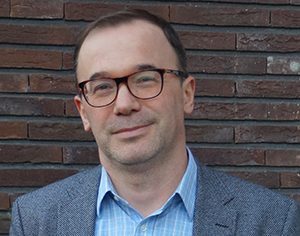
Denis Voskov is an Associate Professor at Delft University of Technology (Faculty of Civil Engineering and Geosciences, Department of Geoscience & Engineering). He also holds an Adjunct Professor position at Stanford University (Department of Energy Resources Engineering, USA). His academic career spans roles as Senior Researcher (2007-2015) and Research Associate (2005-2007) at Stanford, CTO of Rock Flow Dynamic (2005-2008), and engineering positions in oil companies and research institutions in Russia (2000-2005). Current: Head of Reservoir Engineering Section (2024-present) Current: Associate Professor at TU Delft (2015-present) Current: Adjunct Professor at Stanford University (2016-present) Voskov specializes in modeling complex subsurface systems , focusing on reactive flow and transport in altering porous media, scale translation for physical processes, high-performance computing for forward/inverse problems, thermal/geothermal process simulation, CO2 sequestration, and nonlinear solver analysis. His work bridges computational methods (finite volume frameworks, augmented flash calculations, operator-based linearization) with energy transition applications like geological carbon storage and geothermal resource management. Key trends in his recent publications (2024-2025) include: advanced CO2 storage mechanisms (capillary pinning, halite precipitation), multiphysics simulation frameworks (thermal-hydro-mechanical-compositional models), data assimilation for geothermal reservoirs, physics-informed neural networks for subsurface problems, and open-source tools like DARTS-well. Topics frequently intersect with energy transition, reservoir heterogeneity, and numerical robustness. Voskov's lab and team activities center on subsurface energy systems at TU Delft, including the campus geothermal project for direct-use heating and digital twin development for geothermal reservoirs. He collaborates internationally, particularly with Stanford University, and leads initiatives in GPU-based Monte Carlo simulations for uncertainty quantification.