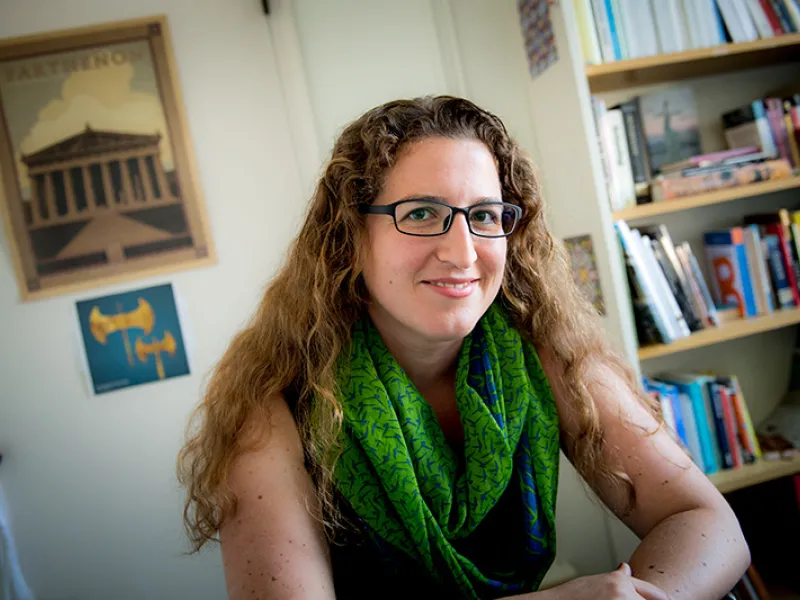
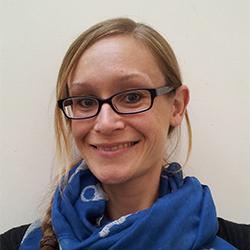
Emilia Oddo is an Associate Professor of Greek Archaeology in the Department of Classical Studies at Tulane University. She holds a Ph.D. in Classics from the University of Cincinnati (2016), an M.A. in Classics from the University of Cincinnati (2010), and an M.A. from Katholieke Universiteit Leuven, Belgium (2007). Her research focuses on the archaeology of Bronze Age Crete, particularly the Late Bronze Age (Neopalatial period), with a specialization in pottery styles and their social implications. She leads excavations at Knossos, analyzing pottery from Sir Arthur Evans’ early 20th-century excavations to understand ritual practices and architectural functions. In 2024, she will lead a student field trip through the Greek Islands organized by the American School of Classical Studies at Athens. Her publications include Knossos: The House of the Frescoes (2022) and South by Southeast: The History and Archaeology of Southeast Crete (2022), which explore Minoan social dynamics and regional identity. Her work highlights how pottery styles reflect communal identity and ritual behaviors. Recent research reinterprets Evans’ archival materials to reveal new insights into Knossos’ urban context and ritual spaces. Teaching courses like CLAS-2320 (Greek Religion) and CLAS-3170 (Greek Art and Archaeology), Oddo bridges academic scholarship and pedagogy. Her field projects emphasize interdisciplinary methods, such as ceramic regionalism and contextual analysis, to reconstruct Bronze Age Cretan society. She actively contributes to archaeological discourse through edited volumes and peer-reviewed articles.
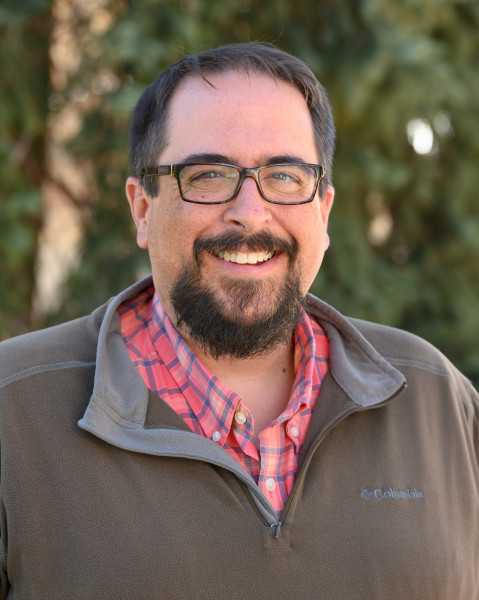
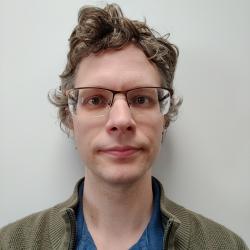
Jason M. LaBelle is a Professor of Anthropology at Colorado State University (CSU), affiliated with the College of Liberal Arts. He serves as Director of the Center for Mountain and Plains Archaeology (CMPA) and Curator of the Archaeological Repository of CSU (AR-CSU). His research focuses on hunter-gatherer societies, particularly in the Intermountain West, emphasizing subsistence, mobility, and pre/post-contact Native American cultures. His work spans environments from the Great Plains to high alpine regions, with specialties in Clovis/Folsom cultures, communal hunting practices, and lithic technology. LaBelle teaches courses in archaeology, lithic technology, and public archaeology. He oversees CMPA projects funded by federal agencies like the National Park Service and the Bureau of Land Management, supporting student training in fieldwork, lab analysis (lithics, faunal studies), and report writing. His lab houses extensive collections from Colorado’s South Platte and Colorado River Basins, including alpine artifacts. He actively engages with tribal partners and the public through outreach, conferences, and NAGPRA coordination. LaBelle’s recent research includes studies on lithic quarries, ice patch archaeology, and Bayesian chronology modeling. His publications address prehistoric mobility, site chronology, and cultural resource management. He values interdisciplinary collaboration and student mentorship, aiming to bridge academic and applied archaeology.
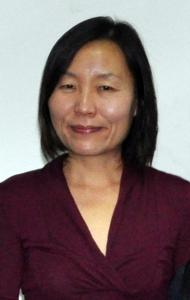
Haagen Klaus is a Professor in the Department of Anthropology at George Mason University, specializing in bioarchaeology, paleopathology, and forensic anthropology. Since 2013, he has directed research on the north coast of Peru, focusing on human skeletal biology, mortuary practices, and the impacts of colonialism and environmental stressors on prehistoric and historic societies. Ph.D., Department of Anthropology, The Ohio State University (2008) M.A., Department of Anthropology, Southern Illinois University (2003) B.A., Department of Anthropology, State University of New York at Plattsburgh (2000) Klaus's research explores biocultural transformations in complex societies, with emphasis on health, violence, identity, and ethnogenesis. His Lambayeque Valley Biohistory Project (founded 2003) investigates skeletal markers of disease, stress, and violence across 10,000 years of Andean history. Methodologies include isotopic chemistry, ancient DNA analysis, and dental phenetics. Recent work (2025) examines oral microbiomes during Spanish colonization, syndemic processes in colonial dynamics, and stress indicators in pre- and postcontact populations. Projects integrate osteoimmunology, ecoimmunology, and life history trade-offs to understand physiological and cultural resilience. Current graduate students under his supervision include Rae-Ocean Blake, Kimberly Hargrave, Megan Jankowski, Emily Schopmeyer, and Celeste Schultheiss. He leads international collaborations involving Peruvian, Japanese, Canadian, and American researchers through the Lambayeque Valley Biohistory Project.
Sören Stark is a Professor of Central Asian Archaeology at New York University's Institute for the Study of the Ancient World (ISAW). He holds roles as Vice Director (Spring/Summer 2025 & AY2025-26) and Chair of the Visiting Scholar Search Committee (AY2025-26). His expertise focuses on the archaeology of Central Asia, particularly Hellenistic and Late Antique Sogdiana, and the dynamics between agrarian societies and nomadic groups. Stark received his PhD in 2005 from Martin-Luther-Universität Halle-Wittenberg and has conducted extensive fieldwork in Tajikistan, Uzbekistan, and the Bukhara oasis. Key projects include directing excavations at Bashtepa (since 2015), investigating agro-pastoral communities in Western Sogdiana, and analyzing Bronze/Iron Age petroglyphs and Iron Age kurgans. His research integrates archaeological data with historical sources, emphasizing regional connectivity and cultural interactions during the Hellenistic and post-Hellenistic periods. Stark co-edits Brill's Handbook of Oriental Studies and has published widely on topics such as Türk archaeology, Sogdian material culture, and Greco-Bactrian coinage. Recent work highlights include the 2019 publication on Bashtepa's fortifications and terracotta figurines, alongside studies on urbanization patterns in Bukharan Sogdiana. His field methodologies combine stratigraphic excavation, ceramic analysis, and radiocarbon dating to reconstruct socio-environmental histories. Laboratory and team collaborations involve the Uzbek-American Expedition in Bukhara (UzAmEB) and the NYU Abu Dhabi archaeological initiative. Stark's research bridges ancient history and archaeology, addressing questions of cultural identity, political frontiers, and subsistence strategies in Central Asia's crossroads.
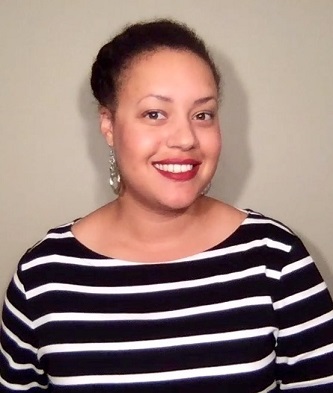
Dr. April Nowell is a Professor of Anthropology in the Department of Anthropology at the University of Victoria's Faculty of Social Sciences, specializing in Paleolithic archaeology, cognitive archaeology, and the archaeology of children. Currently on leave, she leads internationally recognized research projects across Europe, the Levant, Australia, and Africa while actively accepting graduate students. She earned her PhD from the University of Pennsylvania and has developed expertise in Neanderthal lifeways, Paleolithic art, and hominin life histories. Her academic journey reflects deep engagement with both theoretical frameworks and fieldwork across diverse geographical contexts. Nowell's research examines how prehistoric societies structured knowledge transmission, childhood development, and symbolic expression. Her groundbreaking work on finger flutings in Australian caves reveals children's roles in Paleolithic storytelling traditions, while her analysis of Levantine wetland ecosystems demonstrates how Pleistocene humans adapted to environmental shifts. She challenges conventional narratives about Neanderthal cognition and has pioneered methodologies for reconstructing prehistoric childhood experiences through skeletal and material evidence. Her recent publications show consistent innovation in archaeological methodology, particularly in digital documentation of rock art and interdisciplinary approaches to human development. Key trends include integrating bioarchaeological data with cognitive models, examining material culture as evidence of social learning, and analyzing environmental archives to understand human dispersal patterns. Her scientific recognition includes: 2023 EAA Book Prize for Growing Up in the Ice Age: Fossil and Archaeological Evidence of the Lived Lives of Plio-Pleistocene Children Nowell secures major research funding including Social Sciences and Humanities Research Council grants supporting her Azraq Basin project in Jordan and Koonalda Cave research in Australia. She mentors graduate students in Paleolithic theory while collaborating with Indigenous communities and international scholars on field projects spanning five continents. Her work bridges academic research and public engagement through TEDx talks and media appearances examining science communication. She directs field programs at Jordan's Azraq Basin wetlands and Australia's Koonalda Cave, working with multidisciplinary teams including geochronologists, bioarchaeologists, and Traditional Owners to investigate Pleistocene human adaptation and cultural transmission.
Michelle Cameron is an Associate Professor in the Department of Anthropology at the University of Toronto's Faculty of Arts & Science. She joined the department in 2018 and specializes in skeletal biology and bioarchaeology, integrating skeletal analysis with archaeological and ecological evidence to study human adaptability across diverse environments. Her research explores how environmental and cultural contexts shape human biology through time, focusing on biocultural stressors and skeletal responses. She employs advanced methodologies including 3D modeling, biomechanical analyses, and spatial analysis frameworks to examine human adaptation to environmental challenges. Primary research regions: Africa (South Africa, Namibia, Lake Turkana), North America, Europe Key methodologies: Cross-sectional geometry, skeletal biomechanics, paleodiet reconstruction Dr. Cameron's publications demonstrate expertise in subsistence transitions (herding practices), human evolutionary morphology, and contemporary skeletal biology applications. She maintains active fieldwork programs in southern Africa while engaging in comparative studies across continents. Scientific Awards: SSHRC Insight Development Grant Connaught New Researcher Award Education: PhD, University of Cambridge (2017) As co-host of the YouTube series 'Humans in 5', she actively participates in science communication, distilling complex anthropological concepts into accessible five-minute segments.
Robert H. Tykot is a Professor in the Department of Anthropology at the University of South Florida, where he has served since 1996, achieving full Professor status in 2006. He previously held positions as Associate Professor (2001-2006) and Assistant Professor (1996-2001), and served as Undergraduate Director (2012-14) and Acting Chair (summers 2002, 2003). His academic leadership extends to professional societies where he has served as President of the Archaeological Institute of America (Tampa Bay Society), International Association for Obsidian Studies, and Society for Archaeological Sciences. Dr. Tykot earned his Ph.D. and M.A. in Anthropology from Harvard University (1995, 1993), an M.A. in Classical Archaeology from Tufts University (1984), and a B.S. in Archaeology (with special honors) and Chemistry ( cum laude ) from Tufts University (1983). His educational background uniquely bridges scientific methodology with archaeological practice. His research focuses on archaeological science methodology, particularly stable isotope analysis and elemental archaeology applied to Mediterranean prehistory, ancient diets worldwide, obsidian and marble sourcing, and Sardinian/Sicilian archaeology. Dr. Tykot has pioneered techniques for analyzing bone chemistry to reconstruct ancient diets and mobility patterns, with significant fieldwork conducted across the Mediterranean, particularly in Sardinia, Sicily, and Algeria. His work integrates laboratory science with archaeological fieldwork to address fundamental questions about ancient trade networks, subsistence strategies, and cultural interactions. Dr. Tykot has received numerous scientific honors including multiple USF Outstanding Research Achievement Awards (2018, 2020), the USF Outstanding Faculty Award (2013), and recognition as a Fellow of the American Association for the Advancement of Science. His editorial leadership includes serving as Editor-in-Chief of Science and Technology of Archaeological Research (STAR) and editorial roles with Archaeometry and Journal of Archaeological Science: Reports . As an advisor, Dr. Tykot has chaired numerous doctoral and master's committees across diverse research topics in archaeological science. His grant portfolio demonstrates exceptional funding success with over 100 external awards totaling millions of dollars from NSF, NEH, Wenner-Gren Foundation, and other major funders. He directs the Lab for Archaeological Science & Technology at USF and has established significant research partnerships with institutions worldwide, particularly in Italy, Argentina, and Kuwait.
Gideon Hartman is an Associate Professor in the Anthropology Department at the University of Connecticut, where he conducts interdisciplinary research at the intersection of paleoenvironmental reconstruction, plant and animal eco-physiology, anthropology, and archaeology. His work primarily employs stable isotope methods to reconstruct past environments, human mobility patterns, paleodiets, and ancient economic systems. Dr. Hartman received his Ph.D. from Harvard University in 2008. His educational foundation in anthropology and archaeological science has enabled his innovative approach to stable isotope analysis. Rather than treating isotopic values as static markers, he investigates the mechanisms causing variability in stable isotope ratios as they move along foodwebs from soil and atmosphere to plants and then to animals and humans. Hartman's research program uniquely begins in the contemporary world to establish principles that can be reliably applied to archaeological settings. His work spans diverse geographical regions including the Eastern Mediterranean, Levant, Jordan Valley, and Armenian Highlands, with temporal coverage from the Middle Pleistocene to the Early Bronze Age. He has made significant contributions to understanding how environmental factors like water availability, temperature, and soil conditions affect isotopic signatures in modern ecosystems, creating robust models for archaeological interpretation. His publication record demonstrates consistent productivity in high-impact journals, with research trends showing increasing sophistication in multi-isotope approaches applied to complex archaeological questions about pastoralism, trade networks, human migration, and human-environment interactions. His work increasingly integrates zooarchaeological, archaeobotanical, and geochemical evidence to build comprehensive pictures of past societies. As director of the Stable Isotope Preparation Lab at UConn, Hartman leads a research team that processes and analyzes samples from archaeological sites worldwide. His laboratory serves as a hub for interdisciplinary collaboration between archaeologists, anthropologists, geoscientists, and biologists seeking to apply isotopic methods to their research questions. His work has been instrumental in refining methodologies for interpreting strontium, carbon, nitrogen, and oxygen isotope data in archaeological contexts, particularly regarding animal and human mobility patterns in the Eastern Mediterranean region.
Elena Irene Zavala serves as an Assistant Professor in the Section of Forensic Genetics and Guest Researcher at the Globe Institute, Section for Geogenetics at the University of Copenhagen's Faculty of Health and Medical Sciences. Her work bridges forensic science with paleogenetic research, focusing on ancient human DNA analysis and population genetics. Dr. Zavala's research interests span ancient DNA analysis, paleogenetics, forensic genetics, human evolution, population genetics, archaeogenetics, and anthropological genetics. Her work demonstrates a consistent focus on understanding human evolutionary history through genetic analysis, with particular emphasis on migration patterns, adaptation to diverse environments, and the development of methodological approaches for analyzing degraded DNA samples. She has made significant contributions to understanding Neanderthal admixture timing and early human dispersal into Europe. Her publication record shows a strong trend toward high-impact interdisciplinary research, with numerous publications in Nature and other top-tier journals. Her work frequently involves international collaborations across multiple institutions, reflecting the global nature of paleogenetic research. A notable pattern in her recent publications is the integration of multiple analytical approaches (genomic, isotopic, archaeological) to reconstruct human history. Young Investigator Award (2019) Miller Postdoctoral Fellowship (2022) Peter M. Schneider ISFG Fellowship (2023) Novo Nordisk Hallas-Møller Emerging Investigator Grant (2024) Dr. Zavala has secured significant research funding including the prestigious Novo Nordisk Hallas-Møller Emerging Investigator Grant in 2024, indicating strong institutional support for her research program. Her work has garnered substantial attention with multiple publications being picked up by hundreds of news outlets and referenced across social media platforms and academic networks. As a Guest Researcher at the Globe Institute's Section for Geogenetics, Dr. Zavala collaborates with interdisciplinary teams focused on ancient DNA and human evolutionary history. Her research often involves large international collaborations, as evidenced by the extensive author lists on her publications, suggesting she works within substantial research networks dedicated to paleogenetic investigations.
Dr. Emma Pomeroy is an Associate Professor in the Evolution of Health, Diet and Disease at the University of Cambridge's Department of Archaeology. She is an active researcher with expertise spanning anthropology, archaeology, biological anthropology, and paleoanthropology. Her work combines human bioarchaeology with human biology and paleoanthropology, conducting research across South America, South Asia, Europe, and the Near East. Dr. Pomeroy's research focuses on understanding how past and present variation in human health, growth, and morphology is influenced by evolutionary processes including adaptation, neutral variation, and plasticity, as well as interactions with natural and social environments. Her specific interests in reproduction include the evolution and adaptation of the human pelvis, impacts of evolutionary and environmental factors on pelvic morphology and birth complications, and how early life conditions affect later growth and health which may influence birth complication risks. A significant portion of her recent work has investigated the evolutionary origins of low lean tissue mass among contemporary South Asians, which is implicated in elevated risk of type 2 diabetes and other chronic diseases. Dr. Pomeroy leads important archaeological projects including serving as the paleoanthropologist at renewed excavations at Shanidar Cave in Iraqi Kurdistan since 2016, where her team has made significant new Neanderthal discoveries. She also co-directs the Old St Bernard's Hospital Project in Gibraltar with Dr. Kevin Lane and Professor Clive Finlayson, investigating health, diet, and migration among skeletons from a 16th-17th century mariner's hospital. Her recent publications demonstrate a strong focus on human skeletal variation, Neanderthal studies, human adaptation, and the developmental origins of health and disease. Her work spans multiple geographical regions including the Americas, Europe, Mesopotamia and the Near East, and South Asia, examining periods from the Paleolithic through to contemporary populations. Dr. Pomeroy contributes to interdisciplinary research networks including Cambridge Reproduction, where she investigates the evolutionary aspects of human reproduction. Her methodological approaches integrate skeletal biology, archaeological science, and evolutionary theory to address fundamental questions about human variation and adaptation.
Dr. Tamas Mona is a Postdoctoral Research Associate in the Department of Plant Sciences at the University of Cambridge , affiliated with the Epidemiology and Modelling Group . His work focuses on environmental suitability models for large-scale epidemiological forecasting, particularly in wheat rust outbreaks across Africa, the Middle East, and Asia. Collaborations include the UK Met Office, CIMMYT, and institutions in Ethiopia, Kenya, Bangladesh, and Nepal. PhD in Environmental Sciences (2019), Eötvös Loránd University MSc in Meteorology (2013), Eötvös Loránd University BSc in Physics with Meteorology (2011), Eötvös Loránd University Research interests integrate meteorological applications with epidemiological models to predict crop disease outbreaks. Key projects involve tracking transmission pathways for stem rust pathogens and analyzing how irrigation creates green bridges for intercontinental pathogen spread. Publications emphasize environmental science and computational epidemiology . Current collaborations span Sub-Saharan Africa (EIAR, ATI, KARLO) and South Asia (BWMRI, NARC) through initiatives like the Global Food Security IRC . Modeling frameworks developed by Mona contribute to policy advisory systems for emerging pest threats, aligning with DEFRA and UK government strategies.
Wiebke Kirleis is Professor for Environmental Archaeology and Archaeobotany at the Institute for Pre- and Protohistory, Faculty of Arts and Humanities, Christian-Albrechts-Universität zu Kiel (CAU). She has held this position since May 2014 and was previously a junior professor at the same university from 2008 to 2014. She is actively involved in major interdisciplinary research projects, including the Cluster of Excellence ROOTS and the Collaborative Research Centre 1266 'Scales of Transformation', where she serves as co-speaker and technical platform speaker. PhD in Natural Sciences, University of Göttingen (2002) Diploma in Biology, University of Göttingen (1998) Studies in Botany, Anthropology, and Environmental History, University of Göttingen (1990–1998) Wiebke Kirleis' research centers on the interaction between humans and plants during the late Pleistocene and Holocene, with a focus on plant economy, domestication, agricultural development, and landscape transformation. Her work explores how wild and cultivated plants were used for nutrition, ritual, and technical purposes, and how agricultural innovations such as ploughing and manuring impacted Central European landscapes. She has a strong geographical focus on Northern and Central Germany, Southeastern Europe, the Near and Middle East, and Southeast and East Asia, particularly Indonesia. Her methodological expertise includes archaeobotany (analysis of charred and waterlogged plant remains), palynology (pollen and spore analysis from sediment cores), and anthracology (study of charcoal remains). Her recent research includes studies on broomcorn millet diffusion, early farming in Scandinavia and Russia, and plant use in Bronze Age settlements across Europe and Turkey. She leads and collaborates on numerous interdisciplinary projects, emphasizing the integration of botanical data into broader archaeological narratives. Her publications reflect a consistent trend in environmental archaeology, focusing on plant domestication, agricultural transitions, and human-induced landscape change. Keywords across her recent work include archaeobotany, palynology, Neolithic and Bronze Age subsistence, and environmental reconstruction. Her research spans subfields such as food security, cultural transmission of plant use, early monumentality, and socio-economic aspects of prehistoric agriculture. Board member, Cluster of Excellence ROOTS Co-speaker, CRC 1266 'Scales of Transformation' Speaker, ROOTS Technical Platform Board member, Johanna-Mestorf-Akademie Chair, Scientific Advisory Board, Dithmarschen Stone Age Park (since 2023) Full member, German Archaeological Institute (DAI) Elected member, Commission for Archaeology of Non-European Cultures (KAAK) Wiebke Kirleis has supervised numerous research projects funded by the DFG and other agencies, including the Graduate School 'Human Development in Landscapes'. She has advised students and collaborated internationally with institutions in Italy, Norway, Indonesia, and Australia. Her leadership roles in academic self-administration include serving on planning, budget, and equality committees at CAU Kiel. She is committed to science communication, having launched the digital exhibition 'Alles bleibt anders' and produced educational films on archaeobotany. She is also involved in mentoring female postdocs through the via:mento program. She leads the archaeobotanical component in the 'Superfood' module of the SFB 1266 digital exhibition and is actively involved in the ROOTS Cluster’s Subcluster 'Dietary ROOTS'. Her lab and research team operate within the Institute for Pre- and Protohistory, contributing to the university’s strong focus on interdisciplinary landscape archaeology.
Gyoung-Ah Lee is a Professor in Anthropology at the University of Oregon, specializing in environmental archaeology, paleoethnobotany, and the origins of agriculture in East Asia. She has conducted fieldwork across Asia, Australia, Canada, and North America, focusing on the transition from foraging to farming and cultural niche construction. Education: B.A., Seoul National University (1992) M.S., University of Toronto (1997) Ph.D., University of Toronto (2003) Her research spans Neolithic to early historic societies, with expertise in phylogenetics of crops, traditional farming technologies, and quantitative archaeology. She teaches courses on food origins, East Asian archaeology, archaeobotany, and plant-human interactions. Recent publications examine Neolithic dietary patterns in Jeju Island, niche construction in Korea, and land use transformations in North China. These works integrate isotope analysis, soil micromorphology, and interdisciplinary methodologies. Active grants include the Korean Studies Promotion Service Grant (2015-20) and National Geographic Science & Exploration Grant (2015-16). Her fieldwork in Northeast China and Jeju Island reflects global research scope.
Rowan Lubbock is Senior Lecturer in Political Economy of Development at Queen Mary University of London's School of Politics and International Relations. He completed his PhD in International Relations at Birkbeck, University of London and previously served as Junior Research Fellow at Corvinus Institute for Advanced Studies in Budapest. His research examines agrarian political economy, Latin American regionalism, and the historical sociology of international order. Education: PhD in International Relations, Birkbeck, University of London (2017) Lubbock's research explores how agricultural transformations shape international relations, with current focus on the UN Food and Agriculture Organization's role in structuring global food governance. His work combines historical materialism with critical agrarian studies to analyze the co-constitution of global order and agro-ecological systems. His publications analyze Latin American regionalism (particularly ALBA-TCP), food sovereignty movements, and the political economy of agricultural systems, demonstrating consistent theoretical engagement with Marxism and historical sociology across diverse empirical contexts. Scientific awards include the Junior Research Fellowship at Corvinus Institute for Advanced Studies (2022-2023) supporting his archival research on international organizations. He teaches courses on political economy and development, and mentors PhD students working on critical international relations theory and political economy.
Xinyi Liu is a Professor of Archaeology and Associate Chair of the Department of Anthropology at Washington University in St. Louis. She holds a PhD from the University of Cambridge. Her research focuses on plant domestication, agricultural origins, and prehistoric food globalization, with a particular emphasis on millet and the prehistory of China. She leads fieldwork projects across the Tibetan Plateau, Hexi Corridor, Inner Mongolia, Central Asia, and Eastern Europe. Her work bridges archaeology with environmental science, using stable isotope analyses, archaeobotanical methods, and geospatial modeling. She is affiliated with the Laboratory for the Analysis of Early Food-Webs (LAEF), which examines nutrition-ecology interactions in diverse environments including the Tibetan Plateau and the Lower Yangtze region. Dr. Liu serves on editorial boards for journals like Environmental Archaeology and Archaeological Research in Asia and chairs the International Work Group for Paleoethnobotany. Her recent studies highlight millet's ecological significance and its role in achieving modern food security. Her publications (2020-2024) analyze prehistoric crop management strategies, animal domestication genetics, and the socio-environmental impacts of early food globalization. These works emphasize East Asian contributions to global prehistory and the interplay between ancient culinary practices and biodiversity. Dr. Liu's lab collaborates internationally, combining bioarchaeological data with modern ecological insights to address contemporary sustainability challenges. She has advised numerous graduate students and contributes to courses on environmental archaeology, bio-molecular approaches, and culinary globalization's deep history.