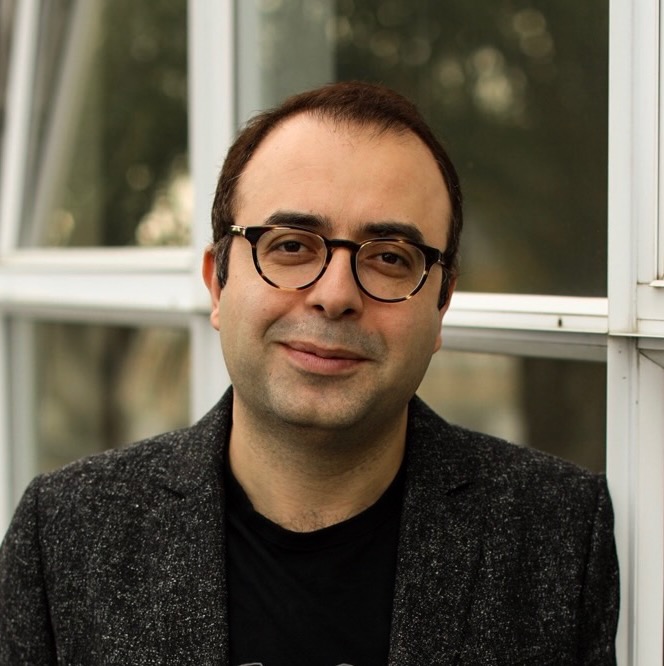
Dr. Troy Lee is an Associate Professor of Quantum Cryptography at the Centre for Quantum Software and Information within the Faculty of Engineering and Information Technology at the University of Technology Sydney . His research focuses on quantum algorithms, computational complexity, and graph theory, with particular emphasis on quantum-classical separations and query complexity. Education: Not explicitly mentioned Research Areas: Quantum algorithms, computational complexity, graph theory, quantum cryptography, and Boolean function analysis Teaching: Supervised the course Data Structures and Algorithms in 2022 Grants: Currently involved in quantum algorithm design and defense optimization projects (2025-2028, 2021-2024) His recent publications highlight advancements in quantum query complexity, graph algorithms, and exact learning techniques. Notably, his work includes quantum speedups for graph connectivity problems and improved bounds for Fourier-sparse function learning. Dr. Lee maintains active collaborations across theoretical computer science and quantum computing domains, contributing to both foundational and applied research in quantum software development.
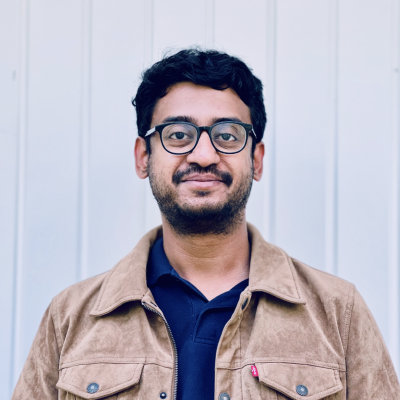
Aarushi Goel is an Assistant Professor in the Computer Science department at Purdue University , specializing in cryptography. She previously held a postdoctoral position at NTT Research's CIS Lab under Sanjam Garg and earned her PhD from Johns Hopkins University in 2022, advised by Abhishek Jain. Research Focus: Designing efficient techniques for secure multiparty computation (MPC) and zero-knowledge proofs (ZKPs), with applications in privacy-preserving systems, blockchain, and cloud security. Teaching: Courses include Advanced Cryptography (CS65500) and Special Topics in Cryptography (CS59200-STC), emphasizing state-of-the-art ZKP methods and MPC protocols. Scientific Awards: Simons-Berkeley Research Fellow (2025), participating in the program "Cryptography 10 Years Later".
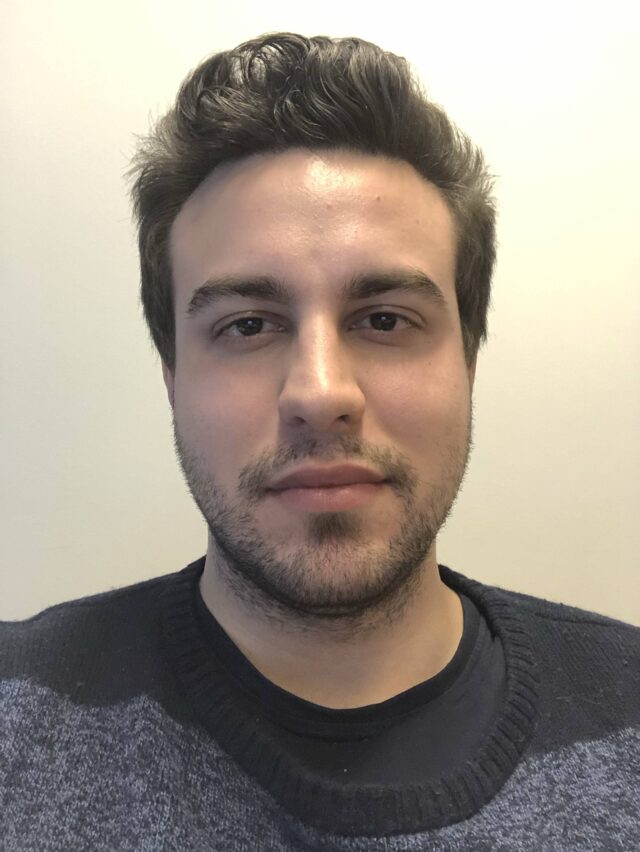
Leo Rebholz is the Dean's Distinguished Professor of Mathematical Sciences and Division Lead for Mathematics at Clemson University's College of Science. He holds a PhD in Mathematics from the University of Pittsburgh (2006). His research focuses on computational and applied mathematics, particularly nonlinear solvers for PDEs and data assimilation techniques. He has published over 130 papers and 5 books, with recent work emphasizing acceleration methods for Navier-Stokes equations and fluid dynamics simulations. His contributions include Anderson acceleration algorithms, reduced-order modeling, and numerical stability analysis. Rebholz has supervised 12 PhD students, 14 M.S. students, and 15 undergraduates. He serves on editorial boards for the Journal of Numerical Mathematics and International Journal of Numerical Analysis and Modeling . His research bridges theoretical mathematics and practical applications, combining rigorous proofs with computational efficiency. Notable areas of focus include turbulence modeling, vorticity-based formulations, and energy-preserving discretizations. Recent work highlights include advancing Anderson acceleration for fluid problems, developing physically constrained reduced-order models, and analyzing data assimilation methods for geophysical flows. His studies emphasize long-time accuracy, stability, and computational efficiency in numerical simulations.
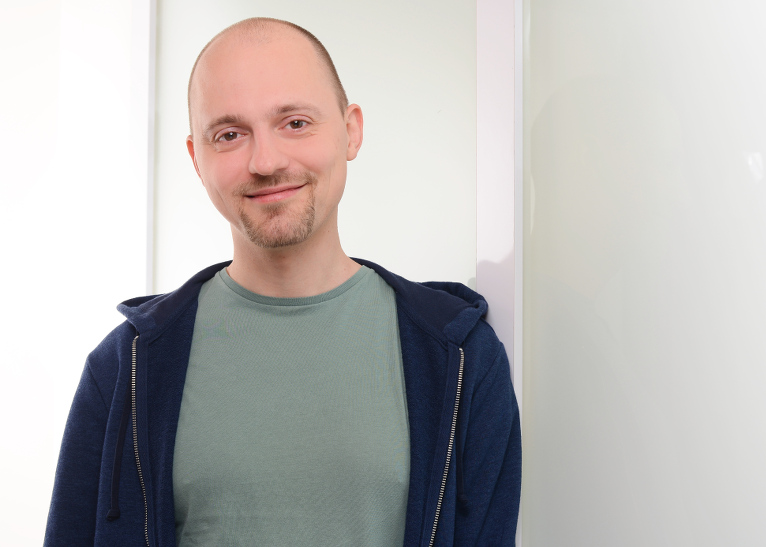
Sepehr Assadi is an Associate Professor and Faculty of Mathematics Research Chair at the Cheriton School of Computer Science , University of Waterloo, since 2023. His research focuses on theoretical computer science , particularly algorithm design and complexity theory for modern computation models like streaming , distributed , and sublinear time algorithms. Recognized with the 2025 Presburger Award for groundbreaking work in multi-pass streaming lower bounds Developed hierarchical embedding technique for optimal lower bounds in graph streaming Key contributions to maximal independent set , maximum matching , and minimum spanning tree problems His work has been cited over 2,500 times (h-index: 30). He has served on program committees for major conferences (FOCS, STOC, COLT) and mentors students in graph algorithms and complexity theory . Awards include Sloan Research Fellowship , NSERC Discovery Grant , and Google Research Scholar Award .
Gramoz Goranci is an Assistant Professor (tenure-track) of Algorithms in the Department of Computer Science at the University of Vienna. He leads research in algorithm design with strong interdisciplinary connections to optimization, graph theory, and machine learning. He is a member of the Research Group Theory and Applications of Algorithms and a board member of the Research Network Data Science. His research focuses on the design of fast dynamic algorithms for large-scale optimization problems, combining techniques from combinatorial data structures, algorithmic graph theory, numerical linear algebra, and metric embeddings. His work emphasizes both theoretical guarantees and practical efficiency. The recent publications highlight a consistent trend in dynamic and incremental graph algorithms, particularly in shortest paths, connectivity, flow, and facility location problems. His work increasingly bridges theoretical computer science with applications in machine learning and high-dimensional data. Keywords across publications include dynamic algorithms, graph sparsification, electrical flows, and optimization in metric spaces. FWF ESPRIT grant (supporting PostDoc Peter Kiss) He advises a growing team of researchers, including PostDoc Peter Kiss and PhD students Eva Szilagyi and Ali Momeni Mohammadabadi. His research is supported by independent funding and collaborations with leading institutions like ETH Zürich, University of Toronto, and UC Berkeley's Simons Institute. He has served on program committees of top conferences including FOCS, STOC, SODA, ICML, ESA, and ALENEX. He is actively involved in the academic community through seminars and talks at institutions such as ETH Zürich, University of Warwick, and Google Research. His team contributes to foundational work in dynamic graph algorithms and their applications in data science.
Dr. Danupon Na Nongkai is an Associate Professor in the Division of Theoretical Computer Science at KTH Royal Institute of Technology's School of Electrical Engineering and Computer Science. His research focuses on theoretical computer science, with specialization in graph algorithms for dynamic and distributed environments. Supported by prestigious grants including the Swedish Research Council's VR Young Researcher Grant (2015) and the European Research Council's Starting Grant (2016), his work spans approximation algorithms, communication complexity, game theory, verification, theoretical databases, quantum algorithms, and social network analysis. PhD in Algorithms, Combinatorics, and Optimization (ACO) from Georgia Tech (2011) Co-winner of Principles of Distributed Computing Doctoral Dissertation Award (2013) Research Interests: Dr. Na Nongkai investigates fundamental problems in graph theory and algorithm design, particularly in dynamic, distributed, and quantum computing paradigms. His research connects theoretical computer science with practical applications in network processing, optimization, and complexity analysis. Article Trends: Recent publications demonstrate expertise in near-linear time algorithms for shortest paths, cut problems, and connectivity in diverse computational models. Key themes include cross-paradigm optimization (dynamic/static, distributed/parallel, quantum), expander decomposition applications, and submodular function analysis. Scientific Recognition: FOCS 2022 Best Paper Award ERC Starting Grant recipient VR Young Researcher Grant PODC Doctoral Dissertation Award Advising & Grants: As a principal investigator, Dr. Na Nongkai has mentored numerous researchers through collaborative publications with 85 co-authors. His group's funding includes competitive national and European grants for cutting-edge algorithm research.
C. Seshadhri (Seshadhri Comandur) is a Professor of Computer Science at the University of California, Santa Cruz's Baskin School of Engineering. He earned his Ph.D. from Princeton University and completed postdoctoral research at IBM Almaden Labs. His primary research spans theoretical computer science, graph algorithms, data mining, and sublinear algorithms, with applications in network analysis and scalable computation. His work focuses on graph property testing, monotonicity testing, subgraph counting, and combinatorial algorithms. Research integrates randomization, high-dimensional analysis, and optimization techniques to solve problems in large-scale network datasets. Key interests include developing efficient algorithms for complex graph structures and exploring limitations of low-dimensional embeddings. Publications demonstrate consistent focus on algorithmic efficiency in graph analysis, with recent work advancing sublinear-time methods, spectral decompositions, and combinatorial dichotomies. Trends show strong emphasis on theoretical foundations of data mining and rigorous complexity analysis. Invited Lecture at ICDT 2023 Best Paper at WSDM 2020 2019 SDM/IBM Early Career Data Mining Research Award Best Paper at WWW 2017 Best Paper at ICDM 2015 Best Paper Finalist at WWW 2015 Best Student Paper at KDD 2013 Best Research Paper at SDM 2013 2013 Sandia Employee Recognition Award Advises PhD/MS students and postdocs including Sabyasachi Basu, Daniel Paul Pena, Shweta Jain, and Andrew Stolman. Leads the PTReview blog on property testing. Current group includes postdocs and graduate students working on algorithms and complexity.
Dr. Lan Truong is a Lecturer (Assistant Professor) at the School of Mathematics, Statistics and Actuarial Science (SMSAS), University of Essex since September 2023. Previously, he held roles including Research Associate at the University of Cambridge (2020–2023), Research Fellow at National University of Singapore (NUS) (2018–2019), and Lecturer at FPT University, Hanoi (2013–2015). He earned a PhD in Information Theory from NUS in 2018 and has industry experience as an Operation and Maintenance Engineer with MobiFone Telecommunications Corporation. His research focuses on deep learning theory, high-dimensional statistics, probability, and information theory. Notable contributions include work on multi-armed bandits, neural network generalization, and coding theory. He is a Senior Member of the IEEE. Key publications span topics like concentration properties of random codes, replica analysis in signal processing, and generalization bounds in deep learning. His work bridges theoretical foundations with practical applications in machine learning and telecommunications. Dr. Truong’s academic journey reflects a strong emphasis on advancing theoretical methodologies while addressing real-world challenges in information and communication technologies.
Monika Henzinger is a Full Professor of Computer Science at the Institute of Science and Technology Austria (IST Austria) and Deputy Speaker of the Vienna Graduate School on Computational Optimization. She holds a PhD from Princeton University and has held positions at Cornell University, Digital Equipment Corporation, Google, EPFL, and the University of Vienna. Her research focuses on combinatorial algorithms, dynamic optimization, and efficient graph algorithms. She leads a group at IST Austria exploring algorithm design for dynamic environments, privacy-preserving algorithms, and practical implementations of theoretical results. Research Interests: Combinatorial algorithms (especially graphs), dynamic algorithms, approximation algorithms, algorithmic game theory, and privacy-preserving computation. Her work includes breakthroughs in decremental graph algorithms, submodular optimization, and computational advertising. Collaborations: Works with Vladimir Kolmogorov, Nysret Musliu, Günther Raidl (Combinatorial Optimization), Birgit Rudloff (Dynamic Optimization), and Dan Alistarh (Parallel/Distributed Optimization). Awards: Wittgenstein Award (2021), ERC Advanced Grants (2021, 2014), ACM Fellow (2016), and numerous others listed in her CV. Grants & Labs: Principal investigator on an ERC Advanced Grant for graph algorithms. Her team includes PhD students (e.g., Bardiya Aryanfard, Antoine El-Hayek) and postdocs focused on algorithmic challenges in dynamic systems.
Amin Saberi is a Professor of Management Science and Engineering at Stanford University and Director of the Stanford Center for Computational Market Design. He earned his BSc from Sharif University of Technology and PhD in Computer Science from Georgia Institute of Technology. Research Interests : Design and analysis of algorithms, social networks, market design, and applications in economics and optimization. Key Contributions : His work spans online algorithms, stochastic optimization, and matching theory, with applications in ride-hailing, social learning platforms, and resource allocation. Recent Article Trends : Saberi’s recent research focuses on adaptive approximation schemes for matching queues, prophet inequalities in stochastic matching, and locality-aware graph rewiring in GNNs. His work bridges theoretical insights with practical applications in market design and computational economics. Scientific Awards : Terman Fellowship, Sloan Fellowship, Best Paper Awards at FOCS (2009), SODA (2010), WINE (2017), and Test of Time Award at ACM EC (2021). Advising & Collaborations : Saberi has advised numerous graduate students and postdocs, many of whom hold faculty or industry leadership roles. He co-founded NovoEd, a social learning platform, and has organized programs at mathematical optimization institutes.
Yuichi Yoshida is a Professor at the National Institute of Informatics (NII), affiliated with the Principles of Informatics Research Division. He also holds a concurrent position as Senior Researcher at Preferred Networks. His academic career at NII spans from Assistant Professor (2012–2015), Associate Professor (2015–2022), to full Professor since 2022. He serves as Vice Director of the Global Research Center for Big Data Mathematics at NII and has held advisory and research roles at Preferred Infrastructure and the Ministry of Education, Culture, Sports, Science and Technology (MEXT). Ph.D. in Informatics, Kyoto University, 2012 Master of Informatics, Kyoto University, 2009 Bachelor of Engineering, Kyoto University, 2007 His research focuses on theoretical computer science, particularly property testing , approximation algorithms , sublinear-time algorithms , and constraint satisfaction problems . He investigates how theoretical insights can be applied to real-world graphs, with recent emphasis on average sensitivity of algorithms and Lipschitz continuity in combinatorial optimization . His work bridges theory and practical scalability in large network analysis and machine learning. The most recent 15 publications (2022–2025) demonstrate a strong trend in algorithmic stability, spectral methods for hypergraphs, influence propagation in networks, and learning-augmented algorithms. Key venues include FOCS, SODA, ICALP, and NeurIPS, reflecting high impact in theoretical computer science and machine learning. Topics such as Lipschitz continuity, average sensitivity, spectral sparsification, and sublinear algorithms recur, indicating a cohesive research program on robust and efficient computation. Best Paper Award, AISTATS (2018) MEXT Commendation for Science and Technology – Young Scientists’ Prize (2017) Inoue Research Award for Young Scientists (2014) KDDI Foundation Award (2024) Funai Information Technology Award (2024) Yuichi Yoshida advises PhD students and hosts numerous postdocs, RAs, and international interns. He leads major research projects funded by JSPS and JST, including Grants-in-Aid for Scientific Research (S) and PRESTO programs. His service includes program committee roles for ICML, NeurIPS, SODA, and ICALP. He has co-authored a book on Property Testing and contributed to encyclopedias on big data technologies. He leads research teams on algorithm desensitization and large-scale graph algorithms, and has been program co-chair for GRADES-NDA'23. His lab fosters international collaboration, hosting interns from top universities worldwide.
Rik Sengupta is a Part-Time Lecturer at the University of Massachusetts Amherst, located in the Lederle Graduate Research Center. His research focuses on graph theory, algorithms, combinatorics, and fair allocation mechanisms. He has contributed to theoretical computer science, discrete mathematics, and algorithmic economics. His work spans dynamic graph streaming algorithms, fair division under structured constraints, and optimization problems with fairness metrics. He also explores graph reconstruction techniques, quantifier complexity in boolean functions, and Ramsey theory applications. Recent publications highlight trends in graphical allocation models, probabilistic graph analysis, and algorithmic solutions for resource distribution challenges. Notable areas include EFX allocations over graphs, time-aware fairness in knapsack problems, and approximation algorithms for housing markets. Rik holds no explicitly listed academic awards or grants. His advising activities are not detailed in the provided texts. He is affiliated with computational theory research groups but no specific labs or teams are mentioned.
Dr. Andreas Maggiori is a Postdoctoral Research Scientist at Columbia University's Data Science Institute, collaborating with Professors Will Ma and Eric Balkanski. His research focuses on the intersection of Online Decision Making, Machine Learning, and Theoretical Computer Science, emphasizing learning-augmented algorithms to enhance decision-making processes. He earned a PhD from École Polytechnique Fédérale de Lausanne (EPFL) , advised by Rudiger Urbanke and Ola Svensson. During his PhD, he visited the Simons Institute at UC Berkeley for the Data-Driven Decision Processes program. He holds a bachelor’s degree in Electrical and Computer Engineering from the National Technical University of Athens . His work spans algorithmic fairness, dynamic clustering, and optimization, with applications in online matching and energy-efficient scheduling. He interned at Google Zurich , collaborating with Nikos Parotsidis and Ehsan Kazemi on algorithmic research. Key research directions include: Learning-augmented algorithms for decision-making Sublinear-time dynamic algorithms Algorithmic fairness in clustering and matching Energy-minimization via speed scaling No scientific awards are explicitly mentioned in the provided text. Advising: No formal advisees listed. Grants: No specific grants detailed. His research is supported through institutional and collaborative affiliations. Labs/Teams: Active in the Data Science Institute at Columbia, with interdisciplinary collaborations across academia and industry (e.g., Google, Simons Institute).
Karl Bringmann is a Professor at Saarland University since November 2019 and is affiliated with the Max Planck Institute for Informatics, where he works in the Department of Algorithms and Complexity. He has established himself as a leading researcher in theoretical computer science, particularly in fine-grained complexity and algorithm design. His work bridges theoretical insights with practical applications in optimization problems. Bringmann's research focuses on conditional lower bounds (often based on the Strong Exponential Time Hypothesis) and algorithm design, with particular emphasis on optimization problems, string algorithms, and computational geometry. His work has significant implications for fundamental problems like Subset Sum, Knapsack, and Integer Programming, with applications ranging from scheduling to post-quantum cryptography. He develops innovative approaches combining modern algorithmic techniques, mathematical structure theory, and fine-grained complexity to design faster algorithms and establish optimality. His publication record shows a consistent trend toward developing near-optimal algorithms for fundamental problems, with significant contributions to fine-grained complexity theory. His work often establishes tight conditional lower bounds while simultaneously providing matching upper bounds, creating a comprehensive understanding of problem complexity. He has made notable advances in string algorithms (particularly edit distance), geometric problems, and optimization. ERC Starting Grant 2019: Technology Transfer between Integer Programming and Efficient Algorithms (TIPEA) EATCS Presburger Award for Young Scientists 2019 Heinz Maier-Leibnitz-Prize 2019 EATCS Distinguished Dissertation Award 2015 Google European Doctoral Fellowship 2012-2014 Bringmann leads the ERC-funded TIPEA project (2019-2024), which investigates fundamental optimization problems with the goal of developing next-generation industrial solvers. He advises several PhD students including Nick Fischer, Alejandro Cassis, and Vasileios Nakos, and has served on numerous program committees for top theoretical computer science conferences including STOC, FOCS, SODA, and ICALP. His teaching includes advanced courses on Fine-Grained Complexity Theory and Competitive Programming.
Thatchaphol Saranurak is an Assistant Professor in the Computer Science and Engineering Division at the University of Michigan, College of Engineering. He holds a Ph.D. in Computer Science from KTH Royal Institute of Technology (2018), advised by Danupon Nanongkai, and was previously a Research Assistant Professor at the Toyota Technological Institute at Chicago (2018–2020). His research lies at the intersection of theoretical computer science and algorithm design, with primary interests in fast graph algorithms , dynamic algorithms , robust algorithms against adaptive adversaries , and combinatorial optimization . His work has significantly advanced the state-of-the-art in areas such as maximum flow (Gomory-Hu trees), vertex and edge connectivity, dynamic matching, expander decompositions, and distributed graph algorithms. His recent publications (2023–2025) reveal a strong trend toward deterministic, near-linear time algorithms for fundamental graph problems, often leveraging expander hierarchies and dynamic sparsification techniques . He has made breakthroughs in dynamic matching, connectivity oracles, and multi-commodity flow, frequently publishing in top venues like FOCS, STOC, and SODA. He has received several prestigious honors, including: Presburger Award 2023 NSF CAREER Award Sloan Research Fellowship His advising and grant activities are supported by major funding such as the NSF CAREER Award and Sloan Fellowship, and he actively mentors and collaborates with a large network of co-authors. He is also involved in organizing academic events, such as the Dagstuhl Seminar on Graph Algorithms. He teaches courses such as Expander and Graph Algorithms and maintains an active research group focused on pushing the boundaries of algorithmic efficiency and robustness.