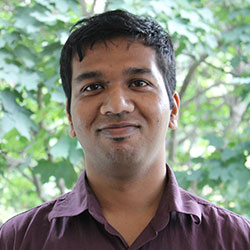
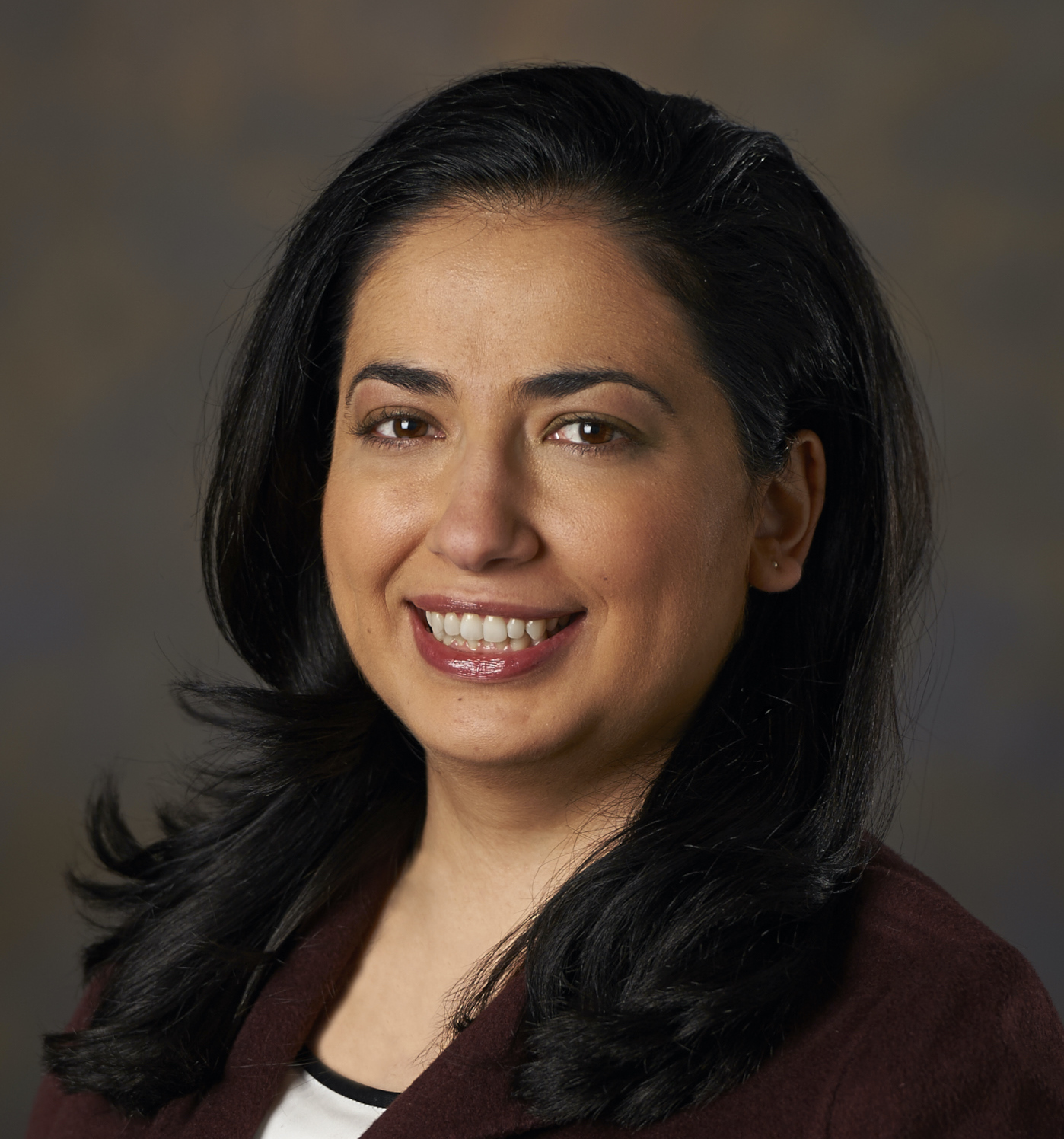
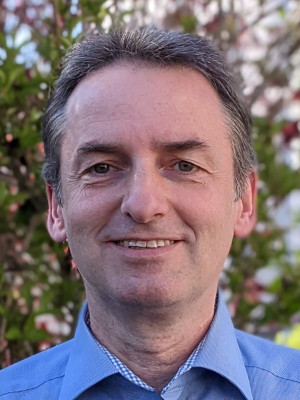
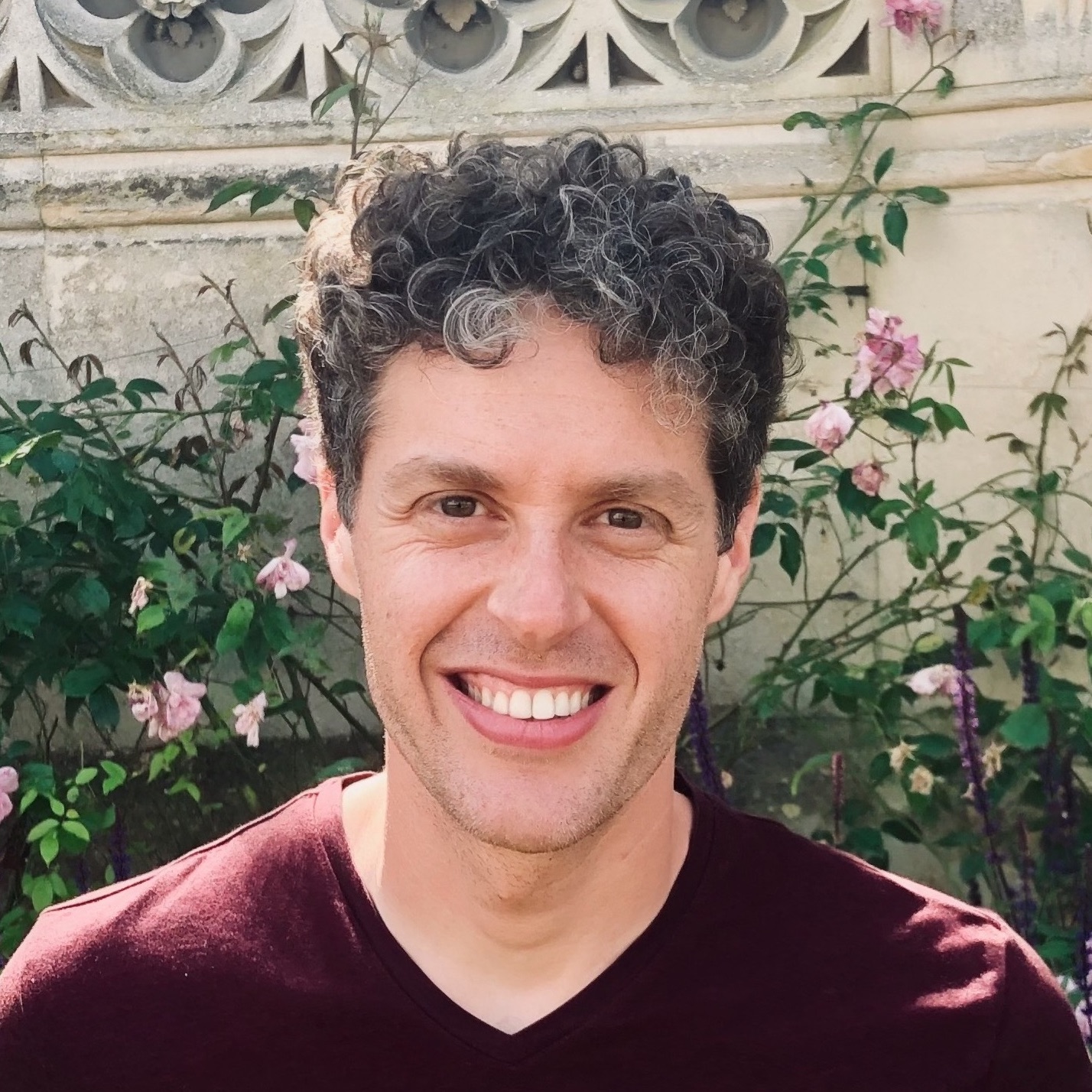
Vaneet Aggarwal is Professor at Purdue University's Edwardson School of Industrial Engineering. His research spans machine learning, reinforcement learning, and quantum computing applications in optimization problems. He develops novel algorithms for complex systems including data centers, networks, and stochastic control environments. Research Focus : Aggarwal's work integrates deep reinforcement learning with combinatorial optimization to solve large-scale engineering problems. Current projects address quantum neural networks, fair resource allocation in bandit settings, and traffic engineering through learning-optimization hybrids. Recent Publications : Recent articles demonstrate consistent focus on theoretical guarantees for learning algorithms, including regret analysis in MDPs, sample complexity of diffusion models, and constrained optimization methods. His quantum machine learning research explores tensor networks for enhanced computational efficiency.
Anindya De is an Associate Professor and Graduate Chair in the Department of Computer and Information Science at the University of Pennsylvania's School of Engineering and Applied Science. Previously, he served as an Assistant Professor at Northwestern University (2015–2018) and held postdoctoral roles at the Institute for Advanced Study (IAS), DIMACS, and the Simons Institute at UC Berkeley. He earned his Ph.D. in Computer Science from UC Berkeley (2013) and a B.Tech. from the Indian Institute of Technology Kanpur (2008). His research focuses on complexity theory, analysis of Boolean functions, learning theory, and applied probability. Notable contributions include work on property testing, trace reconstruction, and algorithmic foundations. He has organized TCS+, an online seminar series in theoretical computer science, and served on program committees for conferences like FOCS, COLT, and STOC. Key achievements include the IBM Pat Goldberg Memorial Math/CS/EE Best Paper Award (2014) and a Best Student Paper award at TCC 2012. His work bridges theoretical computer science with practical applications in stochastic optimization and pseudorandomness.
Robert M. Freund is the Theresa Seley Professor in Management Science at the MIT Sloan School of Management, specializing in Operations Research. His research focuses on nonlinear optimization, computational complexity, and first-order methods with applications in management and engineering. He holds a PhD in Operations Research from Stanford University and has authored influential textbooks like Data, Models, and Decisions: The Fundamentals of Management Science . Education: B.A. in Mathematics (Princeton, 1975), M.S. and Ph.D. in Operations Research (Stanford, 1979–1980). Roles: Faculty Director of MIT Sloan MBA Program, Deputy Dean for Faculty (2008–2011), Co-Director of MIT Program in Computation for Design and Optimization (2004–2008). His research interests span optimization theory, computational science, and applications in machine learning. Notable contributions include advancements in Frank-Wolfe algorithms, interior-point methods, and photonic crystal design. He has received the Longuet-Higgins Prize (2007) and multiple teaching awards. Recent work includes the development of restarted PDHG algorithms, Taylor-approximated gradients for empirical risk minimization, and analysis of first-order methods' computational guarantees. His collaborative efforts with students and researchers like Zikai Xiong and Haihao Lu have produced impactful publications in Mathematical Programming and SIAM Journal on Optimization . Freund has also contributed to educational initiatives, including MIT's Professional Certificate in Data Science and Analytics. His work bridges theoretical optimization advancements with practical applications in engineering and data-driven decision-making.
Fatma Kilinc-Karzan is a Professor of Operations Research at the Tepper School of Business, Carnegie Mellon University, and holds the Frank A. and Helen E. Risch Faculty Development Chair. She is also an Associate Professor of Computer Science (by courtesy) and affiliated with the Algorithms, Combinatorics, and Optimization (ACO) PhD Program. Her career includes visiting roles at institutions like the Simons Institute at UC Berkeley and extensive professional service on editorial boards and conference committees. PhD in Industrial and Systems Engineering (minor in Mathematics) from Georgia Institute of Technology B.S. and M.S. in Industrial Engineering (minor in Information Systems) from Middle East Technical University Research Interests : Her work focuses on convex optimization , structured nonconvex optimization , and their applications in optimization under uncertainty (robust optimization, chance constraints), machine learning (preference learning from limited data), and business analytics . She explores theoretical aspects like semidefinite programming (SDP) relaxations, convex hull characterizations, and algorithmic efficiency for large-scale problems. Article Trends : Her recent publications emphasize semidefinite programs , rank-one function optimization , and chance-constrained programming with applications in portfolio optimization , healthcare , and recommender systems . Key methodologies include perspective reformulation , submodularity , and first-order algorithms . Scientific Awards : 2015 INFORMS Optimization Society Prize for Young Researchers 2014 INFORMS JFIG Best Paper Award Advising and Grants : She has advised over a dozen PhD students, many of whom won awards like the INFORMS Optimization Society Best Student Paper Prize. Her research is supported by grants including an NSF CAREER Award , ONR grant , and AFOSR grant . She collaborates with institutions like IBM and the Simons Institute.
Dr. Gabriel Kaptchuk is an Assistant Professor in the Computer Science Department at the University of Maryland, College Park (UMD), affiliated with UMIACS and MC2. He focuses on applied cryptography, privacy, and interdisciplinary work at the intersection of computer science and law. Previously, he was research faculty at Boston University and earned his Ph.D. from Johns Hopkins University under advisors Avi Rubin and Matt Green. His research includes secure multiparty computation (MPC), zero-knowledge proofs, steganography, and human-centered cryptography. He emphasizes ethical and societal implications of cryptographic systems and collaborates across disciplines to address privacy challenges in real-world contexts. Education: Ph.D., M.S., and B.S. in Computer Science from Johns Hopkins University (2015–2020). Research Interests: Applied cryptography, privacy-preserving technologies, secure multiparty computation, steganography, usable security, and cybersecurity policy. His work bridges technical and social aspects of cryptography, advocating for systems that account for power dynamics and societal impacts. Recent projects include frameworks for harm-aware data release, secure steganography in diffusion models, and privacy-focused research agendas for marginalized communities like sex workers. Teaching: Taught courses on network security, law and algorithms, and algorithmic governance at UMD and Boston University. Recent courses include INST878D/CMSC839C: Governing Algorithms and Algorithmic Governance and DS457/DS657/JD673: Law and Algorithms . Grants & Awards: Notably, his work on user expectations in differential privacy received a Best Paper Runner-up at ACM CCS 2021. He actively engages in policy discussions, including responses to NIST guidelines and technical research agendas for digital intimacy and smart home security. Labs/Teams: Leads research groups exploring MPC for social good, steganography, and privacy-preserving technologies. Collaborates with interdisciplinary teams in policy, law, and ethics to ensure technical solutions align with societal values.
Joshua Brody is an Associate Professor in the Computer Science Department at Swarthmore College, where he has been faculty since 2014. His research focuses on theoretical computer science, particularly communication complexity and its applications to algorithms, data structures, and property testing. He holds a Ph.D. from Dartmouth College (2010), with postdoctoral work at Tsinghua University and Aarhus University. Brody has taught courses such as Data Structures and Algorithms, Competitive Programming, and Theory of Computation. His work spans over 30 publications in top conferences like CCC, FOCS, and SODA, and he has secured grants including a Danish Council research award. He advises undergraduate researchers and coaches the Swarthmore ICPC programming team. Education: Ph.D., Computer Science, Dartmouth College (2010) M.S., Computer Science, New York University (2005) B.S., Mathematics/Computer Science, Carnegie Mellon University (1997) Research Interests: Brody’s work emphasizes lower bounds in communication complexity, query complexity, and their implications for streaming algorithms, data structures, and cryptographic protocols. He explores how communication constraints influence computational efficiency and has developed techniques to derive impossibility results across domains. Grants & Awards: Notable funding includes a Lower Bounds via Communication Complexity grant from the Danish Council (2011–2013) and the Eugene M. Lang Faculty Fellowship (2018). His work bridges foundational theory and practical applications, such as anomaly detection in streams and secure multiparty computation. Teaching: Brody has taught foundational courses like CS 35 (Data Structures) and specialized topics such as Cryptogenography and Randomized Algorithms. His courses emphasize competitive programming and algorithmic problem-solving.
Christos Tzamos is an Associate Professor in the Department of Informatics and Telecommunications at the National and Kapodistrian University of Athens, and a researcher at Archimedes AI. He received his PhD from MIT and BS from National Technical University of Athens. His research bridges computer science, machine learning, statistics, and algorithmic economics. Research Focus: Machine learning theory, algorithmic mechanism design, optimization, and statistical methods with applications to economics. Current projects include active learning, adaptive information acquisition, and robust algorithm design. Awards: NSF CAREER Award (2022), NeurIPS Outstanding Paper Award (2019), George Sprowls Award for best CS PhD thesis at MIT (2017), multiple programming competition medals. Student Advising: Currently advising 4 PhD students and 1 postdoc, with 3 graduated PhD students now at Georgia Tech, Yale, and UT Austin.
Thorsten Theobald Thorsten Theobald is a Professor of Mathematics at the Goethe University Frankfurt am Main, affiliated with the Institute of Mathematics within the Department of Mathematics and Computer Science. His research focuses on discrete and computational geometry, algebraic geometry, optimization, and their applications. He has held visiting positions at institutions such as the Simons Institute for the Theory of Computing (Berkeley), the Mittag-Leffler Institute (Sweden), and Yale University. Education and Career Ph.D. (Dr. rer. nat.) in Computer Science, University of Trier (1997) Habilitation in Mathematics, Technical University of Munich (2003) Professor (W3) at Goethe University Frankfurt since 2006 Research and Awards His work bridges algebraic geometry and optimization, with contributions to polynomial optimization, tropical geometry, and semidefinite programming. Key awards include the Felix Klein Teaching Award (2003), Walther von Dyck Award (2000), and recognition as a Fellow of the German National Merit Foundation (1991–1995). Teaching and Mentorship He teaches courses on optimization, algebraic geometry, and discrete mathematics, and has mentored over 70 students (Bachelor, Master, and Ph.D.). Notable Ph.D. students include Constantin Ickstadt and Timo de Wolff. He has also mentored postdoctoral researchers such as Giulia Codenotti and Mahsa Sayyary Namin. Professional Activities Principal Investigator in DFG Priority Program 2458 (Combinatorial Synergies) Editorial Board Member of Beiträge zur Algebra und Geometrie and SIAM Journal on Applied Algebra and Geometry Organizer of conferences such as the Summer School on Nonlinear Optimization and Combinatorics (2025) and the Frankfurt-Darmstadt Afternoons on Optimization Labs and Collaborations He co-leads the DIGO Research Seminar (Discrete Mathematics, Geometry, and Optimization) and collaborates with institutions like École Polytechnique (Paris) and the Simons Institute. His work integrates theoretical advances with computational tools, emphasizing interdisciplinary applications.
Tom Hayes is an Associate Professor in the Department of Computer Science and Engineering at the University at Buffalo, School of Engineering and Applied Sciences. His research focuses on theoretical computer science and machine learning, with particular emphasis on convergence rates for Markov chains, sampling algorithms, physics of algorithms, and distributed algorithms for radio-enabled sensor networks. Dr. Hayes holds a PhD in Computer Science from the University of Chicago. His academic journey has led him to specialize in probabilistic methods and theoretical foundations of computing. His research interests span theoretical computer science with applications to machine learning. He investigates fundamental questions about how algorithms behave, particularly focusing on Markov chains, random combinatorial structures, and distributed systems. His work bridges theoretical computer science with practical applications in networked systems and optimization problems. His research has significant implications for understanding algorithmic behavior in complex systems. Analysis of his recent publications reveals a consistent focus on theoretical aspects of distributed computing, graph algorithms, and probabilistic methods. His work shows increasing attention to energy efficiency in wireless networks and optimal mixing properties of Markov chains. The research demonstrates strong connections between theoretical computer science and practical applications in network design and analysis. Dr. Hayes actively contributes to the academic community through publications at major theoretical computer science conferences. His work appears regularly in proceedings of conferences like APPROX/RANDOM, reflecting his standing in the theoretical computer science community. He serves as an educator in the Computer Science department, teaching foundational courses including CSE 191 (Intro Discrete Structures) and CSE 331 (Algorithms and Complexity). His teaching emphasizes theoretical foundations while connecting concepts to practical applications in computer science.
Valerie King is a Professor in the Department of Computer Science at the University of Victoria, Canada. Her research focuses on graph algorithms, randomized algorithms, probabilistic analysis, and fault-tolerant distributed computing. She holds a PhD from UC Berkeley. Her work emphasizes scalable and secure distributed systems, with contributions to consensus protocols, network algorithms, and adversarial resilience. Dr. King's research bridges theoretical foundations and practical applications in computing systems. Education: PhD in Computer Science from UC Berkeley. Research Interests: Graph algorithms, randomized algorithms, fault-tolerant distributed computing, and algorithmic defense mechanisms against cyberattacks. Her work often addresses challenges in network security, consensus protocols, and efficient distributed algorithms. Key research trends in her articles include Byzantine agreement protocols, communication-efficient distributed algorithms, and sublinear-time graph algorithms. She explores geometric network models, secure multi-party computation, and energy-efficient communication strategies. Her contributions span algorithm design, complexity analysis, and practical implementations in adversarial environments. Advising and Grants: While specific student names or grant details are not listed here, her extensive publication record reflects sustained research activity in distributed systems and algorithms. She contributes to foundational research in theoretical computer science with applications to real-world distributed networks. Labs/Teams: Affiliated with the Computer Science department at UVic, collaborating on projects related to distributed computing and algorithmic security. Her work often involves interdisciplinary approaches to network resilience and computational efficiency.
Dr. Victor Y. Pan is a Distinguished Professor of Mathematics and Computer Science at Lehman College, The City University of New York (CUNY). He has been affiliated with Lehman College since 1988 and holds one of the highest academic ranks reserved for influential scholars. His research focuses on numerical and algebraic algorithms, with a particular emphasis on polynomial computations, matrix structures, and root-finding methods. Dr. Pan's work bridges numerical and symbolic computing, aiming to optimize computational efficiency while ensuring accuracy. Educational Background: Ph.D. in Mathematics from Moscow University Research experience at the Soviet Academy of Science Research Interests: His key areas include polynomial root-finding, matrix eigenproblems, structured matrices (e.g., Toeplitz, Hankel, and Cauchy), and low-rank approximation. He has pioneered methods combining numerical and algebraic techniques to enhance computational speed and precision. Recent work emphasizes algorithms for sparse polynomials, superfast root-finders, and efficient matrix computations. Publications & Impact: With over 200 peer-reviewed papers and three books, Dr. Pan’s research has influenced global computational mathematics. His articles address topics like fast root-finding, matrix eigenvalue problems, and low-rank approximation at sub-linear cost. His work is widely cited in computer science and applied mathematics. Awards & Recognition: Appointment as Distinguished Professor (CUNY, 2000) Global recognition as a leader in theoretical computer science and numerical analysis Advising & Grants: Recipient of continuous NSF funding for over 20 years. He has mentored 17 Ph.D. students through his seminar program, focusing on algebraic and numerical computing. His seminar fosters collaborative research in topics like polynomial equations, coding theory, and eigen-solving techniques. Labs & Teams: Leads the Algebraic Numerical Computing Seminar at CUNY’s Graduate Center, integrating Computer Science and Mathematics students. The seminar explores cutting-edge topics such as displacement-structured matrices, polynomial root-finding, and eigen-solving algorithms.
Eyal Neumann is an Associate Professor (Reader) in the Department of Mathematics at Imperial College London, within the Faculty of Natural Sciences. He holds a PhD in stochastic processes from the Technion – Israel Institute of Technology and has held academic positions at Imperial College since 2018, including as a Lecturer, Senior Lecturer, and currently as a Reader. He co-directs the MSc in Mathematics and Finance program at Imperial. His research focuses on probability, stochastic processes, and mathematical finance, with specific interests in interacting particle systems, stochastic partial differential equations, and market microstructure. His work bridges theoretical advancements with applications in quantitative finance, including optimal trading strategies and market dynamics. Neumann has organized numerous conferences, including the 12th Bachelier World Congress and workshops on mathematical finance and stochastic analysis. He serves on the editorial board of Mathematical Finance and has collaborated with institutions like HSBC, Bloomberg, and Deutsche Bank on projects involving market microstructure and quantum computing in finance. He has secured significant grants, including funding for a Fintech Lab at the Technion and an EPSRC case studentship for quantum computing in finance. His awards include the 2023 Natixis Prize for Best Master's Thesis (as advisor) and the 2017 Best Paper in Quantitative Finance Award. Neumann has advised multiple PhD students and postdoctoral fellows, contributing to over 40 publications in top-tier journals such as Annals of Applied Probability , Finance and Stochastics , and Mathematical Finance . His research often addresses real-world financial challenges through rigorous stochastic modeling and analysis.
Karthik Sridharan is an Associate Professor in the Department of Computer Science at Cornell University. His research focuses on theoretical machine learning, including online learning, optimization, and statistical learning theory. He holds a PhD from the Toyota Technological Institute at Chicago (2011) and has held postdoctoral roles at the University of Pennsylvania. His work bridges foundational theory with practical applications in optimization and decision-making. Education: PhD, Computer Science (2011), Toyota Technological Institute at Chicago MS, Computer Science (2006), SUNY Buffalo B.E., Computer Science and Engineering (2004), M. S. Ramaiah Institute of Technology Research Interests: Dr. Sridharan explores machine learning theory with emphases on online learning dynamics, optimization algorithms, and the theoretical underpinnings of stochastic methods. His work often addresses challenges like adversarial decision-making and the interplay between optimization and sampling techniques. Recent Trends in Publications: His recent work spans advancements in reinforcement learning with function approximation, minimax analysis of online learning, and the theoretical properties of stochastic gradient descent. These contributions highlight his focus on foundational guarantees for modern machine learning systems. Awards and Honors: Alfred P. Sloan Research Fellow (2018) NSF CAREER Award (2018) Best Paper Awards at COLT (2019, 2018) and ALT (2019) Simons-Berkeley Research Fellowship (2016) Advising and Grants: He advises PhD students on topics like optimization, machine unlearning, and safety in ML. His grants include NSF CDS&E-MSS and collaborations on robust intelligence. He also serves on program committees for leading conferences like NeurIPS and ICML. Labs and Teams: His research group contributes to theoretical foundations of machine learning, with active projects on plug-and-play ML systems, learning on graphs, and de-polarizing recommendation systems.
Michael Kapralov is an Associate Professor in the School of Computer and Communication Sciences at École Polytechnique Fédérale de Lausanne (EPFL) , where he leads research at the Theory Group . His work spans multiple departments including the Laboratory of Theory of Computation 4 and the Doctoral Program in Computer Science and Communications . Kapralov's research focuses on theoretical computer science , particularly sublinear algorithms for big data analysis , with applications in streaming , sketching , sparse recovery , and Fourier sampling . University: EPFL School: School of Computer and Communication Sciences Department: Theory Group Academic Rank: Associate Professor Education: Kapralov earned his Ph.D. in Computer Science from Stanford iCME under the supervision of Ashish Goel . He subsequently held postdoctoral positions at the Mit CSAIL Theory of Computation Group with Piotr Indyk and as a Herman Goldstine Postdoctoral Fellow at IBM T. J. Watson Research Center . Ph.D.: Stanford iCME (2012), advisor: Ashish Goel Postdoctoral: MIT CSAIL (2012-2014), IBM Watson (2014) Research Interests: Kapralov's work addresses fundamental challenges in processing large-scale data through rigorous mathematical models. His contributions include advancements in sublinear algorithms , streaming complexity , spectral sparsification , sparse Fourier transforms , and differential privacy . He has developed techniques for dimension-independent signal processing , kernel ridge regression , and graph spanners , with theoretical guarantees and practical implications for machine learning and data analysis. Scientific Awards: Kapralov received the ERC Starting Grant SUBLINEAR (2018-2023) and the Gene H. Golub Dissertation Award (2012). Advising: He has supervised numerous Ph.D. students and postdoctoral researchers, including Ekaterina Kochetkova , Grzegorz Gluch , Kshiteej Sheth , and Amir Zandieh , many of whom have taken academic or industry positions at institutions like UC Berkeley, National University of Singapore, and Google Zurich. Collaborations and Teaching: Kapralov co-organizes the Turing Course for high school students, leads the Reading Group on Foundations of Deep Learning , and contributes to academic initiatives such as Theory Coffee and the Swiss Winter School on Theoretical Computer Science . He teaches courses like Sublinear Algorithms for Big Data Analysis and Algorithms II , focusing on advanced algorithm design and analysis.
Tom Gur is a Professor in the Department of Computer Science and Technology at the University of Cambridge, with research affiliations in the Algorithms and Complexity and Quantum Computing groups. His work bridges theoretical computer science and quantum computation, supported by major grants including the UKRI Future Leaders Fellowship and ERC Starting Grant . Research Focus : Tom Gur's research centers on Quantum Complexity Theory , Sublinear Algorithms , and Coding Theory , with deep connections to mathematical domains like Harmonic Analysis and Additive Combinatorics . His work explores the interplay between classical and quantum computational models, emphasizing Interactive Proofs , Zero-Knowledge Systems , and Quantum Learning Algorithms . Article Trends reveal a focus on quantum advantage, complexity theory, and cryptographic protocols. Key themes include probabilistically checkable proofs , quantum generalization bounds , and sublinear verification systems across venues like STOC, FOCS, and QIP. Scientific Awards : UKRI Future Leaders Fellowship Advising includes supervision of current PhD and Master's students like Hugo Aaronson and Jack O'Connor , while alumni such as Marcel Dall'Agnol (Princeton) and Aditya Jain (PsiQuantum) reflect his mentorship impact. Professional leadership includes organizing STOC workshops and serving on editorial boards for Quantum and SICOMP .