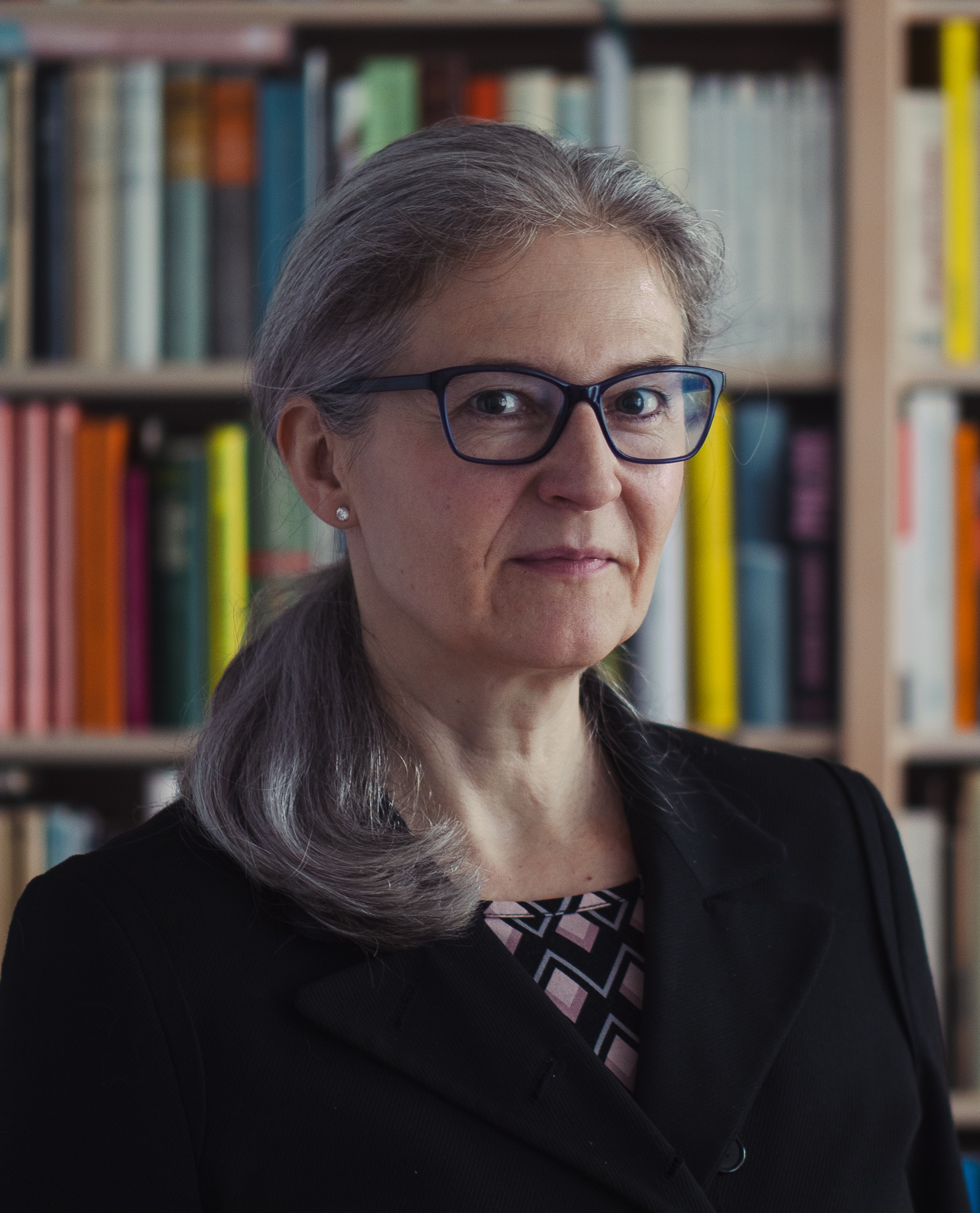
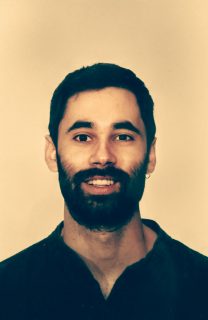
Krzysztof BurdzyView profile
Professor
Krzysztof Burdzy is a Professor of Mathematics and Adjunct Professor of Statistics at the University of Washington, where he is affiliated with the Department of Mathematics in the College of Arts and Sciences. He maintains an active research and teaching profile, currently offering undergraduate courses in probability. His research interests span Probability Theory , Stochastic Processes , Neumann Eigenfunctions , Hot Spots Problem , and the Philosophy of Probability . He is particularly known for his work on Brownian motion, eigenfunction behavior, and spectral theory in geometric domains. His recent work includes contributions to the resolution of the hot spots conjecture for Euclidean triangles and the discovery of interior hot spots in convex sets. The most recent articles reflect a deep engagement with both theoretical mathematics and foundational philosophy. Topics include spectral geometry, probabilistic methods in PDEs, critiques of philosophical theories of probability, and interdisciplinary reflections on epistemology. The publication trend shows sustained contributions from the 1990s through 2024, with a dual focus on rigorous mathematical proofs and meta-scientific analysis. Euclidean triangles have no hot spots (Annals of Mathematics, 2020) Convex sets can have interior hot spots (preprint, 2024) Hypocrisy++: On Philosophy of Probability and Sociology of Ideologies (2023) Burdzy has advised students in mathematics and probability, though specific names are not listed. He has received recognition through publications in top-tier journals such as Annals of Mathematics and Journal of Functional Analysis , though formal awards are not explicitly mentioned. He has delivered numerous talks on the philosophy of probability and its relationship to statistics. He is actively involved in public scholarship, maintaining a personal website with essays on quantum probability, real estate, philosophy, and AI. His work on the limitations of mathematics, suicide prevention, and critiques of post-modern thought reflect a broad intellectual engagement beyond technical mathematics. He does not appear to lead a formal lab or research team, but collaborates with scholars such as R. Bañuelos, W. Werner, and others in probability and analysis.