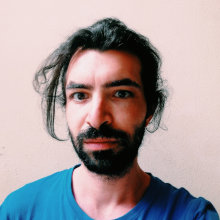
Tommaso Guariento is a Research Fellow at the Department of Philosophy and Cultural Heritage, Ca' Foscari University of Venice. With a PhD in European Cultural Studies from the University of Palermo (2015), he conducted research at Université Paris-1 Panthéon Sorbonne and École des hautes études en sciences sociales (EHESS) in Paris. His work bridges contemporary French philosophy, Anthropocene studies, and semiotics. Education : PhD (2015) - University of Palermo; MA & BA in Philosophy - University of Padua Research : Focuses on collective intelligence, cultural evolution, and computational complexity in the ERC AIMODELS project Guariento's publications reveal interdisciplinary engagement with cognitive psychology, political philosophy, and visual anthropology. His recent articles explore topics like collaborative review systems, memetics, and ontological complexity in the Anthropocene, while his monograph "Miti meme iperstizioni" (2022) examines cultural transmission mechanisms. As a researcher, he develops theoretical frameworks connecting ancient arts of memory with modern computational systems, proposing innovative models for cultural analytics. His work spans from metaphysical explorations of inhuman subjectivity to practical experiments in open-access publishing systems.
Michelangelo Amorim is a University Professor at the Faculty of Sports Sciences of the University of Paris-Saclay. He holds the prestigious distinction of being an Honorary member of the Institut Universitaire de France (IUF), reflecting his significant scholarly contributions to cognitive neuroscience and decision-making research. His primary research focuses on the neurofunctional mechanisms of embodied cognition and decision-making. Through an interdisciplinary approach combining psychophysics and neuroimaging techniques, he investigates: Internalization of subject, environment, and subject-environment relationship properties Predictive control of human movements through sensory consequence emulation Algebraic models for sensory information integration rules Neuro-electrical markers of perceptual anticipation Decision diffusion models isolating perceptual encoding and evidence accumulation His work aims to distinguish between explicit neurocognitive mechanisms (cognitive heuristics) and implicit mechanisms (detection of invariants, presentiment) in perceptual anticipation for decision-making processes. His scientific recognition includes: Honorary membership in the Institut Universitaire de France (IUF) Professor Amorim maintains an active research profile with ORCID identifier 0000-0002-8455-1437. His office is located in Building 335, Office No. 111 at the University of Paris-Saclay campus in Bures sur Yvette (91440), where he conducts research on the intersection of cognitive neuroscience, movement science, and decision theory.
Alessandro Livi, PhD is an Instructor in Neuroscience at Washington University in St. Louis School of Medicine, affiliated with the Padoa-Schioppa Lab. His research focuses on neural mechanisms underlying economic decision making, particularly studying the lateral orbital area in the mouse brain using 2-photon calcium imaging and GRIN lens technology. Dr. Livi's educational background includes: PhD in Neuroscience from the University of Parma (Italy), 2019 MS in Neuroscience from the University of Bologna (Italy), 2014 BS in Psychology from the University of Urbino (Italy), 2012 His research spans multiple domains of neuroscience with particular emphasis on decision making processes, neural representation of economic values, and action cost processing. Dr. Livi employs advanced techniques including 2-photon calcium imaging, electrophysiology, and behavioral neuroscience approaches to investigate how neural circuits represent value and guide economic choices. His work bridges cognitive neuroscience with economic theory, examining neural computations of subjective values during choice processes. Analysis of Dr. Livi's publication record reveals a strong focus on neural mechanisms of decision making, particularly in the orbitofrontal cortex, with significant contributions to understanding mirror neuron systems and action observation networks. His research spans both primate and rodent models, investigating how the brain represents decision variables, action costs, and economic values through advanced neural recording techniques. Dr. Livi has established a robust research profile with 29 publications and over 700 citations according to ResearchGate. His technical expertise includes: 2-photon calcium imaging Electrophysiology Neural data analysis Behavioral neuroscience paradigms Computational modeling of neural data
Dr. Koji Miwa is an Associate Professor at Nagoya University's Graduate School of Humanities, specializing in psycholinguistics with a focus on experimental approaches to understanding how language is processed in the mind. His academic journey includes a Ph.D. in Linguistics from the University of Alberta, followed by postdoctoral work at the University of Tübingen before joining Nagoya University in 2017. Ph.D. in Linguistics, University of Alberta (2007-2013) M.A. in Linguistics, University of Alberta (2004-2007) B.A., Mount Royal College (2002-2004) Dr. Miwa's research primarily investigates how complex words are represented and processed in the mind, with special attention to bilingual reading processes where two languages coexist in a single mind. His work employs sophisticated methodologies including eye-tracking technology to measure real-time cognitive processing during language tasks. He examines morphological decomposition, cross-linguistic influences, and the cognitive mechanisms underlying efficient language processing, with particular emphasis on Japanese-English bilingualism and morphographic scripts. His research consistently explores how humans process complex linguistic information effortlessly and efficiently, often at subconscious levels. Dr. Miwa's recent publications reveal an expanding research program that now includes metaphor comprehension, analogical reasoning, and event role conceptualization across languages. His work bridges theoretical linguistics with empirical cognitive science, often employing advanced statistical modeling techniques like generalized additive mixed models to analyze complex language behavior data. The ENglish Reading Online (ENRO) Project represents a significant contribution to large-scale data collection in second language reading research. Izaak Walton Killam Memorial Scholarship (2010) Roger S. Smith Undergraduate Researcher's Award (2006) As an educator, Dr. Miwa emphasizes balanced development across multiple dimensions of life and learning. His supervision style focuses on cultivating mindfulness, service, and knowledge in students. He serves on editorial boards for PeerJ, Frontiers in Psychology, and Studies in Language Sciences, contributing significantly to scholarly review processes. His research lab at Nagoya University maintains active international collaborations, particularly with researchers in Canada, Europe, and other parts of Asia. Dr. Miwa also maintains a thoughtful personal mission statement that emphasizes living a balanced life while considering fundamental questions about existence.
Jenny Faucheu is a Full Professor at Mines Saint-Étienne specializing in Materials for Design and the Creative Industries. With 53 publications and over 35,000 reads on ResearchGate, she has established herself as a leading researcher at the intersection of materials science, tactile perception, and design. Her work bridges engineering principles with human sensory experience to inform better product design. Professor Faucheu's research focuses on understanding how humans perceive and emotionally respond to textures through touch. Her expertise spans tactile aesthetics, smart materials, polymer nanocomposites, and graphene-based materials. She investigates the relationship between physical surface properties and subjective emotional responses, particularly examining how textures elicit 'liking' versus 'beauty' judgments. Her recent work explores multimodal perception, studying how visual information influences tactile experience and how cognitive factors like working memory affect texture evaluation. Analysis of her 15 most recent publications reveals a consistent focus on the psychophysical aspects of texture perception, with increasing attention to crossmodal interactions and individual differences in sensory processing. Her research has evolved from fundamental studies of friction-induced vibrations to more complex investigations of emotional responses and cognitive mechanisms underlying tactile aesthetics. The work demonstrates strong connections between materials engineering and human-centered design principles. Professor Faucheu's approach emphasizes the importance of interdisciplinary collaboration, combining expertise from mechanical engineering, psychology, and design to create a comprehensive understanding of material perception. Her educational work focuses on developing tools to teach design students about smart materials and their dynamic behaviors, reflecting her commitment to advancing design education through materials knowledge. Her research on VO2-polymer nanocomposites for thermochromic windows represents an important application area, with studies examining both technical performance and environmental impact through life cycle assessments. This work demonstrates her ability to connect fundamental materials research with practical, sustainable applications for energy-efficient building technologies.
Penka Hristova is an Associate Professor in the Department of Cognitive Science and Psychology at New Bulgarian University, where she teaches cognitive psychology, memory, learning, and research methods across undergraduate, graduate, and doctoral programs. Her office is located in Room 414A, Building I, with regular office hours on Wednesdays and Fridays. Her research focuses on cognitive mechanisms of analogical reasoning and relational representation, particularly examining: (1) cognitive resource demands in analogical mapping and relational encoding, (2) long-term memory representations driving analogies, and (3) emotional modulation of analogical processes. She primarily employs behavioral experiments measuring reaction times and accuracy (d'). Her applied work targets educational psychology, developing methods to enhance transferable knowledge through relational reasoning in primary and secondary education. Analysis of her recent publications reveals a consistent trajectory in cognitive psychology with increasing emphasis on educational applications. Her 2024 work extends relational reasoning research to preschoolers through participatory science learning, while earlier studies established foundational mechanisms of unconscious analogy processing and emotional influences on cognition. The publications demonstrate methodological consistency in behavioral experimentation while progressively bridging basic cognitive research with educational practice. Professor Hristova has participated in multiple international research projects applying cognitive science principles to educational contexts, though specific project details and funding sources are not documented in the provided materials. She teaches courses including PSYB503 Memory and Learning and contributes to elementary education programs focusing on foreign language pedagogy.
Nitin Tandon, MD, is a Professor in the Department of Neurosurgery at UTHealth Houston Medical School. He holds multiple leadership roles, including Vice President for Strategy and Development of UTHealth Houston Neurosciences, Director of the Epilepsy Surgery Program at Memorial Hermann–Texas Medical Center, and Co-Director of both the Texas Comprehensive Epilepsy Program and the Texas Institute for Restorative Neurotechnologies. His clinical interests encompass epilepsy surgery, brain tumor resection, awake craniotomies, and microvascular decompression. Research focuses on brain mapping (fMRI, diffusion tractography), intracranial electrophysiology, and neuro-oncology outcomes. He leads the Tandon Research Laboratory, investigating neural mechanisms of language, memory, and epilepsy. Recent publications (2021-2022) demonstrate trends in intracranial EEG for cognitive processes, minimally invasive epilepsy treatments, glioblastoma genomics, and neuroethics. Key areas include neural dynamics of speech, memory networks, and surgical innovation. Scientific awards: AANS/CNS Joint Section on Stereotactic and Functional Neurosurgery Resident Award CNS Resident Award for best paper
Prof. Dr. Jan Fröhlich is a Professor for Motion Picture Engineering at Stuttgart Media University (HdM), specializing in advanced imaging technologies. His research focuses on high dynamic range (HDR) and wide color gamut (WCG) image encoding, color rendering, camera metrology, and HDR workflows. Prior to his academic appointment, he held key industry positions including Senior Image Scientist at ARRI Munich where he contributed to professional cinema camera systems, and Dolby Laboratories where he helped develop the ITU Rec.2100 ICtCp color space and Dolby Vision platform. He also served as Technical Director at CinePostproduction GmbH. His core research areas include: HDR/WCG encoding and color science Virtual production workflows Camera metrology and image sensor technology Perceptual aspects of high frame rate and HDR imaging Real-time HDR/SDR conversion systems Recent publications demonstrate extensive work in virtual production technologies, including LED volume workflows, HDR broadcast graphics, and light field displays. His research consistently addresses both theoretical foundations and practical implementation challenges in cinematography and broadcast engineering.
Dr. Matt Felicetti is a dedicated Lecturer in Engineering at La Trobe University's Bendigo campus, specializing in robotics, electronics, and artificial intelligence. He holds a PhD in randomized artificial intelligence for industrial applications and a bachelor's degree in computer systems engineering with top honors. Matt plays a pivotal role in enhancing the engineering capstone program and teaches subjects including Robotic System Design, Advanced Research, and Advanced Engineering Innovation. His educational background includes: PhD in Randomized Artificial Intelligence for Industrial Applications, La Trobe University (2019-2022) Bachelor of Engineering (Computer Systems) with First Class Honors, La Trobe University (2013-2016) Advanced Diploma of Electronics, Swinburne University of Technology (2011-2012) Matt's research primarily focuses on collaborative industry partnerships through the RAMPS R&D group, implementing innovative engineering solutions using electronics, sensors, embedded systems, robotics, AI, and algorithm design. He has a particular interest in field robotics and machine vision in agriculture. Beyond industry applications, Matt specializes in randomized artificial intelligence algorithms, particularly Stochastic Configuration Networks, with a focus on optimizing these algorithms for industrial environments. His research extends to low-level computing aspects including binary operations, data encoding, and hardware implementation on FPGAs or small embedded devices. His recent publications demonstrate a strong progression from theoretical algorithm development to practical implementations in specific industry contexts, with increasing attention to hardware implementation and agricultural robotics applications. The research shows a clear trajectory toward real-world industrial problem solving. Matt has received numerous scientific awards and recognitions: David Myers Medal Nancy Millis Medal SEMS Teaching Award for Industry Relevance and Student Engagement David Myers Research Scholarship D.M. Myers University Medal Fellow of the Higher Education Academy (FHEA) In terms of academic service, Matt serves as an Associate Editor for the journal Industrial Artificial Intelligence and has conducted peer reviews for Neural Computing and Applications, IEEE Transactions on Industrial Informatics, and Information Sciences. He currently leads the funded research project "Robotic Based Sewer Pipe Condition Assessment" through SmartCrete CRC (2024-2027). His teaching portfolio includes coordinating Robotic System Design, Advanced Research, and Ideas for Innovation courses. Matt is an active member of the RAMPS R&D group, which focuses on crafting innovative solutions for industry-specific problems. His work bridges academic research with practical industry applications, particularly in agricultural robotics and industrial AI implementation, demonstrating strong collaboration with researchers like Ross R, Wang D, and Putland S.
Ralf Schmälzle is an Associate Professor in the Department of Communication at Michigan State University's College of Communication Arts and Sciences. He serves as Graduate Director of the M.A. in Health and Risk Communication program, Co-Director of the Center for Avatar Research and Immersive Social Media Applications (CARISMA), and Core Leader of the Health and Risk Communication Center (HRCC). His research bridges communication science, cognitive neuroscience, and psychology to investigate how the brain processes persuasive messages in health, media, and interpersonal contexts. Dr. Schmälzle's work centers on neurocognitive communication and media neuroscience, utilizing fMRI, EEG, and computational modeling to study audience engagement and health message processing. His recent research explores AI-generated health messages, VR-based advertising, and neural correlates of social interaction in virtual environments. Key methodologies include mobile EEG hyperscanning, pupillometry, and gaze-contingent paradigms to decode attention and memory mechanisms during media exposure. His publication trends (2023-2025) reveal accelerating integration of artificial intelligence with neuroimaging, particularly in cross-cultural health communication and immersive media environments. Methodological innovation dominates his output, with VR billboard paradigms and embodied AI agents enabling naturalistic studies of message exposure-reception-retention chains. A consistent focus on translating neural metrics into practical health campaign design distinguishes his contributions to the field. As Graduate Director of the Health and Risk Communication M.A. program and founder of the Neuroscience of Messages Lab, Schmälzle mentors students in interdisciplinary research linking communication, neuroscience, and technology. His leadership in CARISMA-lab and HRCC facilitates collaborative grant-funded projects examining social-communicative processes through emerging media platforms. He founded the Neuroscience of Messages Lab (NOM) and co-directs CARISMA-lab, creating interdisciplinary environments for studying communication through cognitive neuroscience and immersive technologies. Current lab initiatives focus on AI-human interaction in VR health coaching, neural synchrony during collective media experiences, and cross-cultural neural responses to health messages using mobile neuroimaging.
Åke Viberg is a Professor in General Linguistics at the Department of Linguistics and Philology, Uppsala University, specializing in Swedish language studies within global linguistic frameworks. His work bridges theoretical and empirical approaches to semantic analysis across languages. Viberg's research centers on contrastive and typological linguistics, with deep expertise in lexical semantics and corpus-based methodologies. He investigates how languages encode sensory experiences (particularly smell and vision), motion events, and emotional concepts, focusing on Swedish in cross-linguistic comparison. His work reveals systematic patterns in verb semantics across domains like perception, possession, and communication, demonstrating how cultural and cognitive factors shape lexical expression. Analysis of his 2009-2024 publications shows consistent focus on granularity in event verbalization, sensory semantics, and cross-linguistic variation in verb systems. Key trends include typological profiling of Swedish against European languages, corpus-driven studies of 'get' and posture verbs, and theoretical modeling of semantic fields. His research demonstrates how seemingly minor lexical differences reflect fundamental cognitive and cultural distinctions in language organization.