Max Planck Institute for Plant Breeding ResearchGermany
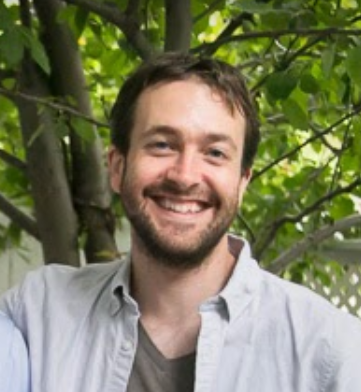
Adam Runions is a researcher in the Department of Computer Science at the University of Calgary, leading the MPG Partner Group in computational analysis of leaf development through collaborative work with Miltos Tsiantis. His group is embedded in the Graphics Cluster, focusing on interdisciplinary problems at the intersection of computer science and developmental biology. University of Calgary - Department of Computer Science MPG Partner Group (2022) Graphics Cluster affiliation His research explores computational modeling and analysis of plant form and development across multiple scales, integrating geometric modeling, physically-based simulation, and computer-aided design. Key themes include plant morphogenesis, self-organization of natural forms, and cross-disciplinary applications in computer graphics and animation. Recent publications emphasize plant development (leaf shape, bark patterning), mathematical modeling (auxin-driven patterning), and geometric techniques (subdivision surfaces, PUPs). Collaborations span institutions like the Max Planck Institute for Plant Breeding Research. Scientific Awards Marie Sklodowska-Curie Fellowship Best Paper Award (International Conference on Cyberworlds 2015) Best Student Paper Award (Computer Graphics International 2011) The group actively recruits BSc, MSc, and PhD students with backgrounds in computer science and mathematics for projects on plant form simulation and digital content creation. Research integrates evolutionary biology, biomechanical modeling, and computational techniques.
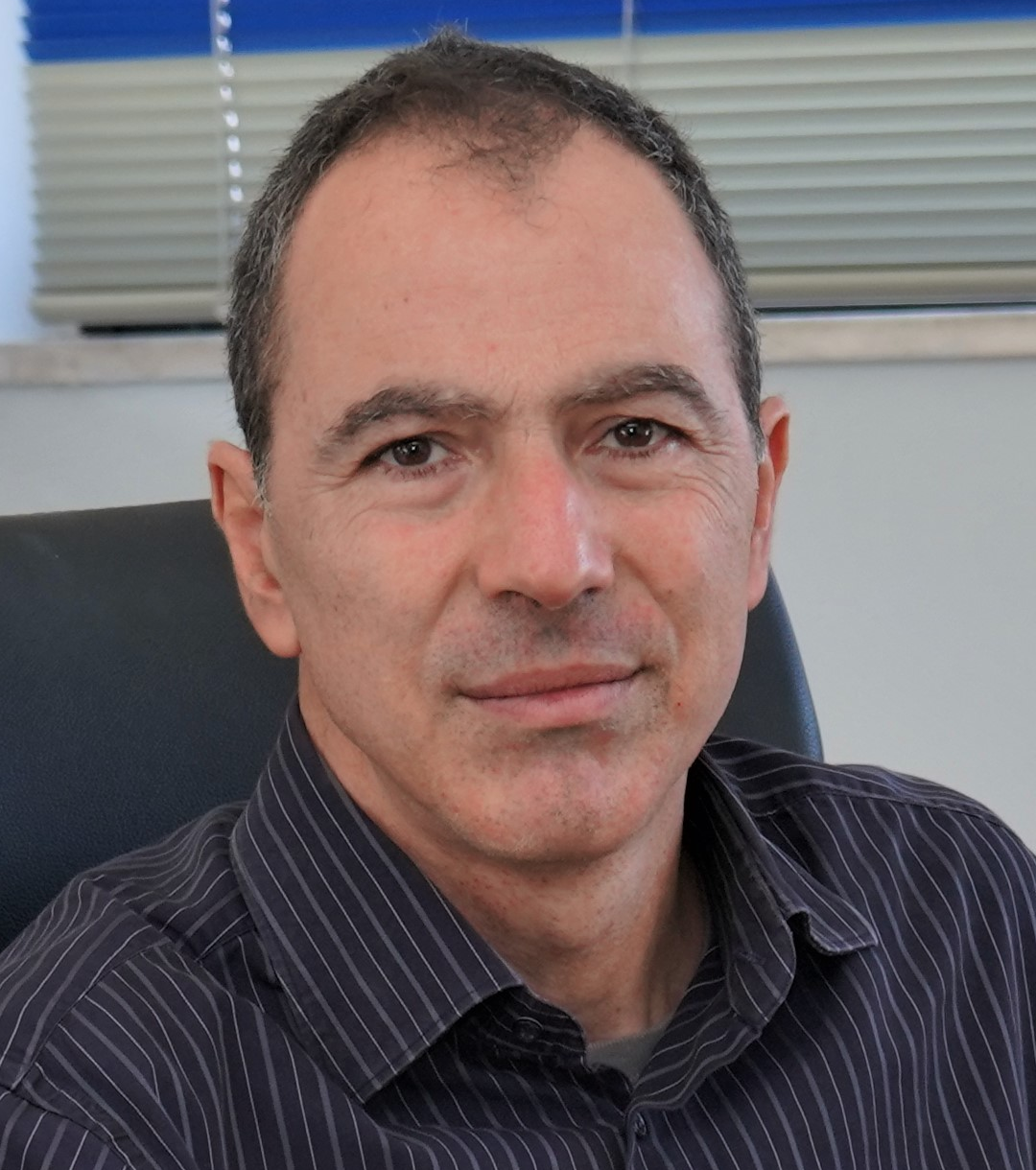
Patrick Willems is a full Professor at KU Leuven's Faculty of Engineering Sciences, Department of Civil Engineering. He serves as the head of the Hydraulics Subdivision within the Hydraulics and Geotechnics unit. Professor Willems holds multiple significant roles including chairman of the ADS Bureau, member of the Faculty Council of Engineering Sciences, and participant in the Leuven One Health Institute and KU Leuven Institute for Urban Studies (LUSI). His work addresses critical global water management challenges through advanced hydrological modeling and climate change adaptation strategies. Professor Willems' research spans several critical areas in water resources engineering. His primary expertise includes urban hydrology and river engineering, statistical hydrology with focus on flood prediction and risk analysis, integrated river basin management, precipitation analysis, and climate change impacts on hydrological extremes. He employs both traditional hydrological modeling approaches and innovative machine learning techniques to develop practical solutions for flood warning systems, urban water management, and climate adaptation planning. His research integrates statistical methods, numerical modeling, and data science to address complex water management problems across multiple geographical contexts. Professor Willems leads multiple major international research projects examining hydrological extremes in transboundary river basins, natural climate adaptation measures, hydrological modeling of peatland areas, and deep learning-based prediction of hydrological extremes. His work spans various geographical contexts including Belgium, Vietnam, Bolivia, Tanzania, and the Congo Basin, demonstrating both local relevance and global applicability of his research. Within KU Leuven, Professor Willems teaches diverse courses including Environmental Problems and Techniques, Statistics and Data Science, Stochastic Hydrology, Urban and River Hydrology and Hydraulics, River Modeling, and Probability and Statistics. He also leads the Hydraulic Engineering Project course and an Artificial Intelligence Project course, reflecting his commitment to integrating traditional engineering knowledge with modern computational approaches. As head of the Hydraulics Subdivision, he oversees research activities focused on developing advanced water engineering tools and methodologies that bridge theoretical advancements with practical applications for water management authorities.
California Institute of Technology (Caltech)United States
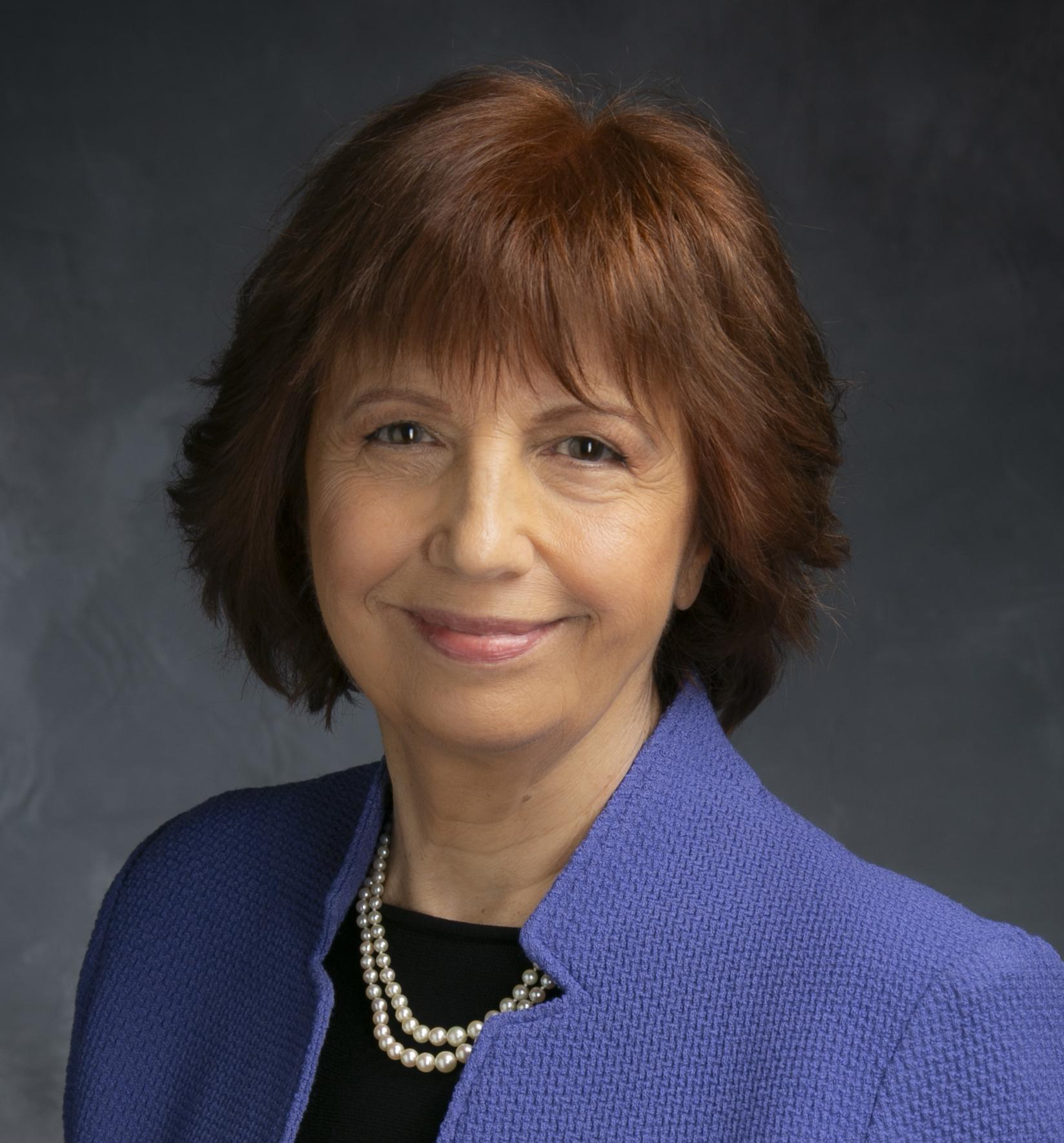
Peter Schroeder is the Shaler Arthur Hanisch Professor of Computer Science and Applied and Computational Mathematics at the California Institute of Technology (Caltech). He holds a B.S. from the Technical University of Berlin (1987), M.S. from MIT (1990), M.A. and Ph.D. from Princeton University (1992–1994). His academic roles at Caltech include Assistant Professor (1995–1998), Associate Professor (1998–2001), Professor (2001–2013), and Hanisch Professor since 2013. He served as Division Deputy Chair (2012–2015) and Acting Director of the Center for Advanced Computing Research (2013–2014). Schroeder’s research focuses on numerical algorithms for computer graphics, geometric modeling, and physical simulation. His work emphasizes Discrete Differential Geometry, rebuilding classical differential geometry for computational applications. Key areas include cloth deformation, fluid dynamics, and vortex simulations. Notable contributions include 'Schrödinger’s smoke' and fluid visualization techniques using Clebsch maps. His publications span ACM Transactions on Graphics and address topics like constrained Willmore surfaces, filament-based plasma models, and shape reconstruction from metrics. He has received the ACM Fellowship and Best Paper in Geometry Processing Award. His research often bridges computational mathematics with artistic and engineering challenges, such as simulating ink chandeliers and solar flares. Schroeder’s academic leadership includes co-founding the ACM SIGGRAPH Academy and mentoring students like James R. McLaughlin and Yanke Song, both recipients of the Henry Ford II Scholar Award.
National and Kapodistrian University of AthensGreece
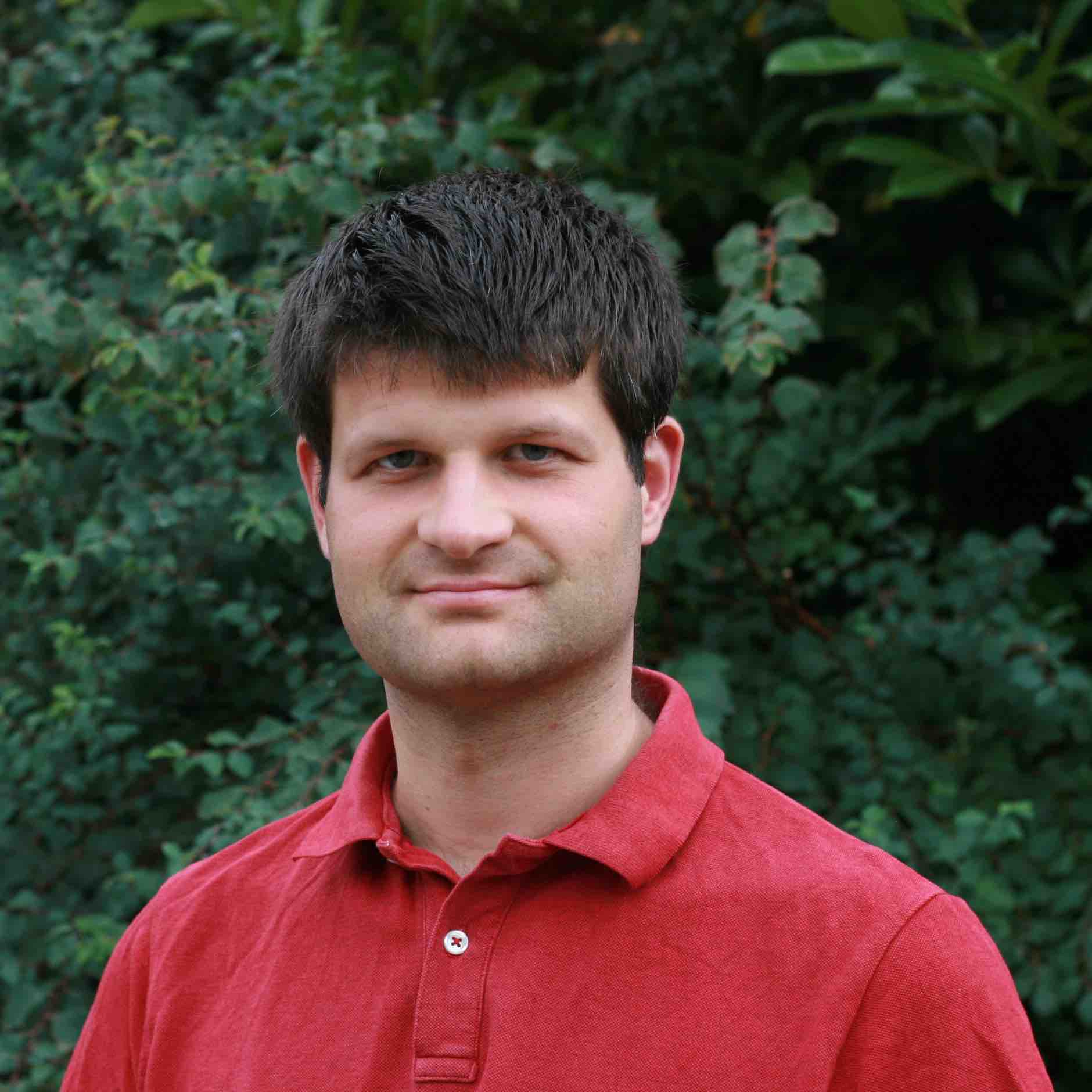
Ioannis Z. Emiris is a Professor in the Department of Informatics & Telecoms at the National & Kapodistrian University of Athens and concurrently serves as President and General Director of the ATHENA Research Center in Greece. He holds a BSc in Computer Science from Princeton University (1989) and a PhD in Computer Science from UC Berkeley (1994). His research spans computational geometry, algebraic algorithms, robotics, structural bioinformatics, and optimization. He is a leading expert in sparse elimination theory, geometric modeling, and algorithmic algebra. Affiliations: ATHENA Research Center, National & Kapodistrian University of Athens, INRIA Sophia Antipolis (France via joint AROMATH team). Education: BSc (Princeton), PhD (UC Berkeley). Research Interests Emiris's work focuses on geometric algorithms, algebraic systems, and their applications. His contributions include advancements in sparse elimination theory, computational geometry for high-dimensional data, and robotics. He has developed algorithms for polynomial system solving, Voronoi diagrams, and geometric predicates for ellipses. Articles Overview His recent work bridges theoretical advances with practical applications, such as deep learning for protein structure prediction (HydraProt) and geometric algorithms for high-dimensional data analysis. He explores intersections between algebraic geometry and computational methods, with applications ranging from robotics to bioinformatics. Scientific Awards Best Paper Award at ISSAC 2003 and 2010 MSCA Network GRAPES (2019-2023) Advising & Grants Emiris has supervised numerous students and researchers, contributing to interdisciplinary projects. He has secured grants for initiatives like the GRAPES network and has led teams in algorithm design and geometric software development. His work on MARS (Maple/Matlab/C Resultant-Based Solver) exemplifies his focus on practical algorithm implementation. Labs & Teams He directs the Lab of Geometric & Algebraic Algorithms and collaborates with the AROMATH team at INRIA. His research group develops open-source tools for computational geometry and algebraic computations.
Tegoeh Tjahjowidodo is a Senior Lecturer at the Faculty of Industrial Engineering Sciences , KU Leuven , affiliated with the Department of Mechanical Engineering and the Manufacturing Processes and Systems (MaPS) unit at Campus De Nayer. He serves as Head of Education for Electromechanics programs and leads Subdivision 17 at the campus. Research Areas: Additive Manufacturing (Wire-Arc Additive Manufacturing), Process Monitoring, Control Systems, Laser Micromanufacturing, Wear Analysis, Robotics, and Condition Monitoring. Publication Trends: Focus on in-situ monitoring of laser micromanufacturing, machine learning for abrasive belt grinding, WAAM parameter optimization , and multi-sensor fusion for process control. Scientific Contributions: Co-promotor for MultiTRIBO (tribology), Promotor for WAAM structural integrity and pedicle screw surgical simulators . Active in international collaborations (e.g., 25th International Symposium on Laser Precision Microfabrication, Spain 2024).
Dr. Prashant Saxena is a Senior Lecturer in the Department of Infrastructure & Environment at the University of Glasgow (since 2018). He previously held positions as an Assistant Professor at the Indian Institute of Technology Hyderabad (2015-2018) and postdoctoral roles at the University of Lausanne (2014-2015) and the University of Erlangen-Nuremberg (2012-2014). He completed his PhD in Applied Mathematics at the University of Glasgow (2012) and a Bachelor/Master of Technology in Mechanical Engineering from the Indian Institute of Technology Kanpur (2009). His research focuses on the mechanics of soft solids and structures, particularly under extreme deformation. Key areas include smart composites with multi-physics coupling (electro-mechanical and magneto-mechanical) and soft biological tissues. He employs tools like nonlinear solid mechanics, continuum mechanics, and numerical analysis to study instabilities in these materials. His work emphasizes the exploitation of instabilities as design features in engineering applications. Research grants include EPSRC funding (2021-2024) and multiple awards from India's Science and Engineering Research Board (SERB). Notable awards: EPSRC New Investigator Award (2021), Ramanujan Fellowship (2015-2018), and multiple SERB Early Career Awards. Teaching roles include Finite Element Analysis, Dynamics, and Structural Mechanics courses at the University of Glasgow. Professional activities include editorial roles in Mathematics and Mechanics of Solids and organizing international conferences. His publications span over 40 papers in journals like Journal of the Mechanics and Physics of Solids and Proceedings of the Royal Society A , with a focus on magnetoelastic deformation, instabilities, and computational mechanics.
Leila De Floriani is a Professor at the University of Maryland, with appointments in the Department of Geographical Sciences and the University of Maryland Institute for Advanced Computer Studies (UMIACS). She previously served as a professor at the University of Genova (Italy) since 1990, where she developed Italy's first undergraduate and graduate curricula in computer graphics and directed the Ph.D. program in Computer Science for eight years. Her professional activities include serving as the 2020 President of the IEEE Computer Society and currently as IEEE Division VIII Director for 2023-24. Professor De Floriani's research spans geometric modeling, data visualization, spatial data representation and processing, computer graphics, shape analysis, and topological data analysis. Her work focuses on developing mathematical models and algorithms for representing, analyzing, and visualizing complex spatial data, particularly through hierarchical models, mesh-based representations, and topology-based approaches. Her research group, the GeoVis group, investigates applications in terrain modeling, environmental data analysis, and forest structure mapping using LiDAR technology. Analysis of her recent publications reveals a strong focus on terrain representation and processing, with increasing emphasis on topological data analysis, machine learning integration, and efficient algorithms for large-scale spatial data. Her work bridges theoretical foundations in computational topology with practical applications in geospatial sciences, demonstrating consistent innovation in data structures and visualization techniques. Scientific Awards & Recognitions Fellow of IEEE (2016) for contributions to geometric modeling and scientific visualization Fellow of International Association for Pattern Recognition (IAPR) (1998) for contributions to geometric modeling and image analysis Fellow of Eurographics Association (2020) for outstanding contributions to computer graphics and visualization Pioneer of Solid Modeling Association (2017) for seminal work in solid and feature-based modeling Inducted Member of IEEE Visualization Academy (2020) IEEE Computer Society Golden Medal Award (2018) Inducted Member of IEEE Honor Society Eta Kappa Nu (2019) Multiple best paper awards at major conferences including Shape Modeling International (2015), IEEE/EG Symposium on Volume and Point-Based Graphics (2008), and ACM SIGSPATIAL (2008) Professor De Floriani has successfully advised numerous PhD students including Xin Xu, Yunting Song, and Noel Dyer, whose recent dissertations focused on topology-based individual tree mapping, efficient terrain analysis, and bathymetric data visualization respectively. Her research has been funded by prestigious agencies including the National Science Foundation, NASA, and the European Commission. As the leader of the UMD GeoVis group, she oversees a research program that develops open-source tools for spatial data analysis available on GitHub, with current projects focusing on forest point cloud processing and topology-based geospatial data visualization. The GeoVis group, affiliated with the Department of Geographical Sciences, UMIACS, and the Center for Geospatial Information Sciences, maintains a strong collaborative environment with ongoing projects in geometric modeling, spatial data structures, topology-based machine learning, and mesh-based terrain modeling. The group has received recent funding from NASA's HPOSS program for developing an open-source library for forest point cloud processing based on topological data analysis.
Bergakademie Freiberg University of TechnologyGermany
Prof. Johannes Carmesin is a Professor at the Faculty for Mathematics and Computer Science, Technische Universität Bergakademie Freiberg. His research focuses on advanced topics in Graph Theory, Combinatorics, and Topology, with notable contributions to 3-dimensional Kuratowski-type theorems and the extension of Structural Graph Theory to simplicial complexes. He leads the Discrete Structures group, which explores areas including Graph Minors, Matroid Theory, and Infinite Graphs. Education and Career: He holds a PhD (2015) and Habilitation (2018) in Mathematics, with earlier work on harmonic functions in networks (Master's 2012). His academic journey includes research on infinite matroids and tree-decompositions. Research Interests: Carmesin’s work bridges discrete mathematics and topology, emphasizing structural properties of graphs and their embeddings. Key areas include 3D graph embeddings, connectivity in infinite graphs, and matroid characterizations. He has pioneered methods for analyzing 2-dimensional simplicial complexes and their topological representations. Recent Trends in Publications: His recent work extends Graph Minor Theory to temporal networks and 3D spaces, with a focus on canonical decompositions, tangle theory, and applications in large-scale network analysis. His 2023 European Prize in Combinatorics recognizes breakthroughs in 3D Kuratowski analogues. Awards: European Prize in Combinatorics (2023) Advising and Team: Supervised PhD students Emily Nevinson and Tsvetomir Mihaylov, and mentored master’s students like Will J. Turner. His research team includes Dr. Jan Kurkofka and Dr. Matthew Kroeker. Notable collaborations address infinite graph connectivity and Stallings-type theorems for finite groups. Labs/Groups: Directs the Discrete Structures research group, which hosts regular seminars and collaborates internationally. Past members include Georgios Kontogeorgiou and Lyuben Lichev as interns.
Ferit Öztürk is a Professor in the Mathematics Department at Bogazici University, specializing in singularity theory, contact topology, and symplectic topology. He leads the Geometry/Topology Seminar and supervises numerous graduate students in these fields. His research bridges topological methods with applications in robotics and dynamical systems. Recent work includes exotic manifold construction, real contact structures on 3-manifolds, and Morse-Bott theory on Lie groups. Dr. Öztürk holds a Ph.D. from Middle East Technical University (2001) and has developed course materials on Morse Theory and Projective Geometry. Student Supervision: 12+ M.S./Ph.D. students in topology and geometry Research Tools: Contact branched covers, real algebraic models, geometric surgery
Max Planck Institute for Sustainable MaterialsGermany
Martin Diehl is a computational materials scientist affiliated with KU Leuven (Departments of Computer Science and Materials Engineering) and the Max-Planck-Institut für Eisenforschung GmbH in Germany. His work focuses on crystal plasticity simulations, computational materials engineering, and multi-physics modeling of metallic systems. Research interests include: Crystal plasticity finite element method (CPFEM) and spectral solvers Microstructure evolution and damage mechanics Machine learning applications in materials design Development of the DAMASK simulation toolkit Multi-phase steel alloys and heterogeneous deformation Integrated computational materials engineering (ICME) Key trends in his publications since 2021 highlight advancements in: Multi-physics DAMASK framework for coupled chemo-mechanical and thermal simulations AI-driven inverse design of steel microstructures Damage modeling in dual-phase steels Collaborative software development for materials science Experimental-simulation integration for stress-strain partitioning High-resolution spectral methods for finite strain analysis He actively collaborates with institutions like Harbin Institute of Technology, University of Oxford, and research groups across Europe and Asia.
Joe D. Warren is a Professor of Computer Science at Rice University, where he has served since 1986. His research focuses on computer graphics, geometric modeling, and computational geometry, with notable contributions to subdivision surfaces, as detailed in his book Subdivision Methods for Geometric Design . He also explores bioinformatics applications, including 3D modeling of mouse brain gene expression and lung motion analysis from 4D CT scans. Additionally, Warren teaches courses in computer game design and introductory programming, co-developing award-winning Coursera specializations. He earned his Ph.D. from Cornell University and previously served as Department Chair (2008-2013). Education: B.Sc. (Rice University, 1983), Ph.D. (Cornell University, 1986) Research Collaborators: Baylor College of Medicine, MD Anderson Cancer Center, Texas A&M Teaching: COMP460 (Game Design), COMP110 (Introductory Computing) His work on the GRACE tool (Graphical Ruler and Compass Editor) won the 1998 Quest for Java award. He has advised PhD students now at Washington University and Texas A&M. Current projects include game prototyping with Pi Studios and lung motion modeling for medical diagnostics.
Prof Graham Shields is a Professor of Geology at University College London's Department of Earth Sciences. His research focuses on Earth's evolution through geochemical and isotopic analysis, particularly in the Precambrian and Cambrian periods. He investigates how the planet's surface environment co-evolved with life, with a focus on ocean/atmosphere composition during critical junctures like the Sturtian Snowball Earth event and Ediacaran-Cambrian transitions. His work combines field studies in Australia, Spain, and China with analytical techniques such as Rb-Sr dating, multi-isotope analysis, and sedimentary proxy development. Research themes include ocean oxygenation, redox dynamics, and the interplay between glaciation, volcanism, and biological innovations. Applied projects explore geochemical solutions for environmental issues like soil erosion and sustainable resource extraction. He leads the Precambrian Research Group and contributes to initiatives like the Life and the Planet initiative. Publications span Neoproterozoic climate modeling, Ediacaran ocean chemistry, and the geological time scale subdivision. Courses taught include GEOL0008 (Geochemistry).
Rudi Pendavingh is an Assistant Professor at the Department of Mathematics and Computer Science at Eindhoven University of Technology. Affiliated since 1999, he specializes in matroid theory , combinatorics , and topological graph theory within the Combinatorial Optimization group. Research Interests include: Matroid theory with focus on excluded minors and representability over partial fields Topological graph theory, particularly Colin de Verdière invariants for surface-embedded graphs Discrete optimization modeling and algorithmic complexity Geometric combinatorics in polyhedral complexes like Dressians Recent Publications highlight his work on: Stable tournament formats using finite projective planes (2025) Bounding topological graph parameters via combinatorial methods (2024) Computational enumeration of matroid minors (2024) Asymptotic analysis of Dressian dimensions (2024) Contact : Email: r.a.pendavingh@tue.nl Phone: +31 40 247 4235 Office: MetaForum 4.105, TU/e Campus
Leif Kobbelt is a Full Professor of Computer Science and Head of the Visual Computing Institute at RWTH Aachen University . He previously held academic positions at the Max-Planck-Institute for Computer Science, University of Erlangen-Nürnberg, and University of Wisconsin-Madison. Diploma in Computer Science (1992), Karlsruhe Institute of Technology PhD in Computer Science (1994), Karlsruhe Institute of Technology His research focuses on computer graphics and geometry processing , with specific interests in 3D reconstruction, quad mesh generation, real-time rendering, and geometric modeling algorithms. He has pioneered techniques for efficient mesh processing, anisotropic geodesic computation, and procedural facade visualization. Recent publications analyze nonlinear constraints in geometric modeling, quad layout optimization, and real-time rendering techniques. Key themes include mesh parameterization, multiresolution analysis, and computational geometry for interactive applications. Scientific recognitions include: 2014 Gottfried Wilhelm Leibniz Prize (Germany's most prestigious research award) 2013 ERC Advanced Grant (ACROSS project) 2008 Eurographics Fellow 2004 Eurographics Outstanding Technical Contribution Award 2000 Heinz-Maier-Leibnitz Award He leads major research initiatives like the excellence clusters UMIC (€40M) and AICES (€15M), and the ERC-funded ACROSS project (€2.5M, 2014-2018). He serves as principal investigator and reviewer for international journals and organizations.
Hans-Peter Seidel is a leading academic in computer graphics, serving as Director of the Max Planck Institute for Informatics and Full Professor at Saarland University since 1999. Previously held roles include Full Professor at University of Erlangen (1992–1999) and Assistant Professor at University of Waterloo (1989–1992). Holds a PhD in Mathematics (1987) and Habilitation in Informatics (1989) from University of Tübingen. Research focuses on 3D image analysis, digital geometry processing, visual computing, and free viewpoint rendering. Key achievements include pioneering work in surface editing, motion capture, and multi-view video processing. Has organized major conferences like Eurographics and SIGGRAPH, serving as editor for journals including IEEE TVCG and Computer Aided Geometric Design. Recipient of the Eurographics Distinguished Career Award (2012), Gottfried Wilhelm Leibniz Prize (2003), and numerous fellowships. Led initiatives such as the Cluster of Excellence on Multimodal Computing and Interaction (M2CI) and the Max Planck Center for Visual Computing and Communication (MPC-VCC). Active in academic leadership roles including Eurographics Chair and DFG committees. Publications span over 30 SIGGRAPH and 50 Eurographics contributions, with an h-index of 62 and 14,000+ citations. Recognized as a top-cited researcher in computer graphics. Current research explores advanced visualization techniques and geometric modeling innovations.