
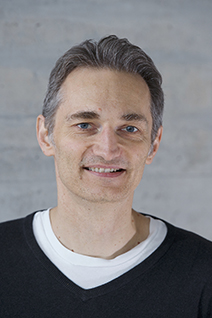
Karsten WeisView profile
Professor
Prof. Dr. Karsten Weis serves as Full Professor and Deputy Head of the Department of Biology at ETH Zurich, Switzerland, leading the Weis Group at the Institute of Biochemistry since his 2013 appointment. Prior to ETH Zurich, he spent 14 years at UC Berkeley (1999-2013), rising from Assistant Professor to Full Professor through promotions in 2003 and 2006, following a UCSF fellowship after his 1996 EMBL Heidelberg Ph.D. under Angus Lamond. Education: Ph.D. from European Molecular Biology Laboratory (EMBL), Heidelberg (1996) Research Interests: The Weis Lab investigates eukaryotic subcellular compartmentalisation through membrane-bound organelles (e.g., nucleus) and dynamic membraneless structures formed by phase separation (P bodies, stress granules). Core focus areas include nucleocytoplasmic transport , nuclear pore complex assembly , and the role of biomolecular condensates in gene expression. Methodologically, they integrate in vitro reconstitution , live-cell imaging , cryo-EM , omics , and genetic approaches while innovating custom imaging tools to visualize cytoplasmic biophysical properties. Recent publications reveal a critical emphasis on experimental methodology in cellular organization research, particularly how fluorescent protein tags distort biomolecular condensation observations (2025 MBoC paper) and structural analysis of nuclear pore complexes (2025 review), highlighting technical rigor in the field. Advising and Grants: The lab actively mentors postdoctoral researchers like Michaela Ristova (joined February 2025) and Federico (February 2025), and hosts Master's projects as noted on their website. While specific grants are unmentioned, their multidisciplinary toolkit suggests robust funding for imaging and biochemical research. Labs and Teams: Situated at the Institute of Biochemistry (Otto-Stern-Weg 3, Zürich), the Weis Group collaborates with ETH Zurich's network of cell biology teams including Allain Group, Barral Group, Helenius Group (emeritus), Jagannathan Group, Kleele Group, Kutay Group, Michaels Group, Neurohr Group, and Peter Group, driving innovation in cellular organization studies.