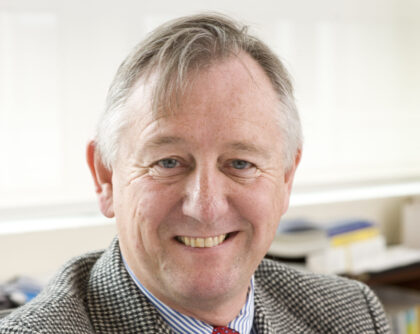
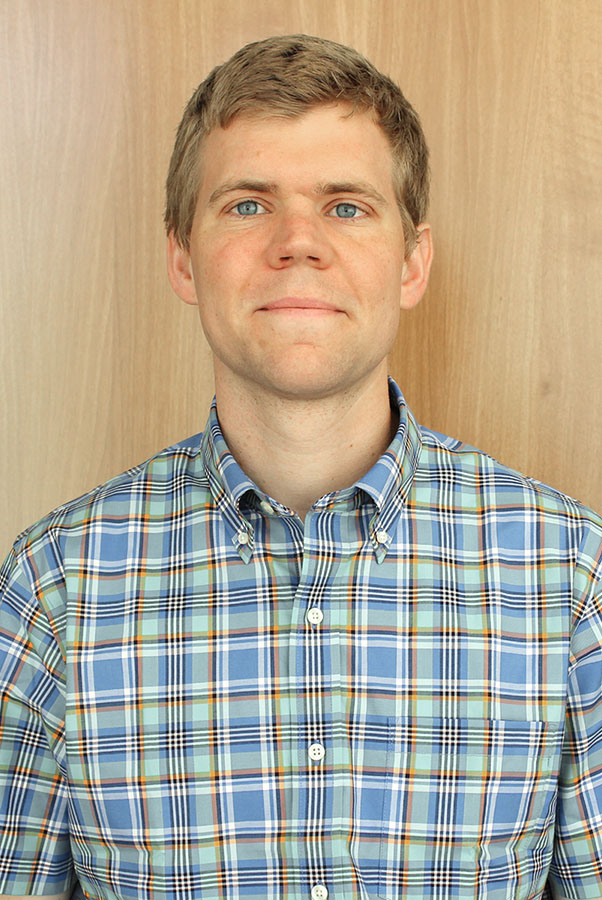
Prof. RNDr. Zdeněk Doležal, Dr. is a faculty member at the Institute of Particle and Nuclear Physics within the Faculty of Mathematics and Physics at Charles University . He is affiliated with the Faculty management and Scientific Council advisory bodies, indicating his active involvement in academic governance and research strategy. Roles: Faculty management, Scientific Council advisory bodies Contact: Office in Cathedral building Troja (A 833, 8th floor) and Ke Karlovu (M 287, 2nd floor), Prague His research interests align with the institute's focus on fundamental physics: Particle Physics Nuclear Physics Theoretical Physics Experimental Physics Subatomic Physics High Energy Physics
Sean Hickey is an Assistant Professor of Teaching in the Department of Chemistry at Wayne State University, affiliated with the College of Liberal Arts and Sciences. He specializes in chemical education, focusing on active learning techniques, public science communication, and innovative uses of animations and interactives in teaching chemistry. Education: Ph.D., Chemical Education, University of New Orleans M.S., Organic Chemistry, University of Michigan, Ann Arbor B.S., Chemistry, University of New Orleans Research emphasizes leveraging pop culture and interactive tools to enhance STEM education accessibility. Recent work includes chapters in ACS Symposium Books exploring creative pedagogical methods (e.g., using TV shows and movies to teach chemistry concepts). Teaching responsibilities include laboratory courses (General Chemistry, Organic Chemistry) and foundational chemistry courses for non-science majors. Courses span all academic terms from 2023 to 2025.
Dean Karlen is the R.M. Pearce Professor of Physics at the University of Victoria and TRIUMF. He has been at UVic since 2002, after previously serving as a professor in the Department of Physics at Carleton University in Ottawa. From 2011-2017, he was director of the Victoria Subatomic Physics and Accelerator Research Centre (VISPA). Dr. Karlen holds a B.Sc. from the University of Alberta and a PhD from Stanford University. His educational background provided the foundation for his distinguished career in experimental particle physics. Professor Karlen's research spans several key areas of particle physics. His primary interests include electroweak physics , neutrino physics , detector development , and accelerator development . He has participated in particle physics experiments around the world since the 1980s, beginning with the Mark-II experiment at SLAC and then the OPAL experiment at CERN in the 1990s. In the early 2000s, he helped develop micropattern Time Projection Chambers for future colliders and later incorporated this technology into the T2K neutrino experiment in Japan. His recent work has focused on neutrino oscillations through the T2K experiment, where three large volume detectors have been operating in Japan since 2009. Professor Karlen is also the principal investigator for projects funded by the Canadian Foundation for Innovation to build a superconducting electron accelerator and expand isotope production capabilities at TRIUMF as part of the ARIEL project. Professor Karlen has received numerous scientific honors throughout his career, including: Being named to Thomson Scientific's ISI Highly Cited Index (only 300 physicists worldwide included) Research Achievement Award at Carleton University (2000) Invited plenary speaker on "Experimental Status of the Standard Model" at the International Conference on High Energy Physics (1998) Primary author on the first publication of the direct determination of the number of neutrino types (1991) As an academic advisor, Professor Karlen has mentored numerous graduate students, both currently and in the past. His research is supported by significant funding from organizations including NSERC and the Canadian Foundation for Innovation, totaling over $50 million for the ARIEL project alone. He has led international collaborations involving researchers from multiple institutions and countries. Professor Karlen has been instrumental in establishing the T2K experiment's detector systems, particularly the Time Projection Chambers, and has played a leadership role in Canada's participation in major international particle physics projects. His laboratory work focuses on advanced detector technologies and neutrino physics research.
Luís Filipe Moreira Mendes is an Assistant Professor at the Department of Physics, Instituto Superior Técnico (IST), Lisbon, Portugal. His research focuses on interdisciplinary physics with a strong emphasis on solar energy systems, thermal and thermochemical energy storage, and applied thermodynamics. He has contributed to advancing calcium-looping technologies for concentrated solar power plants and developed computational models for solar-driven reactors. His work bridges experimental and theoretical approaches in renewable energy systems. Teaching & Academic Roles: He teaches courses such as Solar Thermal Energy, Solar Photovoltaic Energy, and Energy Technologies at IST. His teaching evaluations (QUIC) in 2022-2023 showed high ratings (e.g., Solar Thermal Energy: 9/10). Research & Supervision: He supervises PhD and MSc theses in solar energy applications, including projects on calcium-looping reactors, concentrated solar thermal systems, and solar cavity absorbers. Notable supervisees include Filipe Alexandre Marques (PhD 2019) and ongoing work with Felisberto Camuege. Publications & Impact: Over 30 peer-reviewed articles span solar thermal systems, energy storage, and astrophysical detector design (e.g., the Mercedes Cherenkov detector). His 2023 work on calcium-looping optimization highlights advancements in thermochemical storage. Collaborations & Outreach: Active in the SWGO (Southern Hemisphere Wide-field Gamma-ray Observatory) collaboration and authored educational books like *Physics in Everyday Life at School* (2014). Holds patent PT103112 for an absorption machine with steam refining innovations.
Dr. Kristof de Bruyn is an Assistant Professor at the University of Groningen's Faculty of Science and Engineering, affiliated with the Van Swinderen Institute for Particle Physics and Gravity. He works in the High Energy Frontier, participating in the LHCb experiment to study rare subatomic particle decays containing beauty and charm quarks. PhD in Particle Physics (VU University Amsterdam, 2015) Postdoctoral research at CPPM Marseille (2015-2017) COFUND Fellowship at CERN (2017-2020) His research focuses on testing the Standard Model through decay path comparisons of beauty quarks, investigating discrepancies in electron/muon/tau lepton interactions. He also develops next-generation silicon pixel detectors with picosecond timing alignment for collision separation. Recent LHCb publications (2025) span amplitude analysis, branching fraction measurements, CP violation studies, and detector R&D, reflecting trends in quark dynamics and precision timing technology. COFUND Research Fellowship He contributes to open-access datasets and public engagement, including media appearances on particle physics topics like 'penguin decays.' Collaborations include international teams at CERN and Marseille.
Aleksandr Chatrchyan is a Nordita Fellow at the Nordic Institute for Theoretical Physics (Nordita), hosted by Stockholm University, with primary affiliation in the High-Energy Physics and Cosmology research group. His research spans fundamental theoretical frameworks across: High-Energy Physics (particle interactions at extreme energies) Cosmology (origin and evolution of the universe) Particle Physics (subatomic particle behavior) Theoretical Physics (mathematical modeling of physical phenomena) No publication trends or article fields can be analyzed due to absence of cited works in source material. Scientific awards and student advisement details are unreported in available documentation.
Richard G. Milner is a Professor of Physics at MIT since 1988. He leads research in nucleon/nuclear structure using lepton probes, with a focus on QCD and spin observables. His experimental work spans SLAC, MIT-Bates, DESY, and Jefferson Lab. He directed MIT’s Bates Linear Accelerator Center (1998–2006) and the Laboratory for Nuclear Science (2006–2015). Notable honors include the APS Tom W. Bonner Prize (2020), Humboldt Prize (2011), and APS Fellow status (2007). Educations: B.Sc./M.Sc. (UCC, 1978–1979), Ph.D. (Caltech, 1985). Research: Spin structure of protons, electronuclear experiments, proton visualization projects (e.g., Visualizing the Proton documentary). Labs/Teams: Hadronic Physics Group (HPG), affiliated with MIT’s Laboratory for Nuclear Science (LNS). Leadership: Advocacy for the Electron-Ion Collider (EIC), co-recipient of the Buechner Teaching Award (2018). His work bridges art and science, exemplified by collaborations with filmmakers and animators to depict subatomic phenomena. Current interests include QCD dynamics and gluon states in nuclei.
Daniel Baumann serves as a Professor at the Institute of Theoretical Physics within the Faculty of Science at the University of Amsterdam. His office is located at Science Park 904 in Amsterdam, with postal correspondence directed to Postbus 94485, 1090 GL Amsterdam. He maintains professional contact through the email address D.D.Baumann@uva.nl. His research spans critical domains of modern theoretical physics, characterized by: Cosmology: Investigating the origin, evolution, and large-scale structure of the universe Theoretical Physics: Developing mathematical frameworks for fundamental physical phenomena Particle Physics: Exploring subatomic particles and their interactions in cosmological contexts Gravitational Waves: Analyzing spacetime ripples as probes of early-universe physics Inflation: Modeling exponential expansion in the universe's first moments Quantum Field Theory: Applying quantum principles to fields in curved spacetime No scientific awards were documented in the provided materials. Information regarding student supervision or research funding allocations was not specified in the source text. Details about laboratory facilities or collaborative research teams were absent from the available documentation.
Hudson Smith is an Assistant Professor in the Department of Mathematical and Statistical Sciences at Clemson University, College of Science. His research focuses on integrating domain knowledge with machine learning to address data-constrained problems in healthcare, forensics, and physics. He holds a PhD in theoretical atomic physics from Ohio State University, combining first-principles approaches with data-driven methods. Key areas of research include medical imaging analysis (e.g., ultrasound quality assessment), forensic decomposition modeling (geoFOR database collaboration), and AI detection of coordinated disinformation campaigns. His work bridges theoretical physics (quantum systems, cold atoms) with applied machine learning in healthcare and social media analysis. Publications highlight contributions to AI in trauma care, forensic science, and social media disinformation detection. Active collaborations span forensic science, biomedical informatics, and quantum physics. GitHub repositories showcase contributions to visualization tools (e.g., Schrödinger equation solvers, Voronoi-based image stylization).
Pranav Ande serves as a Part-Time Lecturer in the Department of Physics & Astronomy at the University of Pittsburgh's Dietrich School of Arts & Sciences, contributing to a department renowned for research in Astrophysics and Cosmology, Biological Physics, Condensed Matter Physics, Particle Physics, and Physics Education Research. His scholarly interests align with the department's core research pillars: Condensed Matter Physics exploring quantum materials and nanoscale phenomena Particle Physics investigating fundamental forces and subatomic structures Astrophysics and Cosmology studying cosmic evolution and dark matter Biological Physics applying physical principles to biological systems Physics Education Research innovating pedagogical methodologies Dr. Ande maintains active faculty engagement through teaching responsibilities within the undergraduate and graduate physics curriculum, with primary contact via pra67@pitt.edu .
Christian Forssén is a Professor in theoretical physics at Chalmers University of Technology, affiliated with the Department of Physics and the Division of Subatomic, High Energy and Plasma Physics. His research focuses on theoretical nuclear and particle physics, employing advanced computational tools like Bayesian methods and machine learning to study low-energy effective field theories, nuclear forces, and astrophysical connections. He is an elected Fellow of the American Physical Society and a member of The Royal Society of Arts and Sciences in Gothenburg. Key research interests include nuclear many-body systems, symmetry energy in neutron-rich matter, and precision calculations of nuclear observables. His work bridges fundamental symmetries and astrophysical phenomena, such as neutron star properties and dark matter interactions. Recent studies emphasize Bayesian parameter estimation in chiral effective field theory and emulation techniques for large-scale ab initio calculations. Publications highlight breakthroughs in neutron skin predictions for 208Pb, first observations of exotic nuclei like 28O, and rigorous constraints on three-nucleon forces. Awards include recognition for contributions to nuclear theory and computational methods. Ongoing projects involve collaborations on dark matter detection and precision measurements of neutron halo nuclei.
Giorgio Zavarise is a Full Professor in the Department of Structural, Building and Geotechnical Engineering (DISEG) at the Politecnico di Torino, where he also contributes to the SISCON Interdepartmental Center for Safety of Infrastructures and Constructions. His academic work spans computational and structural mechanics, with a focus on contact mechanics, finite element methods, and thermomechanical modeling. He has held leadership roles in numerous international conferences and serves on the editorial board of Computational Mechanics . His research interests include contact mechanics, isogeometric analysis, cohesive zone modeling, beam-to-beam contact, and the mechanics of masonry and massive concrete structures. He has extended his work into advanced technological applications such as subatomic particle detectors (e.g., Mu2e, SuperB, MEG), thermonuclear fusion (RFX, ITER), large optical telescopes (LBT), and structural fire analysis. His methodologies integrate physical modeling with computational efficiency, often involving multi-scale and coupled problems. The recent publications reflect a strong trend in computational contact mechanics, particularly using NURBS and T-splines for isogeometric analysis, as well as cohesive zone models for fracture and delamination. His work consistently emphasizes algorithmic robustness, geometric accuracy, and real-world engineering applications across civil, aerospace, and energy sectors. Scientific Awards and Recognitions: Fellow of the International Association for Computational Mechanics (IACM), 2013–2022 Professional Memberships: Full Member, IACM Full Member, Italian Group of Computational Mechanics Full Member, AIMETA (Italian Association of Theoretical and Applied Mechanics) Full Member, EUROMECH (European Mechanics Society) Advising and Grants: He has supervised PhD students in Civil, Mechanical, and Complex Systems Engineering at Politecnico di Torino and Università del Salento. He has led multiple PRIN-funded national research projects on contact and fracture mechanics and is currently managing a commercial consulting project on reconstructed stone materials. His editorial role in Computational Mechanics and chairmanship of the ICCCM series highlight his leadership in the computational mechanics community. He has also contributed to the Encyclopedia of Computational Mechanics . Laboratories and Teams: He is affiliated with the SISCON Interdepartmental Center, focusing on infrastructure safety, and collaborates internationally with institutions such as INFN (Lecce), Fermilab, CNR, and the University of Arizona’s Steward Observatory.
Jørgen Beck Hansen is an Associate Professor at the Niels Bohr Institute , University of Copenhagen, specializing in Experimental Subatomic Physics . His career spans roles at CERN and NBI, focusing on particle physics detectors, high-energy collisions, and computational methods. Education: Ph.D. in Particle Physics (1996) and M.Sc. in Physics (1993) from the University of Copenhagen. Research interests include two-boson physics at the ATLAS detector, precision measurements within the Standard Model, effective Lagrangian densities, and searches for new physics beyond the Standard Model (e.g., Higgsless theories, extra dimensions). He also works on GRID computing and distributed data analysis. Recent trends in his research involve Higgs boson studies, vectorlike top quarks, photonuclear collisions, and detector trigger optimization. Collaborative efforts with the ATLAS Collaboration and Danish NORDUGRID team highlight his interdisciplinary approach. Scientific awards : Skou Stipend (Assistant Professor) from the Danish Natural Science Council Teaching and supervision include mentoring 5 summer students, 2 Ph.D., 4 Master's, and 10 Bachelor's students. He has contributed to popular science through Danish Cosmic Rays at Schools and public lectures. Labs and teams : Actively involved in the ATLAS Collaboration and the Danish NORDUGRID team for distributed computing infrastructure.
You Zhou is an Associate Professor at the Niels Bohr Institute , University of Copenhagen, leading the Experimental Subatomic Physics group. With a focus on Quark-Gluon Plasma (QGP) studies via the ALICE collaboration at CERN since 2010, his work leverages anisotropic particle expansion to probe QGP properties, including shear viscosity and thermalization. Principal Investigator of Villum Young Investigator project (2019–2024) on creating the "smallest droplet of early universe" Over 450 publications in experimental nuclear/particle physics Organized major international conferences including Initial Stages 2023 and Quark Matter workshops His research bridges high-energy nuclear physics , particle correlations , and collective flow , supported by grants from the Carlsberg Foundation , DFF-Sapere Aude , and Villum Foundation . He supervises students from bachelor projects to PhDs, including award-winning theses from Katarina Gajdosova and Vojtech Pacik . Key awards include the Villum Young Investigator (2019) and Carlsberg Postdoctoral Fellowship (2016). Recent lectures span the Nordic Winter School and Peking University . His work on femtoscopy, hypernuclei, and photon production has advanced understanding of early universe conditions and matter formation.
Dr. Andro Kacharava is a researcher at Forschungszentrum Jülich's Institute of Nuclear Physics (IKP) , specializing in the Experimental Hadron Dynamics (IKP-2) department. He is based in Building 07.1 / Room 359 in Jülich, Germany, and can be contacted via phone at +49 2461/61-6982 or +49 2461/61-3930. His research focuses on nuclear physics and hadronic interactions , aligning with the experimental work conducted at IKP-2. The institute investigates fundamental questions in particle and nuclear physics using advanced experimental techniques and facilities. As a member of the Experimental Hadron Dynamics group, he contributes to studies involving subatomic particles, quantum mechanics, and accelerator-based experiments. His work supports broader efforts in understanding nuclear structure and dynamics through cutting-edge research.