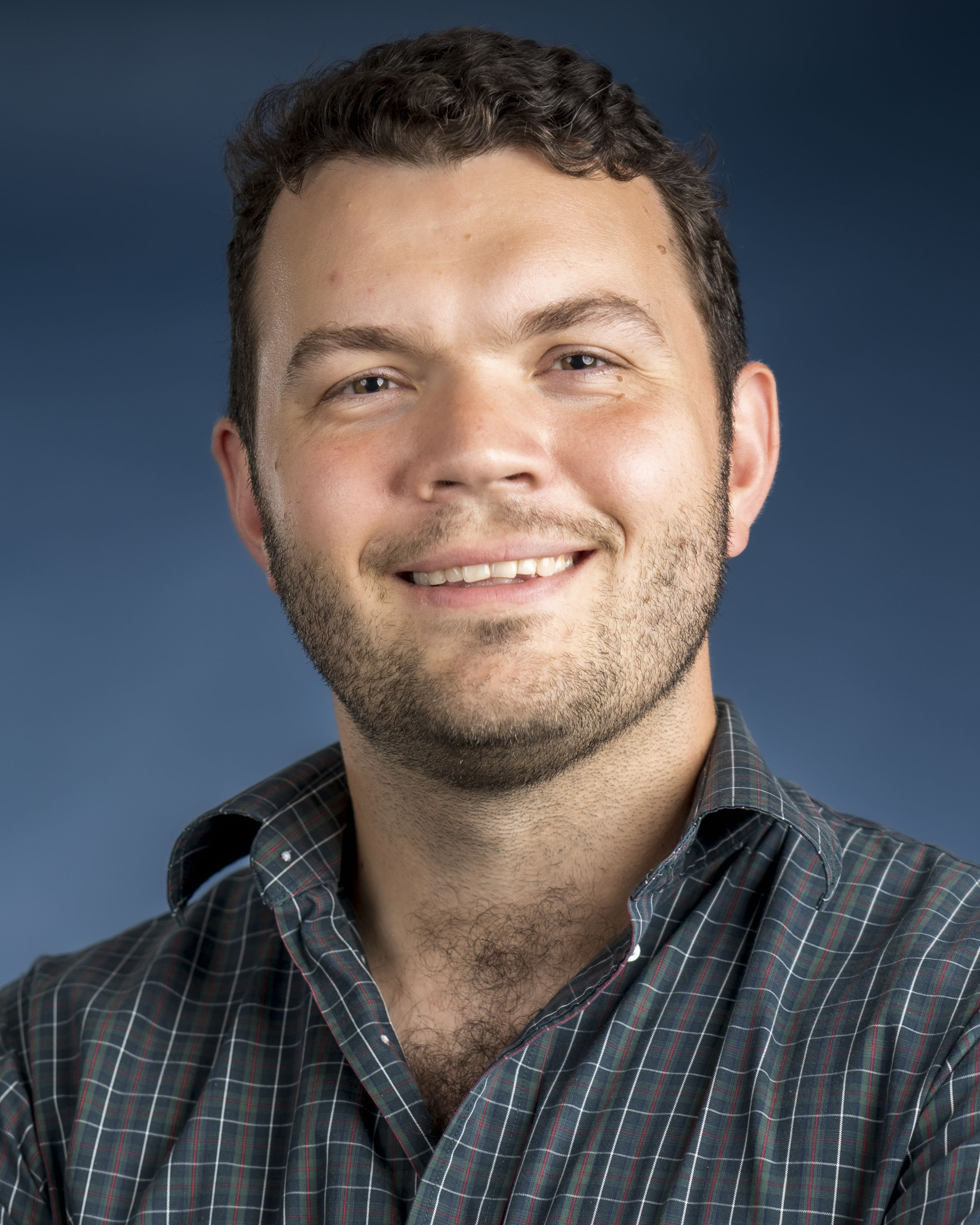
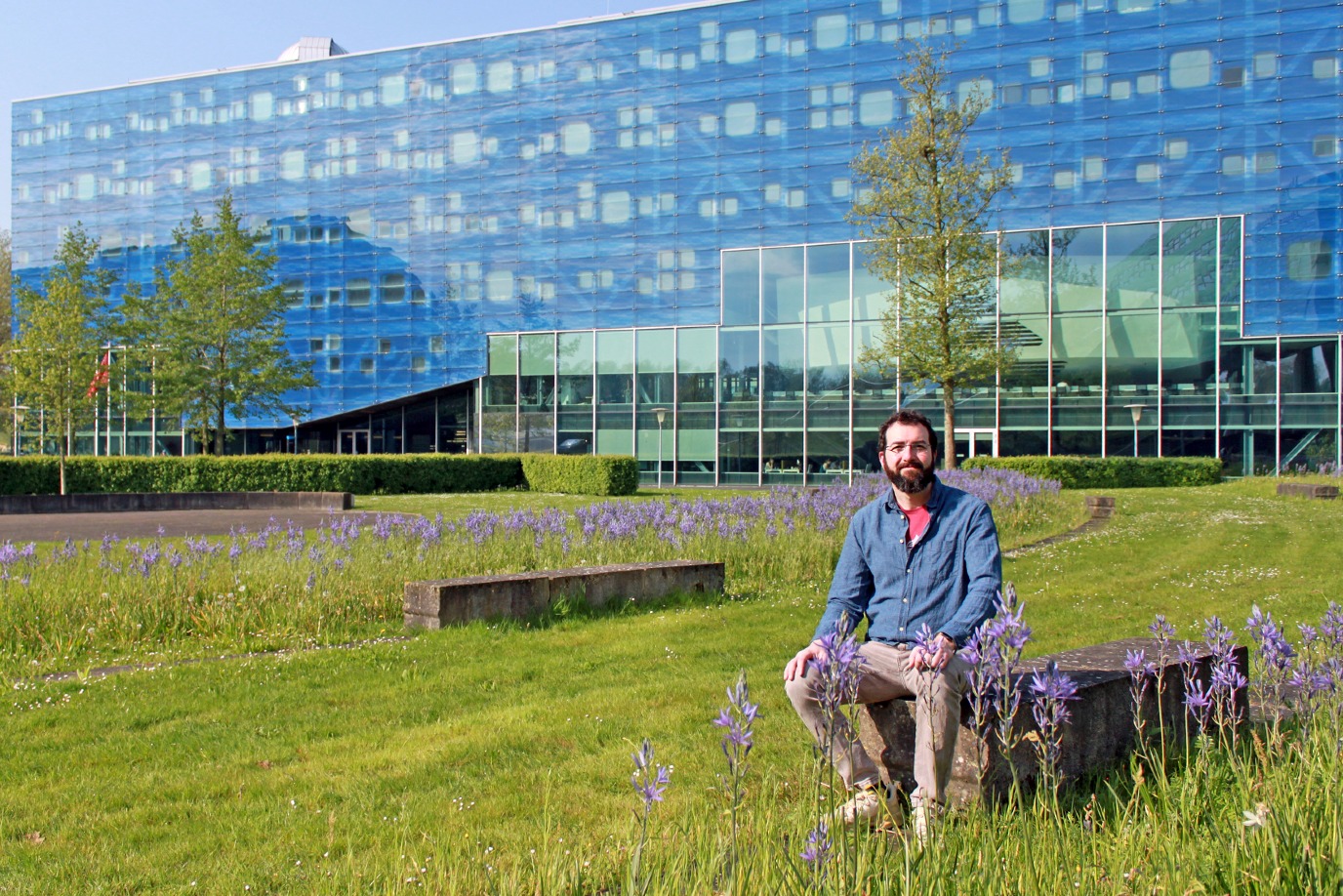
Irina Markina is a Professor at the Department of Mathematics, University of Bergen. Her research focuses on Sub-Riemannian and Sub-Lorentzian geometry, Partial Differential Equations (PDEs), and geometric analysis. She has contributed to studies on geometric control theory, Lie groups, and their applications in physics and mathematical physics. Her work spans theoretical frameworks like the analysis of measure-preserving diffeomorphism groups, Stokes graphs in the Rabi problem, and harmonic maps into sub-Riemannian Lie groups. She has led the NordForsk Research Network 'Analysis and Applications', promoting Nordic collaboration in analysis. Key research areas include ultra-hyperbolic operators on pseudo H-type groups, classification of pseudo H-type algebras, and geometric problems on Stiefel/Grassmann manifolds. Her grants include funding from NordForsk, Norwegian Research Council, and Chilean agencies. She has supervised doctoral theses, including those by Anastasia Frolova and Mauricio Godoy Molina.
Martin R Bridson is the Whitehead Professor of Pure Mathematics at the University of Oxford's Mathematical Institute and President of the Clay Mathematics Institute. He has held these positions since returning to Oxford in 2007 and October 2018, respectively. Previously, he served as Head of Oxford's Mathematical Institute from 2015 to 2018 and held a Chair in Pure Mathematics at Imperial College London. His educational background includes undergraduate studies at Hertford College (BA 1986) and graduate work at Cornell University (MS 1988, PhD 1991). He was an Assistant Professor at Princeton University and a Tutorial Fellow at Pembroke College, Oxford, before holding the title of Professor of Topology at Oxford until 2001. Professor Bridson's research focuses on geometric group theory, low-dimensional topology, and spaces of non-positive curvature. His work explores diverse encapsulations of symmetry, quantifications of complexity, and notions of curvature as unifying themes. He has made significant contributions to understanding the connections between geometry, topology, and group theory, particularly through his influential book "Metric Spaces of Non-Positive Curvature" with A. Haefliger, which won the 2020 Steele Prize. His recent publications show a strong focus on profinite completions of groups, subgroup separability, and the connections between geometric group theory and 3-manifold topology. His work has increasingly addressed algorithmic and decision problems in group theory, demonstrating how geometric methods can solve deep theoretical questions. His honors include: Whitehead Prize of the London Mathematical Society (1999) Forder Lectureship of the New Zealand Mathematical Society (2005) Royal Society Wolfson Research Merit Award (2012) Steele Prize of the American Mathematical Society (2020) Elected Fellow of the Royal Society (FRS) (2016) Elected Fellow of the American Mathematical Society (2015) Elected Fellow of the Academy of Europe (2020) Abel Prize Lecture in Oslo (2009) Erwin Schroedinger Lecture in Vienna (2011) Invited Speaker at the International Congress of Mathematicians (2006) Professor Bridson has advised numerous doctoral students who have gone on to prominent positions at institutions worldwide, including Dani Wise at McGill, Henry Wilton at Cambridge, and Dawid Kielak at Oxford. His research has been supported by various grants, including a Royal Society Wolfson Research Merit Award. He is actively involved in the mathematical community through seminars including the Groups and Geometry in the South East, and various Oxford seminars on Geometric Group Theory, Topology, Geometry and Analysis, and Algebra.
Fabrice Baudoin is a Professor at the Department of Mathematics, Aarhus University . His research focuses on stochastic analysis, differential geometry, and Dirichlet forms, with applications to Lie groups, manifolds, and fractal spaces. Research Interests : Stochastic methods in geometric analysis Heat kernel theory and functional inequalities Sub-Riemannian geometry and curvature bounds Probability distributions for Brownian motion functionals Dirichlet forms on fractal spaces Publications Trends : Recent works address sub-Riemannian comparison theorems, hypoelliptic SPDEs, infinite-dimensional diffusions, and stochastic processes on fractals. His research combines geometric insights with probabilistic techniques. Teaching Activities : He has taught diverse undergraduate and graduate courses, with lecture notes available on his blog https://fabricebaudoin.blog .
Daniel Perry serves as Associate Professor of Mathematics at Augustana University, joining the department in Fall 2019 after completing his doctorate at Montana State University. His academic appointment resides within the Department of Mathematics under the university's institutional framework. His educational qualifications include: Ph.D. in Mathematics (2019), Montana State University M.S. in Mathematics (2013), Montana State University B.A. in Mathematics (2011), Stonehill College Research focuses on theoretical frameworks within geometric topology, specifically examining contact structures and sub-Riemannian manifolds through algebraic methods. His work bridges abstract topological concepts with differential geometric applications, contributing to niche areas of modern mathematical analysis. No scientific awards or honors are documented in the available materials. Student mentorship activities, grant funding, and collaborative research teams remain unspecified in current records. Laboratory affiliations or dedicated research groups are not referenced in the source documentation.
Professor Guozhen Lu is a distinguished faculty member at the University of Connecticut, recently elected to the Connecticut Academy of Science and Engineering (CASE) in 2025. His research bridges advanced mathematical analysis with geometric and functional frameworks, establishing him as a leading figure in modern analysis. Lu's research centers on Partial Differential Equations, Harmonic Analysis, and Geometric Analysis, with particular emphasis on functional inequalities including Sobolev, Trudinger-Moser, and Hardy-Rellich inequalities. His work explores sharp constants, stability phenomena, and extremal problems across diverse geometric settings such as Heisenberg groups, hyperbolic spaces, and CR manifolds. He investigates how geometric structures influence analytical properties, often revealing deep connections between analysis and geometry. Analysis of his 2024-2025 publications shows intense focus on stability of fundamental inequalities (Sobolev, Poincaré, Uncertainty Principle), with innovative approaches to multi-parameter operators and geometric constraints. His work consistently targets optimal constants and dimension-dependent phenomena, pushing boundaries in non-Euclidean analysis. His notable scientific recognition includes: Connecticut Academy of Science and Engineering (CASE) Membership (2025) While specific details about student advising and grant funding are not documented in available sources, Lu's editorial contributions (including special issues honoring Robert Fefferman and David Jerison) demonstrate significant service to the mathematical community. No information is available regarding dedicated laboratories or research teams.
Anton Lukyanenko is an Associate Professor in the Department of Mathematical Sciences at George Mason University (GMU). He conducts research at the intersection of metric geometry, analysis, dynamical systems, group theory, and number theory, with a focus on sub-Riemannian spaces and applications to computer science, biology, and robotics. He emphasizes computation and visualization in his work. On the teaching side, Lukyanenko prioritizes early access to research-level mathematics through programs like the Mason Experimental Geometry Lab (MEGL). He employs inquiry-based learning (IBL) and groupwork-focused pedagogy, particularly in courses such as "Mathematics of Cryptography: An Introduction" and advanced topics like geometric group theory. His teaching spans undergraduate to graduate levels, including distance-learning formats. Contact details: Email: alukyane@gmu.edu Office: 4113 Exploratory Hall, GMU He has previously taught at the University of Michigan, University of Illinois Urbana-Champaign, and University of Maryland College Park, often designing IBL-style courses for both university and high school students.
Luciano Mari is an active mathematics researcher affiliated with the Class of Sciences, specializing in differential geometry and geometric analysis. His research encompasses both theoretical and applied aspects of mathematics with significant contributions to the field. Research interests focus on: Analysis of minimal submanifolds and their spectral properties Nonlinear partial differential equations with geometric applications Conformal geometry and Möbius transformations Spectral theory on Riemannian manifolds Extensions of classical geometric theorems Publication analysis reveals consistent work in geometric analysis since 2009, with recent focus on nonlinear equations, spectral estimates for submanifolds, and applications of maximum principles in Riemannian settings. The research shows progressive development from foundational geometric theory toward applications in PDEs and spectral analysis. Collaborative work spans multiple countries including Brazil, United States, and various European institutions. While specific awards aren't mentioned, the publication record in prestigious mathematics journals indicates significant recognition in the field. Current research directions appear to include nonlinear problems in conformal geometry, spectral properties of immersed submanifolds, and generalizations of classical geometric theorems to non-Euclidean settings.
Mihail Ivanov Krastanov is a Professor at the Faculty of Mathematics and Informatics, Sofia University. His research focuses on theoretical and applied aspects of control systems, optimization, and differential equations, with significant applications in biotechnology and environmental processes. He maintains an active research profile with consistent publications in high-impact journals and conference proceedings. His primary research interests span several interconnected domains: Control Theory : Controllability analysis of nonlinear, hybrid, and discontinuous systems; stabilization techniques; adaptive control frameworks. Mathematical Modeling : Development of dynamic models for biological systems including anaerobic digestion, chemostats, and biodegradation processes. Optimization Methods : Variational inequalities, trajectory tracking, and high-order approximations for nonholonomic systems. Analysis of his 15 most recent publications (2010-2015) reveals dominant themes in nonlinear/hybrid system controllability, model-based optimization of bioprocesses, and theoretical advancements in infinite-dimensional control. Recurring application contexts include bioreactor engineering, waste treatment, and renewable energy systems.
Marcello Seri is an Associate Professor at the Bernoulli Institute for Mathematics, Computer Science and Artificial Intelligence within the Faculty of Science and Engineering at the University of Groningen. He joined the institute in June 2018 and was promoted to Associate Professor in August 2023. His research focuses on the intersection of Spectral Theory, Differential Geometry, and Dynamical Systems, with applications ranging from sub-Riemannian geometry to celestial mechanics. Seri holds a Ph.D. in Mathematics from the University of Bologna and University of Erlangen (2012), a Laurea Magistrale from the University of Bologna (2008), and a Laurea Triennale from the University of Camerino (2006). His academic career includes positions at University College London, University of Reading, and Citrix Systems Ltd. His research explores geometric mechanics and spectral theory, particularly in singular systems like sub-Riemannian geometry. Seri collaborates extensively with astrophysicists and mathematical physicists, applying abstract mathematical theories to concrete physical systems. His recent publications focus on relativistic field theories, black hole dynamics, contact Hamiltonian systems, and innovative numerical methods for celestial mechanics. Awards & Honors: ENW Klein Grant (2020) for spectral aspects of magnetic fields Richard Rado Postdoctoral Fellowship (2015) Leadership & Service: Board Member of European Women in Mathematics Netherlands (EWM-NL) since 2023 Member of Young Academy Groningen (YAG) and Young Science and Engineering Network (YSEN) Co-founder of podcasts: 'It's Not Just Numbers' (mathematics communication) and 'Degrees of Freedom' (higher education)
Alessia Elisabetta Kogoj is an Associate Professor in the Department of Pure and Applied Sciences (DiSPeA) at the University of Urbino Carlo Bo. She teaches courses including Mathematics with Elements of Statistics, Probability and Mathematical Statistics, and Introduction to Differential Models in Applied Sciences for various degree programs such as Biological Sciences, Environmental Sustainability Geology, and Computer Science. Professor Kogoj's research focuses on qualitative properties and pointwise estimates for solutions to second order PDEs of sub-Riemannian type. Her work centers on degenerate elliptic equations with underlying Carnot-Charathéodory metric structures and evolution equations on Lie groups of Kolmogorov-Fokker-Planck type. She has made significant contributions to the understanding of hypoelliptic operators, Kolmogorov-type operators, and various boundary value problems for evolution equations. Her publication record shows consistent high-quality output in prestigious mathematics journals. The trends in her research demonstrate a deepening exploration of hypoelliptic operators, particularly Kolmogorov-type operators and their properties. Her work spans theoretical foundations including Harnack inequalities, Liouville-type theorems, rigidity results, and boundary value problems for various classes of degenerate PDEs. Professor Kogoj is actively involved in the mathematical community, organizing and participating in numerous conferences and workshops including the Urbino PDEs afternoons and the 3 days on Evolution PDEs workshop-school. She has presented her research at international venues across Europe, Asia, and the Americas, demonstrating the global recognition of her work in partial differential equations.
Eugenio Pozzoli is a CNRS permanent researcher (chargé de recherche) since 2023, jointly affiliated with the Rennes Institute of Mathematical Research (IRMAR) at the University of Rennes and the École Normale Supérieure de Rennes (ENS Rennes). His research bridges advanced mathematics and quantum physics, focusing on control theory for partial differential equations and quantum mechanical systems with applications in quantum computing and molecular dynamics. Education: PhD in Mathematics, Sorbonne University and INRIA team CAGE (2021), supervised by Ugo Boscain and Mario Sigalotti Research Focus: Professor Pozzoli's work centers on small-time controllability problems using geometric control theory and sub-Riemannian geometry . His investigations span quantum control of molecular systems (rotors, chiral molecules), bilinear Schrödinger equations , and nonlinear PDE control (heat, wave equations). Recent breakthroughs include enhancing controllability via static fields and solving enantiomer-selective state transfer in degenerate quantum systems, demonstrating exceptional mathematical rigor with experimental relevance. Publication Trends: Analysis of his 15 most recent publications (2024-2025) reveals a dominant focus on quantum control applications (60% of articles), particularly for molecular rotation and chirality, combined with fundamental advances in geometric control theory (30%) and PDE controllability (10%). His work consistently addresses the critical challenge of achieving control in minimal time frames, with increasing emphasis on experimentally feasible strategies for quantum technologies. Grants and Leadership: Principal Investigator of ANR JCJC project QUEST (Quantum and ensemble control in small times) Co-organizer of 'Applications of Mathematics' research seminars at ENS Rennes Lab Environment: As part of IRMAR's mathematics research ecosystem, Professor Pozzoli leads a dynamic group focused on geometric control methods. The QUEST project provides substantial resources for computational modeling and theoretical development, with active recruitment for postdoctoral researchers. His lab emphasizes interdisciplinary collaboration between mathematicians and quantum physicists, maintaining strong ties with Sorbonne University and INRIA while fostering international partnerships through co-authored publications in leading physics and mathematics journals.