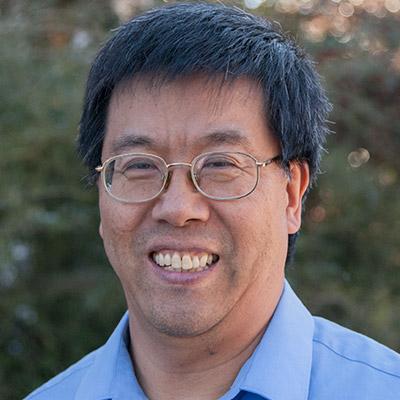
Gian Paolo Leonardi is a Full Professor in the Department of Mathematics at the University of Trento. His research focuses on geometric analysis, calculus of variations, partial differential equations, and their applications in mathematical physics and optimization. He has organized several international conferences, including the 'One-Day Workshop on Applied Mathematics' and the 'National Conference on Calculus of Variations'. His work spans topics such as isoperimetric inequalities, free boundary problems, and geometric measure theory. Notable contributions include studies on Wulff crystals in materials science, quantitative Faber-Krahn inequalities, and the prescribed mean curvature equation. Recently, he has also explored applications of geometric analysis in deep learning theory, proposing novel complexity measures for neural networks. Leonardi has collaborated with institutions like ETH Zurich, the University of Jyväskylä, and the University of Padua. His research often bridges pure mathematics and applied problems, with a focus on variational principles and geometric regularity. Despite extensive contributions, no specific awards or grants are explicitly listed in the provided materials.
Davide Barilari is a Full Professor at the Department of Mathematics "Tullio Levi-Civita" of the University of Padua. His research focuses on Sub-Riemannian Geometry, Curvature, Geometric Control Theory, Hypoelliptic PDEs, and Optimal Transport. He has contributed to curvature analysis, geometric measure theory, and spectral theory in non-Euclidean settings. Research Highlights: Unified synthetic curvature bounds for Riemannian/sub-Riemannian structures, Steiner formulae in 3D contact manifolds, stochastic processes on sub-Riemannian surfaces He serves as Associate Editor for ESAIM: Control, Optimisation and Calculus of Variations and Journal of Dynamical and Control Systems . Recent grants include STARS@UNIPD (2021) and PRIN 2022 as project coordinator. Organized Conferences: Dispersion and Geometry in Padova (2024), PaPa sub-Riemannian seminars, Hypoelliptic Operators in Geometry (2023), Final Conference of ANR Project SRGI (2020)
EL ASSOUDI Rachida is affiliated with INSA Rouen Normandie, where she contributes to the Department of Mathematical Engineering. Her research focuses on Control Theory, Dynamical Systems, and Sub-Riemannian Geometry, with applications to Automatics and Chemical Engineering. She co-advised doctoral student Khaled Dahamna (2011) and collaborates internationally, notably with A. Maciejewski (Poland). Administratively, she holds roles including Member of the CNU 26 section (since 2019), INSA Rouen Studies Council (since 2014), and represents LMI in multiple committees. Her teaching includes Mathematical Engineering courses (GM3, GM4, GM5). Recent publications emphasize geometric control theory and chemical reactor analysis. She actively engages in institutional governance and academic coordination.
Mikhael Gromov is a renowned mathematician and Jay Gould Professor at the Courant Institute of Mathematical Sciences, New York University , and a Permanent Professor at the Institut des Hautes Études Scientifiques (IHES) in France. He has held professorships at the University of Maryland, Université de Paris VI, State University of New York at Stony Brook, and Leningrad University. Education: Masters (1965), Doctorate (1969), and Post-doctoral Thesis (1973) from Leningrad University. His research spans geometry, geometric group theory, analysis, algebra , and even mathematical biology , with foundational work in hyperbolic groups, symplectic geometry, and metric structures. His publications focus on geometric analysis, differential topology, and large-scale group theory. His scientific accolades include the Wolf Prize (1993), Kyoto Prize (2002), Nemmers Prize (2004), and memberships in prestigious societies like the US National Academy of Sciences and Académie des Sciences, France.
Nicolò Forcillo is a Visiting Assistant Professor at the Department of Mathematics, Michigan State University (MSU), since August 2023 under Prof. Russell Schwab. Previously, he held postdoctoral positions at Università di Roma Tor Vergata (2022–2023) and Università degli Studi di Bologna (2021–2022), where he completed his PhD under Prof. Fausto Ferrari's supervision. He also served as a junior fellow at the Institut Mittag-Leffler (2022) and collaborated internationally at institutions like the University of Pittsburgh and Columbia University. His research focuses on Partial Differential Equations (PDEs) , particularly in free boundary problems , sub-Riemannian geometry , and calculus of variations . Key topics include regularity theory for degenerate elliptic/parabolic PDEs, monotonicity formulas (e.g., Alt-Caffarelli-Friedman), and applications in geometric analysis and nonlinear phenomena. His work often explores non-Euclidean settings like Carnot groups and Heisenberg geometry. Notable contributions include counterexamples to monotonicity behaviors in sub-Riemannian spaces, Lipschitz regularity of almost minimizers, and analysis of the ∞-Laplacian in non-Euclidean frameworks. His research bridges theoretical PDEs with geometric control theory, emphasizing both analytical rigor and interdisciplinary applications.
Professor P. S. Krishnaprasad is a faculty member at the University of Maryland, holding positions in Electrical and Computer Engineering and the Institute for Systems Research. He leads the Intelligent Servosystems Laboratory and has joint affiliations with Applied Mathematics and Neuroscience programs. His research focuses on geometric control theory, robotics, and smart materials, with contributions to nonlinear systems, formation control, and biological signal processing. Elected an IEEE Fellow in 1990, he has received prestigious awards including the 2007 Hendrik W. Bode Prize. His work spans theoretical advancements and experimental robotics, emphasizing interdisciplinary applications. Education: Ph.D. in Electrical Engineering, Harvard University, 1977 Research Interests: Geometric control theory, robotics (mobile and collective systems), nonlinear dynamics, smart materials, semiconductor manufacturing, and biomimetic control strategies. His lab explores experimental implementations of theoretical concepts, such as motion camouflage and swarm behavior validation using Vicon motion capture systems. Key Awards: IEEE Bode Lecture Prize (2007) IEEE Fellow (1990) Grover E. Bell Award (2002, team) Outstanding Systems Engineering Faculty Award (1990-1991, 2008-2009) Advising & Grants: Guided notable students like Naomi Leonard (Bellman Award winner) and Fumin Zhang (IEEE Fellow). His grants include projects on smart materials, control networks, and semiconductor processing. Experimental work in ISL includes robotics, motor networks, and collective behavior validation. Lab & Teams: The Intelligent Servosystems Lab (ISL) focuses on mobile robotics, formation control, and smart material actuators. Current projects emphasize collective robotic systems and software for multi-agent coordination, supported by advanced motion capture infrastructure.
Anastasia Molchanova is a Research Fellow at the Institute of Analysis and Scientific Computing, TU Wien, holding an Elise Richter fellowship (2023–2027). Her research focuses on nonlinear elasticity, calculus of variations, and PDEs, with applications in materials science and geometric analysis. She completed her PhD on quasiconformal analysis and has held positions at TU Wien, University of Vienna, and Novosibirsk State University. Key affiliations include the Austrian Association of Women in Mathematics (A²WiM). She has organized conferences such as the ESI Workshop on Variational and Geometrical Methods in Materials Science (2023) and co-organized the Second Austrian Day of Women in Mathematics (2022). Her teaching includes advanced courses on fractional Sobolev spaces and calculus of variations at TU Wien and University of Vienna. Research interests span functional analysis, geometric measure theory, and the analytical foundations of nonlinear elasticity. Her grants include an FWF Elise Richter grant (€404K), a REWIRE Marie Skłodowska-Curie Actions COFUND grant (€266K), and a FWF Lise Meitner grant (€159K). She has authored over 15 publications, focusing on Sobolev homeomorphisms, Lavrentiev phenomena, and variational formulations in materials science.
Tai Melcher is an Associate Professor in the Department of Mathematics at the University of Virginia. Her research focuses on the intersection of probability, geometry, and analysis, with particular emphasis on infinite-dimensional analysis, Gaussian measures, stochastic differential equations on Lie groups, and hypoellipticity theory. She co-organizes the UVa Probability seminar and is a founder and coordinator of Women in Probability. She also serves as faculty coordinator for the UVa Math Ambassadors. Her research interests include stochastic processes, geometric analysis, and functional inequalities. Key areas of exploration involve diffusions in infinite-dimensional spaces, sub-Riemannian geometry, and the interplay between probability and differential geometry. Notable contributions include studies on hypoelliptic operators, heat kernel measures, and functional inequalities in non-Euclidean settings. Her articles reflect a sustained engagement with stochastic processes on Lie groups, hypoellipticity, and geometric stochastic analysis. Recent work includes investigations into large deviations for sub-Riemannian random walks and functional inequalities in infinite-dimensional diffusions. Earlier contributions explored heat kernel properties on Heisenberg groups and Malliavin calculus techniques. Melcher’s academic leadership extends to her roles in fostering community within mathematics, particularly through Women in Probability and the Math Ambassadors program, which promote outreach and education. She is affiliated with the University of Virginia’s Department of Mathematics, where she continues to contribute to both research and academic service.
Laurent Saloff-Coste is the Abram Rogers Bullis Professor of Mathematics at Cornell University , affiliated with the College of Arts and Sciences . His research focuses on analysis , probability theory , stochastic processes , and their interplay with Riemannian geometry and geometric group theory . He explores heat diffusion on manifolds, random walks on groups (both finite and infinite), and quantitative estimates for ergodic Markov chains. Education: Ph.D. in Mathematics (1983), Université Paris VI Doctorat d'État (1989), Université Paris VI Research Interests: His work bridges analysis and probability, studying properties of heat kernels, potential theory, and functional inequalities. He investigates geometric aspects of large-scale structures, such as Cayley graphs, and the relationship between group algebraic properties and random walk behavior. Key areas include: Heat kernel estimates on manifolds and graphs Isoperimetric profiles and their applications Mixing times of Markov chains Sub-elliptic diffusions on Lie groups Recent Trends in Publications (2023–2025): His recent work emphasizes geometric analysis of heat kernels, long-range random walks on nilpotent groups, and functional inequalities. He explores applications to stochastic processes on discrete and continuous spaces, including studies of Lévy processes on nilpotent groups and transient subgraphs. Notable themes include: Estimates for hitting times and Harnack inequalities Perturbation methods for Dirichlet eigenfunctions Uniform doubling properties in Lie group geometries Awards: 2022 Simons Fellow Advising and Grants: No specific advisees or grant details are listed in the provided materials. His research has been supported by collaborations with institutions like the Institute of Mathematics in Wrocław, Poland, and participation in events such as the Midwest Probability Colloquium. Labs/Teams: No dedicated lab or team is explicitly mentioned, though his work involves interdisciplinary collaborations in geometric analysis and probability.
Jiayin Pan is an Assistant Professor at the Department of Mathematics, University of California, Santa Cruz . Their research focuses on Riemannian geometry , particularly the interplay between Ricci curvature and topology , Gromov-Hausdorff convergence , and Ricci limit spaces . Additional interests include Lorentzian geometry and sub-Riemannian geometry . Ph.D. from Rutgers University - New Brunswick (2018) Visiting Assistant Professor at UC Santa Barbara (AY 18-21) Fields Postdoctoral Fellow at Fields Institute (AY 21-22) Research interests center on geometric analysis, with key contributions to understanding the structure of manifolds under curvature bounds, including work on topological rigidity , asymptotic geometry , and Hausdorff dimension in singular spaces. Recent publications highlight collaborations in spectral geometry , sub-Riemannian manifolds , and RCD spaces . Notable scientific awards include Fields Postdoctoral Fellowships , NSF Grant DMS-2304698 , and Simons Foundation Travel Support . Current grants support collaborative research and travel in the field of geometric analysis. For more details, visit arXiv or review their CV .
Maria Gordina serves as a Professor in the Department of Mathematics at the University of Connecticut, where she maintains an active research profile and teaching responsibilities. Her contact details include email maria.gordina@uconn.edu and phone 860-486-2158, with office location MONT 340 and appointment-based office hours. Her research spans interconnected domains of pure and applied mathematics, with primary focus areas including: Probability Theory (stochastic processes, geometric probability) Analysis (functional analysis, harmonic analysis) Differential Geometry (Riemannian geometry, sub-Riemannian structures) Mathematical Physics (quantum probability, statistical mechanics) Mathematical Finance (stochastic modeling, risk analysis) While no recent publications were listed in the source text, her interdisciplinary work demonstrates consistent integration of geometric methods with probabilistic frameworks across theoretical and applied contexts. No scientific awards or honors were explicitly referenced in the available documentation. Regarding academic mentorship and research funding, the provided materials contain no specific details about graduate students supervised, grant awards received, or collaborative research initiatives. Similarly, no laboratory facilities, research teams, or institutional partnerships were described in the extracted content.
Dan Mikulincer is the Brian and Tiffinie Pang Assistant Professor at the University of Washington in the Department of Mathematics, College of Arts and Sciences. He previously held a postdoctoral Instructor position at MIT Mathematics and earned his Ph.D. from the Weizmann Institute of Science under Ronen Eldan. He completed his B.Sc. in Mathematics and Computer Science at Ben-Gurion University, where he also studied Cognitive Neuroscience. B.Sc.: Ben-Gurion University (Mathematics, Computer Science, Cognitive Neuroscience) Ph.D.: Weizmann Institute of Science, Faculty of Mathematics Postdoc: MIT Mathematics Current: Assistant Professor, University of Washington, Department of Mathematics His research lies at the intersection of high-dimensional geometry, probability, statistics, information theory, and data science. He is particularly focused on normal approximations, Stein's method, stochastic analysis, and dimension-free phenomena. His work explores foundational aspects of learning theory, random matrices, transportation inequalities, and neural networks, often using probabilistic and analytic tools to derive sharp, robust results in high dimensions. The recent publications reflect a consistent focus on probabilistic methods in high-dimensional settings. Key themes include normal approximation via Stein's method, optimal transport, concentration and anti-concentration inequalities, random graph models, and theoretical aspects of machine learning such as learnability and neural network expressivity. The work spans both pure mathematics (e.g., GAFA, PTRF) and top-tier computer science venues (e.g., COLT, STOC, NeurIPS), highlighting interdisciplinary impact. Although no formal scientific awards are listed in the provided text, his publications in premier journals and conferences (Annals of Probability, STOC, NeurIPS, COLT) indicate significant recognition in the theoretical community. Dan Mikulincer has advised or collaborated with several researchers including Yair Shenfeld, Max Fathi, Ronen Eldan, and Sébastien Bubeck. He has served as a TA for 18.650: Statistics for Applications at MIT and taught programming courses (Java, Python, JavaScript) at the Interdisciplinary Center Herzliya. He is also a senior lecturer at WeCode, a nonprofit providing free programming education to underrepresented youth in Israel, indicating a strong commitment to education and outreach. He has been affiliated with research groups at MIT Mathematics, Weizmann Institute, and Microsoft Research AI, where he spent the summer of 2019 hosted by Sébastien Bubeck. These collaborations span theoretical machine learning, stochastic processes, and algorithmic foundations.
Jingzhi Tie is a Professor and Associate Department Head in the Department of Mathematics at the University of Georgia, within the Franklin College of Arts and Sciences. He is an active faculty member with a long-standing research program in analysis and applied mathematics. His research interests lie primarily in Analysis and Applied Mathematics , with a focus on harmonic analysis, sub-Riemannian geometry, subelliptic partial differential equations (PDEs), and complex analysis on the Heisenberg group. He frequently employs Laguerre calculus and pseudo-differential operator methods in his work, studying fundamental solutions, heat kernels, spectral projections, and boundary value problems in non-isotropic and CR geometries. The 15 most recent publications reflect a strong continuity in his research themes, particularly the analysis of differential operators on nilpotent Lie groups such as the Heisenberg and Engel groups. His work bridges pure and applied mathematics, with recent forays into financial mathematics involving optimal trading rules under switchable market models. The publications appear in prestigious journals such as Journal of Differential Geometry , Mathematische Annalen , and Communications in PDEs . Jingzhi Tie has not been publicly recognized with scientific awards in the provided text. He advises and mentors students, though specific names are not listed. He has taught a wide range of courses including Ordinary Differential Equations, Partial Differential Equations, Real and Complex Analysis, and Calculus, indicating active engagement in both undergraduate and graduate education. There is no mention of external grants, but his sustained publication record suggests research support. He has been affiliated with several prestigious mathematical institutes such as the Fields Institute, CRM, MSRI, and the Institute for Advanced Study, reflecting broad recognition in the mathematical community.
Scott Zimmerman is an Associate Professor of Mathematics at The Ohio State University at Marion. His research focuses on geometric measure theory, analysis in metric spaces (particularly Carnot groups like the Heisenberg group), and harmonic analysis. He explores extension problems, Whitney extension theorems, and Lusin approximation for curves in non-Euclidean settings. Research Areas: Analysis on metric spaces, Geometric measure theory, Harmonic analysis His work often addresses theoretical challenges in sub-Riemannian geometry, such as curve regularity, singular integrals, and Sobolev extensions. Recent contributions include advancements in Whitney extension theorems for horizontal curves in Heisenberg groups and studies of 1-rectifiable measures in Carnot groups. His articles highlight interdisciplinary connections between pure mathematics and applied fields like computer vision (e.g., object tracking in video data). Despite no listed awards, his research demonstrates sustained innovation in geometric analysis. No advising or grant details are provided, but his active publication record reflects ongoing academic engagement.
Professor Igor Zelenko is a faculty member at Texas A&M University, specializing in differential geometry, control theory, and sub-Riemannian geometry. His research focuses on geometric structures such as CR manifolds, nonholonomic systems, and symplectic geometry. His work often involves analyzing invariants, symmetries, and geometric properties of distributions and metrics. He has contributed to topics like Jacobi equations, Weyl-type theorems, and the geometry of vector fields in Lagrange Grassmannians. Research Interests: His primary areas of research include differential geometry, sub-Riemannian geometry, control theory, and the study of geometric structures on manifolds. He explores concepts such as CR structures, nonholonomic constraints, and the interplay between algebraic invariants and geometric configurations. Publications: Zelenko’s work spans over three decades, with a focus on geometric analysis, including studies on symmetries of distributions, projective rigidity, and applications of algebraic methods to geometric problems. His articles address topics such as the geometry of rank 2 distributions, Weyl’s theorems, and the canonical forms of geometric objects. Awards: No specific scientific awards are mentioned in the provided text. Advising & Grants: While no explicit details on academic advising or grants are provided, his extensive publication record indicates active involvement in research mentorship and potential grant-funded projects. Labs/Teams: No specific labs or collaborative teams are listed, though his work suggests participation in geometric analysis and control systems research groups.