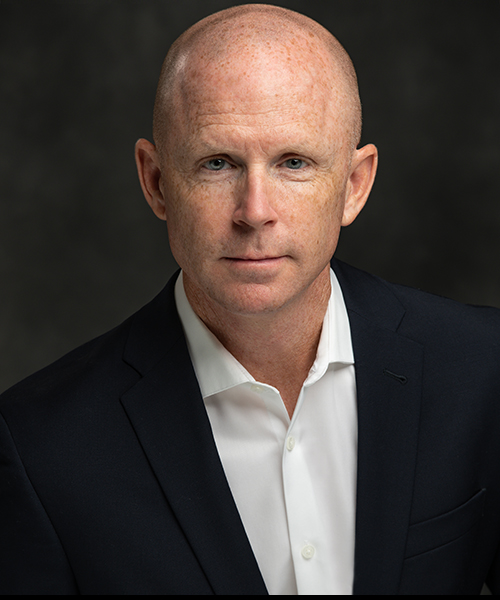
Bill Gibson is a prominent figure in music production and audio engineering, currently serving as President of Northwest Music and Recording, Inc. He has spent over 35 years in the music industry, specializing in writing, recording, producing, and teaching. At Berklee College of Music, he contributes as an instructor, focusing on music production and live sound techniques. His expertise spans high-quality audio production in both studio and live environments. Gibson is renowned for his authored works, including The Hal Leonard Recording Method , The Ultimate Live Sound Operator’s Handbook , and collaborations with industry legends like Quincy Jones and Bruce Swedien. He holds significant roles in professional organizations, including two terms as a GRAMMY National Trustee and membership in the Producers & Engineers Wing’s National Advisory Committee. His professional contributions include advocating for music producers and technicians through policy development, such as co-authoring Recommendations for High-Resolution Music Production . He also leads online course development for Berklee Online, covering topics like live sound mixing and music production.
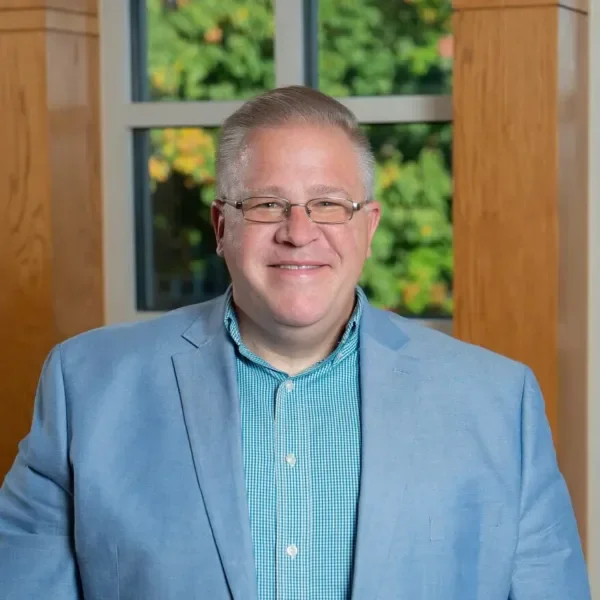
Grant S. Peters is a Professor of Music at Missouri State University, serving as the Brass Area Coordinator and teaching applied studio trumpet. He holds a Doctor of Musical Arts (1998) and Master of Music (1991) from the University of North Texas, and a Bachelor of Music Education (1986) from the University of Nebraska-Lincoln. His professional roles include membership in the Springfield Symphony Orchestra and Springfield Regional Opera, alongside his academic duties. Teaching: Courses include Brass-Trumpet (MUS 156/256/356/456), Small Ensemble-Brass Quintet (MUS 472), Senior Recital-Trumpet (MUS 498), and Survey of Pedagogical Methods (MUS 538). Performance: Highlights include co-principal trumpet of the Orquesta del Principado de Asturias (1992), Dallas Brass ensemble (1989), and international performances in 9 countries. Recordings include Friendly Amendments (2004), From the Hills (2006), and Rhapsody (2009). Leadership: Served as President of the International Trumpet Guild (2019–2021). Research focuses on creation/performance/recording of new American music for trumpet. An Artist/Clinician for Schilke Trumpets. Awards: 2005 University Research Award from Missouri State University.
Caitlin Moore is an Assistant Professor of Voice at Colorado Mesa University, specializing in vocal performance and pedagogy. She holds a Doctorate of Arts in Vocal Performance from the University of Northern Colorado and teaches voice, diction for singers, and serves as assistant director for the Commercial Ensemble. Her research focuses on vocal freedom, authenticity, and functional training methods. Education: DA from University of Northern Colorado; MM from McGill University; BM and BME from Lee University. Her professional engagements include roles in world-premiere operas (e.g., The Taming and Hedy Lamarr: Snow White Under the Knife ), Mozart's Requiem with the Grand Junction Symphony, and Celtic folk performances. She advocates for diversity in vocal training and has certifications from Shenandoah University's Contemporary Commercial Music Institute and the Boston Conservatory’s Vocal Pedagogy Workshop. Moore actively conducts masterclasses nationwide and manages a private voice studio. Her accolades include grants from UNC, Lee University, and Colorado Mesa University, alongside recognition in national programs like the NATS Intern Program.
Martha Matthews is an Adjunct Professor of Flute at Cornerstone University's School of Ministry, Media & the Arts. She holds a B.M. in Music Education from Houghton College and a M.M. in Flute Performance from the University of Idaho. Her roles include teaching woodwind methods and flute performance, alongside extensive freelance and ensemble engagements. Education: Bachelor of Music Education, Houghton College Master of Music in Flute Performance, University of Idaho Her professional interests span music pedagogy, flute performance, and sacred music. She actively performs with groups like the Washington Idaho Symphony and leads handbell ensembles such as the Kalamazoo Ringers, the longest-running bronze-level community handbell group nationally. She also collaborates with her husband, Dr. Gary Matthews, in sacred concert tours across the U.S. Matthews previously served as an adjunct professor at Eastern University and maintains a private flute studio. Her work extends to conducting and clinical training in handbell music, emphasizing both artistic and ministry-oriented musical practices.
Nori Kalman is a Violin Lecturer at Lawrence University's Lawrence Community Music School, affiliated with the College of the Arts and Music Department. Her career spans over 30 years, blending teaching and orchestral performance. She holds a Music Baccalaureate Diploma from the Arts Conservatory in Baia-Mare, Romania, a Diploma in Music specializing in violin pedagogy from the Academy of Music 'G. Dima' in Cluj, Romania, and Advanced Methodology Certification in Violin Teaching from Romania's educational system. She has taught at the Conservatory of Arts Baia-Mare and private studios in Madison and Oshkosh, Wisconsin. Her teaching philosophy emphasizes personalized classical pedagogy, focusing on technical mastery while nurturing life skills like perseverance and confidence. Performance experience includes roles in the Oshkosh Symphony Orchestra, Fox Valley Symphony, and Green Bay Symphony Orchestra. She believes music education can positively transform society, stating, 'If more people embrace the passion of music, the world can become a better place.' At Lawrence since 2008, she continues to inspire students through her dedication to music.
Dr. Christopher Heffner serves as Co-Chair, Director of Bands, and Professor of Music at Lebanon Valley College (LVC). He directs the Pride of The Valley Marching Band, Symphonic Band, and Wind Ensemble. His roles include teaching music education courses, leading a private trumpet studio, and guest conducting nationally. He holds a B.M. from Western Kentucky University and M.M. and Ph.D. from the University of Florida. Education: B.M., Western Kentucky University; M.M. & Ph.D., University of Florida Research interests focus on music pedagogy, situational leadership in rehearsals, and instrumental music methods. Active as a clinician, he has presented at PMEA conferences and guest lectured on topics like strategic rehearsal management and leadership approaches in music education. His trumpet performance credits include collaborations with the Atlantic Chamber Winds and University of Florida ensembles. He leads multiple ensembles and teaches courses such as MUE 101-01 (Marching Band), MED 335-01 (Instrumental Literature), and trumpet lessons. A member of organizations including NAfME and CBDNA, he also holds honorary affiliations with Kappa Kappa Psi and Tau Beta Sigma.
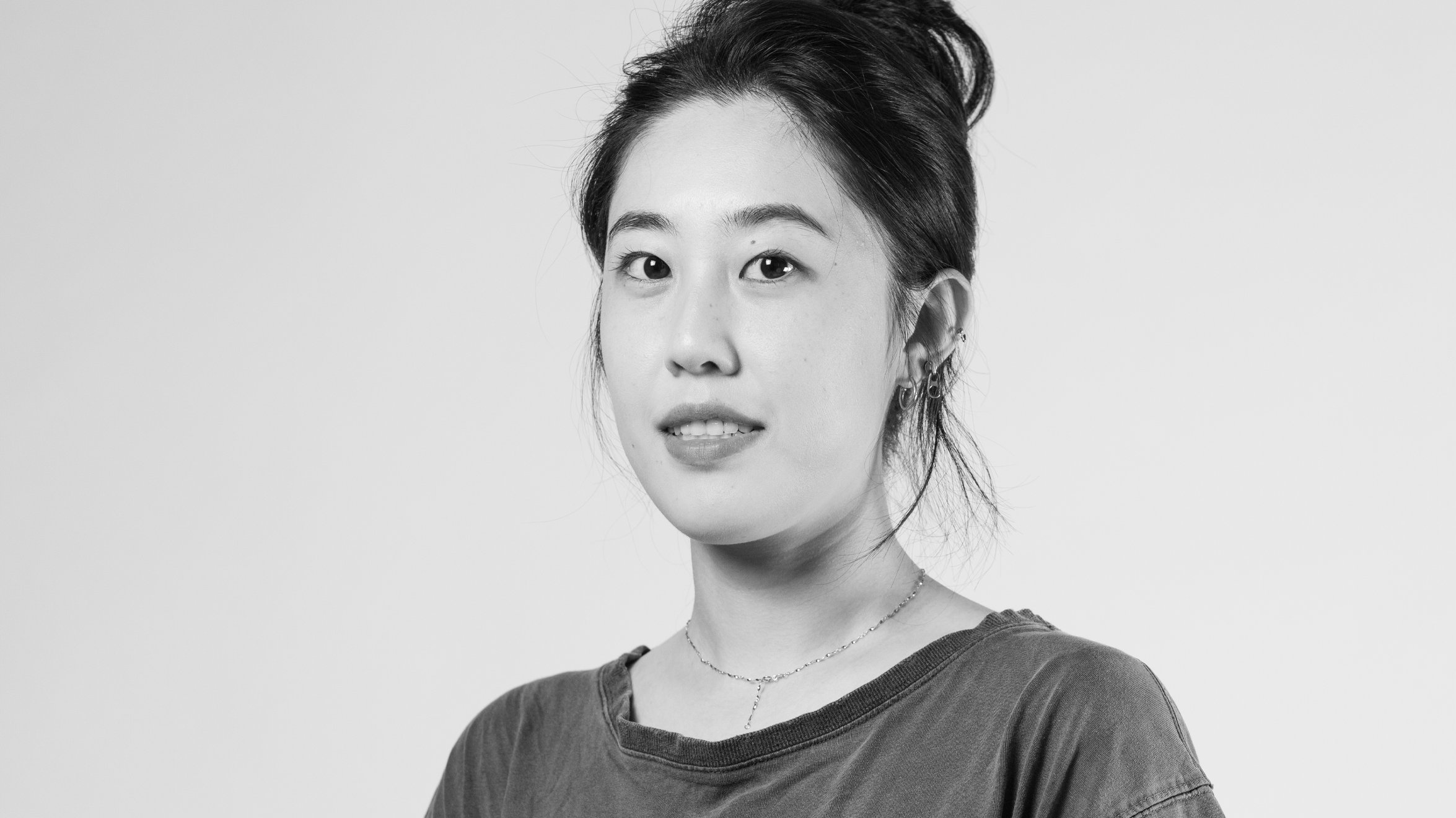
Yuxiao Mu is a Visiting Assistant Professor at the Kansas City Art Institute (2024–present) and has held Adjunct Professor roles at the Massachusetts College of Art and Design (MassArt) . She also serves as a Graduate Programs Administrator at MassArt (2023–2024) and has experience in studio management and student retention. Born in Dalian, China, she completed her MFA in Photography at MassArt (2023) and BFA at LuXun Academy of Fine Arts (2020). Her artistic practice merges photography, video, printmaking, and painting , driven by themes of memory, emotion, and storytelling. Key projects include Phoenix at Sundown (exploring dementia and familial bonds) and Letter to My Father (symbolizing transcontinental connections via sunset imagery). She emphasizes collaboration, particularly with family across generations, and integrates cultural narratives from Eastern and Western contexts. Yuxiao’s work has been exhibited globally, including in Rome, Boston, and Minneapolis, and featured in Our Culture Magazine , Rogue Magazine , Visual Atelier8 , and others. She received the AICAD Post-Grad Teaching Fellowship (2024–2025) and was shortlisted for the Radius Photobook Workshop Scholarship (2023). Teaching has deepened her artistic practice, fostering mutual growth with students while maintaining her focus on interdisciplinary exploration. In her narrative, she balances roles as an artist and educator, using teaching to refine her techniques and art to explore personal and cultural identity. Her future projects aim to further delve into self-identity and the interplay of mediums to document her evolving journey.
Greg Stewart serves as Professor of Art and Sculpture Area Head at James Madison University's School of Art, Design and Art History. He has held this position since 2002, teaching sculpture, 3-Dimensional Design, and interdisciplinary courses including Thinking Drawing Building and Art In the Social Sphere. His administrative responsibilities encompass managing studio facilities, graduate/undergraduate advising, and coordinating the JMU Public Sculpture Invitational. Education: M.F.A., Ohio University, 1993 B.F.A., State University of New York at Brockport, 1991 Stewart's creative research centers on material experimentation and spatial interventions within public contexts. His work investigates the intersection of physical form and social dynamics through large-scale installations, collaborative community projects, and site-specific interventions. Notable series include "Every Word Was Once An Animal" and "Flexible Geography", which challenge conventional art boundaries through participatory frameworks and unconventional material applications. Awards and Recognitions: Nominated for Impact Award for Teaching, 2015 Faculty Professional Development Grant, 2013 Faculty Professional Development Grant, 2012 JMU Distinguished Scholar Award, 2011 Residency at Grand Central Arts, Los Angeles, 2011 Residency at Cite Internationale des Arts, Paris, 2011 Residency at Redux Center for Contemporary Art, Charleston, S.C., 2010 Virginia Museum of Fine Arts Fellowship in Sculpture, 2010 Arts Council of The Valley Artist Grant, Harrisonburg, Va., 2009 Faculty Research Grant, JMU, 2007 Faculty Development Grant, JMU, 2006 Faculty Development Grant, JMU, 2005 New York Foundation for the Arts Special Opportunity Stipend, 2001 Aesthetic Education Institute of Rochester, N.Y., 2000 Stewart has secured significant grant funding including the Virginia Museum of Fine Arts Fellowship and multiple JMU Faculty Development Grants to support his artistic practice. He mentors emerging artists through studio instruction and coordinates public sculpture initiatives that engage the Harrisonburg community. His collaborative approach extends to advising student projects that merge technical skill with conceptual rigor. He directs JMU's metals studio, plaster facilities, sculpture courtyard, and digital labs while maintaining active partnerships with organizations like SPURSE. His studio practice integrates traditional fabrication methods with experimental approaches to material transformation, often incorporating organic elements and repurposed industrial components.
Anna Resnick Henson, DMA, serves as Adjunct Instructor of Bassoon at Oklahoma City University's Bass School of Music since Fall 2006, teaching bassoon lessons and Woodwind Methods classes while maintaining an active orchestral career with the Tulsa Symphony and other ensembles. Her academic credentials include: Bachelor of Music Education from University of North Texas Master of Music in Bassoon Performance from Boston University Doctor of Musical Arts in Bassoon Performance from University of Oklahoma Specializing in woodwind performance and pedagogy, Dr. Henson's expertise spans orchestral repertoire, chamber music, and reed-making techniques. Her performance history encompasses principal positions with the Arkansas Symphony (2005-2006), Monterrey Symphony (Mexico), Israeli Philharmonic, and numerous American orchestras including Wichita Grand Opera and Flower Mound Chamber Orchestra. She maintains a thriving private bassoon studio in Oklahoma City Metro and teaches elementary music, demonstrating commitment to music education across all levels. Dr. Henson has contributed to recordings with North Texas Symphonic Band and Wind Symphony, reflecting her dual focus on performance and pedagogy.
Assoc. Prof. Dr. Bihter Almaç holds an Associate Professor position in the Department of Architecture at Carleton University, Canada. Her academic journey includes a PhD from University College London (2014-2020), a Master's degree from Istanbul Technical University (2009-2011), and a Bachelor's degree in Architecture from the same institution (2004-2009). She has taught at Carleton University since 2021 and previously served as a Postgraduate Teaching Assistant and Short Term Courses Tutor at University College London. Her research focuses on architectural design, theory, and education, with particular interests in critical methodologies, spatial perception, and pedagogical innovations. Notable awards include the 2021 Gemss' Circle Young Science and Art Person Award and the 2009 Archiprix Şevki Vanlı Vakfı Award for architectural excellence. Her work explores themes such as urban geographies, pandemic-responsive housing, AI-driven creativity in education, and the intersection of architectural drawing with theoretical discourse. She has led experimental studio projects and contributed to architectural theory through essay films and critical writings.
Begüm Hamzaoğlu is a Researcher at the Department of Architecture, Istanbul Technical University. She holds a B.Sc. in Architecture (2009-2014), M.Sc. in Architectural Design Computing (2014-2017), and is a Ph.D. candidate in Architectural Design Computing. She serves as a Research Assistant and teaches graduate/undergraduate design studios and computational design courses. Her work includes digital fabrication workshops and explores bridging analog/digital stone carving through visual rule representations, combining shape computation, craft traditions, and digital humanities. Her research focuses on multidisciplinary approaches involving architectural design tools, cultural heritage preservation, and information technologies. She has received notable awards including the 2023 Istanbul Technical University Publication Award and 2024 Best Student Paper Award from CHNT-ICOMOS Austria. Hamzaoğlu's academic career includes roles as both a researcher and educator within the university's architecture program, with active participation in workshops and academic conferences. Her current research emphasizes computational methods for preserving traditional craftsmanship through digital mediums.
Dr. Kyla Paolucci is an Assistant Professor of Graphic Design at St. John’s University’s St. John’s College of Liberal Arts and Sciences, Department of Art and Design. Holding a BFA from the Rhode Island School of Design (RISD) and an MFA from Vermont College of Fine Arts, her professional career includes work with major firms like Amazon, HBO, and Hearst Magazines. Her research focuses on how cultural contexts shape design practices, emphasizing the intersection of craft traditions with modern optimization strategies. She advocates for socially responsive design through pedagogical approaches that blend durational making with accessibility. Education: BFA in Graphic Design (RISD), MFA in Graphic Design (Vermont College of Fine Arts) Her teaching emphasizes exploring vernacular design histories and fostering critical engagement with tools like risograph printing. Professional projects under her studio ‘Patio’ include rebranding initiatives for mission-driven organizations. Research interests include the tension between traditional craft methods and digital tools, as well as equitable design practices. Currently teaching Interaction I at St. John’s, she also develops educational tools like the redesigned ‘prompt tool’ for student projects. Her work often incorporates experimental typography and Riso printing techniques, evidenced by projects like the ‘Intro 2 RISO Zine’ (2024).
Peadar Mac Giolla Bhríghde is a Lecturer in the Department of English and Irish at Marino Institute of Education, serving as National Coordinator for the Irish Language Requirement (SCG/OCG) since 2004. He specializes in inclusive education and Irish language policy, delivering modules on special educational needs and Irish-medium teacher training. Teaches on the B.Ed. (Irish medium) program Develops language assessment frameworks Collaborates on North-South educational initiatives Research focuses on SCG certification processes, multilingual pedagogy, and teacher preparation. Authored over 15 professional articles since 2008, with recent work addressing inclusive language education strategies and cross-border collaboration. Key contributions include: 2023: Clarifying SCG options for educators 2022: Promoting London-Belfast SCG collaboration 2017: Aligning SCG with European language standards Recipient of grants from Northern Ireland Department of Education (2017) and Irish education departments (2005-2010), supporting curriculum development. Maintains SCG website since 2004. Professional memberships include SCG Steering Committee and Open University exam board. Expertise spans studio recording projects for language assessments (2006-2023) and teacher training workshops across Ireland. Holds M.Ed. (UCD) and Dip. Remedial Ed. (Coláiste Iorrais), with qualifications in psychology and management.
Sandra Denicke-Polcher is an architect, National Teaching Fellow and Associate Dean (Education) at the Royal College of Art’s School of Architecture . She has spent over two decades in UK higher education, previously serving as Deputy Head of Architecture (Acting Head 2018–19) at London Metropolitan University. Her leadership champions inclusive architectural education and alternative pathways into spatial practice, embedding global citizenship and community-engaged learning within the curriculum. Education and Academic Background: Qualified architect with extensive postgraduate teaching experience since 2000. National Teaching Fellow (AdvanceHE, 2018) and Senior Teaching Fellow (AdvanceHE, 2016). Research Interests: Sandra’s research interrogates the dynamic relationship between architectural education and live practice. She specialises in community-based, participatory design processes—termed Live Projects —that bring students and local stakeholders together to co-produce spatial solutions. Her ongoing initiative Crossing Cultures (est. 2016) links London design studios with a long-term project in depopulated Calabria, Italy, exploring agricultural adaptation to climate change and migrant settlement through blended residencies and hands-on construction. Additional interests span intercultural pedagogy, social justice in the built environment, student wellbeing, and the re-activation of underused rural territories via inclusive architectural interventions. Research Funding & Grants: Transformation Grant, London Metropolitan University (2022) Rescaling Grant, London Metropolitan University (2021) ERASMUS funded Training Programmes CAMP & CURVE with KAIROS Europe (2020) Scientific Awards & Recognition: National Teaching Fellowship, AdvanceHE (2018) Senior Teaching Fellowship, AdvanceHE (2016) Practice & External Engagement: Sandra is a founding partner of the collaborative practice public works . Their urban regeneration scheme Geesthacht an die Elbe! (Germany) received first prize for exemplary building in the public realm (2003). She regularly serves as external examiner, validation panel member and competition juror, and has delivered UN-Habitat workshops on urban regeneration. Labs, Teams & Projects: She leads and mentors through the Live Project Studio model, integrating students, community groups and not-for-profit partners such as Le Seppie (Italy). The studio functions as a pedagogical laboratory where research, teaching and civic impact converge.
Marianne McAra is a Research and Teaching Fellow and Subject Lead for Transformation Design at The Glasgow School of Art's School of Innovation and Technology. Her work focuses on youth engagement, creative education, and participatory design methodologies. She holds a PhD in Design from GSA and has led numerous projects exploring community collaboration, heritage contexts, and futures-oriented design. Education: PhD in Design, The Glasgow School of Art (2017) Research Interests: Marianne's research integrates action research and ethical frameworks to address challenges in participatory design, youth empowerment, and cultural heritage. She has pioneered methods like artifact-based documentation and participatory video in marginalized communities. Her work often bridges academia and practice through collaborative projects with museums, social enterprises, and local governments. Key Contributions: Over 15 peer-reviewed articles and 36 publications across design pedagogy and community engagement. Notable projects include LEAPFROG (community tools development), Glasgow's Future Stories (participatory democracy frameworks), and Serumpun (craft preservation in Borneo). Advising & Grants: Supervises MRes and PhD students in design innovation. Lead researcher on projects funded by Highlands and Islands Enterprise, with focus on social innovation and co-creation. Labs/Teams: Core member of the Innovation School's Transformation Design unit, collaborating with interdisciplinary teams on urban futures and cultural heritage initiatives.