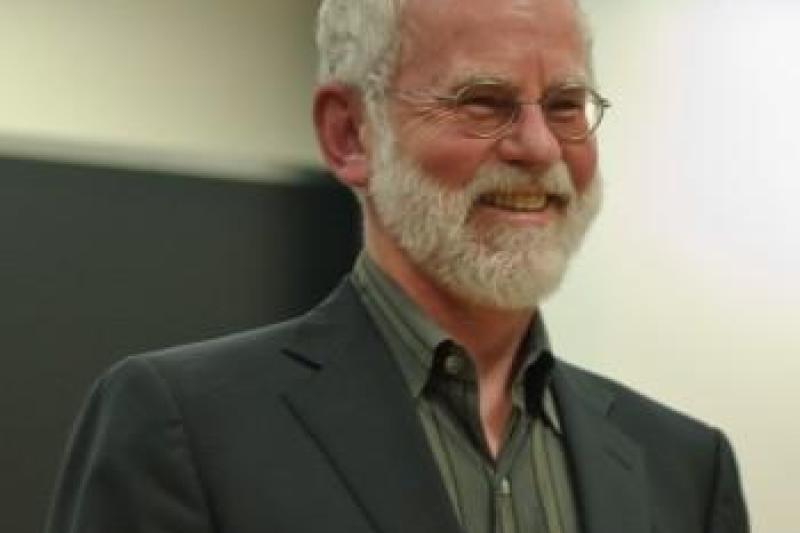
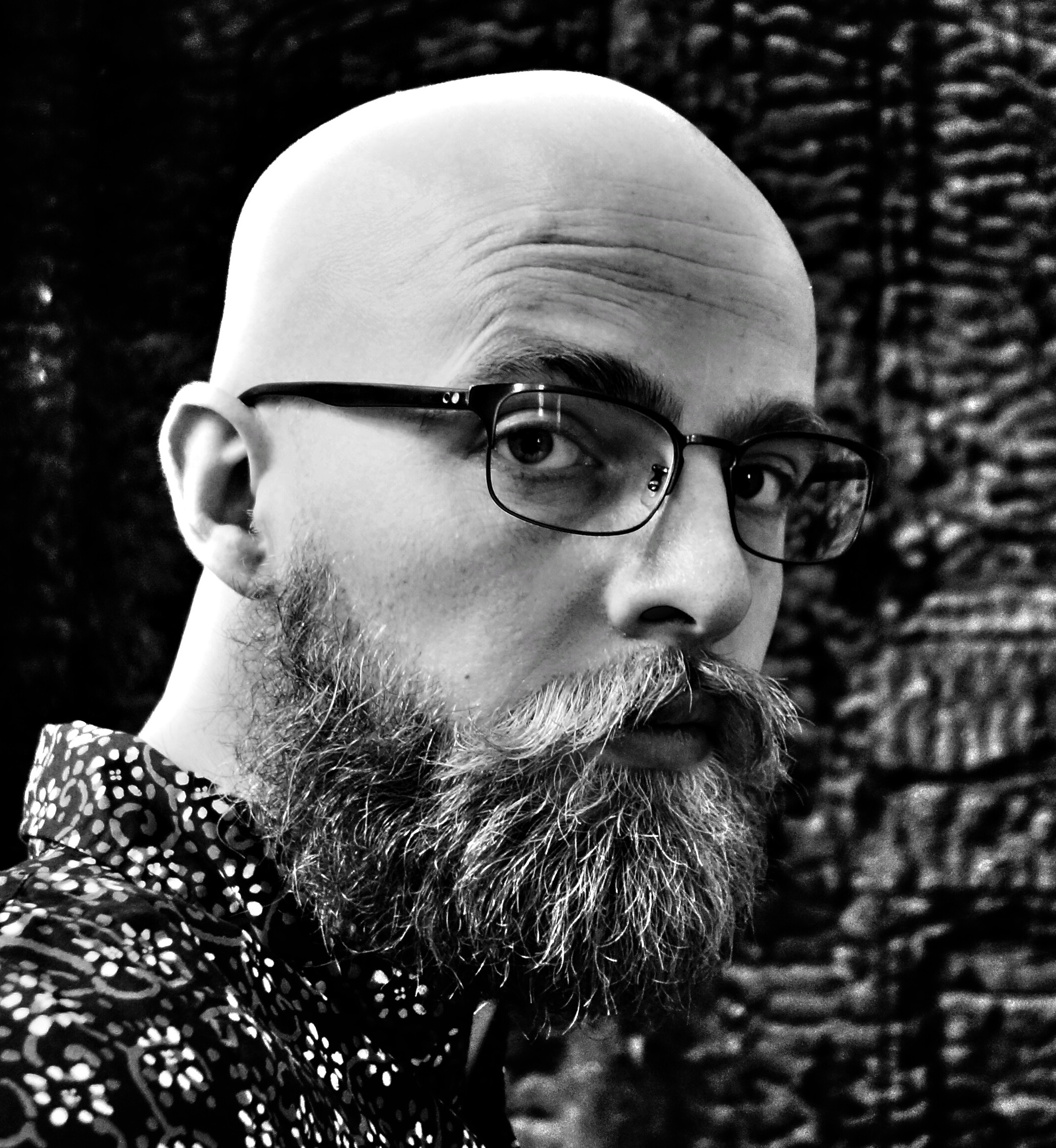
Adelle Forth is a Professor in the Department of Psychology at Carleton University, specializing in psychopathy research. Her work examines cognitive and affective processes underlying psychopathic traits, early manifestations in youth, and societal impacts. She has published extensively on violence risk assessment, forensic evaluation tools, and interpersonal dynamics affected by psychopathy. Research Focus: Her studies explore psychopathy's influence on romantic relationships, empathy deficits, humor styles, and vulnerability perceptions. She also validates cross-cultural diagnostic tools like the Spanish PCL:YV and investigates cyber-related deviant behaviors linked to dark personality traits. Professional Service: Dr. Forth serves on editorial boards and has supervised numerous graduate theses. She no longer accepts new students.
Professor Roy Pea is the David Jacks Professor of Education & Learning Sciences at Stanford University, with a courtesy appointment in Computer Science. He served as Director of the H-STAR Institute (2007-2021) and founded Stanford’s PhD program in Learning Sciences and Technology Design. His research focuses on technology-enhanced learning, social foundations of human learning, and interdisciplinary applications of digital tools. Stanford University, School of Education Graduate School of Education Department Courtesy appointment in Computer Science His work spans complex domains like concussion education, climate change learning, and AI-driven mental health interventions. He co-authored the 2010 National Education Technology Plan and co-edited key texts including Video Research in the Learning Sciences and AI in Education . His NSF-funded LIFE Center (2004-2014) advanced learning science theories. Recent publications address: (1) linguistic framing of concussions and reporting behavior, (2) AI chatbots for mental health, (3) "engineering fiction" to reduce climate change abstractness, and (4) immersive AR/LLM learning experiences. His research integrates data science, psychology, and educational technology. Fellow, American Academy of Arts and Sciences (2019) Inaugural Fellow, International Society of the Learning Sciences (2018) Honorary Doctorate, The Open University (2018) Best Bridging Paper, EDM 2014 LAK13 Best Paper Award (2013) Roy mentors doctoral and master’s students in learning sciences, advising on topics related to technology, cognition, and equity. He contributes to digital education policy through roles on advisory boards for organizations like NSF, NIH, and the Joan Ganz Cooney Center. His patents include methods for digital video analysis and collaborative learning systems.
Dr. Laraib Niaz is a Research Associate at the Faculty of Education, University of Cambridge, where she contributes to the independent evaluation of the Girls' Education Challenge II initiative. She holds an MSc in Development Management from the London School of Economics (LSE) and a PhD in Education from University College London (UCL). Previously, she served as an education consultant at the World Bank and has taught at LUMS and University College London. Her research focuses on inclusive education, disability studies, gender and development, national identity construction, and decolonizing research practices. She is affiliated with the Cambridge Network for Disability and Education Research (CaNDER) and the REAL Centre. Her research interests include exploring the role of religion in education, particularly in Pakistan, and analyzing media narratives during pandemics. She examines how textbooks construct national identity and investigates the impact of pseudoscience in educational systems. Her work also addresses academic freedom in higher education institutions in India and Pakistan. Laraib has extensive experience in supervising students and collaborating with international organizations such as the World Bank on inclusion-focused projects. Laraib has supervised students during her academic roles at LUMS and UCL. While specific grants are not detailed here, her current work involves evaluating 41 GEC II projects across 17 countries to assess support for girls with disabilities. Her research often intersects with global development and educational equity initiatives. She is part of the Cambridge Network for Disability and Education Research (CaNDER) and the REAL Centre , focusing on equitable access and learning in education systems.
LEE Mong Li is a Professor of Computer Science at the National University of Singapore (NUS) and serves as Director of the NUS Centre for Trusted Internet and Community. She holds a Ph.D., M.Sc., and B.Sc. (First Class Honours) in Computer Science from NUS, where she was awarded the IEEE Singapore Information Technology Gold Medal as the top Computer Science student in 1989. Her academic career includes a visiting fellowship at the University of Wisconsin-Madison (1999) and consultancy with QUIQ USA (2000). Her research spans Data Management, Spatio-temporal Databases, Biomedical Informatics, and Retinal Image Analysis . She has pioneered work in data cleaning, data fusion, and analysis of semistructured data, with applications in social media analytics and healthcare. Her recent publications demonstrate strong interdisciplinary focus, particularly in AI-driven medical diagnostics including diabetic retinopathy screening and chronic kidney disease detection from retinal images. She co-authored foundational books on 'Designing Semi-structured Database' and 'Temporal and Spatio-Temporal Data Mining'. Her 150+ publications in major database conferences and journals reflect leadership in both theoretical and applied research. Recent work shows significant emphasis on Medical AI applications (retinal analysis, kidney disease prediction) Temporal fact verification systems Misinformation detection in multimodal environments Privacy challenges in large language models Key honors include: Singapore's President Technology Award (2014) for co-inventing an AI system screening eye conditions IEEE Singapore Information Technology Gold Medal (1989) She actively contributes to government-funded multidisciplinary projects building practical deployable systems. Her leadership extends to program committees of prestigious database conferences and directing the NUS Centre for Trusted Internet and Community. She teaches BT5110 Data Management and Warehousing and has co-developed an AI system for diabetic retinopathy screening deployed in Singapore's national teleophthalmology program.
Steve Loughnan is a Professor of Psychology at the University of Edinburgh's School of Philosophy, Psychology and Language Sciences. His research focuses on dehumanization, objectification, and human-animal relations, exploring how societal and psychological factors influence moral judgments and behaviors. He teaches undergraduate courses on social psychology, experimental/applied social psychology, and social class, and supervises PhD students in related fields. Research interests include: Dehumanization of social and ethnic outgroups Psychological impacts of objectification on women and marginalized groups Moral psychology of meat consumption and animal treatment Effects of economic inequality on societal attitudes Anthropomorphism in human-AI and human-pet relationships His publications analyze topics like the psychological mechanisms behind meat consumption paradoxes, the role of dehumanization in conflict scenarios, and the ethical implications of AI romance. He has received no explicitly listed awards but has been widely cited in social psychology domains. Teaching includes year-long programs on social psychology principles, experimental research methods, and social class analysis. Office hours are held weekly to support students. His work bridges theoretical social psychology with applied issues in global inequality, environmental ethics, and veterinary mental health.
R. Michael Alvarez , Flintridge Foundation Professor of Political and Computational Social Science at Caltech, is a leading scholar in election technology, political methodology, and machine learning applications in social science. Affiliated with the Caltech/MIT Voting Technology Project , the Social and Decision Neuroscience Program , and the Resnick Sustainability Institute , his work bridges technology and democracy. Education: B.A. from Carleton College, Ph.D. from Duke University Academic Career: Caltech faculty since 1992 His research spans: Election Integrity : Monitoring election security, fraud detection, and ballot systems Computational Social Science : Applying machine learning to voter behavior and policy analysis Climate Policy : Examining public attitudes and behavioral interventions for sustainability Online Behavior : Analyzing toxicity in gaming and social media dynamics Key article trends show focus on election forensics (2025 Nature Climate Change study), game toxicity analysis (2025 CHI Play paper), and LLM applications in social science. His students include Jacob Morrier, Mitchell Linegar, and teams of postdocs and undergraduates in Caltech's SURF program. Scientific recognition includes: Google Cloud Research Innovators Class of 2022 Co-editor of multiple academic series including Cambridge Elements in Quantitative Methods
Emily Cooper is an Associate Professor of Optometry & Vision Science at the Herbert Wertheim School of Optometry & Vision Science, University of California, Berkeley. She serves as the Chair of the Vision Science PhD Program and is a co-Director of the Center for Innovation in Vision & Optics. Additionally, she is a member of the Helen Wills Neuroscience Institute and a Visiting Faculty Researcher at Google. Dr. Cooper's research focuses on 3D vision, perceptual graphics, AR/VR, computational neuroscience, visual encoding, and display system design. Her work investigates how the visual system processes information to create our perception of the 3D world, with applications in computer graphics, virtual reality, and assistive technologies for people with low vision. Analysis of Dr. Cooper's recent publications (2023-2025) reveals a strong focus on the intersection of vision science and emerging technologies, particularly in augmented reality and assistive vision systems. Her work spans fundamental research on visual perception mechanisms to applied research developing practical technologies for low vision rehabilitation. A significant portion of her recent work addresses visual discomfort in XR displays, perceptual guidelines for AR/VR systems, and innovative approaches to assistive vision technologies that enhance mobility and independence for visually impaired individuals. Dr. Cooper leads an active research laboratory at UC Berkeley's 391 Minor Hall, where she mentors students and collaborators in vision science research. Her lab investigates both basic questions about how vision works and translational questions about improving visual technologies. She has developed perceptual guidelines for optimizing field of view in stereoscopic augmented reality displays and created assistive technologies such as an augmented reality sign-reading assistant for users with reduced vision. Dr. Cooper is also involved in professional activities including co-organizing the Computational Neuroscience: Vision summer course at Cold Spring Harbor Laboratory and working with Community Resources For Science to promote science education.
Chris Russell is the Dieter Schwarz Associate Professor of AI, Government & Policy at the Oxford Internet Institute (OII), University of Oxford. His work bridges computer vision, machine learning, and ethical AI governance. He leads the Governance of Emerging Technologies programme, focusing on algorithmic accountability, transparency, and fairness. Prior roles include Group Leader at the Alan Turing Institute and Reader at the University of Surrey. Russell’s research has been recognized with awards, including the ICRA Best Paper Prize for autonomous driving mapping work. Research interests span algorithmic fairness, explainable AI, and responsible AI design. Notable projects include collaborations with the British Antarctic Foundation on climate modeling and causal approaches to algorithmic fairness. His work with Sandra Wachter and Brent Mittelstadt informs GDPR guidelines and tools like TensorFlow’s 'What-if Tool.' Current projects include advancing medical machine learning for inflammatory arthritis prediction and governance frameworks for emerging tech. Russell advises PhD students on socio-technical AI evaluations and teaches courses in machine learning and AI ethics. Recent publications address deepfake proliferation, LLM regulation, and fairness in foundational models. He co-leads initiatives like the Digital Good Network to align tech development with societal benefit.
Hsiao-Wen Liao is an **Assistant Professor of Psychology** in the **Adult Development and Aging program** at the **Georgia Institute of Technology**. She holds a Ph.D. in Developmental Psychology from the University of Florida (2017) and completed postdoctoral training at Stanford University’s Center on Longevity. Her research focuses on **autobiographical memory**, **episodic future thinking**, and **meaningful aging**, leveraging **VR and NLP methods** to explore how life experiences shape adult development. She investigates how memory processes interact with sociocultural contexts to foster resilience and continuity across the lifespan. **Research Interests**: Autobiographical memory functions, cognitive aging, intergenerational connectivity, and the role of technology (VR/NLP) in memory reconstruction. Current projects examine VR applications for recollection enhancement and NLP analysis of life narratives. **Awards & Grants**: ISSI Mini Research Grant (2024), College of Sciences Travel Grant (2025), APS Travel Assistance (2025), and ImmerseGT Hackathon Best Use of Omniverse Track (2023). **Lab Members**: Supervises graduate students (DaEun Kim, Sarah Kim, Liam Hart) and collaborates with interdisciplinary teams in HCI and machine learning. Undergraduate assistants focus on neuroscience and psychology interfaces. **Lab Activities**: Janus Lab emphasizes mixed-methods approaches, combining qualitative content analysis with experimental designs. Recent projects address aging well, resilience, and technology-mediated memory interventions.
Dr. Joseph Moore is an Assistant Professor in the Department of Mechanical Engineering at Johns Hopkins University (JHU), serving as Director of the Agile and Intelligent Robotics (AIRO) Laboratory. He is affiliated with the Laboratory for Computational Sensing and Robotics (LCSR), the Institute for Assured Autonomy (IAA), and holds a Bridging Faculty appointment in the Research and Exploratory Development Department (REDD) at JHU/APL. His research focuses on computational control, machine learning, and robotics to enable agile systems operating in complex environments. Dr. Moore previously served as Robotics Group Chief Scientist at JHU/APL, leading projects on hybrid unmanned aerial-aquatic vehicles and aerobatic fixed-wing systems. He has secured funding as Principal Investigator (PI) for ONR, DARPA, and ARL programs, particularly in post-stall maneuvering control and multi-robot coordination. His work emphasizes robust control strategies for autonomous systems in constrained environments. Research interests include aerial robotics, optimization, and learning-based control. Notable contributions involve NMPC-based systems, UAV navigation, and adaptive control for uncertain environments. His recent articles highlight advancements in swarm coordination, morphing-wing UAVs, and PAC-NMPC frameworks. Dr. Moore advises students such as Mark Gonzales and Adam Polevoy. Key grants include ONR/DARPA-funded projects on post-stall flight control and Army-funded multi-robot coordination efforts. His lab (AIRO) and collaborations (LCSR, IAA) drive applied and theoretical robotics research.
Professor Kim A. Wagner is a Professor of Global and Imperial History at Queen Mary University of London. He holds a Ph.D. from the University of Cambridge (2003) under C.A. Bayly and has held fellowships at King’s College, Cambridge, the University of Edinburgh, and a Marie Skłodowska-Curie Global Fellowship at George Washington University (2015–2018). His research focuses on colonial violence, cultural misunderstandings in empires, and the legacies of British and U.S. imperialism. Current projects include studies on the Bud Dajo Massacre (Philippines, 1906) and the Amritsar Massacre of 1919. Education: Ph.D. in South Asian History, University of Cambridge (2000–2003) Research Fellowship, King’s College, Cambridge (2003–2007) Research Associate, University of Edinburgh (2007–2009) Lecturer in Imperial History, University of Birmingham (2009–2012) Research Interests: Colonial violence and its global contexts Cultural anthropology of colonial encounters Decolonization of museums and public history Micro-histories of colonial subjects British Empire in South Asia and the Philippines Publications and Awards: Author of *The Skull of Alum Bheg* (2017), shortlisted for the Templer Medal Contributor to *Amritsar 1919: An Empire of Fear* (2019) Consultant for documentaries on colonial history, including Channel 4’s *The Amritsar Massacre 1919* Teaching and Supervision: Supervises PhD students on colonial violence and decolonization Teaches courses on Indian history, postcolonial heritage, and global history
Professor Ester Cerin is a leading academic at the Mary Mackillop Institute for Health Research, Australian Catholic University (ACU), where she leads the Behaviour, Environment and Cognition Research Program. She holds an adjunct professorship in Statistics at the Department of Community Medicine, UiT The Arctic University of Norway, and is an Honorary Professorial Fellow at both the Baker Heart & Diabetes Institute and the School of Public Health, University of Hong Kong. Her international career includes academic roles in Australia, the USA, and Hong Kong. Her research centers on the environmental and psychosocial determinants of lifestyle behaviors and health, with a focus on physical activity, cognitive health, and sustainable environments. She employs advanced statistical methods to study how urban design and neighborhood characteristics influence health across the lifespan. Her work bridges public health, urban planning, and behavioral science. The recent publications highlight a consistent focus on built environment impacts on physical activity and cognitive health across age groups and continents. Her studies frequently employ multi-country designs (e.g., IPEN, iMAP) and advanced methodologies including meta-analyses, cohort studies, and objective environmental assessments. Key themes include walkability, urban densification, aging, and mental health. Top 1% of scholars, University of Hong Kong, 2015 Clarivate Highly Cited Researcher, 2019 Professor Cerin has secured over $24 million in research funding from prestigious bodies including NHMRC, ARC, NIH, and World Cancer Research Fund. She has led 12 major grants as Lead Investigator and serves as Principal Investigator for the iMAP and EPOCH studies. She supervises HDR students and mentors early-career researchers. Her leadership extends to editorial roles as Deputy Editor-in-Chief of the International Journal of Behavioral Nutrition and Physical Activity and Associate Editor of Health & Place . She co-founded the International Cognitive Health and the Environment Network (ICHEN) to promote research and advocacy for environments that support cognitive health. Her work is embedded in large international collaborations, including multi-country cohort studies and systematic reviews under the IPEN and CEPA working groups.
Dr Glenda Cooper is Reader in Journalism Studies and Head of the Department of Journalism at City St George's, University of London , where she leads a team of 25 staff, 50 visiting lecturers, and over 500 students from 53 countries. She holds a PhD in Journalism from City and an MA in English Language and Literature from Oxford, and has played a pivotal role in elevating the BA Journalism programme to 1st place nationally in the Guardian and Complete University Guide (2023), as well as 1st for Graduate Prospects (Sunday Times 2022). Education: MA in Academic Practice, City, University of London (2022) PhD in Journalism, City, University of London MA in Creative Writing, City, University of London BA (Hons) English Language and Literature, St Hilda's College, University of Oxford PG Diploma in Newspaper Journalism, City University of London Glenda's research focuses on crisis and humanitarian reporting , journalism ethics , live journalism , and the intersection of media and politics, particularly through the legacy of Alistair Cooke’s Letter from America . She has led major funded projects with the British Academy, ESRC, Google Digital News Initiative, and HEIF. Her current research explores AI’s impact on journalism through the DMINR project and innovative storytelling formats via the News on Stage initiative and the Contemporary Narratives Lab . Her recent publications span topics such as AI in newsrooms, humanitarian scandals (#AidToo), refugee representation, and digital narrative innovation. These works reflect a strong interdisciplinary trend, combining journalism studies with media technology, ethics, performance, and political communication. The articles indicate a growing focus on digital transformation, ethical challenges in sourcing, and the evolving role of journalists in public discourse. Scientific Awards and Recognition: Laurence Stern Fellow at the Post (2001) Guardian Research Fellow at Nuffield College, Oxford (2006–2007) AURORA Role Model for Future Women Leaders in Academia (2018) Glenda has supervised PhD students on topics ranging from political communication in Istanbul to the manosphere's influence on journalism. She has been instrumental in curriculum development, notably designing a core ethics module for final-year journalism students. She also serves as Reviews Editor for Journalism: Theory, Practice and Criticism , UK Director of the European Journalism Observatory, and Board Member of The Conversation UK . She co-founded and co-presented the Knowhow podcast, bridging academia and media. She co-directs the Contemporary Narratives Lab and co-founded the News on Stage project, which merges journalism with theatre through live events such as News Cabaret and News on the Street . Her play Aid Memoir , based on her PhD research, was performed at the Pleasance Theatre and featured in the ESRC Festival of Social Science.
Dr. Ava Green is a Lecturer in Forensic Psychology at City, University of London, within the School of Health and Psychological Sciences, Department of Psychology. She completed her PhD in Forensic Psychology at Edinburgh Napier University in 2020 and has held academic positions at Queen Margaret University and Edinburgh Napier University. She is a Chartered Psychologist and a Fellow of the Higher Education Academy. Her educational background includes: PhD in Forensic Psychology, Edinburgh Napier University (2017–2020) MSc in Applied Criminology and Forensic Psychology, Edinburgh Napier University (2015–2016) BSc (Hons) in Psychology, Edinburgh Napier University (2011–2015) Dr. Green’s research focuses on gender differences in personality disorders, particularly narcissism in women, its aetiology, diagnostic assessment, and links to intimate partner violence. She explores how narcissism manifests differently across genders and challenges diagnostic biases in clinical settings. Her work also extends to criminal false confessions and the behavioural manifestations of narcissism in forensic contexts. Her recent publications reveal a consistent focus on narcissism through both empirical research and public engagement. Articles span clinical studies using ICD-11 frameworks, gendered analysis of personality disorders, and accessible commentary in outlets like The Conversation. Her work integrates clinical, forensic, and social psychological perspectives, emphasizing the importance of accurate diagnosis and gender-informed assessment. Her scientific recognition includes: Fellow of the Higher Education Academy Chartered Psychologist, The British Psychological Society Dr. Green is actively involved in teaching and academic leadership, serving as Programme Lead for the BSc Psychology with Criminology and Module Leader for Forensic Psychology. She supervises PhD students and welcomes research collaborations. Her professional experience includes grant acquisition and interdisciplinary research, often in collaboration with international scholars in psychology and psychiatry. She is affiliated with research teams focusing on personality disorders and contributes to academic discourse through book chapters and peer-reviewed journal articles. Her work is supported by a strong foundation in both clinical theory and empirical methodology.
Univ.-Prof. Dr. rer. nat. Michael Vorländer is a full Professor and Chair of Technical Acoustics at the Institute of Technical Acoustics (ITA), Faculty of Electrical Engineering and Information Technology, RWTH Aachen University, Germany. He has been the head of the institute since 1996 and is a leading figure in acoustics research and academic leadership. His extensive service includes being President of the European Acoustics Association (EAA), the International Commission for Acoustics (ICA), the German Acoustical Society (DEGA), and elected President of the Acoustical Society of America (ASA) for 2024–2027. Education: Diplom-Physiker, RWTH Aachen (1984); Dr. rer. nat., RWTH Aachen (1989); Dr.-Ing. habil., TU Dresden (1995) Professional Leadership: Pro-Dean (2007) and Dean (2009) of Faculty of Electrical Engineering and Information Technology, RWTH Aachen; Spokesperson of Professors, RWTH Aachen (2012) Editorial Roles: Editor-in-Chief, Acta Acustica (1998–2003); Editorial Board, Applied Acoustics (since 1996) Michael Vorländer's primary research interests lie in the fields of auralization, room acoustics, building acoustics, psychoacoustics, acoustic measurement technology, and virtual acoustics . His work integrates physical acoustics with human perception, focusing on the simulation and reproduction of sound fields in virtual environments. He leads research in binaural technology, electroacoustics, and auditory scene analysis, with applications in noise research and interactive virtual environments. His group is involved in the Priority Program SPP2236 - AUDICTIVE, focusing on auditory cognition in interactive virtual settings. While specific recent publications are not listed, his research output is extensive, as indicated by links to filtered publications. His body of work consistently bridges theoretical modeling, experimental validation, and practical application in architectural and virtual acoustics, contributing to both engineering standards and perceptual understanding. Michael Vorländer has received numerous scientific awards recognizing his contributions to acoustics, including the prestigious RWB Stephens Medal, W.C. Sabine Medal, and Rayleigh Medal . He is a Fellow of the Acoustical Society of America and holds honorary memberships and awards from acoustical societies in Europe and beyond. He advises doctoral students and leads a multidisciplinary research team at the ITA, fostering collaboration in areas like acoustic virtual reality and spatial audio. His leadership in international societies and editorial boards highlights his role in shaping the global acoustics community. He has been instrumental in advancing research infrastructure and academic collaboration in technical acoustics. The research at his institute is organized into key areas: Acoustic Virtual Reality and Auralization, Binaural Technology and Spatial Audio, Auditory Scene Analysis, Psychoacoustics and Noise Research, Electroacoustics, and Room Acoustics. These labs and teams work on projects ranging from fundamental auditory perception to applied engineering solutions for noise control and virtual sound environments.