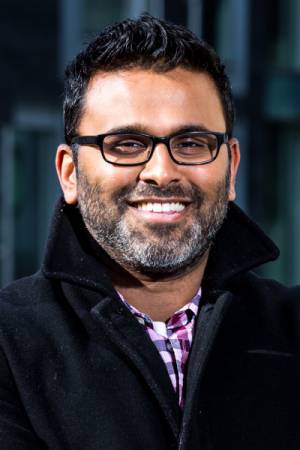
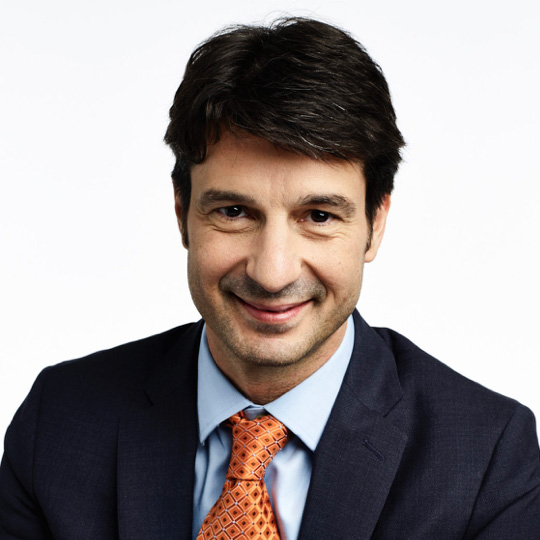
Winnie Wong is a Professor of Rhetoric at the University of California, Berkeley. Her research focuses on art history, particularly exploring themes of fakes, forgeries, and authorship through interdisciplinary approaches. She examines the global artistic networks of Hong Kong, Guangzhou, and Shenzhen, challenging Western narratives of Chinese artistic practices. Wong holds a PhD from MIT's History, Theory + Criticism program and was a Harvard Society of Fellows Junior Fellow. Her major works include Van Gogh on Demand: China and the Readymade (2014, Joseph Levenson Prize winner), Learning from Shenzhen (2017), and a forthcoming book on Canton trade portraitists. She teaches courses like Theory of the Copy and Rhetoric of the Image , mentoring undergraduates through the Undergraduate Research Apprentices program and advising PhD students in art history and visual studies. Wong's research has been supported by grants from Mellon Foundation, ACLS, SSRC, and others. Her work has been translated into multiple languages and appears in journals like Current Anthropology and Law & Literature . She frequently discusses her work on podcasts and collaborates with museums including M+ and the Asian Art Museum.
Mark Liberman is a Trustee Professor at the University of Pennsylvania , holding appointments in the Department of Linguistics and Department of Computer and Information Science . He serves as Director of the Linguistic Data Consortium and Faculty Director of Ware College House . His career spans linguistics, speech technology, and computational methods. Education: Harvard University (1965-1969), MIT (M.S. 1972, Ph.D. 1975) Professional Experience: AT&T Bell Laboratories (1975-1990), University of Pennsylvania (1990-present) His research interests include: Corpus-based Phonetics : Analyzing speech patterns via large-scale datasets. Clinical Applications : Developing speech biomarkers for neurodegenerative diseases. Tonal Phonology : Studying lexical tone and intonation in languages like Yoruba and Mandarin. Formal Annotation Models : Creating frameworks for linguistic data standardization. Recent publications highlight automated speech analysis, cross-linguistic prosody, and digital biomarkers for conditions like ALS-FTD and Alzheimer’s. His collaborations span computational linguistics , neurology , and cognitive science . Scientific awards include the IEEE James L. Flanagan Award (2017), Antonio Zampolli Prize (2010), and fellowships from the AAAS and Linguistic Society of America . He advises PhD students May Chan and Jonathan Him Nok Lee and contributes to editorial boards for journals like Cognition and Annual Review of Linguistics . His work bridges speech science , language technology , and neurocognitive research .
Nicholas Evans is a Distinguished Professor in the Department of Linguistics at the School of Culture, History & Language, Australian National University. He is an ARC Laureate Fellow and serves as Director of the ARC Centre of Excellence for the Dynamics of Language (CoEDL), reflecting his leadership in integrating typology, descriptive linguistics, and cognitive science. His work spans linguistic diversity, endangered languages, and the interplay between language and culture. His research focuses on Australian and Papuan languages, with extensive fieldwork in remote communities. Key interests include linguistic typology, historical and contact linguistics, semantics, and the cognitive underpinnings of grammar. He has published foundational grammars and dictionaries of Kayardild, Bininj Gun-wok, and Dalabon, contributing significantly to the documentation of endangered languages. His recent publications reveal a strong trend in cross-linguistic studies of social cognition (SCOPIC), syntactic typology, and phylogenetic modeling of the Yam languages. These works integrate linguistic, cognitive, and genetic data, highlighting interdisciplinary approaches to understanding language evolution and human diversity. ARC Laureate Fellow Fellow of the Australian Academy of the Humanities (FAHA) Fellow of the Academy of the Social Sciences in Australia (FASSA) Fellow of the British Academy (FBA) Evans supervises research students and leads major projects such as 'The Wellsprings of Linguistic Diversity' and CoEDL, which involve extensive collaboration across institutions and disciplines. His grants include modeling Pacific creoles and phonemic analysis of Tok Pisin. He is also involved in digital archiving initiatives like PARADISEC and the Language Data Commons of Australia, ensuring long-term preservation of linguistic data. He leads and contributes to research teams focused on Southern New Guinea languages, paradigm syncretisms (PARABANK), and cultural heritage preservation. His work emphasizes reciprocal engagement with speech communities and training the next generation of language documenters.
Craig J. Fennie is Professor in the College of Engineering at Cornell University , where he has been on the faculty since July 2008. His appointment spans the interdisciplinary space between physics, materials science, and solid-state chemistry. Education: Ph.D. in Physics, Rutgers University (2006) M.S. in Electrical Engineering, Villanova University (1996) Research Focus: Fennie’s group pursues computational and theoretical materials physics , with a long-term goal of realizing a first-principles “materials-by-design” paradigm. By integrating microscopic Hamiltonians, symmetry analysis, and density-functional theory, the team explores how crystalline motifs—composition, symmetry, geometry, and topology—govern emergent phenomena such as multiferroicity, magnetoelectric coupling, and tunable dielectric response. Particular attention is paid to complex oxides, layered heterostructures, and materials under extreme conditions where chemical intuition can fail. Publication Trends: From 2011 to 2016, Fennie co-authored a series of high-impact papers in Nature family journals and Physical Review Letters . These works collectively advance the understanding and design of room-temperature magnetoelectric multiferroics, bulk magnetoelectric effects in hexagonal manganites, tunable microwave dielectrics through defect mitigation, and the fundamental scarcity of ferroelectric perovskites. The studies span synthesis, characterization, and theory, underscoring a collaborative, interdisciplinary approach. Awards & Honors: MacArthur Fellowship, John D. and Catherine T. MacArthur Foundation (2013) Presidential Early Career Award for Scientists and Engineers (PECASE, 2012) NSF CAREER Award (2011) Army Research Office Young Investigator Award (2010) Fellow of the American Physical Society (2015) Advising & Funding: While specific student names are not listed, Fennie leads a vibrant research program supported by NSF, ARO, and other agencies. His group trains graduate and post-doctoral researchers at the intersection of physics, materials science, and chemistry, preparing them for careers in both academia and industry. Labs & Teams: Work is conducted within Cornell’s shared high-performance computing ecosystem and leverages national user facilities such as the Cornell High Energy Synchrotron Source (CHESS) and collaborations with experimental groups worldwide.
Dr. Balaraman Ravindran is a Professor and Head of the Department of Data Science and Artificial Intelligence (DSAI) at IIT Madras. He also leads the Robert Bosch Centre for Data Science & Artificial Intelligence (RBCDSAI) and the Centre for Responsible AI (CeRAI). His research focuses on reinforcement learning, geometric deep learning, and ethical AI deployment. Education includes a PhD from the University of Massachusetts Amherst (2004) and MSc from the Indian Institute of Science, Bangalore (1996). He holds prestigious fellowships from AAAI and INAE, and is an ACM Distinguished Member. Key contributions include work on class imbalance learning (e.g., TODUS algorithm) and applications in healthcare, transportation, and social networks. He has advised over 20 students and secured grants from Google, TCS Research, and others. Labs/Teams: Heads RBCDSAI and CeRAI, collaborates with TCS Research and Google.
Esther Duflo is the Abdul Latif Jameel Professor of Poverty Alleviation and Development Economics at the Massachusetts Institute of Technology (MIT), where she is affiliated with the Department of Economics within the School of Humanities, Arts, and Social Sciences. She co-founded and co-directs the Abdul Latif Jameel Poverty Action Lab (J-PAL) and holds the position of Chaire, Pauvreté et politiques publiques at the Collège de France. Duflo also serves as President of the Paris School of Economics, demonstrating her significant international influence in economic policy and research. Her educational background includes first degrees in history and economics from Ecole Normale Superieure, Paris, followed by a Ph.D. in Economics from MIT in 1999. This strong foundation has enabled her to become one of the most influential economists of her generation. Duflo's research focuses on understanding the economic lives of people living in poverty, with the explicit aim of informing effective social policy design and evaluation. Her work spans critical areas including health, education, financial inclusion, environmental sustainability, and governance. What distinguishes her approach is the rigorous application of randomized controlled trials to evaluate development interventions, bringing scientific precision to poverty alleviation efforts. Her research methodology has revolutionized how economists approach development questions, moving beyond theoretical models to evidence-based policy recommendations. Her scholarly output demonstrates remarkable breadth and impact, with publications spanning from technical academic papers to influential books for general audiences. Duflo's work consistently bridges the gap between academic research and practical policy applications, with recent publications addressing contemporary challenges including climate change adaptation, pandemic response, and economic policy for hard times. Her research trends reveal a deepening commitment to translating complex economic concepts for broader audiences while maintaining scholarly rigor. Sveriges Riksbank Prize in Economic Sciences in Memory of Alfred Nobel (2019, with Abhijit Banerjee and Michael Kremer) Princess of Asturias Award for Social Sciences (2015) A.SK Social Science Award (2015) Infosys Prize (2014) John Bates Clark Medal (2010) MacArthur 'Genius Grant' Fellowship (2009) Member of the National Academy of Sciences (2017) Duflo has supervised numerous graduate students and collaborated extensively with researchers worldwide through J-PAL, which has grown into a global network conducting field experiments across multiple continents. Her grant portfolio includes substantial funding from major foundations and government agencies supporting large-scale development research. Beyond traditional academic advising, Duflo has mentored a generation of development economists through J-PAL's training programs and field research opportunities. Her primary institutional home is the Abdul Latif Jameel Poverty Action Lab (J-PAL), which she co-founded at MIT. J-PAL has grown into a major research center with offices worldwide, connecting academic researchers with policymakers to ensure that program evaluations inform real-world decisions. Duflo also leads research teams at the Collège de France and the Paris School of Economics, creating a transatlantic network focused on evidence-based poverty reduction strategies.
Mark Y. Liberman is the Christopher H. Browne Distinguished Professor of Linguistics and Trustee Professor at the University of Pennsylvania. He holds a joint appointment in the Department of Linguistics and the Department of Computer and Information Science. His roles include Director of the Linguistic Data Consortium (LDC), Faculty Director of Ware College House, and former Director of the Institute for Research in Cognitive Science. Education: A.B. in Linguistics and Applied Mathematics from Harvard University (1965–1969), M.S. (1972) and Ph.D. (1975) in Linguistics from MIT. Research focuses on corpus-based phonetics, clinical linguistics applications, tonal phonology, formal models for linguistic annotation, and computational linguistics. He explores speech production, prosody, and interdisciplinary topics like language evolution and neurobiology of speech. Recent articles highlight advancements in speech biomarkers for neurodegenerative diseases, autism analysis, and computational linguistics. Awards include Fellowships from the AAAS and Linguistic Society of America. He advises graduate students and leads large-scale language resource initiatives like LDC, contributing to open-access linguistic datasets. Labs/Teams: Linguistic Data Consortium (LDC), Institute for Research in Cognitive Science (IRCS), and collaborations in computational linguistics and neuroscience.
Jonathan Rosa is Associate Professor in the Graduate School of Education, Center for Comparative Studies in Race and Ethnicity, and, by courtesy, Departments of Anthropology, Linguistics, and Comparative Literature at Stanford University. He serves as Director of Stanford's Program in Chicanx-Latinx Studies and has held leadership positions including President of the Association of Latina/o and Latinx Anthropologists of the American Anthropological Association. Dr. Rosa's educational background includes: Ph.D. in Sociocultural and Linguistic Anthropology from the University of Chicago (2010) M.A. in Sociocultural and Linguistic Anthropology from the University of Chicago (2006) B.A. in Linguistics and Educational Studies from Swarthmore College (2003) Dr. Rosa's research examines the co-naturalization of language and race as a key feature of modern governance, tracking colonially structured interrelations among racial marginalization, linguistic stigmatization, and institutional inequity. His scholarship centers on raciolinguistic ideologies, Latinx studies, and educational justice, with a community-based approach that develops tools for challenging systemic vulnerability. He investigates how race and language are jointly defined across historical, geopolitical, and institutional contexts, with particular focus on Latinx communities and educational settings. His recent publications demonstrate a consistent thematic focus on decolonizing linguistic and educational frameworks, challenging standard language ideologies, and examining the intersections of race, language, and power. The work spans multiple disciplines including sociolinguistics, anthropology, education, and critical race studies, increasingly emphasizing undoing raciolinguistics and addressing coloniality in language education and assessment practices. Dr. Rosa has received numerous prestigious awards for his scholarship: Distinguished Summer Scholar, Banks Center for Educational Justice, University of Washington College of Education (2024) Outstanding Book of the Year Award for "Looking like a Language, Sounding like a Race," American Association of Teaching and Curriculum (2022) First Book Award for "Looking like a Language, Sounding like a Race," American Association for Applied Linguistics (2021) Prose Award for Excellence in Language & Linguistics for "Looking like a Language, Sounding like a Race," Association of American Publishers (2020) Charles A. Ferguson Award for Outstanding Scholarship, Center for Applied Linguistics (2018) Dr. Rosa actively mentors doctoral students across multiple programs, serving as primary advisor for students researching race, ethnicity, language, and education. His research has been supported by major grants from the National Science Foundation, Andrew W. Mellon Foundation, Woodrow Wilson National Fellowship Foundation, and Ford Foundation. He collaborates extensively with community organizations, particularly in Chicago, to develop educational approaches grounded in decolonial praxis, focusing on how scholarship can serve as a platform for social transformation. Dr. Rosa co-directed Stanford's Center for Global Ethnography (2021-2023) and directed Stanford's Program in Chicana/o-Latina/o Studies (2020-2023). He serves on multiple editorial boards including Current Anthropology and Equity & Excellence in Education, and has held leadership positions in professional organizations including President of the Association of Latina/o and Latinx Anthropologists (2020-2022).
Wei Xu is an Associate Professor at Georgia Institute of Technology's College of Computing and School of Interactive Computing, with affiliations to the Machine Learning Center. Their research bridges machine learning, natural language processing, and social media with focus areas in large language models, cultural bias mitigation, multilingual capabilities, and human-AI collaboration in text evaluation. NSF CAREER and Google Academic Research Award recipient Director of NLP X Lab PhD from New York University, BSMS from Tsinghua University Research interests span: Multilingual Multicultural LLMs addressing representational gaps and cultural adaptation in language models (NAACL 2025, ACL 2024); Robustness and Reasoning through dynamic AGI evaluations (ACL 2024, EMNLP 2024); Interdisciplinary NLP applications in security, healthcare, and law (EMNLP 2024, ACL 2024). Recent publications focus on multilingual alignment (NAACL 2025), privacy risk estimation (arXiv 2025), cultural bias analysis (ACL 2024), and medical text simplification (EMNLP 2024). Key themes include bias mitigation, multimodal processing, and practical LLM evaluation. Scientific Awards : NSF CAREER, Google/Sony/Criteo research awards, ACL'24 Best Social Impact Award, COLING'18 Best Paper Advising 15 PhD/MS/BSMS students including Yao Dou (human-centered LLM evaluation), Tarek Naous (multilingual LLMs), and alumni like Chao Jiang (Apple AI/ML) and Yang Chen (NVIDIA research scientist). Teaches graduate courses on NLP and LLMs.
Dr. Chang Xu is an Associate Professor in Machine Learning and Computer Vision at the University of Sydney's School of Computer Science. He holds a Bachelor of Engineering from Tianjin University and a PhD from Peking University. His research focuses on machine learning, data mining, and their applications in AI and computer vision, including multi-view learning, visual search, and face recognition. He is an ARC Future Fellow and a member of the Sydney Southeast Asia Centre and The Net Zero Institute. Education: B.E. in Engineering (Tianjin University), Ph.D. in Computer Science (Peking University). His research interests emphasize handling heterogeneous data, exploring data variety, and developing algorithms for robust AI systems. His work includes adversarial robustness, neural architecture search, and efficient deep learning models. Research trends in his articles include adversarial robustness in neural architectures, efficient vision transformers, multimodal 3D style transfer, and underwater image restoration. Key contributions span image restoration, video super-resolution, and lightweight network design. He has advised multiple PhD and master's students on topics like diffusion models, radar image synthesis, and graph similarity. Awards: ARC Future Fellow. Collaborations focus on cross-domain data integration and AI applications. His labs and teams explore generative models, robust learning, and scalable robotics policies. Recent work includes diffusion models for action segmentation and robust vision-language systems.
Jean Oh is a Researcher at the Robotics Institute of Carnegie Mellon University (CMU) , leading the interdisciplinary Bot Intelligence Group (BIG) . Her work focuses on developing persistent robots that co-exist and collaborate with humans in shared environments, emphasizing continuous improvement through training, exploration, and human interaction. Education: Ph.D. in Language and Information Technologies, CMU M.S. in Computer Science, Columbia University B.S. in Biotechnology, Yonsei University Oh's research integrates vision, language, and planning systems in robotics, with applications in human-robot teaming , self-driving cars , disaster response , eldercare , and creative robotics . She has pioneered projects like socially-compliant robot navigation in human crowds and AI-driven robotic painting systems. Recent publication trends highlight her work in vision-language planning , social navigation , computational creativity , and human-robot collaboration . Notable contributions include the StyleCLIPDraw algorithm for text-to-art generation and Social-PatteRNN for human-like trajectory prediction. Scientific Awards: Best Paper Award in Cognitive Robotics (ICRA'18, ICRA'15) Best Systems Paper Finalist (HRI'25) Best Oral Paper Finalist (Humanoids'24) Best Paper in Entertainment (IROS'24) Argoverse Challenge Winner (CVPR'24) Best Student Paper (AIAA'24) Best Demo Finalist (RoboSoft'24) Oh mentors a diverse team of PhD, MS, and undergraduate students from CMU departments including Robotics, Computer Science, and Mechanical Engineering. Her research is funded by US Army Research Lab , DiDi Chuxing , and DARPA , with collaborations across industry and academia .
Ronald C. Lasky is a Professor of Engineering at Dartmouth College's Thayer School of Engineering and a Senior Technologist at the Indium Corporation. His academic roles include teaching courses such as ENGM 187: Technology Innovation and Entrepreneurship and ENGS 155: Intermediate Thermodynamics . Dr. Lasky holds a BS in Engineering Physics from Cornell University (1970), an MS in Applied Mathematics from Binghamton University (1974), and a PhD in Materials Science from Cornell University (1986). His research focuses on process optimization, electronic assembly, materials science, and environmental compliance. Notable contributions include work on lead-free solder assembly and Lean Six Sigma methodologies. He received the Member of Technical Distinction Award from the SMTA in 2021. Dr. Lasky actively engages with industry, exemplified by his collaboration with Galanz in China, exploring modern manufacturing practices and infrastructure. His insights on global supply chains and technological advancements highlight his dual academic and professional expertise.
Deva Kannan Ramanan is a Professor at the Robotics Institute of Carnegie Mellon University , focusing on computer vision , machine learning , and human-centered robotics . His work bridges neurorobotics and visual perception , with applications in autonomous driving and 4D reconstruction . Research Topics Computer Vision 3-D Vision and Recognition Visual Servoing Neurorobotics Human-Centered Robotics Graphics & Creative Tools His recent publications in CVPR , ICRA , and ICCV emphasize 4D human reconstruction , neural rendering , and vision-language models for autonomous systems. He serves as General Chair of CVPR 2027 and Program Chair of CVPR 2018 , with IARPA funding for aerial-ground rendering (2023-2027). Current students include PhD candidates Sally Chen, Kangle Deng, and Zhiqiu Lin, while past advisees like Arun Vasudevan and Olga Russakovsky now hold positions at Amazon and Meta respectively.
Boris Hanin is an Associate Professor at Princeton University's Department of Operations Research and Financial Engineering (ORFE) and Associated Faculty at the Program in Applied and Computational Mathematics (PACM). Prior to Princeton, he held academic positions at Texas A&M University (Assistant Professor of Mathematics), MIT (NSF Postdoctoral Fellow), and Northwestern University (PhD in Mathematics under Steve Zelditch). He works part-time at Foundry, an AI/computing startup, leading the Foundry Institute. PhD in Mathematics, Northwestern University NSF Postdoctoral Fellowship, MIT Mathematics Associate Professor, Princeton ORFE Part-Time Leader, Foundry Institute His research spans machine learning, probability theory, and mathematical physics, focusing on neural network theory (approximation power, optimization guarantees), random matrix theory, and spectral asymptotics. He has made foundational contributions to understanding gradient behavior, initialization, and infinite-width limits in deep learning. Boris has supervised numerous PhD students and postdocs, with former members securing prestigious positions at Harvard, MIT, and Huawei. He serves as Associate Editor for journals like Pure and Applied Analysis and Mathematics of Operations Research , and has taught short courses at Oxford, Luxembourg, and Tor Vergata on statistical physics of neural networks and deep learning theory. 2024 Sloan Fellowship in Mathematics NSF CAREER grant DMS-2143754 NSF grant DMS-2133806 His research group collaborates on topics including hyperparameter transfer, architecture-aware scaling, and spectral analysis of random waves and neural networks. He actively contributes to theoretical machine learning through foundational publications in venues like Probability Theory and Related Fields , Journal of Machine Learning Research , and Communications in Mathematical Physics .
Ruben Juanes is a Professor of Civil and Environmental Engineering and Earth, Atmospheric, and Planetary Sciences at MIT. His research focuses on multiphase flow in porous media, energy resources, and CO₂ sequestration. He holds appointments in both departments and has a strong interdisciplinary focus on geosciences and environmental engineering. His work bridges theory, simulation, and experimentation to address energy and environmental challenges. Education: Ingeniero de Caminos (Civil Engineering), University of La Coruña, Spain (1997) MS in Civil Engineering, UC Berkeley (1999) PhD in Civil Engineering, UC Berkeley (2003) Research interests emphasize fluid dynamics in geologic media, especially CO₂ storage, methane hydrates, and ecohydrology. His group develops computational models to predict large-scale Earth processes, with applications to carbon capture and storage, energy resource management, and subsurface engineering. Notable contributions include advancing understanding of fluid displacement mechanisms, capillary trapping in aquifers, and induced seismicity risks during CO₂ injection. His work has been recognized through awards like the APS Fellowship (2024), DOE Early Career Award (2010), and ARCO Energy Professorship (2008). Advising and Grants: Juanes advises graduate students in CEE and EAPS, focusing on thesis research in multiphase flow and geomechanics. His grants include NSF and DOE funding for projects on subsurface energy systems and induced seismicity. His lab, the Juanes Research Group, collaborates on experimental facilities like the FluidFlower CO₂ storage simulator. Labs/Teams: Active in MIT's Carbon Capture, Utilization, and Storage (CCUS) initiatives and the MIT Energy Initiative (MITEI). Collaborates with industry partners on field-scale CO₂ storage validation and subsurface monitoring technologies.