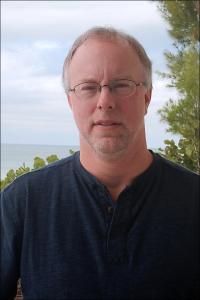
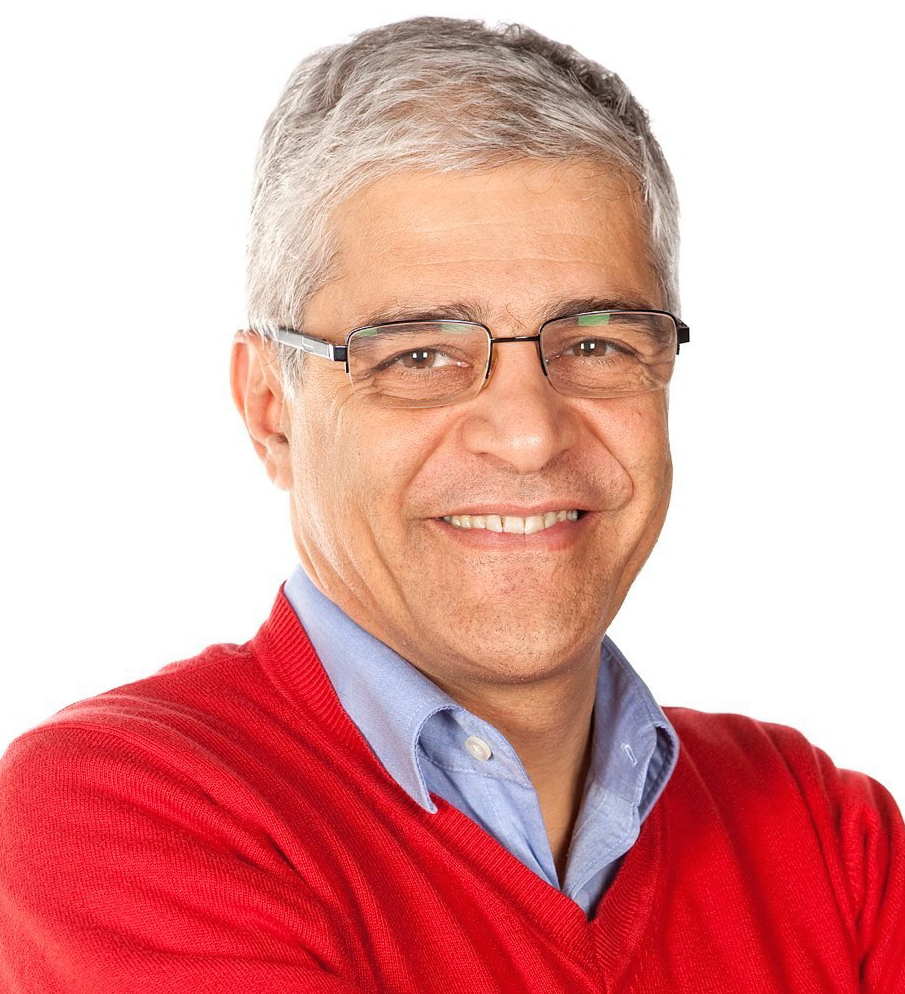
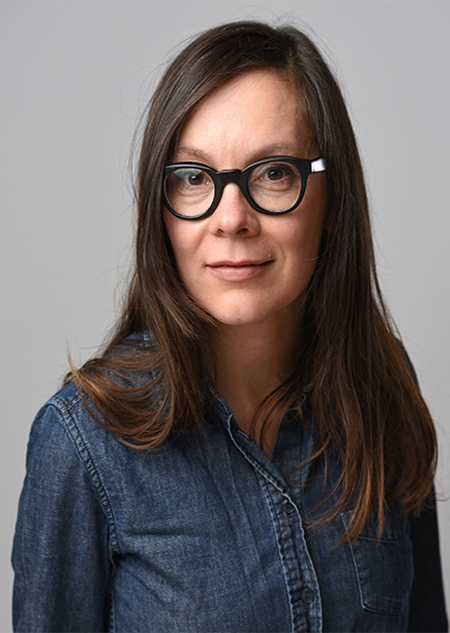
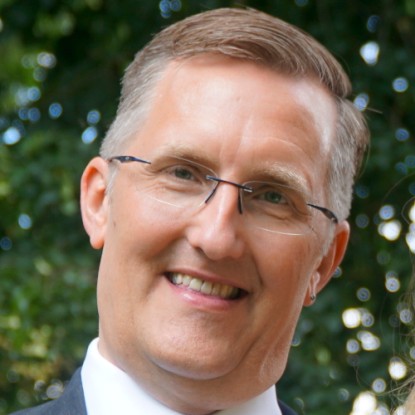
Daniel Dugger is a Professor in the Department of Mathematics at the University of Oregon , affiliated with the College of Arts and Sciences . His work spans algebraic topology, K-theory, and commutative algebra. Research Interests His primary research focuses on algebraic topology with applications to K-theory and commutative algebra . He investigates equivariant homotopy, motivic homotopy groups, and structures in quasi-categories. Publications His recent work includes RO(G)-graded Bredon cohomology , equivariant Z/l-modules , and motivic Adams spectral sequences , emphasizing algebraic structures in topological contexts. Advising and Collaborations While the provided texts do not list formal advisees, Dugger has collaborated with researchers like Christy Hazel , Dan Isaksen , and Brooke Shipley on diverse homotopy-theoretic problems.
Professor Sarah Whitehouse holds the position of Professor of Pure Mathematics at the University of Sheffield’s School of Mathematical and Physical Sciences. Her academic journey includes a B.Sc. (1990), M.Sc. (1991), and Ph.D. (1994) from the University of Warwick. She gained international experience as a Marie Curie post-doctoral researcher at Université Paris 13 and as a Maître de Conférences at Université d’Artois (Lens), France, before joining Sheffield in 2002. Her research focuses on algebraic topology, particularly the interplay between cohomology theories and algebraic structures like A-infinity and E-infinity algebras. She investigates operations in K-theory and their geometric implications, including connections to number theory. Her work emphasizes homotopy-theoretic approaches to algebraic structures, exploring how associativity and commutativity conditions can be relaxed. Teaching highlights include modules on Combinatorics, Analysis, Vector Spaces, Groups and Symmetries, and Algebraic Topology. She has supervised MMath projects on topics such as Aperiodic Tilings, Integer Partitions, and the Dold-Kan Correspondence. Her pedagogical approach emphasizes conceptual depth and student engagement. Prof. Whitehouse has led grants including EPSRC-funded projects on Rigidity Theorems in Stable Homotopy Theory and Stable/Unstable Operations in K-Theory, as well as Leverhulme research on Rings Defined by Congruences. She is actively involved in the Transpennine Topology Triangle and promotes collaborative research networks like Women in Topology. Her office is located at J6c in the Hicks Building, and she can be reached at s.whitehouse@sheffield.ac.uk .
Nasser Kalantar-Nayestanaki is a Full Professor of Physics at the University of Groningen since 2008, with a distinguished academic career spanning multiple positions at leading institutions. He has held roles as Adjunct Professor (2004-2008), Associate Professor (2000-2004), and Assistant Professor (1993-2000) at Groningen, and has also served as Visiting Professor at Duke University (2001) and held research positions at NIKHEF, Free University Amsterdam, and MIT. Education: B.Sc. in Physics and Mathematics (1981, Worcester Polytechnic Institute) M.Sc. in Physics (1983, Brown University) Ph.D. in Physics (1987, Massachusetts Institute of Technology) His research focuses on few-nucleon systems, nuclear structure of exotic nuclei, hadron spectroscopy, and experimental techniques using storage rings and radioactive ions. His work involves advanced detector development, Monte-Carlo simulations, and multi-particle detection systems for nuclear reaction studies at low-momentum transfers. Recent publications highlight his contributions to neutron-rich nucleus studies (68Ni), isoscalar resonances, charmonium-like structures, and innovative facilities like the FRS Ion Catcher for precision experiments. His work spans nuclear structure analysis, exotic matter detection, and cutting-edge instrumentation. Scientific Awards: 1981 Salisbury undergraduate award 2013 Fellow of the American Physical Society 2014 Member of Merit, Netherlands Physical Society 2016 GENCO membership award for outstanding contributions 2018 Knight of the Order of the Netherlands Lion He actively collaborates with international teams through projects like NUSTAR, EXL, R3B, BESIII, ANTARES, BINA, and TAPS, and serves on scientific advisory committees including NuPECC (2017) and IPN-Orsay committees (2013-2016). With over 300 journal publications (h-index: 37), his research represents a significant contribution to modern nuclear physics.
Donald Yau is a Professor of Mathematics at The Ohio State University Newark, specializing in Homotopy Theory and Algebraic K-Theory. His work bridges algebraic topology, category theory, and operadic structures. He holds a PhD from MIT (2002) and has authored numerous influential books and papers. Key research contributions include foundational work on enriched Mackey functors, bimonoidal categories, and higher operads. His books, such as 2-Dimensional Categories and Involutive Category Theory , are standard references. He explores topics like Smith ideals, homotopy invariance, and structured ring spectra, with applications in algebraic geometry and equivariant topology. Recent publications (2022–2025) focus on multifunctorial K-theory, symmetric bimonoidal categories, and modular operads. His work emphasizes categorical coherence, homotopy equivalences, and algebraic foundations for spectral theories. Despite no awards listed here, his extensive publication record underscores his impact in pure mathematics.
Rhythm Shimakawa is an Associate Professor at Waseda University's Center for Data Science and Institute for Advanced Study, with affiliations to the National Astronomical Observatory of Japan (Subaru Telescope). His career spans roles as a JSPS Overseas Fellow at UC Santa Cruz and NAOJ Fellow at Subaru Telescope. Education: Doctor of Philosophy (2017) from The Graduate University for Advanced Studies (School of Physical Sciences, Department of Astronomical Science), B.Sc. in Science (2012) from Osaka University. His research bridges galaxy formation/evolution, machine learning applications, and citizen science projects like GALAXY CRUISE. Key interests include protoclusters, superclusters, Lyα emitters, environmental effects on galaxies, and gas recycling in high-redshift systems. Recent publications (2024) focus on galaxy size-environment correlations, JWST observations of protocluster AGN activity, and discovery of z=4 quiescent galaxy concentrations. His team uses Subaru Hyper Suprime-Cam data for large-scale structure mapping and molecular gas studies in protoclusters. Scientific awards: SOKENDAI Research Award (2017), SOKENDAI Future Scientist Award (2015) Media coverage includes findings on supermassive black holes in protoclusters, galaxy void kinematics, and citizen-astronomy collaborations. He leads observational campaigns with ALMA, Keck/MOSFIRE, and HST data to study protocluster gas properties and galaxy morphologies.
Ethan Monaghan Ackelsberg is a postdoctoral researcher at the Institute of Mathematics, École Polytechnique Fédérale de Lausanne (EPFL), affiliated with the School of Basic Sciences (SB) and the Ergodic Theory group (ERG). He also holds a lecturing position in the SMA-ENS program within the SB-SMA department at EPFL, focusing on teaching mathematics. His research bridges ergodic theory, Ramsey theory, and combinatorial number theory, with a focus on recurrence properties and polynomial configurations. Education: PhD in Mathematics from Ohio State University (2022), MS in Mathematics (2019), BA in Mathematics and Physics from Bard College at Simon's Rock (2016). Ethan's research explores measure-preserving actions of abelian groups, polynomial patterns in large subsets, and connections to number theory. His recent work includes advancements in equidistribution in nilpotent groups and counterexamples to Erdős-type problems. He has received academic honors including summa cum laude at Bard College and highest honors from Budapest Semesters in Mathematics. Ethan actively contributes to teaching, including courses on measure theory.
Dr. Valeriu Moldoveanu is a Scientific Researcher I and Head of the Theoretical Physics and Computational Modeling Group at the National Institute of Materials Physics in Romania. His career spans theoretical physics research with significant contributions to quantum transport phenomena in nanostructures and hybrid quantum systems. His academic background includes graduate studies at the Faculty of Physics, University of Bucharest (1993-1998), a Master Degree in Condensed Matter Physics (1998-2000), and a PhD in Theoretical Physics completed in 2004 through a cotutelle program between Universite de la Mediteranee Aix-Marseille II and University of Bucharest. His doctoral research was supervised by Prof. Gheorghe Nenciu and Prof. Francois Bentosela. Moldoveanu's research focuses on quantum transport in nano-devices and hybrid quantum systems, particularly nano-electromechanical systems, cavity-embedded quantum dots, and color centers. His theoretical work combines configuration interaction methods, density functional theory, and generalized master equation formalisms to address complex many-body problems in mesoscopic physics. Recent publications demonstrate continued active research in cavity quantum electrodynamics with nanostructures, single-molecule magnets, and non-equilibrium transport phenomena. His scholarly achievements include the prestigious Radu Grigorovici Prize of the Romanian Academy awarded in 2010. He has led significant research projects such as 'Electron-vibron coupling effects in driven nano-electromechanical systems' (PCE-Idei, 2017-2019). Throughout his career, Moldoveanu has maintained strong international collaborations, conducting research at institutions including Technion Institute in Israel, Aalborg University in Denmark, Bilkent University in Turkey, and the Science Institute in Reykjavik, Iceland. He has also contributed to academic education through teaching positions at the University of Bucharest and Universite de Toulon et du Var in France.
Noah Riggenbach is a Postdoctoral Scholar at Northwestern University conducting advanced research in algebraic topology and arithmetic geometry. His work centers on algebraic K-theory and trace methods, with publications spanning topological cyclic homology applications to diverse algebraic structures. Education: PhD in Mathematics, Indiana University Bloomington (2021). Thesis: "The S1 Assembly Map on K-Theory and Topological Cyclic Homology" supervised by Michael Mandell. Riggenbach's research bridges abstract homotopy theory with arithmetic geometry, specializing in computational approaches to algebraic K-theory through trace methods. His investigations frequently employ cyclotomic spectra and synthetic techniques to analyze rings and schemes, with particular emphasis on p-adic geometries and singular varieties. This work establishes critical connections between chromatic homotopy theory and arithmetic properties of algebraic objects. Analysis of his publication trends (2021-2024) reveals consistent focus on applying topological cyclic homology to compute K-theory for specialized structures: truncated polynomials, cuspidal curves over perfectoid bases, double points, and p-adic unit disks. His methodology increasingly integrates cyclotomic synthetic spectra and perfectoid space theory, reflecting the field's evolution toward derived techniques and chromatic approaches. Scientific Awards: No awards documented in source materials. Riggenbach's current postdoctoral role emphasizes independent research without documented student advising or grant leadership. His collaborative work with established researchers like Benjamin Antieau and Elden Elmanto indicates integration into leading K-theory research networks. No specific laboratories or structured research teams are referenced, though his office location (Lunt 304) situates him within Northwestern's mathematical research environment.
Shane Kelly is an Associate Professor at the Graduate School of Mathematical Sciences, University of Tokyo. His research focuses on algebraic geometry, with emphasis on algebraic K-theory, motivic homotopy theory, and their applications to representation theory. He has held academic positions at institutions including Tokyo Tech and FU Berlin, where he taught courses such as Derived Algebraic Geometry and (Pro)Étale Cohomology. His PhD thesis, completed at Université de Paris-Nord 13 and Australian National University under Denis-Charles Cisinski and Amnon Neeman, explored 'Triangulated categories of motives in positive characteristic.' Key research contributions include studies on cdh-descent, pro-cdh topology, Hodge cohomology filtrations, and the interplay between motivic spectra and Milnor excision. His work frequently involves collaborations with prominent mathematicians like Shuji Saito and Marc Hoyois. Teaching responsibilities span advanced topics in algebraic geometry, linear algebra, and data science, primarily in Japanese. He maintains active research through grants and publications in top-tier journals like Geometry & Topology and Compositio Mathematica. Notable articles include foundational work on log homotopy types (2025), pro-cdh descent (2025), and non-reduced valuation rings (2024). His courses reflect expertise in étale cohomology, derived algebraic geometry, and linear algebra pedagogy. No academic awards are explicitly mentioned, but his prolific publication record underscores his impact in algebraic geometry and related fields.
Dr. Farnaz Shakib is an Assistant Professor in the Department of Chemistry and Environmental Science at NJIT. She leads the MDMSL research group, focusing on computational methods for charge transfer dynamics in energy-relevant materials. Her work integrates quantum mechanics, molecular dynamics, and machine learning to study multi-configurational systems like metal-organic frameworks (MOFs) and photovoltaic materials. Education: Ph.D. in Theoretical & Computational Chemistry, University of Alberta (2016) M.S. in Computational Organic Chemistry, Tarbiat Modares University (2008) B.S. in Applied Chemistry, University of Tabriz (2005) Research Interests: Dr. Shakib develops advanced computational platforms to investigate proton-coupled electron transfer (PCET) reactions, nonadiabatic dynamics, and nuclear quantum effects. Her group specializes in simulating charge transfer in: Metal-organic frameworks (MOFs) for energy storage/conversion Condensed-phase materials under thermal/photoinduced conditions Hybrid quantum-classical methods (e.g., ring polymer surface hopping) Recent Research Trends: Recent work emphasizes machine learning-driven MOF design, nuclear quantum effects in nonadiabatic simulations, and structural-electronic correlations in conductive 2D materials. Her software contributions include DL_POLY Quantum and SHARP pack, advancing path-integral-based simulations. Grants/Labs: Her lab collaborates on developing computational tools for energy materials. Research is supported by NJIT startup funds and ongoing grant submissions targeting DOE and NSF programs.
Professor Eser Olğar is a faculty member at Gaziantep University , where he serves in the Department of Physics Engineering within the College of Engineering . His career spans over two decades, including promotions from Research Assistant (1999-2006) to Assistant Professor (2007-2010), Associate Professor (2010-2015), and full Professor (2015-present). Education : PhD (2006), MSc (2002), and BSc (1999) in Physics Engineering from Gaziantep University His research focuses on quantum mechanics , mathematical physics , and acoustics , particularly solving wave equations with variable potentials and mass. Key subfields include Schrödinger Equation , Klein-Gordon Equation , and acoustic comfort in architectural spaces . His recent work (2024) explores velocity-dependent potentials in quantum systems. Over 15 years, his publications demonstrate expertise in relativistic quantum mechanics , position-dependent mass models, and acoustic engineering , with applications to quantum dots , diatomic molecules , and noise control in buildings. Teaching : Offers courses in General Physics , Mathematical Physics , Architectural Acoustics , and Group Theory at undergraduate, graduate, and doctoral levels Projects : Led noise mapping initiatives for Gaziantep University campuses and urban areas, and investigated room acoustics in cultural centers He has supervised 2 PhD and 9 Master’s theses, including research on position-dependent mass systems , quantum dot solutions , and acoustic properties of materials . His editorial roles include positions at SCIREA Journal of Physics and International Journal of Mathematical Physics .
M. Ronen Plesser is a Professor of Physics and a Professor in the Department of Mathematics at Duke University, affiliated with the Trinity College of Arts & Sciences since 2014. He holds a Ph.D. in Physics from Harvard University (1991) and an M.A. from Harvard (1988). His research focuses on String Theory, particularly exploring quantum field theories, Calabi-Yau manifolds, and M-theory. He has held significant roles, including Associate Professorships in Physics and Mathematics and served as Associate Chair of the Physics Department. His work spans topics like renormalization group flows, mirror symmetry, and gauge theories in compactified geometries. Notable contributions include studies on (0,2) superconformal models, hybrid conformal field theories, and M-theory transitions. Plesser's research has been supported by grants from the NSF, including projects on string vacua and regional mathematical physics conferences. He teaches advanced courses in physics and mathematics, such as General Relativity and Classical Mechanics. Professional activities include editorial roles in journals like Journal of High Energy Physics and service on NSF panels. His outreach includes public lectures on string theory and stargazing events at Duke's Teaching Observatory.
Chris Medcraft is a Postdoctoral Researcher at the Faculty of Science and Engineering, Southern Cross University. He holds a PhD from Monash University. His research focuses on spectroscopic techniques (e.g., microwave, infrared, and rotational spectroscopy) applied to molecular systems, atmospheric chemistry, and astrochemical studies. Key interests include molecular interactions, aerosol dynamics, and chiral analysis. Medcraft collaborates with advanced facilities such as the Environmental Analysis Laboratory and utilizes cutting-edge methods like drone-based measurements for marine aerosol studies. His work spans diverse areas, including the decomposition of fluorinated compounds, hydrogen bonding in complex systems, and structural analysis of organic/inorganic complexes. Notable contributions include studies on the Great Barrier Reef’s atmospheric aerosols and the rotational spectroscopy of astrochemical candidates like vinyloxirane. Medcraft’s research integrates experimental and computational approaches to understand molecular behavior in environmental, atmospheric, and astrochemical contexts. He has contributed to interdisciplinary projects leveraging advanced analytical tools such as broadband rotational spectroscopy and synchrotron-based Fourier transform spectrometry.
Katherine Poirier serves as an Associate Professor in the Department of Mathematics within the School of Arts and Sciences at New York City College of Technology (CUNY). Her academic career includes a postdoctoral fellowship at the University of California, Berkeley prior to her current appointment, where she teaches courses spanning College Algebra to Differential Equations. Her educational foundation comprises: Ph.D. in Mathematics from the City University of New York Graduate Center M.Sc. in Mathematics from the University of Toronto Honors Bachelor of Science in Mathematics from the University of Toronto Dr. Poirier's research centers on algebraic and geometric topology, with specialized focus on string topology, operadic algebra, Hochschild homology, and moduli spaces of Riemann surfaces. Her work investigates algebraic structures underlying topological spaces and develops invariants for manifold classification through combinatorial and homological frameworks. Analysis of her publication record reveals consistent contributions to operad theory and topological invariants, with recent works emphasizing computational techniques in higher topological Hochschild homology and chain-level string topology operations. These publications demonstrate interdisciplinary connections between combinatorics, homotopy theory, and algebraic geometry. Her scientific recognition includes: PSC-CUNY Research Award (2014-2015) Research funding supports her collaborative investigations, including an American Institute of Mathematics SQuaREs Grant (2015-2018) for collective work on topological Hochschild homology and an Association for Women in Mathematics Travel Grant (2017) enabling conference participation. These resources facilitate her engagement with international topology research communities. While no dedicated laboratory is specified, her collaborative projects—including the Women in Topology initiative and SQuaREs working group—highlight active participation in distributed research networks advancing algebraic topology.
Thomas Blochowicz is an Associate Professor at the Institute for Condensed Matter Physics at Technische Universität Darmstadt, where he leads the research group focused on Structure and Dynamics of Amorphous Systems. He serves as Head of the Basic Physics Laboratory Course and maintains an active research program investigating molecular dynamics in disordered materials. His research spans multiple areas including glass formation, hydrogen-bonding liquids, ionic liquids and ionogels, and binary systems under confinement. Blochowicz's group employs a wide range of complementary experimental techniques to study these systems, with particular expertise in broadband dielectric spectroscopy (BDS), depolarized dynamic light scattering (DDLS), triplet solvation dynamics (TSD), differential scanning calorimetry (DSC), and quasi-elastic neutron scattering (QENS). Analysis of his recent publications reveals a strong focus on understanding the relationship between molecular structure and dynamic processes in amorphous systems. His work particularly examines spectral shapes of structural relaxation, hydrogen-bonding networks in liquids, confinement effects on molecular dynamics, and the development of novel measurement methodologies. The research has significant implications for understanding fundamental glass physics and developing advanced energy materials. Blochowicz actively supervises doctoral students including Till Böhmer and Rolf Zeißler, and his group offers numerous opportunities for bachelor's and master's theses across various research topics in condensed matter physics. His laboratory maintains strong connections with other research groups at the Institute for Condensed Matter Physics, contributing to a vibrant research environment focused on soft matter and glass physics.