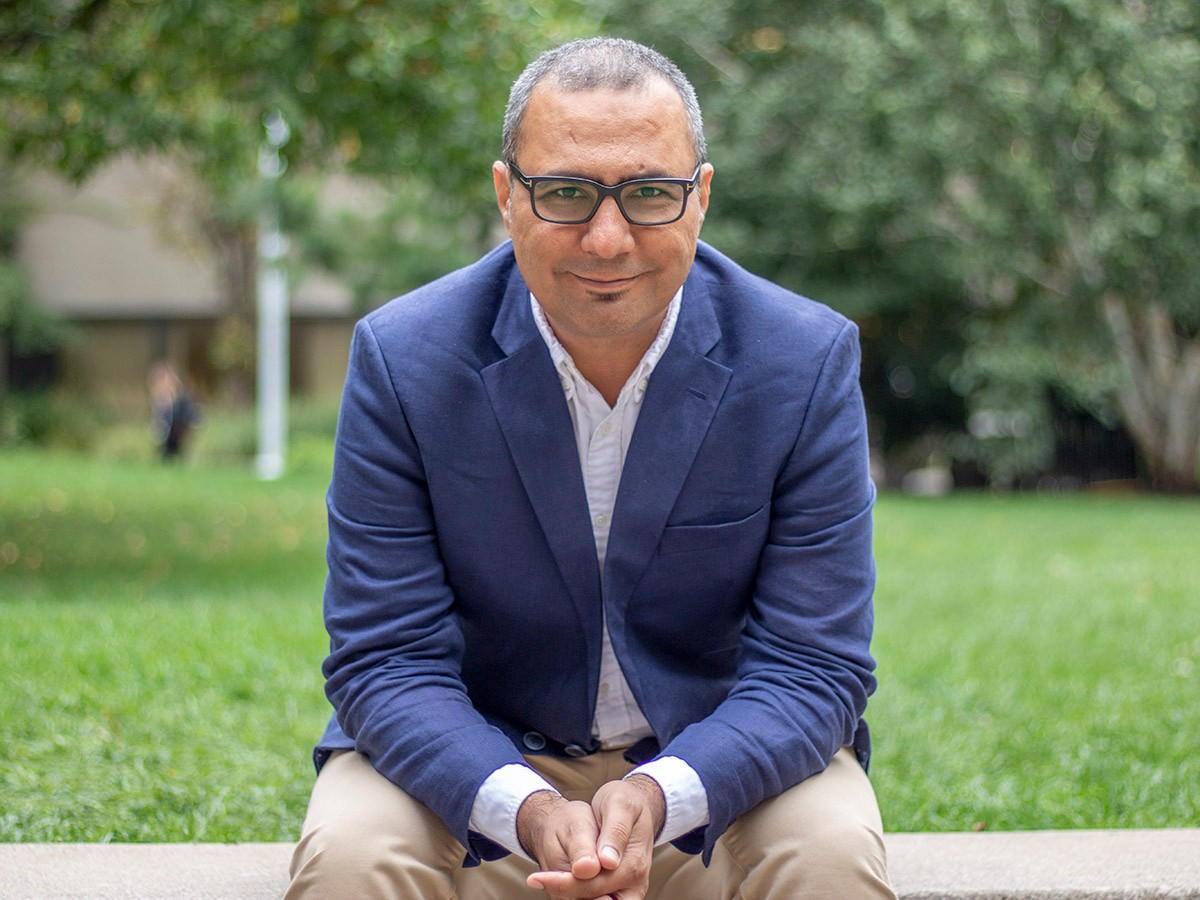
Jianqi Liu is a Hans Rademacher Research Fellow in the Department of Mathematics at the University of Pennsylvania, affiliated with the School of Arts and Sciences. His research focuses on vertex operator algebras (VOAs) and 2D conformal field theory (CFT), with an emphasis on algebraic structures such as fusion rules, Zhu’s algebras, Borel-type subalgebras, and connections to the classical Yang-Baxter equation. He also explores geometric aspects of VOAs and their physical interpretations. He earned his Ph.D. in Mathematics from the University of California, Santa Cruz (2018–2023), under the supervision of Chongying Dong. Prior to his current role, he held teaching roles at both UPenn and UCSC, instructing courses ranging from advanced linear algebra to complex analysis and number theory. His research publications address topics such as twisted conformal blocks, Rota-Baxter operators, and the interplay between algebraic structures and integrable systems. Liu collaborates with researchers like Angela Gibney and Daniel Krashen, focusing on advancing theoretical frameworks in mathematical physics and algebraic geometry.
Bilal Farooq is an Associate Professor and Program Director for the Master of Engineering in Interdisciplinary Engineering (MEIE) at Toronto Metropolitan University, holding the Canada Research Chair in Disruptive Transportation Technologies and Services within the Department of Civil Engineering. His educational background includes a PhD from the University of Toronto (2011), MASc from Lahore University of Management Sciences (2004), and BSc from the University of Engineering and Technology (2001). Dr. Farooq's research pioneers disruptive transportation solutions through cyber-physical systems, AI/machine learning applications, behavioral modeling, and optimization techniques. His work specifically targets on-demand multimodal systems, sustainable urban transportation, urban air mobility, automated vehicles, and extended reality applications, addressing critical urban mobility challenges with human-centered approaches. Analysis of his recent publications reveals a strong trend toward quantum-enhanced computational methods, privacy-preserving federated learning frameworks, and sustainability-focused decarbonization strategies across transportation domains, with increasing emphasis on human factors and real-world implementation. Notable scientific awards include: Ontario Early Researcher Award (2018) Canada Research Chair (2017) MassMotion Academic Pedestrian Modelling Project of the Year (2016) Québec Early Researcher Award (2014) Dr. Farooq actively supervises graduate students and secures significant research funding through his Canada Research Chair position and Early Researcher Awards. He directs the Laboratory of Innovations in Transportation (LiTrans), which develops interdisciplinary solutions integrating mathematics, engineering, computer science, and economics to address emerging transportation challenges. LiTrans focuses on disruptive transportation technologies, complete streets design, cyber-physical systems, pedestrian dynamics, resilience, and climate change impacts, collaborating with industry and government partners to translate research into practical urban mobility innovations for smart cities worldwide.
Marcella Lusardi is an Assistant Professor in the Department of Chemical and Biological Engineering and the Princeton Materials Institute at Princeton University, leading interdisciplinary research at the intersection of materials synthesis, catalysis, and sustainability. Her educational background includes: Ph.D. in Materials Science and Engineering from MIT (2018) B.S. in Chemical Engineering from Columbia University (2012) Dr. Lusardi's research focuses on designing advanced catalytic materials for environmental challenges, with core expertise in surface science, light-matter interactions, and complex materials processing. Her group develops natural and engineered materials for energy and sustainability applications, emphasizing CO 2 capture/reduction, pollution abatement, and photocatalysis through molecular-level catalyst design. The MatCat Lab integrates experimental techniques like NMR spectroscopy with computational guidance to create scalable solutions for closed carbon cycles and greener chemical processes. Analysis of her 15 most recent publications (2019-2025) reveals a dominant focus on zeolite-based catalysis for CO 2 conversion and carbonylation reactions, with growing emphasis on supramolecular assemblies and water-tolerant acid catalysts. Her work consistently bridges fundamental material properties with practical sustainability applications, showing progression toward integrated systems for direct air capture and light-mediated reactions. The MatCat Lab employs a highly interdisciplinary approach centered on defect engineering in silica matrices and molecular recognition for supramolecular networks. Current projects target tailored reaction environments for CO 2 reduction and microplastic oxidation, utilizing advanced synthesis methods and structural elucidation to develop practical catalytic technologies for a sustainable future.
Vladimir Kazeev is an Assistant Professor at the Faculty of Mathematics, University of Vienna , where he has held a faculty position since 2019. He also held previous academic appointments as a Szegő Assistant Professor at Stanford University (2017–2019), a postdoctoral researcher at the University of Geneva (2015–2017), and research positions at ETH Zurich (2011–2015), Russian Academy of Sciences (2008–2011), and Moscow Institute of Physics and Technology (2009). His research focuses on adaptive, data-driven numerical methods for differential equations, nonlinear low-parametric approximation, and numerical linear algebra. His work intersects computational mathematics, tensor methods, and high-dimensional problem-solving, particularly in the context of partial differential equations (PDEs) and stochastic modeling. The 15 most recent publications reveal a strong emphasis on quantized tensor-structured methods for PDEs, low-rank approximations, and high-dimensional numerical analysis. His research spans theoretical advancements in tensor decomposition, practical applications in chemical reaction networks, and novel discretization techniques for multiscale and degenerate diffusion problems. Scientific awards include the prestigious ETH Medal for outstanding doctoral theses (2016) Russian Academy of Sciences Medal for outstanding student works in mathematics (2011) Advising and teaching activities include supervising Jason Zhu (Stanford, 2019) and Simon Etter (ETH Zurich, 2014), as well as teaching advanced courses in tensor methods, numerical analysis, and PDEs at the University of Vienna, Stanford University, and the University of Geneva. His service to the community includes peer review for 15+ journals and co-organizing minisymposia at SIAM meetings.
Anna Levina is an Assistant Professor for Computational Neuroscience at the University of Tübingen , affiliated with the Department of Computer Science under the Faculty of Science. Her research focuses on the self-organization of neuronal activity, critical dynamics in neural networks, and the excitation/inhibition balance in cortical circuits. Current positions: Assistant Professor (since 2018), Group Leader (2017-2018), Equality Officer (Computer Science) Previous roles: IST Fellow (2015-2017), Associated Researcher (2011-2015), Postdoc/PI (2011-2015), Postdoc (2008-2011) Her research integrates mathematical modeling , statistical physics , and computational neuroscience to study criticality phenomena, neural avalanches, and adaptive network dynamics. Key interests include: Self-organized criticality in neural systems Excitation/Inhibition balance mechanisms Network topology and dynamics Timescale analysis in neural processing Stochastic modeling of neural activity Recent publications reveal trends in understanding critical dynamics across biological and artificial networks, with applications to memory systems, sensorimotor integration, and disease modeling. She has received recognition as an IST Fellow .
Chris De Sa is an Associate Professor in the Department of Computer Science at Cornell University, affiliated with the Cornell Machine Learning Group and leading the Relax ML Lab. His research focuses on algorithmic, software, and hardware techniques for high-performance machine learning, particularly relaxed-consistency stochastic algorithms like asynchronous and low-precision stochastic gradient descent (SGD). He earned his Ph.D. from Stanford University under advisors Kunle Olukotun and Chris Ré. His work emphasizes constructing efficient, parallel, and distributed machine learning frameworks for deep learning and data analytics. Education: Ph.D. in Computer Science, Stanford University (2017) Research Interests: Algorithmic techniques for scalable ML, quantization, distributed optimization, hyperbolic geometry in ML, and reliable measurement of ML systems. His group develops frameworks for efficient inference/training and explores the intersection of ML with domains like agriculture and plant science through courses like PLSCI 7202. Recent Highlights: DARPA YFA Grant (2024), NSF CAREER Award, Google Research Scholar Award, and multiple best paper recognitions. Key contributions include QuIP quantization methods, Coneheads attention mechanisms, and theoretical advances in decentralized training. Awards: NSF CAREER Award DARPA YFA Grant (2024) Google Research Scholar Award Mr. & Mrs. Richard F. Tucker Teaching Award Grants & Advising: Advises 8 Ph.D. students (including Ruqi Zhang, Yucheng Lu, A. Feder Cooper) and holds leadership roles in MLSys conferences. Active in grant-funded research (e.g., NSF Robust Intelligence). Labs/Teams: Leads the Relax ML Lab and participates in Cornell’s Institute for Digital Agriculture (CIDA).
Professor Alexander Scott is a faculty member at the University of Oxford, holding positions as Professor of Mathematics and Dominic Welsh Tutor in Mathematics at Merton College. His research focuses on combinatorics, probability, algorithms, and graph theory, with a particular interest in the interplay between local and global structures in networks. He has organized the Oxford Combinatorics Seminar and co-founded the online Oxford Discrete Mathematics and Probability Seminar, fostering collaboration in these fields. Professor Scott’s work bridges theoretical foundations with applications in statistical physics and algorithmic design. He has supervised numerous graduate students in combinatorics and regularly teaches undergraduate courses in analysis and discrete mathematics. His contributions include advancements in extremal graph theory, probabilistic methods, and structural combinatorics, with over 150 publications in prestigious journals. He actively organizes academic events such as the annual One-Day Meeting in Combinatorics, hosting speakers from around the world. Despite the absence of explicit awards noted, his prolific research output and academic leadership reflect significant contributions to the field. His current interests continue to explore the Erdős-Hajnal conjecture, induced subgraph densities, and algorithmic challenges in combinatorial structures.
Joachim Rosenthal is a Professor of Applied Mathematics at the University of Zurich's Department of Mathematics, leading the Applied Algebra Group. His research integrates coding theory, cryptography, and algebraic geometry with applications in communications and security systems. His primary research explores algebraic coding theory including convolutional codes, subspace codes, and post-quantum cryptography. He develops algorithms for error correction, code optimization, and cryptographic protocol analysis, with emphasis on mathematical structures in finite fields and rings. Professor Rosenthal serves as President of the Swiss Mathematical Society (2024-2025) and sits on IEEE Information Theory Society's Board of Governors. He has organized multiple international conferences on coding theory and cryptography, including the Zurich COST Meeting and Workshop on Convolutional Codes. His editorial contributions include roles at Archiv der Mathematik and SIAM Journal on Applied Algebra and Geometry. Recent publications focus on code construction methods, complexity analysis in group-based cryptography, and algebraic approaches to error-correcting codes.
Jan de Gier is a Professor at the School of Mathematics and Statistics, The University of Melbourne . He is also the Founding Director of MATRIX , Australia’s residential research institute in the mathematical sciences, and a former Deputy Director and Chief Investigator in the Australian Research Council Centre of Excellence for Mathematical and Statistical Frontiers (ACEMS) . Additionally, he co-founded the Australian and New Zealand Association for Mathematical Physics (ANZAMP) in 2011 and served as its inaugural Chair. His research focuses on solvable lattice models at the intersection of mathematical physics and statistical mechanics . Key areas include the application of quantum integrability , algebraic structures like the Yang-Baxter equation, Hecke algebras, and quantum groups, as well as analytical methods such as complex analysis and elliptic curves. His work bridges pure and applied mathematics through connections between enumerative combinatorics , representation theory , and real-world phenomena like traffic flow modeling via exclusion processes . The 15 most recent articles reflect his expertise in integrable systems , non-equilibrium statistical mechanics , and algebraic combinatorics . Topics span Macdonald polynomials , stochastic duality , quantum spin chains , and traffic modeling , with methodologies involving matrix product forms , exact solutions , and critical phenomena analysis. He has contributed to editorial efforts through the AustMS Gazette and MATRIX Annals, and has been involved in public science communication via opinion pieces on mathematics funding and applications. His work emphasizes the importance of fundamental research in driving technological innovation, as highlighted in media articles discussing pi calculation , zero-knowledge proofs , and mathematics education .
Sean Howe is an Assistant Professor in the Department of Mathematics at the University of Utah, where he has been employed since July 2019. His research is supported by NSF grants DMS-2201112 and DMS-2501816. In the academic year 2023-2024, he was a Friends of the Institute for Advanced Study Member at the special year on p-adic arithmetic geometry at the Institute for Advanced Study. Dr. Howe received his PhD from the University of Chicago in 2017 under the supervision of Matt Emerton. Prior to his position at Utah, he was an NSF Postdoctoral Scholar at Stanford University from September 2017 to June 2019. He earned a joint master's degree from Leiden University and Universite Paris-Sud 11 through the ALGANT program in 2012 and completed his undergraduate studies at the University of Arizona. Dr. Howe's research spans arithmetic and algebraic geometry, representation theory, and number theory, with a particular focus on p-adic aspects. His work often explores the connections between geometry and number theory through the lens of p-adic methods, including p-adic Hodge theory, perfectoid spaces, and the Langlands program. He has made significant contributions to understanding cohomological structures in mixed characteristic settings, the geometry of moduli spaces, and the statistical properties of L-functions. His extensive publication record demonstrates a strong trajectory in advancing p-adic geometry and its applications. Recent work shows increasing focus on cohomological smoothness in mixed characteristic, p-adic periods, and the interplay between random matrix theory and arithmetic statistics. His research often bridges abstract theoretical frameworks with concrete computational approaches. NSF Postdoctoral Scholar NSF grants DMS-2201112 and DMS-2501816 Dr. Howe is an active mentor, currently advising five PhD students: Minhua Cheng, Madison Delmoe, Shea Engle, Abhay Goel, and Suo Jun Tan. He has successfully graduated two PhD students: Matthew Bertucci (2025) and Hanlin Cai (2024). He also regularly mentors undergraduate researchers, with notable projects including Emil Geisler's work on stable multiplicities in configuration space cohomology and Daniel Koizumi's software for computing braid monodromy of cubic surfaces. His teaching portfolio includes advanced courses in algebraic topology, number theory, and algebra, reflecting his broad expertise across pure mathematics. He has taught courses such as Math 6950 (Topics in Algebraic Topology), Math 4400 (Introduction to Number Theory), and Math 6320 (Modern Algebra II).
Melanie Weber is an Assistant Professor of Applied Mathematics and Computer Science at Harvard University's John A. Paulson School of Engineering and Applied Sciences (SEAS), leading the Geometric Machine Learning Group. Her research focuses on leveraging geometric structures in data for designing efficient machine learning and optimization algorithms with theoretical guarantees. She holds a PhD from Princeton University (2021) and has held fellowships at the Mathematical Institute of Oxford, Brasenose College, and the Simons Institute. Her work bridges geometry, optimization, and machine learning, with funding from NSF, Sloan Foundation, and Harvard initiatives. Education : PhD in Applied Mathematics, Princeton University (2021) BSc/MSc in Mathematics and Physics, University of Leipzig (2016) Research Interests : Dr. Weber's research integrates geometric principles into machine learning and optimization, focusing on non-Euclidean spaces, graph structures, and manifold-based methods. Key areas include optimization on Riemannian manifolds, curvature-based analysis (e.g., Ricci curvature), and developing algorithms resilient to data geometry challenges like over-smoothing in graph neural networks. Her work emphasizes theoretical foundations while addressing practical scalability in high-dimensional data. Awards & Recognition : 2024 Sloan Research Fellowship 2023 Leslie Fox Prize in Numerical Analysis 2023 NSF Grant for Geometric Optimization Grants & Funding : Supported by National Science Foundation (NSF), Alfred P. Sloan Foundation, Aramont Foundation, Harvard Dean’s Fund, and Harvard Data Science Initiative. Labs & Collaborations : Leads the Geometric Machine Learning Group at SEAS, collaborating with institutions like MIT, Max Planck Institute, and industry labs (Facebook, Google, Microsoft). Active in organizing workshops on geometric methods and curvature analysis.
Ahmed El Alaoui is an Assistant Professor in the Department of Statistics and Data Science at Cornell University, with a secondary affiliation in the Department of Computer Science. He joined Cornell in 2021 after completing a postdoctoral fellowship at Stanford University under Andrea Montanari. His research focuses on high-dimensional statistics, probability theory, algorithms on random structures, and statistical physics, with particular emphasis on spin glasses and algorithmic thresholds. El Alaoui holds a PhD in Electrical Engineering and Computer Sciences from UC Berkeley (2018), advised by Michael I. Jordan, and a Master's from Ecole Normale Supérieure/Ecole des Ponts Paristech. His work bridges theoretical and applied domains, addressing challenges in high-dimensional inference, computational trade-offs, and probabilistic models. He has contributed to foundational results in random matrix theory, detection limits in spiked models, and algorithmic approaches to complex systems. His teaching includes courses on high-dimensional statistics, probability models, and theoretical computer science. He has been recognized for his innovative approaches to sampling and optimization in disordered systems, with publications in top journals like Annals of Probability and venues such as NeurIPS and FOCS. El Alaoui's research explores the interplay between statistical physics principles and algorithm design, aiming to uncover computational barriers in high-dimensional problems. His lab develops methodologies for analyzing complex systems and improving the efficiency of statistical estimation in challenging scenarios.
Bryon Aragam is an Associate Professor of Econometrics and Statistics and Robert H. Topel Faculty Scholar at the University of Chicago Booth School of Business. His research focuses on the intersection of causality, statistical machine learning, and probabilistic modeling, with particular emphasis on applications to artificial intelligence systems including large language models like ChatGPT and generative models like DALL-E. Dr. Aragam completed his PhD in Statistics and a Masters in Applied Mathematics at UCLA, where he was an NSF graduate research fellow. Prior to joining the University of Chicago, he was a project scientist and postdoctoral researcher in the Machine Learning Department at Carnegie Mellon University. Research Focus: Causal structure learning in probabilistic generative models Key Areas: Causal machine learning, deep generative models, latent variable models, statistical learning theory Applications: AI interpretability, ethics, and fairness in artificial intelligence systems Teaching: Business Statistics, Econometrics and Statistics Colloquium His recent publications demonstrate a strong theoretical foundation combined with practical applications, particularly in understanding and improving AI systems. His work spans causal discovery, graphical models, deep learning, and latent variable modeling, with particular attention to the theoretical properties of these methods and their applications to real-world AI challenges. The research shows a progression toward increasingly complex problems in causal representation learning and AI interpretability. Scientific Awards: Robert H. Topel Faculty Scholar NSF Graduate Research Fellow Dr. Aragam's work has been published in top statistics and machine learning venues including the Annals of Statistics, Neural Information Processing Systems (NeurIPS), the International Conference on Machine Learning (ICML), and the Journal of Machine Learning Research (JMLR). His research group publishes broadly across both statistical and machine learning communities, demonstrating the interdisciplinary nature of his work at the intersection of statistics, machine learning, and causal inference. As a data science consultant for technology and marketing firms, Dr. Aragam has applied his expertise to problems in survey design, customer retention, logistics, and ranking, bridging the gap between theoretical research and practical applications.
Professor John L Provis is a leading expert in cement materials science at the University of Sheffield 's School of Chemical, Materials and Biological Engineering. He also holds a Visiting Professor position at Luleå University of Technology's Building Materials division. PhD in Chemical Engineering (University of Melbourne) 2013 RILEM Robert L'Hermite Medal 2015 Honorary Doctorate from Hasselt University Editor-in-Chief of Materials and Structures His research focuses on alkali-activated materials and geopolymer binders for sustainable construction, with key themes in chemical speciation , waste immobilization , and novel cement systems for nuclear applications. Recent publications highlight 15 representative articles spanning topics: Radiation-resistant cementitious matrices Geopolymer synthesis for heavy metal containment Thermodynamic modeling of binder systems Corrosion mechanisms in alkali-activated concretes Low-carbon cement alternatives Microstructural analysis via advanced spectroscopy Scientific Recognition : RILEM Robert L'Hermite Medal recipient Hasselt University Honorary Doctorate Editorial leadership roles in major journals Contact: j.provis@sheffield.ac.uk | Sir Robert Hadfield Building, University of Sheffield
Steven N. Evans is a Distinguished Professor at the University of California, Berkeley , affiliated with the Department of Statistics and the Center for Computational Biology . With over three decades of service since 1987, his work bridges probability theory , stochastic processes , and their applications in mathematical biology , computational genetics , and phylogenetics . His research spans: Probability on Algebraic Structures , including random matrices and local fields. Measure-Valued Processes and coalescent models in population genetics. Phylogenetic Inference in historical linguistics and ecology. Stochastic Models for gene expression, fitness landscapes, and mutation-selection balance. Markov Processes and their applications in phylodynamics. Recent publications highlight his contributions to phylogenetic networks , Frechet mean sets , and Levy process analysis , with keywords spanning Probability , Computational Biology , and Population Genetics . He has mentored 10 PhD students, including Boyan Xu (2024) and Nicholas Bhattacharya (2022). His email is evans@stat.berkeley.edu .